Princess Cruise Lines to Pay Largest-Ever Criminal Penalty for Deliberate Vessel Pollution
Company to Pay $40 Million and Implement Remedial Measures on All Carnival Companies Visiting U.S. Ports
Princess Cruise Lines Ltd. (Princess) has agreed to plead guilty to seven felony charges stemming from its deliberate pollution of the seas and intentional acts to cover it up. Princess will pay a $40 million penalty– the largest-ever criminal penalty involving deliberate vessel pollution – and plead guilty to charges related to illegal dumping of oil contaminated waste from the Caribbean Princess cruise ship. The plea agreement was announced today by Assistant Attorney General John C. Cruden for the Department of Justice’s Environment and Natural Resources Division and U.S. Attorney Wifredo A. Ferrer for the Southern District of Florida in Miami, Florida.
Princess, headquartered in Santa Clarita, California, is a subsidiary of Carnival Corporation (Carnival), which owns and operates multiple cruise lines and collectively comprises the world’s largest cruise company. Carnival is headquartered in Miami. As part of the plea agreement with Princess, cruise ships from eight Carnival cruise line companies (Carnival Cruise Line, Holland America Line N.V., Seabourn Cruise Line Ltd. and AIDA Cruises) will be under a court supervised Environmental Compliance Program (ECP) for five years. The ECP will require independent audits by an outside entity and a court appointed monitor.
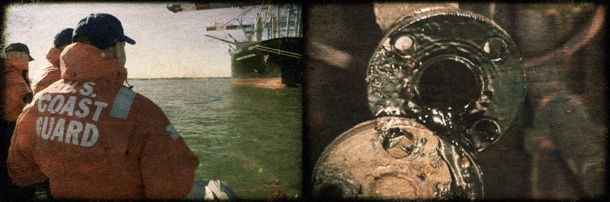
The charges to which Princess will plead guilty concern the Caribbean Princess cruise ship which visited various U.S. ports in Florida, Maine, Massachusetts, New Jersey, New York, Puerto Rico, Rhode Island, South Carolina, Texas, U.S. Virgin Islands and Virginia. The U.S. investigation was initiated after information was provided to the U.S. Coast Guard by the British Maritime and Coastguard Agency (MCA) indicating that a newly hired engineer on the Caribbean Princess reported that a so-called “magic pipe” had been used on Aug. 23, 2013, to illegally discharge oily waste off the coast of England. The whistleblowing engineer quit his position when the ship reached Southampton, England. The chief engineer and senior first engineer ordered a cover-up, including removal of the magic pipe and directing subordinates to lie. The MCA shared evidence with the U.S. Coast Guard, including before and after photos of the bypass used to make the discharge and showing its disappearance. The U.S. Coast Guard conducted an examination of the Caribbean Princess upon its arrival in New York City, New York, on Sept. 14, 2013, during which certain crew members continued to lie in accordance with orders they had received from Princess employees.
According to papers filed in court, the Caribbean Princess had been making illegal discharges through bypass equipment since 2005, one year after the ship began operations. The discharge on Aug. 26, 2013, involved approximately 4,227 gallons, 23 miles off the coast of England within the country’s Exclusive Economic Zone. At the same time as the discharge, engineers simultaneously ran clean seawater through the ship’s overboard equipment in order to create a false digital record for a legitimate discharge.
Caribbean Princess used multiple methods over the course of time to pollute the seas. Prior to the installation of the bypass pipe used to make the discharge off the coast of England, a different unauthorized valve was used. When the Department of Justice investigative team conducted a consensual boarding of the ship in Houston, Texas, on March 8, 2014, they found the valve that crew members had described. When it was removed by Princess at the department’s request, it was found to contain black oil.
In addition to the use of a magic pipe to circumvent the oily water separator and oil content monitor required pollution prevention equipment, the U.S. investigation uncovered two other illegal practices which were found to have taken place on the Caribbean Princess as well as four other Princess ships – Star Princess, Grand Princess, Coral Princess and Golden Princess. One practice was to open a salt water valve when bilge waste was being processed by the oily water separator and oil content monitor. The purpose was to prevent the oil content monitor from otherwise alarming and stopping the overboard discharge. This was done routinely on the Caribbean Princess in 2012 and 2013. The second practice involved discharges of oily bilge water originating from the overflow of graywater tanks into the machinery space bilges. This waste was pumped back into the graywater system rather than being processed as oily bilge waste. Neither of these practices were truthfully recorded in the oil record book as required. All of the bypassing took place through the graywater system which was discharged when the ship was more than four nautical miles from land. As a result, discharges within U.S. waters were likely.
“The pollution in this case was the result of more than just bad actors on one ship,” said Assistant Attorney General Cruden. “It reflects very poorly on Princess’s culture and management. This is a company that knew better and should have done better. Hopefully the outcome of this case has the potential not just to chart a new course for this company, but for other companies as well.”
“The conduct being addressed today is particularly troubling because the Carnival family of companies has a documented history of environmental violations, including in the Southern District of Florida,” said U.S. Attorney Ferrer. “Our hope is that all companies abide by regulations that are in place to protect our natural resources and prevent environmental harm. Today’s case should send a powerful message to other companies that the U.S. government will continue to enforce a zero tolerance policy for deliberate ocean dumping that endangers the countless animals, marine life and humans who rely on clean water to survive.”
“The safety, security and environmental stewardship of our ports, waterways and oceans is an important Coast Guard mission set and the complexity of the challenges we face today requires a global unity of effort among law enforcement partners,” said Rear Admiral Scott Buschman Commander, Coast Guard District Seven. “I sincerely thank the U.S. Attorney and the United Kingdom Maritime and Coastguard Agency for your leadership, your collaboration and the hard work put forth to reach a plea agreement with significant penalties that serve as a clear warning to all polluters.”
“This shows just how well the U.K. and U.S. can work together on these kind of cases,” said Jeremy Smart, head of enforcement at the Maritime & Coastguard Agency of the United Kingdom. “It also sends a clear message to the industry that this kind of pollution practice will not be tolerated anywhere in the world. It also shows that we will always take any information we are given by those who report such practices to us very seriously and will act upon it.”
In addition to the criminal information, a plea agreement and joint factual statement were today filed in court in Miami. Photographs of some of the evidence provided by the whistleblower and obtained by the government were also filed in federal court. In the factual statement, Princess also admitted to the following:
- Illegal discharges took place on the Caribbean Princess dating back to 2005, one year after the vessel started operations, as part of a conspiracy to violate the Act to Prevent Pollution from Ships and to obstruct justice.
- Different bypass methods were used over the course of time, including a “magic pipe” used to transfer oily waste overboard.
- After learning that an engineer had blown the whistle, senior ship engineers dismantled the bypass pipe and instructed crew members to lie.
- Prior to the MCA boarding, the chief engineer and senior first engineer ordered crew members to lie. Following the MCA’s inquiry, the chief engineer held a sham meeting in the engine control room to pretend to look into the allegations while holding up a sign stating: “LA is listening.” The engineers present understood that anything said might be heard by those at the company’s headquarters in Los Angeles, California, because the engine control room contained a recording device intended to monitor conversations in the event of an incident.
- When using the magic pipe, engineers processed sea water through the oily water separator in order to create a digital record to account for the missing waste.
- Shore-side management failed to provide and exercise sufficient supervision and management controls to prevent or detect criminal violations by Caribbean Princess crew members.
- A perceived motive for the crimes was financial – the chief engineer that ordered the dumping off the coast of England told subordinate engineers that it cost too much to properly offload the waste in port and that the shore-side superintendent who he reported to would not want to pay the expense.
- Princess engineers on the Caribbean Princess indicated that the chief engineer responsible for the discharge on Aug. 26, 2013, was known as “broccino corto” (a person with short arms), an Italian expression for a cheap person whose arms are too short to reach his wallet. Some expressed the same opinion of the shore-side superintendent.
- Graywater tanks overflowed into the bilges on a routine basis and were pumped back into the graywater system and then improperly discharged overboard when they were required to be treated as oil contaminated bilge waste. The overflows took place when internal floats in the graywater collection tanks got stuck due to large amounts of fat, grease and food particles from the galley that drained into the graywater system. Graywater tanks overflowed at least once a month and, at times, as frequently as once per week. Princess had no written procedures or training for how internal gray water spills were supposed to be cleaned up and the problem remained uncorrected for many years.
Princess discovered “stub pipes” along the entire length of the ship for the apparent purpose of pumping graywater overflows into the bilges back into the graywater system and subsequently overboard.
According to papers filed in court, Princess has undertaken remedial measures in response to the government’s investigation, including upgrading the oily water separators and oil content monitors on every ship in its fleet and instituting many new policies.
If approved by the court, $10 million of the $40 million criminal penalty will be devoted to community service projects to benefit the maritime environment; $3 million of the community service payments will go to environmental projects in South Florida; $1 million will be earmarked for projects to benefit the marine environment in United Kingdom waters.
Today’s prosecution was made possible through the combined efforts of the U.S. Coast Guard Investigative Service, the U.S. Coast Guard 7th District Legal Office, U.S. Coast Guard’s Office of Maritime and International Law and U.S. Coast Guard Office of Investigations and Analysis. In announcing the case, Assistant Attorney General Cruden and U.S. Attorney Ferrer expressed their appreciation to the U.K.’s MCA for their cooperation and assistance. The case was prosecuted by Richard A. Udell, Senior Litigation Counsel with the Environmental Crimes Section of the Department of Justice and Thomas Watts-FitzGerald, Deputy Chief, Economic & Environmental Crimes Section for the Southern District of Florida.
======
Avoiding the APPS Magic Pipe Trap
During the 3rd annual SAFETY4SEA forum held in Athens in October 2012, George A.Gaitas, Attorney at Law in Houston Texas Chalos & Co.
gave a very interesting speech on how a shipping company may get caught
in a whistleblower situation and end up paying heavy fines and/or other
penalties without ever committing an actual oil pollution. More than a
decade has passed since the United States Department of Justice launched
a vigorous campaign to enforce the observance of MARPOL 73/78 Annex I
regulations by foreign ships calling at U.S. ports. Some ten years
later, one would think that ship owners and ship managers would have
caught-on, and found ways to effectively deal with it. Unfortunately it
hasn’t worked out that way.
Very large monetary incentives in the
form of whistleblower cash rewards authorized by the Act to Prevent
Pollution from Ships, has created a state of affairs that rewards
seafarers for violating MARPOL. These, so-called, “whistleblowers”:
- commit the violations
- report the violations to the U.S. Port State Control authorities
- provide the evidence needed to obtain a conviction or guilty plea on the owner’s and/or manager’s part
- are awarded as much as 50% of the fines assessed
MARPOL is an International convention
without self enforcing provisions. It doesn’t contain rules about what
happens if you violate it. Each country is left to make its own
enforcement rules. There are two countries that have jurisdiction to
enforce MARPOL for any given ship: the flag country; and the port state
control country. Here we are talking about the USA as a port state
control country.
In the United States MARPOL is adopted by
a piece of legislation called the Act to Prevent Pollution from Ships,
known by its acronym APPS. It is at 33 U.S.C.§ 1901 et seq. MARPOL I
requires all events of transfer of oily waste and oil to be recorded in
the ship’s oil record book. Some countries enforce MARPOL with
administrative sanctions. Not so with the U.S.A. The U.S.A. treats
MARPOL violations as criminal offenses, though it also has an option for
administrative enforcement which may include civil penalties or even
the out and out banning of ships from calling at American ports.
APPS has grafted its own enforcement
provisions onto MARPOL and these provide criminal sanctions against
those who violate the Convention. In particular 33 USC§ 1908 (a)
provides that each violation of MARPOL is regarded as a class D felony.
This will get you 5 to 10 years in prison and /or a fine of $ 500,000 if
you are an organization, for each violation. And this is not all.
Smart lawyers a few years back thought
that since MARPOL prohibits dumping oily waste in the Oceans, and the
Oceans are not owned by any country, the U.S. authorities had no
jurisdiction to criminally prosecute MARPOL violations. The argument was
that the writ of the United States does not run outside its territorial
jurisdiction. They raised the argument with a federal trial judge in
Texas and won. But then the government appealed and the matter went
before the 5th Circuit Court of Appeal which held that the crime
prosecuted is not the illegal dumping in the ocean. It is writing of
lies about it in the oil record book, and possessing it onboard the
vessel while in the U.S.A. U.S. v. Jho, 534 F 3d 398 (5th Cir, 2008).
Remember, so long as you write the truth
in the oil record book the government cannot prosecute you. So if your
chief engineer writes “today we dumped 10 tons of sludge in the Atlantic
Ocean”, You cannot be prosecuted, nor can he.
So the odd thing about APPS prosecutions
is that they are not about pollution they are about keeping false
records. The Government uses two additional provisions of the criminal
law to make things even harder for the owner being prosecuted. On top of
the APPS charge it piles up other similar charges relating to the same
conduct: i.e. based on the statute that punishes making false statements
to the government e.g. the handing over to the USCG of a book with
inaccurate entries, 18 U.S. C.§ 1001(False Statements Act); and
instructing others to tell false stories to the investigating
authorities (Obstruction of Justice Act) 18 U.S.C. §1505). So e.g. if
the Coast Guard decides that the ORB contains one false entry, and the
chief engineer tells the oiler to state that this is a correct entry,
you are looking at three different class D felonies.
The prosecution of Owners for MARPOL
violations in the last 12 months or so has been ever strong and ever
vigorous. The department of Justice has a special section known as the
Environmental Crimes Division. It is run by people who have a lifetime
dedication and missionary zeal when it comes to prosecuting shipowners.
They are what one might call crusaders.
Targeted ships are not just substandard
elderly tonnage, rapidly becoming extinct anyway. Rather, the ships
targeted are young; state of the art; well managed; with well organized
quality and safety departments; sophisticated crew training programs;
strict procedures for pollution prevention, etc.
But none of this helps the owner. The
government doesn’t care whether you have a world class operation. They
will disregard all the sophisticated systems and will take the word of
the oiler or wiper who produces an oil stained hose with flanges, over
the owner’s word.
The impression we have from our recent
work is that owners are being set up by greedy seamen; well practiced
and prepared to play the role of whistleblower; motivated by an
eventually large reward they anticipate to collect ( 50% of the fine at
the court’s discretion). They have the U.S. Government on their side.
Whom do owners have?
There is no doubt. We are seeing a magic pipe industry out there
operating for profit. Whistleblowers appear to have well qualified legal
advocates (for a share of the money), and connections with certain
international union representatives.
So, having chosen to employ seafarers
from countries that are training grounds for whistleblowers i.e. people
who will deliberately discharge oil overboard in order to blame the
vessel owner and collect a large reward, is there anything you can do as
an owner or manager of the ship to prevent it?
As things stand now American law rewards
people who are polluters and liars – this is what whistle blowers often
are – and this will always be and we cannot change that, and it is
unfair.
Suppose tomorrow when your ship come into
Houston or New Orleans the Coast Guard comes onboard and wants to do an
extended MARPOL inspection, Do you know how to respond? Have you
prepared your chief engineer and master how to respond?
There is plenty you can do to prepare for
such an encounter but the work needs to be done well in advance. If it
has been done, I feel the chances of being caught in a whistleblower
situation involving APPS are minimal.
Prevention of getting caught to a whistleblower sitaution may include the following
- Put in place a whistleblower prevention program
- Regularly have officers you trust check oily waste management
systems for compromised points i.e. pipes, flanges, pumps, unlawful
installations, excessive ware around flanges, oil spots, etc.
- Whistleblower- proof your oily waste management network, e.g. use seals.
- Hold accountable, supervise close, deter and sanction. Fire some
people. Practice zero tolerance don’t just talk about it in the ships
policies and SMS.
- Keep permanent records of oily waste management (sounding log, oily
water separator log, incinerator log). Regularly check and hold
accountable those who maintain them.
- Control the supply of flexible hose and flanges and any other
materials that can be used to compromise the integrity of the engineroom
oily waste management system.
- Have shoreside management regularly review Oil Record Book entries for compliance with MARPOL regulations and accuracy.
- Use Superintendent visits as actual audit events to ensure observance of these procedures,
- Maintain ship – office extensive correspondence on the subject of these inspections.
- Don’t recruit from whistleblower mills. Ask around which crewing agents supply whistleblowers.
- Have a retired U.S. Coast Guard man come onboard and show you what you should expect and be prepared.
- Please note, when the authorities enforcing APPS catch up with one
ship, they want to bring in a whole fleet. They score their points on
how big of a company they can bring down. They brag on how they forced
vessel’s managers to enter into pleas of guilty and submit their managed
ships into wholesale compliance plans.
- Don’t use the word “operator” when you describe the office that
manages the ship. “Operator” has a very specific legal meaning in
APPS. ” 33 USC § 1901, definition: “operator” means – (a) in the case of
a ship, a charterer by demise or any other person, except the owner,
who is responsible for the operation, manning, victualing, and supplying
of the vessel,” Operators can be held liable under APPS. So, it makes
no sense to volunteer that the fleet management company is the operator.
- Your paperwork should also avoid giving the impression that there is
an operator involved. Care should be taken not to identify an
“operator” in office forms found onboard the ship. It should be made
clear to officers, port agents, et al. that the office is not “the
operator”.
- Remember to use “as agents only” in all correspondence, even in
correspondence that goes out to the ship. Ideally, each ship-owning
company should hold its own document of compliance and be the operator
of the vessel as well.
- Remember your corporate structure is something entirely under your
control and there is a lot that can be done ahead of time to avoid
entangling a whole fleet in the APPS whistleblower trap.

 Fire Captain: Mansion fire started in fireplace


 ESRI/APSan Francisco Bay Area authorities say a fire has broken out at an Oakland warehouse, Dec. 2, 2016 in Oakland, California.
  Josh Edelson/AP PhotoFirefighters assess the scene where a fire tore through a warehouse party, Dec. 3, 2016 in Oakland, California.