One crewmember died and two others were injured after a U.S. Army Blackhawk helicopter crashed at a golf course in Leonardtown, Maryland, during a "routine training flight" shortly before 2 p.m. EST today, officials told ABC News.
The survivors, in critical and serious condition respectively, were transported to the University of Maryland R. Adams Cowley Shock Trauma Center in Baltimore, the Army said.
The cause of the crash remains under investigation, the Army said.
"We are deeply saddened by this loss within our community," said Maj. Gen. Bradley A. Becker, commanding general, Joint Force Headquarters National Capital Region and the U.S. Army Military District of Washington. "Our condolences go out to the families and friends affected by this tragedy, and our team is focused on supporting them during this difficult time."
The UH-60 Blackhawk, from the 12th Aviation Battalion, was stationed at Davison Airfield in Fort Belvoir, Virginia.
Date:
17-APR-2017
Time: c13:30 LT
Type: 
Sikorsky UH-60 Black Hawk
Owner/operator: US Army
Registration:
C/n / msn:
Fatalities: Fatalities: 1 / Occupants: 3
Other fatalities: 0
Airplane damage: Written off (damaged beyond repair)
Location: Breton Bay Golf Course, Leonardtown, MD -  United States of America
Phase: Unknown
Nature: Military
Departure airport:
Destination airport:
Narrative:
The Black Hawk helicopter went down on the Breton Bay Golf Course (near Naval Air Station Patuxent River). Two people have been taken to hospital. The helicopter was based at Fort Belvoir, the Army installation in Northern Virginia.
Sources:
http://baltimore.cbslocal.com/2017/04/17/helicopter-crash-st-marys-county/
http://www.nbcwashington.com/news/local/Military-Helicopter-Crashes-in-Maryland-419633233.html
http://www.wbaltv.com/article/military-helicopter-crashes-in-southern-maryland/9519313
https://www.armytimes.com/articles/army-helicopter-crashes-in-maryland-one-soldier-medevaced

Scathing report details failures leading to Philadelphia firefighter Joyce Craig's death
By Christie Ileto
Tuesday, April 18, 2017 05:06AM
PHILADELPHIA (WPVI) -- Bad equipment was something both Lt. Joyce Craig's fire union and even her family argued were partly to blame for her death.
A report from the fire department and the National Institute for Occupational Safety and Health released Monday not only reaffirms their argument, but details the chilling moments Craig drew her last breath.
Craig's first mayday for help was at 3:02 a.m.
30 seconds later came a third may day, "I am trapped on the first floor."
Three minutes later, "I can't breathe." Her last words.
The 11-year veteran was found in the dining room of a burning West Oak Lane home in December 2014. Never before seen photos were released along with the scathing report.
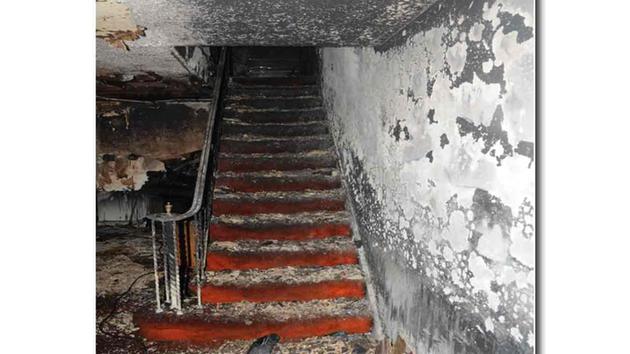
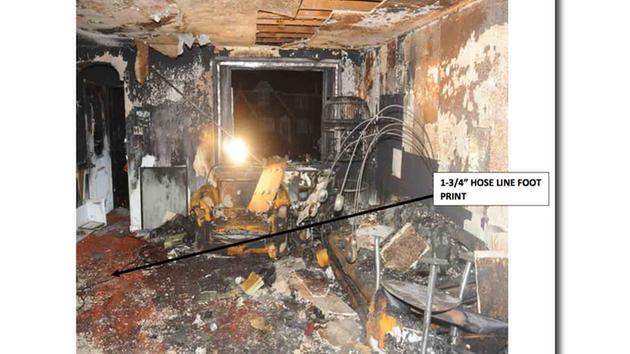
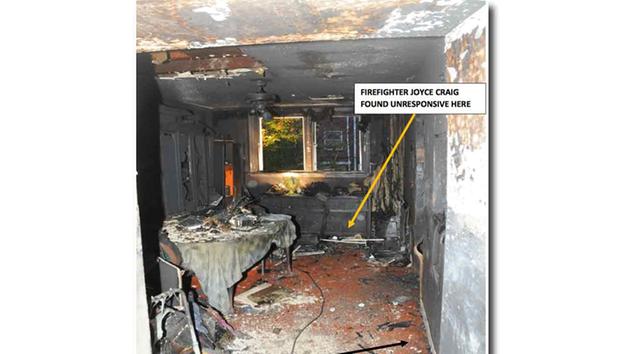
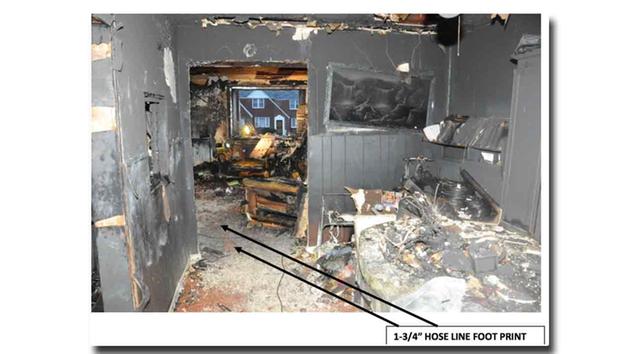
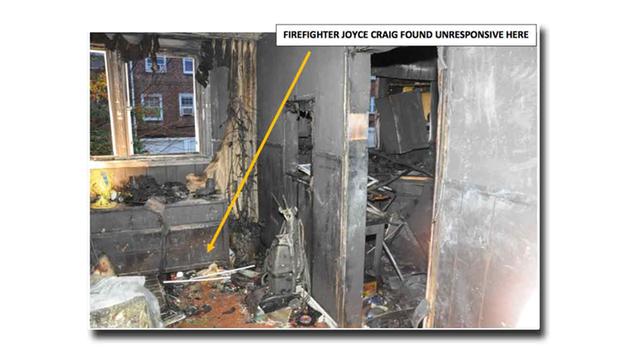
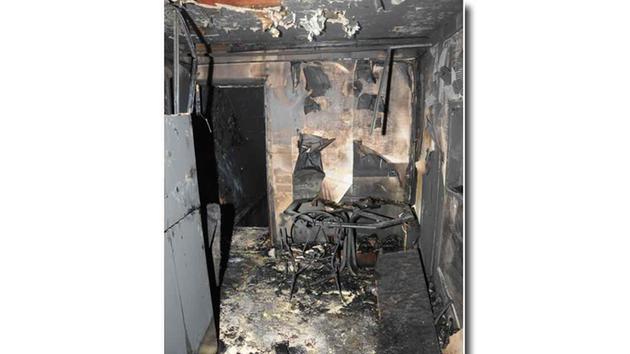
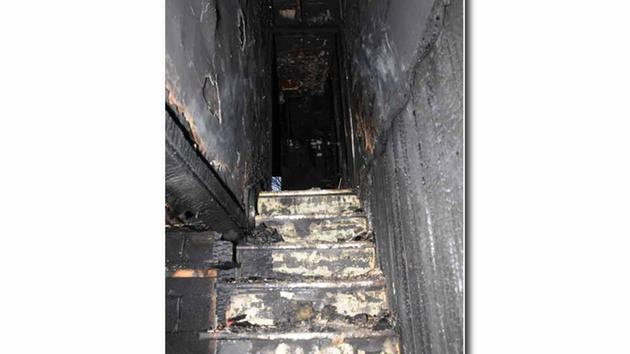
The fire department and the National Institute for Occupational Safety and Health released reports Monday about the December 2014 death of Lt. Joyce Craig.
Findings reveal the hose supplying her with oxygen was burned through during the blaze. Forty-five minutes' worth of air disappeared in just ten minutes.
And along with outdated equipment, the feds cite other fatal factors like a backup team that took 21 minutes to arrive and the controversial brownouts to cut city costs.
"We deemed this to be an unsafe environment to work in, and it was reaffirmed on the tragic night in December 2014," Local 22 Firefighters and Paramedics Union President Andrew Thomas.
Thomas says the report only proves what they had been arguing all along.
"Have those changes been dealt with? Yesm there are no more brown outs in the department, and there are no firefighter rotations. Do we need the engine and ladder companies back? Absolutely," Thomas said.
The report recommends the department should upgrade their breathing apparatus, and be trained in mayday techniques, which are already being addressed.
The report also highlights the outdated fire academy.
"You have to have a facility for classroom and on hand experience training. We don't have one. Our fire tower itself is unsafe, it can't be used operationally to burn anything," Thomas said.
More on the firefighter training and details of the report will be addressed at a press conference Tuesday morning.
A lawsuit was filed against manufacturers of the equipment last year. Lawyers representing Craig's family says Monday's report only furthers their case.


Tuesday, April 18, 2017 04:47AM
ROSEDALE, Queens (WABC) -- Two men are in critical condition after an under-riding collision between a car and a tractor-trailer in Queens Monday night.
Just after 6:30 p.m., near the intersection of Rockaway Boulevard and Brookville Boulevard in Rosedale, two people in a 2014 Dodge Charger were traveling west on Rockaway Boulevard.
Police said the Dodge struck an eastbound tractor-trailer making a left turn into Kennedy airport's Logistics Center on Rockaway Boulevard. The car was crushed beneath the truck as emergency crews raced to save the two men inside.
"The fire department tried to extricate the people from the car," said truck driver Mike Bogdan. "Chaotic scene, they broke the whole truck, the whole car and then they pulled them off."
The 23-year-old driver of the Dodge, from Far Rockaway, sustained head trauma and is in critical condition at Jamaica Hospital. His passenger, a 28-year-old man, also from Far Rockaway, is in critical condition.
A third vehicle, a 2016 Ford Expedition, was hit by flying debris.
The driver of the tractor-trailer and the 62-year-old driver of the Ford were uninjured.
============
Two seriously injured after car strikes tractor trailer near Kennedy Airport
BY Andy Mai John Annese
NEW YORK DAILY NEWS
Monday, April 17, 2017, 8:52 PM
Three people were hurt, two seriously, when a sedan collided with a tractor trailer near John F. Kennedy Airport in Queens and became trapped underneath the big rig’s wheels Monday night.
The green 18-wheeler was trying to make a left into an air freight facility on Rockaway Blvd., near Guy Brewer Blvd. in Springfield Gardens, when a Dodge sedan slammed into it just after 6:20 p.m., according to witnesses.
"The car came too fast into the trailer, it was like a big bang — forget about it!" said Mike Bogdan, 49, who was driving a truck just behind the 18-wheeler.

A car went under a tractor trailer injuring three on Rockaway Blvd., near Guy Brewer Blvd. (Ken Murray /NEW YORK DAILY NEWS)
Bogdan watched firefighters cut open the car to extract two of the people inside.
"There was blood on the hand, legs, the face... I'm shaken up just looking at it. The (truck) driver was in shock too."

The green 18-wheeler was trying to make a left into an air freight facility when a Dodge sedan slammed into it. (Ken Murray/NEW YORK DAILY NEWS)
Medics took the injured people to Jamaica Hospital, an FDNY spokesman said. The third person in the car refused medical aid at the scene, the spokesman said.

Noise Exposure Among Federal Wildland Fire FightersPosted on April 17, 2017 by George Broyles , LCDR Corey Butler, CAPT Chuck Kardous
Hearing loss is one of the most common work-related illnesses in the United States. NIOSH estimates that 22 million U.S. workers encounter noise exposures loud enough to be hazardous. Wildland fire fighting (vs. urban/ structural fire fighting), aims to suppress grass, brush, or forest fires (see Figure 1). Wildland fire fighting is considered a high-risk emergency response occupation requiring considerable physical and psychological demands. Wildland fire fighters often work 12 to more than 16 hours per shift for up to 14 consecutive days over a 3- to 9-month period [U.S. Department of Agriculture (USDA), 2008].  Figure 1. Wildland fire fighters during various fire suppression activities.
Wildland fire fighters often have extreme exposures to many physical agents and occupational hazards [Britton et al., 2013]. Similar to other high-risk occupations, research efforts and occupational safety and health programs have historically focused on identifying and preventing acute injuries and exposures, but less emphasis has been placed on research and prevention programs relating to chronic diseases or injuries such as occupational noise-induced hearing loss.
Although noise exposures and hearing loss among structural fire fighters have been well studied [Hong et al., 2008] and documented [National Institute for Occupational Safety and Health (NIOSH), 2013), wildland fire fighters have not received the same attention, nor have their noise exposures been empirically researched and studied. Wildland fire fighters may be repeatedly exposed to known sources of noise including chainsaws, aircraft, wood chippers, audio equipment, portable pumps and engine pumps, heavy equipment (e.g., bulldozers), and ambient noise from the wildfire itself.
In an effort to address noise exposures within this population, the United States Forest Service, Technology and Development Program, in partnership with NIOSH, conducted a 3-year study to assess wildland fire fighters’ noise exposures during training and fire suppression tasks and to identify which jobs put these fire fighters at increased risk for NIHL. A recently published paper by USDA and NIOSH researchers on wildland fire fighters [Broyles et al., 2016] in the Journal of the Acoustical Society of America reports on the initial results from the study, characterizes the most hazardous noise sources and job tasks based on personal dosimetry measurements, and provides specific and practical recommendations for protecting the hearing health of these fire fighters.
Noise exposure measurements were collected at 10 different fire locations during the 2014–2015 fire seasons. A total of 174 full-shift personal noise dosimetry measurements were conducted on 156 fire fighters in 14 different wildland fire fighting job categories. Overall, 85 of the 174 measurements were above the NIOSH maximum allowable daily dose. Almost all masticator/chipper operators, pilots, pump operators, leaf blowers, sawyers and swampers, and bulldozer operators had TWAs that exceeded the NIOSH recommended exposure level (REL) of 85 dBA (masticators/chippers TWAs reaching 105 dBA, sawyers and swampers TWAs reaching 106 dBA, and bulldozer operator TWAs reaching 112 dBA). Fire fighters exposed to TWA of 105–106 dBA would exceed their maximum daily limit in just 4–5 minutes. At 112 dBA, a bulldozer operator exceeded 100% noise dose in 56 seconds. Bulldozer operators received the highest possible daily noise dose, some exceeding the OSHA maximum daily dose by 20-fold and the NIOSH maximum daily dose by 500-fold. It is interesting to note that four of the bulldozer operators had TWAs well below the NIOSH REL, most likely because they operated in a closed or environmental cabs which isolated the bulldozer operator from much of the noise generated from the heavy equipment. Figure 2 contains the percentage of fire fighters’ personal dosimetry measurements that exceeded the NIOSH REL or the OSHA permissible exposure level (PEL) based on their specific activities or tasks.  Figure 2. Percentage of dosimetry samples exceeding the OSHA PEL and NIOSH REL per work category.
On the basis of these study results, wildland fire fighters may be considered at risk of noise-induced hearing loss. To prevent fire fighters from developing a hearing impairment, NIOSH recommends that all wildland fire fighters be enrolled in a hearing conservation program and that fire agencies establish and maintain fire service specific hearing loss prevention programs. In addition, the authors recommend additional studies to examine targeted approaches to mitigate risk among fire fighters with highest exposures. See the full list of recommendations and read more about the noise exposures of wildland fire fighters in our recent paper: Noise exposure among federal wildland fire fighters. If you are a wildland fire fighter or you work with wildland firefighters, please share your experiences with our readers.
George Broyles is a Fire and Fuels Project Leader with the Technology and Development Program, USDA Forest Service.
LCDR Corey Butler is an Occupational Safety and Health Specialist with the NIOSH Western States Division.
CAPT Chuck Kardous is a senior research engineer with the NIOSH Division of Applied Research and Technology.
References
Britton, C., Ramirez, M., Lynch, C. F., Torner, J., and Peek-Asa, C. (2013). “Risk of injury by job assignment among federal wildland firefighters, United States, 2003-2007,” Int. J. Occup. Environ. Health 19, 77–84. doi: https://doi.org/10.1179/2049396713Y.0000000019
Broyles, G., Butler, C.R., Kardous, C.A. (2016). “Noise exposure among federal wildland fire fighters” J. Acoust. Soc. Am. 141, EL177); doi: http://dx.doi.org/10.1121/1.4976041
Hong, O., Samo, D. , Hulea, R. , and Eakin, B. (2008). “Perception and attitudes of firefighters on noise exposure and hearing loss” J. Occup. Environ. Hyg. 5(3), 210–215. doi: https://doi.org/10.1080/15459620701880659
National Institute for Occupational Safety and Health (2013). Promoting Hearing Health among Fire Fighters. U.S. Department of Health and Human Services, Centers for Disease Control and Prevention, National Institute for Occupational Safety and Health, Cincinnati, OH. https://www.cdc.gov/niosh/docs/wp-solutions/2013-142/pdfs/2013-142.pdf
U.S. Department of Agriculture (2008). Fact Sheet – The basics of wildland firefighting. U.S. Department of Agriculture, Office of Communications Washington, DC).