MEC&F Expert Engineers

Sunday, September 13, 2015

Noise mitigation at gas compressor stations across the United States


METROPOLITAN ENGINEERING has worked on numerous assignments to model and reduce the noise (environmental and workplace) of several gas compressor stations in across the United States.

The typical project starts with input data collection by means of measuring the Sound Power Level of the main sources of the facility.  Sound power or acoustic power is a measure of sound energy per time unit.  It is the power of the sound force on a surface of the medium of propagation of the sound wave. For a sound source, unlike sound pressure, sound power is neither room dependent nor distance dependent. Sound pressure is a measurement at a point in space near the source, while sound power is the total power produced by the source in all directions. 
Sound power, denoted P and measured in W, is given by:


where:
·         f is the sound force, measured in N of unit vector u;
·         v is the particle velocity, measured in m·s−1;
·         A is the area, measured in m2;
·         p is the sound pressure, measured in Pa.


                   Table of selected sound sources
Situation and
sound source
Sound power
(W)
Sound power level
(dB ref 10−12 W)
Saturn V rocket
100,000,000
200
Turbojet engine
100,000
170
Turbofan aircraft at take-off
1,000
150
Turboprop aircraft at take-off
100
140
10
130
1
120
0.1
110
Lawn mower
Car at highway speed
Subway
.01
100
Large diesel vehicle
Heavy city traffic
0.001
90
Alarm clock
0.0001
80
Noisy office
Vacuum cleaner
10−5
70
Busy restaurant
Hair dryer
10−6
60
Quiet office
Average home
10−7
50
Refrigerator
low voice
Quiet home
10−8
40
Quiet conversation
Broadcast studio
10−9
30
Whisper
Wristwatch ticking
10−10
20
Human breath
10−11
10
Threshold of hearing
Reference Power Level
10−12
0
[1]Usable music sound (trumpet) and noise sound (excavator) both have the same sound power of 0.3 watts, but will be judged psychoacoustically to be different levels.


Sound Power and Sound Pressure
"Sound power" and "sound pressure" are two distinct and commonly confused characteristics of sound. Both share the same unit of measure, the decibel (dB), and the term "sound level" is commonly substituted for each. However, to understand how to measure and specify sound, the Motor system designer must first understand the difference between these properties.  

To obtain the maximum benefit from sound power level (Lw) ratings, an engineer must understand what Lw ratings represent and how to apply them properly. For the design engineer who is not yet familiar with the techniques of applying Lw ratings, this article may serve as a brief introduction.

Sound Power Ratings
Sound power is the acoustical energy emitted by the sound source, and is an absolute value. It is not affected by the environment. 
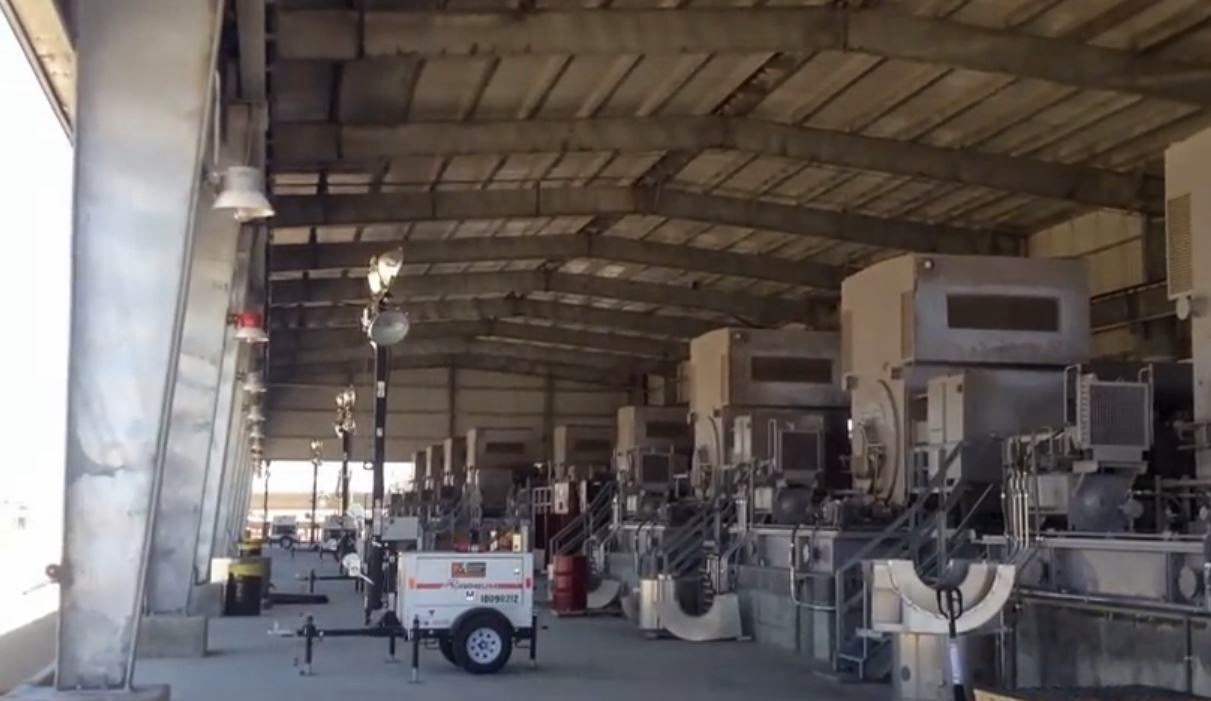
Motor Lw ratings are obtained from the determination of sound power levels generated by a motor when it is operated at no load. These sound power levels are obtained in accordance with IEEE 85. What is heard is a sound pressure level that is determined, for any particular location, by many factors, including size of the room, nature of its walls, ceilings, furnishings, etc. The pressure level at the point of hearing is also related to the distance from the sound source. The motor is the starting point, and when proper and accurate consideration is given to the other components of the system, sound power level ratings in octave bands will allow calculation of the resulting sound pressure levels in the space.  

Sound power levels are connected to the sound source and independent of distance. Sound powers are indicated in decibel. 
Lw = 10 log (W / W0)                   where:
W0 = reference power    (W)            

The normal reference level is 10-12 W, which is the lowest sound persons of excellent hearing can discern.   Sound power is measured as the total sound power emitted by a source in all directions in watts (joules / second). 


Sound Pressure Level 
Sound pressure is a pressure disturbance in the atmosphere whose intensity is influenced not only by the strength of the source, but also by the surroundings and the distance from the source to the receiver. Sound pressure is what our ears hear, what sound meters measure ... and what ultimately determines whether a design achieves quality sound.  
The sound pressure level in a space may be estimated when sufficient information is available from the Lw of motor and the acoustical characteristics of the space. A proper acoustical calculation requires the use of the motor Lw stated separately for each of the eight octave bands. Each octave band level is usually different, and the room acoustical characteristics also vary with frequency. 

Since sound measuring instruments respond to sound pressure the "decibel" is generally associated with sound pressure level.  Sound pressure levels quantify in decibels the intensity of given sound sources. Sound pressure levels vary substantially with distance from source, and also diminish as a result of intervening obstacles and barriers, air absorption, wind and other factors.

Sound Pressure Level (SPL) = 


where  po = 2x10⁻⁵ N/m2.
p = root mean square pressure  (N/m2)

The usual reference level po is 20x10-6 N/m2.  Note that the noise from motors is documented in sound power level.  "Threshold of audibility'' or the minimum pressure fluctuation detected by the ear is less than 10-9 of atmospheric pressure or about  20x10-5 N/m2 at 1000 Hz. "Threshold of pain'' corresponds to a pressure 106 times greater, but still less than 1/1000 of atmospheric pressure.  Because of the wide range, sound pressure measurements are made on a logarithmic scale (decibel scale). 


Relating Power to Pressure 
Equipment sound power ratings are determined in an acoustics laboratory, usually by the manufacturer. Specific standards qualify testing facilities and methods to promote data uniformity and objective comparisons of different units across the industry. 
By contrast, sound pressure can be measured in an existing space with a sound meter, or predicted for a space not yet constructed by means of an acoustical analysis. Since the only accurate sound data a manufacturer can provide is expressed as sound power, the challenge of designing for quality sound is to examine the effect of environmental factors. 


An Illuminating Analogy 
The following comparison of sound and light may help illustrate the distinction between these terms. Think of sound power as the wattage rating of a light bulb; both measure a fixed amount of energy. Sound pressure corresponds to the brightness in a particular part of the room; both can be measured with a meter and the immediate surroundings influence the magnitude of each. In the case of light, brightness is more than a matter of bulb wattage.  

Asking for a 90 dBA motor is a lot like asking for a “light:” you don’t know what you are going to get. Most of us are much more familiar with light than sound. If someone says he has a 100-watt light bulb, you have some idea of the candlepower available, but if you want to read by the light, you want to know the light intensity level at the reading location. To determine the light intensity level you would need to know: 
“How far away is the light?” If the light is a mile away, it is not much use. The analogous sound question is “How far away is the motor?” 
“Is the light outdoors?” With no walls to reflect the light, all but the direct light radiates out into the free field of space. The analogous sound question is “Is the motor outdoors?” 
“Are the room walls reflective if the light is not outdoors?” A room covered with black velvet would not reflect much light regardless of its size. The analogous sound question is “How reverberant are the walls?” 


Motor dBA Rating 
The term dBA applies to sound pressure. The sound pressure immediately around a motor depends on a number of variables. Sound pressure can only be calculated from the motor sound power rating when using known variables. Motor manufacturers indicate the noise level of their products by sound pressure levels expressed in dBA. These figures refer to the sound pressure levels that should be experienced by an observer at a certain distance from the motor in a given environment, which is generally assumed to be a free field. 

These values should only be used to compare noise levels of similar types of motors at the same distance, and in the same environment.  Do not assume that the dBA levels on the performance data will in any way be similar to those achieved in practice.  Depending on circumstances, they can be substantially exceeded. 

Sound Power to Pressure Conversion Rule of Thumb
TYPICAL FREE FIELD SOUND PRESSURE
VERSUS SOUND POWER LEVELS - IN dB
FRAME SERIES
POWER LEVEL
PRESSURE LEVEL @ 3 FT
PRESSURE LEVEL @ 5 FT
140
X
X - 7.8
X - 10.6
180
X
X - 8.0
X - 10.8
210
X
X - 8.2
X - 10.9
250
X
X - 8.4
X - 11.1
280
X
X - 8.8
X - 11.4
320
X
X - 9.0
X - 11.6
360
X
X - 9.2
X - 11.8
400
X
X - 9.5
X - 12.0
440
X
X - 10.9
X - 12.4
5000
X
X - 10.6
X - 12.8
5800
X
X - 11.6
X - 13.7
6800
X
X - 11.9
X - 13.9
8000
X
X - 12.5
X - 14.7
  

Calculating Sound Pressure  
Sound instruments measure only sound pressure; this pressure varies depending on the surroundings. To calculate sound pressure from sound power, one must consider all the variables that affect sound pressure. The relationship between sound power level (sound energy emitted by the motor and sound pressure (what is heard) at a specific location. 

Human Response
Ear sensitivity varies with frequency. A low frequency sound at a certain power does not seem as loud as a higher frequency sound of the identical power. To account for this difference, a weighting scale has been developed. Sound power levels adjusted by this specific weighting scale are called A-weighted. Sound power levels in eight octave bands are calculated to a single A-weighted sound power number, LWA

Free Field Ratings
Because one environment, a free field, can be easily defined, it is sometimes used to specify desired sound pressure levels. If a motor is placed on the ground in a large open field, all of its sound radiates out in a hemispherical free field with no sound reflected back. These conditions are fully defined, and it is possible to convert motor sound power to sound pressure at a specified distance. 

As distance from the motor increases, sound pressure decreases; so it is important to include distance from the motor when asking for a dBA rating.  If you specify a hemispherical free field but do not specify a distance, it is possible to make a loud motor appear quieter by calculating its sound pressure level at a distance farther away from the motor. For example, Motor A calculates to 90 dBA at a distance of 3 m (10 ft) in a hemispherical free field. Another motor, Motor B, with a sound power level 12 dB higher than Motor A, will also calculate to 90 dBA, but at 12 m (40 ft) from the motor.

Multiple Sources 
Two equal sources produce a 3 dB increase in sound power level.  Two equal sources produce a 3 dB increase in sound pressure level, assuming no interference.  Two 80 dB sources add to produce an 83 dB SPL. 

Noise Modeling
For the purpose of noise modelling the operating time of the noise sources is taken into account in every time period of the day.  The governing factors in relation to the atmospheric absorption are the relative humidity and the temperature of the air.  

To calculate the long term equivalent level as needed for noise modelling a meteorological correction will be applied. This correction is dependent on the location, and is determined by meteorological data collection and a calculation method developed by METROPOLITAN engineers.
Noise model calculations for environmental and workplace noise will be done with SoundPLAN - the market leader in noise mapping software.

The goals of the project are to determine the baseline noise level with modelling and to find cost-effective solutions for noise reduction.  In the noise reduction ActionPLAN model calculations will be used to demonstrate the effect of the proposed noise reduction measures.


Main advantages of modelling
·         cost-effectiveness: modelling can substitute hundreds of measurements
·         large possibilities: presentation of the results at any chosen location possible, any selected scenario can be modelled
·         presentation of the future: the emission load of not only present but future developments can be presented
·         presentation of the achievable noise reduction: the results of the ActionPLAN can be presented before implementation
·         noise calculations in and outside: noise coming from the outside sources can be modelled inside buildings such as control rooms, workshops, warehouses, etc.


Noise measurement 
METROPOLITAN is equipped with the latest computer-based noise measurement and data logging equipment to assess the noise impact of a wide variety of developments and activities. 
We have building acoustics instrumentation for the testing of walls and floors.
Our instrumentation can be used for both data logging (long term noise monitoring) and attended measurements, allowing noise assessments to be tailored to meet the specific needs of clients.

We have multi-channel noise measurement instrumentation so that sources can be simultaneously measured at four locations.  This can be used for environmental noise monitoring, vehicle pass-by testing and building acoustics measurements. 
Multi-channel measurement allows us to carry out noise insulation measurements according to ISO140-5 for either internal walls or for external elements such as windows, doors and facades using traffic, train and aircraft noise as sources.  

Measuring the transmission loss ratings of panels is carried out with instrumentation using speakers as sound sources (for the transmission loss of internal walls). We use transportation noise sources (eg aircraft) using ISO140 to assess the transmission loss of windows and doors installed in buildings.  Tri-axial vibration measurements are carried out using the same analyzer. 
We have designed the facades of buildings near roads and rail lines using our PC based noise instrumentation.  For a residential development adjacent to a proposed compressor station, we identified the actual nature of the problem using instrumentation that simultaneously stores the noise data on a notebook computer and makes an audio recording of the noise source for later analysis.  By making measurements before and after the compressor building insulation we were able to play an audio recording that demonstrated the reduction in noise due to the insulation as well as show the overall reduction in noise in decibels. 


Metropolitan Engineering, Consulting & Forensics (MECF)
Providing Competent, Expert and Objective Investigative Engineering and Consulting Services
P.O. Box 520
Tenafly, NJ 07670-0520
Tel.: (973) 897-8162
Fax: (973) 810-0440
We are happy to announce the launch of our twitter account. Please make sure to follow us at @MetropForensics or @metroforensics

Metropolitan appreciates your business.
Feel free to recommend our services to your friends and colleagues.


Milk tanker struck and overturned by failure-to yield car driver causing fuel spill in Pavilion, New York


Photo by Alecia Kaus/For Daily News


Posted: Sunday, September 13, 2015

By Alecia Kaus For Daily News

PAVILION, NEW YORK


A milk tanker truck headed west on Route 20 was struck by a car at the intersection of Perry road late Saturday afternoon.

The truck's fuel tank was ripped from the cab as it went off the northwest side of the road and overturned on the driver's side into a ditch.

About 75 gallons of diesel fuel spilled mostly onto the road and into the ditch.

The Oldsmobile Cutlass was headed north on Perry road and did stop at the stop sign. The driver of the car then continued on into the intersection and struck the westbound milk tanker.

The driver said she did not see the truck.

Both drivers were sent to Strong Hospital with minor injuries.

The female driver of the car had to be extricated. The driver of the truck was able to get out of his demolished cab on his own and was walking around on scene.

The driver of the car will be charged with failure to yield the right of way in an intersection.

The road remained closed late Saturday evening to offload 31,000 pounds of milk and upright the truck.

Metropolitan Engineering, Consulting, Forensics, and Environmental Remediation Services. Construction, Investigation, Remediation and Forensic Expert Engineers


Construction Defects, Construction Claims, Engineering, Property & Casualty Investigations, Assessment, Site Investigation, Remediation, Litigation and Indoor-Air Expert Engineers


Bill Stephan, PhD, PE, CIH, CHMM, JD, MBA

Principal Engineer


P.O. Box 520

Tenafly, New Jersey 07670-0520

Phone: (973) 897-8162

Fax: (973) 810-0440


______________________________________________________________________


Firm Overview


The engineering and forensic firm of Metropolitan Forensics and Consulting Engineering and Environmental Services was established for the purpose of providing a high value service to the insurance industry and to the insured companies or individuals. Our founding principal (Bill Stephan) is a licensed professional engineer in several states, including, New Jersey, New York, Pennsylvania, and Delaware.


We specialize in the in-situ remediation of petroleum and chlorinated spills, the defense of liability claims, the investigation and defense of first or third party insurance claims and the handling of subrogation claims.  We are also experts on oil and gas energy sector issues (design, investigations, construction oversight), renewable energy sector (wind turbines, solar panels, biofuels, etc), vapor intrusion evaluation, vapor phase and transport and in design on vapor mitigation systems.  Additionally, we offer forensic engineering services, including age-dating of contaminant releases, construction defects, oversight, evaluation of remedial alternatives, sub-slab ventilation system design and installation.  The list of our core services is:


  • Cause and Origin Investigations
  • Construction Failure Analysis (Residential, Industrial and Commercial)
  • Structural Integrity Evaluation
  • Site Investigation
  • Tank removals and tank installations; licensed and insured to perform entire UST work
  • In-Situ Remediation of Soil and Groundwater
  • Vapor intrusion, indoor air evaluation and mitigation
  • Causation
  • Forensic Investigations (age-dating)
  • Oversight
  • Review of Remedial Action Work Plans
  • Reserve Estimation
  • Cost Allocation
  • RAWP Preparation
  • Site Remediation
  • Cleanup Level Development and Negotiation
  • Subrogation
  • Expert Witness/Litigation Support
  • Licensed Site Remediation Professional (LSRP) Services
  • Construction Claims (Delay, Differing Site Conditions, Loss of Productivity, Acceleration, and others)

Additional Specialty Service Areas

Age Dating
Boilers & Burners
Bridges
Building Codes
Building Inspections


Construction Accident
   Reconstruction
Construction Defects
Construction Delay Claims

Construction Surety Claims
Construction Disputes
Construction Differing Condition Claims
Construction Oversight
Construction Management
Construction Acceleration Claims

Construction Failures
Construction Injuries
Contractor Performance Issues
Corrosion


Defective Designs
Defective Roadway Design
   Evaluations


Earthquake
Electrical Accidents/Injuries
Electrical Equipment Failures
Electrical Fires
Elevators, Escalators
   & Conveyors
Embedded Software Hazards
   & Analysis
Equipment Failures
Errors and Omissions
Explosions

Failure Analysis
Fire
Fire Codes
Fire Protection Systems
Fire Suppression Systems

Flood Damage Assessment

Foundation Systems

Gas Systems

Hailstorm damage

Heating & Ventilation Systems
Heavy Construction
Highway/Roadway Design
Human Factors


Indoor Air Quality
Laboratory Services
Ladders, Scaffolding Falls
   & Failures
Lightning

Mechanical Defect Evaluations
Metallurgical Age Dating
Mold Causation
Natural Disasters/Weather
   Related Issues
Nuclear Energy
Occupational Hazards
   & Illness

Piping
Playground Equipment Injuries
Plumbing
Product Failures
Roofing Problems & Failures
Safety Codes
Safety & Human Factors
   Engineering
Scalding
Scene Mapping and Photographs
Sick Building Syndrome
Sports Equipment Injuries
Standardized Codes
Steam Systems
Subrogation Issues


Transportation Issues
Trips, Slips & Falls
Underground Storage Tanks
Utilities Expertise
Vibration
Water Damage
Windstorm


Mission Statement


Our mission is to work as an extension of our clients to expeditiously achieve the most economically favorable resolution of claims on their behalf and on behalf of their insured. We have developed and will continue to create new solutions to the technical problems and issues which are facing the insurance industry and the insureds today.  

Metropolitan provides forensic engineering work (age-dating or fingerprinting), site remediation, auditing, cost control and litigation support services to insurance carriers, their insureds and to private or public companies.  In its risk management role, examines, manages and audits environmental claims to ensure that assessment and remediation services provided to both carriers and policy holders are reasonable and necessary, properly rendered and appropriately charged. 


In its litigation support role, Metropolitan assists carriers and their counsel to ensure that litigious disputes are resolved fairly and reimbursement benefits are provided when appropriate.  The corporations service area includes the entire United States, with our corporate office located in Northern New Jersey.  The Firm's professional staff also travels regularly throughout the United States on assignment.


Forensics at Metropolitan


There are many issues associated with disputes over responsibility for cleanup. Who, what, when, where, and how chemicals were released can be investigated. The tools of forensic investigation include mathematical models, statistical models, fate and transport calculations, chromatography, lead isotope analyses, time of travel assessments, library search site characterization, tracer additives, and recently developed software applications.


Effective forensic project management should include an evaluation of multiple forensic tools based on site specific circumstances. The process of evaluation and the ultimate selection of the forensic tool are critical to a successful outcome. When project budgets allow, combining forensic methods for corroborative evidence can substantially strengthen your client’s position in an effort to prevent or support litigation. The effective forensic consultant must be well acquainted with an ever expanding list of analytical methods, environmental regulations, assessment procedures and remedial technologies.


The forensic field is one that utilizes a wide range of scientific tools to identify and characterize complex adverse environmental events. Some of the scientific disciplines involved in forensics include engineering principles (biological, physical and chemical), hydrology, lithology, geology, site history, site practices, mathematics, and statistics. These areas may be combined with technologies such as respiratory analyses, chromatography/mass spectrometry and chemical fingerprinting methods to answer complex questions with the ultimate goal of establishing responsibility for a particular event. Accurate, defensible forensic analyses are an essential component of any strategy that attempts to resolve the extent of the insurer or insured client responsibilities in the cleanup of contaminants.


Contact us online or call 973-897-8162 to learn more about our forensic services.


Property Damage Services at Metropolitan

Metropolitan assists property owners, claims professionals, businesses, and attorneys in   the assessment of the cause & origin (C&O), extent of damage and required restoration after pipe bursts, settlements, manufacturing and construction failures, fire, flood, earthquake, or storm damage.  Our teams of engineers have extensive experience in the many systems that make up a building including structural, mechanical and electrical systems.   We also have the necessary background to evaluate property damage to items such as communications towers or solar panels. We can help determine alternative, appropriate, and cost effective solutions for repair or restoration of any damaged property, both commercial and residential. 

Providing Competent, Expert and Objective Investigative Engineering and Consulting Services.

Our experts are multi-skilled, competent, and objective professionals who apply their analytical and common sense skills to reconstruct, determine the root cause, and document the events that give rise to property, casualty, and liability claims.  Thorough investigations and detailed measurements/research help us distinguish between pre-existing conditions and sudden and accidental losses.


Our investigations are:

·         Comprehensive & Accurate

·         Legible & Easy to Understand

·         Timely Performed

·         Delivered Quickly

·         Cost Effective

·         Clear & Concise

·         Developed by Professionals

·         Dependable

·         Our own uniform reporting system saves time and money.


Our Fast Track Investigation and Uniform Format Reporting systems allow us to conduct and deliver a comprehensive response to the assigned claim.  In most cases, we will obtain findings based on a site visit, visual observations, photographs, interviews, and field measurements.  Further investigations and testing will be provided upon request and approval by the client.


Forensic Investigation of Property Damage Claims

Metropolitan Consulting, Engineering & Forensics understands your need to complete a claim investigation accurately and efficiently as possible.  Whether it is accident reconstruction, damage due to environmental forces such as wind, water, hail, snow, tornado, etc.; fire origin & cause investigation or any other claim, the engineers at Metropolitan understand both you and your client want to resolve the claim.  The analysis you receive from Metropolitan will be accurate and complete, giving you the information needed in the claim adjustment and analysis.

Our services have extended beyond the forensic analysis phase into the remediation and repair phase of many large loss claims.  Upon the completion of the cause and origin (C&O) investigation, Metropolitan can provide our clients with complete working drawings and specifications needed to repair or rebuilt damaged buildings or other structures.  Metropolitan Consulting & Engineering’ staff possesses many-many years of experience in rehabilitation design, construction management, and project oversight to ensure the loss is restored in a timely and cost-effective manner without sacrificing quality.  Building code knowledge allows us to identify possible code upgrades as needed.  Metropolitan understands constructability and realizes making an insured whole goes beyond forensic investigation and design. We pride ourselves in providing practical solutions contractors can understand and follow.

At the forefront of available technology, we provide professionals and staff capable of handling a variety of engineering evaluations.  Our reports are clear, concise, complete and efficiently produced.  Our engineering objectives are achieved in an ethical manner consistent with the traditions and character of engineering professionals.

Contact us online or call 973-897-8162 to learn more about our property damage services.


Extensive Experience helping Sureties

Metropolitan also has extensive experience helping sureties fulfill their bond obligations resolve disputes after a contractor has defaulted.  This work includes the evaluation of contractor bid pricing, evaluation of the contractor’s ability to perform work, risk assessment, evaluation of termination, construction completion services, claim and litigation support services, loss recovery services, evaluation of payment bond claims, negotiation and settlement of payment bond claims, and construction defects investigation services.  Metropolitan has provided these services for commercial, development, educational, and assisted living projects.

Construction is a business fraught with risk.  Disputes over even the smallest of issues can quickly escalate, with crippling consequences to the project and the parties.  Over the years, the construction industry has developed various methods of contractually allocating the risk of project delay and disruption.  Some of these methods include liquidated damages provisions, "no damages for delay" clauses, mutual waivers of consequential damages, provisions that limit liability, claims notice provisions, and provisions addressing responsibility for the adequacy of the construction plans and specifications.  Parties frequently litigate the sufficiency of these risk-shifting efforts in conjunction with the underlying merits of delay and disruption disputes.
Construction Claims & Disputes
The most frequently encountered claims include:
1.            Construction Delay Claims
2.            Disruption and Loss of Labor Productivity Claims
3.            Design and Construction Defect Claims
4.            Force Majeure Claims
5.            Acceleration or Compression of the Schedule Claims
6.            Suspension, Termination and Default Claims
7.            Differing Site Conditions Claims
8.            Change Order and Extra Work Claims
9.            Cost Overrun Claims
10.         Unacceptable Workmanship or Substituted Material Claims
11.         Non-payment Claims (stop notice (or Notice to Withhold) claims, mechanics’ lien (only for private construction projects) and payment bond claims)


Forensic Engineering Experience Case Studies


Metropolitan staff has developed and utilized scientific methods to assist clients in a variety of ways related to their claim issues. The following is a partial list of such projects:

  • Provided expert witness services for plaintiff seeking remediation of contaminated groundwater that caused indoor air inhalation problems;
  • Testified that engineering and scientific evidence was improperly collected and analyzed and was inadequate to show the age of the release;
  • Origin and cause of retaining wall failures.  
  • Lightning damage to structures or electrical systems and equipment
  • Roof failure or collapse as a result of accumulated load, additional weight and snow drift at hundreds of commercial and residential properties.
  • Demonstrated that solvents in groundwater at client's property originated from off-site dry-cleaner and that client's site actually provided remediation for the off-site release of dry cleaning solvent;
  • Expert witness for property owner impacted by industrial waste disposal from industrial manufacturer;
  • Demonstrated that environmental analysis by a previous consultant for a manufacturing site was inadequate; as a result, the lender's concerns were alleviated and financing proceeded;
  • Chemical "age-dating" and contaminant transport analyses of petroleum in groundwater at a gas station showed that contaminants originated from other parties;
  • Age-dated petroleum release at a former gas station to show that the previous owner of the gas station caused groundwater contamination;
  • Age-dated petroleum releases at an industrial facility to show that the on-site plume was the result of an off-site source;
  • Prepared age-dating reports for over one-hundred residential fuel oil spills;
  • Assisted insurance companies attorneys in defending subrogation claims; was able to demonstrate that the forensic data collected by the first party consultant were collected and analyzed using invalid methods;
  • Demonstrated that structural damage to a residence was from a source other than the alleged high lake level
  • Collected evidence (for the primary responsible party) that identified other responsible parties to share in the cost of a Superfund cleanup;
  • Review of the site data at a bulk petroleum facility indicated that the site releases were not the result of regular oil transfer operations and that they were caused by the negligent actions of the insured’s agents; the case was settled in favor of the insurance company;
  • Was able to demonstrate that the majority of the removal actions at petroleum release sites were neither reasonable nor necessary; as a result of our opinion, the insurance client settled the claim in favorable terms;
  • At several drycleaner sites we were able to demonstrate that the age of the release was much earlier than the parties originally believed; as a result, the insurance client settled the claim at a fraction of the alleged liability;
  • We performed numerous flood and wind damage assessments at commercial and residential properties.
Contact us online or call 973-897-8162 to learn more about our forensic engineering services.


Site Remediation Services


 Characterizing and remediating contaminated sites involve some of the most complex and difficult issues for environmental lawyers and their clients. Problem areas include responding to regulators; negotiating enforcement settlements; negotiating or litigating cost allocation and recovery claims; working with the insured or insurer client, lawyers and regulators to develop efficient, cost-effective remediation approaches; and selling, buying, or developing contaminated properties.


Metropolitan staff has developed and applied an innovative approach to the use of sodium persulfate for the sequential in-situ treatment of subsurface contaminants through chemical oxidation followed by enhanced biological degradation through sulfate reduction. This approach has broad applicability to a wide range of contaminants, and shows strong cost-saving benefits through reducing the initial volume of chemical oxidant necessary and enhancing the in-situ biological degradation of contaminants.


Through proper subsurface geochemical characterization and chemical dosing design, the approach focuses on utilizing the oxidant for immediate mass reduction at the source area, followed by degradation or polishing of the residual contamination using sulfate reducing bacteria.  Depending upon the oxidant activation method, this approach is applicable to petroleum hydrocarbons including both volatiles and PAHs, chlorinated volatile organic compounds (CVOCs) including chlorinated ethene, ethane and methane groups, as well as PCBs.


Contact us online or call 973-897-8162 to learn more about our Site Remediation Services.


Vapor Intrusion and Indoor-Air Studies


Vapor intrusion has received increased attention over the last few years near contaminated sites because some contaminants have the potential to migrate into nearby buildings and negatively affect indoor air quality. The accumulation of these volatile vapors in buildings can result in significant safety and health concerns.
To properly evaluate vapor intrusion a thorough evaluation of the building's ventilation system and subsurface conditions needs to be conducted by a knowledgeable professional in accordance with state and federal established procedures. 
The evaluation process typically includes a thorough building chemical inventory, the advancement of soil gas probes and the collection of soil gas samples. When indoor air quality problems are identified they can normally be resolved through the modification/installation of a properly designed ventilation system.
Metropolitan is well experienced with U.S. EPA and State vapor intrusion investigation techniques. We have completed numerous vapor intrusion and indoor air quality studies at commercial and residential properties. We have the experience to identify and resolve indoor vapor intrusion problems and the practical know-how to resolve indoor quality issues in an efficient and cost effective manner.
Contact us online or call 973-897-8162 to learn more about our Vapor Intrusion and Indoor Air Studies.


Metropolitan Engineering, Consulting, Forensics, and Environmental Remediation Services.

Construction, Investigation, Remediation and Forensic Expert  Engineers

P.O. Box 520

Tenafly, New Jersey 07670-0520

Ph.: (973) 897-8162

Fax: (973) 810-0440


Contact: Dr. Bill N. Stephan, PhD, PE, JD, CIH, MBA, CHMM


Insurance claim examiners, insureds, insurers, insurance adjusters and risk managers use Metropolitan for determining cause, evaluating the extent of damage, determining the age of the release, separating unrelated damage, analyzing loss scopes and managing restoration data, determining costs to repair, restore or replace, and preparing for insurance appraisals.


Attorneys call on Metropolitan for help when preparing for Litigation and Alternative Dispute Resolution such as arbitration and mediation


At least 85 people killed, 100+ injured when a cooking gas cylinder blew up in a crowded restaurant in central India


Saturday, September 12, 2015

NEW DELHI | By Sanjeev Miglani and Tommy Wilkes


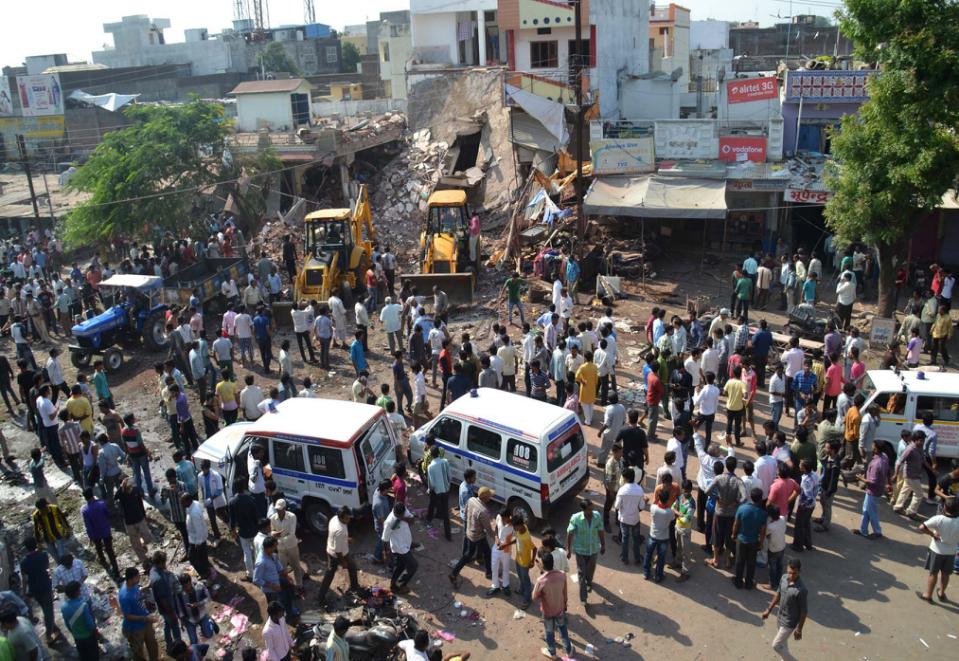
At least 85 people were killed when a cooking gas cylinder blew up in a crowded restaurant in central India on Saturday, triggering a second blast of mining detonators stored illegally nearby, police said.

The explosions tore through the restaurant as labourers sat down for breakfast during the morning rush hour in the town of Petlawad, about 800 km (500 miles) south of New Delhi, Inspector Mewa Lal Gaur told Reuters.

Gaur said people who had gathered outside the restaurant after the initial blast were caught in a second explosion when gelatin sticks stored in a nearby building caught light, blew up and buried scores of people as the roof caved in.

"When the first blast took place in the gas cylinder many people collected there to watch and see what had happened. Then there was a secondary blast," Gaur said, adding the explosion was so powerful it damaged adjacent buildings and ripped out nearby windows.


Bodies lay amid the rubble of the collapsed restaurant, which was located next to a busy junction, and twisted motorcycles and debris were strewn outside, as a crowd of onlookers searched for survivors.

Police said the death toll had risen throughout the day as rescue workers continued to pull bodies from under the rubble, but that they had now recovered all the dead and injured from the scene.

Arun Sharma, a local medical officer, said 87 people had been killed. Around 100 people were also injured in the blast, and 15 of them were in a serious condition, he said.

The accident is one the deadliest to hit India in recent years.

"This is a tragic incident, which has shook me. The causes of the incident will be investigated," Madhya Pradesh's chief minister Shivraj Singh Chouhan told local television channels.

Chouhan has announced 200,000 rupees ($3,000) in compensation for the families of those killed and 50,000 for those injured, media reported.

Gaur said the detonators, which are used for construction activity, mining and digging wells, should not have been kept in the room near to the restaurant and it was illegal to do so even if the owner was given a licence.

The district surrounding Petlawad is home to a number of manganese and bauxite mines.

(additional reporting by Karen Rebelo in MUMBAI; writing by Tommy Wilkes; Editing by Ros Russell)