MEC&F Expert Engineers

Tuesday, March 9, 2021

Christopher Stuck, 56 of South Windsor, Connecticut Died In Construction Collapse Inside Cambridge, Mass. Parking Garage


March 05, 2021

The Associated Press

The construction worker who died when a concrete stairwell collapsed at a city-owned parking garage in Cambridge, Massachusetts, this week has been identified by authorities as a Connecticut man.

Christopher Stuck, 56 of South Windsor, Connecticut, was apparently removing the metal railings on a stairway located on the fourth floor of the building during a restoration project on Tuesday morning when it collapsed, according to a statement Thursday from the office of Middlesex District Attorney Marian Ryan.

Get up to speed on the local coronavirus outbreak and other news Boston is talking about. Add our daily newsletter to your morning routine. Sign up now.

Stuck fell and was pinned by the fallen stairway on the second floor, the statement said. He was pronounced dead at the scene. Autopsy results are pending.

Another worker, a 41-year-old man, sustained critical injuries and remains hospitalized.

The accident is under investigation by state authorities as well as the federal Occupational Safety and Health Administration, but foul play is not suspected, authorities said.

The accident occurred a week after two construction workers were killed in downtown Boston when they were struck by a truck during sewer work.


======================


One construction worker was killed and a second was critically injured in Cambridge, Massachusetts, on Wednesday morning when a section of the concrete stairwell in a city-owned parking garage collapsed, authorities said.

“At least a ton” of steel and concrete fell during the collapse of the second-story stairwell, which was undergoing repairs, acting Fire Chief Gerard Mahoney said during a news conference.

No names were released but the man who died at the scene was 56, while a 41-year-old man was taken to the hospital with critical injuries, according to a statement from the Middlesex district attorney. Mahoney described it as a chest injury.

No one else was in the stairwell at the time, but the garage has remained open during the work.

The fire department reported that it responded to the scene at about 8:30 a.m. for a “structure building collapse.”

Both men were employed by a subcontractor.

State and local authorities as well as the federal Occupational and Safety Health Administration are investigating.

The accident occurred a week after two construction workers were killed in downtown Boston when they were struck by a truck during sewer work.


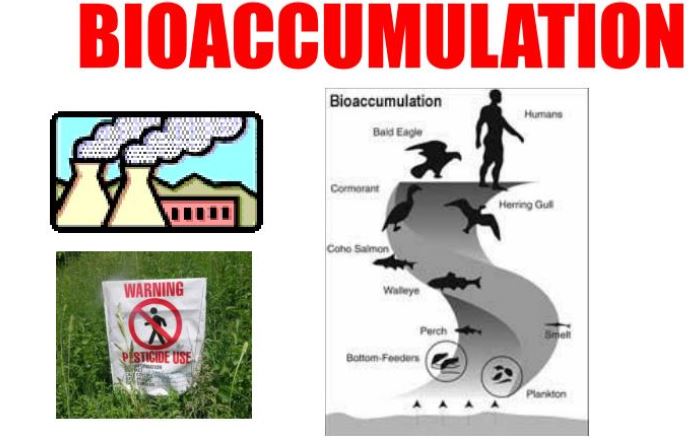
Persistent, bioaccumulative and toxic (PBT) chemicals


EPA Seeks Public Comment on Protecting Human Health and the Environment from PBT Chemicals


WASHINGTON (March 8, 2021) — Today, in accordance with Biden-Harris Administration executive orders and directives, the U.S. Environmental Protection Agency (EPA) is asking for additional public input on five final rules for persistent, bioaccumulative and toxic (PBT) chemicals issued on January 6, 2021 under the Toxic Substances Control Act (TSCA). These rules, which went into effect last month, address exposure to toxic chemicals that remain in the environment for long periods of time and build up in the body. 

“These rules are intended to provide critical health protections for Americans, including children, workers, other potentially at-risk groups, and the environment,” said Michal Freedhoff, Acting Assistant Administrator for the Office of Chemical Safety and Pollution Prevention. “Re-examining these rules under the Biden-Harris Administration and making any necessary changes to them will ensure we’re delivering on the promise to protect human health and the environment by reducing exposure to toxic chemicals.”

As a first step in its efforts to immediately review these rules, EPA is opening a 60-day comment period for the public to provide new input on:

  • Whether the rules sufficiently reduce exposure to these chemicals, including exposures to potentially exposed or susceptible subpopulations, and the environment.
  • Newly-raised compliance issues associated with the final rule on phenol, isopropylated phosphate (3:1) (PIP (3:1)) including the compliance dates for certain regulated articles.
  • Whether to consider additional or alternative measures or approaches.

This review is being done in accordance with the Protecting Public Health and Environment and Restoring Science to Tackle to Climate Crisis Executive Order, which asks all agencies to review their actions to ensure that they meet statutory obligations, are guided by the best available science, ensure the integrity of federal decision-making, and protect human health and the environment.

EPA will use the feedback received during this public comment period to determine the best path forward, which could include amending the current rules to include additional or alternative exposure reduction measures or extending compliance dates for certain regulated products and articles. Upon publication of the Federal Register notice, EPA will accept public comments in docket EPA-HQ-OPPT-2021-0202 on www.regulations.gov for 60 days.


As noted above, the notice seeks comment on newly-raised issues associated with the March 8, 2021, compliance date for the prohibitions on processing and distribution of Phenol, Isopropylated Phosphate (3:1) (PIP (3:1)) for use in articles, and the articles to which PIP (3:1) has been added. Stakeholders recently informed EPA that the prohibition on processing and distribution of PIP (3:1) could impact articles used in a wide variety of electronics, from cell phones, to robotics used to manufacture semiconductors, to equipment used to move COVID-19 vaccines and keep them at the appropriate temperature. Stakeholders note that the complexity of international supply chains makes locating the presence of, and finding alternatives to, PIP (3:1) in components challenging. They assert that an extension to the compliance deadline is necessary to avoid significant disruption to the supply chain for a wide variety of articles. It was not EPA’s intent during the development of the rule to have such a broad disruptive impact. Thus, EPA is also announcing its expectation that this specific issue will be addressed as part of the broader re-examination of these rules. Based in part on the information collected as part of the effort announced today, EPA intends to extend compliance dates as necessary for the prohibitions on processing and distribution of PIP (3:1) for use in some articles, and some of the articles to which PIP (3:1) has been added.

For these same reasons, EPA is issuing a temporary 180-day “No Action Assurance” indicating that the agency will exercise its enforcement discretion regarding the prohibitions on processing and distribution of PIP (3:1) for use in articles, and the articles to which PIP (3:1) has been added. The agency is taking this action to ensure that the supply chain of these important articles is not interrupted while EPA continues to collect the information needed to best inform subsequent regulatory efforts and allow for the issuance of a final agency action to extend the March 8, 2021, compliance date as necessary.  

Metropolitan Engineering Consulting and Forensics Forensic and Remediation Expert Engineers


Metropolitan Engineering Consulting and Forensics

Forensic and Remediation Expert Engineers


40 County Road

Closter, New Jersey 07670

Phone: (201) 293-6064

E-mail: metroforensic@gmail.com

______________________________________________________________________

Firm Overview

The engineering and forensic firm of Metropolitan Environmental Services was established for the purpose of providing a high value service to the insurance industry.  We specialize in the defense of liability claims, the investigation and defense of first party insurance claims and the handling of subrogation claims.  Additionally, we offer forensic engineering services, including age-dating of contaminant releases, oversight, evaluation of remedial alternatives, sub-slab ventilation system design and installation.  The list of our core services is:

Metropolitan’s professional staff provides services in the following areas of practice:

  • Site Investigation
  • Causation
  • Forensic Investigations (age-dating)
  • Oversight
  • Review of Remedial Action Work Plans
  • Reserve Estimation
  • Cost Allocation
  • RAWP Preparation/Site Remediation
  • Subrogation
  • Expert Witness/Litigation Support


Mission Statement

Our mission is to work as an extension of our clients to expeditiously achieve the most economically favorable resolution of claims on their behalf and on behalf of their insured. We have developed and will continue to create new solutions to the technical problems and issues which are facing the insurance industry today.  

Metropolitan provides forensic engineering work (age-dating or fingerprinting), site remediation, auditing, cost control and litigation support services to insurance carriers.  In its risk management role, examines, manages and audits environmental claims to ensure that assessment and remediation services provided to both carriers and policy holders are reasonable and necessary, properly rendered and appropriately charged. 


In its litigation support role, Metropolitan assists carriers and their counsel to ensure that litigious disputes are resolved fairly and reimbursement benefits are provided when appropriate.  The corporations service area includes the entire United States, with our corporate office located in Northern New Jersey.  The Firm's professional staff also travels regularly throughout the United States on assignment.


Forensics at Metropolitan


There are many issues associated with disputes over responsibility for cleanup. Who, what, when, where, and how chemicals were released can be investigated. The tools of forensic investigation include mathematical models, statistical models, fate and transport calculations, chromatography, lead isotope analyses, time of travel assessments, library search site characterization, tracer additives, and recently developed software applications.


Effective forensic project management should include an evaluation of multiple forensic tools based on site specific circumstances. The process of evaluation and the ultimate selection of the forensic tool are critical to a successful outcome. When project budgets allow, combining forensic methods for corroborative evidence can substantially strengthen your client’s position in an effort to prevent or support litigation. The effective forensic consultant must be well acquainted with an ever expanding list of analytical methods, environmental regulations, assessment procedures and remedial technologies.


The forensic field is one that utilizes a wide range of scientific tools to identify and characterize complex adverse environmental events. Some of the scientific disciplines involved in forensics include engineering principles (biological, physical and chemical), hydrology, lithology, geology, site history, site practices, mathematics, and statistics. These areas may be combined with technologies such as respiratory analyses, chromatography/mass spectrometry and chemical fingerprinting methods to answer complex questions with the ultimate goal of establishing responsibility for a particular event. Accurate, defensible forensic analyses are an essential component of any strategy that attempts to resolve the extent of the insurance client responsibilities in the cleanup of contaminants.

Forensic Engineering Experience Case Studies

Metropolitan staff has developed and utilized scientific methods to assist clients in a variety of ways related to their claim issues. The following is a partial list of such projects:

  • Provided expert witness services for plaintiff seeking remediation of contaminated groundwater that caused indoor air inhalation problems;
  • Testified that engineering and scientific evidence was improperly collected and analyzed and was inadequate to show the age of the release;
  • Demonstrated that solvents in groundwater at client's property originated from off-site drycleaner and that client's site actually provided remediation for the off-site release of dry cleaning solvent;
  • Expert witness for property owner impacted by industrial waste disposal from industrial manufacturer;
  • Demonstrated that environmental analysis by a previous consultant for a manufacturing site was inadequate; as a result, the lender's concerns were alleviated and financing proceeded;
  • Chemical "age-dating" and contaminant transport analyses of petroleum in groundwater at a gas station showed that contaminants originated from other parties;
  • Age-dated petroleum release at a former gas station to show that the previous owner of the gas station caused groundwater contamination;
  • Age-dated petroleum releases at an industrial facility to show that the on-site plume was the result of an off-site source;
  • Prepared age-dating reports for over one-hundred residential fuel oil spills;
  • Assisted insurance companies attorneys in defending subrogation claims; was able to demonstrate that the forensic data collected by the first party consultant were collected and analyzed using invalid methods;
  • Demonstrated that structural damage to a residence was from a source other than the alleged high lake level
  • Collected evidence (for the primary responsible party) that identified other responsible parties to share in the cost of a Superfund cleanup;
  • Review of the site data at a bulk petroleum facility indicated that the site releases were not the result of regular oil transfer operations and that they were caused by the negligent actions of the insured’s agents; the case was settled in favor of the insurance company;
  • Was able to demonstrate that the majority of the removal actions at petroleum release sites were neither reasonable nor necessary; as a result of our opinion, the insurance client settled the claim in favorable terms;
  • At several drycleaner sites we were able to demonstrate that the age of the release was much earlier than the parties originally believed; as a result, the insurance client settled the claim at a fraction of the alleged liability.


Site Remediation Services


Characterizing and remediating contaminated sites involve some of the most complex and difficult issues for environmental lawyers and their clients. Problem areas include responding to regulators; negotiating enforcement settlements; negotiating or litigating cost allocation and recovery claims; working with the insurance client, lawyers and regulators to develop efficient, cost-effective remediation approaches; and selling, buying, or developing contaminated properties.


Metropolitan staff has developed and applied an innovative approach to the use of sodium persulfate for the sequential in-situ treatment of subsurface contaminants through chemical oxidation followed by enhanced biological degradation through sulfate reduction. This approach has broad applicability to a wide range of contaminants, and shows strong cost-saving benefits through reducing the initial volume of chemical oxidant necessary and enhancing the in-situ biological degradation of contaminants.


Through proper subsurface geochemical characterization and chemical dosing design, the approach focuses on utilizing the oxidant for immediate mass reduction at the source area, followed by degradation or polishing of the residual contamination using sulfate reducing bacteria.  Depending upon the oxidant activation method, this approach is applicable to petroleum hydrocarbons including both volatiles and PAHs, chlorinated volatile organic compounds (CVOCs) including chlorinated ethene, ethane and methane groups, as well as PCBs.


Metropolitan Engineering Consulting and Forensics

Forensic and Remediation Expert Engineers


40 County Road

Closter, New Jersey 07670

Phone: (201) 293-6064

E-mail: metroforensic@gmail.com


Insurance claim examiners, insurance adjusters and risk managers use Dr. Stephanatos’ services for determining cause, evaluating the extent of damage, determining the age of the release, separating unrelated damage, analyzing loss scopes and managing restoration data, determining costs to repair, restore or replace, and preparing for insurance appraisals.


Attorneys call on Dr. Stephanatos for help when preparing for litigation and Alternative Dispute Resolution such as arbitration and mediation


https://sites.google.com/site/metropolitanenvironmental/


Monday, March 8, 2021

Construction Workers Jordan Romero, 28, and Carlos Gutierres, 32 were crushed to death by an Atlantic Coast Utilities, LLC truck in Boston


                                              Jordan Romero, 28, crushed to death by truck


Construction Workers Jordan Romero, 28, and Carlos Gutierres, 32 were crushed to death by an Atlantic Coast Utilities, LLC truck in Boston


By

Dialynn Dwyer, Boston.com Staff

February 25, 2021

Two families are mourning the loss of loved ones and authorities are investigating after a “tragic incident” at a construction site in Boston on Wednesday morning left two workers dead. 

 “We will work tirelessly to understand how this happened in order to create safer conditions in the future,” Boston Mayor Marty Walsh said in the hours after the tragedy. 

Investigators have said they are still in the process of determining the exact series of events that resulted in the deaths of the two men, whose identities have not been released by authorities. Family members have identified the two workers as Jordan Romero, 28, and Carlos Gutierres, 32. 

Below, what we know about the incident at the construction site that claimed the lives of the two young men. 

What authorities have said happened 

At a press conference on Wednesday, officials said first responders were called to the scene near 190 High St. around 8 a.m. for reports that pedestrians had been struck by a truck. 

Upon arrival at the scene, first responders located the bodies of two men in a hole in the street. The two workers were pronounced dead at the scene. 

Boston Fire Commissioner John Dempsey told reporters that when the department arrived at the scene, firefighters initially prepared to be engaged in a technical, confined space rescue. 

Once the scene was made safe, a firefighter and member of EMS were lowered into the hole to “assess” the two men, at which time the operation switched from a rescue effort to a recovery, Dempsey said.

The commissioner said rescuers had to move a truck before they lowered the two rescuers into the hole.

Boston Police Superintendent-in-Chief Greg Long said Wednesday that police were still working to determine the exact timeline and series of events that resulted in the tragedy, and were interviewing witnesses and reviewing surveillance footage. An exact “blow-by-blow” of what occurred could not be provided, he said.

Jared Petruzzella, who owns a barbershop near the construction site on High Street, told The Boston Globe he was waiting for his first appointment of the day to arrive when he saw a truck start, rev its engine, and grind into gear before it jolted backward, striking two men who were sitting over the construction hole. 

“It was pretty gruesome, pretty tragic,” he told the newspaper. “It didn’t look like anything collapsed on them inside. … It was a panic. It wasn’t a good scene.”

Family members of the deceased workers told the Globe the mattress-sized hole was about 20 feet deep. 

The investigation into the incident is being directed by Suffolk District Attorney Rachael Rollins, in conjunction with police and the federal Occupational Safety and Health Administration.

Rollins said Wednesday that it was not yet clear whether any crime took place, but she was prepared to partner with the other agencies in the investigation, as when two workers were killed in a South End trench collapse in 2016.

“We know that it’s a tragedy,” Rollins said of the Wednesday incident.

In a statement Wednesday, Walsh said the city immediately suspended Atlantic Coast Utilities’ only other permitted construction site in Boston, saying the company will not be allowed to perform work in the city until “a thorough investigation is complete.”

Atlantic Coast Utilities is a limited liability company (LLC) located at 100 State St, Ste 900 in Boston, Massachusetts that received a Coronavirus-related PPP loan from the SBA of $70,240.00 in May, 2020.

“As a former laborer, the safety of our workers is of paramount importance to me,” Walsh said. “I’m heartbroken that two hardworking people lost their lives so suddenly and tragically.”

According to the Globe, Atlantic Coast Utilities had been doing an emergency sewer repair for LDJ Development at 190 High St. 

The company has been cited “multiple times” for violating workplace standards in recent years, a spokesperson for OSHA told the Globe. The federal agency reportedly suggested Atlantic Coast Utilities be fined $34,920 in 2016 for one “willful” and two “serious” violations, but the company did not pay the penalties. According to the Globe, in 2019 the company contested citations from OSHA totaling $7,502 for allegedly failing to provide safety instructions to workers and allegedly violating safety rules. 

The company had no citations or violations in 2020, OSHA told the Globe. But the newspaper found in a review of U.S. Department of Transportation data that 15 vehicles operated by Atlantic Coast Utilities failed highway safety inspections almost 27 percent of the time, above the 21 percent national average for vehicle inspections of similar companies. 

According to the Globe, drivers for the company were twice ordered off the road due to licensing issues. 

MassCOSH, a local worker safety group, called the deaths of the two men “preventable” in a statement on Wednesday. The group said Atlantic Coast Utilities’ record with  OSHA “raises serious questions regarding Boston’s Inspectional Services permitting process.”

“It is unclear at this time if the City did not conduct due diligence in awarding the permit or if Atlantic Coast Utilities failed to submit, or submitted incorrect information during the permitting process … One way to ensure that workers are safe is to prevent companies that have failed to protect their employees from receiving public contracts and/or permits,” the group said. 

On Thursday, Walsh in a statement again reiterated that the company will not be allowed to perform work in the city until an investigation into the fatal incident is complete. 

“No worker should ever have to worry about their safety or well-being at the job site,” Walsh said. “We need to understand what happened, so we can create safer conditions in the future.”

What we know about the victims 

While authorities have not released the names of the two workers who were killed, family members are speaking out and sharing memories of the two men. 

Jordan Romero, 28, of Lynn, was an employee of Atlantic Coast Utilities working on the private sewer line repair, his 23-year-old sister, Leslie Villalobos, told the Globe

She described her brother as “a fun guy” who was full of life and a hard worker. He was the oldest of four siblings, she told the newspaper, and always served as her protector. 

Romero got married on Jan. 2 and leaves behind children, she said. 

Villalobos told WHDH her brother’s two children are currently living in El Salvador, and he had been trying to find a way to make the money needed to bring them to live with him in Lynn.

“He found his job [to be] like an escape from reality,” Villalobos told the Globe. “And he just wanted to work really hard for his kids. … He always told me, ‘Life is gonna get tough, but you got to push forward, keep going.’ ”

Carlos Gutierres, 32, also worked for the Atlantic Coast Utilities, his sister, Edna Gutierres, told CBS Boston

Originally from Guatemala, Edna Gutierres told WHDH her brother was living in Chelsea.

He was a hard worker, she told CBS Boston. 

“He was working for his family, trying to do the best for them,” she said.

GoFundMe set up for family of Carlos Gutierrez, one of two workers who died at Boston construction site


A GoFundMe page has been set up for the family of 32-year-old Carlos Gutierrez, one of two workers killed Wednesday morning after reportedly being hit by a truck and falling into a hole at a construction site in Boston’s Financial District. (Diana Perez/GoFundMe)

======================================


ATLANTIC COAST UTILITIES, LLC

Company Number

001172605

Incorporation Date

8 May 2015 (almost 6 years ago)

Company Type

Domestic Limited Liability Company (LLC)

Jurisdiction

Massachusetts (US)

Registered Address

·        100 STATE STREET, SUITE 900

·        BOSTON,

·        02109

·        MA

·        USA

Agent Name

LAURENCE MOLONEY

Agent Address

100 STATE ST. STE. 900, BOSTON, MA, 02109, USA

Directors / Officers

·        LAURENCE MOLONEY, agent

·        LAURENCE MOLONEY, manager

·        LAURENCE MOLONEY, real property

Registry Page

http://corp.sec.state.ma.us/CorpWeb/C...

In April 2016, OSHA records show Atlantic Coast Utilities was cited and fined a combined $34,920 for three safety violations for a job on West Brookline Street in Boston, including issues with support systems and stability measures to prevent the possible collapse of structures, such as sidewalks and pavement; failing to protect employees from excavated or other materials or equipment that could pose a hazard by falling or rolling into excavations; and for failing to have a system in place to prevent cave-ins during excavations. The third violation on its own carried a fine of $25,000, 5 Investigates has learned.

In March 2019, OHSA records indicate Atlantic Coast Utilities was cited and fined $7,500 for two serious safety violations while working a job on Prescott Street in East Boston, including failing to train employees to recognize and avoid unsafe conditions or eliminate hazards to illness or injury; and issues with support systems and stability measures to prevent the possible collapse of structures, such as sidewalks and pavement.

The company is currently contesting the 2019 fine.

In 2016, two employees of a plumbing company died in the city's South End when the trench in which they were working on Dartmouth Street collapsed, broke a fire hydrant supply line and filled with water.

Kevin Otto, owner of Atlantic Drain Service Co., was convicted in 2019 of two counts of manslaughter in a jury-waived trial.