MEC&F Expert Engineers

Friday, November 10, 2017

Wine Country wildfires: PG&E argues a “third party” tapping into the utility’s electrical lines in Calistoga may have been the cause of the Tubbs fire


California utilities can be held liable for economic damages from wildfires caused by their equipment, even if they followed all applicable safety regulations. 


The deadliest and most destructive of last month’s Wine Country wildfires may have been started by electrical equipment not owned or installed by Pacific Gas and Electric Co., the utility said in a legal filing Thursday.

The filing states that while California fire investigators are still trying to determine the cause of the Tubbs Fire, which destroyed entire neighborhoods of Santa Rosa, “preliminary investigations suggest that this fire might have been caused by electrical equipment that was owned, installed and maintained by a third party.”


A spokesman for the California Department of Forestry and Fire Protection, or Cal Fire, said he did not know the source of PG&E’s information.


The filing, which comes in response to several wildfire-related lawsuits against PG&E, gives no supporting evidence for the claim other than referring to an electric incident report that the utility submitted to state regulators in the wake of the fires.

The report, released to the public last week, described Cal Fire investigators taking possession of customer-owned overhead lines on a property near Calistoga. Although the exact address was redacted from the incident report by the California Public Utilities Commission, PG&E’s filing Thursday describes it as being near where the Tubbs Fire began.

A PG&E spokesman declined to elaborate on the filing’s assertion, noting that Cal Fire’s investigation is still under way.

“Our motion speaks for itself,” spokesman Keith Stephens said.

Cal Fire has said it is examining whether PG&E’s power lines may have played a role in starting the many fires that erupted during a fierce windstorm on Oct. 8.

Cal Fire officials said Thursday that they would not comment on any of their investigations. As of Wednesday, 28 investigators continued working to determine the cause of the wildfires in Napa, Sonoma, Mendocino and Yuba counties, said Deputy Chief Scott McLean, a Cal Fire spokesman.

“We have not released any information to anybody,” McLean said. “Our investigations are ours, and I’m not sure what PG&E is talking about.”

Cal Fire officials said they don’t expect to release a cause of any of the fires anytime soon. Investigations often take months or more than a year to wrap up.

“We want to make sure we get the job done right,” McLean said.

October’s wildfires, which included blazes in the Sierra foothills and Orange County, caused more than $3.3 billion in damage, according to an estimate from the state’s insurance commissioner. California utilities can be held liable for economic damages from wildfires caused by their equipment, even if they followed all applicable safety regulations.

Most of PG&E’s filing argues against a move by attorneys who have sued the company over the Oct. 8 wildfires to consolidate their separate lawsuits into one proceeding in San Francisco. Instead, PG&E argues that there should be separate suits based on the location of each fire concerned. All plaintiffs affected by the Atlas Peak Fire, for example, would be part of a single proceeding, while those affected by the Tubbs Fire would be in a separate proceeding.

PG&E submitted the filing to the Judicial Council of California, asking the council’s chair to coordinate the suits into five separate proceedings based on location. The council, the policy-making body for California’s court system, has the authority to coordinate proceedings in complex cases.

Cal Fire investigators have been at the scene of a possible point of origin for the Tubbs Fire on a hillside along Bennett Lane just off Highway 128 in Calistoga.

Several neighbors reported seeing the fire spark around 9:45 p.m. on Oct. 8 before the flames raced west toward Sonoma County on their way to killing 22 people and destroying thousands of structures. The fire has been termed the most destructive in state history.

A Chronicle reporter and photographer visited the site last month. Much of it was encircled by yellow crime tape and monitored by a private security guard. Investigators walked up and down a steep driveway next to small colored stake flags that marked the fire’s burn patterns farther down on the hill.

Two guards at the bottom of the driveway would not give a Chronicle photographer access to the site Thursday night.


PG&E contends in a new court filing that a private power line may have started the deadly Tubbs fire that raced through Santa Rosa last month and became the most destructive wildfire in state history.

The Tubbs fire, which killed 21 people and destroyed more than 4,400 homes in Sonoma County, remains under state investigation. At least 10 lawsuits with more than 100 plaintiffs had been filed last week against PG&E claiming poorly maintained power lines were responsible for Northern California blazes that erupted Oct. 8, including the Tubbs fire.

But “preliminary investigations suggest that this fire might have been caused by electrical equipment that was owned, installed and maintained by a third party not named in these actions,” PG&E attorneys wrote in a filing Thursday with the Judicial Council of California, the policymaking body of the California courts.

PG&E did not name the third party but referenced a Napa County location near Bennett Lane and Highway 128 north of Calistoga where investigators have focused their work on the cause of the Tubbs fire. Cal Fire officials have seized power equipment and privately owned electric lines at a undisclosed property in the area, according to separate PG&E filings made public last month by state utility regulators.

The new PG&E filing does not offer any evidence that the reported third-party electrical equipment was responsible for the Tubbs fire. It makes clear investigators with Cal Fire and the state Pubic Utilities Commission have not identified a cause.

“The Cal Fire and CPUC investigations are still ongoing,” PG&E spokesman Keith Stephens said in a statement “They haven’t determined the cause of any of the wildfires yet. Our motion speaks for itself.”

The Tubbs fire began shortly before 10 p.m. Oct. 8 and ultimately burned 36,807 acres on a westward path into northern Santa Rosa, where it destroyed 2,900 homes inside city limits and about 5,500 structures countywide.

It was by far the most destructive of the wind-whipped blazes that last month ravaged Northern California, together accounting for estimated property losses of $3.2 billion, making them the costliest in U.S. history.

PG&E filings with utility regulators last month documented 10 cases in Sonoma and Napa counties of toppled trees, downed lines and other damaged equipment in areas close to the origins of local blazes, including the Tubbs fire.

Cal Fire investigators have collected as evidence damaged power poles, wires and other pieces of utility equipment from at least 8 of the 10 sites in Sonoma and Napa counties where PG&E reported “electrical safety incidents,” according to the CPUC filings.

Last month, a Bennett Lane property was roped off with crime scene tape, and private security guards were working 12-hour shifts to secure the area.

One of the utility filings noted Cal Fire investigators took possession of equipment at a fire damaged home near Calistoga, including a “secondary service line that had detached from the fire-damaged home.”

The report noted that “Cal Fire also took possession of multiple sections of customer-owned overhead conductor that served multiple pieces of customer-owned equipment on the property.”

Cal Fire investigators have repeatedly stressed that their investigation is ongoing and has not identified a cause of any of the 30 blazes that broke out last month across Northern California during an unusually fierce, dry wind storm. They’ve said determining causes could take years.

Deputy Chief Scott McLean, a Cal Fire spokesman, said he had seen media reports about PG&E’s latest filings, but did not have any information about them. He said 28 Cal Fire investigators are working to determine the cause of the wildfires, and they need to be allowed to complete their work.

“Our investigation is ongoing in a very meticulous and very thoughtful matter, and I will not say anything to jeopardize that investigation,” McLean said.


PG&E attorneys submitted the new court filing Thursday to support their case that 15 pending lawsuits against the company shouldn’t be consolidated before a single judge in San Francisco. The company contends that the fires are all different and therefore the cases should go to five different judges in five distinct geographic areas where the blazes occurred. The judicial council hasn’t made any decision on the request.


======================


In new court filings PG&E argues a “third party” tapping into the utility’s electrical lines in Calistoga may have been the cause of the Tubbs fire.

The claim comes in documents arguing against combing 15 separate lawsuits filed over the North Bay firestorm.

“Although Plaintiffs have rushed to file complaints often while the fires were still burning, the reality is that no one currently knows what caused any of these fires,” the company argues.

But in the Tubbs fire that began in Calistoga, PG&E says, “preliminary investigations suggest that this fire might have been caused by electrical equipment that was owned, installed and maintained by a third party not named in these actions.”

That suggestion is apparently based on the report PG&E filed Oct. 27 with state regulators. It recounts how Cal Fire investigators had seized several fused wires, near Calistoga, as well as “a secondary service line that had detached from the fire-damaged home.”

Investigators also took “multiple sections of customer-owned overhead conductor that served multiple pieces of customer-owned equipment on the property. No damage to PG&E equipment was readily apparent.”

In its regulatory report on this incident, the utility goes on to say, “This information is preliminary and PG&E is fully cooperating with Cal Fire.”

As for its latest court filing, company officials had no further comment late Thursday.

Thursday, November 9, 2017

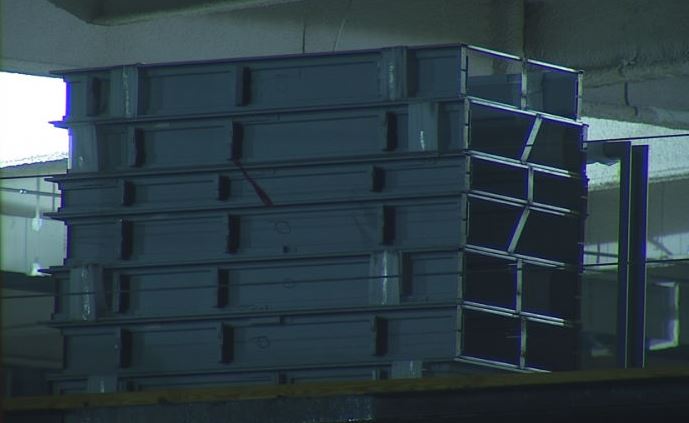
Construction worker Jesse Zimmer, 38, with Acme Plumbing & Heating Company critically injured after a metal beam fell from the fifth floor and hit the Readilite portable toilet he was inside in Durham, NC. Raleigh-based Barnhill Contracting is in charge of the project.


DURHAM, NC (WNCN) -

Durham Police said a construction worker could die after a metal beam fell from the fifth floor and hit a portable toilet he was inside of.

The beam fell at a site in the 400 block of Morris Street around 3:30 p.m.

The worker was inside the portable toilet on ground level when the metal beam fell.

The beam hit the portable toilet and the worker, police confirmed.

The worker was rushed to the Duke hospital with life-threatening injuries.

Barnhill Contracting Company said the injured worker is an employee of a local plumbing company.

The North Carolina Department of Labor’s Occupational Safety and Health Division is investigating.

A spokesman for the NCDL confirmed that the victim was an employee of Acme Plumbing Company.

In some places you cannot even take a crap without risking injury or death.

Marty Mangum wrote on Facebook:


I just visited Jesse Zimmer in the hospital. He is in desperate need of prayer. God is able to do far more abundantly beyond all that we ask or think, according to the power that works within us. Also pray for his family as they walk through this difficult journey.==============


DURHAM (WTVD) -- A construction worker is in critical condition after he was injured Wednesday while using a portable toilet at work.


Durham Police identified him Thursday as 38-year-old Jesse Zimmer.

Police said the incident happened around 3:30 Wednesday afternoon at a construction site in the 400 block of Morris Street.

Officers said Zimmer was inside of the portable toilet when a large metal beam fell off of a building from five stories up and hit the portable bathroom, crushing it.
"We called 911 with some other guys. We tried to figure out what was going on," said Luis Carmona, who was arriving to pour concrete at a nearby construction site when the incident happened.


Zimmer was taken to the hospital.

Carmona said he has seen accidents before but this one left him "shocked."

The 15-acre construction site covers the entire 400 block of Morris Street at Hunt Street.

It's the first phase of the $100 million Durham Innovation District - two seven-story buildings of research labs, retail, and restaurants.

Raleigh-based Barnhill Contracting is in charge of the project.

Department of Labor records show two serious accidents on Barnhill sites since 2008.

ABC11 reached out to Barnhill but did not hear back Wednesday.

As of late Wednesday evening, the injured worker remained in critical condition. He remained hospitalized Thursday, police said.

"It could've happened to anybody," Carmona said. "It could've been me, or anybody else."


==================


State investigation begins after worker injured in portable toilet

Posted 10:11 a.m. today
Updated 8 minutes ago


Durham, N.C. — Investigators with the North Carolina Department of Labor were working Thursday morning at a Durham construction site to piece together the accident that led to a beam falling on a portable toilet while a man was inside.

Jesse Zimmer, 38, is an employee of Acme Plumbing and Heating Company, which was contracted by Barnhill Contracting Company to work on the site, at 400 Morris St.

Durham police said Zimmer was inside the portable toilet at about 3 p.m. Wednesday when a large metal beam fell from the fifth floor of a building, crushing the toilet.

Zimmer was rushed to a local hospital where he is being treated for serious injuries.


A Department of Labor spokeswoman said her agency learned about the incident when they saw it on the news. Acme had contacted the Occupational Safety and Health Administration (OSHA), which checks and enforces safe working conditions. The agencies will work together to investigate the accident, Department of Labor spokeswoman Mary Katherine Revel said. The construction site is part of the Durham Innovation District, which will include 1.3 million square feet of parking, retail, office and residential space, according to the project's website.

3 crew members injured after a Bell 206L-3 LongRanger III helicopter operated by Air Evac EMS Inc. crashed in an urban area in east Union City, Tennessee


UNION CITY, Tenn. — 


Three crew members suffered minor injuries after a medical helicopter went down hard in a landing in Union City on Wednesday.

The chopper went down near Home and Howard Street near the Union City Police 911 building.

A spokesperson with the Air Evac Lifeteam said Air Evac 143 went down at 11:40 a.m., with three crew members were on board. They were based out of Troy, Tennessee and were headed to Obion County.

No patients were involved. Three crew members were treated and released from a local hospital.

Brad Woody, program director for the Obion County Air Evac base, was waiting for the crew at the 911 dispatch center in Union City when the hard landing occurred.

“The crew was on its way to the dispatch center to go over the new satellite tracking capabilities Air Evac provided to them,” Woody said. “We are thankful the crew experienced only minor injuries.”

The NTSB and FAA have been notified of the event.


Date: 08-NOV-2017
Time: 11:40 LT
Type:
Bell 206L-3 LongRanger III
Owner/operator: Air Evac EMS Inc
Registration: N275AE
C/n / msn: 51186
Fatalities: Fatalities: 0 / Occupants: 3
Other fatalities: 0
Airplane damage: Substantial
Location: Obion County, Union City, TN - United States of America
Phase: En route
Nature: Ambulance
Departure airport: Troy, TN
Destination airport: Union City, TN
Narrative:
While en route the air ambulance / HEMS helicopter experienced a hard force landing in an urban area in east Union City, Tennessee. The helicopter sustained substantial damage consistent with a wire strike (tbc). The three occupants received minor injuries (e.g. smashed upper windscreen, lost upper wire strike cutter and transmission). There was no patient onboard.

Some press report suggest a 'training flight' while others state the crew were en route to the Union City site for a sat tracking system briefing.

Sources:
http://www.wpsdlocal6.com/2017/11/08/helicopter-crashes-union-city-tn/
http://www.wbbjtv.com/2017/11/08/medical-helicopter-crashes-union-city/
http://wreg.com/2017/11/08/medical-helicopter-crashes-in-obion-county/
http://www.localmemphis.com/news/local-news/air-evac-helicopter-crashes-in
-union-city-tennessee/853672837
_____________________
http://registry.faa.gov/aircraftinquiry/NNum_Results.aspx?NNumbertxt=275AE

Avoid Common Asthma Triggers after a Hurricane


Avoid Common Asthma Triggers after a Hurricane

silhouette of a person using an inhaler

An asthma attack can happen when you or your children are exposed to asthma triggers. After a hurricane, more or different asthma triggers may be present.  The following tips can help you and your family avoid common asthma triggers after a hurricane:  
  • Wash hands. Illnesses such as colds or the flu can trigger an asthma attack. Keeping hands clean helps prevent the spread of cold and flu germs. If safe water is not available, you can use a hand sanitizer with a 60% alcohol content to clean your hands.
  • Avoid homes or buildings with mold damage. People with asthma, allergies, or other breathing conditions may be more sensitive to mold. Try not to enter any building that has mold growth you can see or smell, or that had leaks that let water get inside. Children should not take part in disaster cleanup work, whether or not they have asthma.
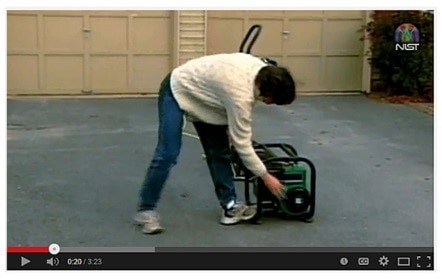
  • Be careful around generators. When a power outage occurs after a storm, some people may use generators as a backup power source. These generators provide power to appliances, lights, and other vital items in the home, including “breathing treatments” for asthma (also known as nebulizer machines). Using generators improperly can cause poisonous carbon monoxide or “CO,” which you cannot see or smell, to build up in a home, garage, or camper. Keep generators and other gasoline-powered engines at least 20 feet from any window, door, or vent and use a battery-powered or battery backup carbon monoxide detector in your home.
  • Avoid smoking and secondhand smoke. Tobacco smoke is unhealthy for everyone, especially people with asthma. If you have asthma and you smoke, think about quitting. “Secondhand smoke” is smoke created by a smoker and breathed in by a second person. Secondhand smoke can trigger an asthma attack. If you have asthma, people should never smoke near you, in your home, in your car, or wherever you may spend a lot of time.
  • Take your medicine exactly as your doctor or other medical professional tells you to do. Not everyone with asthma takes the same medicine. Some medicines can be inhaled or breathed in, and some can be taken as a pill. Asthma medicines come in two types—quick relief and long-term control. Quick-relief medicines control the symptoms of an asthma attack. If you need to use your quick-relief medicines more and more (for example, more than two times per week), you should visit your doctor or other medical professional to see if you need a different medicine.
  • Manage stress. Strong emotions can trigger an asthma attack. Take care of your mind and body, connect with others, and seek help when you need it.
  • Get a flu shot. Influenza, commonly called “the flu”, can trigger an asthma attack. Everyone 6 months of age and older should get a flu vaccine every year.  
========================================


Asthma Care Before, During, and After a Hurricane or Other Tropical Storm

Before a Hurricane or Other Tropical Storm

During and after a hurricane, you may need supplies to keep your family safe and healthy. Remember that a hurricane could cut off your power and water supply. You also may not be able to drive because of damage to your car. Roads may be flooded or blocked.
That’s why it’s best to be prepared — stock up on everything you might need, including:
  • At least a 3-day supply of asthma medications
  • Copies of important documents such as insurance cards and immunization records (and asthma action plans, if available)
  • Equipment you may need to use when cleaning up after the storm, including N95 respirators, goggles, protective gloves, and waterproof boots.
Remember that certain items, like medications and paper documents, need to be kept in waterproof containers.
More information is available on preparing for a hurricane or other tropical storm.

Avoiding Common Asthma Triggers During and After a Hurricane or Other Tropical Storm

Influenza, commonly called “the flu”, can trigger an asthma attack. Everyone 6 months of age and older should get a flu vaccine every year. It is particularly important for people with asthma to be vaccinated against the flu every year because they are more likely to have serious health problems from getting the flu. This website has information on flu shots for people with asthma.


Illnesses such as colds or the flu can trigger an asthma attack. Keeping hands clean helps prevent the spread of these germs. This website includes information on handwashing during or after emergencies, when finding clean, safe running water can sometimes be difficult.

During and after a disaster it is natural to experience different and strong emotions. Strong emotions can trigger an asthma attack. This website has information on steps people can take to help themselves and others cope.

This website describes other common triggers of asthma attacks and how to avoid them.
If your home was flooded and you were not able to dry your home (including furniture and other items) within 24-48 hours, you should assume you have mold growth. Breathing in mold can trigger an asthma attack. If possible, people with asthma should stay away from moldy sites. This website includes information on how to recognize mold and how to safely clean up mold.


This website includes information for children about mold, a common asthma trigger. Children should not take part in disaster cleanup work.

Using Asthma Medications or Devices During and After a Hurricane or Other Tropical Storm

Asthma can be controlled by taking asthma medication exactly as directed by a doctor or other medical professional. This website has information on how asthma medications help control asthma.
This website has videos and step-by-step instructions (in English and Spanish) on the correct way to use a common type of asthma inhaler (a metered dose inhaler).
When a power outage occurs after a storm, some people may use generators as a backup power source. These generators provide power to appliances, lights, and other vital items in the home, including “breathing treatments” for asthma (also known as nebulizer machines). Using generators improperly can cause poisonous gas (carbon monoxide) to build up in a home, garage, or camper. Never use a generator indoors or less than 20 feet from any window, door, or vent. When using a generator, use a battery-powered or battery backup carbon monoxide detector. This website has information on how to prevent carbon monoxide poisoning after an emergency.
This website includes information on the use of medications that might be affected by flooding, unsafe water, or other disasters.

Getting Asthma Medications or Devices During and After a Hurricane or Other Tropical Storm

This website describes the Emergency Prescription Assistance Program (EPAP), which can help people who don’t have health insurance continue to use certain prescription drugs, medical supplies, or medical equipment in a disaster area. People with health insurance are not eligible to receive assistance under EPAP.
This website has information on how people with Medicare drug plans can get prescription medications in a disaster or emergency.
 

SMG Huntington Events worker, Tom McCormick, 59, died after he fell about 5 feet off a stage and hit his head on the concrete floor while he was helping set up for the Kidz Bop concert at the Big Sandy Superstore Arena in WV


HUNTINGTON, W.Va. (WSAZ) -- An events worker died after an accident last week at the Big Sandy Superstore Arena, according to a statement from SMG Huntington.

He is identified as 59-year-old Tom McCormick.

McCormick's family says they were told he fell about 5 feet off a stage and hit his head on the concrete floor while he was helping set up for the Kidz Bop concert Thursday, Nov. 2. He died from the injury Saturday.

"He worked these shows all the time," McCormick's daughter, Melissa Booton, said. "This was nothing new. For him to fall off the stage is very odd. It wasn't a malfunction. It wasn't anybody's fault. It's just an accident."

The daughter says McCormick had been doing production work on local plays and performances more than 20 years. He also worked on two movies, including "We Are Marshall."

"Hug your family," Booton said. "Give them lots of love. You never know when you won't see them again. I didn't expect my dad to pass away working a show."

McCormick was a retired nurses assistant at the VA Medical Center. Booton says her father did production work on the side for fun.

"He loved working those shows," Booton said. "Going through some of his stuff, I realized he kept everything from almost every show he ever worked."

SMG Huntington released the following statement:

“This past Thursday night, a beloved and respected member of the International Association of Stage & Theatrical Employees (IATSE) and a long-term SMG employee, Tom McCormick, was involved in a tragic accident at the Arena. On Saturday night all of us at SMG were shocked and saddened to learn that Tom had passed away. Our hearts are broken, and words alone cannot express our sorrow at hearing this news. Speaking for the entire SMG-family, we wish to extend our deepest sympathies and condolences to Tom’s family, friends and loved ones during this incredibly difficult time.”


===================


HUNTINGTON, WV — A stage employee at Big Sandy Superstore Arena died Saturday after sustaining injuries in an accident last Thursday evening.


Tom McCormick was a member of the International Association of Stage & Theatrical Employees and a long-time SMG employee.


"Our hearts are broken, and words alone cannot express our sorrow at hearing this news," spokeswoman Veronica Hordubay said in a statement. "Speaking for the entire SMG family, we wish to extend our deepest sympathies and condolences to Tom’s family, friends and loved ones during this incredibly difficult time.”


Though the timeline of the accident was unclear, the arena hosted the Kidz Bop Kids for a concert on Nov. 2.