MEC&F Expert Engineers

Tuesday, September 27, 2016

Family of four killed in heavy fire at a single-family home in Greenfield, Massachusets


State police employee killed in fire along with 3 family members
Youngest victim was 5 years old
UPDATED 7:45 PM EDT Sep 25, 2016


GREENFIELD, Mass. —Massachusetts State Police are mourning the loss of an employee who died in a fire Sunday along with three members of his family, including a 5-year-old.


Brian Tower, a state police radio technician, died along with his wife, Florenda Tower; her son, Raymond Wood; and Raymond's 5-year-old son, William Paul Clark. State Police said Brian Tower was a civilian employee with 28 years of experience.

The family perished in heavy fire at a single-family home in Greenfield, about 40 miles north of Springfield. Firefighters tried to get inside the home at 140 Meridian Street early Sunday, but found the flames were too intense.


"Brian was a member of our State Police family, and as such, his loved ones were also part of our family. We are mourning the sudden and tragic losses of four members of the MSP family tonight," MSP said in a statement.


State police said Tower was born in Hartford and raised in Franklin County. He joined the state police in 1998, had his most recent promotion in 2007 and spent his entire career at Troop B Headquarters in Northampton.


MSP is offering assistance to Tower's friends and colleagues.
"We thank the firefighters who responded to the incident in an attempt to rescue Brian and his family," state police added.

Worker with Otto Baum Company, Inc. lucky to be alive after was buried up to his waist in dirt following trench wall collapse in Decatur, IL


Crews in Forsyth spent Tuesday morning rescuing a man who was trapped for more than two hours underground in the 4900 block of McDonald Avenue. (WRSP)

Decatur Worker Stuck Underground For Over 2 Hours
By Fox Illinois News Team Tuesday, September 20th 2016


 DECATUR, Ill. (WRSP) — A central Illinois man is home tonight after a frightening several hours trapped in a trench this afternoon.

Steven Givans was working on a construction project for the Decatur Sanitary District.

The fire department tells us dirt along the trench he was in collapsed.

He was 20 feet below ground, buried up to his waist in dirt.

Emergency crews say this is one of the most difficult rescues they’ve had to make in years.

“There was more room at the bottom then there was at the top, so we’re actually working out over an area that’s unstable because it could fall at any second,” said Jeff Abbott, Decatur Fire Chief.

It took more than two hours to free Givans.

He’s an employee of Otto Baum Contractors, which was contracted out by the Decatur Sanitary District for this project.

Givans was taken to St. John’s Hospital in Springfield after being rescued, but has since been released.


TSCA Reform: For the first time, workers are defined as a “susceptible subpopulation” within the chemical safety law. Only five out of 62,000-plus existing chemicals have been banned since TSCA was enacted in 1976.


TSCA reform: What does it mean for worker safety?

September 25, 2016
Tom Musick


Image: Skyhobo/iStockphoto


Key points
For the first time, workers are defined as a “susceptible subpopulation” within the chemical safety law.
Only five out of 62,000-plus existing chemicals have been banned since TSCA was enacted in 1976.


OSHA stated that the agency is looking forward to working with EPA and that the new law will improve worker safety.

The Frank R. Lautenberg Chemical Safety for the 21st Century Act spans more than 50,000 words. Yet one phrase within the document could hold the power to improve protections for millions of workers in the United States: The legislation amends the Toxic Substances Control Act to create specific safeguards for “potentially exposed or susceptible subpopulations … such as infants, children, pregnant women, workers, or the elderly.”

It might be easy to overlook “workers” among the listed at-risk groups. However, stakeholders who have spent years fighting for TSCA reform say the wording is no small feat. The revised law gives the Environmental Protection Agency the power to restrict chemicals based on health risks.

“That’s a big add,” said Lynn Bergeson, who specializes in TSCA reform as managing partner at Washington law firm Bergeson & Campbell PC. “EPA heretofore has often worked with OSHA on worker exposure issues, particularly in the context of new chemical review, but with this new definition – ‘a potentially exposed or susceptible subpopulation’ – workers as a demographic are now a more important, defined group that could drive risk assessment.”
Read the Frank R. Lautenberg Chemical Safety for the 21st Century Act
History

Employers in industries such as manufacturing and construction work with chemicals every day. Some workers use respiratory protection to guard against the hazards from paint thinners, ammonia, bleach and other hazardous substances. Others work in buildings that contain asbestos, which may cause deadly lung diseases such as cancer. Still others use degreasers, spray adhesives and other cleaning products that contain 1-Bromopropane, or 1-BP, which has been linked to cancer and reproductive disorders. (For more on 1-Bromopropane, see EPA review committee issues report on 1-Bromopropane risk assessment draft.)

The intent of TSCA when it was enacted in 1976 was to protect the public and the environment from danger, but it did not grant EPA the authority to regulate the more than 62,000 chemicals in use at the time. EPA could review and regulate only new chemicals introduced after the law went into effect.

As a result of this and other red tape, only five chemicals were banned.

“Forty years after TSCA was enacted, there are still tens of thousands of chemicals on the market that have never been evaluated for safety, because TSCA didn’t require it,” EPA Administrator Gina McCarthy wrote in a June 22 blog post on the agency’s website. “And the original law set analytical requirements that were nearly impossible to meet, leaving EPA’s hands tied – even when the science demanded action on certain chemicals.”

Advocates clamored for many years for Congress to solve the problem. One member listened.

Frank Lautenberg (D-NJ) spent five terms in the Senate and devoted much of that time to improving chemical safety before his death in 2013. On June 22 of this year, President Barack Obama signed the Frank R. Lautenberg Chemical Safety Act for the 21st Century into law.

That signature granted EPA the authority to provide better protections from toxic chemicals for the public and the environment. Its directive to protect workers as a vulnerable population aligns with the work of OSHA, which has lamented outdated permissible exposure limits for chemical hazards and a lack of funding to protect workers as effectively as possible.
Common mission

OSHA has stated that it is eager to partner with EPA, especially as the agency faces a possible 3.3 percent budget cut.

“OSHA is reviewing the new law and looks forward to working with EPA as it develops an implementation strategy,” OSHA spokesperson Kimberly Darby told Safety+Health. “We believe the changes will help workers by providing improved safety, health and exposure information for chemicals currently in the marketplace.”

Chemical safety experts agree a collaborative approach to protecting workers makes sense. OSHA regulates worker exposure to chemicals in large part through its Hazard Communication Standard (1910.1200), which calls for employers to clearly inform workers about chemical and toxic substance hazards in the workplace, as well as effective ways to protect themselves from those hazards. Employers need to ensure chemical safety labels and Safety Data Sheets on chemical hazards are available, and workers should be trained on appropriate handling of those chemicals.

With the update of TSCA, EPA now has the muscle to force action and restrict harmful chemicals. In addition, Section 9(e) of the new legislation, “Exposure Information,” specifies that the administrator should inform “the relevant Federal agency or office of the Environmental Protection Agency” if he or she discovers chemical exposures that may be prevented or reduced under another federal law.

“In other words, in our view, the law as revised will almost inevitably force EPA to be more engaged with and involved in the referral of worker exposure issues to OSHA,” Bergeson said. “The fact that there is this new subsection means that the EPA will be working with other federal agencies, and this has OSHA written all over it.

“As much as we would like to believe that all employers are faithfully adhering to all PPE requirements and so on and so forth, to the extent that is not happening, workers can be disproportionately exposed. The chemical law here reflects the fact that Congress wishes workers to be a part of that demographic that is protected because they may be disproportionately and uniquely susceptible.”
Moving forward

The next step for EPA is to determine how and where to achieve the greatest impact.

The agency has released its first-year implementation plan, which includes an outline for EPA to conduct risk assessments and define high-priority chemicals. EPA said it plans to publish a list of 10 Work Plan chemicals and start a formal risk evaluation on them in mid-December, when the agency also plans to publish a proposed rule establishing its process for evaluating the risk level of high-priority chemicals. 


EPA’s first-year implementation plan

Many organizations, including the Environmental Defense Fund, a New York-based advocacy group, have participated in meetings conducted by EPA to discuss the risk evaluation process and how to establish fees under TSCA.

“This is a major reform of America’s badly broken chemical safety system,” Keith Gaby, spokesperson for EDF, told S+H. “It’s going to help workers because EPA now has the authority to restrict chemicals that cause cancer and other health problems – and that will mean reduced exposure for those who make the products that used them.”

Bergeson said the law could revolutionize chemical management in the United States. She encourages employers to seek as much information on the law as possible and to be active participants in EPA’s risk evaluation process.

“Number one: Read the law,” Bergeson said. “Number two: Be mindful of the implications in your value chain. If you are a manufacturer, you may not be aware of the fact that there might be closer coordination with OSHA or with the Consumer Product Safety Commission. Number three: There are many ongoing rulemakings that will have a very significant impact. They’re in play right now. So participate, be aware of, comment on and work with your trade association or your VP of EHS to make sure you know how these rules are going to impact you.

“What I urge our people to do is know your chemicals. If a very important chemical component in your manufacturing line is thought to pose risks that are uniquely impactful of sensitive subpopulations of workers or others, it could be deselected. There are no surprises here. The federal government has a very difficult time operating in secret. So understand it, participate, and be prepared.”

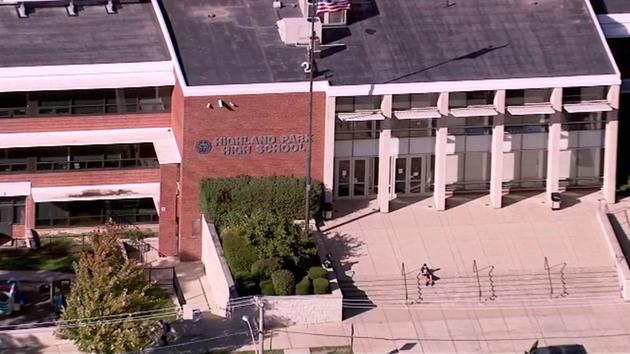
High lead levels were found in the drinking water at Highland Park High School.


Updated 15 mins ago
HIGHLAND PARK, Ill. (WLS) -- High lead levels were found in the drinking water at Highland Park High School.

Test results were just made public.

Officials said six samples out of the eight taken from three drinking fountains and one sink at the high school were found to be over the action level for lead. According to officials, all four of the fixtures were shut down and will not be in use until they are remediated.

Officials say all drinking fountains and faucets in public buildings will now be tested as well.

Four oil workers have died, 2 are missing after a Bell 430 helicopter of Heli Malongo charter transporting workers to an offshore Angola Chevron oil platform crashed


Helicopter crashes en route to Chevron Angola oil platform, at least four dead


Four people died and two were missing after a helicopter crashed en route to a Chevron oil platform off the Angolan coast, the U.S. oil company said on Tuesday.

The helicopter left Malongo port in Angola's Cabinda province on Monday at 1523 local time to make the short journey to the Tombua-Landana offshore oil platform but never arrived.

"The helicopter did not reach its intended destination. It was carrying five passengers and one pilot," Chevron said in a statement, adding that one of the passengers was an employee while four others were contractors.

"Extensive search and rescue activities continue for those who remain missing."

Chevron did not say if there was any impact on oil production from the crash or the search and rescue operation, which involved 19 marine vessels and three helicopters.

Angola competes with Nigeria to be Africa's largest oil exporter, shipping around 1.7 million barrels per day, mainly to Asian markets.

(Reporting by Herculano Coroado in Luanda; Additional reporting by Ron Bousso and Libby George in London; Writing by Joe Brock; Editing by Mark Trevelyan)

====================
Four dead after Chevron helicopter goes missing

By Nicolas Torres -
September 27, 2016


At least four people have died after a helicopter transporting workers to an offshore Angola oil platform went missing.

According to Reuters, a helicopter departed from Malongo port on Monday around 3:30 p.m. local time to transport workers to the Tombua-Landana offshore platform.

The helicopter never arrived at the Chevron-operated platform, Reuters said.

Chevron told Reuters that four of the people aboard the helicopter died as a result of the accident.

Two other passengers are still missing.

The helicopter was carrying four contractors, one Chevron employee and a pilot when it departed from the port, located in the Cabinda province.

The company has deployed 19 marine vessels and three helicopters to conduct search and rescue operations.

Chevron did not comment on whether the search operations will impact its oil and gas activities in the area.

No further details about the incident have been disclosed.

Chevron Corporation, through its subsidiary Cabinda Gulf Oil Company, began crude production at the 100,00 barrel per day Tombua-Landana project in 2009.

The platform is located 50 miles off the coast of Angola is Block 14.


Date:

26-SEP-2016
Time:16:00 LT
Type:Silhouette image of generic B430 model; specific model in this crash may look slightly different
Bell 430
Owner/operator:Heli Malongo
Registration:
C/n / msn:
Fatalities:Fatalities: 4 / Occupants: 6
Other fatalities:0
Airplane damage: Written off (damaged beyond repair)
Location:offshore Cabinda -   Angola
Phase: En route
Nature:Non Scheduled Passenger
Departure airport:Malongo
Destination airport:Tômbwa-Lândana Offshore Installation
Narrative:
Crashed offshore. Five pax and 1 pilot. 4 bodies recovered. 2 persons missing. 19 vessels and three helicopters deployed for search. Reported to be on contract to Chevron Angola subsidiary, Cabinda Gulf Oil Company.
Sources: https://angorussia.com/noticias/angola-noticias/helicoptero-da-heli-malongo-cai-mata-seis-pessoas-cabinda/
http://www.jn.pt/mundo/interior/helicoptero-com-seis-pessoas-a-bordo-cai-no-mar-em-angola-5411041.html
http://m.redeangola.info/helicoptero-despenha-se-no-mar-de-cabinda/
http://www.reuters.com/article/us-chevron-helicopter-angola-idUSKCN11X139


Heli Malongo Aviação e Serviços de Angola, Lda is an air charter operator headquartered in Luanda, Angola, which offers onshore and offshore flights in support of the oil industry in Angola from its base at Cabinda Airport. 


ProfileAt the 2008 Farnborough Air Show, Heli Malongo signed a deal with the Sikorsky Aircraft Corporation for the supply of three Sikorsky S-76C++. This marked the first time Heli Malongo had ordered Sikorsky helicopters. The airline made the purchase in order to set up Angola's first search and rescue service, allowing the company to further support the burgeoning oil industry in Angola.[2] The three helicopters were delivered to Heli Malongo at a ceremony in Coatesville, Pennsylvania on 20 January 2011.[3]