MEC&F Expert Engineers

Friday, August 26, 2016

Neighbors who live near two former U.S. Army Nike sites in Aurora and Orchard Park have concerns about possible PCB environmental contaminants.


Source: http://www.wgrz.com, August 25, 2016
By: Kelly Dudzik

Neighbors who live near two former U.S. Army Nike sites in Aurora and Orchard Park have concerns about possible environmental contaminants. Thursday night, a representative from the U.S. Army Corps of Engineers met with them.

There is an old launch area and an old control area. Both were used by the U.S. Army in the late 50s and early 60s.

Both sites are now privately owned, and the Army Corps of Engineers is looking through documents to see how the land has been used since the Army left it to see if there are any contaminants.

The U.S. Army Corps of Engineers representative said Thursday that they are going to test one of the sites for possible PCBs this year. He says they want to make sure any existing Army liabilities of an environmental nature are addressed.

One neighbor shared video with us of a sewer line spewing out water near her home, which she built in 2005. She lives 13-hundred feet from the control site on Transit Road in Orchard Park and is very worried that the water could be contaminated.

“I have two children. My daughter is here this evening, and as the neighbors had said, it’s not just my children, they have children. The roadway is giving away. There’s a sinkhole forming underneath where the pipe crosses the road. So not only is my family at risk now, the general public is that travels on this road,” says Laura Piccillo.

“What we’re going to do is make sure that anything that we may have had at the site is not something that might be flowing down in through those manholes,” says Gregory Goepfert with the U.S. Army Corps of Engineers.

Piccillo is suing the control site’s current owner, Health Research Inc., a public benefit corporation of the State of New York. She wants her driveways fixed and says the water coming from the sewer has damaged them.

A formal report on the environmental investigation is expected to be released this fall. There will also be another community meeting at that time. A citizen advisory group is being formed. Many of the people there Thursday night plan to join it.


=========================

FACT SHEET – Niagara Falls – Buffalo Defense Nike Battery, Nike BU 34/35 (Launch & Control Areas)

Formerly Used Defense Sites (FUDS)


DESCRIPTION: The Niagara Falls - Buffalo Defense Nike Battery BU 34-35 consisted of a launch and a control area. From December 1955 to April 1956, the subject site was acquired by the United States for defense purposes by direct purchase.  Both the launch and control areas are in Erie County, New York; specifically the launch area is located on Willardshire Road, in the Town of Aurora,  New York and the control area is located off of Transit Road, in Orchard Park, New York. The properties related to this FUDS are located in Congressional District NY-26.

After acquisition by the United States, a surface-to-air missile launch and other ancillary buildings were constructed by the U.S. Army between December 1955 and January 1957.  The type of missile stored was the Nike Ajax Missile.  This installation was never subject to other-than Department of Defense (DoD) use and control during the period of DoD interest.    

The launch area is currently owned by a limited liability corporation (LLC). The only facility utilized (post-DoD) was the enlisted men's barracks and bachelor officers' quarters building. This building was converted into apartments.
The control area is currently owned by the Health Research, Inc., a public benefit Corporation of the State of New York.  Former Nike facilities that were rehabilitated for use were the mess hall, the garage, the administration building, the enlisted men's barracks and bachelor officers' quarters, two stand-by generator plants, two fire unit integration facility rooms (radar control buildings), and the water pump building. These facilities were used in the past for cancer research.  

AUTHORIZATION: The Nike BU 34/35 properties are being investigated under the Defense Environmental Restoration Program for Formerly Used Defense Sites (FUDS). The Superfund Amendments and Reauthorization Act of 1986 authorized that program.

PREVIOUS INVESTIGATIONS: Limited environmental investigations and studies were drafted by the U. S. Army Corps of Engineers (USACE)  for the launch area in 1996, however, the reports were not finalized, and no remedial actions were taken.

The control area was not studied directly by the U. S. Army Corps of Engineers (USACE), since Nike control  sites typically do not present environmental issues related to DoD use of these parcels, as hazardous materials were not stored or used by DoD in control areas.  Studies, assessments and site clean ups conducted by the current site owner were undertaken at the control area.  USACE will not be conducting any field investigations at the control area.

STATUS/SCHEDULE (AS OF AUGUST 2016):
USACE will review all previous studies, investigations and reports regarding the former launch and control sites, and perform remedial investigations (e.g., sampling and analysis of groundwater, soils, silo water), as necessary, to determine the need for any further action at these sites.
  • Remedial Investigation work plan has been finalized.
  • Remedial Investigation field work was conducted at the launch area in April 2016.
  • Remedial Investigation report will be issued in spring 2017.
  • Any future remedial actions will be undertaken, subject to availability of funds, and an assessment of alternatives based upon results of the remedial investigation.  Date: to be determined.
PROJECT COST:
Estimated Federal Cost:  $1,500,000 (Remedial Investigation)

Warrington, PA family sues Navy over Horsham, Warminster water contamination by firefighting foams once used at two former bases in suburban Philadelphia.


Warrington family sues Navy, blaming it for contaminated drinking water


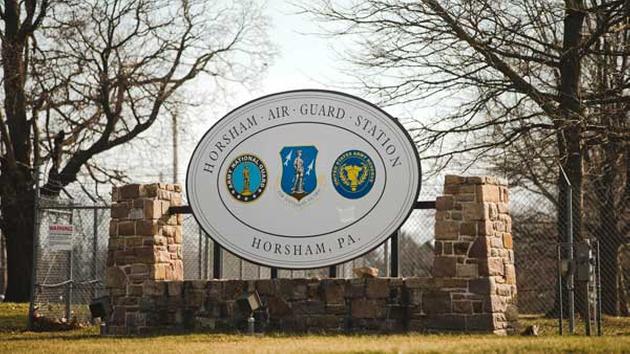
The front of the former Naval Air Station Joint Reserve Base Willow Grove and present day Horsham Air Guard Station is photographed, Thursday, March 10, 2016, in Horsham, Pa. (AP Photo/Matt Rourke)

Wednesday, August 24, 2016 11:58AM
NORRISTOWN, Pa. -- A Bucks County family is suing the Navy, alleging their drinking water has been tainted by firefighting foams once used at two former bases in suburban Philadelphia.

A Navy spokesman didn't immediately respond when notified of the lawsuit filed Tuesday by the Giovanni family of Warrington. They live near the Horsham Air Guard Station.

The Navy previously has said it's taking action after the Environmental Protection Agency and Congress raised concerns about the water at the Air Guard station, the Naval Air Station Joint Reserve Base Willow Grove and the Naval Air Warfare Center in Warminster.

The lawsuit contends the bases are the source of cancer-causing chemicals found in nearly 100 public and private wells near the properties.

The lawsuit seeks unspecified damages, medical testing for affected families and other relief. 


==============================
Source: http://www.montgomerynews.com, August 26, 2016
By: Dan Sokil

A Warrington family has filed suit against the U.S. Navy, seeking health assessments and coverage of medical costs related to the ongoing water contamination from two local military bases.

“We had sent a notice of intent to the Navy that we were going to sue them, to force them to do blood testing and health monitoring and a health effect study on the community, because of the contamination of the water supply the Navy caused,” said attorney Mark Cuker.

“What we asked for was the same thing the governor asked for, the three local congressmen asked for, several state legislators, and the Navy never responded to us, so we are suing,” he said.

The lawsuit was filed Tuesday by Philadelphia-based environmental law firm Williams, Cuker, Berezofsky on behalf of the Giovanni family of Poplar Road in Warrington, who allege the Navy was responsible for “improper disposal of contaminants and hazardous substances” at the Willow Grove and Warminster bases.

Water testing near both sites has revealed high levels of toxic PFCs — perfluoroochemical compounds — such as PFOA (perfluorooctanoic acid) and PFOS (perfluorooctanesulfonic acid), both linked to firefighting compounds used at both bases.

The complaint alleges that the half-life of PFOA in the body is two to nine years and that studies have shown a higher risk of bladder, kidney and other types of cancers after long-term exposure to PFOA. Cuker said Thursday the family who filed the suit has not yet seen any of those symptoms, but other local families with those diseases and conditions have also contacted the law firm.

Starting in 2003, that particular family has lived “virtually across the street” from the Willow Grove base, according to the complaint, with water supplied by a private well there. In December 2014, the family learned that PFOA and PFOS levels in their well were far higher than the health advisory level set by the federal Environmental Protection Agency, with a combined level more than 40 times the EPA limit.

Beginning in late 2014, the family was provided with bottled water from the Navy, which they used for roughly six months for cooking, drinking and brushing teeth, according to the complaint. After the family was connected to the Warrington Township Water & Sewer Department’s public water supply, they learned that three of that department’s wells were taken offline in late 2014 for exceeding EPA levels of PFOS, and two more were taken offline in May 2016 after the EPA lowered the health level.

“Plaintiffs’ consumption and use of water from private and public sources has resulted in significant exposure to one or more PFCs, relative to the general population,” reads the complaint.

“Plaintiffs’ exposure was the result of improper disposal of contaminants and hazardous substances from the facilities,” it says, before asking for medical assessments on behalf of the family and their children as per terms of the state Hazardous Sites Cleanup Act, and blood testing for “all individuals exposed to the contaminants and hazardous substances released from Willow Grove and Warminster.”

“It’s unfortunate that citizens have to ask their own government to step up and take responsibility for what it did, but that’s what we have to do,” Cuker said.

Now that the lawsuit has been filed, the Navy has 30 days to enter an appearance and file with the Montgomery County Court of Common Pleas that they will be represented in the case. After that deadline, “in terms of how the case will move through the courts, no one can predict that,” Cuker said.

When asked for comment, a Navy spokesman for the Willow Grove base referred to the U.S. Department of Justice, which said Thursday they do not comment on pending litigation.

Influx of Fentanyl-laced Counterfeit Pills and Toxic Fentanyl-related Compounds Further Increases Risk of Fentanyl-related Overdose and Fatalities


Distributed via the CDC Health Alert Network
August 25, 2016, 15:15 ET (3:15 PM ET)
CDCHAN-00395
Summary 

On October 26, 2015, CDC issued HAN 384 (http://emergency.cdc.gov/han/han00384.asp) that alerted (1) public health departments, health care professionals, first responders, and medical examiners and coroners of the increase in fentanyl-related unintentional overdose fatalities in multiple states primarily driven by illicitly manufactured fentanyl (IMF) (i.e., non-pharmaceutical fentanyl); (2) provided recommendations for improving detection of fentanyl-related overdose outbreaks; and (3) encouraged states to expand access to naloxone and training for administering naloxone to reduce opioid overdose deaths.

The purpose of this HAN update is to alert public health departments, health care professionals, first responders, and medical examiners and coroners to new developments that have placed more people at risk for fentanyl-involved overdoses from IMF and may increase the risk of non-fatal and fatal overdose. These developments include the following: (1) a sharp increase in the availability of counterfeit pills containing varying amounts of fentanyl and fentanyl-related compounds (e.g., labeled as Oxycodone, Xanax, and Norco), (2) the potential for counterfeit pills containing fentanyl and fentanyl-related compounds to be broadly distributed across the United States which could impact states not previously impacted by IMF and persons using diverted prescription pills (i.e., licit drugs diverted for illicit purposes and involves the diversion of drugs from legal and medically necessary uses towards uses that are illegal and typically not medically authorized or necessary)[1], (3) the widening array of toxic fentanyl-related compounds being mixed with heroin or sold as heroin, including extremely toxic analogs such as carfentanil, and (4) continued increases in the supply and distribution of IMF (http://www.cdc.gov/drugoverdose/data/fentanyl-le-reports.html).

Background

In July 2016, the Drug Enforcement Administration (DEA) issued a nationwide report indicating that hundreds of thousands of counterfeit pills have been entering the U.S. drug market since 2014, some containing deadly amounts of fentanyl and fentanyl analogs [2]. Traditionally, fentanyl and fentanyl analogs in the illicit market have been mixed into heroin or sold as heroin, often without the knowledge of the consumer, and have primarily impacted areas where white powder heroin is prevalent, including the Northeast, Midwest, and Southeast regions of the United States. The influx of counterfeit pills, which closely resemble oxycodone [2,3], Xanax [3], and Norco [4,5], has increased the chance of fentanyl-involved overdoses among persons misusing prescription opioids or benzodiazepines who seek diverted medications on the illicit market [2], in addition to persons who inject, sniff, or snort drugs. Persons who misuse prescription pills are geographically widespread; thus, the potential risk for fentanyl overdose has spread beyond those regions previously known to be impacted by IMF, and could intensify the impact in regions already affected by IMF.

The supply, distribution, and potency of illicitly manufactured fentanyl and fentanyl-related compounds in the U.S. drug market is evolving. Carfentanil, an extremely potent fentanyl analog, has been detected in at least one state [6,7] and is currently being investigated as a possibility in a few other locations [8]. Designed in 1974, carfentanil was previously used exclusively for veterinary use with large animals and is not approved for use in humans, as it has been shown to be 100 times more potent than fentanyl in animal studies. 

Other fentanyl-related compounds have been reported by the DEA National Forensic Laboratory Information System (NFLIS), which systematically collects drug identification results from drug cases submitted for analysis to forensic laboratories (referred to as drug submissions). From 2014 to 2015 the number of drug submissions testing positive for acetyl fentanyl increased substantially, rising from 463 in 2014 to 1,870 in 2015[9,10,11], and in 2016, NFLIS reported increasing drug submissions testing positive for furanyl fentanyl (244 drug submissions from January to July 2016) [9]. States should be vigilant about the possibility of highly toxic fentanyl-related compounds becoming available in the illicit drug market, as well as other highly toxic synthetic opioid derivatives, such as U47700 [2,12].

NFLIS has reported that the overall supply of illicitly manufactured fentanyl appears to have substantially increased from 2014 to 2015, with the number of drug submissions testing positive for illicitly manufactured fentanyl doubling during this period (from 5,343 to 13,882). The number of states reporting more than 100 fentanyl submissions also increased during this period from 11 to 15 (http://www.cdc.gov/drugoverdose/data/fentanyl-le-reports.html [9]). Recently, according to NFLIS and National Seizure System (NSS) reports, the amount of fentanyl seized in the United States has nearly doubled; from October 2014 to September 2015, federal, state, and local law enforcement agencies seized a total of 167.7 kilograms of fentanyl, and through June, 2016, they seized 363.8 kilograms of fentanyl [9].

Recommendations

CDC suggests the following actions in response to the increased risk of fentanyl overdose from IMF due to the influx of fentanyl-laced counterfeit pills, the widening array of highly toxic fentanyl-related compounds, and the continued expansion and geographic spread of the IMF supply:
  1. Improve detection of fentanyl outbreaks to facilitate effective response.
  • Public health departments:
    • Explore methods for rapidly identifying drug overdose outbreaks through use of existing surveillance systems such as medical examiner data, emergency medical services data, near-real time emergency department data, and poison center data [13].
    • Consider engaging local poison centers to assist with treatment of patients (toll free phone number is 800- 222-1222).
    • Track and monitor geographic trends in fentanyl and heroin supply using DEA's National Forensic Laboratory Information System (NFLIS) reports (see NFLIS Report http://www.deadiversion.usdoj.gov/nflis/spec_rpt_opioids_2014.pdf). National Heroin Threat Assessment Summaries (see NHTA Summary https://www.dea.gov/divisions/hq/2016/hq062716_attach.pdf) and alerts on the DEA website [2] to inform prevention and response efforts.
    • Raise awareness among key partners and stakeholders to the widening profile of those at risk for fentanyl overdose, which increasingly includes persons misusing diverted prescribed oral pain and sedative medications [2].
    • Track decedent demographics and known risk factors (e.g., drug type, recent release from an institution, previous overdose) to inform prevention efforts [14].
    • Develop general public health messaging about fentanyl, including fentanyl-laced counterfeit pills and fentanyl-related compounds that emphasizes the toxicity and potential lethality of the drug versus its high "potency. The messaging should include warnings of the highly variable content of fentanyl present in illicit products, which further elevates risk of overdose [12,15].
  • Medical examiners and coroners:
    • Screen for fentanyl in suspected opioid overdose cases in regions reporting increases in fentanyl seizures, fentanyl-related overdose fatalities, or unusually high spikes in heroin or unspecified drug overdose fatalities.
    • Screen specimens using an ELISA test that can detect fentanyl. Confirmatory gas chromatography mass spectrometry (GC-MS) of positive screens for fentanyl may either confirm the presence of fentanyl or suggest the presence of a fentanyl analog. [16]. When fentanyl screening is negative, or confirmatory testing is inconclusive, yet opioid or fentanyl overdose is highly suspected, consider specialized testing for fentanyl analogs, particularly if an increase in overdoses is occurring.
  • Law Enforcement: Law enforcement plays an important role in identifying and responding to increases in the distribution and use of illicitly manufactured fentanyl.
    • Use extreme caution when handling suspected illicitly manufactured fentanyl, white powders, and unknown substances (see DEA warning https://www.dea.gov/divisions/hq/2016/hq061016.shtml). Use appropriate safety precautions and personal protective equipment (see NIOSH Emergency Response Card http://www.cdc.gov/niosh/ershdb/emergencyresponsecard_29750022.html)
    • Prioritize and expedite laboratory testing of drug samples taken from drug overdose scenes, if possible.
    • Share data on fentanyl and fentanyl analog drug seizures with local health departments, medical examiners, and coroners.
    • Carry a supply of naloxone so that it can be administered immediately to mitigate the effects of the overdose. (See Recommendation 2 below.)
  • Laboratories: The following government forensic laboratories supporting law enforcement can provide assistance with reference materials or reference data on a case-by-case basis.
  1.  Expand Use of Naloxone and Treatment
  • Health Care Providers:
    • Multiple dosages of naloxone may need to be administered per overdose event, because of fentanyl's increased potency relative to other opioids. Orally-ingested counterfeit pills laced with fentanyl may require prolonged dosing of naloxone in the ED/hospital setting due to a delayed toxicity that has been reported in some cases [15].
    • Facilitate access to Medication-Assisted Treatment (MAT). MAT is a comprehensive approach to addressing the needs of persons with opioid use disorders that combines the use of medication with counseling and behavioral therapies.  Providers should discuss treatment options with persons who have an opioid use disorder, and persons who have experienced an opioid-related overdose once they are stabilized.
  • Harm reduction organizations:
    • Expand naloxone access to persons at risk for opioid-related overdose and to their friends and family members [17].
    • Train those using drugs how to effectively administer naloxone and emphasize the importance of calling 911 immediately after recognition of an overdose, because naloxone that is available in the field may be insufficient to reverse the overdose.
For more information
References
[1] "Drug Diversion in the Medicaid Program: State Strategies for Reducing Prescription Drug Diversion in Medicaid," Centers for Medicare & Medicaid Services (Baltimore, MD: January 2012), p.1, https://www.cms.gov/Medicare-Medicaid-Coordination/Fraud-Prevention/MedicaidIntegrityProgram/downloads/drugdiversion.pdf
[2] Drug Enforcement Administration. Counterfeit pills fueling U.S. fentanyl and opioid crisis. July 22, 2016. https://www.dea.gov/divisions/hq/2016/hq072216.shtml
[3] Florida Department of Law Enforcement. Buyer beware - deadly super pill found in Central Florida. http://www.fdle.state.fl.us/cms/News/2016/April/Buyer-Beware-%E2%80%93-deadly-super-pill-found-in-Central.aspx
[4] Drug Overdose Health Alert. Counterfeit Norco containing fentanyl. http://www.dhhs.saccounty.net/PUB/Documents/AZ-Health-Info/ME-Fentanyl+Alert_20160401.pdf
[5] Vo KT, van Wijk XM, Lynch KL, Wu AH, Smollin CG. Counterfeit Norco poisoning outbreak - San Francisco Bay Area, California, March 25-April 5, 2016. MMWR Morb Mortal Wkly Rep 2016; 65:420-423. DOI: http://dx.doi.org/10.15585/mmwr.mm6516e1
[6] Ohio Hamilton County Heroin Coalition: heroin adulterant creating deadly combination. http://www.hamiltoncountyhealth.org/files/files/Press%20Releases/Carfentanil_7_15_2016.pdf
[7] Medical Examiner Public Health Warning Deadly Carfentanil Has Been Detected in Cuyahoga County [news release]; Cuyahoga County Medical Examiner; August 17, 2016.http://executive.cuyahogacounty.us/en-US/ME-Public-Health-Warning.aspx
[8]Unpublished data, based on communications with DEA; August, 2016
[9]National Forensic Laboratory Information System. Data query; accessed August 15, 2016.
[10] NFLIS Special Report. Opiates and related drugs reported in NFLIS, 2009-2014, Revised February 2016. https://www.nflis.deadiversion.usdoj.gov/DesktopModules/ReportDownloads/Reports/NFLIS-SR-Opioids-Rev.pdf           
[11] NFLIS 2015 Midyear Report. https://www.nflis.deadiversion.usdoj.gov/DesktopModules/ReportDownloads/Reports/NFLIS_MidYear2015.pdf
[12] Canadian Center on Substance Abuse Bulletin. Novel synthetic opioids in Counterfeit pharmaceuticals and other illicit street drugs. June 2016. http://www.ccsa.ca/Resource%20Library/CCSA-CCENDU-Novel-Synthetic-Opioids-Bulletin-2016-en.pdf
[13] Jones TS, Krzywicki L, Maginnis J, et al. Nonpharmaceutical fentanyl-related deaths-multiple states, April 2005-March 2007. MMWR Morb Mortal Wkly Rep [serial online]. July 26, 2008; 57(29):793-796. http://www.cdc.gov/mmwr/preview/mmwrhtml/mm5729a1.htm.
[14] Levy B. Undetermined risk factors associated with drug overdose deaths, New Mexico. February 2014 (Epi-Aid 2012-022).
[15} Sutter ME, Gerona R, Davis MT, et al. Fatal fentanyl: one pill can kill. Acad Emerg Med. [Epub ahead of print June 20, 2016] http://onlinelibrary.wiley.com/doi/10.1111/acem.13034/abstract
[16] Centers for Disease Control and Prevention. Recommendations for laboratory testing for acetyl fentanyl and patient evaluation and treatment for overdose for synthetic opioids. HAN Health Advisory. June 20, 2013. https://stacks.cdc.gov/view/cdc/25259
[17] Jones CM, Logan J, Gladden RM, Bohm MK. Vital signs: demographic and substance use trends among heroin users - United States, 2002-2013. MMWR Morb Mortal Wkly Rep 2015; 64(26); 719-725. https://www.cdc.gov/mmwr/preview/mmwrhtml/mm6426a3.htm
The Centers for Disease Control and Prevention (CDC) protects people's health and safety by preventing and controlling diseases and injuries; enhances health decisions by providing credible information on critical health issues; and promotes healthy living through strong partnerships with local, national and international organizations.

Massive fire that broke out at a CenterPoint substation in the northwest part of Harris County on Tuesday was accidental


CenterPoint station fire that knocked 75,000 off grid ruled accidental

By Mike Glenn
Updated 4:32 pm, Thursday, August 25, 2016

The Harris County Fire Marshal's Office has determined that a fire that broke out at a CenterPoint substation in the northwest part of the county on Tuesday was accidental

"After reviewing the security camera footage with CenterPoint Cooperate Security, we confirmed that no criminal or suspicious activity occurred prior to the fire," said Capt. Dean Hensley. "The cause of the fire at the CenterPoint substation is accidental."


The fire broke out about 5 p.m. Tuesday at the CenterPoint plant in the 12800 block of Grant Road near Kluge. About 75,000 customers were knocked off the power grid.

The fire sent thick clouds of smoke billowing through the area, resulting in a temporary shelter-in-place advisory for homes and schools in the area. The fire was extinguished by about 8:30 p.m. Tuesday.

Late Tuesday, CenterPoint announced it had restored power to more than two-thirds of those who were left in the dark.

CenterPoint officials were asking customers who had power to conserve energy, such as setting their thermostats to 78 degrees, until repairs were done.

"We continue to ask customers in NW Harris Co to conserve energy to help prevent outages as we complete repairs from Tue's fire," the company tweeted.

There were no reports of any injuries.

2-alarm fire at a Waipahu, Hawaii home was intentionally set; Damage was estimated at $210,000.


WAIPAHU, Hawaii -


Investigators: Fire intentionally set at Waipahu home Posted: Aug 25, 2016 4:15 AM EST Updated: Aug 25, 2016 11:24 PM EST
By Roger Mari


Fire crews got the call to a two-alarm fire just after 5 p.m. Wednesday in Waipahu. Although it took them about 10 minutes to get the fire under control, it caused two people to be without a home.

Investigators say the fire was intentionally set. The case has been turned over to police as an arson case.

"If you put it on a scale of 1-to-10, an 8," says Waipahu resident Brigido Daproza.

This is how Daproza describes how scared he was. He lives next door to the house that caught fire. Nine fire companies arrived with 35 personnel to extinguish the flames at a 2-story residential building.

"And I was scared because my house might get burned too," says Daproza.

It was an unsettling scene as other neighbors came home to see fire trucks on Waikele Road. The fire happened at 94-083 Waikele Loop.

"When I came from Walmart, all I saw is big black smoke so i parked my car down there and all I saw was smoke coming out of this house," says Waipahu resident Tony Malubay.

Fire personnel established command, secured a water source and began fight the flames. The fire was fully extinguished by 6:13 p.m.. Jurry Batangan lives across the street and called 911 as soon as he saw smoke coming out of the house.

"They responded right away so, I'm glad, I really appreciate the Honolulu Fire Department,"says Batangan.

Two people were in the house when the fire started, fire officials say. They were alerted to the fire by the odor of smoke and were able to escape without injury.

"They're lucky, yeah they're lucky," says Daproza.

Some neighbors say there is always what they describe as suspicious activity going on at that home and they say police have responded to their complaints sometimes 3-to-4 times a week. Still, on occasion, Batangan has offered the residents assistance.

"I help them, the two that left, they haven't had water for I don't know how many months and electricity and I don't know how they live there," says Batangan.

Fire investigators remained on scene until sundown. The American Red Cross arrived to assist those affected. Damage was estimated at $210,000.