This blog presents Metropolitan Engineering Consulting & Forensics (MEC&F) claim management and claim investigation analyses of some of the typical claims we handle
Shelter-in-place order lifted after chemical spill in Fremont
Bay City News Friday, August 12, 2016 12:32PM FREMONT, Calif. -- Fremont fire officials said a neighborhood is safe again after firefighters mitigated a hazardous materials situation this morning.
Fire officials reported the "all clear" on Twitter at 10:36 a.m. for residents sheltering in place near 34309 Newton Court where a Republic garbage truck released toxins into the air after a pickup at about 9:30 a.m., police and fire officials said.
After picking up the garbage on a regular route, the driver compacted the load and a reaction started in the back of the truck, sending toxic fumes into the air, fire Division Chief Diane Hendry said.
The truck driver had difficulty breathing and was taken to a hospital. The fire department asked residents of surrounding streets to stay in their homes with the windows closed, Hendry said.
A hazardous materials team responded to clean up the spill and determine what chemicals were in the truck.
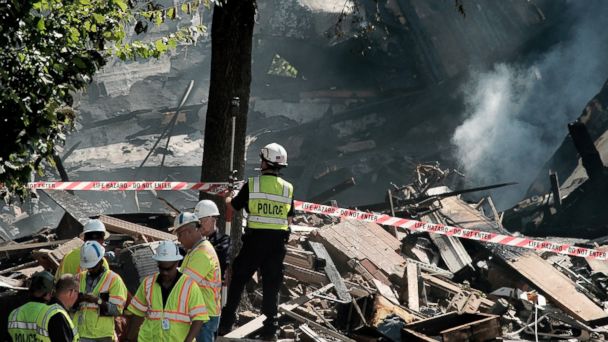
MORGAN WINSOR Updated 1 hr 21 mins ago A third body has been pulled from the ruins of a Maryland apartment complex following an explosion and fire earlier in the week, police said.
The third body was found Friday afternoon, a day after two other bodies were pulled from the debris of the building in Silver Spring, Maryland. Investigators have not yet identified the three victims, whose bodies have been transported to the chief medical examiner's office in Baltimore for autopsies and possible identification.
The blast and three-alarm fire at the Flower Branch Apartments late Wednesday night left at least 34 people injured, including three firefighters. Many of the injuries resulted from residents jumping out of windows, officials said.
Some 100 residents from 28 apartments in two buildings were forced to evacuate and are displaced, according to Montgomery County Fire Department spokesman Pete Piringer.
One building at the complex suffered structural collapse, several others were damaged and storefront windows across the street were shattered. Montgomery County Fire and Rescue Service division chief David Steckel said the building still presents a "collapse hazard" to investigators and rescue crews, and that hot weather has made their working conditions difficult.
"It's been a very challenging incident for us," Steckel said at a news conference Friday afternoon.
As of Friday afternoon, approximately 110 residents from the apartment complex were accounted for since the explosion. But investigators have not yet been able to determine the exact number of residents missing, according to Montgomery County Police Department assistant chief Russ Hamill.
"Investigators are still working to identify the missing people from this event. Throughout the day, we have located many individuals that were originally thought to be missing," Hamill told reporters Friday. "We do not have a number at this time."
He said that if any residents are still trapped inside the building, it's unlikely they're alive.
"Tragically, that doesn't seem that that's a possibility at this time," Hamill said at a news conference Thursday night.
Earlier Thursday, Montgomery County Fire and Rescue Service chief Scott Goldstein said between five and seven residents were still unaccounted for.
Anyone seeking to locate loved ones from the complex can receive immediate assistance at the nearby Rolling Terrace Elementary School in Takoma Park, officials said.
Investigators are looking into the cause of the deadly blast and fire. The Montgomery County Police Department, the Montgomery County Fire and Rescue Service and the Bureau of Alcohol, Tobacco, Firearms and Explosives (ATF) are jointly investigating.
ATF special agent Jeffrey Matthews said investigators will ultimately conclude whether the origin and cause of the explosion and fire was "accidental, incendiary or undetermined."
There are natural gas furnaces and quick-fire stove tops in each apartment of the four-level buildings on Piney Branch Road, officials said. Washington Gas, which serves more than 1.1 million customers in Maryland, Virginia and Washington D.C., turned off the natural gas to the complex around 1:45 a.m. Thursday morning.
"Washington Gas is supporting local, state and federal officials responding to and investigating this incident. Our thoughts are with the families impacted by this event," the company said in a statement to ABC News on Thursday.
Montgomery County Executive Ike Leggett said fire and rescue teams responded to a complaint at the apartment complex on July 25 about the smell of gasoline in the area. Officials are looking into the complaint.
The American Red Cross and local officials have set up a temporary shelter at the Long Branch Community Center in Silver Spring for displaced occupants, like Mariana Turag.
Turag told ABC News she heard the explosion, which "felt like an earthquake," and saw flames billowing out from her neighbor's apartment unit.
"That blast was a warning for everyone to get out," Turag said at the shelter Thursday. "I open the door -- there was a big blast in the apartment across from me."
For those looking for ways to help victims, financial donations can be made directly to the Montgomery Housing Partners, a nonprofit that has stepped up to help the displaced Flower Branch Apartment residents. Donations of goods can be taken to the CASA Welcome Center in Silver Spring.
ABC News' Dee Carden and Sarah Shales contributed to this report.
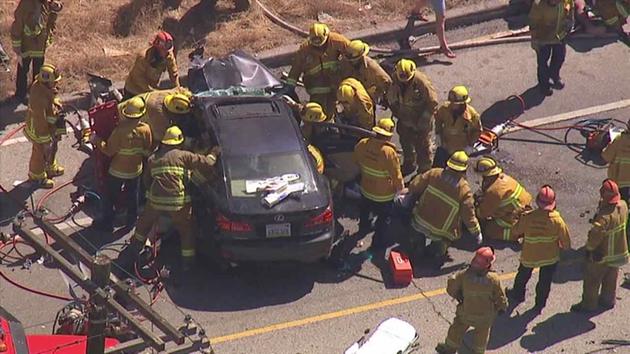
Firefighters help rescue several people from a deadly multi-vehicle crash in Sunland on Friday, Aug. 12, 2016.
By ABC7.com staff Saturday, August 13, 2016 10:49AM SUNLAND, LOS ANGELES (KABC) -- Two men killed in a head-on, multi-vehicle crash that left six other people injured in Sunland were identified Saturday morning.
A spokesperson for the Los Angeles Police Department's Valley Traffic Division said one or more vehicles attempted to pass in a two-way left-turn lane when the crash occurred.
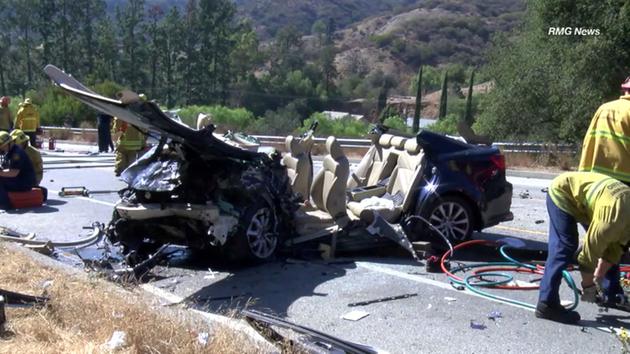
Los Angeles firefighter-paramedics removed the roof of a sedan after a fatal three-car crash in Shadow Hills on Friday, Aug. 12, 2016. (KABC) A Honda Civic traveling westbound struck a Lexus that was heading in the opposite direction. The Honda driver lost control of the car, which hit another Honda Civic that was also traveling westbound, authorities from the LAPD said.
Several patients were trapped in two of the wrecked cars and were subsequently extricated by some of the more than two dozen firefighters who responded to the crash site.
Karami and Minasian were the occupants in the first Honda when they were killed; two other men and two boys were initially hospitalized in critical condition, according to the Los Angeles Fire Department.
Another man was transported to a medical center in fair condition, while a sixth man sustained minor injuries and declined to be hospitalized.
The conditions of the hospitalized patients were later upgraded to stable, police said.
An investigation into the incident was ongoing.
===========================
2 killed, 6 injured in Sunland area crash
Two
men were killed and six other people were injured in a multi-vehicle
collision Friday afternoon in Shadow Hills, authorities said. (KABC)
By
Jory Rand
SHADOW HILLS, LOS ANGELES (KABC) --
Two men were killed and six other people were injured in a
multi-vehicle collision Friday afternoon in the Sunland area,
authorities said.
The three-car pileup happened about 3:10 p.m.
in the 9200 block of La Tuna Canyon Road, when one or more vehicles
attempted to pass in a two-way left-turn lane, a spokesperson for the
Los Angeles Police Department's Valley Traffic Division said.
According
to the LAPD, a Honda Civic traveling westbound struck a Lexus that was
heading in the opposite direction. The Honda driver lost control of the
car, which hit another Honda Civic that was also traveling westbound.
Several
patients were trapped in two of the wrecked cars and were subsequently
extricated by some of the more than two dozen firefighters who responded
to the crash site.
The occupants of the first Honda, described
as two men in their 20s, were pronounced dead at the scene; two other
men and two boys were initially hospitalized in critical condition,
according to the Los Angeles Fire Department.
Another man was
transported to a medical center in fair condition, while a sixth man
sustained minor injuries and declined to be hospitalized.
The names of the deceased were not immediately released.
The conditions of the hospitalized patients were later upgraded to stable, the Police Department said.
Louisiana Gov. John Bel Edwards has declared a state of emergency for the entire state as a result of heavy rain and widespread flooding. (Gerald Herbert)
Saturday, August 13, 2016 11:34AM
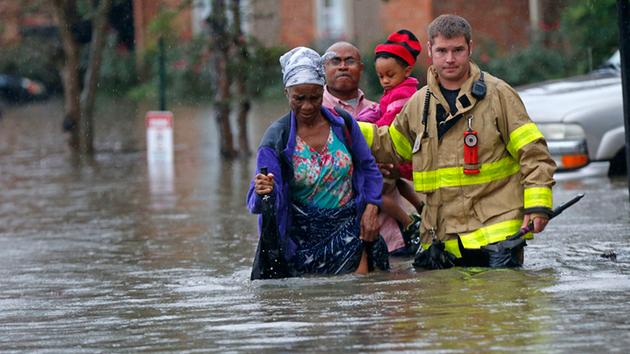
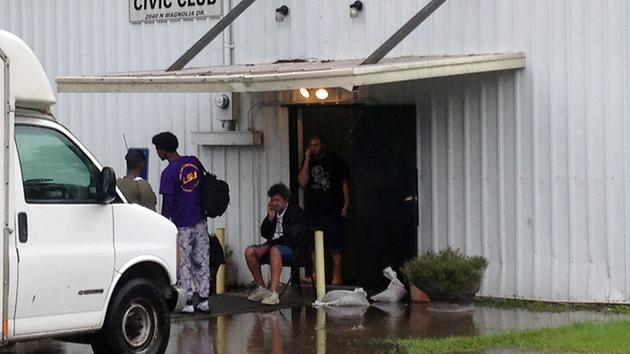
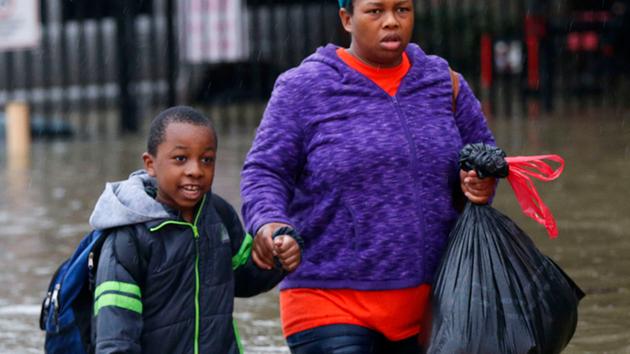
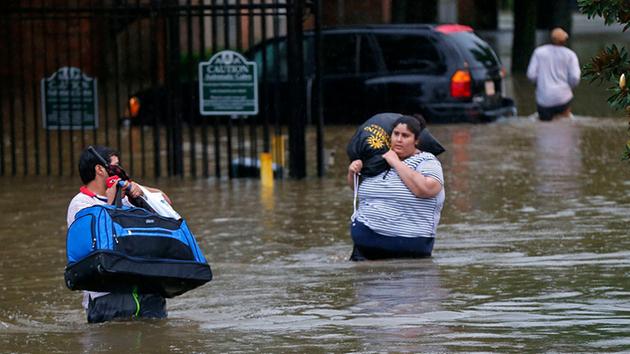
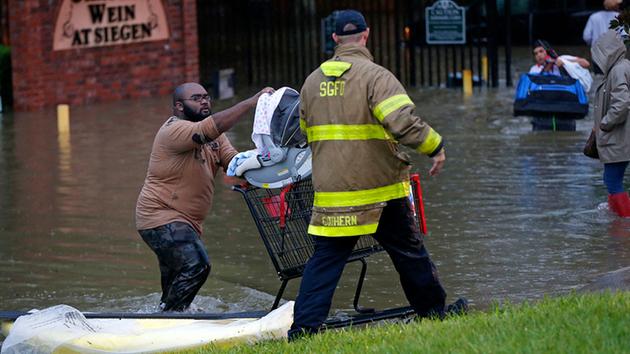
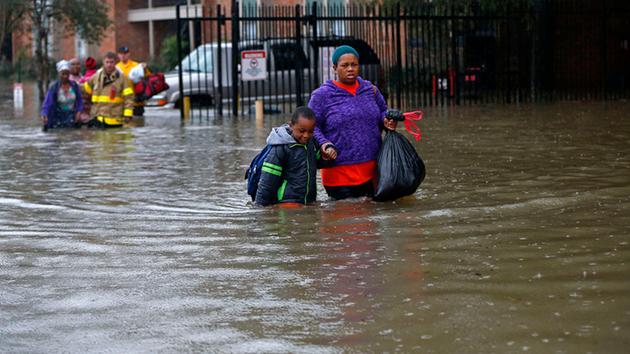
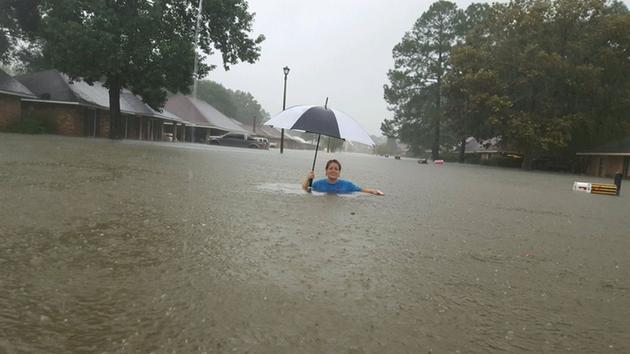
BATON ROUGE, LA -- More rain Saturday was expected to swamp already soggy ground across Louisiana and other parts of the Gulf Coast where at least two people died and dozens had to be rescued from waist-high water surrounding their homes.
Louisiana Gov. John Bel Edwards declared a state of emergency as rescue workers in the southeastern part of the state braced for more precipitation.
National Guard soldiers and other officials in boats and helicopters plucked more than 1,000 people from their homes and cars. (Mike Kunzelman)
Edwards spokesman Richard Carbo said the governor returned to Louisiana on Friday because of the flooding. Edwards had been in Colorado for a policy meeting of the Democratic Governors Association but left early because of the storm.
Edwards has scheduled a news conference for 10:30 a.m. Saturday to discuss the flooding situation, which also affected the Louisiana Governor's Mansion, which has a flooded basement. WAFB-TV reports (http://bit.ly/2b4rZsO) the governor's family has been relocated until the situation is resolved.
A spokeswoman for the East Baton Rouge Parish Sheriff's Office said one man died Friday after slipping into a flooded ditch near the city of Zachary. Casey Rayborn Hicks identified the victim as 68-year-old William Mayfield. His body was found about noon Friday.
Dr. William "Beau" Clark, the parish coroner, ruled the death "an accidental drowning."
A second victim was found in St. Helena Parish, where crews pulled a body from a submerged pickup on Louisiana Highway 10.
State Fire Marshal H. "Butch" Browning confirmed they found a man in his 50s inside a marooned Chevrolet pickup truck about 7 p.m. Friday. The body was turned over to the parish coroner's office. His name has not been released, but Browning said he's believed to be from the area.
Meanwhile, crews are continuing to search for possibly another washed away vehicle after residents reported a missing person.
Browning said the area is sparsely populated and authorities only came across the truck after earlier successfully rescuing the driver of an 18-wheeler whose rig was pushed off the roadway.
Numerous rivers in southeast Louisiana and southern Mississippi were overflowing their banks and threatening widespread flooding after extreme rainfall that began late Thursday, the National Weather Service reported.
Meteorologist Mike Shields, with the service's Slidell, Louisiana office, said a flash-flood watch remained in effect through Sunday.
"Potentially, additional heavy rain from 4 to 8 inches can be expected west of Interstate 55 and lesser amounts east of there as the system continues moving further west," he said.
In a 24-hour period, Baton Rouge reported as much as 11.34 inches of rain fell compared with 2.34 inches at New Orleans' international airport in Kenner. Shields said one of their weather observers reported 17.09 inches fell in Livingston.
The Comite River near Baton Rouge and Amite River near Denham Springs, both in Louisiana, were predicted to set record crests over the weekend. Forecaster Alek Krautmann said both rivers could flood many houses in suburban areas near Baton Rouge.
The Tickfaw River, just south of the Mississippi state line in Liverpool, Louisiana, was already at the highest level ever recorded at 9 a.m. Friday.
Mike Steele, a spokesman for the Louisiana Governor's Office of Homeland Security and Emergency Preparedness, said requests were coming in for high-water vehicles, boats and sandbags. Tangipahoa Parish alone requested tens of thousands of sandbags.
In southwest Mississippi, rescues occurred in Amite and Wilkinson counties.
Leroy Hansford, his wife and stepson were among those rescued near Gloster.
Hansford, 62, said waters from Beaver Creek, which is normally more than 400 feet away from his house, rose quickly overnight. He said another stepson who lives nearby alerted him.
"We woke up and the water kept on coming," Hansford said. "It came up to my waist." His wife told Hansford that it's the highest she's seen the creek in the 48 years she's lived there.
In Crosby, Mississippi, more than 50 people flooded out of a neighborhood will be housed at a shelter in Natchez.
Wilkinson County Chancery Clerk Thomas Tolliver said an apartment complex and surrounding houses in the town were flooded after 10 inches of rain fell. Authorities said they expect to shelter displaced Crosby residents at least until Monday.
Perfluorinated chemicals linked to military bases, airports New analysis finds association between drinking water contamination and non-industrial sources By Jessica Morrison
A new study links drinking water contamination from perfluorinated chemicals to airports and military bases. Credit: U.S. Air Force/Greg L. Davis
Drinking water contamination from perfluorinated chemicals is a known concern for communities near industrial sites in the U.S. where the chemicals were once produced. Contamination that extends beyond the reach of production facilities is coming from other sources, experts say.
Researchers are now pointing to military bases, civilian airports, and wastewater treatment facilities as sources of poly- and perfluoroalkyl substances (PFASs) in ground and surface waters.
Xindi C. Hu of Harvard T.H. Chan School of Public Health and colleagues report drinking water supplies of some 6 million U.S. residents exceed the lifetime health advisory levels for perfluorooctanoic acid (PFOA) and perfluorooctane sulfonate (PFOS) set by the Environmental Protection Agency in May (Environ. Sci. Technol. Lett. 2016, DOI: 10.1021/acs.estlett.6b00260).
Hu and her colleagues examined EPA’s national drinking water contaminant data for a suite of PFASs and analyzed 16 industrial sites, 664 military fire training sites, 533 civilian airports, and 8,572 wastewater treatment plants. They show a statistical association between the number of these facilities in an area and the concentration of PFASs in its drinking water.
“This study gives weight to what many of us had suspected for many years, which is that there is a very significant contribution of non-industrial sources of these chemicals to contaminated water supplies,” says Christopher P. Higgins, an environmental chemist and professor at Colorado School of Mines and co-author of the study.
The Department of Defense late last year began investigating contamination at military training sites where aqueous film-forming foams containing PFOS and related fluorochemicals that can degrade to PFOA or PFOS had been used for fire training exercises. In addition, the authors note that wastewater treatment plants are unlikely to remove PFASs through standard treatment methods.
“The authors are to be commended for taking EPA data and interpreting it for the public and decision makers,” says Jennifer A. Field, an environmental chemist at Oregon State University who was not involved in the work.
Military bases and airports are more abundant than manufacturing sites, Field adds. “This issue has the potential to touch every state.”
=======================
PFCs Quick Facts1 What are PFCs? PFCs are very stable, man-made chemicals (always blame the men). The chemical structure of PFCs is a chain of carbon atoms (4 to 16) surrounded by fluorine atoms and often with a charged functional group at the end (typically acarboxylate or sulfonate salt or acid). PFCs with 8 or greater Carbon atoms, including PFOA and PFOS, are long-chain PFCs. They are unique substances that repel oil, grease and water. How have PFCs been used? PFCs have been used to make fluoropolymer coatings and products that are oil and water repellent such as Teflon®, StainMaster® carpets, Scotchgard®, and GoreTex®. They have also been used to make surfactants that are used in firefighting foams and mist suppressants for metal plating operations. Where are PFCs found in the environment? PFCs are extremely stable and persistent in the environment, and migrate easily. They have been found globally (even in remote locations) in water, soil, and air, as well as in food, breast milk, umbilical cord blood, and human blood serum. They also concentrate in the food chain. How does exposure to PFCs affect human health? Scientists are continuing to study PFCs. Studies show that humans do not metabolize PFCs nor does the human body excrete the longer chain compounds very rapidly. In some cases it may take years for the human body to rid itself of PFCs. This is in contrast to animal (mice, rats) which rapidly excrete the chemicals. Some studies suggest that these substances may affect sex hormones and cholesterol in humans. Animal studies indicate damage to the liver and tumor development. The scientific evidence is inconclusive on whether PFCs might cause cancer in humans. Source: ATSDR, 2009 ===================== There are many chemicals that fall into the generic family of PFCs. This paper will focus on the two most commonly researched PFCs and most prevalent in the environment:1
The science surrounding PFCs is still evolving, especially in the fields of health and environmental effects and human toxicology. Much research has been and is being performed in the U.S. and internationally. PFCs are persistent, bio-accumulative, and toxic substances that have been detected all over the world, even in remote locations. They have been shown to be toxic to laboratory animals, and there is inconclusive evidence that they might cause cancer in animals.
The toxicity to humans is still being debated; although some studies suggest that these chemicals function as endocrine disruptors and mimic fatty acids in the body. The chemicals are not easily excreted and remain in the human body for years (estimated 4-8 years). In addition, PFCs do not degrade in the environment and are not removed by conventional water treatment methods, such as in-situ pump and treat, soil vapor extraction and air sparing. PFCs have been used to make fluoropolymer coatings and products that are widely used by consumers due to their oil and water repellent characteristics. They have also been used to make surfactants that are used in fire-fighting foams and mist suppressants for metal plating operations. Locations that may have been contaminated with PFCs include:
firefighting training areas,
aircraft crash sites,
metal coating and plating facilities,
water treatment systems and receiving water bodies, and
airport hangars and other facilities storing fire-fighting foams
The scientific community, industry leaders, regulatory agencies, and others are working to fully understand the health and environmental effects of PFCs as well as developing various analytical methods, treatment technologies, and remediation alternatives. In addition, federal government agencies and States are developing their own regulatory guidelines and protocols for addressing PFC contamination in the United States. This document includes introductory information and resources specific to PFCs and their persistence in the environment, and summarizes policy decisions and programs being implemented at federal facilities and other cleanup sites within the United States. A case study provided by the Michigan Department of Environmental Quality is also presented. MANUFACTURING AND USES OF PFCs PFCs are a large class of synthetic fluorinated chemicals and have been used in many industries including aerospace, automotive, construction, manufacturing, electronics, and textiles. PFCs have been used since the 1940s as manufacturer-applied oil and water repellants on products such as clothing, upholstery, paper, and carpets, and are also used in making fluoropolymers for non-stick cookware. PFCs surfactant qualities were also utilized in mist suppressants that can be added to metal plating baths to prevent air releases and to fire-fighting foams for flammable liquids (ATSDR, 2009). The two most commonly researched PFCs and most prevalent in the environment are PFOS and PFOA (ATSDR, 2009). PFOS In 1966, aqueous film forming foam (AFFF) was patented as a method for extinguishing liquid hydrocarbon fires (Tuve & Jablonski, 1966). In 1969, the Department of Defense (DoD) issued military specification Mil-F-24385, which includes the requirements for AFFF liquid concentrate fire extinguishing agents consisting of PFOS.
AFFF meeting MIL-F-24385 specifications were developed by seven manufacturers since the 1960s – 3M, Ansul, National Foam, Angus, Chemguard, Buckeye, and Fire Service Plus, Inc. – for the use in extinguishing fires at military bases, airports, oil refineries, and firefighting training facilities throughout the U.S. Between 2000 and 2002, the 3M Company, the largest manufacturer of AFFF in the world, voluntarily phased out its production. AFFF has not been manufactured in the United States since 2002 (Place & Field, 2013; Houtz, Higgins, Field, & Sedlak, 2014). AFFF products containing PFOS may still be in use. Although AFFF was reformulated in the early 2000s and no longer contains PFOS, civilian and military airports continue to maintain an inventory of PFOS-based AFFF. In recent years, the U.S. Environmental Protection Agency (EPA) issued Significant New Use Rules (SNURs) under its Toxic Substances Control Act (TSCA) authority to restrict the production and use of products that contain PFOS and its precursors; however, the U.S. EPA, Federal Aviation Authority, and other regulatory agencies continue to allow its use (FAA, 2011). 67 FR 11008, 67 FR 72854, citing the TSCA Section 5(f)
In 2004 and 2011, Robert L. Darwin, P.E., prepared estimates on the quantities of AFFF in the U.S. for the Fire Fighting Foam Coalition. Estimates provided in 2011 are provided in Table 1 below. Table 1: Estimates of AFFF Quantities by Sector, 2004 – 2011 (Darwin, 2011) Sector PFOS-based AFFF (2004) PFOS-based AFFF(2011) Military & Other Federal 2,100,000 1,094,700 Civil Aviation (Aircraft Rescue and Fire) 130,000 20,000 Oil Refineries 950,000 152,000 Other Petro-Chem 1,000,000 500,000 Civil Aviation (Hangars) 190,000 70,300 Fire Departments 120,000 60,000 Miscellaneous 150,000 75,000 TOTALS 4,600,000 gallons 1,972,000
PFOA PFOA has been manufactured in industrial quantities since the 1940s, and unlike PFOS, PFOA continues to be manufactured in the United States although several companies are phasing out its use. PFOA has been used primarily as an aqueous dispersion agent (additive) in the manufacturing of fluoropolymers, which are substances with special properties that have thousands of manufacturing and industrial applications. Well-known fluoropolymers are Teflon®, which is used in non-stick cookware, Gore-Tex® textiles, Stainmaster® carpets, and Scotchgard®. These registered and trademarked products are still available; however their manufacturers have ceased purchasing materials containing PFOA or revised the chemical formulas to eliminate the use of PFOA. PFOA can also be created by the degradation of some fluorinated telomers that are not manufactured using PFOA. Fluorinated telomers are used in fire-fighting foams and as surface protection to provide soil, stain, grease, and water resistance in products such as tile, stone, textiles, and paper packaging (U.S. EPA, 2014).
In 2006, U.S. EPA partnered with eight chemical companies to launch the 2010/2015 PFOA Stewardship Program to reduce emissions and product content of PFOA and long-chain PFCs that break down to PFOA by 95% in 2010, and to eliminate long-chain PFCs by 2015. As of January 2015, the program is on track to meet its goal of phasing out the use of PFOA by 2015 (U.S. EPA, 2015).
ENVIRONMENTAL FATE AND TRANSPORT
PFOS and PFOA compounds are highly soluble in water and typically present as an anion (conjugate base) in solution and have very low volatility due to their ionic nature (ATSDR, 2009). Long chain PFCs have low vapor pressure, and aquatic environments are expected to be their primary sink in the environment (Environment Canada, 2010). These compounds do not readily degrade by most natural processes. They are thermally, chemically, and biologically stable and are resistant to biodegradation, atmospheric photooxidation, direct photolysis, and hydrolysis. The structure of PFCs increase their resistance to degradation: the carbon-fluorine bonds require a lot of energy to break, and the fluorine atoms shield the carbon backbone (OECD, 2002).
PFCs have been found worldwide in soil, groundwater, surface water, rain, ice caps, air, plants, animal tissue, and blood serum (Furl & Meredith, 2010). The highest concentrations found in the environment tend to be associated with direct discharge from industries where PFCs are in use. Fresh waters in the vicinity of these industries have been documented to have concentrations of PFCs ranging from 1 – 1000s parts per trillion (ppt). Oceanic concentrations of PFCs are several orders of magnitude lower, ranging closer to 0.01 – 0.1 ppt (Lindstrom, Strynar, & Libelo, 2011). U.S. EPA Region 5 (2009) has detected PFCs in municipal tap water in Chicago and Cleveland with PFOS concentrations ranging from 2.0ppt to 5.0 ppt. Interestingly, while not volatile, PFCs have been detected in air, sediments, and fauna in the Arctic, despite being geographically separated from any possible human sources (Lindstrom et al., 2011).
PFCs are mobile in soil and leach into groundwater (SERDP, 2012). It is not completely understood how the compounds are transported to areas far removed from industrial facilities or consumer products. Three hypotheses have been presented regarding the method of long-range transport of PFCs. One possibility is direct ocean transport of PFCs (ATSDR, 2009).
The second is that PFCs are transported directly as marine aerosols, which is supported by evidence that surfactants accumulate at the surface of water bodies (ATSDR, 2009). In addition, a third hypothesis is that volatile fluorotelomer alcohols travel great distances in the atmosphere and degrade into PFOSand PFOA (Wallington et al., 2006)