MEC&F Expert Engineers

Sunday, September 20, 2015

SEQUENTIAL USE OF ACTIVATED PERSULFATE OXIDATION AND SULFATE-REDUCTION FOR IN-SITU REMEDIATION


SEQUENTIAL USE OF ACTIVATED PERSULFATE OXIDATION AND SULFATE-REDUCTION FOR IN-SITU REMEDIATION


INTRODUCTION

Metropolitan has developed and applied an innovative approach to the use of sodium persulfate for the sequential in-situ treatment of subsurface contaminants through chemical oxidation followed by enhanced biological degradation through sulfate reduction. This approach has broad applicability to a wide range of contaminants, and shows strong cost-saving benefits through reducing the initial volume of chemical oxidant necessary and enhancing the in-situ biological degradation of contaminants. 

Through proper subsurface geochemical characterization and chemical dosing design, the approach focuses on utilizing the oxidant for immediate mass reduction at the source area, followed by degradation or polishing of the residual contamination using sulfate reducing bacteria.   

Depending upon the oxidant activation method, this approach is applicable to petroleum hydrocarbons including both volatiles and PAHs, chlorinated volatile organic compounds (CVOCs) including chlorinated ethene, ethane and methane groups, as well as PCBs.  

 As discussed further below, enhanced sulfate reduction is also conducive to metals precipitation, and therefore, potentially useful for metals remediation and addressing metals mobilization concerns typical of in-situ chemical oxidation.  Although still developing, we believe this sequential oxidation and enhanced biodegradation approach is also applicable for the remediation of explosives or accelerants such as TNT, TNB, RDX and HMX. 

Metropolitan is currently seeking and pursuing opportunities for pilot or full-scale demonstration projects to further document and evaluate the timing and robustness of these two processes for treatment of any or a combination of these contaminant or chemical mixtures.  Further benefits and supporting details of this innovative approach are provided in the following discussion.  For additional information, please contact one of the Metropolitan remediation professionals provided below.


IN-SITU CHEMICAL OXIDATION (ISCO)

Persulfate Oxidation

Persulfates are strong oxidants that have been widely used in many industries for initiating emulsion polymerization reactions, clarifying swimming pools, hair bleaching, micro-etching of copper printed circuit boards, and TOC analysis. In the last few years there has been increasing interest in sodium persulfate as an oxidant for the destruction of a broad range of soil and groundwater contaminants.  

The persulfate anion is the most powerful oxidant of the peroxygen family of compounds and one of the strongest oxidants used in remediation. The standard oxidation – reduction potential for the reaction


is 2.1 V, as compared to 1.8 V for hydrogen peroxide (H2O2). This potential is higher than the redox potential for the permanganate anion (MnO4-) at 1.7 V, but slightly lower than that of ozone at 2.2 V. 

In addition to direct oxidation, sodium persulfate can be induced to form sulfate radicals, thereby providing free radical reaction mechanisms similar to the hydroxyl radical pathways generated by Fenton’s chemistry. The generation of sulfate radicals is


The sulfate radical is one of the strongest aqueous oxidizing species with a redox potential estimated to be 2.6 V, similar to that of the hydroxyl radical, 2.7 V. 

In addition to its oxidizing strength, persulfate and sulfate radical oxidation has several advantages over other oxidant systems. First, it is kinetically fast. Second, the sulfate radical is more stable than the hydroxyl radical and thus able to transport greater distances in the sub-surface. Third, persulfate has less affinity for natural soil organics than does the permanganate ion and is thus more efficient in high organic soils. 

Finally, the persulfate releases sulfate anions in the subsurface that can be used by sulfate-reducing bacteria to biologically degrade or stabilize a large number of contaminants. These attributes combine to make persulfate an effective and economic option for the chemical oxidation of a broad range of contaminants.


Source Area Mass Reduction/Ability to Treat a Wide-Range of Contaminants

ISCO has proven extremely useful for source area mass reduction to destroy mobile and recalcitrant contaminants.  Important advantages of ISCO include the speed of reaction, that there is no need for permanent above-ground installations and its cost benefit.   

Activated Sodium Persulfate is an emerging oxidant of choice for chemical oxidation because of its ability to treat a wide range of contaminants, safer handling characteristics and longer staying-power in the subsurface. When properly activated, persulfate provides an excellent combination of oxidative power and control that can be delivered both safely and cost efficiently.  

Successful pilot and full-scale field applications of Activated Sodium Persulfate have demonstrated it’s ability to treat a wide range of contaminants including; chlorinated ethenes (TCE, PCE, DCE, and vinyl chloride), chlorinated ethanes (1,1,1-TCA, DCA, vinyl chloride), chlorinated methanes (carbon tetrachloride, chloroform), polyaromatic hydrocarbons (PAHs), petroleum hydrocarbons, BTEX, MTBE and 1,4-dioxane.


The Metropolitan Technology Results in Reduced Amount of Oxidant and thus Saving Time and Money

Chemically, the stoichiometric oxidant demand for sodium persulfate varies between 20 and 45 pounds of oxidant per pound of oxidizable compound.  This high demand results in increased time in the field, increased number of mobilizations and resulting higher overall project costs. One primary challenge of any ISCO project is developing a thorough characterization and dosing design for the contaminants present.  

No less challenging is the delivery of the oxidant to the subsurface and achieving contact with all contaminant mass necessary to meet remedial goals or performance criteria (ISCO is a “contact sport”).  These chemical and physical challenges, while well understood and being further developed / optimized continuously, lead to relatively high demand for chemical oxidant quantities and incentive for conservative “safety factors” in the dosing design. 

However, the stoichiometry and other design challenges do not account for any subsequent reduction of the contaminant mass by sulfate-reducing bacteria that would be stimulated by the addition of the sulfate.   

Thus, following initial oxidation, the persulfate can play a role in enhancing the natural attenuation of contaminants.  In fact, enhanced sulfate reduction shows robust capabilities for biological degradation of a wide range of possible contaminants.   

While not well studied or understood as a sequential approach, Metropolitan believes the destruction of contaminants using both the oxidation and anaerobic degradation processes can be demonstrated and quantified, resulting in reduced chemical and project costs, and improved contaminant destruction beyond the initial, and potentially limited ISCO contact treatment.   

By taking into consideration the contaminant degradation by the sulfate-reducing bacteria, will reduce the amount of persulfate that needs to be injected at the source zone.  For example, while 1,000 pounds of persulfate can oxidize 22 pounds of BTEX, the SRB bacteria can utilize the injected sulfate to destroy an additional 160 pounds of BTEX.  At the same time, metals would be immobilized due to the production of metal sulfides that represent among the most stable compounds on earth. 


SULFATE REDUCTION FOLLOWING THE CHEMICAL RELEASE OF SULFATE

At many source areas, the natural bioremediation of contaminants is hindered by the presence of biotoxic concentrations and/or the lack of electron acceptors.  Sulfate is a well known electron acceptor utilized in anaerobic biodegradation.  This process is termed sulfate reduction and results in the production of sulfide.  Chemically, sulfate consists of one sulfur atom surrounded by four oxygen atoms. Sulfate-reduction strips away the four oxygen atoms leaving the sulfur atom in a form known chemically as sulfide.

The four oxygen atoms are used by the sulfate-reducing bacteria (SRB) to change carbon containing "foods" or "fuels" (i.e. contaminants) into carbon dioxide and water.  It is estimated that once natural or enhanced sulfate-reduction takes hold, approximately five (5) pounds of sulfate per pound of petroleum hydrocarbons is needed to achieve anaerobic degradation of the contaminants.   

This is substantially lower than the 20-45 pounds of persulfate needed to oxidize one pound of contaminants.  Evidence suggests that the growth and development of naturally occurring sulfate-reducing bacteria can happen relatively quickly (e.g., within thirty days or so), and that these populations are robust and aggressive, and show substantial contaminant degradation capabilities.  
Further, when provided with an organic carbon source (such as BTEX, other petroleum hydrocarbons, etc.), SRB will reduce sulfate to soluble sulfide; bicarbonate ions are also produced, helping to stabilize the water pH. The soluble sulfide reacts with metals in the groundwater to form insoluble metal sulfide precipitates. Therefore, this approach is more appropriate in situations where there are potential concerns with metal mobilization, as with a conventional oxidation method.  Using this sequential remediation method, the SRB-created sulfides can precipitate metals and minimize displacement or mobilization. 


SRB CAPABLE OF REDUCTIVE DECHLORINATION

Although the sulfate-reduction process or phase of this sequential persulfate application technology is not well understood or studied, studies and literature provide strong evidence of the capability of SRB to treat many contaminants including chlorinated solvents through reductive dechlorination.  In general, SRB produce sulfide as a waste product while obtaining electrons from molecules such as alcohols or organic acids. 

Several SRB species can also be useful in the co-metabolic reduction of CAHs.  Studies have shown that SRB Desulfitobacterium frappieri and Desulfomonile tiedjei are capable of degrading PCE to cis-DCE (Gerritise et al., 1996; Townsend and Suflita, 1996). Desulfitobacterium chlororespirans has been shown to degrade other CAHs such as 3-chloro-4-hydroxybenzoate (Gerritise et al., 1996).

Scientists have sequenced the genome of a sulfate-breathing bacterium that can damage oil and natural gas pipelines and corrode oilfield equipment.  The microbe, Desulfovibrio vulgaris, plays a role in a process called microbial-influenced corrosion (MIC).  The analysis of the microbe's genes is expected to help find better ways to minimize such damage as well as to develop methods to use such microbes to help remediate metallic pollutants such as chromium, arsenic, etc.

SRB SPECIES CAPABLE OF METAL REDUCTION
Desulfovibrio is a model for the study of sulfate-reducing bacteria, which use hydrogen, organic acid, or alcohols as electron donors to "reduce" (that is, add electrons to) certain metals, including chromium, arsenic, uranium, etc.  Other sequenced microbes that are capable of such reduction include Shewanella oneidensis and Geobacter sulfurreducens,  In their analysis of the D. vulgaris genome, scientists found a network of c-type cytochromes – proteins which facilitate electron transfers and metal reduction during the organism's energy metabolism. The presence of those c-type cytochrome genes are thought to give D. vulgaris a significant capacity and flexibility to reduce metals.


RDX REMEDIATION

Although even less studied at the current time, some work has been done that provides further evidence that SRB are capable of degrading explosives or accelerant contaminants prevalent at many military sites.  The metabolism of TNB (not TNT), RDX, and HMX by a sulfate-reducing bacterial consortium, Desulfovibrio spp., was studied by Boopathy, R., Gurgas, M., Ullian, J., and Manning, J.F. (1998). Metabolisms of Explosive Compounds by Sulfate-Reducing Bacteria. Current Microbiology 37(2): 127-131. 

The results indicated that the Desulfovibrio spp. used all of the explosive compounds studied as their sole source of nitrogen for growth. The concentrations of TNB, RDX, and HMX in the culture media dropped to below the detection limit (less than 0.5 parts per million [ppm]) within 18 days of incubation. The sulfate reducing bacteria may be useful in the anaerobic treatment of explosives-contaminated soil.

COMPETITION BETWEEN METHANOGENS AND SULFATE-REDUCING BACTERIA

It has long been known that methane production in marine sediments occurs only after sulfate has been depleted from the pore water (Martens and Berner 1974; Winfrey and Zeikus 1977). Subsequently, it was found that this is due to the competition between methanogens and SRB for some electron donors (Banat et al. 1983; Winfrey and Ward 1983). Based on thermodynamic considerations, the utilization of H2 or acetate by SRB yields more energy than the utilization of these two substrates by methanogens. Thus, SRB obtain more energy for a given substrate than do methanogens, and they out-compete the methanogens for that substrate if sulfate is sufficiently abundant in the habitat. 

When sulfate is depleted, methanogens carry out the terminal steps of decomposition in the anaerobic environment. In addition, the sulfate reducer Desulfovibrio vulgaris (Marburg) has a lower apparent Ks (half-velocity constant) for H2 than does the methanogen Methanobrevibacter arboriphilus (Kristjansson et al. 1982), indicating that the former outcompetes the methanogen for H2 when the concentration of this electron donor is low. Similarly, the Ks value for acetate is lower for the acetate-utilizing sulfate reducer Desulfobacter postgatei than for the methanogen Methanosarcina barkeri (Schönheit et al. 1982). Thus, SRB have both thermodynamic and kinetic advantages over methanogens.


THE BOTTOM LINE

The use of Metropolitan’s hybrid chemical oxidation/anaerobic biodegradation approach has the potential to substantially reduce the in-situ treatment costs for a large number of contaminants and at complex sites where a mixture of chemicals are present.  Metropolitan’s method will ensure that matrix issues are dealt with reliably (minimize the rebounding effects), while reducing the amount of field work with minimum disruptions to the property.


REFERENCES
1)   Behrman, E.J. and J.O. Edwards. Reviews in Inorganic Chemistry, 2, p 179 (1980) Brown, R.A., D. Robinson and G. Skladany. “Response to Naturally Occurring Organic Material: Permanganate versus Persulfate”, ConSoil 2003, Ghent Belgium, (2003) Bruell, C. J. “Kinetics of Thermally Activated Persulfate Oxidation of Trichloroethylene (TCE) and 1,1,1- Trichloroethane (TCA),” The First International Conference on Oxidation and Reduction Technologies for In-Situ Treatment of Soil and Groundwater, Niagara Falls, Ontario, Canada, June 25-29, 2001
2)   Beller, H.R., Reinhard, M., and Grbic-Galic, D., 1992, Metabolic byproducts of anaerobic toluene degradation by sulfate-reducing enrichment cultures: Appl. Environ. Microbiol., v. 58, p. 3192-3195.
3)   Balazs, G.B., J.F. Cooper, P.R. Lewis and G.M. Adamson. Emerging Technologies in Hazardous Waste Management 8, ed. Tedder and Pohland, Kluwer Academic / Plenum Publishers, New York, 2000.
4)   Beller, H. R., D. Grbic-Galic, and M. Reinhard. 1992b. Microbial degradation of toluene under sulfate-reducing conditions and the influence of iron on the process. Appl. Environ. Microbiol. 58:786-793
5)   Coates, J.D., R.T. Anderson, and D.R. Lovley. 1996. “Oxidation of Polycyclic Aromatic Hydrocarbons under Sulfate-Reducing Conditions.” Appl. Environ. Microbiol.62:1099-1101.
6)   Coates, J.D., J. Woodward, J. Allen, P. Philip, and D.R. Lovley. 1997. “Anaerobic Degradation of Polycyclic Aromatic Hydrocarbons and Alkanes in Petroleum-Contaminated Marine Harbor Sediments.” Appl. Environ. Microbiol., 63:3589-3593.
7)   Elmendorf, C., F. Sessa. Poster at the 4th Annual Battelle Conference On the Remediation of chlorinated and Recalcitrant Compounds, Panther Technologies and FMC Corporation (2004).
8)   FMC Corporation , activation of persulfate using peroxide, patent pending technology (2002)
9)   FMC Corporation, activation of persulfate using high pH, patent pending technology (2003)


Metropolitan Engineering, Consulting & Forensics (MECF) 
 Providing Competent, Expert and Objective Investigative Engineering and Consulting Services

P.O. Box 520
 Tenafly, NJ 07670-0520 
Tel.: (973) 897-8162 
Fax: (973) 810-0440
 E-mail: metroforensics@gmail.com 
Web pages: https://sites.google.com/site/metropolitanforensics/ 
https://sites.google.com/site/metropolitanenvironmental/ 
https://sites.google.com/site/metroforensics3/

http://metroforensics.blogspot.com/

We are happy to announce the launch of our twitter account. Please make sure to follow us at @MetropForensics or @metroforensics1 
Metropolitan appreciates your business.Feel free to recommend our services to your friends and colleagues.

ENVIRONMENTAL FORENSICS: DETERMINING WHEN, WHAT, WHERE, WHO AND HOW CHEMICALS WERE RELEASED


ENVIRONMENTAL FORENSICS: DETERMINING WHEN, WHAT, WHERE, WHO AND HOW CHEMICALS WERE RELEASED


https://sites.google.com/site/metropolitanforensics/environmental-forensics-determining-when-what-where-who-and-how-chemicals-were-released


Subsurface releases of chlorinated and petroleum hydrocarbons (drycleaner and degreasing solvents, crude oils and refined products such as gasoline) are one of the most frequent causes of groundwater contamination in the United States. They are the subject of billions of dollars spent in investigation, remediation, property damage claims, and litigation. In order to differentiate the nature and sources of contamination, detailed chemical data of the in situ contamination and its potential sources must be collected and compared, to properly allocate contaminant ownership.


Many forensic tools are available during the forensic investigations to accomplish the objective of determining when, what, where, who and how; several have been used for decades and others are now more widely used due to improvements in laboratory analytical capabilities. For example, trace elements can be used to track surface and groundwater contaminant plumes. We have used Boron to track leachate emanating from municipal solid waste landfills because it is extensively used in disinfectants, preservatives, and as a fluxing agent in glass and enamels; is readily soluble in water; and will travel greater distances than some hydrocarbons and most heavy metals. We have also used rare earth elements to track refinery effluent and sediment and waste soil dumped into rivers. 


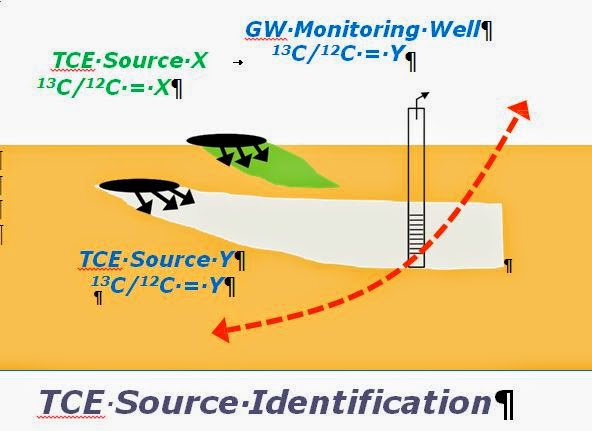
More recently, we have used CSIA (compound specific stable isotope) methods in vadose zone and vapor phase contaminant studies to identify the source of the contamination and to assess the in-situ degradation of contaminants. See figure below for an example illustration of how we determine the impacts at a monitoring well from source X or from source Y, a very common dispute in environmental contamination incidents.


The many issues associated with disputes over responsibility for cleanup are reviewed in this multi-part blog, as we attempt to answer the questions: When, what, where, who and how chemicals were released. Case studies are presented, highlighting the approach and results of these forensic investigations.


Tools of the Forensic Investigation


The tools of forensic investigation include, but are not limited to, gas chromatography, mass spectrometry, flame ionization, thin layer chromatography, lead isotope analyses, library search site characterization, tracer additives, stable and radioactive isotope analyses, mathematical fate and transport models, and so on. These tools are presented with emphasis on how they might be applied at mixed or commingling plume sites.

The best tools to apply to a particular case depend on the questions posed, so clarity about the ultimate objective of the forensic work is important from the start. For example, a focus on product identification or source characteristics is usually quite different from age-dating the release(s). Crude oil and refined products are complex mixtures of hundreds to thousands of constituents that can have widely varying physico-chemical properties, and some forensic tools are better suited to certain constituents than others. In addition, it is very important to consider the phase of the chemical to be sampled, such as petroleum product, soil-sorbed constituents, dissolved phase constituents in groundwater, and vapor phase constituents.


For example, a forensic method that we use is called PIANO (Paraffins, Isoparaffins, Aromatics, Naphthenes, Olefins). The analytical method is high resolution GC/FID or full scan GC/MS. The distribution of the over PIANO gasoline-range constituents provides information on the source and age of the product, because it determines the amount of weathering. This method is applicable to gasoline, naphtha, and other light hydrocarbons. Other methods available for gasoline fingerprinting include: oxygenate analysis, organic lead and lead scavenger analysis, bulk and compound-specific stable isotope analysis. The figure below shows a typical PIANO histogram.


For diesel fuel fingerprinting we may use: PAH and alkyl-PAH analysis, n-alkane and acyclic isoprenoid analysis, biomarker and n-alkylcyclo-hexane analysis, total sulfur analysis, and so on.


Metropolitan is typically applying environmental forensic methods taking into consideration of the hydrogeological properties of aquifers, fate and transport properties of contaminants, and advanced chemical ‘fingerprinting’ to answer the posed questions and to assist clients define their relative responsibility in environmental cleanup at spill sites. Metropolitan uses a multiple-line of evidence approach and places a particular interest in cross-checks of results and interpretations with the goal to generate factual information to assist our clients in the fair settlement of the legal claim.


Estimation of the Fuel Release Time


At several of our projects Metropolitan is tasked with the determination of the time of the release of fuel oil. The correct determination of the time of the release insures that an equitable settlement of the resulting liability and damages occurs.


Estimates on fuel/oil release times are feasible in the presence of suitable data sets, including:


1. geochemical data


2. stable and radioactive isotope analyses


3. chemical, biological and physical data of soil and or groundwater, including analyses for trace elements


4. hydrogeologic system and groundwater level variations


5. nature and extent of hydrocarbon plume; concentration gradients within plume


6. microbial soil / water potential to degrade various hydrocarbon constituents


7. metal concentrations in the impacted soils and groundwater


8. contaminant sampling within and beyond the plume


Forensic Engineering Experience Case Studies


Metropolitan staff has developed and utilized scientific methods to assist clients in a variety of ways related to their claim issues. The following is a partial list of such projects:


· Provided expert witness services for plaintiff seeking remediation of contaminated groundwater that caused indoor air inhalation problems;


· Used CSIA to determine the source(s) of PCE and TCE at monitoring wells at a number of sites in New York, New Jersey, Pennsylvania and Connecticut;


· Testified that engineering and scientific evidence was improperly collected and analyzed and was inadequate to show the age of the release;


· Demonstrated that solvents in groundwater at client's property originated from off-site drycleaner and that client's site actually provided remediation for the off-site release of dry cleaning solvent;


· Expert witness for property owner impacted by industrial waste disposal from industrial manufacturer;


· Demonstrated that environmental analysis by a previous consultant for a manufacturing site was inadequate; as a result, the lender's concerns were alleviated and financing proceeded;


· Chemical "age-dating" and contaminant transport analyses of petroleum in groundwater at a gas station showed that contaminants originated from other parties;


· Age-dated petroleum release at a former gas station to show that the previous owner of the gas station caused groundwater contamination;


· Age-dated petroleum releases at an industrial facility to show that the on-site plume was the result of an off-site source;


· Prepared age-dating reports for over one-hundred residential fuel oil spills;


· Assisted insurance companies attorneys in defending subrogation claims; was able to demonstrate that the forensic data collected by the first party consultant were collected and analyzed using invalid methods;

· Demonstrated that structural damage to a residence was from a source other than the alleged high lake level


· Collected evidence (for the primary responsible party) that identified other responsible parties to share in the cost of a Superfund cleanup;


· Review of the site data at a bulk petroleum facility indicated that the site releases were not the result of regular oil transfer operations and that they were caused by the negligent actions of the insured’s agents; the case was settled in favor of the insurance company;


· Was able to demonstrate that the majority of the removal actions at petroleum release sites were neither reasonable nor necessary; as a result of our opinion, the insurance client settled the claim in favorable terms;


· At several drycleaner sites we were able to demonstrate that the age of the release was much earlier than the parties originally believed; as a result, the insurance client settled the claim at a fraction of the alleged liability.


Gasoline Fingerprinting Case Study – Applying the PIANO Analysis to Determine the Source of the Gasoline Product in Monitoring Wells


A typical situation we encounter in urban settings is contamination that may have been caused by multiple sources. Insurers and responsible parties want to know the percent contribution from each source or from a source so that they perform cost allocations. Forensic characterization of gasoline releases can be accomplished with PIANO analyses, an enhanced GC/FID or GC/MS technique which can identify and quantify hundreds of hydrocarbons. By quantifying diagnostic ratios of selected hydrocarbons obtained from the PIANO scan, investigators can obtain information on the magnitude of environmental weathering, the type of gasoline present and the refining methods used in its production and the gasoline’s compliance with environmental regulations. These parameters can be used to assess the nature of the gasoline release and when it occurred.


The objective of a typical investigation is to determine if LNAPL (a floating gasoline product) encountered inside groundwater monitoring wells or test pits downgradient from two or more gasoline and diesel service stations came from-phase gasolines found on the property of these service station. We typically must perform a detailed gasoline product analysis from each gasoline station and from the downgradient areas. It is well known that refiners that provide the gasoline and other product to the individual service stations use different blending compositions. Therefore, we can use this knowledge to determine the source of the gasoline as it is transported and degraded in the subsurface environment.


Weathering in the subsurface environment typically affects the product samples differently; therefore, some differences are always apparent. In a typical case, the gasolines samples analyses from each station revealed differences related to refinery blending. Formulated gasoline is generally enriched in isoparaffins and aromatics. One Station’s gasoline contained an abundance of particular isoparaffins, namely, 2,2,4-, 2,3,4-and 2,3,3-trimethylpentane, which indicate that the refiner blended alkylate into its gasolines. 


Another refiner that provided gasoline to a second station did not use alkylate in production of its gasoline(s). The relative absence of these isoparaffins in the downgradient monitoring well samples indicated that it was consistent with the gasoline from the first station’s refiner. Thus, we were able to prove with a reasonable degree of scientific certainty that the contamination in the wells had originated from only one of the gasoline stations.


In another case, we were able to determine that the subject gasoline was a leaded gasoline and that only two of the subject four gasoline stations were using that type of product. Furthermore, by using analyses for methyl lead and tetraethyl lead, we were to prove that only one gas station was using methyl lead gasoline.


Claims Closed


We are pleased to report the closure of the following claims.


Claim Closed #1: Release of One Thousand Gallons of Kerosene


We were asked to investigate the release of kerosene from an underground storage tank (UST) and associated piping. The insured claimed that the release was sudden and accidental, triggering coverage of our client’s policy. We investigated the leak site, collected forensic data and determined that the leak occurred over a period of many years and that it was not a sudden and accidental release. Our client settled the claim for a small fraction of the $150,000 claim price tag. Claim closed – at a record time.

Claim Closed #2: Historic Release of Gasoline at a Former Gasoline Station


We were asked to review a claim file for determining the age of the release(s) of gasoline and other petroleum hydrocarbons. Without collecting additional data, we determined that the gasoline releases were historic in nature (pre 1982). Since our client insurance policy covered the property for the years 1990-1995, an amicable settlement was reached with the insured without incurring additional claim investigation expenses. Claim closed – at a record time.


Issue Resolved


We are very pleased to report the resolution of the following issue(s).

Issue Resolved: Plume Commingling.

We were asked to review a claim file to determine if the releases from two diesel USTs were commingling. Other consultants had unsuccessfully attempted to resolve the issue and one of the insurance carriers was refusing to admit that the plumes were commingling. Based on constituents found in the diesel fuel(s), we were able to show that the two plumes were commingling; we were also able to determine the percent mixing of the plumes. As a result, our client requested from the other insurance company to contribute to the cost of site cleanup. The parties have reached an amicable settlement based on the conclusions of our work. Issue resolved.


Metropolitan Also Offers the Following Claim Management Services

Professional Errors and Omissions


Design Errors and Omissions: Code Compliance, Drawing/Plans Analysis, Quality Assurance, Defect Analysis, Design & Repair Scope, Conflict Resolution, Scheduling Analysis, Contract Analysis, Exhibit Preparation, Testimony, Expert Analysis


Construction Errors and Omissions. We perform the following basis services. Claims Analysis, Scope of Repair, Delay Claims, Estimating, School Construction, Timeline Analysis, Defect Claims, Negotiation of Claims, Report Generation, Exhibit Preparation, Testimony, Expert Analysis.

Construction Defects

We provide civil engineering and construction consulting services including technical advice, dispute resolution assistance and expert testimony. Services include construction contract claim preparation and analysis utilizing Critical Path Method (CPM) schedule techniques, loss of productivity studies and liability assessments; Construction project performance evaluations (including Standard of Care assessments); Construction contracts analysis; Property and casualty loss investigations and reconstruction estimates; Personal injury investigations and opinions of liability; Pre-litigation support services including interrogatory and opposing expert deposition question preparation; Attendance at opposing expert deposition; Provision of expert testimony at deposition, mediation, arbitration and trial.

When involved during construction, our basic strategy in addressing claims is anticipation, avoidance, mitigation, and then preparation or defense of the claim. To that end, we perform detailed research and comprehensive analysis of disputed issues and the responsibilities of the owner and the contractor related to each issue.


_______________________________________________________

Metropolitan’s Pledge

Our goal is to help you resolve the claim at the lowest possible transaction cost. Since transaction costs are, on average, fifty to seventy five percent of the claim, Metropolitan believes that the emphasis should be placed in reducing the transaction costs by collecting high quality data early on to ensure unnecessary challenges by the insured and/or other insurance carrier, should the claim is subrogated.

We know that you want the facts; that you want them fast; that you want uncompromised quality of the deliverable; and at a rock bottom price.


forensic professionals are second to none and are dedicated to fast, efficient and effective response and creating a product of uncompromising quality and value.

forensic professionals are second to none and are dedicated to fast, efficient and effective response and creating a product of uncompromising quality and value.

Metropolitan is ready to assist you with a number of forensic engineering or age-dating determinations or evaluations to insure that the proper coverage trigger or period has been determined. We also have the scientific expertise to determine whether the releases were historic in nature, whether they were sudden or accidental, as well as to be able to differentiate plume contributions from various sources.


We are ready to assist you with E&O claims and/or construction defect claims. Metropolitan will also use proven forensic techniques in the determination of the cause, origin, and extent of foundation/soil movement, grating/drainage, structural failures, water intrusions, construction defects and other failures. Our job is to find out what happened and why, from the cause and origin through the extent of loss. Metropolitan will be able to point the way toward a speedy disposition of the claim.


Our job is to find out what happened and why, from the cause and origin through the extent of loss. Metropolitan will be able to point the way toward a speedy disposition of the claim.


Metropolitan Engineering, Consulting & Forensics (MECF)
Providing Competent, Expert and Objective Investigative Engineering and Consulting Services
P.O. Box 520
Tenafly, NJ 07670-0520
Tel.: (973) 897-8162
Fax: (973) 810-0440
E-mail: metroforensics@gmail.com
Web pages: https://sites.google.com/site/metropolitanforensics/
 

Metropolitan appreciates your business.

Feel free to recommend our services to your friends and colleagues.

We know you need to process damage claims quickly and knowing the facts is now faster than ever – within 24 hours of site visit. Our Pegasos Forensic Investigation Services (PFIS) feature:

· Expert Forensic Investigators on-site.

· Defensible, Readable, Conclusive Reports.

· Fixed-Prices starting at $499 per chimney or roof inspection (volume discounts are also available). Flood loss assessments start at $999.0. HVAC equipment only inspections start at $299 for local (within one hour one-way drive) assignments.

· 10-State Coverage Area.

· All of our employees and associates are subjected to full FBI background investigations and security clearance.

THE FIRE AND EXPLOSION RISKS ASSOCIATED WITH ETHANOL PRODUCTION AND TRANSPORTATION


THE FIRE AND EXPLOSION RISKS ASSOCIATED WITH ETHANOL PRODUCTION AND TRANSPORTATION


In the last fifteen years, the production of ethanol has increased dramatically due to the demand for ethanol-blend fuels.  Current production (November 2014) in the United States is almost 15 billion gallons (14.932 billions).  On December 19, 2007, the Energy Independence and Security Act of 2007 was signed into law.  

This comprehensive energy legislation amended the Renewable Fuels Standard (RFS) signed into law in 2005, growing the RFS to 36 billion gallons in 2022.  There are 213 nameplate refineries, with additional refineries being proposed/expanded.  Most the ethanol refineries are located in the Midewest and upper Midwest.  Ethanol is produced by fermentation and distillation processes.  

The most common ethanol concentration leaving a biorefinery is denatured fuel ethanol which consists of 98% ethanol and 2% denaturing agent (rust inhibitor).  Natural gasoline is also mixed with the alcohol, prior to shipment.


 The yellow circles indicate refineries under construction.  The green circles are operational ethanol plants.

Denatured ethanol is largely shipped from production facilities by rail and is now the largest volume hazardous material shipped by rail. 
Large volumes of ethanol are commonly shipped by unit trains, up to 3.5 million gallons, and the larger barges can transport up to 2.5 million gallons.  In Massachusetts, two to three ethanol unit trains currently travel through the state per week, as well as an ethanol barge per week.  The number of trains and barges transporting denatured ethanol (95% - 98% ethanol) through the state are anticipated to increase in the future, especially if the use of higher ethanol blends becomes more prevalent. 

The high volume of ethanol transported and the differences in the chemical properties, and the fate and transport of ethanol as compared to standard gasoline, led to the need for additional consideration of spill response actions. In particular, this document considers the assessment and response actions for rail and barge spills of denatured ethanol. 


Ethanol is a flammable colorless liquid; a polar solvent that is completely miscible in water. It is heavier than air, and has a wider flammable range than gasoline, with a Lower Explosive Limit (LEL) to an Upper Explosive Limit (UEL) range of 3.3% to 19%. The flash point for pure ethanol is 55°F, and for denatured ethanol it is much lower (-5°F). 

Ethanol is still considered a flammable liquid in solutions as dilute as 20%, with a flash point of 97°F. At colder temperatures (below about 51°F), the vapor pressure of ethanol is outside the flammable range. Denatured ethanol is shipped with a flammable liquids placard and North American 1987 designation. 

Here is a partial list of some fires and explosions involving ethanol plants across the United States.  Due to the flammable and explosive nature of the process, these fires and explosions occur at some frequency.


 ETHANOL PLANT EXPLOSION OR FIRE
PLANT
LOCATION OF FIRE/EXPLOSION
DATE


Arkalon Energy LLC, Liberal, Kansas
A corn dryer caught fire and exploded.  The combustion chamber of the dryer exploded due to natural gas.
29-Jun-14
Green Plains Renewable Energy, Fergus Falls, MN
A hydraulic pump which controls the damper in the dryer building of the Green Plains Renewable Energy plant failed
13-Mar-14
Flint Hill Resources, Arthur, Iowa - Platinum Ethanol Plant, 2585 Quail Avenue, Arthur, IA
A distilled grains dryer exploded, damaging a unit of the building.
17-Jul-14
Badger State Ethanol Plant 820 W. 17th Street
P.O. Box 317 Monroe, WI 53566
small fire and explosion in silo
23-06-07
Ethanol of Florida, E 1705 Mann Rd , Bartow FL Polk - County
a tank containing alcohol exploded near the rear of an ethanol plant
24-04-09
Abengoa Bioenergía , 395 Bissell St. Madison, IL, 63060, USA
Men were working near a container in a maintenance shed when the container exploded.
11-04-11
Lincolnway Energy, 59511 West Lincoln Highway, Nevada, Iowa
Explosion at the ethanol plant.  A power surge caused a steam pipe to burst, burning the workers who were performing maintenance nearby
11-11-07
American AG Fuels, Defiance, Ohio
unknown reason for blast, but happened in loading area
04-01-08
Appomattox Bio Energy Plant, 701 S. 6th Avenue, Hopewell Virginia 23860
vapors back-up and the vapors were in a device that has a burner in it and so the vapors ignited
09-09-10
Chief Industries, 4225 E South St. • PO Box 488 • Hastings, NE 68901
the men opened the door of a grain grinder while doing maintenance and a small explosion occurred.
Mar. 6, 2009
Poet Ethanol Plant , 27716 462ND AVE. CHANCELLOR, SD 57015
issue with feed dryer. Worker were taking downt he dryer when a a small amount of dust ignited.
24-08-10
Pinal Energy, 38585 W Cowtown Rd Maricopa, AZ 85139
the explosion was possibly the result of corn by-product dust particles that were ignited by a heating system used in the ethanol-producing drying process.
09-10-09
Central Minnesota Ethanol Co-op in Little Falls, Minn.
the damage was contained to a biomass gasification system
03-10-07
Chippewa Valley Ethanol Co. 270 20th St. NW, Benson, MN 56215
A tank holding 40,000 gallons of corn mash, exploding with a "whoosh and a flash"
Oct. 22, 2003
A LyondellBasell US ethanol 625 East US Highway 36,
Tuscola, IL 61953
plant rocked by an explosion on Monday
22-03-10
Collingwood Ethanol plant
fire in silo
13-05-09
Amaizeingly Green L.P formerly Collingwood Ethanol
The company was convicted of a number of charges laid by
the MOE related to odour and noise issues.
2009
Tharaldson ethanol plant 3549 153rd Avenue SE Casselton, ND 58012
contained to a dust collection bin.
28-02-09
Constellation New Energy Inc
3201 West Calvert Street South Bend, IN 46613-1010
fire not clear
12/30/10
Bushmills Ethanol, Atwater, MN 56209
fire on conveyor belt
11/04/2010
Bushmills Ethanol, Atwater, MN 56209
natural gas leak
10/24/2009
Poet Refining, Caro, MI 48723
fire in the ductwork between the dryers and thermal oxydizer caught fire
10/13/10
Pinal Energy, 38585 W Cowtown Rd Maricopa, AZ 85139
explosion at a grain elevator
12/29/08
Glacial Lakes Energy
fire in large corn dryer
12/23/08
East Kansas Agri Energy
Ethanol Explosion
12/16/08
anildra Ethanol Plant, Bomaderry, NSW 2541
Australia
explosion
12/10/2008
Greater Ohio Ethanol, Lima OH
dust fueled fire in duct work
11/11/2008
Central Minnesota Ethanol Co-op, Little Falls, Minn.
explosion in a wood chip storage silo
10/29/08
Poet Biorefining Michigan Ethanol
fire in hot spots in the ductwork
9/23/08
Glacial Lakes Energy, Mina, SD 57451
electrical motor blamed for the fire at the bottom of a grain bin
8/30/08
Abengoa Bioenergy, York, NE 68467
fire in duct work
07/02/2008
Andersons Albion Ethanol, Sheridan Township, MI
explosion in the dryer
6/27/08
Poet Biorefining Mitchell, Loomis, S.D
flash fire,
01/03/2008
Pine Lake Corn Processors, Steamboat Rock, IA 50672
Dryer explosion
2007-dec
Central Minnesota Ethanol Co-op in Little Falls, Minn.
explosion in silo/biomass gasification system
10/27/07
AGP Ethanol plant, Hastings
fire in soybean meal dryer
7/29/06
Big River Resources, West Burlington, IA
fire in bin that is used to dry animal feed
9/21/05
Heartland Grain Fuels, Aberdeen, SD
dryer fire
11/14/04
Michigan Ethanol/Poet, Caro, MI
dryer fire during routine dryer shutdown
5/24/04
Great Plains Ethanol/Poet, SD
power outage/ fire stated when feed ignited
3/14/04
Gopher State Ethanol/ out of business
a piece of insulation fell into a heated area, setting the roof
on fire
7/26/03
Tri-County Ethanol/North Country Ethanol, S. Dakota
fire and explosion in the distillation area
12/31/02
Gopher State Ethanol, Saint Paul, MN
fire in grain drying unit
06/05/2002
Gopher State Ethanol, Saint Paul, MN
fire in grain drying unit
3/23/02
Corn Plus, Winebago, MN
older dryer fire
11/30/01
Heartland Grain Fuels, Aberdeen, SD
fire started after a valve allowed 200 proof raw alcohol to
drain onto the floor and run out an open door. A spark from welding equipment used by a crew working on the second floor of the building ignited the alcohol.
8/23/2000
New Energy, South Bend, Indiana
fire contained to the bag house. Spontaneous combustion the
cause
3/21/2000
Minnesota Energy, Buffalo Lake, MN
fire in the dryer
11/06/1998
Yokkaichi, Mie, Japan
explosion in recycle gas piping near reactor due to erosion
05/02/1997
Cornhusker Energy Lexington LLC, NE
natural gas rupture
12/24/2008
Manildra Park Petroleum, Australia

1/29/2004
Delta Oil Mill, Greenwood, Miss
grain fire
06/27/2011
Surat India
leak in ethanol pipeline
11/23/2003
Equistar Chemicals, Tuscola, Illinois
confined to a furnace
03/23/10
Agri-Energy, 1304 S. Main St., Garnett, Kansas

12/17/2008
Lincolnland Agri- Energy, Palestine, Ill
dryer
12/14/09
boiler or maintenance area explosion, caused severe damage at the plant
9-Jan-13
fire in a storage unit used to house grain and wheat at the FUEL Ethanol Plant in Pelham.
15-Sep-11
The fire was caused after a piece of burning conveyor belt fell into the bin.  Fire burns conveyor and 750,000 bushel grain.
4-Nov-10
explosion at an ethanol tank sent flames 40 feet in the air
24-Apr-09
Explosion and fire in a germ dryer and bagging processor. But the fire extended into the grain handling ductwork and spread to other pieces of equipment
19-Jan-09
The power at the facility went down.  The system that dries feed to make ethanol shut down, and heat inside the building caused some of the grain to start on fire.  The lack of power made it difficult to fight the fire.
14-Mar-04
the distillery at an Atchison alcohol plant exploded, throwing debris across Main Street and shaking surrounding buildings.
14-Sep-02


Train accidents do have the potential to do more than puncture a tank car. Ethanol train accidents, for example, have resulted in multiple car derailments that have sparked massive fireballs.  In one of the worst cases, in Cherry Valley, Illinois, in 2009, a derailment of 13 ethanol cars and resulting fire killed one person at a rail crossing and injured seven others, led to the evacuation of 600 homes, and caused $8 million in damages.

A number of large volume ethanol incidents have occurred. Some of these have resulted in significant fires, most of which have been allowed to burn. Water has been used in some incidents, primarily to protect nearby structures or tanks.  Alcohol-resistant foam has also been used, primarily to extinguish fires within tanker cars.  

Sampling and analysis of environmental media that has occurred in connection with spill response activities have shown impacts related to these spills, although they are generally of relatively short duration.  The most significant documented impact was a large fish kill that occurred in Kentucky as a result of a bourbon spill.  This effect was related to oxygen deficiency resulting from ethanol biodegradation, rather than direct toxicity. Another fish kill was observed subsequent to a spill in Illinois, but it has not been definitively attributed to the spill. 


Summary of Ethanol Incidents Nationwide between 2008 & 2014
Reviewed 40 incidents where ethanol or an unidentified hazardous material was released.
·         25 incidents involved release of ethanol
·         14 incidents involved release of unknown hazardous material
·         Four incidents had detailed reports available from the FRA or National Transportation Safety Board (NTSB).  Remaining information collected from media sources and crash reports.
·         Improper track inspections/maintenance and lack of communication were the major causes of the derailments.
·         Train speed and DOT-111 railcar design contributed to the release of ethanol.  One event resulted in a fatality, two events resulted in personal injury.
·         Average cost of damages to railroad property is $1,900,000 per incident.


Metropolitan Engineering, Consulting & Forensics (MECF)
Providing Competent, Expert and Objective Investigative Engineering and Consulting Services
P.O. Box 520
Tenafly, NJ 07670-0520
Tel.: (973) 897-8162
Fax: (973) 810-0440
We are happy to announce the launch of our twitter account. Please make sure to follow us at @MetropForensics or @metroforensics

Metropolitan appreciates your business.
Feel free to recommend our services to your friends and colleagues.