MEC&F Expert Engineers

Monday, July 27, 2015

Massive fire engulfs Las Vegas hotel pool deck


Story highlights

  • Fire engulfs pool deck at the Cosmopolitan Hotel in Las Vegas
  • Two hospitalized for smoke inhalation
(CNN)
Flames and thick plumes of black smoke from a quick-spreading fire engulfed the 14th-floor pool deck of a sprawling Las Vegas Strip resort Saturday. 

Videos posted on social media showed the inferno consuming the poolside tent-like cabanas, imitation palm trees, and just about everything else on the open-air deck of the Cosmopolitan of Las Vegas hotel.

An unknown number of guests and employees at the 3,000-room resort were evacuated. There were no serious injuries, but two people suffered smoke inhalation, according to Clark County Fire Chief Greg Cassell. 
Pool deck fire at Las Vegas hotel caught on camera

Pool deck fire at Las Vegas hotel caught on camera 02:13

Amy Rossetti, vice president of public relations for the Cosmopolitan, said the fire started at about 12:15 p.m. (3:15 p.m. ET) and was contained to the Bamboo Pool, located in the resort's west end tower. 

"The pool was fully loaded," Cassell said.

Fire ''took off like a rocket'

The fire chief said that in 26 years on the job he'd seen his share of casino fires, but never one quite like this one. 

"What made it move so fast were all the fake palm trees," Cassell said. The plastic foam used to construct the imitation Arecaceae "is like solid gasoline to us," he said. That's why the fire "took off like a rocket."

Mike Naumann was staying in the Aria Resort and Casino in Las Vegas when the fire engulfed the pool deck of the Cosmopolitan. He was able to capture this video of the fast moving fire outside of his window.

Corbin Williams, a guest staying on the 14th floor, described a chaotic scene. "Alarms started going off and it became really chaotic.," Williams, from Los Angeles, told CNN, "It's pretty crazy over here. There are fire trucks everywhere." 

Matt Mills, who was sharing a suite with Williams, shot video through the door leading to the pool as the evacuation was underway. 

"This is unbelievable. Unbelievable," Mills is heard saying on the video. 

Cassell said that several rooms on the 14th floor sustained heat damage, but the fire never got into the hotel itself.

Cause under investigation

Clark County fire spokeswoman Sandra Baker said, "Early preliminary reports indicate a landscaping fire," but that investigators were still looking into the cause. Cassell said an electrical fire was also possible due to the amount of decorative lights festooned about the fake palms. 

Williams, however, said his experience at the pool a day earlier left him with an unsettling premonition that it might have been something else. 

"I noticed cigarette burn holes in my cabana's roof, I assumed they had been flicked from above balconies," he said. "And I had that exact thought, that these things could catch on fire."

Williams, who said he was staying in a complimentary suite because of "issues we had the last time we stayed (at the hotel)," nevertheless remained upbeat.
"Cosmo is one of the best places to stay, in my opinion," he said. "You know, except for the last two times." 

UK Marine Accident Investigation Branch Releases 2014 Annual Report


Maib report 2014


The UK Marine Accident Investigation Branch (MAIB) has issued its annual casualty and incident report, providing information on what kept the branch busy during 2014.

The report notes that in 2014, 1,270 accidents (casualties and incidents) were reported to MAIB involving 1,470 vessels. Of those, 33 accident involved only non-commercial vessels, 424 were occupational accidents that did not involve any actual or potential casualty to a vessel.

There were also 822 accident involving 953 commercial vessels that involved actual or potential casualties to vessels.

In the Chief Inspector’s Report, Chief Inspector of Marine Accidents Steve Clinch said that 31 investigations were started and 33 investigation reports were published, as well as two Safety Digests and three Safety Bulletins.

Clinch noted that for the fifth straight year, no UK merchant vessels of more than 100gt were lost in 2014 and the overall accident rate for such vessels was unchanged from 2013 at 88 per 1,000 vessels. There were also no crew deaths on UK merchant vessels of more than 100gt – the first time this has happened since record-keeping began 50 years ago.

For vessels less than 100gt however, five crew lost their lives – including four fatalities in a single accident when the yacht Cheeki Rafiki suffered a detached keel and capsized in the North Atlantic.

Twelve commercial fishing vessels were lost in 2014 compared with 18 in 2013, below the 10-year average of 19 vessels per year. Eight fishermen also lost their lives in 2014 compared with only four lives lost in 2013. The average number of fishermen who lost their lives over the last 10 years is 8.5, the report said.

In addition, 59 recommendations were issued during 2014 to 63 addressees, with 88.8% being accepted compared with 96.7% in 2013.

In addition to the Chief Inspector of Marine Accident’s report for 2014, the report includes an overview of accidents reported, a summary of investigations started, details of investigation reports published, responses to recommendations issued and marine accident statistics.

The full MAIB Annual Report 2014 report can be found HERE.

Chinese Vessel Jiang Xia Xiang Sinks After Collision With Oil Tanker Bai Chai on the Yangtze River


All 16 Crew Members Were Rescued

Oil Rig
By MarEx 2015-07-27 09:32:23 

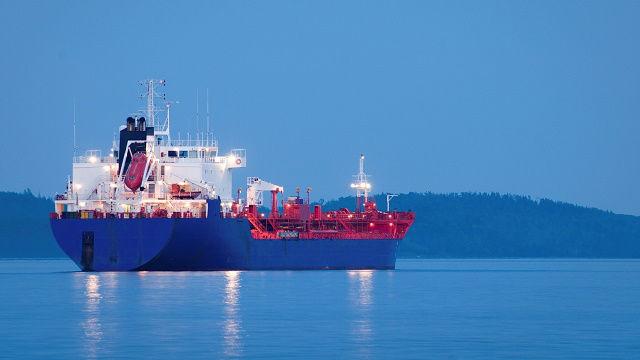
Chinese cargo vessel Jiang Xia Xiang sunk following a collision with the oil tanker Bai Chai. The collision occurred on the Yangtze River in Shanghai as the Jiang Xia Xiang was berthing at Waigaoqiao Port on July 24. All of the 16 crew members onboard the cargo vessel were rescued by the Shanghai Maritime Authority. The Bai Chai suffered minor damage to the bow.

The Jiang Xia Xiang was owned and operated by Huayuan Shipping and was delivering 7,500 tons of rock to Ningbo from Anqing. The Bai Chai was carrying about 3,000 tons of crude oil. The Bai Chai is currently docked at the Waigaoqiao port.

Authorities are still investigating the cause of the collision.

Installation Work Starts on First U.S. Offshore 30-MW Wind Farm in Rhode Island


Block Island
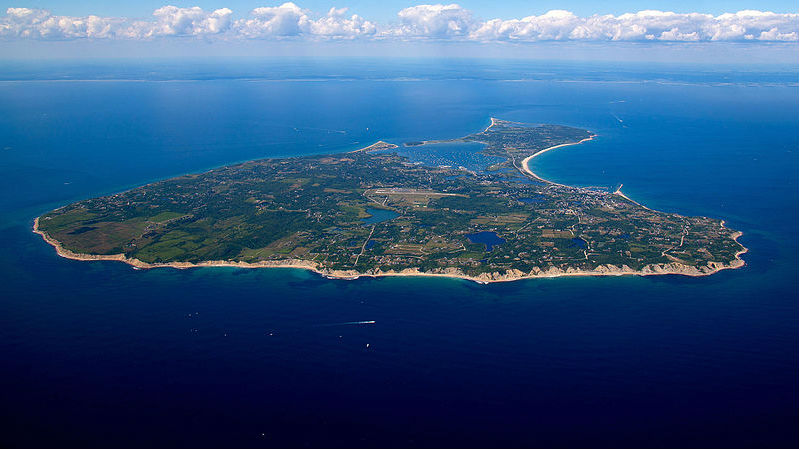
Block Island, picture by Timothy J. Quill 
 
By MarEx 2015-07-27

Rhode Island's Deepwater Wind began installing the foundations for North America's first offshore wind farm on Monday, a milestone the company says could pave the way for an industry long established in Europe but still struggling with opposition in the United States.

The 30-megawatt wind farm, which will include five turbines located three miles (4.8 km) off the coast of the bucolic summer tourist destination of Block Island, will take more than a year to build and is scheduled to produce electricity for the tiny island community and the mainland by the end of next year.

"Our belief is once Block Island is up and running, it will bring offshore wind from theory to reality in the United States and open up opportunities to build larger projects," said Jeffrey Grybowski, Deepwater Wind's CEO.

Representatives from the U.S. Department of the Interior, the Bureau of Ocean Energy Management and environmental organizations toured the offshore construction site in overcast conditions on Monday morning, as vessels hauled the giant steel foundations into place.

Offshore wind projects have been delivering power in Europe since the 1990s, with nearly 2,500 turbines connected to the grid, but they have struggled to gain a foothold in the United States due to worries about cost, the aesthetics of towering wind turbines within view of the coasts and the impact on birds and whales.

A rival project, Cape Wind's proposed 130-turbine wind farm off Nantucket Sound, for example, was for years expected to be America's first such project but stalled in part due to a lack of local support. Other offshore wind projects are in limbo off Delaware, New Jersey and New York.

Deepwater's project fits a different mold, according to Grybowski and the project's backers, French bank Societe Generale and Ohio-based Key Bank: It was relatively small and therefore easier to finance and is set in a location that has substantial built-in government and local support.

"Rhode Island was very forward-thinking and had designated a specific development area," said Alexander Krolick, Societe Generale's energy project finance director for the Americas. SocGen and Key Bank have provided about $300 million for the project, according to Deepwater, which is based in Providence.

Block Island was chosen as a wind power site by the state in 2007 in part as a solution to the island's own energy woes: Its 1,000 residents have for years relied on costly diesel-fired generators for electricity. Once the wind farm starts up, prices will drop 40 percent, according to a study by the Block Island Utility Task Group.

"We have some of the country's highest electricity prices," said David Kane, who retired to the island a few years ago. "This is going to help us a lot."

Britta Schulte, a German tourist who was visiting Block Island's Southeast Light House on a bluff overlooking the work site on Monday, said she did not expect the wind turbines to create an eyesore for vacationers.

"It will look fine. It will still be beautiful," she said. "Besides, I think it is about time America starts catching up with Europe on wind anyway."


POWER TO BE SENT TO MAINLAND

About 90 percent of the wind farm's power will be shipped to Rhode Island's mainland via an undersea cable where utility National Grid will buy it for 26 cents/kwh and mix it into the rest of the state's supply, which generally ranges between 6 and 10 cents/kwh. Although it will account for only one percent of the state's power supply, the higher cost represents the industry's biggest challenge.

"Everybody shares the view that we need to make progress to decrease the cost," said Jerome Deflesselles, Societe Generale's head of renewable origination for Europe. He said more efficient turbines and cheaper construction methods could help offshore wind compete with traditional power within about five years.

The foundations for Deepwater's wind turbines were produced in Louisiana and will be fixed with pilings penetrating more than 150 feet (46 m) into the sea floor over the next few months. Deepwater said it had agreed to do the pile driving only when migrating whales are not in the area.

The towers and five Haliade 150 6 MW turbines, produced by Alstom in France, will be installed next summer and fall. Gulf Island Fabrication built the wind farm’s five steel jacket foundations.

Deepwater said if the project is successful, it could pave the way for expansion. It holds a 30-year lease on a parcel in federal waters about 15 miles (24 km) southwest of Martha’s Vineyard with room for as many as 250 turbines.

“We are on the cusp of bringing offshore wind from theory to reality in the U.S. We’re incredibly proud of our position at the forefront of the U.S. offshore wind industry,” Grybowski said. “We’ve brought together some of the best American and European expertise to build an outstanding project and finance team. We’re poised to launch a new American clean-tech industry, and it all starts here with our work on the Block Island Wind Farm.”


LOCAL INDUSTRY BENEFITS

U.S. offshore industry body, NOIA, issued a congratulatory statement by President Randall Luthi: 

“NOIA congratulates Deepwater Wind as on-site construction begins on its Block Island Wind Farm offshore Rhode Island. It is gratifying that Deepwater Wind chose NOIA member company Gulf Island Fabrication for the off-site construction of the foundations for this project, which is on course to be America’s first offshore wind farm. It is also fitting that a company best known for fabricating offshore oil and gas structures played a role in constructing this historic project.  

“NOIA has long supported an all-of-the-above offshore energy strategy, and we look forward to seeing more partnerships between offshore renewable companies and offshore oil and gas companies made possible by the success of the Department of the Interior’s offshore wind leasing program.  

“The U.S. derives about 17 percent of its domestic oil production, and about five percent of its domestic natural gas production from offshore areas, even though current federal policies prohibit oil and gas development off the Atlantic Coast. 

Offshore wind combined with offshore oil and gas in the Atlantic and additional areas of the outer continental shelf will strengthen our nation’s energy security, produce thousands of new jobs and benefit American consumers.”

U.S. Coast Guard Revises Casualty Reporting Rules


coast guard investigation
By MarEx 2015-07-27

The U.S. Coast Guard has published Navigation and Vessel Circular NVIC 01-15 to provide new guidance for the identification and reporting of marine casualties. 

Over the years, maritime industry stakeholders frequently noted that Coast Guard field commands had varying interpretations regarding what types of marine incidents should be reported and investigated under 46 CFR Part 4. To address the concerns, NVIC 01-15 clarifies terminology used in the reporting regulation, draws attention to additional regulatory citations related to reporting and provides detailed regulatory interpretations to assist in the marine casualty reporting and investigation process.

“I’m confident that promulgation of the NVIC will focus industry resources and Coast Guard investigative efforts on the higher priority investigations that lead to critical safety recommendations and alerts,” said Captain Jason Neubauer, chief of the Coast Guard’s Office of Investigation and Casualty Analysis.

A draft of the new NVIC was originally published for comment in the Federal Register in January 2014. The majority of the comments received from multiple industry segments and organizations made it clear that more detail was needed for specific types of marine casualties that had led to uncertainty in the past. As a result, several new definitions, interpretations, and common casualty scenarios were added to the updated NVIC.

“I would like to thank the leaders from the various companies, maritime organizations and Coast Guard field commands who provided the input that enabled us to improve and finalize this important guidance,” stated Rear Admiral Paul Thomas, assistant commandant for prevention policy.

The change means that, for example, vessels are excluded from the requirements of 4.05-1(a)(5) and (a)(6) with respect to the death or injury of shipyard or harbor workers when such accidents are not the result of either a vessel casualty (e.g., collision) or a vessel equipment casualty (e.g., cargo boom failure) and are subject to the reporting requirements of Occupational Safety & Health Administration (OSHA) under 29 CFR 1904. 

NVIC 01-15 is available on the Coast Guard’s website here.