MEC&F Expert Engineers

Saturday, March 6, 2021

1,4 DIOXANE: FATE AND TRANSPORT AND TREATMENT TECHNOLOGIES

EPA evaluated 1,4-dioxane under the amended Toxic Substances Control Act (TSCA) and completed the final risk evaluation in December 2020. EPA will now begin the process of developing ways to address the unreasonable risks identified and has one year to propose and take public comments on any risk management actions.

Uses of 1,4-Dioxane

1,4-dioxane is currently used as a solvent in a variety of commercial and industrial applications such as in the manufacture of other chemicals, a processing aid, functional fluid, a laboratory chemical, in adhesives and sealants, in spray polyurethane foam, in printing inks, and as a dry film lubricant. 1,4-dioxane may be found as a contaminant in consumer products such as soaps and detergents. Information from the 2016 Chemical Data Reporting (CDR) for 1,4-dioxane indicates reported production volume in more than 1.1 million lbs/year (manufacture and import).


Risk Evaluation of 1,4-dioxane under Amended TSCA

In December 2020, EPA released the final risk evaluation for 1,4-dioxane. The final risk evaluation shows that there are unreasonable risks to workers and occupational non-users from 13 conditions of use. EPA found no unreasonable risks to the environment, consumers, bystanders, or the general population. As with any chemical product, EPA strongly recommends that users carefully follow all instructions on the product’s label.

In June 2019, EPA released the draft risk evaluation for 1,4-dioxane for public comment and peer review. In November 2020, EPA released a supplemental analysis to the draft risk evaluation which includes eight consumer uses where 1,4-dioxane is present as a byproduct, meaning when 1,4-dioxane is created from the breakdown of other chemicals. The supplemental analysis also assesses exposure to the general population from 1,4-dioxane in surface water.

In June 2017, EPA released the scope document for 1,4-dioxane which includes the hazards, exposures, conditions of use, and the potentially exposed or susceptible subpopulations EPA expects to consider in its risk evaluation of 1,4-dioxane conducted pursuant to TSCA section 6(b). In June 2018, EPA released the problem formulation for 1,4-dioxane which refined the scope of the 1,4-dioxane risk evaluation by clarifying the chemical uses that EPA expected to evaluate and describing how EPA expected to conduct the evaluation. 


Treatment Technologies for 1,4-Dioxane

1,4-Dioxane is a solvent stabilizer frequently found at contaminated sites where methyl chloroform (1,1,1-trichloroethane) was used for degreasing.  This report profiles the occurrence and properties of 1,4­dioxane and provides a summary of the available remedial technologies. The information presented should prove useful to project managers and other regulatory officials who oversee cleanup of contaminated groundwater, particularly where chlorinated solvents are the principal contaminant. Consultants, including hydrogeologists, remediation engineers, and modelers, should also find this report useful, as should water utility operators and regulators. In recent years, the regulated community has become increasingly aware that 1,4-dioxane is likely to be present at sites where methyl chloroform is a contaminant.

Although 1,4-dioxane has been a constituent of methyl chloroform wastes for decades, recent improvements to analytical methods allowed its detection in the parts per billion range beginning in 1997. Analysis of 1,4-dioxane often must be specifically requested. The common practice of analyzing by a limited list of available methods for regulatory compliance has precluded detection of 1,4-dioxane. The properties that made 1,4-dioxane difficult to analyze in the past also make it difficult to treat. For example, 1,4-dioxane is fully miscible in water.

As a hydrophilic contaminant, it is not, therefore, amenable to the conventional ex situ treatment technologies used for chlorinated solvents. Successful remedial technologies must take into account the challenging chemical and physical properties unique to 1,4-dioxane. This report profiles technologies that have been shown to successfully remove or eliminate 1,4-dioxane and examines other technologies currently under development. 1,4-Dioxane is among the most mobile organic contaminants in the saturated zone. As a result, it may be found farther downgradient than the leading edge of a solvent plume.

The combination of a wider spatial occurrence and different requirements for treatment technologies make 1,4-dioxane a potentially problematic contaminant, particularly if it is discovered after site characterization and remedial design have already been completed. In some cases, discovery of 1,4-dioxane has necessitated expanded monitoring networks, larger capture zones, and the addition of new treatment technologies to the treatment train.


TREATMENT OF MEDIA CONTAINING DIOXANE

The physical and chemical properties of dioxane create challenges for removing this compound from water. Dioxane is well suited to removal by groundwater extraction because of its high solubility and low degree of partitioning to organic matter in soil.

However, the relatively low Henrys Law constant of dioxane makes technologies such as air stripping generally ineffective in treating the chemical in water. Its low adsorptive capacity also limits the effectiveness of treatment by granular activated carbon (GAC), although one full-scale GAC application was identified. Bench-scale studies indicate that biodegradation of dioxane is possible, but information on field applications of this technology is limited (Dr. Basilis Stephanatos and others 2001). Technologies that are effective for treating chlorinated solvents are often ineffective for treating dioxane because the properties of dioxane differ from those of chlorinated solvents.

To date, the number and types of technologies available to treat dioxane are limited; however, research is under way to test and evaluate additional treatment technologies for this contaminant.

To date we are familiar with three technologies that have been used to treat dioxane at the pilot and full scale levels:

Advanced oxidation (ex situ)

Adsorption (GAC) (ex situ)

Bioremediation


As discussed previously, dioxane in soil tends to readily partition to groundwater and does not sorb to soil particles. Therefore, groundwater is the primary medium of concern for this contaminant.

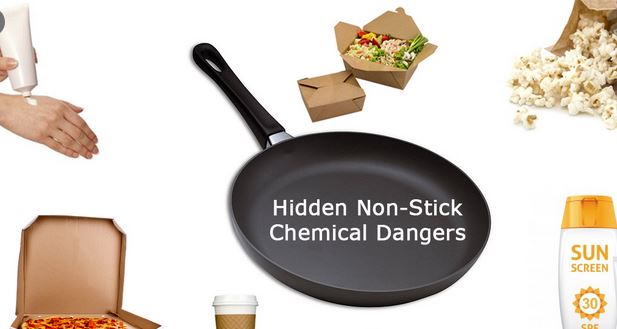


EPA Releases Testing Data Showing PFAS Contamination from Fluorinated Containers


EPA Releases Testing Data Showing PFAS Contamination from Fluorinated Containers


WASHINGTON (March 5, 2021) — As the U.S. Environmental Protection Agency (EPA) pursues its mission to protect human health and the environment, addressing risks related to PFAS is a priority. To this end, EPA is making available new testing data related to PFAS found in fluorinated containers in which a mosquito control product was packaged and sold. EPA is also announcing its planned next steps to further characterize and address this potential source of contamination.

“Advancing science and taking action to reduce the health risks associated with PFAS go hand-in-hand,” said Acting Assistant Administrator for the Office of Chemical Safety and Pollution Prevention Michal Freedhoff. “The Biden-Harris Administration’s focus on developing and using the best available science will guide our decision-making, strengthen our work with stakeholders, and lead to pragmatic solutions that advance our efforts to address PFAS contamination and protect human health.”

Since first becoming aware of the PFAS contamination issue in September 2020 through citizen science testing of a pesticide product, EPA has been working to investigate the source of the contamination. In December 2020, EPA studied the fluorinated HDPE containers used to store and transport the product and preliminarily determined the fluorination process used may be the source of PFAS contamination.

In January 2021, EPA continued its testing which showed the PFAS were most likely formed from a chemical reaction during the container fluorination process which then leached into the pesticide product. After completing a robust quality assurance and quality control process, EPA can confirm that it has detected eight different PFAS from the fluorinated HDPE containers, with levels ranging from 20-50 parts per billion.

While EPA is early in its investigation, the agency will use all available regulatory and non-regulatory tools to determine the scope of this emerging issue and its potential impact on human health and the environment. It is important to note that although these types of products should not be a source of PFAS, the data indicates that the amount of PFAS that has entered the environment from the contamination in the containers the agency tested is extremely small. The agency is also committed to coordinating with the affected entities involved and their supply and distribution chains, pesticide users, the pesticide and packaging industry, and its federal, state, and tribal partners as it works through this complex health and environmental issue.

Building on the agency’s initial actions announced in January 2021, EPA initiated a series of steps to tackle this issue including:

  • On Jan. 13, 2021, to minimize risks to human health and the environment, EPA asked states with existing stock of the mosquito product distributed in fluorinated HDPE containers to discontinue use and hold that inventory until its final disposition is determined. The pesticide manufacturer has also notified all its customers regarding management of the product, voluntarily stopped shipments of all products in fluorinated HDPE containers, and is now using non-fluorinated containers.
  • On Jan. 14, 2021, EPA issued a TSCA subpoena to the company that fluorinated the containers supplied to the manufacturer of the pesticide in which PFAS was discovered to learn more about the fluorination process used on the HDPE containers. 
  • EPA is aware that many companies are using fluorinated HDPE containers to store and distribute pesticide and other products. EPA is actively working with the Food and Drug Administration, the U.S. Department of Agriculture, and industry and trade organizations to raise awareness of this emerging issue and discuss expectations of product stewardship. For example, EPA is coordinating with the Ag Container Recycling Council, the American Chemistry Council, Crop Life America, the Household & Commercial Products Association, and the National Pest Management Association.
  • The agency is also testing different brands of fluorinated containers to determine whether they contain and/or leach PFAS, and if so, learn the conditions affecting leaching. EPA will present these findings as expeditiously as possible.
  • The agency is encouraging the pesticide industry to explore alternative packaging options, like steel drums or non-fluorinated HDPE.
To view the data and learn more, visit: https://www.epa.gov/pesticides/pfas-packaging 

CAUSE & ORIGIN INVESTIGATIONS: COMMERCIAL AND RESIDENTIAL HEATING, COOLING AND AIR CONDITIONING SYSTEMS


This time of the year we see a number of cause and origin (C&O) cases regarding property damages caused by heating, ventilation and air conditioning (HVAC) systems.  Investigation and evaluation of these systems determines the cause of failure and damage, including whether or not there are sudden and accidental related causes or long term maintenance and age related conditions or some other cause. This blog addresses the results of some of the C&O investigations of these property damage claims.

The most common HVAC damage claims include: mold growth, water damage and air quality claims; carbon monoxide damage claims; theft or vandalism; lightning or power surge damage; improper installation or maintenance; hail/flood/fire/mechanical failure and other miscellaneous damage claims. This blog addresses the water damage/mold growth claims. 

Mold Growth and Water Damage Claims

As the air conditioning system cools a building it produces a large amount of condensation.  Without proper routine maintenance that condensation can lead to extensive water damage and mold growth.  See Figure 1 for what can grow in the HVAC condensation pan, unless it is regularly maintained by the insured.


Figure 1.  Mold growth collected from an HVAC drip pan.  The insured complained about odor problems and stained or clogged air registers, but he never inspected the HVAC unit because it was located in the attic.

Depending on the humidity level, a central home air conditioner can produce from 5 to 20 gallons of water day. When the system is working correctly, this condensation drains off of the coil into a drip pan and is carried by a condensate drain hose into the sewer system. 

Regardless of which system an AC system uses, almost all blockages occur in the small bend, called a trap. The trap system always holds a small amount of water that is there to keep fumes and other objects from backing in to the system. Over time, algae or gum builds up, the trap becomes clogged, resulting in a plugged condensate drain line.  At other times, we see a kink in the hose, leading into water damage.  Humidifiers can also add too much moisture to a house, leading to dampness and mold.

If for any reason (typically because of lack of maintenance or lack of proper operation or improper installation) the drain or the hoses become clogged, or the system is producing more water than the drain can handle, the result can be water damage and mold growth.  The HVAC system then becomes a mold supper highway by recirculating air contaminated with mold spores and other contaminants throughout the building. 

Depending on where the air handler is located, i.e. a basement, a closet or attic, if the water over flows it could go unnoticed for a period of time leading to extensive water damage and mold growth.  See Figure 2 for a rusted air handler located in the crawl space.  Lack of accessibility led to lack of maintenance, corrosion and water damage.


Figure 2.  Rusted and leaked air handler located in the crawl space of this building.

Clogged drain lines are not the only cause of damage. There are other problems that can contribute to water damage such as excessive condensation and evaporator coils that are dirty or over worked. An overworked coil may freeze up and defrost over and over causing more water than the systems main drain can handle.

Many times, we have discovered that the HVAC ducts are leaking cold air that mixes with humid air in the attic or other non-conditioned area of the building; this causes condensation with subsequent water damage and/or mold growth.  At other times, our inspections have discovered that the air leaks exist on the return side where the HVAC unit is drawing humid, un-filtered air into the blower and ducting, resulting in buildup of water and mold growth that in turn is released into the home.  We oftentimes see mold growth on the ceilings around the air register.  What is happening is that the builder often cuts the drywall opening too large and forgets or not properly seals the gap.  The result is that humid and hot attic air enters the building through these openings and condenses, providing the moisture needed for mold growth. 


Figure 3:  Condensation formed on the exterior of the duct due to system leaks.

In many high rise constructions we have observed lack of return air ducting due to lack of space.  This led to overworked HVAC systems, resulting in freezing, water leaks and mold growth. At other times we observed the ducts to be too bent, causing excessive energy use;  the building owner then turned down the thermostat to compensate for the reduced system efficiency, causing duct sweating and mold growth.  The building tenants complained that they were “breathing dust and mold”.


Figure 4.  This is an example of a common problem we have seen with air ducts:  they are bent by the installers too much trying to fit them in tight places.  This has led to excessive energy usage, water damage and mold growth. 

By far the most common area of mold growth in an HVAC system is associated with buildup of mold and dust inside the return duct.  The buildup of mold and dust there will cause an accumulation of the same in the evaporator coils, leading to water damage and health issues inside the home.  Regular maintenance of the air filters and the ducts will prevent such damage claims.


Figure 5 and 6:  Dirty air filter and air duct (Fig. 5) due to lack of cleaning of the air filters and ducts.  This resulted in dirty HVAC coils (Fig. 6), because there was lack of maintenance of the coils.  The coils rusted, froze up and end up causing water damage to the insured’s property.

Overall, the overwhelming majority of the property claims could have been avoided with proper maintenance or replacement/repair of the failing HVAC components.

Metropolitan Engineering, Consulting & Forensics (MECF)

Providing Competent, Expert and Objective Investigative Engineering and Consulting Services

P.O. Box 520

Tenafly, NJ 07670-0520

Tel.: (973) 897-8162

Fax: (973) 810-0440

E-mail: metroforensics@gmail.com

Web pages:  https://sites.google.com/site/metropolitanenvironmental/

To unsubscribe from future technical blogs and announcements, please reply to this email with the word “unsubscribe” in the subject line.


Metropolitan appreciates your business.

Feel free to recommend our services to your friends and colleagues.

We know you need to process damage claims quickly and knowing the facts is now faster than ever – within 24 hours of site visit.  Our Pegasos Forensic Investigation Services (PFIS) feature:

·                 Expert Forensic Investigators on-site.

·                 Defensible, Readable, Conclusive Reports.

·                 Fixed-Prices starting at $499 per chimney or roof inspection (volume discounts are also available).  Flood loss assessments start at $999.0.  HVAC equipment only inspections start at $299 for local (within one hour one-way drive) assignments.

·                 10-State Coverage Area.


Metropolitan has extensive experience assisting in the evaluation of environmental factors. Our Certified Industrial Hygienists and Registered Professional Engineers have performed IAQ testing, mold testing, Chinese drywall corrosion investigations, water source evaluation and remediation design and oversight.

We perform Property Condition Assessments, Indoor Air Quality Evaluations and Environmental Site Assessments, including Indoor Air Quality

Sunday, September 8, 2019

Speeding drunk country musician Kylie Rae Harris, 30, kills herself and Maria Elena Cruz, a Taos High School sophomore, 16.

The dead speeding drunk driver, Kylie Rae Harris, 30


New details are emerging about the tragic accident that claimed the lives of singer-songwriter, Kylie Rae Harris, and a 16-year-old girl. Taos County Sheriff Jerry Hogrefe confirms to Yahoo Entertainment that Harris, 30, is considered to be responsible for the fatal three-car collision. (The third driver was unharmed.) Maria Elena Cruz, a Taos High School sophomore, has been identified as the teenager killed.

"At this time I will say with most certainty that Miss Cruz was an innocent victim of this senseless crash caused by Ms. Harris," Sheriff Hogrefe tells Yahoo Entertainment in a statement.

Speed appears to be a contributing factor in the collision while alcohol is suspected. Investigators are waiting on a toxicology report from the Office of the Medical Investigator. "As you know this is a non-chargeable case due to death of the at fault person (Harris) so the toxicology report is likely to be several months up to a year because of no urgency for criminal charges," Sheriff Hogrefe notes.

Sheriff Hogrefe told local paper Taos News that evidence at the crash scene indicated alcohol may have been involved, though he declined to provide specifics. Harris had a prior DWI conviction in Collin County, Tex. in 2017, according to the paper. Records showed that Harris had been court ordered to install an ignition interlock device on her vehicle.

Harris’s mother Betsy Cowan told People that alcohol was something her daughter “struggled with on-and-off over the years.” She didn’t want to get into specifics “out of respect to both families.” Alcohol, speed suspected in fatal crash involving Kylie Rae Harris. (Photo: Instagram)

The Sheriff’s Office says the musician was driving south on State Road 522 toward Taos, N.M. in a 2017 black Chevrolet Equinox when she clipped the back of a black Chevrolet Avalanche. Harris’s vehicle was launched into the northbound lane, causing a head on collision with a white 2008 Jeep driven by Cruz. Both of them died at the scene.

Taos residents are in mourning as the Cruz family is a beloved member of the community. Maria Cruz's father, Deputy Chief Pedro Cruz, is a Taos County Firefighter and EMT.

"This is truly a terrible tragedy that has affected all parties involved. There are no words that can express how much this tragedy has affected the family of Maria Elena as well as the community. At this time we are asking for privacy for the family," Taos County fire manager Mike Cordova told People. The department is accepting donations for the family at the Taos County Fire and EMS office. A funeral will be held on Sept. 10.

"Maria was a loving and caring person who was taken from her family and friends’ way too soon," her obituary reads. "She will be deeply missed by all who knew and loved her."

Harris's publicist confirmed news of the musician’s passing on Thursday. "Everyone that knew Kylie knew how much she loved her family and, beyond that, how much she loved music," the statement said. "The best tribute to her unmatched enthusiasm for both is to spread as much love as you can today, and listen to music that fully inspires you."

Harris, whose self-titled EP was released in March, is survived by her 6-year-old daughter.


=============================


Kylie Rae Harris, a country singer from Texas, has passed away after a three-vehicle crash in northern New Mexico. She was 30.

Harris, who was set to perform at the Big Barn Dance Music Festival in Taos on Thursday, was killed Wednesday night in the crash on State Road 522. Authorities say two people are dead, including a 16-year-old girl. The third driver escaped injury, the Associated Press reports. Alcohol is suspected as being a factor in the crash, according to the Sheriff's Office.

"We are heartbroken to confirm that Kylie Rae Harris passed away in a car accident last night," a publicist for the singer said in a statement to Billboard. "We have no further details to share, and ask for privacy for her family at this time. Everyone that knew Kylie knew how much she loved her family and, beyond that, how much she loved music. The best tribute to her unmatched enthusiasm for both is to spread as much love as you can today, and listen to music that fully inspires you."

Monday, August 12, 2019

Drunk and speeding NYPD officer Kimberly Lajara, 24, kills herself and her passenger, Oscar Monegro, 32, when she crashes her speeding white 2016 Mercedes car into a defenseless tree along the Henry Hudson Parkway in Manhattan and catches fire.


The speeding drunk NYPD officer Kimberly Lajara.  She also killed her passenger in the fiery crash.


Off-Duty NYPD Officer, Passenger Killed in Fiery NYC Car Crash
Their car crashed into a tree along the parkway, near West 96th Street, just before 3:45 a.m. Sunday, according to police
By Ken Buffa and Marc Santia


August 12, 2019


An off-duty NYPD officer and another person died when their speeding car crashed into a tree along the Henry Hudson Parkway in Manhattan, police and sources said.

The 2016 Mercedes Benz crashed into a tree along the parkway, near West 96th Street, just before 3:45 a.m. Sunday, according to police. The car was consumed by fire.

Officer Kimberly Lajara, 24, and her passenger, Oscar Monegro, 32, were pronounced dead after the crash, the sources and the NYPD said. Police say Lajara was a member of the 121st Precinct in Staten Island.

Officers were diverting traffic near the site of the crash hours later.


Most of the deadly drunk-driver (drug-related crashes) occur in the early am hours, like in this case. These drunks cannot drive in a straight line or follow the road and they end up crashing their cars.


Mayor Bill de Blasio tweeted, "We're mourning the loss of one of New York's Finest today." We disagree: she was a drunk loser who killed an innocent passenger. Besides, at 24 years old, how she could have made herself such a fine officer?


Police say an investigation is ongoing.


=============================


FROM NY POST:


A young NYPD cop was killed in a fiery car crash along with her passenger early Sunday on the Upper West Side, possibly as a result of speeding, according to authorities and law-enforcement sources.

Officer Kimberly Lajara was flying south along the Henry Hudson Parkway around 3:45 a.m. when her 2016 Mercedes Benz hopped a median near West 98th Street and slammed into a tree, cops and sources said.

The Benz burst into flames, leaving both the 24-year-old Staten Island cop and her male passenger, Oscar Monegro, 32, dead at the scene, according to police.

The flames were so fierce that the two were “pretty badly burned” and “unrecognizable” at first, police sources said.

Investigators traced the car back to Lajara because the car was registered in her name, and her purse was found among its charred shell.

“Rest In Peace Police Officer Lajara,” tweeted Staten Island’s 121st Precinct, for which she worked. “You will be missed by your entire 121 Precinct Family.”

The cause of the crash officially remains under investigation, but sources said that it appears Lajara was speeding when she lost control.

The mangled mess of twisted metal left behind in the aftermath left onlookers horrified.

“I’ve never seen anything like that in my freaking life — a car mangled like that, destroyed,” said Paul Vella, 57. “It’s unbelievable. … It’s sad.”  

Additional reporting by Aaron Feis