MEC&F Expert Engineers

Tuesday, January 9, 2018

Search for Pilot n Paws volunteer pilot Bill Kinsinger, 55, and his missing Cirrus aircraft is called off. The pilot is believed to have suffered from hypoxia, a lack of oxygen.


The U.S. Coast Guard said it is calling off its search for a missing pilot who vanished over the Gulf of Mexico last week.

After searching for 79 hours and 17,458 nautical square miles, the Coast Guard said it would suspend its search for Bill Kinsinger, 55, and his missing Cirrus aircraft.

Last Wednesday, Kinsinger took off from Wiley Post Airport in Oklahoma City, with a plan to land in Georgetown, Texas.

When the plane failed to land, air traffic controllers attempted to reach Kinsinger who never responded.

"Ending a search is a difficult decision that we put the upmost thought and consideration into," said Capt. David Cooper, chief of incident management, Eighth Coast Guard District. "Dr. Kinsinger was a well loved man and our hearts go out to everyone impacted during this tragic time."

Investigators said the plane continued on the same course, and was last observed on radar about 219 miles northwest of Cancun at 15,000 feet.


Naval Air Station Joint Reserve Base New Orleans launched aircraft to investigate over the Gulf of Mexico and reported the pilot was slouched over and appeared unconscious.
The pilot is believed to have suffered from hypoxia, a lack of oxygen.

The Coast Guard said four aircrews from Corpus Christi; Clearwater, Florida; Elizabeth City, North Carolina; and Mobile, Alabama were involved in the search.


Date:03-JAN-2018
Time:17:41+ CST
Type:Silhouette image of generic SR22 model; specific model in this crash may look slightly different
Cirrus SR22T
Owner/operator:Abide Aviation LLC
Registration: N325JK
C/n / msn: 1290
Fatalities:Fatalities: 1 / Occupants: 1
Other fatalities:0
Airplane damage: Substantial
Location:Gulf of Mexico -   Mexico
Phase: En route
Nature:Private
Departure airport:KPWA
Destination airport:KGTU

Narrative:
Aircraft missing over Gulf of Mexico.

Aircraft was operated by a Pilot n Paws volunteer who was on the way to pick up a rescue dog. The pilot became unresponsive to ATC and the aircraft went off-course flying into the Mexican Gulf. Fighter jets tracked the aircraft but could not get pilot's attention. It is likely that the pilot may have suffered from hypoxia.

Sources:

https://flightaware.com/live/flight/N325JK
http://www.fox23.com/news/plane-disappears-after-taking-off-from-oklahoma-city/675612395
https://www.rt.com/usa/414952-plane-oklahoma-texas-disappears-radar/
http://registry.faa.gov/aircraftinquiry/NNum_Results.aspx?NNumbertxt=325JK
http://www.kathrynsreport.com/2018/01/cirrus-sr22t-n325jk-abide-aviation-llc.html

https://en.m.wikipedia.org/wiki/Time_of_useful_consciousness
http://www.cfinotebook.net/notebook/aeromedical-and-human-factors/hypoxia


BLAME THE TOASTER FOR MASSIVE FIRE IN NYC: 7-alarm fire broke out on the second floor of the six-story residential building at 775 Riverside Drive, near West 156th Street, in Washington Heights


17 people were hurt and dozens displaced in a seven-alarm fire that tore through a building in upper Manhattan Monday afternoon.

The flames broke out on the second floor of the six-story residential building at 775 Riverside Drive, near West 156th Street, in Washington Heights. The fire reached the roof, sending plumes of dark smoke billowing into the sky.

The FDNY reports that all the victims suffered non-life-threatening injuries, and that no one is critical. Eight of the injured were civilians and nine were first responders.


More than 200 firefighters were working to get the blaze under control.

According to investigators, the preliminary cause of the fire was accidental and it was electrical, caused by a toaster.

Officials say a tenant was making toast when the appliance suddenly burst into flames that quickly spread throughout the kitchen and up a dumbwaiter to the upper floors and the cockloft.

"It's an open shaft that runs through the building and once fire got into that shaft way it quickly traveled into the cockloft space," said FDNY Commissioner Daniel Nigro.

A smoke alarm was present and operational.

"My mother, my sister and my niece live in this building. That was my first reaction, if they were safe," said tenant Sean Polite. He then rushed to his family's apartment building which by then was surrounded by firefighters.

Many residents though were unaware of the fire until they arrived home from work. "I turned the corner and I see people from the building, 'who called you?'. I said no one called me, I'm finding out right now, I'm like, Oh my God," said one resident.

A staging area has been set up for victims and their family members affected by the fire in Our Lady of Esperanza Church located at 624 West 156th Street.

Authorities advised those nearby to close windows and avoid smoke. Drivers were told to expect delays in the area.

The Red Cross said it is uncertain when the displaced residents will be able to return home.


One of the leading causes of fire deaths in homes of adults ages 65+ is heating equipment. Keep space heaters at least 3' away from anything that can burn, turn the heater off before going to bed, & plug the heater directly into the wall.  Also, do not overload electric circuits, do not overload electric cords, do not use defective or ill-maintained appliances or devices, etc., etc.

Monday, January 8, 2018

Barge worker 38-year-old Robert Bradley Dawson of Oak Grove, Louisiana fell off a company barge into the Ohio River and died


Livingston County investigating death on the river

January 6, 2018 


WPSD Staff

UPDATE: The coroner’s office says 38-year-old Robert Bradley Dawson of Oak Grove, Louisiana fell off a company barge into the river.

Dawson fell off a company barge into the river about two miles south of the Smithland Lock and Dam.

Dawson worked for Kirby Inland Marine.

Investigators say he was pronounced dead at the scene; his death was accidental.

LIVINGSTON COUNTY, KY – Livingston County coroner’s office is investigating a death that occurred on the river.

A deputy said it is an accidental, work-related death, not criminal or suspicious.

The person was pronounced dead at the scene.

Investigators cannot release a name at this time, but did say the person fell off a company barge around 3:15 PM Saturday, January 6th.

Investigators were not able to release the cause of death.

The coroner’s office was assisted by Livingston County Emergency Management, EMS, and Smithland fire department.

We will update this story with information as it comes in.


==================


LIVINGSTON COUNTY, KY (KFVS) -

A barge worker has died in what's being called a work-related accident in Livingston County, Kentucky.

According to the coroner, it happened on Saturday, Jan. 6 around 2 p.m.

A 38-year-old Louisiana man fell off of a barge into the Ohio River.

It happened about two miles south of the Smithland Lock and Dam.

The man was pulled from the river shortly after he fell.

The coroner said the man died at the scene and his death is ruled as an accident.

Furnaces, flues, fireplaces, space heaters, woodstoves, water heaters, kitchen stoves, as well as electrical systems and electrical appliances must be maintained to avoid fires


Fire Prevention

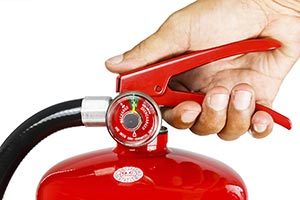
A fire extinguisher Our study of mobile home fires found the number one cause of accidental mobile home fires to be inadequate maintenance of the home's mechanical system. Other frequent causes: carelessness and accidents.

Proper Maintenance Can Prevent Fires

Several mechanical systems in a mobile home require maintenance. These systems include heating equipment such as furnaces, flues, fireplaces, space heaters, woodstoves, water heaters, kitchen stoves, as well as electrical systems and electrical appliances. The bad news: if these systems aren't properly maintained, the potential for fire increases. The good news: fires in all these systems are preventable. The information here will help you decrease the chance of having a fire in your mobile home.

Carelessness

Storing all matches and lighters out of the reach of children can prevent a tragedy. Fires caused by a mobile homeowner's carelessness, such as a grease fire or a fire that started because flammable liquids were stored inside the mobile home, are also preventable.

An Ounce of Prevention Could be Worth a Life

  • Fire Drills. It's important to hold family fire drills at least two times a year. If you have very young or elderly people in your mobile home, assign someone to help them. If there's a fire, get everyone out of the home, then call the fire department.
  • Exit Windows. Make sure at least one window in every bedroom can be used for easy and fast escape in case of fire. Don't attempt to reach the front or rear door during a fire — always use a window as your exit.
    To exit from a window, slide it up or sideways and remove the screen. Kick the screen out if you need to. If your mobile home has crank-out style jalousie or awning quick-exit windows, remove the interior storm sash by turning the pivot clips. Trip the exit latches at the window sill and slide the window open or open it at the hinges and make your exit. If there's no trip latch on the window or no time to open it, break it with a chair, lamp or shoe and get out.
  • Fire Extinguishers. Keep one fire extinguisher in the kitchen and another near the furnace. Make sure they're multi-purpose, dry-chemical extinguishers, suitable for class A, B and C fires. Teach all family members how to operate them. Small home fire extinguishers operate for only five to ten seconds, so be sure of your aim.
  • Smoke Detectors. Mobile homes built since 1976 come equipped with smoke detectors. If your home doesn't have smoke detectors, you need one high on the wall or ceiling adjacent to bedroom areas. Place another in the kitchen. Check your smoke detectors once a month by pressing the test button. Replace the battery in each smoke detector at least once a year. Never remove the battery except when replacing it. If your smoke detector is a photo unit, replace the bulbs every three years. Keep the grill of the detector free of dirt by dusting and vacuuming it regularly.
    If your home's smoke detectors are powered by electricity, add at least one detector that's battery powered in case of power outages.
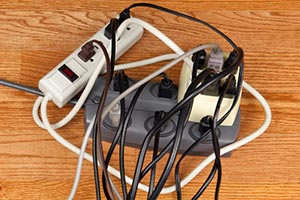
  • Be Careful Not to Overload Electrical Circuits. Lights that flicker or dim indicate trouble that must be corrected. When replacing fuses, install only recommended fuses. Use fuses and breakers that are the proper size for the wire. A ground monitor is a valuable tool for locating any shorts or other problems in the electrical system. If you are inexperienced in working with electricity, don't try to correct electrical problems yourself. Call a qualified electrician.
  • Don't Overextend an Electrical Outlet with Extension Cords. Replace frayed or broken electrical cords. Make sure all appliances are properly installed. Buy electrical appliances and equipment approved by a certified testing laboratory. Never run cords under rugs. Keep dust from accumulating on televisions, electrical equipment and appliances.

Note These Additional Tips

An overloaded power strip
  • Store flammable liquids in approved containers outside the mobile home.
  • Never place combustible material under your mobile home — that includes bales of hay or straw.
  • Check for worn spots on any heat tape that covers water pipes.
  • Ground your television antenna to prevent damage from a lightning strike.
  • Keep your yard tidy and free of debris.
  • Don't plug multiple items into the same electrical outlet or circuit.
  • Make sure lightbulbs are the recommended wattage for all of your light fixtures.
  • Keep baking soda near your stove to extinguish grease fires.
  • Keep matches and lighters out of children's reach, preferably in a locked cabinet.
  • Don't smoke in bed or when you're drowsy. Run butts and ashes under water before disposing.
  • Never install a double cylinder deadbolt lock on your exit doors. They require a key to unlock from the inside.
  • Never use an extension cord on a permanent basis and avoid running them under rugs.
  • Never leave home with the clothes dryer running. Clean dryer vents frequently and clean lint screens after each load to keep the airway clear.
  • Make regular safety checks of your mobile home's major systems. Check for cleanliness, proper functioning and loose connections.
  • Never block doors or windows with furniture or other large objects.
  • Supplemental heating units like electrical space heaters, fireplaces, kerosene heaters and woodstoves can be dangerous. Be sure each device is approved for use in a home. Turn them off before you leave or go to sleep.

Take Action if a Fire Strikes

Smoke and toxic fumes are the leading cause of death in fires. That's why it's so important to get out immediately and stay out.

  • Don't try to fight your own fire. Leave immediately and call for help from a neighbor's home.
  • The clearest air is 12 to 24 inches above the floor, so crawl to the nearest safe exit.
  • Carefully touch the bottom of all doors before opening them. If they're hot, don't open them. Find another way out.
  • If your clothes catch fire, don't run. Stop, drop to the ground, cover your face with your hands to protect your face and lungs, and roll until you smother the flames. Remember: stop-drop-and-roll.

The fire that killed 39-year-old Lonnie Malone in Tacoma, WA was caused by flammable materials that were ignited on a baseboard heater


January 2, 2018

TACOMA, Wash. — 


Investigators say flammable materials ignited on a wall heater, causing a fire that killed a man in Tacoma.

About 1:20 a.m. Tuesday, crews were called to the Spanish Hills Apartments at 6409 S 12th Street.

During their investigation, an adult’s body was found inside a burned apartment on the ground floor.

The person was identified as 39-year-old Lonnie Malone. Authorities say he lived alone.

No other injuries were reported.

Tacoma Fire said the fire started on the ground floor and was contained to only one unit.


================


TACOMA, Wash. – Three people have died in house fires in just the past week across Western Washington.

A woman in Federal Way died last week, and a man in Spanaway and another man in Tacoma died this week when fires broke out in their homes.

Firefighters believe the cold weather could have played a part.

It may sound like a broken record but firefighters say the message is important and could save lives. No matter how you stay warm in these cold temperatures, firefighters say there are steps you can take to keep your family safe.


Firefighters responded to Spanish Hills Apartments in Tacoma early Tuesday morning to put out a reported fire.

But sadly the 39-year-old renter, Lonnie Malone, died. Neighbors told Q13 News he used to work for the apartment complex.

Firefighters say radiant heat from his baseboard heater ignited materials and started the fire.

First responders pulled another man from a fire in his Spanaway mobile home only hours later, but 66-year-old Orville Stancil died later at the hospital.

Investigators believe a space heater hooked up to a faulty extension cord could be to blame.

And last week 69-year-old Carol Halder died inside her Federal Way apartment after it caught fire but officials don’t yet know the cause.

“During the winter season, while folks are paying attention to their heating, they also need to pay attention to safety and injury prevention aspect to home heating,” said Tacoma Fire Department’s Joe Meinecke.

Firefighters say anything that could catch fire should be stored at least 3-feet away from heaters.

Plus, all portable heaters should be UL-certified and never be left running while you’re asleep.

“For best practices, use portable heaters directly into your outlets into your wall and one at a time only,” said Meinecke. “Don’t put more one in there and don’t use extension cords or power strips, directly into the wall is best.”

Firefighters say now is also a good time to double check the batteries in smoke and carbon monoxide detectors. Plus, if the equipment is ten-years-old now is the time to replace them.


Statistics to share

  • Three out of five home fire deaths result from fires in properties without working smoke alarms
  • More than one-third (38 percent) of home fire deaths result from fires in which no smoke alarms are present.
  • The risk of dying in a home fire is cut in half in homes with working smoke alarms.

Source: National Fire Protection Association