MEC&F Expert Engineers

Thursday, October 26, 2017

THE AFTERMATH OF THE CALIFORNIA FIRES: a toxic environmental brew that poses risks to cleanup and recovery workers and residents alike.


The possible long-term health problems that persist long after the smoke and ash are gone.


 People returning to homes devastated by wildfires in Northern California are getting ready for the arduous task of cleanup. In some cases, entire neighborhoods went up in smoke. What remains may contain harmful substances, including carcinogenic materials like asbestos. 


California fires: Response and recovery health hazards

October 25th, 2017 by Julie Ferguson
A firefighter working in the California fires
Photo: Mike Blake / Reuters

In the wake of the devastating California fires, the massive debris field – formerly neighborhoods, homes and businesses – is now a toxic environmental brew that poses risks to cleanup and recovery workers and residents alike. Kirk Johnson discusses the environmental and health risks of the California fire cleanup in an article in the New York Times.
“In modern times this has got be an unprecedented event, and a major hazard for the public and for property owners,” said Dr. Alan Lockwood, a retired neurologist who has written widely about public health. He said an apt comparison might be the environmental cleanup after the terrorist attacks of Sept. 11, 2001, in New York, as debris and dust swirled through Lower Manhattan.
As could well happen too in California, Dr. Lockwood said, the health and environmental effects were felt long after the attack, in the chemicals or pollutants workers and responders at the site, and the public at large, may been exposed to as the cleanup went on.
The scope of the fire disaster in California is hard to comprehend:  Photos Capture Apocalyptic Aftermath Of California Wildfires. Also: and the Los Angeles Times Mapping the destruction from California’s wine country fires.
We’d be remiss if we didn’t offer a tribute to the 9,000+ hard-working firefighters on the front lines who risked life and limb to contain the fires, rescue people and save property. See NPR’s story by Eric Westervelt: In Northern California, Exhausted Firefighters Push Themselves ‘To The Limits’.
See the Atlantic‘s In Focus for a display of photos that document the danger and the destruction.

One interesting and little known aspect of the battle against the fires is that 30-40% of the firefighters battling the fires were prisoners, according to Mother Jones. About 4,000 low-risk prisoners save the state about $80 million a year. Inmates are volunteers who are trained in a four-week program, receive $2 an hour and earn a 2-day sentence reduction for every day served. Typically, they are low-risk felons.
“Career firefighters do things like flying in helicopters and driving bulldozers; inmate firefighters use hand tools, like chainsaws, axes, and rakes, to contain the fire by clearing out the vegetation around it. The prisoners participate in a four-week training process—the same process that other state firefighters go through—proving that they’re fit enough to work through brush in the heat of a fire while carrying up to 100 pounds of gear. They work in teams of about 15 people, supervised by a fire captain. When there’s a big fire blazing, the teams work in shifts of 24 hours, followed by a 24-hour break. When not tending fires, the inmates do other conservation work, often clearing brush to prevent future fires.”
Jaime Lowe of the New York Times reports on The Incarcerated Women Who Fight California’s wildfires. It talks more about how the program works and takes an up-close look at some of the female inmates on the front lines, including the very real risks they take. While many tout this as a win-win for both the state and the inmates, there are many limitations in terms of the rehabilitative value. Lowe says:
“C.D.C.R. says that the firefighter program is intended to serve as rehabilitation for the inmates. Yet they’re being trained to work in a field they will probably have trouble finding a job in when they get out: Los Angeles County Fire won’t hire felons and C.D.C.R. doesn’t offer any formal help to inmates who want firefighting jobs when they’re released.”
Further in the article, Lowe talks more about this:
When I visited Rainbow, I asked a Cal Fire captain named Danny Ramirez why the state wouldn’t increase the incentive to join the program by paying even a little bit more. He didn’t have a ready answer. Which brought up another puzzling aspect of the program: Why doesn’t the state get more out of its investment in training these women by hiring them when they’re released? Or at the very least, by creating a pathway to employment? Ramirez said the idea ‘‘to keep tags on the girls’’ had come up before. ‘‘Some of these girls leave very interested in what they got exposed to and say, ‘Oh I never knew this exists, how do I keep on doing this?’ And it’s hard when they get out there because they do have a lot of the same walls that they were facing before. But a program to keep them guided and keep them on that path and keep them focused on something instead of getting back into their old ways or old friends would be awesome.’’

WHAT PROPERTY DAMAGE IS COVERED DURING A BLACKOUT?


Is insurance coverage on when the power goes off?


Coverage Q&A


It can be difficult to determine the applicable coverage when property damage is the result of a series of events, such as a fire that started after the repair of previously downed power lines. (Photo: iStock)

Question: The AAIS Form 3 Ed 2.0 appears to exclude coverage for damage caused by a power surge, low power or brown out if the (Sudden and Accidental Damage from Artificially Generated Electrical Current) occurs with an off premise (Power Disruption). 

The Power Disruption exclusion along with the preceding broad preface seems to exclude coverage for a surge when the power disruption (regardless of cause) is off the insured premises.

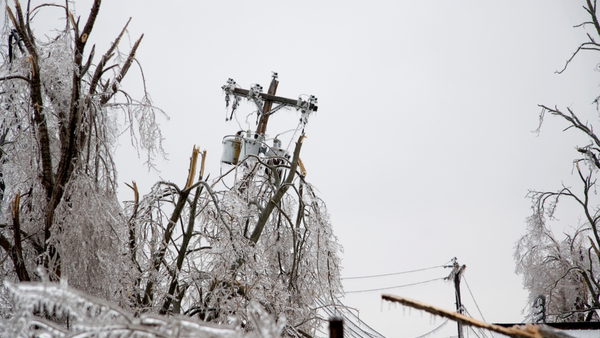
Hurricane-force winds can knock out power lines, but what happens when power is restored?

The exception to the exclusion, (We do pay for direct loss that is otherwise covered… which occurs on the insured premises) would apply as follows. If an off premise power disruption caused a power surge that damaged a freezer, or heating system, the damage to the freezer or heating system would be excluded. The otherwise covered food loss or any resulting freeze damage would be covered.    

Can you provide clarification?  

Relevant policy sections:
Sudden and Accidental Damage from Artificially Generated Electrical Currents
— However, "we" do not pay for loss to tubes, transistors, and similar electronic components.

EXCLUSIONS THAT APPLY TO PROPERTY COVERAGES
1. "We" do not pay for loss if one or more of the following exclusions apply to the loss, regardless of other causes or events that contribute to or aggravate the loss, whether such causes or events act to produce the loss before, at the same time as, or after the excluded causes or events.

h. Power Disruption — "We" do not pay for loss which results from the disruption of power or other utility service, whether or not it is caused by a peril insured against, if the cause of the disruption is not on the "insured premises."
"We" do pay for direct loss that is otherwise covered by this policy which occurs on the "insured premises" as a result of the disruption of power. 
— Pennsylvania Subscriber

Answer: Let's look at this one step at a time.

The first section you reference is listed under Coverage C, and applies to personal property damaged by artificially generated electrical currents. (Tubes, transistors and similar components are not covered.) The current must be artificially generated so it would include a power surge either on or off premises that damaged property.

Since tubes, transistors, and electronic components are not covered, coverage would apply to the nonelectrical components of the property. For example, the refrigerator received a power surge that shorted it out and caused a fire. The short to the electronics would not be covered as the electronics components are not covered, but the fire damage to the refrigerator door and sides would be covered.

Then we get to the exclusions, which has the standard anticoncurrent causation clause that eliminates coverage when two causes of loss are in play and one is an excluded loss and the other a covered loss.

Next, we must consider the power disruption exclusion, which falls under the anticoncurrent causation language. There is an exception to the exclusion, though, so that allows coverage even with the anticoncurrent causation clause. Therefore, if a transformer off premises is struck by a vehicle that damages the transformer, creating a disruption of power or a surge that damages the refrigerator, there is no coverage other than a direct loss that results from said disruption. Therefore, if the damage to the transformer shorts out the refrigerator and the refrigerator sets the carpet and sofa on fire, the refrigerator is not covered but the carpet and sofa are.

Lastly, since we're dealing with a refrigerator, you have Refrigerated Food Spoilage coverage under the Incidental Property Coverages. This pays for spoilage of food in a freezer or refrigerator caused by temperature change resulting from interruption of electricity to the refrigeration equipment caused by damage to the generating equipment, which would be the offsite transformer or onsite power lines, or mechanical or electrical breakdown of the equipment as long as the equipment is maintained in good working order. So if the power lines come down and the refrigerator loses power the loss of food is covered.
If the refrigerator malfunctions and the food is lost, there is also coverage as long as the refrigerator was maintained.


Property damage caused by a power surge


Question: Our insured had a laser machine inspected, and the error messages that appeared stated it was damaged by a power surge. There had been a storm that caused a loss of power, and the ensuing surge damaged the machine. But for the windstorm there would not have been a power failure or surge. We understand that there is no coverage for power surge or failure, but would proximate cause pick it up?
— Florida Subscriber

Answer: On the ISO CP 10 30, the exclusion for power surge falls under the anti-concurrent causation wording, which states, "Such loss or damage is excluded regardless of any other cause or event that contributes concurrently or in any sequence to the loss." So, the loss you describe would not be covered.

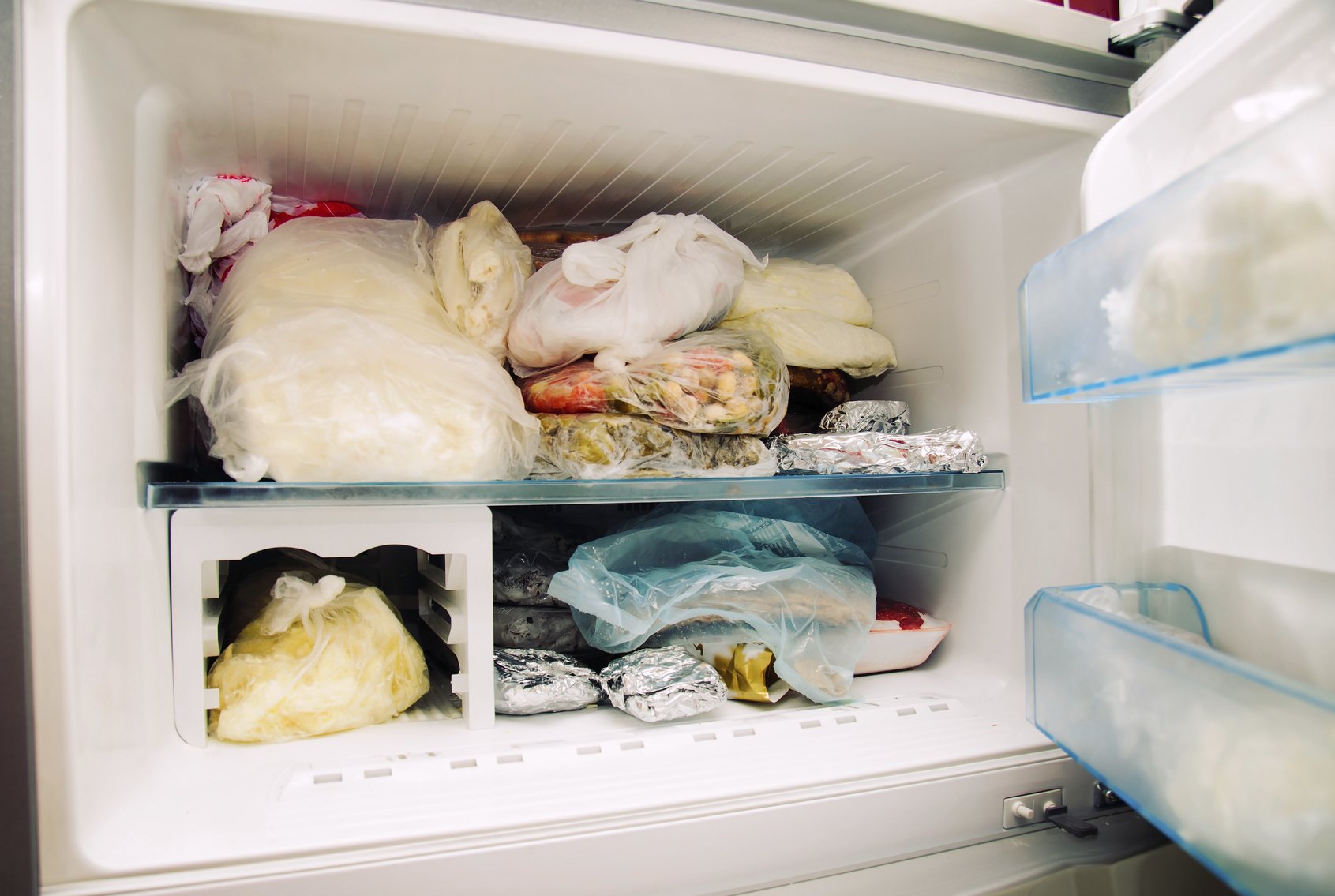
Some commercials policies allow for coverage after a power outage that results in spoiled refrigerator or freezer food. (Photo: iStock)

Coverage for damage caused by an off-site event


Question:
Lightning struck a detached sign and power pole. The sign and pole fell on power lines, which in turn caused a power outage and surge at the insured premises. The insured is making a claim for damaged electronic business personal property items such as cash register, due to the power outage and surge.


We are contemplating whether there is coverage under CP 10 30 06 07, Utility Services exclusion.

Our initial opinion is that while there is an on-premises outage, the language regarding power surges in the exclusion may eliminate coverage for this loss.
— Colorado Subscriber 

Answer: We agree with your thinking on this loss — the policy language states that loss or damage caused by surge of power is excluded if the surge would not have occurred but for an event causing a failure of power.

The language here does not specify an on-premises or off-premises failure, just a failure. Since the surge caused the damage to the electronics, the loss would not be covered unless the loss was caused by a resulting covered cause of loss. So, if the surge caused a fire that destroyed the cash register, that would be covered. But if the surge alone damaged the cash register, it would not.


What about fire damage and a windstorm policy?

Question: Our insured has a windstorm policy only. When Hurricane Wilma hit in October 2005, it took down a large tree in the insured's yard as well as the power line. Power was out throughout the area from October until November 9. When the power company restored the power, the house caught fire.

We turned in a claim, but it was denied. We think that the proximate cause was the hurricane that took the tree and wire down; had this not occurred the power would not have had to be restored and the fire would not have occurred. The "power failure" exclusion says that any ensuing loss to property not otherwise excluded is covered, so we think the ensuing loss — the fire — is covered.
Please give us your opinion.
— Florida Subscriber

Answer: The Florida windstorm only policy promises to pay for "direct physical loss to property" caused by the perils insured against. But the only perils insured against are hurricane (other than flood, related storm surge, etc.), tropical storm, other windstorm (such as tornadoes) and hail.

The exclusion for power failure states that if power failure results in a peril insured against, that ensuing peril will be covered. However, because the policy covers only loss by windstorm, that ensuing peril would have to be windstorm. In any event, it appears the power loss occurred on, not off, premises.

Although not in the contract, the "outline of coverage" page included with the policy clearly states the policy "does not protect you against other perils such as fire or lightning."

The only possible approach the insured might take is to convince the windstorm property insurance corporation, which issued the policy, that he reasonably expected that all losses flowing from the hurricane — such as falling tree, power loss, restoration, and resulting fire — would be covered.

Power failure vs. power surge

Question: Our insured is covered under the building and personal property coverage form CP 00 10 with the special causes of loss form CP 10 30. There was a cessation of power off-premises that stopped operations, but caused no damage. However, when power was restored, a power surge did damage insured property. The insurer is denying the claim due to the power failure exclusion in the special causes of loss form.
Would this exclusion apply to these facts?
— California Subscriber
Answer: The usual meaning of the term "failure," as found in a standard dictionary, is "an omission of occurrence or performance." Absent a specific definition of power failure in the policy, it is this definition that must be applied. Therefore, any damage caused by the cessation of power would qualify as damage caused by a power failure; however, damage caused by a surge of power is not an omission of occurrence or performance, and would not fall under the power failure exclusion, properly applied.

However, a Pennsylvania subscriber correctly points out that the adjuster could have relied on the "artificially generated power" exclusion further down in the form. Exclusion 2.a. eliminates coverage for damage caused by or resulting from artificially generated electric current... that disturbs electrical devices, appliances, or wires. However, if loss or damage by fire results, that damage is covered.


The Pennsylvania Department of Environmental Protection (DEP) issued an Administrative Order requiring the Pittsburgh Water and Sewer Authority (PWSA) to make critical infrastructure upgrades and repairs to its public drinking water system specifically to ensure adequate pressure and volume within the system.

FOR IMMEDIATE RELEASE
10/25/2017
CONTACT:
Lauren Fraley, DEP
412-442-4203

 
DEP Orders PWSA to Make Critical Infrastructure Upgrades to Ensure Adequate Drinking Water Supplies


Pittsburgh, PA – The Pennsylvania Department of Environmental Protection (DEP) today issued an Administrative Order requiring the Pittsburgh Water and Sewer Authority (PWSA) to make critical infrastructure upgrades and repairs to its public drinking water system specifically to ensure adequate pressure and volume within the system.

This order requires no action on the part of PWSA customers. Residents should continue to use water as they normally would. The Department’s order pertains to improvements to infrastructure; there is no boil water advisory in effect.

“DEP’s Safe Drinking Water program staff have devoted significant resources to specifically addressing PWSA’s drinking water issues,” said DEP Secretary Patrick McDonnell. “DEP is committed to providing necessary oversight of the commonwealth’s 8,500 public water systems, including PWSA.”

DEP has issued an Administrative Order to require PWSA to take specific corrective actions on a schedule prescribed by DEP. Today’s order targets the water system’s ability to provide a continuous supply of safe and potable water to consumers, and pertains to pressure and volume, not an imminent threat from contaminants. The order has been issued to PWSA, the lessee and operator, and to the City of Pittsburgh, which owns the water system.

In its Administrative Order, DEP requires the following and other actions from PWSA:
•    Restore the Lanpher Reservoir to service by completing repairs to the cover of the east cell of the reservoir initially, and ultimately the replacement of the covers and liners of both the east and west cells;
•    Resume operation of the Highland 1 Reservoir, which would require either the addition of an ultraviolet disinfection unit and other upgrades to the Highland Membrane Filtration Plant or the covering of the Highland 1 Reservoir, which would negate the need for operation of the Membrane Filtration Plant;
•    Ensure reliability of the Bruecken Pump Station by installing a backup pump and emergency backup power supply; and
•    Take necessary actions to assure that water at adequate pressure is continuously supplied to users.

PWSA has cooperated with DEP’s investigations and requests for documents, and DEP expects that PWSA will continue to comply with DEP oversight.

“We have and will continue to provide technical guidance and clearly communicate compliance requirements to PWSA and process permits quickly and thoroughly,” said DEP Acting Southwest Regional Director Ron Schwartz. “We are all working toward the same goal of continuing to provide safe drinking water to residents, and this order provides a plan moving forward.”

Previously, DEP identified significant deficiencies and violations at PWSA, which resulted in enforcement actions and field orders that led to two Tier 1 boil water advisories in January and August 2017. Following the incidents, DEP conducted investigations of PWSA’s system.

DEP has requested the assistance of the U.S. Environmental Protection Agency (EPA) to perform a comprehensive performance evaluation of PWSA’s distribution system, which EPA has agreed to do.

For more information, including the Administrative Order, visit DEP’s Southwest Region page here.

THE DEADLY HIGH-RISES: At manufacturer's request, the U.S.'s fire safety code was weakened 5 years ago for more use of combustible panels.


A high school in Alaska, a National Football League stadium, a Baltimore high-rise hotel and a Dallas airport terminal are among thousands of structures world-wide covered in combustible-core panels similar to those that burned in June’s deadly London fire, The Wall Street Journal found.

Safety improvements to building interiors over the past 40 years have helped cut the number of structure fires and related deaths in the U.S. by roughly half, a remarkable victory over one of civilization’s oldest threats.

In promotional brochures, a U.S. company boasted of the "stunning visual effect" its shimmering aluminum panels created in an NFL stadium, an Alaskan high school and a luxury hotel along Baltimore's Inner Harbor that "soars 33 stories into the air." 

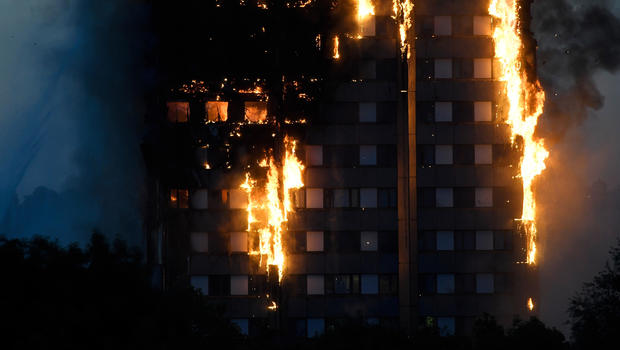
Those same panels -- Reynobond composite material with a polyethylene core -- also were used in the Grenfell Tower apartment building in London. British authorities say they're investigating whether the panels helped spread the blaze that ripped across the building's outer walls, killing at least 80 people. 

The panels, also called cladding, accentuate a building's appearance and also improve energy efficiency. But they are not recommended for use in buildings above 40 feet because they are combustible. In the wake of last month's fire at the 24-story, 220-foot-high tower in London, Arconic Inc. announced it would no longer make the product available for high-rise buildings

Determining which buildings might be wrapped in the material in the United States is difficult. City inspectors and building owners might not even know. In some cases, building records have been long discarded and neither the owners, operators, contractors nor architects involved could or would confirm whether the cladding was used. 

That makes it virtually impossible to know whether such structures as the Baltimore Marriott Waterfront hotel -- identified by Arconic's brochures as wrapped in Reynobond PE -- are actually clad in the same material as Grenfell Tower, which was engulfed in flames in less than five minutes.
At a Thursday news conference that followed the publication of The Associated Press' story on the use of the cladding material in the U.S., Cleveland's chief building official confirmed that panels on the city-owned Cleveland Browns' football stadium are "similar if not identical" to those used on the doomed London tower, but said they pose "zero risk to the fans."

Thomas Vanover said the panels were installed differently and that the venue's overall cladding includes many materials.
"From these panels and this installation, there's no risk of anything remotely close to the Grenfell tragedy," Vanover said.

The International Building Code adopted by the U.S. requires more stringent fire testing of materials used on the sides of buildings taller than 40 feet. However, states and cities can set their own rules, said Keith Nelson, senior project architect with Intertek, a worldwide fire testing organization.
The National Fire Protection Association conducts fire resistance tests on building materials to determine whether they comply with the international code. Robert Solomon, an engineer with the association, told the AP that the group's records show the U.S.-made Arconic panels never underwent the tests. For that reason, he said, the group considered the products unsafe for use in buildings higher than 40 feet.

Tests conducted by the British government after the Grenfell fire found samples of cladding material used on 75 buildings failed combustibility tests.

Solomon said the use of Reynobond PE on the Baltimore Marriott and Browns stadium in particular should be reviewed because of their height.

On buildings that are "higher than the firefighters' ladders," incombustible material must be used, Arconic advises in a fire-safety pamphlet. It warns that choosing the right product is crucial "in order to avoid the fire to spread to the whole building" and that fire can spread extremely rapidly "especially when it comes to facades and roofs."

No one has declared the U.S. buildings unsafe, nor has the U.S. government initiated any of the widespread testing of aluminum paneling that British authorities ordered after the London disaster.

Arconic declined to give further details about the buildings in the brochure, and hasn't said how many U.S. buildings contain the product.

The company is cooperating with building owners and others involved, such as the Baltimore hotel, spokesman Steven Lipin said. The product is "certified for use in the UK and US" and the company "will continue to be here to answer any questions about its products," Lipin said in a statement to the AP.
He did not indicate whether Arconic is contacting all the contractors, builders and others that used the material.

Baltimore City Housing Authority spokeswoman Tania Baker said the city doesn't keep detailed records of building materials but added that, if used, the material would have been compliant with local fire codes because the Marriott is equipped with sprinklers. Harbor East, a development company that owns the building, referred all inquiries to the Marriott, whose spokesman Jeff Flaherty said results of testing on the hotel's exterior panels could be received as early as this week.

"We can tell you that the hotel passed building inspection at the time it opened in 2001 and that the hotel's fire and life safety systems meet local code requirements," he said.

The Arconic website stated that the Browns stadium used 100,000 square feet of the bright silver aluminum composite material in its exterior.

One option for building owners who are unsure of the product's use would be to remove a section of paneling and have it tested at a lab, said Vickie Lovell, president of InterCode Inc., a consulting firm on building codes and standards.
Building records kept by cities can include construction blueprints, inspection logs and fire safety plans. But local agencies don't require that an applicant seeking a building permit submit a list of materials or specific products. In the case of the Marriott, Baltimore's housing department holds the building's original plans, which don't say what cladding was used.

The architect of record would have known what materials were used during construction. But Peter Fillat, an architect who worked on the 2001 Marriott construction, said he destroyed his records pertaining to the property six years ago because his contract requires him to keep files for only 10 years.
Construction and contracting firms that worked on the Marriott also said they no longer had those records.

For decades, the U.S. has required sprinkler systems to be installed in new high-rise buildings, as well as multiple ways for people to exit in the case of a fire. Grenfell Tower had none of those safeguards.

But fire safety experts caution that indoor sprinklers can't stop a fire that ignites on a building's exterior and spreads across the coating that encases it.
The danger is that "the whole outside of your building could be on fire, yet the internal sprinkler heads may never activate!," Oklahoma fire safety consultant John Valiulis wrote in a 2015 research report on the flammability of exterior walls. He pointed to high-rise fires that began on building exteriors where indoor sprinklers were completely ineffective at stopping flames from racing up the outside walls.

Some of the buildings Arconic lists as using Reynobond PE:

Anchorage, Alaska

South Anchorage High School used 20,000 square feet of Reynobond Aluminum Cladding Material on the exterior of its science classrooms, according to Arconic's website. Anchorage Public Schools Superintendent Deena Bishop confirmed to the AP that the material was used at the high school. "We are looking at options, studying it more, understanding what the risks are," Bishop said, adding that the cladding was installed according to code. "Presently, we're finding that the use of it on single-story buildings is appropriate according to the manufacturer."

Dallas

Arconic's website says Reynobond PE was used in Dallas-Fort Worth International Airport's 2-million-square-foot Terminal D facility, which opened in 2005. Reynobond PE formed the walls of the terminal's shopping and dining areas, the company's project report states. The panels were installed in parts of the interior and exterior of the terminal, airport spokesman Casey Norton said. "We've been aware that we have these panels for a long time and it's part of the equation that we use every time we inspect the airport for fire safety," he said.

Detroit

Arconic's website reported 26,000 feet of the paneling was used in six Early Childhood Development Centers for the Detroit Public School System. Detroit Fire Marshal Gregory Turner said no specific buildings had been identified using the material applied to Grenfell Tower but that the city was continuing to investigate.

Denver

The top two floors of 1899 Wynkoop, a nine-story office and retail building in downtown Denver's historic warehouse district, were clad with the product to lighten its appearance and keep it from dominating the surrounding warehouses, Arconic advertises in promotional materials. About 13,000 square feet of Reynobond PE was used, the company said. Officials in Denver's community planning and development office have been looking into the matter, but haven't been able to locate the original building plans. "Our expectation is that it was purged as part of our normal records retention process," spokeswoman Andrea Burns said in an email.

=================

How a common building material turned a Dubai hotel fire into an inferno

Experts say they have no idea how many skyscrapers around the world have a potentially combustible panelling making them at risk of similar fast-moving fires.


DUBAI, UNITED ARAB EMIRATES—Within minutes, the revelry of New Year’s Eve in Dubai turned to horror as those gathered for fireworks downtown watched flames race up the side of one of the glistening city’s most prominent luxury hotels.

But the fire at the 63-storey The Address Downtown Dubai wasn’t the first, second or even third blaze to spread swiftly along the exterior of skyscrapers that have risen from the desert at a torrid pace in and around Dubai over the past two decades.

It was at least the eighth such fire in the Emirates alone, and similar blazes have struck major cities across the world, killing dozens of people, according to an Associated Press survey.


The reason, building and safety experts say, is the material used for the buildings’ sidings, called aluminum composite panel cladding. While types of cladding can be made with fire-resistant material, experts say those that have caught fire in Dubai and elsewhere weren’t designed to meet stricter safety standards and often were put onto buildings without any breaks to slow or halt a possible blaze.

While new regulations are now in place for construction in Dubai and other cities, experts acknowledge they have no idea how many skyscrapers have the potentially combustible panelling and are at risk of similar fast-moving fires.

“It’s like a wildfire going up the sides of the building,” said Thom Bohlen, chief technical officer at the Middle East Center for Sustainable Development in Dubai. “It’s very difficult to control and it’s very fast. It happens extremely fast.”
The Address Downtown hotel after it was gutted by the New Year's Eve blaze.


Cladding came into vogue over a decade ago, as Dubai’s building boom was well underway. Developers use it because it offers a modern finish to buildings, allows dust to wash off during rains, and is relatively simple and cheap to install.

Dubai has since burgeoned into a cosmopolitan business hub of more than two million people. As in other Emirati cities, foreign residents far outnumber the local population. Expatriate professionals in particular are drawn to the ear-popping apartments the city’s hundreds of highrises offer, and skyscraper hotels accommodate millions of guests each year. The city-state aims to attract 20 million visitors annually by the time it hosts the World Expo in 2020.

That means the risk of highrise fires touches people from all over the world.

Typically, the cladding is a half-millimeter thick piece of aluminum attached to a foam core that is sandwiched to another similar skin. The panels are then affixed to the side of a building, one piece after another.

The biggest problem lies with panel cores that are all or mostly polyethylene, a common type of plastic, said Andy Dean, the Mideast head of facades at the engineering consultancy WSP Global.

“The ones with 100-per cent polyethylene core can burn quite readily,” Dean said. “Some of the older, even fire-rated, materials still have quite a lot of polymer in them.”

The panels themselves don’t spark the fires, and the risks can be lessened if they are installed with breaks between them to curb a fire’s spread. The panels’ flammability can be significantly reduced by replacing some of the plastic inside the panels with material that doesn’t burn so easily.

However, when installed uninterrupted row after row, more flammable types of cladding provide a straight line of kindling up the side of a tower.
A skyscraper burns in Sharjah, United Arab Emirates, on Oct. 1, 2015. Local experts have suggested as many as 70 per cent of the towers in Dubai may contain the flammable material.


That was the case in 2012 when a spate of fires struck Dubai and the neighbouring emirate of Sharjah. Blaze after blaze, though some ignited differently, behaved the same way: fire rushed up and down the sides of the buildings, fuelled by the external panels.

The day after an April 2012 fire at a 40-story building in Sharjah, Dubai issued new building regulations barring the use of cladding constructed with flammable material. Officials elsewhere in the United Arab Emirates followed suit, though by that time, the building boom had subsided in the wake of a global recession.

But the rules did not call for retrofitting buildings with flammable cladding already installed — nor is there any clear idea of how many of these buildings stand in Dubai or the UAE’s other six emirates.

Local experts have suggested as many as 70 per cent of the towers in Dubai may contain the material, though they acknowledge the figure is only an estimate as there are apparently no official records.

“There’s an exposure because there’s a lot of them and unfortunately they don’t come with an ‘X’ on the building to know which ones they are,” said Sami Sayegh, global property executive in the Middle East and North Africa for insurance giant American International Group, Inc.

Emaar Properties, which developed The Address Downtown and nearby properties including the Burj Khalifa, the world’s tallest building, said authorities are still investigating the New Year’s Eve fire. It has hired an outside contractor to assess and restore the damaged tower, and it plans to reopen the hotel, based on orders from Dubai’s ruler himself. It has not released specific details about the type of cladding used.

However, The National, a state-owned newspaper in Abu Dhabi, has reported that the cladding used on The Address Downtown was the fire-prone type seen in other blazes.
The Tamweel residential tower at Jumeirah Lakes Towers in Dubai burns in this Nov. 18, 2012 file photo.

Lt. Col. Jamal Ahmed Ibrahim, director of preventive safety for Dubai Civil Defence, said authorities take the issue of cladding fires seriously and are committed to “finding solutions and stopping these accidents from happening.”

A nationwide survey of existing buildings has been ordered in the wake of The Address fire, and additional guidelines will be put in place in March to ensure new buildings are constructed to a higher standard, he said.

However, Ibrahim insisted that the type of cladding that was involved in previous tower fires appears to have been used on only a small number of all buildings in the emirate — a figure he suggested could be as little as 5 per cent. But he acknowledged that officials don’t know how many buildings are at risk.

“Without (doing) the survey or something, we can’t say the number exactly,” he said.

The problem is not Dubai’s alone — cladding fires have struck elsewhere in the world.

In 2010, a similar fire at a Shanghai highrise killed at least 58 people. An apartment fire in May in Azerbaijan’s capital, Baku, killed 16. Another dramatic blaze hit Beijing’s TV Cultural Center in February 2009, killing a firefighter.

All bore similarities to the Dubai fires, with flames racing up the sides of the building, and experts attributed each fire’s speed to the cladding.

Peter Rau, the chief officer of the Metropolitan Fire Brigade in Melbourne, Australia, knows firsthand how dangerous such fires can be. In November 2014, a fire erupted at a 23-story apartment building in Melbourne and raced up more than 20 stories in just six minutes as flaming debris rained down below. While no one was injured, the fast-moving blaze did millions of dollars’ worth of damage to the building.

In the aftermath of the blaze, fire officials discovered some 50 other buildings in the city — and 1,700 in the surrounding state of Victoria — had similar, flammable siding, Rau said.

“You know you’ve only got to step back a little bit further and say: ‘What does it mean for Australia and what does it mean (when) you’re talking to me from Dubai?’” Rau said. “This is a significant issue worldwide, I would suggest ... There is no question this is a game changer.”

The cause of a Hanford, CA house fire was determined to be an overheated electrical circuit in the separate building, which was furnished and contained several electrical devices being supported by one extension cord.


HANFORD, CA — Hanford was hit with multiple structure fires Tuesday, causing thousands of dollars worth of damage to homes and displacing several people.


The first fire happened around 3:40 a.m. Tuesday on 10 1/2 Avenue between Houston Avenue and Hanford-Armona Road, said Kings County Battalion Chief Sal Gutierrez.


By the time crews arrived, Gutierrez said a double-wide trailer home had already been on fire and had essentially burned to the ground.


Gutierrez said four county fire crews and two Hanford city fire crews immediately began attempting to work on a nearby home that had also caught fire.


He said crews were unable to contain the fire on the wooden house and it ultimately burned down as well.


Gutierrez said one man lived in the house and he was able to get out safely and uninjured. He said the trailer has no residents and was unoccupied when it burned.


"The fire completely destroyed that house," Gutierrez said, adding the man who lived in the home is now displaced.


Fire crews stayed at the scene of the fire for almost six hours to make sure the fire was fully contained and did not leave until around 9 a.m., Gutierrez said.


Gutierrez said he estimates the damage to be about $60,000 for the trailer and about a $90,000 in damage for the home.


Gutierrez said the cause of the fire is still under investigation and asked that anyone with information regarding the incident call the department's dispatch center at 584-9276.


Later on in the day, firefighters from both the Hanford and Kings County Fire departments responded to a house fire they said was caused by an overheated electrical circuit and has left seven people displaced.


Firefighters said damage to both the house and the contents was extensive, estimated to be valued at $176,000.


Around 2:40 p.m. Tuesday, the Hanford Fire Department responded to the fire, located at 416 E. Grangeville Blvd.


Fire crews found a separate structure near the house that was engulfed in flames and the fire had extended to the house.


Fire officials said it took crews approximately 90 minutes to get the fire under control due to fire in both the basement and attic of the home.


In total, 10 firefighters from the Hanford Fire Department and six firefighters from the Kings County Fire Department responded to the fire. Officials said there were no injuries in the incident.


Fire officials said the fire investigation is complete and the cause was determined to be an overheated electrical circuit in the separate building, which was furnished and contained several electrical devices being supported by one extension cord.