Annapolis-Area Traffic Deaths: 2nd Driver Dies In Wrong-Way Crash That Killed Mother
A Cape St. Clair man died Wednesday when his SUV was hit head-on by a Salisbury woman driving the wrong way on US 50; she died at the scene.
By Deb Belt (Patch Staff) - May 18, 2017 10:04 pm ET

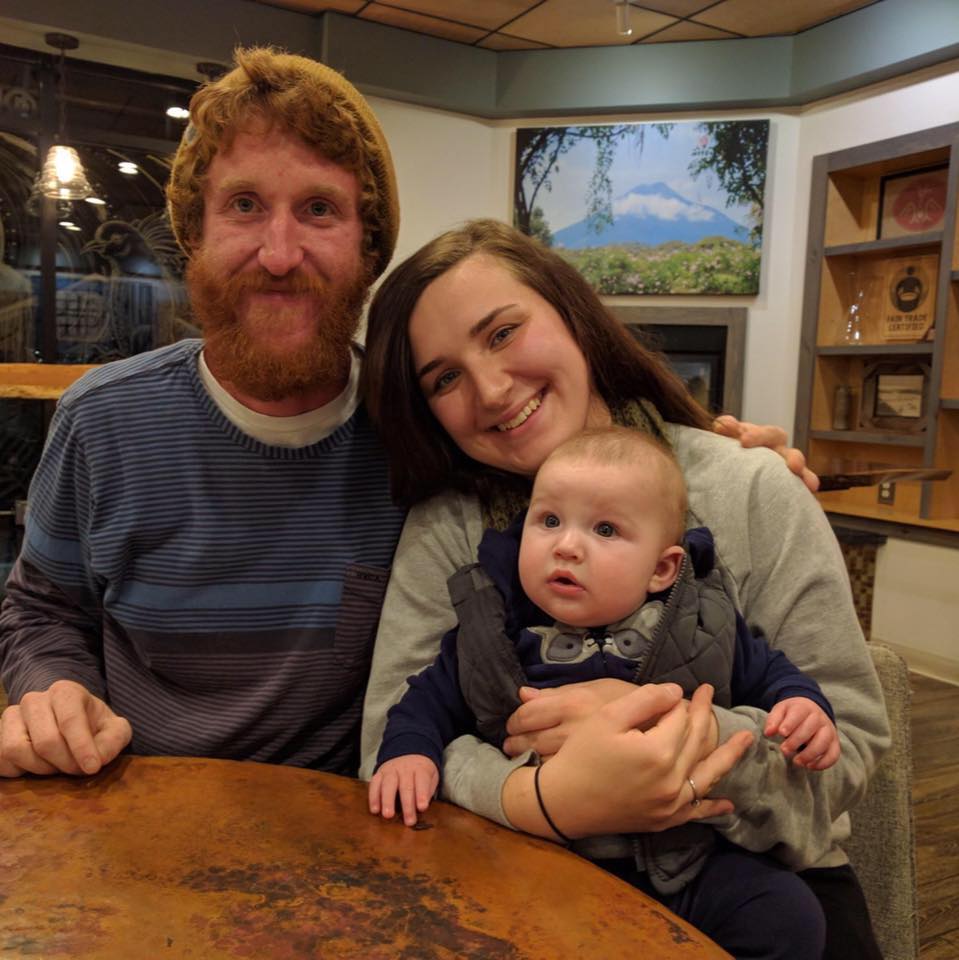
ANNAPOLIS, MD — Investigators say they are exploring whether a woman who drove the wrong way on US 50 near Annapolis crashed head-on into an SUV, killing both drivers, may have been confused by a frontage road, distracted or impaired. Maryland State Police identified Laura Ashley Murphy, 22, of Salisbury, as the driver who caused Wednesday's crash.
Murphy was driving a 2017 Volkswagen Tiguan; her 14-month-old son was a passenger in the vehicle. He was flown by State Police medevac helicopter to Johns Hopkins Medical Center, where he is in critical condition.
Robert Skidmore, 66, of Cape St. Clair, was driving the 2016 Mercedes SUV that Murphy slammed into as she was driving westbound in the eastbound lanes of Route 50 in Annapolis. EMS personnel extricated Skidmore from the vehicle, and he was also flown by helicopter to R. Adams Cowley Shock Trauma Center. Authorities said Monday night that Skidmore was pronounced dead by hospital personnel at Shock Trauma.
State Police are listening to cell phone calls they received from drivers on the highway reporting Murphy's chaotic drive before the crash. And authorities ask anyone who saw Murphy pull onto the highway the wrong way to contact State Police at (410) 267-5800.
"I'm traveling eastbound on Route 50 toward the Bay Bridge, and there was just a car coming head-on down all three lanes eastbound. It was going westbound in our lanes of traffic, and it was totally out of control," one 911 caller said, reports WBAL.
State Police say the third vehicle involved in the crash was driven by Anthony Stanley, 59, of Bowie. Stanley was driving a 2016 Nissan 350-Z, which sustained minor damage. He was not hurt in the crash.
Shortly before 1:30 p.m. Wednesday, troopers from the Annapolis barrack responded to multiple calls reporting Murphy's vehicle was traveling in the wrong direction on Route 50 at Route 2, in Annapolis. As troopers raced to the scene, additional calls were received reporting the crash.
Early information indicates that Murphy was driving westbound in the eastbound lanes of Route 50, about one-quarter mile east of the Severn River Bridge when the crash occurred. So far, investigators don't know where Murphy initially entered Route 50.
Murphy’s vehicle crashed head-on with the Mercedes SUV, which came to rest on the side of the highway in a wooded area. About 4 p.m., the driver was extricated from the vehicle and taken to the trauma center.
The Maryland State Police Crash Team will conduct a detailed crash reconstruction.
Reports say drivers began calling 911 about a mile before the crash to warn police the woman was headed the wrong way on the highway. There is no word yet on what might have caused Murphy to enter the highway from the wrong direction.
»Screenshots from SHA traffic cameras


Investigators: Arson Cause of Deadly Central Iowa House Fire
Investigators say arson was the cause of a house fire in central Iowa that killed two girls and severely injured their uncle.
May 17, 2017
Investigators: Arson Cause of Deadly Central Iowa House Fire
GUTHRIE CENTER, Iowa (AP) — Investigators say arson was the cause of a house fire in central Iowa that killed two girls and severely injured their uncle.
Law enforcement officials said Wednesday that the girls, who were cousins, have been identified as 16-year-old Shakiah Cockerham and 12-year-old Melanie "Paige" Exline, both of Guthrie Center.
Their uncle, 54 year old William Long III, suffered severe burns to his upper body in the Monday afternoon fire and was flown to an Omaha, Nebraska, hospital, where he remained Wednesday. The girls' 74-year-old grandmother, Shirley Exline, suffered minor injuries.
The Iowa State Fire Marshal's Office found arson to be the fire's cause, and a criminal investigation has begun Guthrie Center is about 50 miles west of Des Moines.
===============
GUTHRIE CENTER, Iowa —
Authorities are searching for suspects in connection with the deadly arson fire in Guthrie Center.
Shakiah Cockerham, 16, and Paige Exline, 12, died in a house fire Monday at 1005 Main St. in Guthrie Center.
The state fire marshal announced Monday that the fire is considered an arson case.
“So their deaths would be considered homicides,” Iowa DCI Assistant Director Mitch Mortvedt said. “They are being investigated as homicides. Agents are pursuing any and all leads and it's a very active investigation at this point.”
FAMILY DRAMA
Mandy Long, a cousin of the two girls, told KCCI she believes another family member set the fire that killed them and injured their uncle and grandmother.
“(I am) very angry because of who I have in mind that did this,” Long said. “It's just terrible.”
Long said she blames a long history of family drama.
“This family has been torn for a long time and this is a terrible way for the girls to go,” Long said.
SEX ABUSE ALLEGATIONS AND THREATS
The Des Moines Register reports Shirley Exline, grandmother to the girls, told the newspaper Noah Duane Exline, 19, Paige's brother, was charged in April with seven counts of second-degree sex abuse against his sister.
The newspaper reports Paige had lived with her brother and father, James Exline, before March.
Shirley Exline told the newspaper that since gaining guardianship of the girl, she had been threatened by a person associated with the family.
COMMUNITY IN SHOCK
Guthrie Center residents said the arson investigation is another shock for a town that hasn't seen this kind of crime for as long as anyone can remember.
“Whoever did this is still out there somewhere and if they're capable of this, what else are they capable of?” Guthrie Center resident Mike Finnegan said.
Cindy Slaybaugh, who lives next door to the Exlines, said she saw the fire burn Monday morning.
“I don’t know how anyone can do that,” Slaybaugh said. “There is a reason, but I have no idea.”
“It's just a tragedy,” Long said. “The girls are too young for any of this.”
The Iowa DCI urges anyone with information about the arson to call the Guthrie County Sheriff’s Office or the Iowa DCI at 641-747-2214.
OSHA investigates Marshall Pottery death of Arturo Gonzalez
May 17, 2017 at 11:53 p.m.
The federal Occupational Safety and Health Administration is investigating the April 17 death of Marshall Pottery employee Arturo Gonzalez.
Arturo, who was a supervisor at Marshall Pottery, was found dead inside of a kiln. The cause of death was "environmental hyperthermia," according to his autopsy report.
Juan Rodriguez, deputy regional director for the U.S. Department of Labor Office of Public Affairs-Dallas Region, said Marshall Pottery notified OSHA about Gonzalez's death at the time of the incident, as required by law."No other details are available until the investigation is complete," Rodriguez said. The autopsy notes Gonzalez's manner of death was an accident.
Arturo was born on December 2, 1974 and passed away on Monday, April 17,
2017. Arturo was a resident of Texas at the time of passing.
==============
Arturo Gonzalez of Marshall Pottery died after he was stuck in a piece of equipment, possibly a kiln
MARSHALL, TEXAS
An
autopsy has been ordered in the death of a 42-year-old Marshall Pottery
supervisor who died on the job this week in what's being investigated
as an industrial accident.
Funeral services for Arturo Gonzalez of Marshall were Friday.
Marshall
Fire Chief Reggie Cooper said EMS units responded to Marshall Pottery
to a report of a man who was stuck in a piece of equipment, possibly a
kiln.
Cooper said the man was unresponsive and not breathing. He also was not entangled in any equipment.
Kelly
Colvin, public information officer for Marshall Police Department, said
the cause of death has not been determined but is being investigated as
an industrial accident.
Marshall Pottery officials declined comment.
Federal
Occupational Safety and Health Administration officials did not return
calls to confirm whether they are involved in the investigation.
=========
With a vast
array of traditional, ethnic, and contemporary pottery, the Marshall
Pottery is the gardener’s ultimate resource! Enhance your Garden Center
with pots and planters from one of the oldest Potteries in the nation.
Marshall Pottery specialized in hand turned pottery straight from the
potter’s wheel. Skilled artisans turned the clay of East Texas for over
one hundred years making beautiful, functional stoneware pottery. Each
piece was truly a piece of art. Master Potters and Cobalt artist
transformed lumps of clay into wonderfully designed pieces of heirloom
quality stoneware
Marshall Pottery still maintains a strong
presence in the pottery manufacturing arena today. With the construction
of a new fully automated terra cotta manufacturing facility in 1998
promoted by Deroma Group, Marshall Pottery remains the largest
manufacturer of red clay pots in the United States. With a commitment to
quality and customer service, the processes are constantly being
upgraded. The stoneware production remains much the same as it has been
manufactured in the past with the exception of electricity turning the
potter’s wheels instead of the potter’s kick. The traditions of
manufacturing a MADE IN THE USA stoneware line of pottery continue as a
strong force in the overall business plan today.
==============
Arturo was born December 2, 1974 in San Miguel de Allende, Guanajuato Mexico to Maria Isabel Tovar and Jose Gonzalez. He passed away unexpectedly on April 17, 2017 in Marshall due to a work related accident.
Arturo was a supervisor at Marshall Pottery where he had worked for the past 11 years. He was a very loving husband, father, son, brother and friend. He enjoyed taking his children to the movies, camping and watching them compete in sports! Arturo liked to cook and just spend time with his friends and family, but above all, he loved spoiling his wife!
Mr. Gonzalez was preceded in death by his maternal grandparents, Nasario Tovar and Encarnacion Mosqueda; paternal grandparents, Cruz Gonzalez and Erculana Zarate; two uncles, Nicolas and Pedro Gonzalez; and aunt, Aurora Gonzalez all of San Miguel de Allende Gto, MX; and his nephew, Zachery Ledbetter of Marshall, TX. He is survived by his loving wife of 19 years, Evelia Rios Gonzalez; son, Kevin Arturo Gonzalez; two daughters, Gabriela Evett and Sopia Elane Gonzalez all of Marshall; parents, Maria Isabel Tovar and Jose Gonzalez of San Miguel de Allende Gto, MX; 43 nieces and nephews, many aunts, uncles, cousins and other family members, as well as a host of friends.
Sullivan Funeral Home


Research: Workplace Injuries Are More Common When Companies Face Earnings Pressure
Judson Caskey
N. Bugra Ozel
May 18, 2017
At a steel mill in Seguin, Texas, an employee suffered burns to more than 60% of his body after hot liquid steel spilled onto him. He died in a hospital three days later.
A 21-year-old plastics worker was treated for severe burns to his hand and had to have four fingers amputated after he was injured on his first day on the job at a factory in Elyria, Ohio.
A flawed network of pipes and valves at a manufacturing plant in La Porte, Texas, led to the release of a poisonous pesticide that killed four workers.
These are just three examples of recent workplace injuries and fatalities. U.S. companies are facing pressure to meet earnings expectations, and research indicates that meeting analyst forecasts is a more important benchmark than meeting the prior year’s earnings or avoiding losses. While these issues may seem unrelated, we wondered whether there is a connection or correlation. Do workplace injuries occur more commonly in companies that are facing increased pressure to meet earnings expectations?
In our study recently published in the Journal of Accounting and Economics, we test whether there is any relationship between workplace safety and managers’ attempts to meet earnings expectations. To do so, we used establishment-level injury data (e.g., individual store or factory) compiled by the Occupational Safety and Health Administration (OSHA) from 2002 to 2011 and matched it to earnings data. This yielded a sample of 35,350 establishment-year observations for 868 firms, excluding financial firms and firms in regulated industries. Our investigation focused on those companies that met or barely beat analysts’ expectations, and we uncovered a previously undocumented phenomenon of higher workplace injuries at these firms in particular.
The numbers are telling. Controlling for other factors, injury/illness rates are 5%–15% higher in periods where a firm meets or just beats analyst forecasts. The injury/illness rates for such firms are also significantly higher than those for firms that miss or comfortably beat analyst forecasts.
We found that pressure to meet earnings forecasts can relate to workplace safety in at least two ways: high workload and cuts to safety-related expenditures. When managers believe their company may be close to missing earnings benchmarks, they may increase employees’ workloads by pressuring them to work faster or for longer hours. In addition, employees may compromise their own safety by overexerting themselves or ignoring safety protocols that slow workflows. All of these behaviors can undermine worker safety.
Managers may also circumvent or overlook explicit and implicit safety-related measures, such as maintenance spending on equipment and employee training. When managers engage in such practices, workplace safety deteriorates and workplace injuries mount.
What does this mean in terms of real people? According to the injury data from OSHA, we find that about one in every 24 employees is injured in firms that meet or just beat analyst earnings forecasts, compared with about one in 27 workers in firms that miss or comfortably beat forecasts.
We identified three factors that characterized the companies that beat earnings benchmarks. First, we found that benchmark beaters in industries with high unionization report lower injury rates than those in industries with low unionization by about 6.4%. That’s because unions typically serve as a proxy for employees’ power to ensure safe work environments. They negotiate safety protocols and compliance into their contracts, and workers can report safety issues to their union representatives.
A second factor emerged when we compared the insurance premiums of workers’ compensation programs. These state-mandated programs differ considerably in their policies and coverage requirements. The premium in North Dakota, for instance, is $0.88 per $100 of payroll, while California’s is $3.48 per $100 of payroll.
It turns out that benchmark beaters in states with high workers’ compensation premiums have a nearly 5% lower injury rate, compared with those in lower-premium states. In other words, in states where workplace injuries are more costly, managers appear to be more diligent about their workers’ safety and less willing to increase workloads and demands on employees.
Finally, we found that companies doing considerable business with the government have better workplace safety records. Federal and state governments typically require that companies submitting bids for contracts maintain adequate workplace safety. Indeed, companies that do not meet certain workplace safety benchmarks may be barred from competing for such work. It’s likely that contract requirements cause managers to remain cognizant of workplace safety as they race to meet or beat expectations.
The effects that we document may represent the tip of the iceberg about employee health, as OSHA only collects data on relatively serious and physical injuries and illnesses that require hospitalization or days away from work. Additionally, our results suggest that disclosures about workplace safety could serve as signals to investors that managers are engaged in short-sighted activities to meet earnings targets. In other words, unusually high injury rates may signal that the firm is engaged in practices that resulted in a transitory boost to earnings that investors should not expect to persist.
When managers and workers lose sight of workplace safety while focusing short-term financial targets, the consequences can be severe. At the company level, the costs include fines, litigation, increased insurance and workers’ compensation premiums, and negative publicity. For workers, however, the price may be significantly worse: pain, lost wages, and, in the very worst scenarios, loss of life.


The federal government has proposed more than $10,000 in fines for Universal Orlando after an investigation into the death of an employee who was electrocuted on the Men in Black: Alien Attack ride last year.
Leopoldo Buenaventura’s body was found in the rafters of the ride Nov. 8.The District Nine Medical Examiner’s Office ruled the cause of death accidental electrocution.
The Department of Labor’s Occupational Safety and Health Administration has issued two citations for serious violations and another for a minor one.
Employees were using metal studs to stand and walk on as they maneuvered through the area, and fall protection was not provided. Universal corrected that during the inspection. The proposed penalty is $5,432.
OSHA also said Universal did not provide employees safe access when they entered and exited a confined space area from the catwalk. The proposed penalty for that was also $5,432. The violation must be abated by June 21.
A minor violation was that portable fire extinguishers were not mounted, located and identified so that they were readily accessible without subjecting the employees to injuries. No fines were proposed for that violation.
A Labor Department spokesman said Universal has not appealed the citation but still has time to do so.
“The safety of our team members and guests is always our top priority and we take these matters very seriously,” Universal spokesman Tom Schroder said in an email. “But we are not going to discuss the specifics of this situation.”
Buenaventura, 60, had worked as a Universal ride technician for 12 years, according to an online obituary. He had previously spent more than 20 years working as an airline aeronautics engineer.