Hoverboards are keeping ERs in N.J. busy; fractures may be bigger worry than fires

CHRIS PEDOTA/STAFF PHOTOGRAPHER
A Paterson teen riding his hoverboard near Grand and New streets in the city this week.
It turns out that falls — not fires — may have been the biggest reason to fear the hoverboard this holiday season.
Over the last week, social media feeds have been filled with hoverboard photos and videos of crashes into Christmas trees, people, furniture and the ground, prompting one laughing emoji after another in response. The injuries related to the two-wheeled balance boards aren’t funny at all, however. Many have required trips to the emergency room.

MARKO GEORGIEV/STAFF PHOTOGRAPHER
Hoverboards for sale at Marcia's Attic for Kids in Englewood.
On Christmas Day alone, The Valley Hospital in Ridgewood saw 14 patients in the ER with hoverboard-related injuries. Since then, there have been “a handful” more, according to a representative.
Safety tips
The Consumer Product Safety Commission has issued some warnings for hoverboard owners:
- Wear the same safety gear you would use when riding a skateboard — a helmet, knee and elbow pads, and wrist guards.
- Do not ride near vehicular traffic.
- Do not charge a hoverboard overnight or when you are not able to observe the board.
- Charge and store in an open dry area away from items that can catch fire.
- Do not charge directly after riding. Let the device cool for an hour before charging.
- Look for the mark of a certified national testing laboratory. While this does not rule out counterfeits, the absence of such a mark means your safety is likely not a priority for that manufacturer.
The commission urges consumers to report incidents to them at saferproducts.gov.
“There have been numerous wrist injuries occurring from falls,” emergency room doctor Bruce Felsenstein wrote in an email. “In fact our on-call orthopedist at Valley Hospital was kept quite busy attending to wrist injuries from accidents incurred from hoverboards received as Christmas presents, some of which had to be surgically repaired.”
Felsenstein saw his first hoverboard injury a couple of months ago when a child riding in his house ran into the carpet and was thrown forward, hitting his head on a wall. He said since then, there have been injuries to children and adults from falling and striking objects. Anyone riding a hoverboard should wear a helmet, wrist guards, and elbow and knee pads, according to Felsenstein.
Nationally, the U.S. Consumer Product Safety Commission, or CPSC, had dozens of ER visits reported because of hoverboard accidents. The injuries included concussions, fractures, bruises and scrapes.
Children aren’t the only ones trying the hot holiday gift that costs anywhere from $200 to more than $1,500 depending on the manufacturer. Adults are deciding to take the hot gift for a spin, often to disastrous — and when escaping injury, hilarious — results (Google “Mike Tyson” and “hoverboard”).
The hands-free Segways, as they are sometimes called, require riders to lean slightly forward to go forward, backward to go backward and put a little pressure on the foot in the direction the rider wants to turn.
Earlier in December, the CPSC began investigating the items because of fires apparently caused by the device’s lithium-ion batteries, especially when charging. With fear of the battery igniting, most major airlines banned them from planes and some retailers, including Amazon, stopped selling them.
This week, the Bergenfield Fire Department responded to a report of a smoking hoverboard. They were able to dismantle it before a fire started and found at least one broken wire. After the incident, the town’s fire chief cautioned residents to make sure their hoverboards are turned off and to keep an eye on them. In Lacey Township, a Smart Balance hoverboard burst into flames and caught fire inside a home. There were no injuries in either incident.
The airline rule has prompted multiple complaints, including some angry tweets from actor Russell Crowe, who apparently missed the memo — and many major news stories — on the ban and tried to take his kids’ new boards onto a Virgin Australia flight.


Power lines and cranes continue to be a deadly combination on work sites
Tumwater – Two King County contractors face large fines from the Department of Labor & Industries (L&I) for safety violations after a crane boom made contact with high-voltage power lines at a construction site in Seattle. Two workers were severely injured during the incident when 7,200 volts of electrical current traveled down the crane's hoist line to the men working below the power lines.
As a result, Marpac Construction, of Seattle, has been cited for six workplace safety violations, including three "willful," and fined $133,500. A subcontractor, Spartan Concrete of Kirkland, faces five violations, including two "willful," and $90,000 in fines. Also, Shaffer Crane & Equipment Inc., another subcontractor, was cited for three serious and one general violations with a total fine of $5,700.
The investigation began last September when news outlets reported that two workers had been taken to Harborview Medical Center after suffering severe electrical burns.
L&I investigators at the site found that a mobile crane and a forklift with a crane-boom attachment had been operating under live high-voltage power lines. The power lines were scheduled to be moved underground, but rather than wait for that work to be done, the companies continued to work under them.
A Shaffer Crane employee was operating the crane and a Spartan foreman was giving signals when the incident happened. Seven workers were put at risk by being exposed to the potentially deadly electrical shock.
Cranes and power lines a known hazard
The danger from a crane contacting overhead power lines is well-known. From 1999-2012, there were nine deaths in Washington from crane contacts with power lines, including a double fatality in 2010.
In 2012, L&I issued an alert (Lni.wa.gov/safety/hazardalertsCranesAndPowerlines.pdf) to warn companies of the deadly hazard after receiving reports of six power line contacts by cranes over six months.
Companies operating cranes must make sure that all power line requirements are implemented. That includes putting protective measures in place to prevent crane booms from contacting energized power lines, designating a qualified "lift director" to ensure the safe operation of the crane, and maintaining a safe radius from power lines.
Willful, serious and general violations
The willful citations are for not ensuring that protective measures were in place and for not prohibiting work below energized power lines. Marpac was cited for an additional willful violation for not designating a qualified "lift director" who was aware of the voltages of the power line and the safety requirements for working around them. The investigation found that Marpac's lift director was not aware of the voltages involved or the specific safety requirements.
Marpac was also cited for three serious violations related to inadequate training and for not ensuring an effective accident prevention plan, with penalties totaling $7,500.
The investigation found that Spartan's employees were not trained or aware of the danger of working under power lines. Consequently, the concrete company was cited for two serious safety violations and fined $6,000 for not ensuring that employees clearly understood the hazards of overhead power lines and for lack of training and supervision. Spartan was also cited for one general violation for not holding and documenting walk-around safety inspections at the beginning of the job and weekly.
A willful violation is one where L&I finds evidence of plain indifference or an intentional disregard to a hazard or rule. A serious violation is one where there is a substantial probability that worker death or serious physical harm could result from a hazardous condition.
As a result of the violations and the severity of the injuries, both Marpac Construction and Spartan Concrete have been identified as severe violators and are subject to follow-up inspections to determine if the conditions still exist.
Marpac and Shaffer have appealed the citation, and the appeals are pending. Spartan has until April 14 to appeal. Penalty money paid in connection with a citation is placed in the workers' compensation supplemental pension fund, helping workers and families of those who have died on the job.


Meet a victim of the nation's opioid addiction scourge: the American worker.
A number of U.S. states are taking steps through their workers compensation systems to stem the overprescribing of the powerful painkillers to workers injured on the job, while helping those who became hooked to avoid potentially deadly consequences.
Injured workers, like so many others dealing with pain, are often prescribed opioids like OxyContin and Vicodin.
"I was eating them up like they were candy," said Jimmy Duran, of Boston, who was prescribed opioids for years after hurting his neck and fracturing vertebrae in a workplace accident in 2004. A commercial mover, Duran was hit and thrown 30 feet by a moving truck.
"OxyContin, Percocet, morphine. ... It ruined my life," he said. "It brought me to my knees."
Unable to work, broke and desperate to feed his habit, Duran said he eventually began dealing cocaine to bring in cash, a mistake that landed him in jail for two years. Free of addiction now, he has become a licensed counselor at a substance use prevention and treatment program.
In all, about 2.8 million private industry workers and 752,000 public sector employees suffered nonfatal workplace injuries in 2015, more than half resulting in time away from work, according to the most recent figures from the federal Bureau of Labor Statistics.
According to a survey by CompPharma, an industry group that seeks to control workers compensation spending, more than $1.5 billion was spent on opioids by workers compensation insurers in 2015, with prescriptions for injured workers accounting for 13 percent of total opioid pharmacy costs in the U.S. that year. Survey respondents cited opioids and addiction as their most pressing concern.
A separate study of 337,000 workers compensation claims in 25 states published last year by the independent Workers Compensation Research Institute found that 55 to 85 percent of injured workers who missed seven days or more of work received at least one opioid prescription.
Rates of longer-term opioid use varied widely among states, the study found, including 1 in 6 injured workers in Louisiana, and 1 in 10 in California, New York and Pennsylvania, but only 1 in 30 in New Jersey and Missouri.
States oversee workers compensation insurance systems that employers pay into, and that provide medical care and help offset wage losses from on-the-job injuries.
Omar Hernandez, an administrative judge who resolves workers compensation disputes for the Massachusetts Division of Industrial Accidents, said injured workers belie a common misconception of addicts as people shooting up in back alleys.
"These are people from all walks of life that didn't ask to get injured," he said. "These are hard-working people who unfortunately suffered a work-related injury ... and are now hooked on these drugs."
After he and other judges became alarmed by overdoses and deaths among people in the state's workers compensation system, Hernandez spearheaded a voluntary program for people who had settled claims but were still being treated with opioids. It offers an expedited hearing process to resolve medication disputes with insurers and assigns care coordinators to help guide workers toward alternative treatments for pain.
Other states are changing policies, as well.
Calling opioid abuse a public health crisis that "deeply affects" injured workers in New York, the workers compensation board there announced in October it would allow insurers to request hearings to determine whether a claimant should be weaned off opioids.
Under new rules issued by the Ohio Bureau of Workers Compensation, reimbursement for opioid prescriptions can be denied if it's believed physicians are overprescribing or otherwise failing to follow "best medical practices" in treating injured workers.
The rules also allow the bureau to provide treatment for opioid dependence to workers who got hooked on painkillers after getting hurt.
Those and previous steps taken by Ohio to combat opioid abuse have resulted in 44 percent fewer injured workers receiving opioids in the past five years, saving $46 million in drug costs, said Melissa Vince, a spokeswoman for the bureau.
Duran's advice to other injured workers is to use painkillers sparingly and get off of them as quickly as possible.
"Once you're on these pills, you forget you're hurt," he said. "You're just about getting that high."


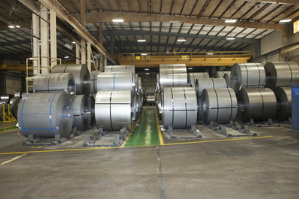


FOREST PARK, Ohio – A worker was killed in an accident at a construction company Monday morning.
Brian K. Cupp, 46, of Hamilton, was pronounced dead at SteelSummit Ohio on Southland Road, according to a news release from Forest Park police. The Hamilton County Coroner's Office and the Occupational Safety and Health Administration were investigating the incident.
A 30,000-pound steel coil fell on a worker at the business, according to a call to 911. It pinned him from the waist down.
“Oh, god,” the caller says repeatedly.
“No, don’t move it. He’ll die. Don't move that coil,” the man shouts at other workers.
“He’s still under it. You better bring everything you’ve got. “It’s very serious,” the caller says to the 911 dispatcher.
"He’s still breathing.”
Another caller said the coil was about 50,000 pounds. He said they had a crane that could lift the coil, but the dispatcher advised them to wait until EMTs arrived.
Co-workers held the injured man hand and rubbed his head while waiting for emergency help to arrive, according to a third caller.
SteelSummit provides steels for the automotive, HVAC and construction industries, as well as other manufacturers, according to its website.A check into the plant safety record showed no previous OSHA investigations listed on the OSHA website and no federal civil lawsuits filed against the company relating to worker safety.
=========
A Hamilton man was killed Monday working at SteelSummit Ohio Corporation in Forest Park, police said.
Emergency crews responded to the steel processing facility on Southland Road just after 10 a.m.
Brian Cupp, 46, was pronounced dead at the scene.
Forest Park Fire Department Lt. Adam Pope said Cupp died in an industrial accident. He said the incident was not of chemical nature and there was no additional risk to other employees or nearby residents.
Pope said SteelSummit has closed the facility for the day.
The Hamilton County Coroner's Office and the Occupational Safety and Health Administration (OSHA) are investigating Cupp's death.
OSHA could not provide any records of their inspections of SteelSummit on Monday.
SteelSummit purchased the Forest Park building in 2011 from Ohio Metal Processing. The business is a subsidiary of the Sumitomo Corporation of Americas and operates a second facility in Nashville. Both facilities produce steel for the automotive, heating and air conditioning and construction industries.
BERKELEY, Calif. (KGO) -- PG&E is working to restore power to customers in Berkeley after a huge tree fell near Cal's Memorial Stadium.
The tree took out power lines and power poles on Bancroft Way and Prospect Street just before 8 p.m. Sunday.
Crews are now using chainsaws to slowly take the tree apart.
Nearly 2,000 PG&E customers lost power. They've turned the lights back on for most of those people. But PG&E says the remaining 35 customers won't have their power restored until after 8 p.m. Monday.
With another storm headed our way, there's concern more trees could be falling this week.


