FENTON, MICHIGAN
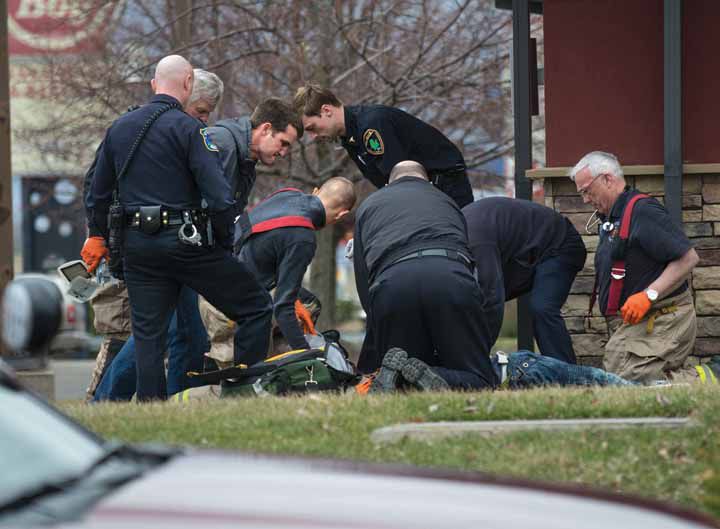
Emergency responders work to save the life of a 23-year-old utility worker from Burton, who was shocked while working on a business sign at the former Pizza Hut on Owen Road at 2 p.m. on Tuesday, March 7.
The man was working from an elevated bucket when he was shocked. The bucket was lowered and emergency responders, including the Fenton Fire Department and STAT EMS provided medical care.
He was transported to Genesys Health Park in Grand Blanc Township with life-threatening injuries for further treatment.

A federal safety official called on the rail industry to move faster to upgrade aging rail tankers following a fiery train derailment in rural Iowa that spilled ethanol into a creek and was still burning nearly two days after it erupted.
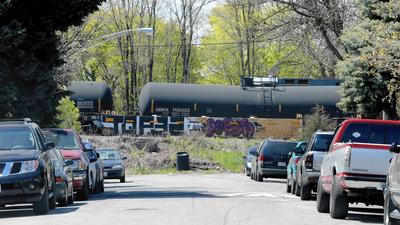
A Union Pacific train hauling 99 tankers of ethanol from a producer in Omaha, Nebraska, derailed around 1 a.m. Friday on a trestle bridge spanning Jack Creek near Graettinger, about 160 miles northwest of Des Moines. It sent off the tracks 20 tanker cars considered by federal investigators as older, less sturdy tanks set to be phased out over the next dozen years. Fifteen of them caught fire, National Transportation Safety Board member Robert Sumwalt said at a news conference Saturday evening. The train left from a plant in Superior, Iowa, heading for Texas City, Texas, he said.
The derailment in Iowa happened miles from any communities, and no one was injured. The fire occasionally sent explosions and fireballs high into the sky as highly flammable ethanol fumes poured from the ruptured tanks. NTSB officials said that some of the tankers, which carry about 25,000 gallons each, had spilled ethanol into the creek, but environmental officials don't believe it's enough to be toxic to wildlife or fish.
Iowa Natural Resources field office manager Kenneth Hessenius said Friday that checks of water downstream found no obvious signs of a spill.
New federal regulations on tank-car trains face challenges
Two tankers were still burning by 7 p.m. Saturday, Sumwalt said. He said the train consisted solely of an older type of car known as the DOT-111. The agency deemed that tanker a hazard as far back as 1991, noting its steel shell is too thin to resist puncture in accidents. The ends are especially vulnerable to tears from couplers that can fly up after ripping off between cars.
Sumwalt said few crude oil shippers now use the older tankers, after recent emphasis in the industry about the danger of it.
"But meanwhile, people have forgotten about the potential hazard of transporting ethanol using these cars," he said. "We would like to see the shippers accelerate their schedule to get these legacy DOT-111 tank cars out of service when transporting flammable liquids — specifically crude oil and ethanol."
There have been at least seven significant accidents involving trains hauling ethanol since 2006 that released a combined 2 million gallons of the fuel.
"God forbid this happens in a community or with people sitting in their cars waiting for the train to go by. It's not like we haven't seen that kind of tragedy before," said Karen Darch, co-chair of an Illinois-based coalition of local officials, called TRAC, that has pushed for rail safety enhancements. The group was formed after a 2009 derailment of ethanol tankers killed a woman at a crossing in Cherry Valley, Illinois. Darch is village president of neighboring Barrington, Illinois.
Even though investigators have not been able to examine the site of the Iowa derailment because of the fire, they have interviewed the derailed train's two-man crew, as well as the crew of a train that passed through the area around midday Thursday, Sumwalt said.
"Neither of these crews saw anything unusual," he said.
Nothing that would have been an obvious cause of the derailment was spotted from viewing a front-facing video taken from a camera in the derailed train's locomotive, he said.
Federal rules enacted in 2015 call for replacing or retrofitting the aging, soda can-shaped rail tankers by 2029, although most would have to come off the tracks sooner. Those that carry ethanol would have to be replaced by 2023.


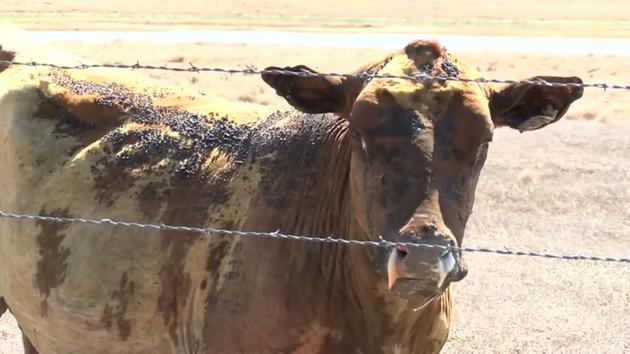
The Texas Cattle Feeder's Association says more than 5,000 cattle are in immediate need of hay and feed supplies. (KTRK)
Saturday, March 11, 2017 05:21AM
Officials say two of the three fires that have burned the Texas Panhandle this week now are fully contained and firefighters continue to tamp down the largest of the three.
The Texas A&M Forest Service says a fire in the northeast corner of the Panhandle near the Oklahoma border has burned nearly 500 square miles and was 75 percent contained Thursday.
A separate fire just to the south was fully contained after burning about 210 square miles. Another, smaller fire to the west, near Amarillo, was fully contained by firefighters Tuesday.
Four people have died in the Texas fires while a fifth person was killed in Oklahoma and another person died in Kansas.
The Texas Cattle Feeder's Association says more than 5,000 cattle are in immediate need of hay and feed supplies.
========
(CNN)Rancher David Bouziden lost his home, his ranch and nearly all his cattle in wildfires that swept through Kansas this week.
"I'd say personally we probably lost close to 150 head, maybe," he said. "That's probably 90% of our cattle."
Bouziden barely escaped the blaze, which set a state record for the most widespread single fire. On Monday, he was plowing a fireguard on his ranch in Clark County in Southwest Kansas when flames propelled by near-70 mph winds struck the pasture, he said. The smoke engulfed him, forcing him from his tractor to struggle through soot and ash. He could hardly see, he said, but managed to distinguish the outline of a hay shed where his pickup truck was parked.
Bouziden was able to drive to safety, but nearly all his cows were killed in the fire that consumed his home, three outbuildings, hay barns and machinery sheds.
"It burned every acre of the ranch. There's not a blade of grass standing out there."
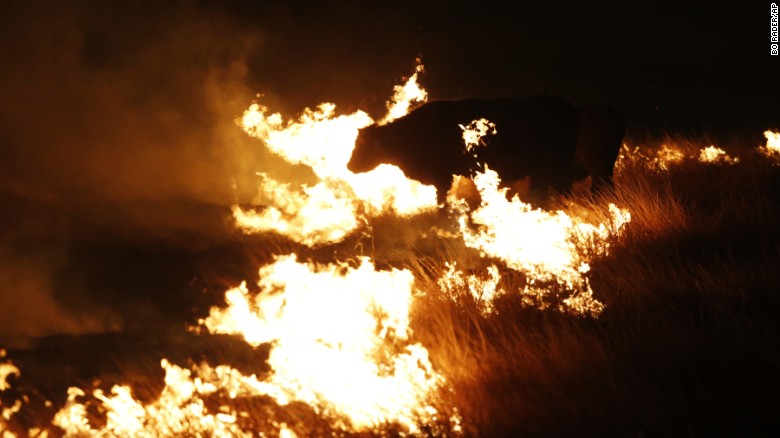
A cow grazes by a wildfire near Protection, Kansas, early Tuesday.
Bouziden's family has been in ranching for nearly 100 years, since his grandfather bought a few cattle in the 1930s. "This is all I've ever done," he said.
His experience is typical of ranchers in Kansas this week, where grass fires have scorched more than 650,000 acres, devastating farming and ranching communities.
The destruction has been particularly pronounced in Clark County.
Randall Spare, a veterinarian in Ashland, the county seat, said Wednesday it's too early to make a guess as to how many cattle were lost in the blazes; ranchers are still trying to assess the damage.

A pair of badly burned cows stand along a rural road near Ashland, Kansas, early Tuesday.
"It's probably at least 2,000. It could be 6 or 7,000," he said.
With spring approaching, many of the cows were calving, Bouziden said, and if the calves are added to the count, the number of animals lost could nearly double.
'The perfect storm'
The fires have been perpetuated by low humidity and heavy winds, conditions that have made the Kansas Plains a tinderbox. The state saw a particularly wet summer last year, said Todd Domer, spokesman for the Kansas Livestock Association. According to Domer, the grass that it brought is now fueling the fires.
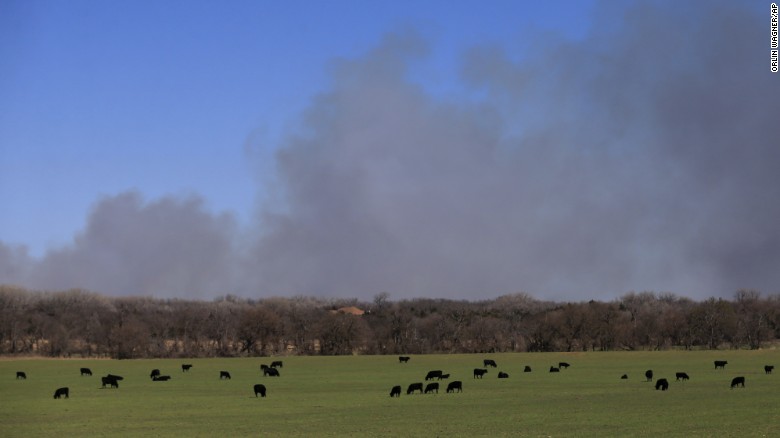
Cattle graze with a background of smoke from wildfires near Hutchinson, Kansas, Tuesday.
"We had the perfect storm," he said. "We had a wet summer and then kind of a dry winter and then you get wind on top of that and then anything that's flammable will spark."
Domer spoke about the emotional toll an event like this takes on ranchers.
"They're geared to take care of cattle and have cattle be healthy and grow and be productive," Domer said. "When you have to switch gears mentally and deal with injuries and death on a massive scale, it can be pretty tough."
Huge loss of infrastructure
The devastation for ranchers' businesses is far reaching. Not only have they lost an unknown number of cattle, but the livestock that have survived have no grass or hay to feed on, most of it having been consumed by the flames.
"It looks like the moonscape," Domer said. "It just looks like a big sand beach that's endless."
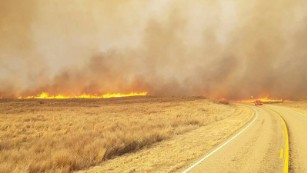
Wildfires burn more than 1 million acres, taking 7 lives
The fences that lined the edges of the pastures, they're gone, too. "That's a rancher's infrastructure right there," Domer said. "That's a huge loss."
He said early estimates have the cost of fencing at $10,000 per mile.
"There could be 100,000 miles of fence," Spare said.
He's been focused on helping his veterinary clients assess the damage. When asked they dealing with the losses, Spare said, "They care so deeply for their livestock. They're more concerned with their livestock's welfare than their own."
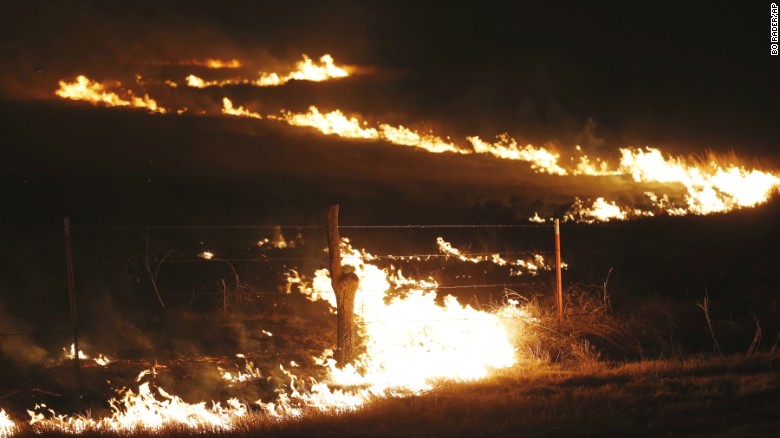
Wildfires swept by high winds burn near Protection, Kansas, on Tuesday.
Bouziden, who, like many of his neighbors, is focused on dragging the dead cattle into a pile to get a physical count.
"It's entirely devastating," Bouziden said. "You've got a home there with all of your belongings and 40 years of living, and it's gone."
But the generosity and support of his community and groups like the livestock association, which is heading up relief efforts, is helping him through.
"It's really heartwarming to see how your neighbors react in a disaster like this," he said. "It's that way all over the country. People want to help."

A de-icing truck tipped over after colliding with an Alaska Airlines aircraft at Boston's Logan International Airport Friday night, injuring the worker in the truck's basket, officials said.
The truck came in contact with the San Diego-bound Boeing 737 aircraft on the tarmac around 7 p.m., according to Massport, the authority which operates the airport.
Alaska Airlines Flight 769 had just pushed back from the gate for departure and was being de-iced when the truck came in contact with the left wing of the aircraft, reported ABC affiliate KOMO in Seattle, where the airline is based.
The truck tipped over, injuring the worker, who was transported to a nearby hospital.
There were no injuries reported on the aircraft
As the plane was being de-iced, passengers in the back were yelling to stop the plane, according to one passenger. "They stopped the plane and they eventually came over the speaker and said they had an incident with the truck," Jessica Zewski told ABC Boston affiliate WCVB.
According to KOMO, passengers were given meal and hotel vouchers, and the airline was getting a new plane so customers could fly out Saturday morning.


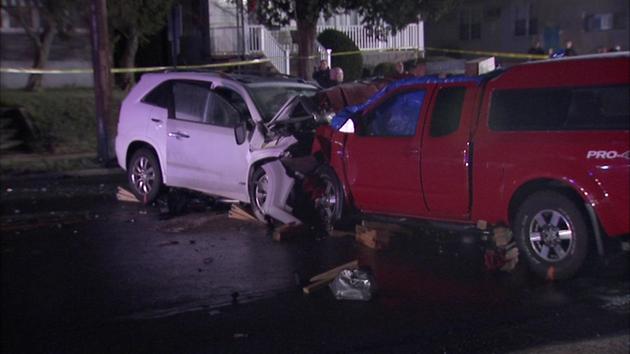
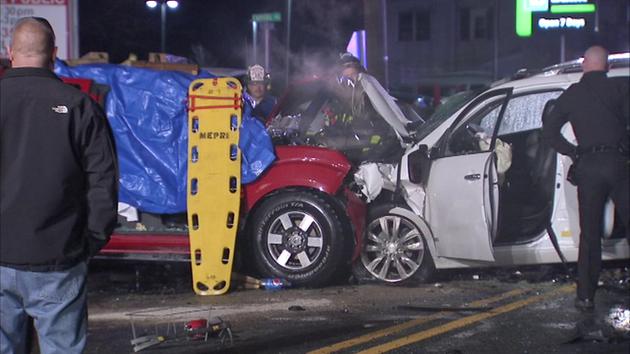
Two people are dead and three people are hospitalized following a serious crash and fire in Oaklyn, Camden County.
By Jeff Chirico
Updated 34 mins ago
OAKLYN, N.J. (WPVI) -- Two people are dead and three people are hospitalized following a serious crash and fire in Oaklyn, Camden County.
It happened around 6:30 p.m. Friday along the White Horse Pike near Capitol Avenue.
Police say two vehicles collided at that location. The impact of the crash caused one to burst into flames.
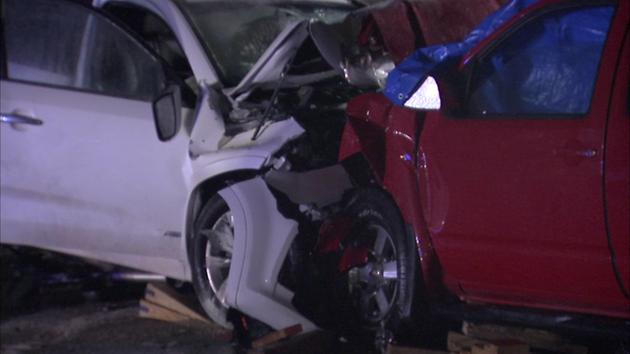
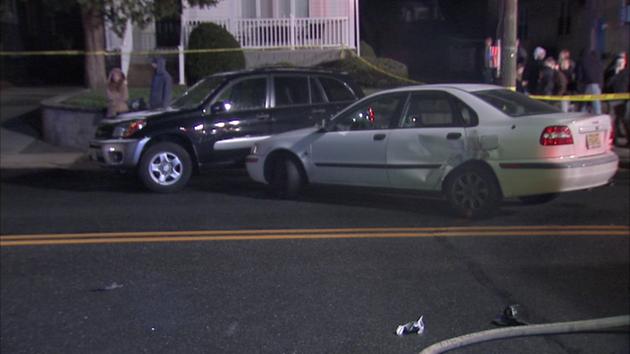
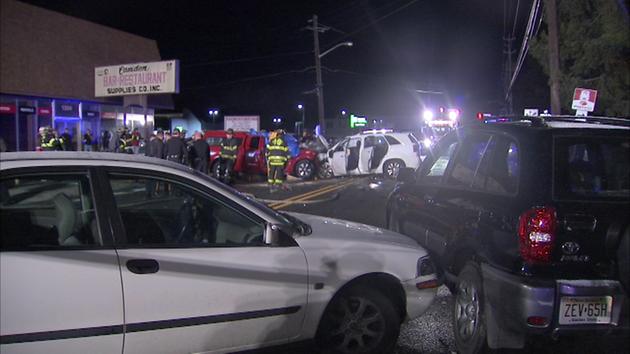
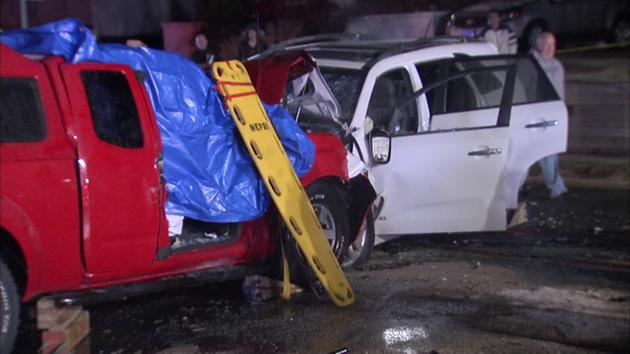
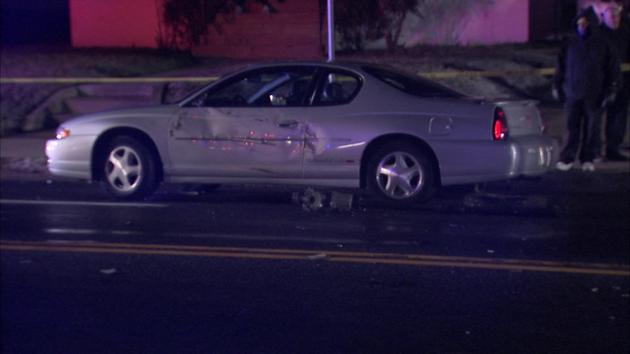
At least five people had to be rushed to the hospital following a serious crash and fire in Oaklyn, Camden County.
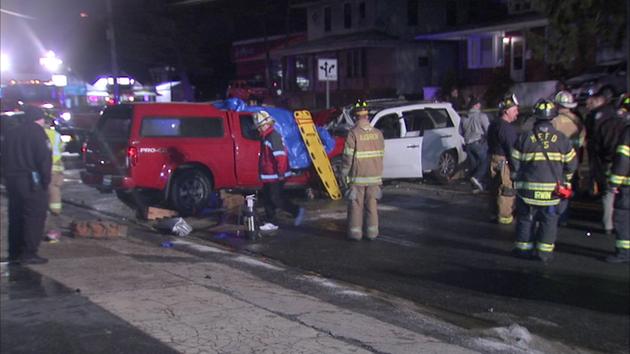
Three people had to be extricated from their vehicles.
An Action News viewer sent us drone video of the crash scene.
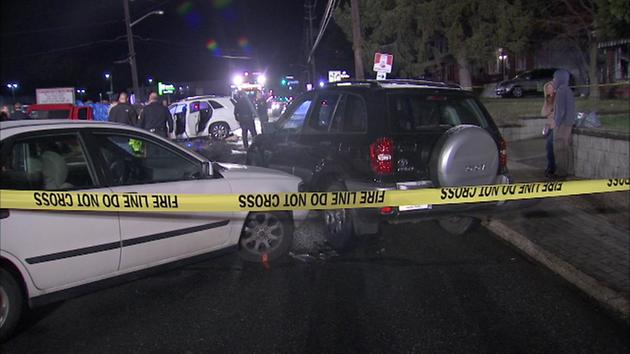
Five vehicles were involved in all. Two of their front-ends mangled.
When Action News arrived on the scene, one was still smoking after catching fire.
Police have not said what caused the crash.
One victim died at the scene. A second victim died at Cooper University Hospital.
Three other victims are also taken to Cooper. One is critical and the other two are in serious condition.
Reporter Jeff Chirico spoke with a man who was at a nearby diner when the crash happened.
"I just heard a crash. I just come running down the street, and there were just people running all over the place," said Sal Borreggine of Audubon. "I seen the fire trucks coming down, and it was just craziness."
Action News was there as crews towed the fifth and final vehicle away from the scene.
We're told the roads at the time were not icy, but police have not yet released the cause of this crash. Based on the severity of the damage, speed and/or alcohol/drugs played a role.