MEC&F Expert Engineers

Wednesday, September 28, 2016

MARINE AND TRANSPORTATION CLAIM MANAGEMENT AND CLAIM INVESTIGATIONS Metropolitan Engineering, Consulting, Forensics, and Environmental Remediation Services

MARINE AND TRANSPORTATION CLAIM MANAGEMENT AND CLAIM INVESTIGATIONS

 

Metropolitan Engineering, Consulting, Forensics, and Environmental Remediation Services

Construction, Investigation, Remediation and Forensic Expert  Engineers
P.O. Box 520
Tenafly, New Jersey 07670-0520
Ph.: (973) 897-8162
Fax: (973) 810-0440


The Wages of the Sea, Ground, and Air


The maritime business is a high-profile industry with ever-present potential for catastrophic losses. Transportation issues affect nearly every enterprise around the world, but can present particular financial and operational challenges to firms in this industry. Rising fuel costs, employee shortage and retention issues, credit risks, marketplace competition, these and other exposures can have a severe impact on a company's bottom line and impede its overall success.

Whatever and wherever the possible risk, Metropolitan has experienced professionals to provide solutions and the ability to quickly deploy them to the site of the incident.


Worldwide Scope and Precision Expertise

With a dedicated global Marine and Transportation team of experts, our services range from simple cargo surveys, loss control analysis, adjustment of ocean or inland marine claims, and full third-party administration (TPA) services with centralized claims intake, to complicated hull and machinery liability attendances.

Whatever the scale of the service required, our clients can be assured of a professional approach, delivered by highly qualified personnel with the required experience and qualifications to deliver an effective marine and transportation claims solution. Our staff includes ex-seagoing mariners and engineers, cargo experts, naval architects, specialists in ocean, inland and motor truck cargo, specialists in subrogation and recovery, and many more expert disciplines.

The Marine and Transportation group has focused expertise on the key components of a comprehensive insurance loss program including:

  • Aviation liability Property Damage & Bodily Injury
  • Aviation machinery
  • Construction, civil, and port
  • General average
  • Logistics and cargo liability
  • Marine cargo
  • Marine hull and machinery
  • Motor cargo liability
  • Protection and indemnity
  • Small craft claims less than 60 meters
  • Subrogation and recovery
  • Super yachts worldwide
  • Trip and tow management
  • Wind park offshore


The Benefits of METROPOLITAN 

The multinational and global risk and insurance community needs a team of experts with the experience and industry focus to evaluate and assess damages under extreme conditions. METROPOLITAN has the commitment, skills, resources, technology and the experience required to meet the specific needs of each client.

METROPOLITAN Key Service Features:

  • World-wide service: A global network of experts, including surveyors, environmental scientists, engineers, consultants, and specialist case handlers
  • Compliance: Strict adherence to relevant governing legislation (ELD, CERCLA/Superfund, etc.)
  • Cost-effective: Reduced indemnity spend, financial assurance for insurers
  • Confidence: Transparent claims procedures and reporting standards
  • Reliability: Experienced, qualified professionals, infrastructure and leadership to strategically project manage losses anywhere on the glob


METROPOLITAN Claims Handling Guidelines for

MARINE – SERVICE STANDARDS

I.                    Acknowledgement

A.                  Always by e-mail unless otherwise requested.

II.                  Contact

A.                  Immediate contact with vessel owner and boatyard to arrange inspection.

B.                  Contact by telephone and e-mail confirming date and time of inspection.

C.                  Copy of e-mail and notes in file.

III.                Investigation

A.                  Identify vessel by the Hull Identification Number (HIN) and compare to the policy.  Obtain hours on the vessel and serial numbers on the engine when possible.  Comment on how the vessel is maintained.

B.                  Inspect vessel within the scope of the claim, i.e., if mechanical, make sure you have the proper personnel present if you do not have the qualifications.  The client will direct as to what they want covered.

C.                  Inspect damage both inside and out as damage may transfer.  Damage often in a fiberglass vessel will show on both the hull and the interior, i.e., bottom damage on the outside may be minor, but the interior could have major damage such as stringer separation or cracking.

D.                 Scene inspections should be identified either by marina locations or the longitude and latitude coordinates on the water.

E.                  Statement from the captain and crew when instructed.  Identify official personnel present, i.e., Department of Natural Resources (DNR) or marine police.  Obtain report number and where it can be obtained.

F.                   Photograph all sides of the vessel, along with good photographs of the damage or the accident scene.

G.                 Obtain the name of the boatyard where the Insured wants the vessel repaired and try to get an agreed scope and price for the repairs.  All yards vary in their pricing.

IV.                Experts

A.                  Experts are frequently used on marine claims, depending on the fields of expertise needed.  Information can be found on the Internet or by using the directories provided by the surveying associations SAMS and NAMS.

V.                  Reporting

A.                  First report is always a captioned report on stationary and copied and e-mailed.

1.         Assignment

2.         Coverage state policy number and dates and coverage to be involved or coverage questions to be discussed and researched.

3.         Vessel identification, HIN number to police and full description of the vessel.  Is it well-maintained, including name, length, width, power and serial numbers?

4.         Description of Incident – Full description from the vessel captain or operator.  Full description of the damage involved to insured vessel or claimant’s vessel.  Identify all parties involved and separate captions for them - Insured, Claimant, Witnesses, DNR or Marine Police.

5.         Repairs scope of the damage with open area, if any, and agreed price with the owners repair yard.

VI.                Conclusion

A.                  Further Handling – List all work needed to complete the investigation or the completion of the damage report.

VII.              Billing

A.         Unless prior agreement was made, billing is done on a time and expense basis to be sent in with the final report.


Claims Management System


Many clients mean many claims management or tracking systems. Our adjusters and examiners are familiar with most "out of the box" style management systems, as well as a number of customized systems. For those clients that may not have their own system developed, we can offer a web based customizable system, tailored to the specific needs of the client.

Our claims management system is constantly under development in an effort to keep abreast of new advances in technology and deliver streamlined access and intuitive document retrieval. 

This system not only allows secure access to relevant documents, reports and at-a-glance status updates, but also allows adjusters and examiners to collaborate in real-time via video, voice or text to generate the perfect end product. 

 Currently, for catastrophes, we utilize the FileTrac CMS.

Our file handling process at a glance:


Our file handling process generally far exceeds the standards for file handling issued by our client carriers. Below is a brief description of the typical step-by-step process that has become our personal standard for handling your files:

 Claim is received via email, fax, online or by telephone

  1. Claim is entered into our CMS
  2. Claim is assigned to adjuster, who is notified via telephone and email
  3. Acknowledgment is sent to client

  • Adjuster Handling

  1. Insured is contacted on the same business day of assignment
  2. Loss is inspected within 48 hours
  3. Estimate is completed using the Xactimate estimating platform
  4. Report is submitted for internal review within 5 days

  • Internal Review

  1. Each and every file is reviewed by a staff examiner intimately familiar with the policies and procedures of your company
  2. File revisions are performed in house to ensure speedy delivery to the client 
  3. *Complete report is submitted to the client within 7 days
    • In the event of a large loss or directions from the client to secure an agreed cost or bids from a contractor or emergency mitigation service, a first report will be submitted within 5 days.

  • Revisions & Re-Inspections

  1. Any carrier requested file revisions are completed the day they are requested
  2. The client will not be charged any additional fees if a re-inspection is required as a result of items that were overlooked by the field adjuster (hidden damages do not apply).


Marine, Inland Marine and Cargo Claims

We maintain a roster of adjuster specialists focusing on Marine & Aviation claims. Smaller losses, such as container losses, inland marine losses and cargo losses can be managed anywhere within our daily claims territories. Larger losses such as ship, oil platform, wind turbine or aviation losses will generally require specialists that can usually arrive at an accessible loss site within 24-48 hours.


We work with some of the finest estimators and engineers in the nation, and have strong relationships with aviation repair facilities and shipyards. We can generate accurate estimates and secure agreed scopes and costs for repairs in record time.

 Our specialist marine adjusters are trained to handle:

  • Builders Risk (Marine Related)
  • Cargo
  • Charterer's Liability
  • General Liability
  • Hull & Machinery (P&I)
  • Offshore Property (such as drilling platforms and wind turbines)
  • Pollution
  • Ship Repairer's Liability
  • Stevedore's Liability
  • Tankerman's Liability
  • Terminal Operators Liability
  • Wharfinger's Liability


Marine Claims Investigation

High and unjustified claims in simulated cases of damage make it more difficult for ship and yacht insurance companies to maintain a customer and competition-oriented premium structure; and they, too, burden the result. Processing departments with their internally or externally involved legal advisers therefore regularly depend on professional support in order to achieve a clear understanding about the legitimacy of the underlying claims.

As regards the reconstruction of the circumstances of a loss, the discovery and return of insured asset values, or the identification and structured interrogation of witnesses and suspicious persons it is often also important to have experiences in cooperating with domestic and foreign law enforcement agencies and to have special nautical expertise.

METROPOLITAN is an approved and successful partner of notable insurance companies and in this regard knows to keep in focus the relevant legal aspects in all phases of damage investigation.

Whatever the commodity, Metropolitan has the expertise available from a professional team of consultants for undergoing surveys on a full cause, nature and extent basis.

Our expertise includes a full range of liquid cargoes and multi-commodity dry and reefer goods; together with other marine claim areas such as: damage to the ship’s hull, locks, docks, trailers and containers.

Our Clients include P & I Clubs, Cargo Underwriters & Charterers.  We work from various locations all around the US for local coverage and administer all operations from our Head Office in Newark. Due to our longstanding expertise and the specialized nature of many of the cargoes we deal with, we also travel world-wide for assignments.

We undergo reviews of claim documentation on both shortages and contamination of liquid and dry cargo claims having a vast range of experience with vessels and Terminals worldwide.

We are able to prepare our reports in a format for follow up Court Action, Arbitration or Mediation proceedings as required; we have also attended as Expert Witnesses when requested to do so.

To summarize our Marine Claims Investigation service includes the following:-

·         Full technical ‘Cause, Nature & Extent’ surveys

·         General average surveys

·         On the spot regular updates with the Client from our surveyors

·         Detailed photographic evidence, wherever possible, sent by email when required

·         Prompt but detailed reports immediately following our survey

·         Comprehensive report writing to an Expert Witness standard, as required

·         Review of claim documents for arbitration, mediation or court proceedings

We are active members of the Energy Institute, (EI) and we are quality assured to ISO 9001 giving our clients added security.


Loss Control

Loss Control is the process that is used to succeed in today’s ever demanding and evolving Petroleum industry. More than ever before, it is vital that a loss control strategy is in place working and protecting your financial interests.

Metropolitan has an unrivalled global reputation within the Loss control industry, with our dedicated team of qualified professionals including, Master Mariners, Chemists, Ex-terminal personal and experienced senior surveyors.

Losses can be categorized into two associated areas:

  • Real physical losses are caused by events such as; ROB quantities, loss of light ends, leakage or passing of vessel or terminal valves and deliberate theft or sabotage.
  • Apparent losses; these are paper losses caused by poor or erroneous procedures in quantity measurements, differing calculation procedures, sampling, sample handling and analysis as well as the different contractual methods of determining Quantity and Quality between the purchase and sale of a cargo.

Our policies ensure that we strategically evaluate an operation to prevent, minimize or eradicate both real and apparent losses.

All of METROPOLITAN’s consultants are proactive to give that added value to our principals’ commercial interest.

Our expertise enables us to investigate, react and respond to prevent our clients from suffering financial losses in cargo shortages, contaminations and demurrage claims.


We are continually preventing the loss of over 15 million USD annually to our clients.


We are ISO 9001 accredited, to give our clients quality assurance and we are active members of the Energy Institute.


Cargo Surveys & Superintendency


  Metropolitan has an unrivaled global reputation within the Cargo Surveying & Claims prevention industry, with our dedicated team of qualified and experienced professionals. METROPOLITAN have carried out numerous cargo surveys or have overseen cargo operations as Superintendents, across a wide spectrum of dry and wet cargoes.

 An outline of our experience covering particular cargoes is given within the pages listed to your left.

 Whatever the operation, be it a loading, discharge or an STS operation; or whatever the cargo, be it Dry goods, Reefer, or Petroleum such as Crude Oil, Products, or Chemicals, Bio-Fuels, LNG/LPG, we have expertise available to protect your interests.

 Our policy includes attendance at the loading and discharging or STS operations; until confirmation of both quantity and quality are successfully obtained. By doing such, we have found that we have been in a stronger position to prevent our clients from suffering financial losses in cargo shortages, cargo contamination and demurrage claims.

 Precise and regular communication with our clients, both prior and during an assignment by the attending Surveyor or Superintendent is an integral part of our service.


Crude Oil & Petroleum Products

 In an ever-evolving world market of clean & black oil trading, transportation and storage, it is vital, more than ever before, that a loss control strategy is in place - working on your behalf.

 METROPOLITAN have a wealth of global experience in the monitoring, measurement and control of a wide range of various crude oils and petroleum products.
Our Loss Control techniques include:

  • 100 % attendance during a load, discharge or STS operation
  • "Squeeze dry" discharge operations, effective C.O.W plan and monitoring,
    particularly of heated or waxy natured cargoes
  • Multi Point ROB/OBQ assessment
  • Specialized Closed sampling techniques available
  • Direct "real time" field communication with our clients
  • Protection of the Principal’s commercial interest
  • Analytical witnessing
  • Minimizing demurrage costs
  • Cargo Blending, both on board and in terminal
  • Oversight of cargo document accuracy
  • Detailed and unbiased report of events
  • Loss Investigation

Other Liquids & Services


 Other Liquids


Bio-Fuels


Metropolitan are building their knowledge base with Bio-Fuels having been requested to attend for shipments and on claims matters relating to these products. We are also part of a Working Group with the Energy Institute liaising with FOSFA & API to put forward proposals of standards on measurement practice. In addition, on the quality side we have been gaining experience with each cargo we have been involved with; as there is such a variety of products available in the market each with varying quality standards. METROPOLITAN are well placed to be able to assist you with any recent Claims matters and also with Loss Control and Claims Prevention.


LNG/LPG


Metropolitan have experience with measurement practice and certain claims matters relating to these cargoes and are well placed to be able to assist you with any recent Claims matters and also with Loss Control and Claims Prevention.

Other Services


Terminal Shore Tank Auditing (Inventories)


Metropolitan qualified team can offer an Inventory service linked to any operational Loss Control system your company may run.


Vessel Tank Cleaning


Metropolitan  qualified team can offer:

  • A pre-wash vessel tank inspection
  • A vessel washing equipment inspection & suitability report
  • A risk assessment and time-scale report
  • A bespoke tank washing programmer, designed individually, for each vessel
  • Use of chemical wash if needed
  • 100% attendance during washing operation
  • Direct field communication with our clients
  • Motivation, support and guidance to a vessel’s officers and crew

Our attendance can reduce a vessel’s down-time and eliminates possible next cargo contamination.

 Closed Sampling of Liquid Cargoes

Metropolitan  is aware that contaminated and non-representative samples can cause lengthy delays for Oil Majors and Traders - both after loading and prior to discharging.

That is why METROPOLITAN has experience with specialized closed sampling equipment which can eradicate the time lost due to the necessity of re-sampling or re-analyzing owing to erroneous contamination claims on sensitive and light cargoes. The system ensures that samples are not contaminated with particulates from the vessels vapor locks.

Unlike many vessels' sampling equipment used for obtaining cargo tank samples; the equipment we can employ draws representative running, spot or dead bottom samples on oil tankers via their vapor lock system.

In today's work place, with advancing safety and environmental considerations, the system eradicates the need for "open sampling" and enables accurate representative samples to be drawn.

The closed sampler ensures that no gases are expelled from a vessel tanks during sampling, essential when dealing with high H2S cargoes.

 We are active members of the Energy Institute and we are quality assured to ISO 9001.


 Commercial Risk Management


Oil Terminal Inspections and Audits

METROPOLITAN has experience in Oil Terminal Inspections and Audits to international recognized standards for Oil Majors, Traders and Insurers.

Surveillance of Oil Jetty Operations

METROPOLITAN has the experience of delivering specialized bespoke marine related services. Their expertise and professionalism has been called upon to represent the interests of Marine Assurance departments within Major Oil Companies in outlying ports and at Oil Terminals where difficulties / incidents have been experienced in the past. METROPOLITAN are able to offer that measure of confidence in the vessel operations by their attendance where there has been a lack of it in the past. Due to the unique ‘personal professional’ manner of operating, our Consultants are able to deliver results in what has been described previously as almost impossible circumstances.

These services can be tailor-made to the Clients requirements. We draw on a vast resource of experience in order to deliver just-in-time services, which is quite a frequent request in today’s heavily litigious society.

We are ISO 9001 accredited, to give our clients quality assurance and we are members of the Energy Institute and Nautical Institute.


 AVIATION CLAIMS

Our aviation adjusters are capable of handling hull claims and liability claims on all types of aircraft and aviation facilities. We maintain a strong roster of experienced aviation engineering and mechanical specialists. Our aviation adjusters are top notch, with A&P licensed professionals (with real world experience) and FAA Airframe Engineers acting as our estimators, former Commercial Pilots & Airline Transport Pilots acting as our C&O consultants (and adjusters in some cases) and Inspection Authorization professionals for review and quality assurance of our estimates. 

 We maintain a solid relationship with aviation MRO's and FBO's throughout the US, and can perform accurate adjusting with Accelerated results.


METROPOLITAN’S ACCELERATED ADJUSTING

Claims Management System


Many clients mean many claims management or tracking systems. Our adjusters and examiners are familiar with most "out of the box" style management systems, as well as a number of customized systems. For those clients that may not have their own system developed, we can offer a web based customizable system, tailored to the specific needs of the client.

Our claims management system is constantly under development in an effort to keep abreast of new advances in technology and deliver streamlined access and intuitive document retrieval. 

This system not only allows secure access to relevant documents, reports and at-a-glance status updates, but also allows adjusters and examiners to collaborate in real-time via video, voice or text to generate the perfect end product. 

 Currently, for catastrophes, we utilize the FileTrac CMS.

Our file handling process at a glance:


Our file handling process generally far exceeds the standards for file handling issued by our client carriers. Below is a brief description of the typical step-by-step process that has become our personal standard for handling your files:


  • Claim is received via email, fax, online or by telephone

  1. Claim is entered into our CMS
  2. Claim is assigned to adjuster, who is notified via telephone and email
  3. Acknowledgment is sent to client

  • Adjuster Handling

  1. Insured is contacted on the same business day of assignment
  2. Loss is inspected within 48 hours
  3. Estimate is completed using the Xactimate estimating platform
  4. Report is submitted for internal review within 5 days

  • Internal Review

  1. Each and every file is reviewed by a staff examiner intimately familiar with the policies and procedures of your company
  2. File revisions are performed in house to ensure speedy delivery to the client 
  3. *Complete report is submitted to the client within 7 days
    • In the event of a large loss or directions from the client to secure an agreed cost or bids from a contractor or emergency mitigation service, a first report will be submitted within 5 days.

  • Revisions & Re-Inspections

  1. Any carrier requested file revisions are completed the day they are requested
  2. The client will not be charged any additional fees if a re-inspection is required as a result of items that were overlooked by the field adjuster (hidden damages do not apply).


Metropolitan Engineering, Consulting, Forensics, and Environmental Remediation Services.

Construction, Investigation, Remediation and Forensic Expert  Engineers
P.O. Box 520
Tenafly, New Jersey 07670-0520
Ph.: (973) 897-8162
Fax: (973) 810-0440

Contact: Dr. Bill N. Stephan, PhD, PE, JD, CIH, MBA, CHMM


Worker safety is compromised when a drilling site turns into a web of subcontractors


RJ Sangosti, The Denver Post “The (oil) patch was my playground.” Jimmy Richardson’s left leg was amputated after a spreader beam rolled off a forklift, hitting him on the head and then crushing his leg. 

 Drilling through danger

Worker safety is compromised when a drilling site turns into a web of subcontractors.


Chapter 2
Oil and gas industry’s practice of farming out work can have deadly consequences

Published September 26, 2016

By Monte Whaley and John Ingold


Oil and gas companies typically leave management of their sites to subcontractors, a practice that dilutes safety standards and protects companies from liability, making an already dangerous job even more so, a Denver Post investigation has found.

While companies such as Noble Energy, Encana and Anadarko are the face of the industry, its backbone is made up of small companies — many with only a handful of employees. In this environment, responsibilities can become blurred and safety policies can be confused.

“The problem becomes the subcontractors,” said Michael Lynham, assistant regional administrator for the federal Occupational Safety and Health Administration. “As you trickle down, the quality of safety programs and protocols for employees deteriorates.”

The Denver Post found documentation for 38 deaths in the state’s oil and gas industry between 2003 and 2014 — and the large majority of those, 34, involved workers for subcontractors. Details of another 13 deaths that the Bureau of Labor Statistics said occurred in that time span were not available.

“Oil and gas has been a poster child for the ways in which contracting out a lot of very hazardous work can be a fatal mistake and cause a lot of really serious problems,” said Peter Dooley, a safety and health project consultant with the National Council for Occupational Safety and Health.

Workers’ compensation laws give the site owners immunity from lawsuits brought by subcontracted workers injured on the job. Contracts between owners and subcontractors often contain a provision — so controversial that its use in the oil and gas industry is banned in several other high-producing states — in which the companies agree not to sue each other over accidents regardless of who is at fault. And site owners can further distance themselves from day-to-day operations at their wells by hiring independent contractors called “company men” to take charge of the work.

All of these issues spilled forth into a Weld County courtroom in 2014 when the widow of an oil and gas worker named Reyes Garcia sued two subcontractors she alleged were responsible for her husband’s death. Garcia had been working at a well site near Greeley when an explosion consumed him.

The subsequent $6 million jury verdict against the companies was among the largest ever awarded in a Colorado case involving an oil and gas worker.

“I don’t think everyone is calloused on purpose,” said Randy Kelly, the attorney who represented Garcia’s family. “But the business is very profit-oriented, and there are very few incentives to make a site safe.”

“In this case,” Kelly said, “the subcontractors helped kill Mr. Garcia.”


RJ Sangosti, The Denver Post Reyes Garcia died in 2007, six weeks after he suffered burns to more than 85 percent of his body in a gas well explosion in Weld County. Nearly seven years later, his wife, Lorena, was awarded $6 million by a jury that found the subcontractors to be liable for his death.


All Lorena Garcia could recognize were her husband’s feet.

More than 85 percent of his body was burned in the explosion, from the top of his head down to his ankles. Only in his bare toes could she still see the man she married.

In July 2007, Garcia was working a pump at a Weld County natural gas well owned by Noble Energy, a $3 billion multinational giant. But on the day of the explosion that would claim Garcia’s life, no one from Noble was at the well.

Garcia worked for one subcontractor. Another subcontractor was in charge of running day-to-day operations at the well. That company delegated responsibility to a third subcontractor, who was supposed to make sure Garcia’s pump was far enough away from a piece of equipment venting flammable gas.

After the explosion, Reyes Garcia was confined to a bed in the North Colorado Medical Center burn unit in Greeley, subdued by drugs to help ease his pain. The 30-year-old father died six weeks after the fire.

Garcia knew his work was dangerous.

“He and Lorena would talk about it sometimes,” Kelly said.

But Garcia was reluctant to complain because he was making $60,000 a year, supporting a wife and child and close to getting his American citizenship.

“I think he hoped one day to become a well supervisor, who can make six figures,” said Kelly. “And I think there is a little bit of machismo to doing this kind of work.

“It’s a little bit like having a football player mentality. You don’t want to let your teammates down. You want to stay in the game.”.

On the day of the explosion, July 25, 2007, Garcia was part of what is called a workover crew, which cleans out a gas well after it has been used for fracking. There are only two safety measures that would keep the gas where Garcia was working from exploding: wind, which is expected to blow the gas away, and the distance between the piece of equipment venting gas and the other equipment being operated by the workers.

But because there is no state or federal regulation regarding equipment placement, crews are supposed to rely on an industry standard to set the safe distance. In this case, the American Petroleum Institute says the minimum distance between a “gas buster,” which helps to separate and disperse any gases coming out of the well into the air, and other equipment needs to be 100 feet.


RJ Sangosti, The Denver Post Jessica Warehime, 34, quit the oil and gas business after long hours and what she believes were skin problems caused by chemicals. Warehime watered her garden at her home in Kersey as drilling operations burned off flammable gas nearby. “Living here, you can’t escape it — no matter how hard you try,” Warehime said.


In a typical arrangement, Noble Energy — known in the industry as a well’s “operator” — handed off daily oversight to Schneider Energy. Schneider then hired an independent contractor named William Smith to be the “company man” on site.

All of which works well, if the subcontractors adhere to safety recommendations. In the Garcia case, as in others, they did not.

“These big companies, they never have to take responsibility because they are not the ones on the ground,” Kelly said. “But the guys on the ground are basically told to take their chances.”

During the week-long trial in Weld County, Smith — who was named a defendant in Lorena Garcia’s suit, along with Schneider Energy Services — told jurors he was a graduate of the “school of hard knocks” and that the night before the accident, he “eyeballed” the distance between the equipment and Garcia’s crew, called it good and gave the operation his go-ahead.

It turns out Garcia’s pump was only 75 feet away.

After the trial, defense lawyers asked jurors to fill out a questionnaire, and they blistered Smith and Schneider Energy for lax attitudes about safety standards.

The jurors felt Smith and Schneider Energy had been in the best position to implement American Petroleum Institute guidelines, but they did not know the standards.

“Ignorance breeds ignorance,” one juror told attorneys after the case was decided.

Another said the defendants were typical of the “arrogant” guys in the industry, ”and that they just kept doing things the way they’d always been done instead of looking up the right way to do it.”

Another juror pointed out Garcia was “new in the country and doing this dangerous work because it is the best-paying job that does not need an education.” Jurors said they were compelled by testimony that Garcia had not even completed his safety quizzes fully and his employer — Leed Energy Services — put him out in the field anyway.

The $6 million verdict — which soon became the subject of additional lawsuits over whether Schneider or an insurance carrier was responsible for paying it — sent an emphatic and possibly historic message, Kelly said: Oil and gas companies should be forced to adhere to safety standards that, until now, have been largely voluntary.

“Basically, the defense in this case said that the oil companies didn’t have to follow published safety standards,” Kelly said. “But if you want to take that kind of risk, and not follow those written standards, then one day the state or some rule-making body will tell you to do it.”

Representatives of Schneider did not return messages seeking comment, efforts to locate Smith were unsuccessful and his attorney during the case declined to comment.

However, the Reyes verdict didn’t extend to all companies involved.

Neither Leed Energy nor Noble was part of Lorena Garcia’s lawsuit because of immunity provisions in the state’s workers’ compensation laws. The workers’ comp rules protect companies from civil suits brought by injured employees or their families — so long as the companies paid out workers’ comp benefits for the injuries. Subcontractors and their employees can sue other subcontractors. But if an employee for a subcontractor is hurt, the company that hired the subcontractor is entitled to the same immunity.


RJ Sangosti, The Denver Post Oil-field workers check a rig site near Greeley. A National Institute for Occupational Safety and Health study showed there were 1,333 fatalities in the U.S. oil and gas industry from 2003-2014, including 51 in Colorado. 


===========


Drilling through danger

In a 12-year span, an oil and gas worker died once every three months on average in Colorado, victims of a system focused more on protecting the industry than its employees.


RJ Sangosti, The Denver Post Sharon Hill hugs her late husband’s muddy boots. The company returned Shane Hill’s gear the day after he was killed in a drilling accident. “It seems like they didn’t care when they dropped off the truck.”


Chapter 1
Regulatory vacuum in oil and gas production compounds the inherent risks of drilling

Published September 25, 2016

By Monte Whaley and John Ingold


The temperature dipped to 14 below zero, but the oil and gas industry does not take a day off, so neither did Matt Smith.

A high-pressure water line at his Weld County worksite had frozen solid in the cold, and Smith and his co-workers for energy giant Halliburton Co. took a blowtorch to thaw it. Suddenly, the line exploded, spraying water at more than 20 times the pressure of a fire hose.

Two co-workers were seriously injured and raced to a hospital. Smith — the right side of his face torn apart by the blast — was killed.

Smith’s death, in November 2014, was among the most recent of at least 51 fatalities since 2003 in Colorado’s oil and gas fields, according to federal data. And what happened next was typical of a system that falls short of consistently protecting workers and fails to hold companies strictly accountable.

Inspectors from the Occupational Safety and Health Administration investigated the incident and levied against Halliburton a $7,000 fine, which the multibillion-dollar company initially fought before agreeing to pay. Halliburton and the worksite’s operator failed to file a required report to state oil and gas officials, who, regardless, are powerless to regulate worker safety on the sites they oversee and don’t inform OSHA of safety problems. Smith’s family, blocked by workers’ compensation laws that protect employers even when they are at fault for an employee’s death, could not sue for punitive damages.

And another worker was laid to rest from an industry that, in good years, directly employs more than 35,000 people and generates more than $15 billion worth of production in Colorado but receives less scrutiny from workplace-safety inspectors than roofers and homebuilders.

“Trucking is more regulated and a lot safer,” said Matt Smith’s father, Carl, who also worked in the oil and gas business. “That same type of regulation could have saved my son.”

Culling the vast oil and gas reserves in Colorado is a dangerous job. Oil and gas companies say they work hard to educate their employees about job hazards and promise to keep their workers safe.

“If there are areas where we need to improve, you can be damn sure we’re going to do it,” said Eric Wohlschlegel, a spokesman for the American Petroleum Institute, a pro-industry trade organization.

“I’m pretty confident that the oil and gas industry probably does some of the best work on safety.”

But a year-long Denver Post investigation shows that there is little consequence when companies let that promise lapse.

A national legacy of encouraging oil and gas development — for energy security, for jobs, for the economy — has created a regulatory vacuum. There is an entire federal agency devoted to mining safety, for instance, but nothing comparable exists for oil and gas. While OSHA has created specific safety standards that companies in other industries must follow, oil and gas businesses successfully beat back such regulations for themselves. The standards — recommendations, really — that OSHA mostly uses to judge safety violations on oil and gas worksites were written by the American Petroleum Institute.

Debate about the industry in Colorado typically focuses on its environmental toll or its potential threat to public health.

Meanwhile, 1,333 workers died in the nation’s oil and gas fields between 2003 and 2014, according to the Bureau of Labor Statistics. The nationwide death toll in 2014 of 144 was the highest in more than a decade. By another measurement — the number of worker deaths per active drilling rig — 2014 was the second-most lethal year in Colorado in a decade, according to a Denver Post analysis. There was about one death per every 12 rigs that year.


Oil and gas worker fatalities by rig count

According to the latest Bureau of Labor Statistics data, there were 51 deaths in Colorado related to the oil and gas industry from 2003 to 2014. Because of worker privacy issues, the BLS would not release years for all of those deaths. Nationally, 1,333 oil and gas workers were killed in the same 12-year time frame.


Source: Bureau of Labor Statistics, Baker Hughes Rig Count


OSHA rarely levies heavy fines against oil and gas companies. Only one time in the past 15 years has an oil and gas company paid a fine of more than $50,000 for a workplace safety inspection in Colorado. Three-quarters of the time, OSHA allows companies to settle their proposed fines for lower sums — shrinking them at a higher rate than the average for all businesses, The Post found. Since 2000, oil and gas companies have negotiated away more than $1 million in fines for safety violations, according to The Post analysis.

Regulation is so disjointed that no one can even agree on the number of workers killed on the job. The industry does not keep its own tallies. Totals kept by state health officials, the state workers’ compensation agency and OSHA all differ.

The Bureau of Labor Statistics abides by rigid privacy rules that mean its published state-level figures on oil and gas deaths are often incomplete, and, even when they aren’t, the bureau provides few precise details about the deaths.

For 2003 through 2014 — the longest and most recent time period for which comparable federal data is available — the agency says 51 workers died in jobs related to the oil and gas industry in Colorado. On average, that is one death every three months and is the seventh-highest total for any state in the country.

The Post, searching through OSHA reports, state records, court filings and news accounts, found documentation for 38 deaths in that time span related to oil and gas extraction. In two of those deaths, OSHA never investigated, even after the families of the deceased filed lawsuits accusing the companies involved of responsibility.

The only things that consistently have been able to slow the number of deaths in Colorado have been the prices of oil and natural gas — both near 15-year lows, resulting in a substantial drop in oil and gas activity and employment in the state.

But now, economists have begun looking toward a rebound in prices in a year or two. Historically, when activity surges anew, so do deaths.


RJ Sangosti, The Denver Post Carl Smith put up a shed at his home in Cheyenne to hold his late son’s belongings. Matt Smith died in 2014 after a water-line explosion while working for Halliburton in Mead.


Scott Nelson was killed in 2004, when the rig he was working high up on collapsed.

Joshua Arvidson drowned in fracking sand in 2006. Brian Wallace died in 2012 when a pressurized gas line he was handling exploded. He was thrown 45 feet through the air.

In the oil field, there is a kaleidoscope of ways workers can die.

At least two workers were electrocuted. Four others fell to their deaths. One burned alive.

Workers died when pipes fell on them or when trucks they were driving crashed or when forceful drilling equipment struck them. In 2006, four workers died in separate accidents within a 35-day span, the deadliest stretch of time in the industry’s recent history in Colorado.

There are few unions in the oil and gas industry, and although industry advocates, working closely with federal watchdogs, say they are placing more emphasis on safety than ever before, workers still face enormous risks in a field where company safety cultures can vary widely. The combination of powerful equipment, high pressures and flammable chemicals means few jobs in the country can turn as deadly as quickly.

Wolverine Drilling Rig No. 33 was trying to hoist 135 tons of drill pipe in August 2004 near Rifle when its uppermost component — the crown — failed and tumbled to the ground, killing Randall Taylor.

The rig’s owner said no one could have predicted it.

“This unforeseen accident,” Robert Blackford, the president of Wolverine Drilling, wrote in a letter to OSHA two months after the accident, “will serve notice that regardless of proper care of any machine, apparatus, a manmade article can fail without warning.”

But Taylor’s widow, Mary, later sued the engineer who inspected the rig before her husband’s death. The engineer said in a 2007 deposition that he was not told to inspect the crown, and, even if he did, there were no American industry standards at the time to guide his assessment.

“People were operating equipment without any kind of clear requirement for how it should have been inspected or run,” said the engineer, Francis Yuzyk.

In an interview, Blackford, now retired, said the rig’s failure was “spontaneous” and the result of poor manufacturing that inspectors failed to catch. He said the rig had a good safety record and described Taylor’s death as “one of the toughest days I ever had.”

But he said there was nothing he would do differently.

“It’s a tough thing to second-guess what you would do,” he said. “In hindsight, it’s easy to judge what took place. There weren’t any corrective measures that I could have done or looked into.”


RJ Sangosti, The Denver Post Matt Smith was killed in November 2014 at this Anadarko well site in Mead. He was working in subzero temperatures, which caused a high-pressure water line to freeze. The crew broke out a blowtorch to thaw it, and the line erupted.


As a result of the dangers, few industries talk about safety as much as the oil and gas industry.

There are regional safety councils in Colorado that hold meetings to discuss emerging dangers. There are safety requirements written into contracts, job safety analyses conducted for specific tasks and daily safety meetings. The American Petroleum Institute maintains 600 standards on industry best-practices.

Still, the industry can be guarded when questioned about safety.

Multiple oil and gas companies declined to allow The Post to observe worker safety training or to review company safety policies. The API is also careful in revealing its standards, many of which are available only at a price. Members of the public can read the API’s full suite of safety and fire-prevention standards — if they pay $2,505 to a company that sells them.

After multiple requests, the API made a safety expert available for a telephone interview on Friday. The Colorado Oil and Gas Association denied a Denver Post request for an in-person interview and would instead only answer questions via e-mail.

“As an industry, employee safety is a top priority for all operators, and many go above and beyond what is required to ensure they are providing a safe work environment,“ Doug Flanders, the policy director for COGA, wrote in a statement.

But The Post found numerous instances where regulators or employees accused the industry of treating worker safety as a burden.

Although federal law authorizes OSHA inspectors to “enter without delay” any worksite they choose to investigate, OSHA has had to go to court a dozen times since 2000 to get warrants to inspect oil and gas sites. In warrant applications, OSHA said one company, Nabors Drilling, had a company policy of refusing to allow inspectors on its job sites without warrants. (A Nabors spokeswoman told The Post that company policy is to require law enforcement officials to obtain a warrant — except in an emergency — before being allowed on site but said the company “has a history of cooperating with OSHA.”)

Another company, Williams Production, required OSHA inspectors in Colorado to go to a regional office in Parachute to obtain the company’s permission before inspecting a Williams rig, even if that site was hours away, OSHA wrote in a 2008 warrant request. A spokesman for WPX Energy, the company formed in 2011 when Williams spun off its drilling and exploration business, said that is not current company policy.

“We want to work in a very cooperative and transparent fashion,” said the spokesman, Kelly Swan.


Oil and gas worker fatalities


There is no single database for deaths in the oil and gas industry. The Denver Post has confirmed the cause of death for 44 oil and gas workers since 2001. From 2003-14, the BLS says 51 workers died in Colorado, but the cause of death was not released in every case.


Although the oil and gas industry accounted for about 3 percent of all OSHA inspections in Colorado from 2000 through 2015, it accounted for 15 percent of all of OSHA’s warrant requests, according to a Post review.

OSHA sought eight warrants in 15 years to inspect Nabors sites. None of those inspections was related to a worker’s death, but three times in 2006, workers complained to OSHA about safety conditions on Nabors sites, telling of greasy floors, workers not wearing fall protection and supervisors sleeping on the job. In one of the complaints, a worker said a supervisor “threatened physical violence against an employee who raised safety concerns,” according to a copy of the complaint filed with a warrant application.

Herb Gibson, OSHA’s area director for the Denver office, said the agency can’t punish companies for refusing to let inspectors in.

“There’s no violation,” he said. “It’s your constitutional right to refuse entry.”

But OSHA officials also worried the warrant requirements could harm enforcement efforts and rob them of their greatest asset: surprise. After Nabors Drilling denied an inspector access to a job site in 2007, OSHA wrote in a subsequent warrant request, “Nabors Drilling effectively obtained advanced notice of the inspection.”


U.S. fatalities by age and cause, 2003-14


Source: Bureau of Labor Statistics, Denver Post research

In addition to the inspection warrants, The Post found five lawsuits filed in state or federal court in Colorado over the past 15 years in which workers alleged that they were punished for reporting injuries or safety hazards.

One worker hurt on the job claimed he was told to “take care of the injury himself.” Another said he was made to scrub floors while on work-related restrictions due to an injury. And yet another said his boss told co-workers that the company “had it out” for him because he had petitioned to reopen a workers’ compensation claim.

In one lawsuit, a driller named Earl Woodward alleged that he was fired in 2011 after warning supervisors at Ensign United States Drilling about safety problems on drill rigs.

“Upon one occasion, (Woodward’s) supervisor stated that he did not want to fix a piece of faulty equipment because the replacement would cost Ensign too much money,” Woodward’s subsequent lawsuit alleged.

All of the lawsuits settled for undisclosed terms except for one, which is still ongoing. In each case, the sued companies denied the accusations.

Workers’ compensation claims reveal more ways that oil and gas companies have been accused of penalizing those who report injuries. In a 2013 claim that an administrative judge ultimately denied, a worker said he didn’t report an injury right away as work-related “because he did not want his co-workers to lose their safety bonus.” In a 2011 claim, a worker said that company representatives insisted on accompanying him to doctors’ appointments regarding the injury.

And in 2014, a supervisor at a drill rig said he responded with an expletive when told via text message that a worker had reported an injury on the rig — but the response was not because he was concerned for the worker.

An administrative law judge later wrote in a ruling that the supervisor testified “that he used the expletive because on-the-job injuries are a headache and require a lot of paperwork.”

Most of the time when a drill worker dies in northern Colorado, the phone rings in a cubicle-cluttered office just south of downtown Denver.

From there, 26 inspectors for OSHA patrol 26 counties across the state, including Colorado’s heaviest oil and gas producers. From another office, 14 miles away in Englewood, inspectors cover the remaining 38 Colorado counties.

Combined, those two offices conducted 25,357 inspections between the start of 2000 and the end of 2015, according to OSHA records. More than half of the inspections occurred within the broader construction industry, with the roofing industry, specifically, accounting for about one out of every six inspections.

The Post found 797 inspections that fell within the oil and gas industry, or about 3 percent of the total. More than half the time, OSHA alleged safety violations when inspecting oil and gas sites. In 403 inspections, OSHA proposed fines for the violations, with the average fine being about $8,500 per inspection.

But those fines rarely held up.

In 75 percent of cases where OSHA assessed a fine, the company negotiated to have the fine slashed — on average by almost half, The Post’s analysis found. In 56 instances, companies negotiated away their fines entirely.

The vast majority — more than three-quarters — of those deals came through “informal settlements,” in which companies can negotiate the penalties with OSHA without officially contesting the violations. All but two other deals came through a “formal settlement,” which occurs after a company has contested the violations.

The result of this convoluted process is that OSHA has slapped oil and gas companies in Colorado with about $3.42 million in fines since 2000 for workplace safety breaches but has ultimately settled for $1.94 million. In the most extreme example, Williams Four Corners LLC settled a fine from a single inspection for $50,000 less than initially proposed.

Gibson, OSHA’s area director in Denver, said he slashes fines for good reason.

Sometimes, he said, OSHA inspectors are mistaken in their initial findings, something proved during the settlement process. More important, Gibson said cutting fines is a quick way to resolve a case — and thus get the oil and gas company to fix the underlying safety problems more promptly.

“One of the focuses is to improve their safety and health program,” Gibson said. “That should be the big focus.”

The fine reductions are not limited to the oil and gas industry. But The Post’s analysis suggests the industry may benefit from them more than others.

Analyzing OSHA data between 2000 and 2015, The Post found about $40.6 million worth of fines levied against all companies in Colorado, reduced to $25.5 million after settlement. That’s a drop of 37 percent. For the same period, the oil and gas industry in Colorado saw its total fines reduced by 43 percent, The Post found. Other heavily inspected industries — roofing, construction framing, commercial construction and homebuilding — all saw fine reductions between 30 and 39 percent over a comparable period, according to The Post’s analysis.

A 2010 audit from the U.S. Department of Labor’s Inspector General’s Office raised further questions about the practice.

OSHA, the audit concluded, did not effectively track whether the fine reductions actually improved workplace safety, and the agency didn’t do a good enough job of considering a company’s safety track record when deciding to settle for a lower fine.

The audit found that, over a two-year period in the late 2000s, as much as $127 million in fine reductions across all industries nationwide “may not have been appropriately granted.” That accounted for more than a third of the fine reductions in that period.

A list of reductions that were particularly troubling because they involved companies with a history of workplace deaths and serious safety violations contained 15 inspections in Colorado’s oil and gas industry, including four that occurred after deaths.

Furthermore, the audit found that OSHA’s record-keeping system — in most cases, OSHA’s centralized enforcement database does not contain detailed inspection reports — hindered the agency’s ability to track patterns of safety violations at companies operating across multiple states.

In response, OSHA said it is required by law to consider reducing penalties in certain cases and said it was working to fix the record-keeping problems.

But The Post found one instance in Colorado after the audit that raises questions about what really changed.

Shane Hill was 34 years old when he was killed working on a rig near Parachute in October 2014.

Hill had just finished tightening a 2-inch valve to prepare for drilling. But when the pressure inside the rig reached 2,700 pounds per square inch, the valve blew loose and darted through the air, hitting Hill in the head and killing him instantly.

When OSHA investigators arrived on site, they documented three workplace-safety violations. It was not the first time that OSHA inspectors had found problems with Cyclone’s safety measures on that rig.

Three years earlier, when the rig — Cyclone Rig No. 17 — was drilling in a different location, OSHA inspectors documented five violations and slapped an initial $13,480 fine on the company, according to inspection records. Cyclone settled for three violations and $8,088 in fines.

By the time of Hill’s death, Cyclone had been charged with 37 safety violations on all of its rigs in Colorado since 2000 and been assessed $88,495 in fines, which the company had settled for $42,640 spread out over 29 violations. Two OSHA inspections at Cyclone rigs in Colorado had even been included on the 2010 audit’s list of questionable fine reductions.

Nonetheless, after Hill’s death, OSHA proposed a $13,545 fine against Cyclone. After settlement talks, Cyclone admitted to two violations and agreed to pay $9,805.

There was also a familiarity to the citations.

Two of the violations that OSHA documented after Hill’s death fell into the same categories as violations that OSHA documented during the inspection on Rig No. 17 three years earlier. One charge noted that Cyclone failed to provide adequate protection around floor or wall openings. Another accused Cyclone of breaching its “general duty” to provide employees with a workplace, “free from recognized hazards that are causing or are likely to cause death or serious physical harm to (its) employees.”

But, despite the repetition after Hill’s death, OSHA didn’t charge Cyclone with any repeat violations — which would carry the heaviest potential fines. In fact, OSHA rarely hits companies in Colorado with the most serious penalties it can deliver.

OSHA has the ability to punish companies with fines of up to $12,471 for serious violations and $124,709 for violations that are repeated or willful, meaning the company knowingly broke workplace-safety rules. Those fine schedules increased this year for the first time in decades.

OSHA has assessed a repeat violation 23 times against an oil and gas company since 2000 and a willful violation three times. After settlement talks, seven companies agreed to a repeat violation and one oil and gas company admitted to a willful violation.

One of those seven companies was Union Drilling, which OSHA charged with a repeat violation in November 2005, after a worker named Larry Hill fell 60 feet to his death while working on a drilling rig in Rio Blanco County, in northwest Colorado. Union Drilling admitted to the repeat violation, along with one serious violation, in a settlement and agreed to pay a $19,900 fine.

That punishment, however, did not eliminate safety hazards at Union’s rigs. Almost 10 months later, OSHA conducted a follow-up inspection at the same rig and charged Union with three more serious violations. The company admitted to the three violations in a settlement but negotiated its fine for them down to $4,550, from $6,000.

And that wasn’t the first time that OSHA inspectors had found continued safety violations at a Union rig after a death.

On May 31, 2004, Scott Nelson was killed when the rig he was working on near Rifle collapsed. OSHA’s investigation turned up five serious workplace-safety violations, resulting in a $24,300 fine, which Union settled at $18,225.

Eight months later, OSHA returned to the same rig and documented two more serious violations. Union agreed to pay a $1,700 fine, half the amount that OSHA inspectors had originally proposed.

Most follow-up inspections at oil and gas sites in Colorado turn up no further safety violations, according to The Post’s review of OSHA records.

But The Post also found 19 instances since 2000 when OSHA inspectors returned to previously cited job sites or rigs — sometimes years later — and found additional violations.

Gibson said both repeat violations and willful violations are difficult to prove, requiring extensive documentation.

“You need good facts,” he said.

But something else limits how vigorously OSHA can tell companies to fix their safety problems — something that shows the unusual difficulty of regulating workplace safety on oil and gas sites.


RJ Sangosti, The Denver Post Jack Redd Jr. takes wedding photos out of a picture frame he broke during a party at his family’s home near Grand Junction. Since his stepfather, Shane Hill, died in a drilling accident, Jack has had anger problems. ”Both of my boys haven’t been the same,” said Jack’s mother, Sharon Hill. “They’re angry all the time.”
Working in oil fields gives family sense of pride, reason for fear

Shane Hill’s death won’t deter stepson from joining family business

By Monte Whaley, The Denver Post

GRAND JUNCTION — Sharon Hill sees her teenage son closing in on the same fate that killed her husband almost two years ago, and it breaks her heart.

“I don’t want him to die out there,” said Hill, whose husband, Shane, died while working on a drilling rig near Parachute. “I just don’t want him out there.”

But her 18-year-old son still wants to work in the oil fields, and he assures his mother he will be safe.

“I feel like the oil industry really does make you a man,” said Jack Redd Jr., who is Shane Hill’s stepson, “and I feel like that’s my way.”

Redd’s father, Jack Sr., was friends with Shane Hill and owned a small oil and gas company in Palisade.

“I took him out on his first job, … and he loved it from the day he got in the truck,” Jack Sr. said of Hill. “Once he got in it, he was hooked. … It gave him a sense of pride in his life.”

On the evening of Oct. 21, 2014, Hill and his night crew were gearing up the pressure on a gas rig to begin drilling. But when the pressure reached 2,700 pounds per square inch, a 2-inch valve blew loose and shot through the air. The valve hit the 34-year-old Hill in the head.

“You can’t paint a whole industry based on one incident or one company that didn’t meet safety requirements, because a majority of them do go above and beyond to make sure their people on-site are safe,” Jack Sr. said. “But in the back of your mind, you always worry about the people you know out there.

“There’s no glamour about it. You do it for the pride and the paycheck. You can earn a good living out there and have a good life if you’re willing to deal with the risks and the long hours and everything else that comes with working out there.”

Sharon found out about her husband’s death on Facebook.

“It said there was a major explosion on Rig 17,” Sharon said of an operation run by Cyclone Drilling Inc., “and then like an hour later, Cyclone called me and said they were coming to my house.”

When Occupational Safety and Health Administration investigators arrived at the site two days later, they documented three workplace safety violations at the rig and proposed a $13,545 fine. After settlement talks, Cyclone Drilling admitted to two violations and agreed to pay $9,805.

“Shane gave his life for our family, and I am unbelievably grateful for it,” Jack Jr. said of his stepfather. “It’s causing me to think about my future a lot more. Now it’s time to be a man and move on. … Everything I have, everything my dad has, is all because of the oil fields.”

Sharon got survivor benefits after Shane’s death, but financially she couldn’t keep up with house payments and was facing bankruptcy this year. She filed for Chapter 13 and was able to save her house in the Redlands, just west of Grand Junction, where she now lives with six others. She’s working as a housekeeper at a hotel, but Jack Jr. is looking for work.

“I will be able to keep our family together,” said Sharon, in a house the family bought five days before Shane’s accident.

Jack Redd Sr. wants to reopen his old oil company, Threadtek Tubular services in Palisade. It shuttered during the recent oil production slowdown.

And he plans to hire his son when the doors open again.

Denver Post videographer Lindsay Pierce contributed to this story.


RJ Sangosti, The Denver Post Friends and family raise a toast during a party on the one-year anniversary of Shane Hill’s death. The 34-year-old was killed in western Colorado when a 2-inch valve blew off a pipe and hit him in the head.


In 1983, OSHA officials decided there needed to be a change in the way federal rules protected oil and gas workers.

Six years earlier, and after a string of deadly accidents at coal mines, Congress had created the Mine Safety and Health Administration to provide specific protection for miners. Today, that agency’s regulations require that all mines be inspected at least twice a year — and some mines require four inspections a year.

But nothing comparable existed for the oil and gas industry. In fact, there were hardly any workplace-safety rules at all that were specific to oil and gas. So, OSHA proposed writing some.

The existing rules, OSHA wrote in a notice in the federal register in late 1983, “inadequately address the unique hazards encountered” in the industry.

“OSHA believes this lack of adequate regulatory protection has contributed to the high number of deaths and injuries in this industry,” the notice stated.

Oil and gas companies pushed back swiftly — even before OSHA actually proposed the rules.

“It would require a number of major modifications to all rigs at a cost of millions of dollars for no real safety benefit,” Roy Carlson, the then-production director for the American Petroleum Institute, wrote to OSHA in February 1983.

OSHA buckled and announced in 1985 that it would rewrite the proposed rules. But one year turned to two, one decade into another. Early in the administration of President George W. Bush — at a time when domestic energy production was being discussed as a matter of national security — OSHA officially shelved the planned rule rewrite, according to the industry-focused publication EnergyWire.

“The industry has sought to exempt itself from various rules for national energy concerns that they say impact the United States and the military,” said Mark Kaszniak, senior recommendation specialist with the U.S. Chemical Safety Board. “They have a powerful lobbying group on Capitol Hill.”

The result is that oil and gas is now exempt from the types of specific workplace safety standards that other industries must follow.

When OSHA inspectors cite oil and gas companies for safety violations, Gibson said they do so mostly under the agency’s “general duty” standard — which requires that companies must provide a safe workplace. To define when oil and gas companies are violating that standard, OSHA looks to safety recommendations written by the American Petroleum Institute.

The API’s Wohlschlegel says experts from the industry, government and academia all have input in developing the standards, which he said are “widely used” by companies across the globe. But Wohlschlegel said, absent their inclusion in written government regulations, the standards aren't binding, and the API can’t punish companies that violate them.

A note included in the standards takes that further: “The formulation and publication of API standards is not intended in any way to inhibit anyone from using any other practices,” the note states.

Gibson said using the “general duty” standard has some advantages for federal regulators — mainly that OSHA doesn’t have to prove letter for letter that a company breached a detailed standard in order to issue a citation. But it also limits how much input OSHA can have in telling a company to improve safety.

In many cases, OSHA can only tell an oil and gas company that it has to fix a problem; it can’t order the company specifically how to do that. For instance, if an OSHA inspection finds that an oil and gas company isn’t protecting its employees from toxic chemicals, the agency will tell the company to provide protection. But a lack of detailed standards for the industry means OSHA can’t order the company to provide certain equipment or keep exposure to a chemical below a precise level.

“I think the only way to impact an industry that has high fatality rates is to develop specific standards for that industry,” said R. Dean Wingo, a former OSHA assistant regional administrator in Texas. “But when we started to develop those standards years ago, it just fell apart.”


RJ Sangosti, The Denver Post Carl and Debbie Smith often visit their son’s grave. “My son was murdered,” said Debbie as she talked about Matt Smith being allowed to work in below-zero temperatures on a November day in Colorado.


On the morning he died, Matt Smith’s alarm clock rang at 2 a.m., and the 36-year-old former rodeo star dragged himself from bed.

Time to go to work.

Surrounded by young men on his team at Halliburton, Smith was the veteran of the group. They called him Donkey because he smiled like the character in the movie “Shrek.” And he spent more time with them than he did his own family — one week logging 127 hours on the job, according to his time sheets.

But, by that subzero morning in November 2014, he had begun to dread his assigned job site near Mead, telling friends and family members of dangerous working conditions. He texted his girlfriend, Jennifer Palermo, almost daily with reports of explosions or other hazards.

“This is sh–- show central over by the barn,” he wrote in one such message. “You might see a fireball come from this way today lol.”

“Had a pump blow up,” he wrote in another. “Trying to find a replacement, found one but of course it leaks like a sieve. It’s always an adventure with these clowns lol.”

The dangers wore on Smith so much that he was thinking of quitting his job, Palermo said. But Smith also felt an obligation to the young guys on the team. They looked up to him.

“So many of the other crews had called in sick, or some companies had shut down altogether that day,” Palermo said. “But Matt wanted to be with his guys; they had a camaraderie they shared. He didn’t want to let them down.”

He was working beside them when he was killed.

In the months that followed, Smith’s friends and family would search for answers to the tragedy. His father would wonder how an industry that had sustained the family when Matt was young could now fail to protect them.

“What did it hurt to shut down for a day or two?” asked Carl Smith, who also worked for Halliburton.

His mother would urge the company to adopt new safety policies and restrictions on work in inclement weather.

“Have they done that?” Debbie Smith asked. “No.”

Matt’s daughter would remember her dad through cards and pictures packed neatly into a shed that Carl built to house the memories.

“Best dad in the world,” 13-year-old Huston said. “I wouldn’t have asked for a better one.”

OSHA would cite Halliburton for violating the “general duty” standard because the company didn’t protect its employees from a potential explosion as they worked on frozen high-pressure lines, but then the agency would offer only a nonbinding recommendation that the company thaw lines out more slowly in the future and adopt other safety policies to keep workers from harm’s way.

“Among other abatement methods, one feasible and acceptable method is to develop and implement specific procedural elements,” OSHA’s official explanation of its proposed changes began.

“OSHA is a joke,” Palermo said.

And Anadarko Petroleum, the owner of the site where Smith died, would shut down operations at the well to reassess its safety plans, even though it would not tell The Post what, if anything, it changed.

The assessment ended after one week.

Work began again.


RJ Sangosti, The Denver Post Huston Smith looks through her father’s belongings, which are kept in a shed at her grandparents’ property in Cheyenne. Matt Smith was killed when a frozen water line exploded. “They called him ‘Donkey,’ like from the ‘Shrek’ movie,” Huston said of her dad.

Kirby Inland Marine has agreed to pay $4.9 Million in penalties after a 168,000 gallons of heavy marine fuel oil was released in the Houston Ship Channel after one of its oil barges collided with a cargo ship


A barge loaded with marine fuel oil sits partially submerged in the Houston Ship Channel, March 22, 2014, following a collision with the cargo ship, Summer Wind. U.S. Coast Guard Photo 
 Kirby to Pay $5 Million for Houston Ship Channel Oil Spill

September 27, 2016 by gCaptain

Kirby Inland Marine has agreed to pay $4.9 Million in civil penalties to settle claims stemming from a 4,000-barrel oil spill in the Houston Ship Channel after one of its oil barges collided with a cargo ship in March 2014, the U.S. Justice Dept. and Coast Guard announced Tuesday.

The company has also agreed to implement a fleet-wide improvement program, which includes additional equipment, training, and AIS requirements for every transit throughout its fleet.

In its complaint, filed Tuesday in the U.S. District Court for the Southern District of Texas along with the notice of lodging of a consent decree, meaning the settlement was reached with no admission of guilt, the United States alleged that Kirby is liable under the Clean Water Act for the oil spill.

The spill occurred on March 22, 2014 when a Kirby tow boat, the Miss Susan, was pushing two 300-foot oil barges in the “Texas City Y” area of the Houston Ship Channel in fog conditions. Despite detecting the nearby presence of a 585-foot bulk cargo ship, the Summer Wind, traveling up the Houston Ship Channel, Kirby’s tow boat and barges tried to cross the channel in front of the cargo ship, resulting in the lead barge being struck by the cargo ship.

Approximately 4,000 barrels (168,000 gallons) of heavy marine fuel oil was released from the barge into the waterway. The spill oiled approximately 160 miles of shoreline, including sensitive marsh habitat, the national wildlife refuge on Matagorda Island, Mustang Island State Park and Padre Island National Seashore.

The incident, which became known as Texas City Y oil spill, closed the Houston Ship Channel for about three days.  


In addition to the civil penalties, Kirby has also committed to improving its operations across its fleet of hundreds of vessels operating in the inland waters of the United States. The improvements will include the installation enhanced navigational equipment and additional employee training in areas such as navigation, use of equipment, and simulator-based scenario training. Kirby also agrees to improve operational practices such as entering complete tow dimensions in each vessel’s automatic identification systems before embarking on every transit. Finally the company agreed to waive any limits on its liability under the Oil Pollution Act related to the oil spill incident.

The penalties and remedial measures to be paid are in addition to the costs the company has already incurred or will incur to clean up the oil spill and reimburse federal and State response efforts, as well as compensation paid to victims and the public as it relates to the oil spill.

“This settlement sends a clear message that vessel owners and operators have a responsibility to protect our waters, people and the environment from oil spills and those who violate that duty will be held accountable under the law,” said Assistant Attorney General John C. Cruden for the Justice Department’s Environment and Natural Resources Division. “The remedial measures in this agreement will upgrade navigational equipment, provide employee training, and improve operational practices across an entire fleet of vessels.”

“This case illustrates the inherent risk in transporting oil and other chemicals along our waterways,” said Eighth Coast Guard District Commander, Rear Adm. David Callahan. “The Coast Guard remains committed to enforcement, prevention and response with regards to our nation’s waterways and natural resources.”

Section 311(b) of the Clean Water Act makes it unlawful to discharge oil or hazardous substances into or upon the navigable waters of the United States or adjoining shorelines in quantities that may be harmful to the environment or public health.

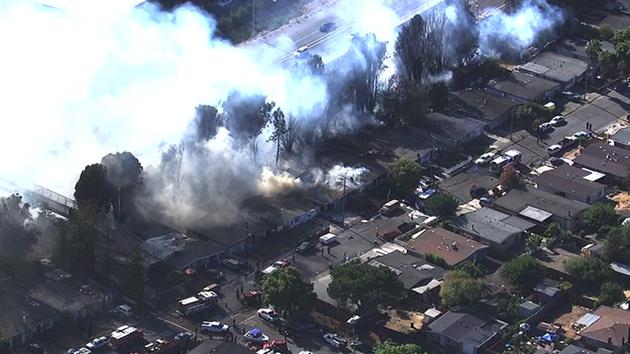
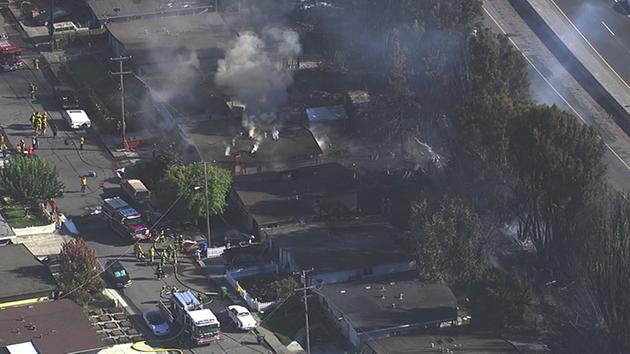
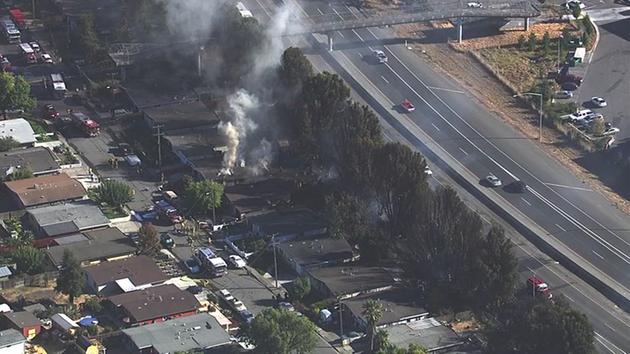
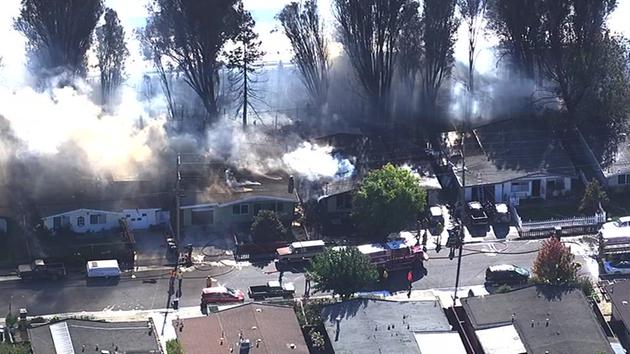
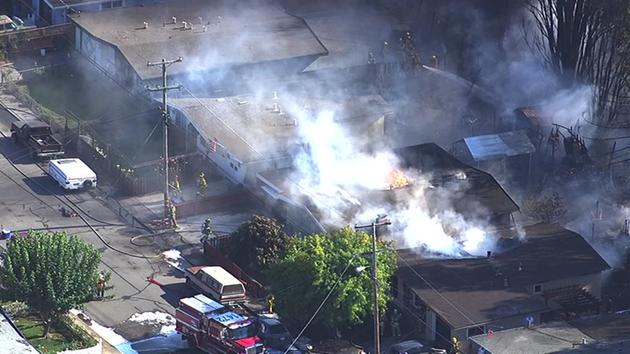
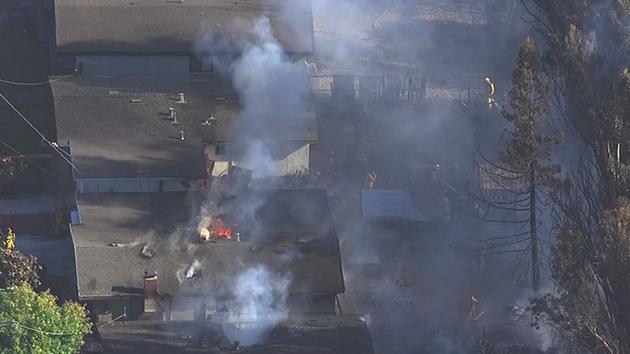
A fast-moving fire in Petaluma burned multiple homes near Lakeville Highway and northbound Highway 101


Fast-moving fire damages over a dozen homes in Petaluma


A fast-moving fire damaged 13 homes near Stuart Drive and northbound Highway 101 in Petaluma Tuesday afternoon. (KGO-TV)

by Cornell Barnard
Tuesday, September 27, 2016 11:36PM
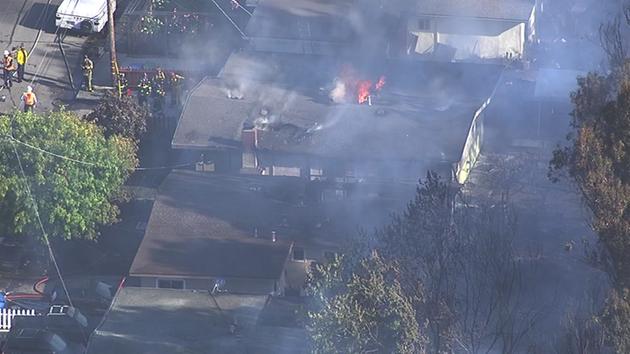
PETALUMA, Calif. (KGO) -- A fast-moving fire damaged 13 homes near Stuart Drive and northbound Highway 101 in Petaluma Tuesday afternoon.


The fire prompted the California Highway Patrol to close the highway's northbound lanes between East Washington Street and Lakeville Street at 3:30 p.m., CHP officials said.

Fire crews attacked the fire from all sides and made water drops from the air. "They started to dump water on it. I thought oh my God this is going to get worse," homeowner Monique Nichols said.


A fire in Petaluma is burning multiple homes near Lakeville Highway and northbound Highway 101 on Sept. 27, 2016. (KGO-TV)

Firefighters said it began as a grass fire near Highway 101 and that hot and dry conditions fueled the situation. "Fire went up into the trees and the wind started blowing it down the side of the freeway," Petaluma Fire Department Batt. Chief Jeff Holden said.

The flames dropped hot embers on houses below. Four homes were heavily damaged and are now red tagged.

"It's on fire, you have to get out now, they didn't grab anything," relative Marci Luis said.

Luis said her elderly in-laws escaped their burning house just in time.

Many things in the family's home can be salvaged.

Firefighters are investigating to find out what caused the fire.

Bay City News contributed to this story.

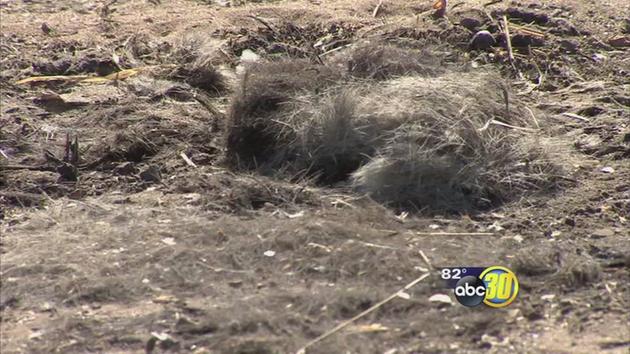
The Central California SPCA said two dogs were set on fire at the hands of people and tortured to death


CCSPCA finds 2 tortured dogs burned alive at abandoned home


The Central California SPCA said two dogs were set on fire at the hands of people and tortured to death. (KFSN)

By Joe Ybarra
Tuesday, September 27, 2016 11:39PM
FRESNO, Calif. (KFSN) -- A disturbing case of animal cruelty in Southwest Fresno.The Central California SPCA said two dogs were set on fire at the hands of people and tortured to death.

Pictures from the scene showed one dog was tied up just feet away from the other. Walter Salvari with the CCSPCA said both were tortured and burned alive.

"It was a horrific scene to watch and of course, the pictures that came from investigators. It's just something that really shouldn't be happening in our community."

Salvari said the call came in on Thursday and the next day humane officers went out to take a look. Salvari said there were several butane tanks scattered across this empty field. The butane was likely used to set the dogs on fire tires, and pieces of wood were also burned.

James Sanders lives nearby and he recognized one of the dogs.

"He used to be around here, as a matter of fact, it had some puppies over here in this field, that might have been a stray."

The SPCA believes both were strays and because they were found behind an abandoned home, near Church and Farris, Salvari suspects the person, or people, who killed them may have been transients.

"If they would do it to a dog, they would probably do it to a human."

At this point, the SPCA is searching for leads and offering a $1,000 reward for information leading to an arrest and conviction.

If you have any information about this case, you can call the Central California SPCA. You can also help the cause by dropping off a donation at the shelter.


Serial killers typically start their killings with animals.  These people must be found.  They are not only savages, but their next victims could be humans.