This blog presents Metropolitan Engineering Consulting & Forensics (MEC&F) claim management and claim investigation analyses of some of the typical claims we handle
The severity of claims lodged by the PV industry has risen sharply, says GCube
GCube
By Christopher Hopson in London
Tuesday, September 13 2016
Updated: Tuesday, September 13 2016
The impact of extreme weather conditions on the global solar PV industry has contributed to an 87% increase in the average severity of claims over the past five years, renewables underwriter GCube revealed.
Its Cell, Interrupted study finds that weather-related losses are one of the most common causes of solar PV claims worldwide, accounting for just under half of all PV claims in North America, and over a quarter in the rest of the world.
GCube says the solar PV industry will need to invest time and resources in order to increase its tolerance to risk, particularly for losses resulting from extreme weather, which can include tornadoes, floods, windstorm and hail damage.
Additional factors to this risk increase include electrical failure, lightning strikes and the theft of components including copper wire. The latter is a particular concern for operators in Southern Europe, and theft-related claims account for over a quarter of the total outside of North America.
While the study says an increase in the total number and cost of claims is to be expected as the PV market expands, this overall increase in severity highlights a growing need for knowledge sharing and collaboration among project owners, developers and risk, insurance and claims managers.
Cell, Interrupted – produced exclusively for the firm’s international community of insured clients and supporting brokers – identifies the challenges faced by solar PV developers and owners around the world, the causes and cost of solar PV claims, and discusses how they can best be mitigated.
Annual growth in the solar market consistently exceeds 25%, with falling technology costs, and sufficient scale and innovation driving development in new markets, says GCube.
However, if the industry is to continue to develop at this rate – particularly in an age of declining subsidies – it will need to more adequately prepare for sudden and unforeseen risks, particularly as the market increasingly moves into areas prone to natural catastrophe and extreme weather conditions.
The study warns that a failure to do so will be to the detriment of investors and project stakeholders.
Jatin Sharma, head of business development at GCube and author of the report, says that despite its relative infancy, the solar PV industry has already gained a number of scars.
“It has faced bankruptcy and consolidation. Its investors have been left in the wake of regulatory uncertainty, including concerns that industrial policy will undermine a cost competitive, but ‘foreign’ supply chain.
“And climate change, its once greatest ally, has demonstrated how vulnerable utility-scale and residential solar PV are to the increasing frequency and severity of natural perils such as floods, windstorms and tornadoes.”
Sharma says an industry preoccupied with growth, cost reduction and innovation will struggle to brace itself for the continuing turmoil.
“Until there is greater awareness among the investment community that risk and asset managers need more resources to adequately prepare for the sudden and unforeseen, the industry will continue to be caught off guard.
“As we’ve recently seen with Californian wildfires, extreme weather-related conditions and their aftermath can pose a very real threat to solar energy assets and surrounding infrastructure, operating in increasingly testing environments worldwide.”
In summary Cell, Interrupted, which draws on a blend of GCube’s proprietary claims data, technical expertise and publicly available market information, says the solar industry will continue to exceed analysts growth expectations as it proliferates.
“Falling costs, sufficient scale and innovation in energy storage should result in further penetration in established markets while overcoming investment barriers and weak grid issues in new markets.
“But if the industry is to adapt and develop to reduced margins in a zero subsidy environment, it will need to invest time and resources to increase its tolerance to risk, notably adapting and responding to electrical malfunction and natural peril losses,” the study concludes.
The study also contains input and contributions from DNV GL, Lightsource, OST Energy, Quintas Energy, RES Group, Dulas and Renewable Energy Loss Adjusters.
Fairfax County settles underground storage tank violations with EPA 09/13/2016 Contact Information: Roy Seneca (seneca.roy@epa.gov) (215) 814-5567
PHILADELPHIA (September 13, 2016) – Fairfax County, Va. has agreed to pay a $64,450 penalty for underground storage tank violations at 15 county locations where facilities stored gasoline, diesel fuel or motor oil. The settlement addresses compliance with environmental regulations that help protect communities and the environment from exposure to oil or potentially harmful chemicals.
At the facilities, the county did not test the equipment that was being used to detect leaks from pressurized underground lines that were connected to the storage tanks. In addition, at two facilities, the county failed to annually test its tank lines for tightness. None of the violations included any type of release or leak from the tanks or pipes. The county has corrected all violations.
With millions of gallons of petroleum products and hazardous substances stored in underground storage tanks throughout the country, leaking tanks are a major source of soil and groundwater contamination. EPA and state regulations are designed to reduce the risk of underground leaks and to promptly detect and properly address leaks thus minimizing environmental harm and avoiding the costs of major cleanups.
The settlement penalty reflects the county’s cooperation with EPA in correcting the violations. For more information on underground storage tanks, go to: http://www.epa.gov/oust/index.htm .
U.S. EPA Requires L.A. Oil Storage Facility to Reduce Risk of Spills 09/13/2016 Contact Information: Soledad Calvino (calvino.maria@epa.gov) 415-972-3512
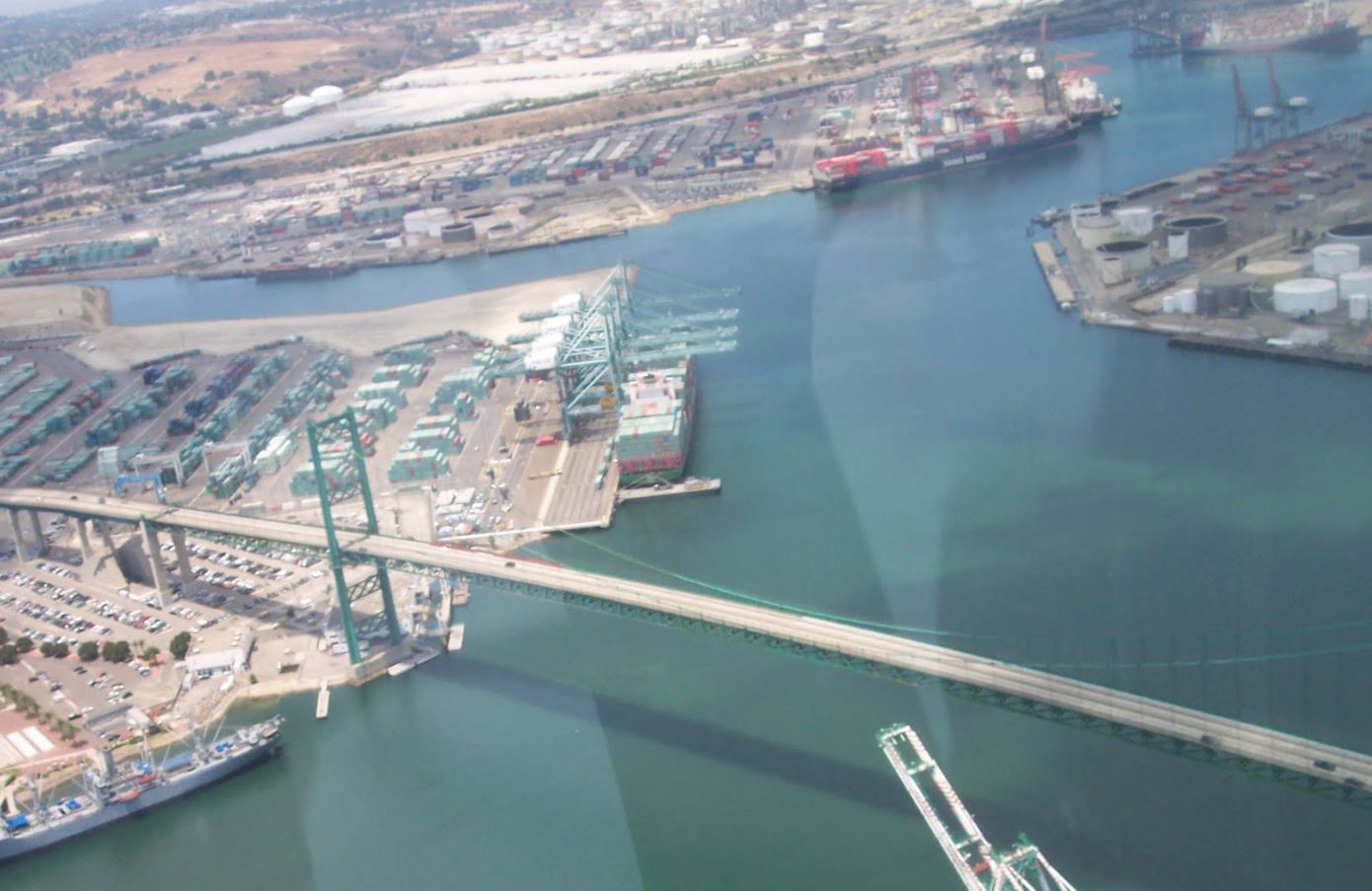
SAN FRANCISCO – Today, the U.S. Environmental Protection Agency reached a settlement with General Petroleum Corporation to resolve federal Clean Water Act violations at its petroleum storage facility located on Terminal Island in the Port of Los Angeles, Calif. The company will pay a $15,500 penalty as part of the agreement, and has already come into compliance with the law.
"Spill prevention is a key planning element for oil storage facilities, especially those located near California’s precious waterways,” said Kathleen Johnson, Director of the Enforcement Division in EPA’s Pacific Southwest Region. “To reduce the risk to San Pedro Bay, we have been working with our state and local partners to ensure the deficiencies were all addressed.”
Today’s action is a result of a joint inspection conducted by EPA and representatives of the Los Angeles Fire Department in April 2015. The investigation found that General Petroleum had violated regulations requiring onshore oil production facilities at risk of discharging oil to nearby waterways to prepare and implement a Spill Prevention, Control, and Countermeasure (SPCC) plan.
“This enforcement action, taken in partnership with the U.S. EPA, was needed to not only protect the City’s environment but to also protect the health and safety of the City’s residents,” said LAFD Fire Marshal, Chief John Vidovich, who oversees the program responsible for inspecting and enforcing environmental compliance at this type of facility.
General Petroleum is located within the Port of Los Angeles adjacent to the Los Angeles Harbor. The company failed to provide adequate secondary containment around tanks to keep spilled oil from leaving the site and entering surrounding waters. General Petroleum also failed to amend and re-certify its SPCC plan after making significant physical changes to its facility. In addition, the company did not maintain and implement an SPCC plan that discusses discharge or drainage controls, and procedures for the control of a potential discharge.
The goal of EPA's SPCC regulation is to prevent oil from reaching navigable waters and adjoining shorelines, and to plan for containment of oil discharges in the event of a spill. The regulation requires onshore oil storage facilities to develop and implement SPCC Plans and to establish procedures, methods, and equipment to prevent spills, and to respond properly if a spill occurs.
EPA Fines Total Petroleum $345,000 for Industrial Stormwater Discharge Violations Company to Support Artificial Reefs in Condado Lagoon in San Juan 09/13/2016 Contact Information: John Martin (martin.johnj@epa.gov) 212-637-3662
(New York, N.Y. – September 13, 2016) The U.S. Environmental Protection Agency today announced that it has reached an agreement with Total Petroleum Puerto Rico Corporation (“Total Petroleum”) to settle the company’s alleged violations of requirements to control pollution from stormwater discharges at its Guaynabo Bulk Fuels Terminal. Under the agreement, Total Petroleum is required to comply with the Clean Water Act’s stormwater discharge requirements associated with industrial activities and will pay a $345,000 penalty. The company will also invest $40,000 to construct and install approximately 30 artificial reef modules in the Condado Lagoon, which was recently designated as a nature reserve.
“Puerto Rico has extraordinary natural resources, including amazing water bodies and coastal ecosystems that are important places of recreation and tourist attractions,” said Carmen Guerrero Pérez, the Director of the EPA’s Caribbean Environmental Protection Division. “Every company operating in Puerto Rico has an obligation to comply with the Clean Water Act so these water resources are not damaged and degraded.”
The Clean Water Act requires that certain industrial facilities apply for and obtain National Pollutant Discharge Elimination System permits to control the discharge of pollutants carried out by stormwater runoff into nearby water bodies. These facilities must develop and implement a Storm Water Pollution Prevention Plan that details the best management practices that the company will follow to prevent stormwater runoff from washing harmful pollutants into local water bodies.
Without adequate on-site controls, stormwater runoff can flow directly to the nearest water body and can cause water quality damage such as siltation of rivers, beach closings, fishing restrictions, and habitat degradation. As stormwater flows over these facilities, it can pick up pollutants, including dirt or sediments, nutrients, trash, chemicals, and oils. Of particular concern is the uncontrolled runoff that can harm or kill fish and wildlife due to changes in water quality, hydrology, and other factors.
The EPA complaint alleges that Total Petroleum violated numerous stormwater requirements at its Guaynabo Bulk Fuels Terminal, such as failing to: implement best management practices; implement a Storm Water Pollution Prevention Plan; monitor and report discharge data of the facility’s discharges of pollutants; and obtain the appropriate stormwater discharge permit associated with industrial activity.
In addition to agreeing to come into compliance with the Clean Water Act and paying a penalty, Total Petroleum has also agreed to construct a new stormwater collection and discharge system at the Guaynabo Terminal, as well as submit an updated stormwater permit application for the facility. The company will also construct the third and final phase of the Condado Lagoon Taíno Coral Trail and Reef Enhancement Project, which is built in the northeastern reach of the Condado Lagoon’s outlet to the Atlantic Ocean. Total Petroleum will install approximately 30 artificial reef modules to provide artificial habitats for reef species in the San Juan Bay Estuary. The purpose of this project is to enhance, protect, and promote marine life diversity in the Estuary System, which is designated as an estuary of national importance and is part of the EPA’s National Estuaries Program. Total Petroleum will invest a minimum of $40,000 for this project. The project, which benefits the environment and the community, is not required to bring the company into compliance.
The proposed consent decree has been lodged in the U.S. District Court for the District of Puerto Rico, and is subject to a 30-day public comment period and final court approval. A copy is available on the Department of Justice website at: http://justice.gov/enrd/Consent_Decrees.html.
For more information about the requirements of the Clean Water Act and how the EPA protects the nation's water, visit http://water.epa.gov.
Follow EPA Region 2 on Twitter at http://twitter.com/eparegion2 and Facebook at http://facebook.com/eparegion.
A water main break has shut down a SEPTA trolley line in West Philadelphia.
The break was reported before 1:30 p.m. Tuesday at 60th Street and Lansdowne Avenue.
Images from the scene showed several large sections of roadway which had buckled.
SEPTA has shut down its Route 10 trolley service.
Passengers are instead being bused between 33rd and Market streets and 63rd and Malvern streets.
The summer-time uncommon water main breaks have become more common in the once great city of Philadelphia. Old, aging and deteriorating infrastructure from water to gas pipes to sewer pipes breaks down often now. The cost to rehabilitate is enormous, and that is why no government will do it unless things get to be unbearable for the citizens.