This blog presents Metropolitan Engineering Consulting & Forensics (MEC&F) claim management and claim investigation analyses of some of the typical claims we handle
FIREFIGHTER FALLs DOWN STAIRS AT NJ APARTMENT FIRE
September 13, 2016
Thanks to Statter911.com for posting this video from william rashak taken during a 2-alarm fire reported around 2:00 p.m. yesterday (Monday) at the Society Hill Development on Woodward Lane in Bernards Township, New Jersey (Somerset County).
AT :58 into the video a firefighter on the top level falls down a half flight of stairs. Rashak wrote in his description, “Firefighters were pushed down the stairs by a roof collapse early in the fire.” No report of serious injuries to firefighters.
Firefighting foam under fire for link to water contamination, injuries Foam caused shutdown of drinking wells at Wright-Patterson and will no longer be used at the base. Defense Department has launched a nationwide investigation.
By Barrie Barber - Staff Writer
Posted: 6:54 p.m. Sunday, Sept. 11, 2016
WRIGHT-PATTERSON AIR FORCE BASE — A fire suppressant foam linked to the shutdown of two drinking water wells at Wright-Patterson Air Force Base injured a firefighter during a training incident and the Defense Department has launched an investigation to determine how widespread the problem is across the nation.
The firefighter, Michael R. Strouse, was injured when piping inside a fire cab ruptured and shot the chemical at high pressure into his eyes, he said.
“My face was chemically burned and my eyes were really blood shot and they were sore,” Strouse said in an interview with this newspaper. “Then the next day I was actually taken off the job.”
Strouse, 38, a veteran firefighter for more than a decade at Wright-Patterson, was reassigned to administrative duties. But his condition gradually worsened, he said. He’s now been off work for more than three months.
The injury to Strouse comes as concerns over aqueous film forming foam, or AFFF, have soared in recent years. Wright-Patterson Air Force Base firefighter Michael R. Strouse, 38, has worked there for more than decade. AFFF has been used in training by the military since the 1970s and is considered more effective than water to extinguish petroleum-based fires.
But it is suspected of causing groundwater contamination – not just here but in communities near Peterson Air Force Base in Colorado, where some drinking wells were shut down this year.
The Defense Department has launched an investigation to determine how widespread the problem is at hundreds of military bases. A preliminary list is expected by early next year, Pentagon spokesman Lt. Col. James B. Brindle said. Bill Lackey Members of the Wright Patterson fire department spray foam on a tractor trailer and car after they collided head-on and burst
The wells in Colorado had levels of perfluorinated compounds found in AFFF that exceed U.S. EPA levels – in one case 20 times the threshold, according to media reports. At issue are the compounds in AFFF known as perfluorooctane sulfonic acid (PFOS) and perfluoroctanoic acid (PFOA), which some researchers suggest have been linked to cancer and other health ailments.
At Wright-Patterson the Air Force says the old foam will be incinerated and replaced with an environmentally safer foam as part of an Air Force-wide $29 million effort to rid bases worldwide of the potentially carcinogenic compound. The replacement foam is free of PFOS and has little to no PFOA, according to the military.
The drinking water at Wright-Patterson is now safe to drink, according to base officials. Aqueous Film-Forming Foam, or AFFF, at a hangar at Mountain Home Air Force Base, Idaho. Photo: U.S. Air Force
The Air Force says AFFF will no longer be used in training exercises. If used on an emergency basis it will be treated as a hazardous material, according to the Air Force.
The old foam was sprayed for more than two decades in exercises at Wright-Patterson, according to base spokeswoman Marie Vanover.
“There is approximately 14,000 gallons of AFFF in the inventory and we will ensure it is disposed of in a proper and safe manner,” she said in an email.
However, the union that represents Wright-Patt firefighters, concerned about its members’ exposure to the chemical, balked at the base’s initial plan to use firefighters to remove the foam from trucks and storage.
‘Unnecessary exposure’
Wright-Patterson firefighters’ concerns arose when Strouse was injured on the job.
Steven McKee, secretary/treasurer with the International Association of Firefighters Local F88, said the union had expected to “fervently battle” initial plans to use firefighters to remove it from trucks and storage.
“Obviously, handling it is an issue,” said McKee, also a firefighter.
Base officials have since said they would use contractors for the foam cleanup at a cost of $4,000. Wright-Patt has more than 75 firefighters and about 15 fire trucks.
“It’s unnecessary exposure for us,” said Brian L. Grubb, president of the International Association of Fire Fighters Local F-88, which represents Wright-Patterson firefighters.
The issue of who will remove AFFF is under contention at other Air Force Materiel Command bases in Georgia, Oklahoma, Massachusetts and California, union leaders say. The IAFF says it asked to negotiate the removal at those bases but was rebuffed by senior Air Force leaders who said refilling AFFF was a long-standing firefighter responsibility.
“We’re concerned about any exposures, especially if we have another catastrophic failure” in a fire truck, said Roy Colbrunn, an IAFF district field service representative and former Wright-Patterson firefighter. The process would require firefighters to drain and rinse trucks three times.
“This is a hazardous material we feel should be remediated by a specialized trained workforce, not the firefighters,” he said.
AFMC spokesman Derek Kaufman said each base has the authority to make its own decision on the issue. Historically, firefighters have refilled AFFF in trucks and equipment, he said in an email.
Firefighters are trained to handle AFFF and many are certified hazardous materials technicians “trained and paid to handle the most hazardous chemicals the Air Force deals with,” Kaufman wrote.
He said the Air Force School of Aerospace Medicine evaluated the health risk and concluded the process of draining, rising and refilling AFFF “presented a low health risk to the workers, who only require limited personal protective clothing.”
Wright-Patt complaint filed
Strouse and the two firefighters in the truck cab with him last October have shown “elevated levels” of perfluorinated chemicals in their blood since the incident, Grubb wrote in a complaint to the National Institute for Occupational Safety and Health Centers for Disease Control.
A full NIOSH investigation on the union complaint could take a year. The agency sent investigators to Wright-Patterson within the past two weeks.
“What I hope will come from it will be changes in the way the Air Force investigates accidents,” Grubb said.
In preliminary recommendations released Friday, NIOSH investigators told Wright-Patterson that firefighting employees should wear protective clothing and equipment, such as a face shield and closed toe shoes, when transferring AFFF; flush exposed skin with large amounts of water; and update operating procedures on safe work practices and protective equipment.
The three-decade-old fire truck Strouse was injured in was pulled out of service Sept. 1 immediately after the NIOSH inspectors visit and fire chiefs removed the foam out of the vehicle, Grubb said.
Vanover said a safety investigation into the cause of the incident that led to Strouse’s injury was inconclusive. “There is no history that the truck had any maintenance issues,” she said in a statement.
Drinking well shutdown
The city of Dayton quietly shut down seven water production wells at Huffman Dam near the boundary of the base fence line in June in what a city environmental manager called a “precautionary measure,” but the city says it has not detected the suspected compounds in the production wells or the water distribution system that serves 400,000 customers. The wells remain closed.
The Ohio Environmental Protection Agency extended emergency orders for 90 days shutting down the two water production wells in Area A at Wright-Patterson where water contamination was first detected and required monthly sampling.
Wright-Patterson and other military bases aren’t alone. Highly fluorinated chemicals have contaminated drinking water supplies of more than 6 million Americans, at military bases, airports, and industrial sites, according to estimates of researchers at Harvard University and the University of California at Berkeley and elsewhere.
In July, the Air Force announced plans to spend $4.3 million to treat wells in Colorado communities near Peterson Air Force Base “at which preliminary indications are that the service may be a potentially responsible party for the PFOA/PFOS contamination,” Air Force Civil Engineer Center spokesman Mark D. Kinkade said in a statement to this newspaper.
Health risks
Studies have linked highly fluorinated chemicals with kidney and testicular cancer, high cholesterol, obesity, ulcerative colitis, thyroid disruption, lower birth weight and size, liver malfunction and hormone changes, according to the independent, non-profit Green Science Policy Institute in Berkeley, Calif.
But a Centers for Disease Control spokesperson said “more research is needed to confirm or rule out possible links between health effects of potential concern and exposure” to perfluoroalkyl substances (PFAS). The substances are found in many products, from pizza boxes to cell phones, researchers say.
Some, but not all studies have shown certain PFAS may increase the risk of cancer, cholesterol, and impact growth, learning and behavior in children and fetuses, decrease fertility and adversely affect the immune system, according to CDC spokesperson Taka L. Allende.
The CDC is in the midst of a study on the potential health impact of “exposure to these compounds from contaminated drinking water,” Allende said in an email.
The U.S. Environmental Protection Agency lowered the lifetime exposure guidelines for humans to 70 parts per trillion, which prompted the shut down in May of two drinking wells at Wright-Patterson and a drinking water advisory – since lifted — for pregnant women and infants.
EPA emergency orders extended
Ohio EPA Director Craig W. Butler extended emergency orders for 90 days in late August to shut down the two drinking water wells in Area A and required Wright-Patterson officials to sample wells monthly to detect potential contamination.
“While none of the production wells are currently above the health advisory level the elevated presence of PFOA/PFOS requires continued monitoring to ensure that drinking water above the health advisory level is not put into distribution,” Butler said in an Aug. 23 directive to base commander Col. Bradley W. McDonald.
The Ohio EPA pressed Wright-Patterson officials to expand a groundwater monitoring network to fill in “data gaps” to determine where a plume of contamination could head. Wright-Patterson plans to add 50 groundwater monitoring wells in coming weeks and, for the first time, sample the Mad River to find how far contamination has spread.
The Air Force expects to investigate nearly 200 active duty, Air National Guard and closed bases where the foam may have been sprayed. The foam was used widely in training exercises in the military since the 1970s.
In a statement, a Pentagon spokesman said the U.S. military “is committed to working closely with regulators, communities, and other stakeholders to protect human health and take action so that DoD continues to provide safe drinking water to its servicemen and their families.”
No federal enforceable standards
Cincinnati attorney Robert Bilott said he contacted the U.S. EPA in 2001 to tell the agency of the health threats the compounds posed in drinking water. He said he learned of the risks while involved in litigation against chemical manufacturer DuPont in West Virginia.
“There is still no federal enforceable standard for these chemicals in drinking water,” he said.
U.S. EPA set threshold guidelines — but not enforceable standards — in May 2016, he added.
He questioned if any threshold level was safe.
“This chemical will build up in human blood when you’re exposed to even the tiniest amounts over time,” he said.
When contacted for a response, an agency spokeswoman said U.S. EPA’s review into the potential risks associated with PFOA began in the 1990s.
An environmental researcher said the “regrettable substitutes” to replace AFFF are “equally persistent and can be more difficult to filter out of drinking water.”
“There are non-fluorinated firefighting foams that should be considered for use instead,” Arlene Blum, a study co-author and executive director of the independent, non-profit Green Sciences Policy Institute in Berkley, Calif., said in an email.
Firefighter speaks out
Strouse said he wants to spread the message of what happened to him to avoid it happening to another firefighter.
Since the incident, his eyes burn painfully frequently, leaving him unable to drive, he said.
“I no longer drive a car anymore,” said Strouse, who once drove fire trucks. “My wife carts me around.”
Inside and outdoors, he wears sunglasses to shield his eyes from light.
Doctors diagnosed him with dry eye disease, and rosacea, a skin inflammation condition, and pingueculae, or small yellow bumps on his eyes, he said and medical documents show.
A physician’s evaluation showed Strouse experienced exposure to AFFF to his eyes, ears and mucus membranes. The health record also said lab tests showed the “core chemicals contained in AFFF were elevated within his serum.”
A July 2016 medical report, signed by a doctor, said Strouse was “unable to perform the duties of the job” because of his medical condition.
Three months prior to the incident, Strouse said he passed a job-related health exam “with flying colors.”
A medical doctor has not conclusively linked the health issues to the exposure to foam, but medical authorities have tied the health problems to the incident in the fire truck cab, Strouse said.
“Basically, what happened was when the chemical shot in my eyes … it damaged the ability of my eyes to tear and keep lubricated,” he said.
Strouse’s wife, Terri, has watched his health worsen.
“I’m very angry about this,” she said. “This could have been avoided.”
“I just wish his quality of life could be better instead of always suffering,” she said.
This newspaper interviewed experts, reviewed medical records and Ohio Environmental Protection Agency documents, and sought answers about an the injury of a Wright-Patterson firefighter in a training incident, and the ongoing concern of firefighting foam linked to groundwater contamination at Wright-Patterson Air Force Base.
==========
EPA Asks Wright-Patterson to Speed Up Clean Up of Drinking Water Wells Wright-Patterson Air Force Base The Dayton Daily News | Jun 06, 2016 | by Barrie Barber
A state agency has directed Wright-Patterson to expedite the removal of contamination in two drinking water wells out of concern a plume of contamination might one day reach the city of Dayton's water production wells near Huffman Dam.
In a June 2 directive, Ohio EPA director Craig W. Butler told 88th Air Base Wing commander Col. John M. Devillier of "additional work needed" to prevent perfluoroalkyl substances detected in groundwater from contaminating additional drinking water wells at Wright-Patterson and potentially reaching the city of Dayton's seven drinking water production wells at Huffman Dam.
The two contaminated drinking wells in Area A at Wright-Patterson taken offline in recent days pose "a continued threat to the public health from the potential plume emanation to the city of Dayton well field," the EPA letter said.
Ohio EPA directed the base to submit water testing samples pulled from the area of concern within a week. If additional contamination is found, the EPA directed further actions to determine the extent of and to prevent further contamination.
Water samples at two wells in Area A at Wright Patterson showed levels of perfluorooctanesulfonic acid (PFOS) and perflurooctaonic acid (PFOA) above a recently set U.S. EPA threshold of 70 parts per trillion, Ohio EPA said. The finding led to a drinking water advisory last month for pregnant or lactating women and bottle-fed infants. Exposure to the substances have been linked to possible adverse health effects in infants, but adults -- other than those listed in the advisory --can continue to drink tap water, according to the EPA.
The city of Dayton has not detected PFOS or PFOA contaminants in Huffman Dam drinking production wells nor in its water distribution system, according to Michele Simmons, the city's environmental director in the water department.
"This is not an imminent threat to our well field," she said Friday. "This is something we want to plan ... to prevent from entering our well field."
Since late May, Wright-Patterson has offered bottled water to those affected on base and to Wright-Patterson Medical Center patients.
The chemical agent PFOS was used in military firefighting suppressant foam.
The base volunatrily closed one well in April and shut the second May 26. The EPA issued an emergency closure order last week when Wright-Patterson did not immediately close the second well within days of initial notification while base civil engineers evaluated the impact on water pressure needs.
The two contaminated wells are more than two miles to the nearest city production well at Huffman Dam, Simmons said. Determining location
Ohio EPA has asked Wright-Patterson to determine if the plume is moving and where it might be headed, said Heidi Griesmer, a state EPA spokeswoman.
"The hydrology would indicate it would be moving toward Dayton but we need actual data," Griesmer said. "We're asking them to put that on a fast track so they can look at that now and get information as soon as possible."
The military base does not have data to determine the direction of any potential plume, Wright-Patterson spokeswoman Marie Vanover said in an email Friday. However, she added, a "contract is in place and a work plan is being developed that will be submitted to the Ohio EPA and the U.S. EPA in August" to find answers.
The base had already planned to test boundary sentry wells and monitoring wells downstream that detect contamination in groundwater "as expeditiously as possible" to determine if contaminants had entered the area of concern, she said.
Wright-Patterson planned to install a temporary water filtering system for the two contaminated wells while it investigates a long-term solution, she said. It also has started monthly sampling of four drinking wells still in operation in Area A and at the brick housing area, Child Development Center in Area A and in a west ramp location near the 445th Airlift Wing.
The city will work with the Ohio EPA to determine what steps to take in response to its findings, Simmons said. "We work very closely with EPA to monitor everything coming downstream from Wright-Patterson," she said.
Dayton and Wright-Patterson have cooperated for years to protect the city's water supply, she said.
The city samples the seven drinking wells near Huffman Dam annually, but plans to increase how often it tests once it determines EPA findings of Wright-Patterson's upcoming tests, she said. The city's 18 to 20 groundwater monitoring wells in the area, meant to detect contamination prior to reaching a drinking production well, are sampled twice a year. Water in the distribution system to consumers is tested daily during the work week, she said.
The base also has a network of monitoring wells, some of which it had EPA approval to shut down in recent years. In its directive Friday, EPA called on Wright-Patterson to evaluate its monitoring well network and add additional wells if needed if contamination is detected.
Deemed an EPA Superfund site, base environmental officials have worked for years and the Air Force has spent millions of dollars to clean up contaminated sites on the more than 8,100-acre base.
The Ohio EPA issued the June 2 directive under a decades-old administrative order reached with Wright-Patterson in 1988.
Volume 94 Issue 36 | p. 8 | News of The Week Issue Date: September 12, 2016
Air-pollution-derived magnetic nanoparticles found in human brains Magnetite particles, which can be inhaled, may play a role in Alzheimer’s By Ryan Cross
This electron microscopy image shows magnetite particles extracted from a human brain sample. Credit: PNAS
Magnetite, a magnetic iron oxide mineral, is showing up in a place it doesn’t belong: the brain.
Researchers at the University of Lancaster found unexpectedly high levels of magnetite nanoparticles in human brain tissue they were examining with electron microscopy (Proc. Natl. Acad. Sci. USA 2016, DOI: 10.1073/pnas.1605941113). Barbara A. Maher, one of the team leaders, says that’s concerning because magnetite could be toxic to the brain, generating harmful reactive oxygen species that have been linked to Alzheimer’s disease.
Scientists first discovered magnetite particles in human brains more than two decades ago that had structures suggesting a biological origin. In contrast, the vast majority of particles found in the new study resemble magnetite from airborne pollutants.
Common sources of magnetite particles include iron impurities in burning fuel—especially diesel—and indoor sources such as printer toners, and leaky stoves.
Another recent investigation found magnetite particles in amyloid plaques, the hallmark peptide aggregates in Alzheimer’s brains (Sci. Rep. 2016, DOI: 10.1038/srep24873). But Maher and coworkers show that magnetite buildup is not necessarily linked to increasing age, as is the case for Alzheimer’s. The brain with the most magnetite was from a 32-year-old who lived in Mexico City. “His brain was absolutely, incredibly, strongly magnetic,” Maher says.
Jon Dobson, a biomedical engineer at the University of Florida who has studied magnetite in Alzheimer’s brains, says: “It is important to remember that a causal link between magnetite—or other iron compounds—and Alzheimer’s has not been unequivocally established.”
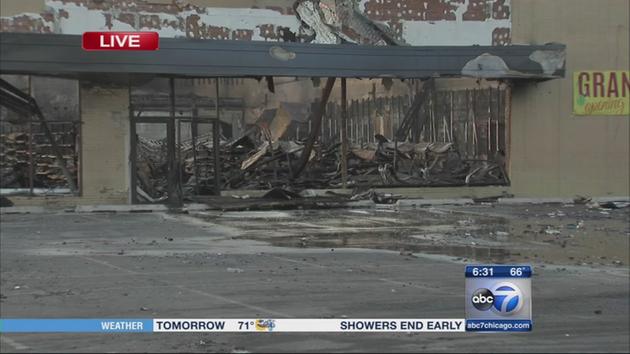
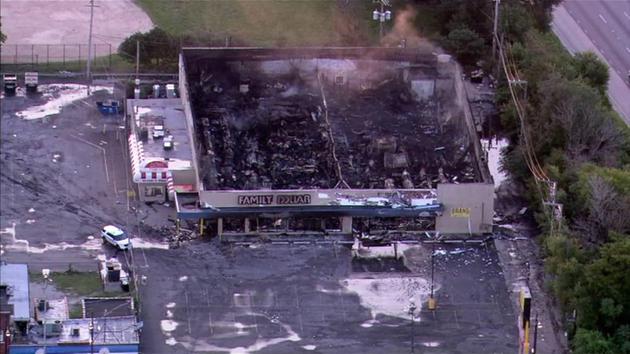
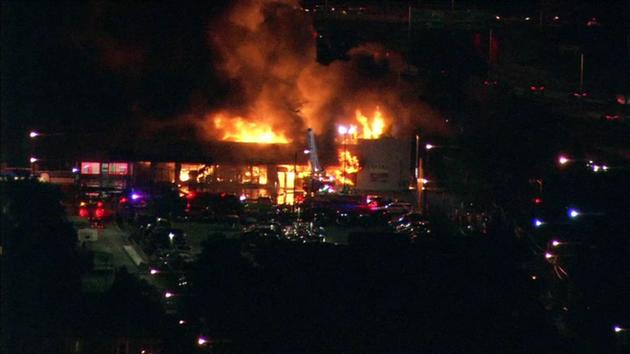
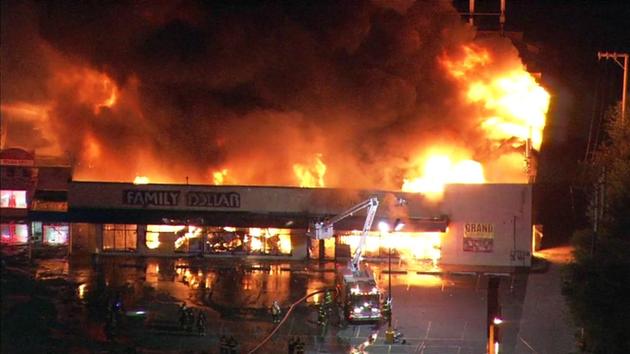
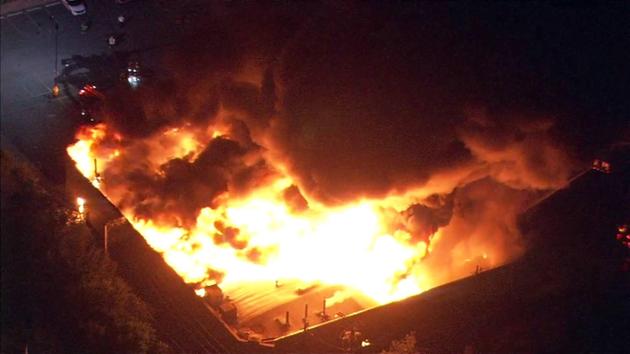
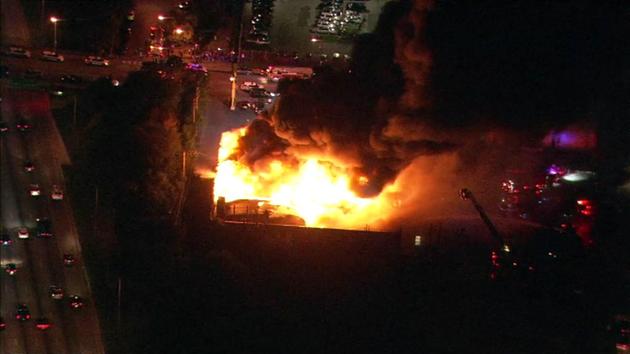
Fire destroyed a strip mall in Chicago's East Garfield Park neighborhood. Investigators are looking into how the fire started. (WLS)
Liz Nagy Updated 1 hr 9 mins ago CHICAGO (WLS) -- Firefighters put out hot spots Tuesday morning at the scene of a strip mall fire on Chicago's West Side that destroyed several businesses Monday night.
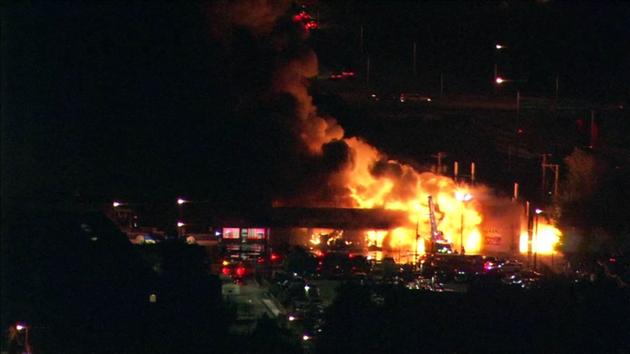
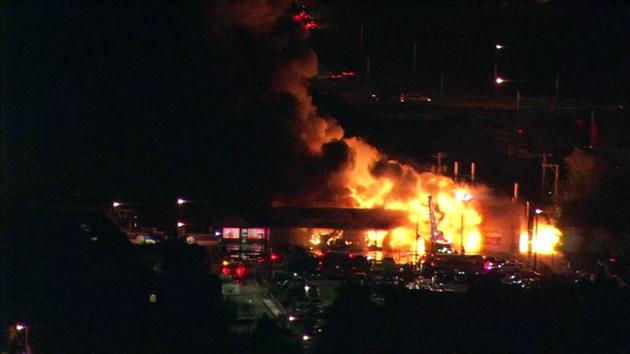
Crews raced to the row of businesses, which included a Family Dollar, a beauty supply store and a J&J Fish restaurant, in the 400-block of South Kedzie Avenue in the city's East Garfield Park neighborhood around 7:15 p.m. Monday. When they arrived, the stores were engulfed by flames.
Due to the intensity of the fire, more than 150 firefighters were called to the scene. They tried to get inside, but were forced back out.
"When they realized it was lightweight construction and the fire is aggressively gaining momentum, they back out. Lightweight construction will fail very quickly," said Michael Carbone, Assistant Fire Chief, Chicago Fire Department.
The fire was struck out by around 10 p.m. Two firefighters were hospitalized for smoke inhalation. They are expected to be OK.
The stores are black and gutted. Portions of them smoldered overnight. Officials said it is unlikely anything will be salvageable.
"This is a neighborhood plaza and provided more for the neighbors than anyone else. It's a catastrophe," said Fred Akkawi, who owned a business in the strip mall.
Investigators are looking into how the fire started.
"It could have been a lot of things. It could have been the fire load inside the occupancy. You've got a lot of aerosol cans, you've got a lot of chemicals in there and that could have fueled the fire. There's a lot of paper products and a lot of product, a lot of liquid products and a lot of flammable products there," Carbone said.
Nearly three years after Winter Storm Atlas blanketed western South Dakota and two months after the state Supreme Court ruled that a Quinn couple was entitled to compensation from their insurance company for nearly 100 yearling heifers that died in the blizzard, dozens of ranchers are reportedly revisiting their insurance policies to determine if they, too, are eligible for claims previously denied.
The Atlas storm killed thousands of livestock with heavy rain followed by snow from Oct. 3 to Oct. 5, 2013, in western South Dakota.
In late July, the South Dakota Supreme Court overturned an earlier decision by a lower court that ruled against Richard and Larayna Papousek, who run a crop and livestock ranch 61 miles east of Rapid City. A veterinarian who had examined some of the couple’s dead cattle attributed the cause of death to drowning.
Nonetheless, the circuit court had ruled in favor of De Smet Farm Mutual Insurance Co. of South Dakota, finding that the Papouseks’ policy, which specifically covered drowning, didn’t cover their loss because none of the 93 heifers was found in water.
But in reversing the lower court, justices noted: “Papouseks point out, however, that reasonable people understand that the hallmark of drowning is not the presence of water outside the body; rather, it is death caused by water or fluid within the body.”
That unanimous ruling by the state’s high court has sparked a wave of scrutiny from area ranchers whose claims were initially denied coverage, according to Silvia Christen, executive director of the South Dakota Stockgrowers Association, which represents about 1,000 ranchers in the state.
“I have been getting a disturbing number of calls from ranchers who had De Smet Insurance during the Atlas blizzard,” Christen said Friday. “The company has their claims adjusters calling folks and offering to revisit their cases and ‘settle’ cases that were previously declined. In other words, the insurance company is trying to buy its way out of more potentially expensive lawsuits.”
But in reviewing claims with ranchers, Christen said De Smet’s adjustors had been working to reduce the amount of monetary damages despite their policies having the same verbiage as the Papouseks’ policy.
“What I’m hearing is they had the exact claim that was decided in the Papousek case,” she said. “It seems since the Supreme Court case, the company recognizes that its definition of drowning won’t hold up in court. That would seem to be good news. But the company seems to not want to pay the full claim, or pay at the rate that was decided in the Supreme Court case.”
Christen said the Stockgrowers Association believes that is decidedly unfair.
“This isn’t about ranchers who are looking for a handout,” she said. “These are ranchers who took out insurance policies to manage their losses, and they should expect to be covered when they have a loss.”
Rapid City attorney Michael Hickey, who represented the Papouseks in their case against the insurance company, said Friday that the high court’s ruling had triggered at least a half-dozen calls from potential clients who found themselves in the same situation as the Papouseks.
“They’ve brought us copies of their insurance policies, which are virtually identical in terms of coverage as the Papouseks’, and we’ve given them some recommendations and advice,” Hickey said. “The only company that routinely denied these claims appears to be De Smet; others handled those insured fairly. It appears that now they’re saying they want to do the right thing, which they should have done three years ago.”
Calls to De Smet Insurance on Friday seeking comment were not immediately returned.
Christen and Hickey encouraged those who had been denied insurance claims tied to Winter Storm Atlas to review their policies with an attorney.
“Don’t sign anything just because the insurance company puts something in front of you,” Hickey advised. “They may not have your best interests at heart.”
Hickey, who has been practicing law for 40 years and said he gained his greatest satisfaction by helping “salt-of-the-earth people” like the Papouseks prevail in their case, said most non-ranchers had little comprehension of the destruction Storm Atlas had wrought or the strain it had placed on small family ranching operations, some of which lost scores of cattle.
“In some cases, these losses were tremendous,” he said. “Until you see the pictures and the number of cattle lost, you can’t understand the devastation. They were the future of these ranches and, in some instances, it put people out of business.”
=========
Atlas Shrugged: The Definition Of Drowning
Posted: Wednesday, August 3, 2016 9:55 pm
By Thomas E. Simmons University of South Dakota
The blizzard of 2013 was a doozy. Over a two-day period in early October, “Winter Storm Atlas” raged. It began as rain but soon turned to snow. The snowfall reached nearly two feet. Winds topped 70 miles per hour.
Richard and Lorayna Papousek ranch near Quinn, South Dakota. As the storm subsided, they discovered 93 of their yearling heifers lying dead on the prairie.
A veterinarian examined eight or so of the corpses. The heifers’ lungs were saturated with water, their airways obstructed with foam. Clear liquid filled all of the cow’s airways and it ran from their noses.
The cattle, it seemed, had inhaled first the rain and then the snow. A lack of oxygen led to cardiac arrest, followed by death. The heifers, the veterinarian concluded “absolutely died due to drowning.” The Papouseks filed a claim for their cattle losses with their insurer.
Their insurance was a Farmowner-Ranchowner Policy from De Smet Mutual Insurance Company. The policy provided coverage for cattle deaths caused by several named perils including drowning. But because the heifers had not been submerged in water, De Smet denied the claim. The Papouseks sued.
The Papouseks introduced testimony from their veterinarian. De Smet did not dispute the cause of the cattle’s deaths, but it argued that “drowning” meant death caused by immersion in liquid. Since the cattle had not been submerged in water, their loss had not been caused by drowning, De Smet reasoned.
Pennington County’s Judge Wally Eklund agreed and dismissed the Papousek’s complaint. They appealed. As the case of Papousek v. De Smet Farm Mutual Insurance Company reached the South Dakota Supreme Court, the parties repeated their arguments on the meaning of drowning.
Two of the five jurists, Justices Severson and Wilbur, concluded that drowning could mean death by immersion as well as death resulting from excessive inhalation of water. Therefore, the heifers’ death was caused by a peril for which the Papouseks had insurance. They held for the Papouseks and against De Smet.
The other three members of the South Dakota Supreme Court agreed that the Papouseks should prevail, but disagreed slightly with Justices Severson’s and Wilbur’s reasoning. Drowning, they concluded, was a term with alternate definitions — death by immersion or death by suffocation from excessive fluids. The term “drowning,” therefore, was ambiguous. It could mean death caused only by immersion. It could just as reasonably mean death from inhaling water; death that results from liquid which prevents breathing, which is what happened to the Papouseks’ cattle caught in the blizzard. Which definition applied was unclear.
The law of insurance states that when a policy term is ambiguous, it should be construed in the insured’s favor. It’s a sensible rule. It is the insurer company that drafts the policy language, defining what constitutes a named peril and what does not. When the chosen language is unclear in a given circumstance, it ought to be read so as to provide coverage.
De Smet’s policy identified drowning as a named peril. The policy itself did not define drowning. Nor did it restrict coverage to drowning under certain circumstances, or provide any exceptions to coverage for drowning losses.
The policy also included coverage for cattle deaths from windstorms, then excluded deaths caused by windstorms when resulting from running against fences, fright or suffocation. De Smet argued that the suffocation exception also applied to death by drowning.
The court dismissed that idea. The language limiting the scope of coverage from windstorm losses did not also modify the coverage for drowning. There was no scope of coverage limitation for drowning. Judgment was entered for the Papouseks.
Thomas E. Simmons is an associate professor at the University of South Dakota School of Law in Vermillion. Simmons’ views are his own and not those of USD.
========
South Dakota Majority Reverses No Coverage Ruling For Cattle Killed In Winter Storm
(July 25, 2016, 1:24 PM ET) --
PIERRE, S.D. — A majority of the South Dakota Supreme Court on July
20 reversed a lower court’s ruling that an insurer has no duty to
indemnify its insureds for their loss of 93 cattle during winter storm
Atlas, finding that the insurance policy’s drowning provision is
ambiguous (Richard Papousek v. De Smet Farm Mutual Insurance Company of
South Dakota, No. 27658, S.D. Sup.; 2016 S.D. LEXIS 93).
(Opinion available. Document #51-160811-009Z.)
Richard and Lorayna Papousek, who own and operate a crop-and-livestock
ranch, discovered that 93 of their cattle died following winter storm
Atlas in October 2013.
Dr. Jim McConaghy determined that the cause of the cattle's death was drowning.
Drowning Provision
The Papouseks filed a claim under the drowning provision of a
Farmowner—Ranchowner Policy that was issued by De Smet Farm Mutual
Insurance Company of South Dakota. De Smet denied coverage, contending
that none of the 93 cattle was found submerged in water.
Papouseks sued the insurer in the 17th Judicial Circuit Court in
Pennington County, S.D., seeking a declaration as to coverage. Judge
Wally Eklund ruled in favor of the insurer, finding that the plain
meaning of drowning is "the deprivation of life by immersion in water or
other liquid."
The Papouseks appealed to the South Dakota Supreme Court, contending
that the drowning provision is ambiguous and, as a result, should be
construed in their favor.
2 Reasonable Interpretations
The majority agreed.
“‘Drowning’ is undefined in the Policy, and both De Smet and Papouseks
offer reasonable interpretations of the term. De Smet points out that a
common understanding of the term requires some form of submersion or
immersion in water or other liquid. . . . Papouseks point out,
however, that reasonable people understand that the hallmark of drowning
is not the presence of water outside the body; rather, it is death
caused by water or fluid within the body. . . . Because we agree with
Papouseks that the undefined term is susceptible to these two reasonable
interpretations, the provision indemnifying loss caused by drowning is
ambiguous. We therefore construe the provision liberally in Papouseks'
favor. . . . In turn, the dispositive question is whether Papouseks
established that the cattle died from inhaling water.”
The majority noted that McConaghy concluded that “the cattle's lungs
were saturated with water and their airways were obstructed with foam
(air trapped in water).”
“In addition, Dr. McConaghy found clear liquid in all airways and
running from the cattle's noses. Dr. McConaghy speculated that during
the storm, the cattle inhaled large quantities of rain and then snow,
resulting in a lack of oxygen and eventually cardiac arrest and death.
In Dr. McConaghy's opinion, his findings indicated that the cattle
‘absolutely died due to drowning.’ De Smet neither refuted Dr.
McConaghy's findings nor contradicted his opinion with competent
evidence. Indeed, De Smet proffered no evidence to the contrary. Based
on this record, we find Papouseks established coverage under the
drowning provision.”
Exclusion Inapplicable
De Smet argued that the policy’s windstorms or hail provision provides
that coverage is barred for loss "caused directly or indirectly by
frost, cold weather, ice (other than hail), snow or sleet, all whether
wind-driven or not;" and loss to livestock caused by or resulting from
"smothering, suffocation or asphyxiation" or "freezing in blizzards or
snowstorms[.]"
De Smet argued that this language applies to bar coverage because the
insureds established that the cattle died in part from the inhalation of
snow.
The majority noted the policy is a named-peril policy and the insureds only claimed coverage pursuant to the drowning peril.
“Importantly, the drowning provision contains no exclusions or similar
explanatory language. . . . Furthermore, to the degree that De Smet
believes this explanatory language also modifies the drowning provision,
it is mistaken — the explanatory language of the windstorms-or-hail
provision is prefaced by ‘[t]his does not cover loss’, followed by the
list explaining the scope of coverage. Thus, the explanatory language
limiting the scope of coverage for losses caused by windstorms or hail
neither applies to this case nor modifies the other covered perils. De
Smet failed to prove that an applicable policy exclusion exempted
Papouseks from coverage.”
Associate Justice Janine M. Kern wrote the opinion, which was joined by
Chief Justice David Gilbertson and Associate Justice Steven L. Zinter.
Associate Justice Glen A. Severson filed a separate concurrence, which
was joined by Associate Justice Lori S. Wilbur.
Special Writing
“The Policy covers named perils including drowning, and no applicable
exclusions apply. The uncontested opinion of Dr. McConaghy from his
postmortem examination, submitted to the court by affidavit at the
summary judgment hearing, was that the cattle died from drowning. I
would not find the term drowning to be ambiguous. The term only became
ambiguous when the circuit court added words from dictionary definitions
to a clear term in the Policy. The clear terms of the Policy do not
limit drowning to submersion in water. Thus I concur in reversal and
remand to the circuit court to enter summary judgment in favor of
Papouseks,” Associate Justice Severson said.
Sarah Baron Houy and Michael M. Hickey of Bangs, McCullen, Butler, Foye
& Simmons in Rapid City, S.D., represent the insureds. Jessica L.
Larson of Beardsley, Jensen & Lee Professional in Rapid City
represents De Smet.