MEC&F Expert Engineers

Saturday, August 27, 2016

EPA released the draft triazine risk assessments for public comment. Atrazine is part of the triazine chemical class


SOYBEAN

Mode: Photosynthetic Inhibitor Herbicide: Atrazine, Metribuzin Injury: Lower leaves display interveinal chlorosis with necrotic margins
Condition: Carryover of atrazine or high rate of metribuzin


SOYBEAN

Mode: Photosynthetic Inhibitor Herbicide: Atrazine, Metribuzin Injury: Lower leaves go from chlorotic to necrotic, fall off of stem, and in severe cases, complete death of plant
Condition: Carryover of atrazine or high rate of metribuzin; both herbicides are influenced by high soil pH making the herbicides more available to cause injury; eroded knolls in field are likely areas where injury may occur


Atrazine - Background and Updates

Atrazine is a widely used herbicide that can be applied before and after planting to control broadleaf and grassy weeds. Atrazine is part of the triazine chemical class, which includes simazine and propazine due to their common mechanism of toxicity. It is primarily used in agriculture (with the greatest use on corn, sorghum, and sugarcane). To a lesser extent, it is used on residential lawns and golf courses, particularly in Florida and the Southeast. 
The Agency's oversight of atrazine is dynamic and includes periodic pesticide re-evaluation and intensive monitoring programs. Over the years, the Agency has consulted with the FIFRA Scientific Advisory Panel (SAP) on a variety of atrazine topics.
On this page:

Registration Review of Atrazine

Atrazine is undergoing registration review, our periodic re-evaluation program for existing pesticides. All documents related to the registration review of atrazine can be found in the registration review docket: EPA-HQ-OPP-2013-0266. In particular:
If at any time EPA determines there are urgent human or environmental risks from atrazine exposure that require prompt attention, we will take appropriate regulatory action, regardless of the status of the registration review process.

Additional Information

Additional information on atrazine’s registration review, reregistration, and food tolerance reassessment is available in the atrazine dockets:
Docket # at regulations.gov Docket Title and/or SAP Title
EPA-HQ-OPP-2003-0367 Atrazine Interim Reregistration Eligibility Decision (IRED)
EPA-HQ-OPP-2005-0481 Triazine Cumulative Risk Assessment
EPA-HQ-OPP-2009-0759 Presentation of the Atrazine Reevaluation Plan
EPA-HQ-OPP-2009-0851 Draft Framework and Case Studies on Atrazine, Human Incidents, and the Agricultural Health Study: Incorporation of Epidemiology and Human Incident Data into Human Health Risk Assessment
EPA-HQ-OPP-2010-0125 Re-Evaluation of Human Health Effects of Atrazine: Review of Experimental Animal and In Vitro Studies and Drinking Water Monitoring Frequency
EPA-HQ-OPP-2010-0481 Re-Evaluation of Human Health Effects of Atrazine: Review of Non-Cancer Effects and Drinking Water Monitoring Frequency
EPA-HQ-OPP-2011-0399 Re-Evaluation of Human Health Effects of Atrazine: Review of Non-Cancer Effects, Drinking Water Monitoring Frequency, and Cancer Epidemiology
EPA-HQ-OPP-2012-0230 Problem Formulation for Reassessment of Ecological Risks from Use of Atrazine
EPA-HQ-OPP-2013-0266 Atrazine Registration Review

Atrazine Monitoring Program - Drinking Water

The Atrazine Monitoring Program (AMP) monitors approximately 150 community drinking water systems (CWS), primarily in the Midwest, to determine whether concentrations of atrazine and its chemical degradates pose a risk to public health. This monitoring program is required as a result of the 2003 Atrazine Interim Reregistration Eligibility Decision (IRED) and the Memorandum of Agreement (2004). 
Community water systems, which are a subset of public water systems (PWS), are selected for intensive monitoring based on a history of atrazine use and a screen of EPA's Office of Water monitoring data. CWSs included in the AMP are monitored on a weekly basis during peak atrazine use season and biweekly during the rest of the year. All other CWSs are monitored on a 90-day basis as part of the Office of Water’s routine monitoring under the Safe Drinking Water Act (SDWA).
  • Any CWS with a total combined triazine (TCT) concentration exceeding the trigger values of 2.6 ppb for finished water or 12.5 ppb for raw water over a 90-day rolling average will be inducted into the AMP intensive water monitoring program for 5 years. Pesticide registrants implement the AMP.
  • If any CWS in the AMP meets or exceeds the trigger value for one year, registrants must submit a mitigation plan and begin implementation within 90 days of the exceedance.
  • If any CWS in the AMP meets or exceeds the trigger value for 2 out of 5 consecutive years, atrazine use is banned in the water system’s watershed.
  • If any CWS in the AMP does not exceed a TCT concentration of 37.5 ppb for five consecutive years, intensive monitoring can be terminated.
To date, EPA has determined that more than 100 systems no longer require monitoring under the program, and no system has exceeded the maximum allowable concentration more than once. More than 30 CWSs have been added to the program.
View Atrazine Monitoring Program Data and Results

Atrazine Ecological Exposure Monitoring Program

The Atrazine Ecological Exposure Monitoring Program assesses atrazine levels in streams in watersheds that are exposed to atrazine runoff from corn and sorghum production (small streams, high atrazine use areas, and vulnerable soils). This monitoring program is required as a result of the 2003 Atrazine Interim Reregistration Eligibility Decision and the Memorandum of Agreement (2004). 
EPA currently regulates on an aquatic plant Concentration Equivalent Level of Concern (CE-LOC) of 10 ppb as a 60-day average concentration, which ensures that atrazine levels will not cause significant changes in aquatic plant community structure, function and productivity. 
If a watershed shows atrazine concentrations above this level of concern in any two years of monitoring, atrazine registrants must initiate watershed-based mitigation activities in concert with state or local watershed programs to reduce atrazine exposure. These mitigation activities can include, for example, label education, stewardship and outreach programs for growers and distributors. A watershed can be decommissioned from the monitoring program if the 60-day running average falls below the CE-LOC for two consecutive years.
  • Since the program's inception, up to 33 watersheds have been monitored for atrazine in corn-, sorghum- and sugarcane-producing areas.
  • As of 2015, nine watersheds in five states (Iowa, Texas, Missouri, Louisiana and Nebraska) are in the monitoring program.
  • As of 2013, all sugarcane sites were decommissioned from the monitoring program.
  • The registrant has addressed exceedances by implementing label education, stewardship, and outreach programs in these watersheds, and is attempting to quantify the impact and effectiveness of the mitigation activities through a grower survey.
View Atrazine Ecological Exposure Monitoring Program Data and Results

Triazine Cumulative Risk Assessment

Atrazine is chemically related to two other herbicides, simazine and propazine, which together are called "triazines." The triazines have a common mechanism of toxicity, and are often evaluated together in cumulative risk assessments. As part of EPA’s registration review process, the Agency is currently conducting an updated cumulative human health risk assessment for the triazines. EPA expects to issue this risk assessment in 2016. 
The Agency conducted a triazine cumulative human health risk assessment in 2006, which concluded:
  • Cumulative exposures to atrazine and simazine through food and drinking water are safe and meet the rigorous human health standards set forth in the Food Quality Protection Act.
  • Levels of atrazine and simazine that Americans are exposed to in their food and drinking water, combined, are below the level that would potentially cause health effects.
View the 2006 Triazine Cumulative Risk Assessment (Docket ID: EPA-HQ-OPP-2005-0481-0003 at www.regulations.gov)

Triazine Ecological Risk Assessments

EPA released the draft ecological risk assessments for atrazine, simazine and propazine, which evaluate risks to animals and plants including, amphibians, birds, mammals, fish, reptiles, aquatic invertebrates, aquatic plant communities, and terrestrial plants. For ecological risks, each of the triazines (atrazine, propazine, and simazine) was assessed separately.

FIFRA Scientific Advisory Panel Meetings on Atrazine

The Agency has consulted with the FIFRA Scientific Advisory Panel on 12 occasions on various topics regarding the evaluation of atrazine data and key aspects of its risk assessments since 2000, all of which are listed in the table below. The SAP is composed of independent scientists who advise on technically challenging scientific assessment issues.


=====================


Senate oversight hearing examines atrazine, anhydrous regulations


IFT photo by Bill Tiedje


During a Senate Homeland Security and Governmental Affairs Committee hearing in Dubuque on Aug. 17, Sens. Ron Johnson and Joni Ernst questioned witnesses on the impacts of federal regulations in agriculture.

August 25, 2016 9:09 am • By Bill Tiedje, Iowa Farmer Today


DUBUQUE — Federal regulation of the broadleaf herbicide atrazine and safety compliance requirements for retailers of anhydrous fertilizer were among the topics discussed Aug. 17 at a Senate oversight hearing held by Sens. Ron Johnson of Wisconsin and Joni Ernst of Iowa.

Jim Zimmerman, a board member of the National Corn Growers Association who farms near Rosendale, Wis., testified the EPA’s call for a reduction in the allowable environmental concentration of atrazine in its standard 15-year reevaluation of the herbicide would be “practically unachievable” and would represent a “de-facto ban” on the use of atrazine.

“One of the most important tools I use on my farm is the herbicide atrazine — and I am far from alone in this regard,” Zimmerman said. “Atrazine is one of the most widely used herbicides in the United States — used on well over half of corn and sorghum acres and on as much as 90 percent of sugarcane acres.”

Zimmerman also questioned the validity of the EPA’s studies used in the “Refined Ecological Risk Assessment for Atrazine” released this June, citing “50 years of safe use.”

Responding to questioning from Johnson, Zimmerman declined to speculate why the EPA would want to limit use of atrazine.

“The point is if you can take a product that has been proven safe and used for over 50 years and you can minimize it, you can do anything. Then pretty much everything is at risk,” Zimmerman said.

The comment period on the draft ecological risk assessment of atrazine is open until Oct. 4.

A human health assessment for atrazine, propazine and simazine is also currently under review by the EPA and is expected to be released in 2016, according to the agency’s website.

Anhydrous retailer exemption

In her introductory remarks, Ernst criticized the Obama Administration for routinely “skirting the rulemaking process” and ignoring Congressional intent.

Ernst stated that in reclassifying process safety management (PSM) exemptions for retailers, including farmer-owned cooperatives that supply anhydrous, the Department of Labor did not go through the formal rulemaking process, denying many affected stakeholders, including farmers, the chance to comment.

“The changes OSHA has made will be difficult for the companies to implement and will yield little if any safety benefits,” Ernst said. “Further, they will costs these retailers tens of thousands of dollars per site, costs that will ultimately be passed on to the family farms that they serve.”

Ernst said the agency now plans to go through the formal rulemaking process, but still expects farmer-owned cooperatives to be in compliance with the changes this October.

The cost of regulation

Rick Vaughan, CEO of Innovative Ag Services, a farmer/member-owned cooperative with locations in eastern Iowa and southwest Wisconsin, testified that the estimated cost of implementing the new PSM requirements would be $725,112, or $28,856 per location.

He estimated at a total annual cost of $10,646 per location, including a five-year amortization of upfront costs plus $5,275 in ongoing annual costs per location, the cost of PSM compliance would equate to $10.31/ton of anhydrous.

“Today we are spending 64 cents per ton to invest in our current anhydrous training,” Vaughan said. “We do not believe the PSM will improve our safety performance.”

He said the company strives to create a safe work environment for its employees and currently invests $17,765 each year to train employees to safely handle anhydrous.

Vaughan said, “We will be forced to close 16 of our 27 plants (59 percent), affecting 389 (35 percent) of our customers. This will affect our other business with these same customers. This will put more anhydrous ammonia loaded trips and miles on the road.”

According to the Occupational Safety and Health Administration (OSHA), retailer compliance with the new rule may include “modifications to existing management system elements such as: standard operating procedures, hazard analyses, employee participation in the development and implementation of the process safety management systems, reviews prior to startup of new or modified processes, welding safety procedures and safety implications of process or equipment changes affecting covered chemicals.”

Ernst said the rule would lead to reduced competition in the anhydrous market and may cause smaller retailers to exit the market.

Ernst also stated the West Fertilizer plant explosion, which preceded this regulatory push, was caused by arson.
=======================


Farmers oppose EPA’s proposed Atrazine restrictions

August 17, 2016 By Larry Lee Filed Under: Crops, News

Farmers are asking Congress to stop the EPA’s attempt to put more regulation on Atrazine use.

Among those testifying Wednesday at a Senate committee field hearing was Wisconsin farmer and National Corn Growers board member Jim Zimmerman. Zimmerman tells Brownfield that EPA’s plan to drop the “Level of Concern” from 10 to only 3-point-4 parts per billion is unacceptable. “If it is at this level which they’re advocating, it would make it virtually impossible for us to use the product or use it at a rate that would mean anything to us.”

Zimmerman told the committee Atrazine has been proven safe in over 7,000 tests around the world, and the EPA hasn’t given adequate scientific grounds for its recommendations. “We do not believe that they are using procedure or policy that has been outlined for them to do reviews, and so all we’re asking for is that we have some oversight, and that they do follow the procedures and use the best science we have available.”

Zimmerman says there are other products on the market, but the key is to have a number of herbicides available to prevent over-use of one product as part of an effective resistance management plan.

Committee Chairman Senator Ron Johnson of Wisconsin said, “We’ve reached a point where the annual regulatory burden is around $2 trillion.” He wants to eliminate unnecessary and burdensome federal regulations, saying, “We pile layer upon layer upon layer of new regulations atop the old ones without acknowledging that they may be doing little to improve the environment or make food safer.” Zimmerman told Brownfield, “We want a predictable regulatory system where we can all operate with clarity on how to move forward.”

Zimmerman says the cost of losing Atrazine would be both financial and environmental, since growers would be forced to do less no-till and low-till to control weeds…leading to increased soil erosion from traditional tillage. He says, “Atrazine is a safe product, and we want to make sure we have access to it.”

Construction contractor impaled to death by rebar after he fell 15 feet at the Clifton C. Williams Wastewater Treatment Facility in Mobile, Alabama


Victim identified in fatal impalement accident at water treatment facility Posted: Aug 24, 2016 7:06 PM EST Updated: Aug 24, 2016 7:06 PM EST
By Kati Weis, FOX10 News Reporter


Cyrus Gates, 36, was killed Monday at a construction site at a MAWSS facility. (Facebook) MOBILE, AL (WALA) -

Mobile Police have confirmed Cyrus Gates, 36, of Semmes, as the victim in a fatal impalement accident at a water treatment facility Monday.

Police said Gates was cutting a beam 15 ft in the air when the beam shifted and caused him to fall. Police said Gates was impaled by rebar below. Gates died on scene. At this time, Mobile Police do not suspect foul play or criminal activity.

It happened at the Clifton C. Williams Wastewater Treatment Facility at 1600 Yeend street in Mobile, which is owned and operated by the Mobile Area Water and Sewer System (MAWSS).

Officials said Gates was working construction as a private contractor on a new addition to the facility. Work for the project began in February.

Local officials with the Occupational Safety and Health Administration (OSHA) said they have an open investigation into Gates' death.

Wednesday, FOX10 News Investigates tried to find previous incidents or violations at the facility reported by OSHA, but there were no records, because OSHA does not have jurisdiction over the MAWSS facility.

That's because MAWSS is a public agency, and OSHA does not have jurisdiction over any local or state public entities, only private companies.

MAWSS said it has its own full-time safety manager to oversee safety issues, and that it follows all state and local guidelines.

In this case, OSHA is investigating Gates' death, because Gates was a private contractor.


OSHA said it should finish the investigation within the next six months.


=====================

Mobile Area Water and Sewer System (MAWSS).

Facilities

MAWSS currently owns and operates two conventional wastewater treatment facilities, the Clifton C. Williams Wastewater Treatment Facility on McDuffie Island and the Wright Smith Wastewater Treatment Facility off Conception Street. Both have sterling records of performance.

In addition, MAWSS owns and operates five decentralized wastewater treatment facilities including Hutchens, Copeland Island, Snow Road, Hamilton Oaks and a unique on-site treatment and disposal facility adjacent to Three Mile Creek. This demonstration project was funded through an EPA project grant. The primary objective of the facility is to demonstrate the use of decentralized facilities within a centralized infrastructure. To learn more about this unique project, view the DVD found by clicking on the "Decentralized Wastewater Systems" link above the photo.


Clifton C. Williams Wastewater Treatment Plant 

 
The Clifton C. Williams Wastewater Treatment Plant was built in 1957 as a sixteen million gallon a day treatment plant on McDuffie Island and was named the Mobile Sewage Treatment Plant. It was a diffused air activated sludge plant and was sized to treat wastewater from the downtown area of Mobile. Its influent flow was delivered by force main from the Virginia Street pump station. Within twenty years, the increase in population in the western part of the city began to require some planning for the smaller and aging treatment plants at Halls Mill Creek and Eslava Creek. The decision was made to upgrade the Mobile Sewage Treatment Plant to handle the increased flow from the down town area and also the flow from the Halls Mill Creek and Eslava Creek collection systems.

Completed in 1977, this upgrade project included the conversion of the Halls Mill and Eslava Creek plants to lift stations. Their force mains, along with the Virginia Street force main, are now the total influent flow for the pure oxygen activated sludge, 28 million gallon a day treatment plant on McDuffie Island. The plant's effluent discharges into Mobile Bay at the junction of Mobile River.

In 1987, the Board of Water and Sewer Commissioners of the City of Mobile officially named the treatment plant at McDuffie Island after a former superintendent of MAWSS, Clifton C. Williams.

In 2005, the Clifton C. Williams Wastewater Treatment Plant was the recipient of the Platinum Peak Performance Award from the National Association of Clean Water Agencies. This prestigious environmental honor was given to the Williams plant for five consecutive years of perfect operations with 100% compliance with NPDES permit requirements.

The Williams WWTP is the recipient of numerous state and national environmental awards including the Platinum Peak Performance Award from the National Association of Clean Water Agencies (NACWA). This prestigious honor is given to only a handful of plants in the nation that have five or more consecutive years of perfect regulatory compliance with NPDES permit requirements.

The plant has also been recognized as Best Operated Plant in Alabama by the Alabama Water Pollution Control Association (AWPCA) and Alabama’s Water Environment Association. Tours are available. Call or contact us online.


Wright Smith, Jr. Wastewater Treatment Plant 


The Wright Smith, Jr. Wastewater Treatment Plant was built in 1947 as a primary treatment plant and named Three Mile Creek Sewage Treatment Plant. As the population grew north and west of Mobile, the plant required a major upgrade.

Completed in 1964, this upgrade included two larger primary clarifiers, two trickling filters, two final clarifiers, one sludge thickener, and another digester. The upgrade increased the capacity of the plant to 10.0 MGD.

In 1987, the plant received another addition that included nitrification filters for the reduction of ammonia nitrogen in it's effluent. At this time, the Board of Water and Sewer Commissioners of the City of Mobile named the plant the Wright Smith Jr. WWTP.

In 1993, the Alabama Department of Environmental Management increased the plant's design flow to 12.8 Million Gallons per Day based on treatment performance.

The Smith WWTP has been recognized with state and national environmental awards including the Platinum Peak Performance Award given by NACWA for five or more consecutive years of perfect regulatory compliance with meeting NPDES permit requirements. It has also been recognized as Best Operated Plant by the Alabama Water and Pollution Control Association and Alabama’s Water Environment Association. Tours are available. Call or contact us online.


=======================

Municipal Water and Wastewater Facility Project Case Study in Alabama

This project information is pulled from our database of hundreds of thousands of construction projects that have been started over the past 5 years. Use it to research ideas and potential partners for your own project. Additional examples of municipal water and wastewater facility projects in Alabama are also available.

Project Overview

Project Title:CC WILLIAMS WASTEWATER TREATMENT PLANT
Start Date:2006-06-01
Estimated Value:$94,163
The cost to build municipal water and wastewater facilities in Alabama depends upon the location, project scope, specific components used and current market conditions. If you are looking to size the cost of building a project similar to this one,

Project Location

State:Alabama
County:Mobile
City:Mobile
Address:1600 Yeend St

Project Type

Building Category:Municipal Water and Wastewater Facilities
Work Type:Alteration

Project Description:

Sewage Treatment Cat Generator Shelter And Electrical Room Scrubber Improvements To The Existing Generator Shelter, Installation Of Masonry Walls Leveling Concrete Floor With Generator Support Slab, Installation Of Mechanical Louvers, Mechanical Scrubbed Air Supply For Positive Pressurization And HVAC Modifications And Painting, Including Appurtenances And Accessories Necessary T Complete The Work

Friday, August 26, 2016

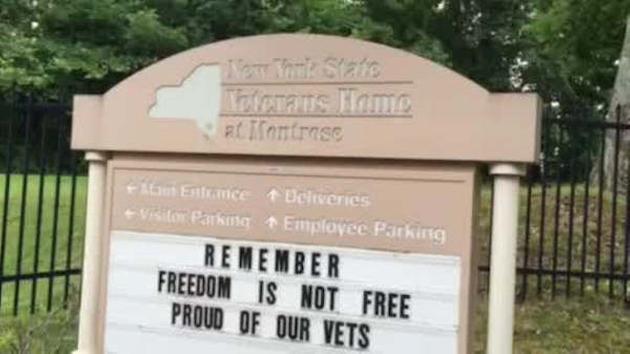
4 dead, dozens sick from rhinovirus at Westchester veterans home in Montrose, NY


By Jim Hoffer
Updated 12 mins ago
MONTROSE, New York (WABC) -- Dozens of people at a local home for veterans have come down with the rhinovirus this month, and four have died at the Westchester County facility.

On the last three weeks, a team of infectious control experts from the state Department of Health have been on the scene at the New York State Veterans Home in Montrose, trying to bring the outbreak of the respiratory infection under control.

The Eyewitness News Investigators have learned that nearly one in four of all patients at the 221-bed facility have come down with the fast spreading illness, which is a bad strain of the common cold.

Health officials say that since August 2, there have been 58 cases, four of which resulted in death. Fifteen are still recovering, while 39 have fully recovered.

"This is the first step state health must take to establish whether or not this does represent an outbreak," said Dr. Denis Nash, of the CUNY School of Public Health. "It does, on the face of it, seem like an unusual number of cases and deaths."

Dr. Nash, an infectious disease specialist, said the state must immediately assess the facilities standards and practices for infection prevention.

"This is something that state health department is looking into very carefully," he said. "As they are gathering all this information, marking any changes right away, as they need to, in order to stop any ongoing outbreak and also prevent future ones. "

A spokesman for the state Department of Health says they've been working closely with the Veteran's Home onsite to ensure that infection prevention and control measures are implemented to diminish the risk for infections.

"If so many are affected by the same infectious disease, it does point to infection control issues," Dr. Nash said. "And that's something the state will want to be looking at right away."

Rhinoviruses are the most common cause of the common cold. CLICK HERE for more information from the CDC.

http://www.cdc.gov/features/rhinoviruses/

Accumulation of Grease in Sewer Lines is Responsible for 60 Percent of Confirmed Sewer Backups in New York City


FOR IMMEDIATE RELEASE
16-84

August 23, 2016

Contact:

deppressoffice@dep.nyc.gov, (718) 595-6600

"Cease the Grease" Outreach Campaign Has Visited 50,000 Homes in Southeast Queens to Encourage Residents to Properly Dispose of Grease and Help Reduce Sewer Backups
Accumulation of Grease in Sewer Lines is Responsible for 60 Percent of Confirmed Sewer Backups in New York City
Photos and a Map of the Outreach Program are Available on DEP’s Flickr Page

The New York City Department of Environmental Protection (DEP) today announced that outreach teams have knocked on the doors of 50,000 homes in southeast Queens to spread the message that improperly disposing of grease down kitchen drains can clog pipes and lead to sewer backups. The door-to-door campaign began last September and covered Community Boards 12 and 13, where there were more than 4,800 reports of sewer back-ups during the past five years. Investigations by DEP crews found that most of the backups were caused by grease blockages in the sewers. 


With help from interns with the Summer Youth Employment Program, the campaign has now reached 50,000 households and more than 1,000 food service establishments with grease education kits and compliance information. In addition, partnerships have been established with local schools, community boards, elected officials, business groups, and religious and neighborhood organizations to encourage New Yorkers to properly dispose of grease. Grease should never be poured down kitchen sinks or toilets, but should instead be placed in sealed non-recyclable containers and discarded with regular garbage.

“When grease is improperly poured down the drain it can block sewer lines and threaten public health and the environment,” said DEP Acting Commissioner Vincent Sapienza. “By working with our community partners to ensure that grease is properly disposed of we can help to prevent costly problems for homeowners and businesses.”

“We have all been guilty at one time or another of pouring kitchen grease down the sink drain, but doing so can clog pipes and sewers,” said State Senator James Sanders Jr. “Every single person can make a difference when it comes to taking care of our environment and it can begin with something as small as disposing of your kitchen grease in the proper way. I commend the DEP for its Cease the Grease campaign and efforts to educate the public about this issue and providing residents with free specially lined bags for properly disposing of grease.”

“As the Department of Environmental Protection continues to build out our sewer system in Southeast Queens, it is even more important that residents are aware of the damage grease can do to our infrastructure when it is improperly poured down the drain,” said Council Member Donovan Richards (D-Laurelton). “This campaign has helped to educate more than 50,000 households and business owners, in addition to its implementation in STEM lessons in elementary and middle school. I’d like to thank the entire DEP team for all of their hard work on the ‘Cease the Grease’ outreach campaign and their continued efforts to decrease the harmful effects of flooding that Southeast Queens has been dealing with for decades.”

Educational programs have been developed for the schools in the area, including P.S. 176, P.S./I.S. 148 and I.S. 59, with interactive and multidisciplinary STEM (Science, Technology, English and Math) lessons. The curriculum introduces students and educators to New York City’s drinking water and wastewater systems. In addition, information and grease education kits will continue to be made available at as many community events and meetings as possible, and on-site visits will continue to be made to commercial food establishments. The campaign also includes workshops at New York City Housing Authority developments, which include approximately 2,500 households within the two Community Boards.

DEP has embraced a data-driven, proactive approach to operate and maintain New York City’s sewer system. By using a range of digital tools and in­novative practices, DEP develops targeted programs to provide a high level of service to customers while focusing on investments that will prioritize maintenance in the areas where it is needed most. This approach led to the development of a comprehensive map and target grids for public outreach in southeast Queens.

DEP manages New York City’s water supply, providing more than one billion gallons of water each day to more than nine million residents, including eight million in New York City. The water is delivered from a watershed that extends more than 125 miles from the city, comprising 19 reservoirs and three controlled lakes. Approximately 7,000 miles of water mains, tunnels and aqueducts bring water to homes and businesses throughout the five boroughs, and 7,500 miles of sewer lines and 96 pump stations take wastewater to 14 in-city treatment plants. In addition, DEP has a robust capital program, with a planned $14 billion in investments over the next 10 years that will create up to 3,000 construction-related jobs per year. 


This capital program is responsible for critical projects like City Water Tunnel No. 3; the Staten Island Bluebelt program, an ecologically sound and cost-effective stormwater management system; the city’s Watershed Protection Program, which protects sensitive lands upstate near the city’s reservoirs in order to maintain their high water quality; and the installation of more than 820,000 Automated Meter Reading devices, which will allow customers to track their daily water use, more easily manage their accounts and be alerted to potential leaks on their properties. For more information, visit nyc.gov/dep, like us on Facebook, or follow us on Twitter.


Learn more at the NYC Environmental Protection website
====================


Grease Disposal Tips to Help the City’s Environment

New York City needs the help of all of its residents to keep our sewer system running properly. Liquefied fat, oil, or grease (FOG) that is poured down the kitchen sink drain can cause serious impacts. FOG can cling to the insides of pipes and the sewer system. Over time, it can build up and can eventually block pipes completely. If wastewater can’t move freely through pipes and out into the sewer system, it can back up into your home and can cause unsanitary conditions and damages that can be expensive to repair. By following the guidelines below, you can help avoid repeated repairs and unnecessary disruptions to residences and businesses.

Properly Dispose of Cooking Oil & Grease

Cooking oil and grease are wastes that the City’s sewer system cannot handle and should not be discarded down the drain. Dumping grease, fats, and oil can clog sewer lines, causing sewage back-ups and flooding. Sewage back-ups can damage personal and public property. Here’s how you can help.

DO NOT dump cooking oil, poultry fat and grease into the kitchen sink or the toilet bowl. DO NOT dump cooking oil, poultry fat and grease into the kitchen sink or the toilet bowl.
DO NOT use hot water and soap to wash grease down the drain, because it will cool and harden in your pipes or in the sewer down the line.
DO place cooled cooking oil, poultry and meat fats in sealed non-recyclable containers and discard with your regular garbage. DO place cooled cooking oil, poultry and meat fats in sealed non-recyclable containers and discard with your regular garbage.
DO use paper towels to wipe residual grease or oil off of dishes, pots and pans prior to washing them.

The following brochure, Cease the Grease (Grease Disposal Tips to Help the City’s Environment), informs residents on how to properly dispose of used cooking oil:

Recycle Used Motor Oil

When poured down house or storm drains, used motor oil may travel to your local stream, bay, or harbor, where it can harm underwater vegetation and aquatic life. Service stations are required by State law to accept up to 5 gallons of used motor oil per person, per day, at no charge. Remember not to mix your motor oil with any other substance.
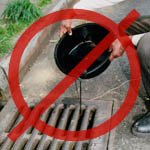
DO NOT dump used motor oil into street or house drains. DO NOT dump used motor oil into street or house drains.
DO put used motor oil in a sturdy container, such as a plastic milk jug, and take it to your local service station for recycling. DO put used motor oil in a sturdy container, such as a plastic milk jug, and take it to your local service station for recycling.

Contact Us

For more information on disposal of motor oil and residential or commercial grease, or to report illegal dumping into street storm drains, call:
311
Write to DEP at:
NYC Department of Environmental Protection
59-17 Junction Boulevard
Flushing, New York 11373

The Use of Mediation for Construction Disputes


The Use of Mediation for Construction Accidents
Posted on August 23, 2016 by admin


Ronald Sherr | The Legal Intelligencer | August 12, 2016

The percentage of plaintiffs’ verdicts in Philadelphia Common Pleas Courts has decreased dramatically in 2015. It is most noticeable in construction cases. Construction cases are complex, costly and tough to win in jury trials. They usually involve multiple defendants in different disciplines and require expert testimony that is difficult to communicate to a jury. Multiple defendants may result in multiple defense experts. Additionally, because of the exposure involved, a trial will be against a top-notch defense counsel. The advantages of mediation are that you get to play a role in selecting the fact finder instead of a chance selection. It certainly is preferable to be able to select the date for the hearing rather than being subject to the dreaded phone call. 


Your dealings with a mediator regarding the issues of both liability and medical expenses are usually better if he or she is an experienced litigator, who is likely to be more reasonable than an autocratic judge. Most of you have suffered the anguish of trying to get an out-of-town expert into court on short notice, let alone the exorbitant cost of a live appearance instead of a well-crafted report that is readily absorbed by any mediator worth their salt. You can select a mediator with significant experience in trying construction cases whereas the average Court of Common Pleas judge may not have that specific knowledge. While it is true that representing a significantly injured plaintiff, may result in a very generous damage award by a jury; for the most part you will get a more reasonable result from a skilled mediator.

Among other pitfalls of a jury trial is explaining to a lay jury a case that may involve understanding plans, blueprints, work rules, statutes, safety regulations and construction contracts. It is often difficult to keep juries interested in listening to complex medical testimony. How do you keep a jury interested in a trial that lasts more than two weeks? Whereas a mediation rarely lasts longer than one day. A jury deliberation can take several days in contrast to getting a mediation result the same day.

Many lawyers are more comfortable in a mediation setting. They are far more capable of presenting their case to a mediator than to a judge, a jury and a public audience. An important participant in a mediation is the representative of the workers’ compensation carrier. This party is seldom involved in the jury trial. Pre-hearing motions can probably be disposed of by a conference call prior to the mediation rather than with a meeting before a judge with a crowded docket.


The amount of time spent in a mediation is far less than a jury trial. There isn’t time spent in voir dire, side bar, chambers conferences, recesses for the jury, interruptions to the trial judge for other matters, etc. The difference in time, consumed by live testimony of experts versus the time spent by the mediator reading the report prior to the hearing, is enormous. The mediator can read and compare reports in the same time frame rather than trying to compare one’s testimony with another’s given days before.

One cannot say enough about the well-reasoned opinion of a mediator contrasted to the possible outrageous opinion of a radical juror. It is not easy for lay jurors to understand the distinctions between general contractors, subcontractors, statutory employers and the other terminology involved in construction cases. Educating the jury is a lengthy and uncertain process.

I cannot emphasize enough how important it is to select an appropriate mediator. Not only one who is an experienced neutral but one who has actual experience in handling and trying construction cases. The mediator should not only understand the law involved, but also be able to differentiate between the nuances of subcontractors and statutory employers. You should hire a mediator who can interpret a construction or labor contract as well as a workers’ compensation agreement. 

 
A good mediator is also a good psychologist who knows how to handle plaintiffs lawyers and their clients as well as defense lawyers and claims representatives. He or she is aware of when to play hard ball and when to use a soft sell, how to get angry litigants speaking civilly to each other and how and when to get the parties into negotiations. It is most difficult to get angry people to negotiate. It is also important to have the mediator ingratiate himself to all parties and their attorneys. A skilled mediator is able to convince everyone of his knowledge and expertise without offending. The first thing a mediator must do is to get everyone speaking civilly to each other. Money discussions should wait until the appropriate time. Construction cases can involve personal injury, construction and insurance contracts, labor contracts, blueprints, design and labor management relationships; and you want someone who is familiar with all facets.

How does a mediator arrive at the negotiating point, where the parties and their attorneys have confidence in him? Of course there are many tricks to the trade and you can be certain that some mediators are more skilled than others. One of the problems of negotiating construction cases is that you usually have multiple defense counsel who do not want to show their hand too soon and are adopting a small pay or no pay stance. In many cases, one defense counsel will not discuss money with the other defense counsel(s), except for counsel who might present exposure to their client. 


What I try to do is to engage groups of defendants, small and large, into separate meetings. I try to get groups of different personalities involved in discussions. It is most necessary in construction to have claims representatives with authority in attendance, so that I, as a mediator can look them in the eye and try to convince them of my settlement proposals. A tactic that works successfully is to get all defendants to agree on a global settlement with the plaintiff, as well as a method of funding such a settlement and an agreement to select an arbitrator to hold a binding hearing thereafter to set the proportionate contributions. It is always easier for insurance carriers to negotiate percentages of a known lump sum than with an unknown figure. The known is always easier to deal with than the unknown. It is also easier to come up with the global figure when the participants don’t know how much of it they will have to pay. You also want to have a mediator who has personally negotiated construction cases with insurance representatives.

As a mediator, I always want to speak personally to the plaintiffs as well as claims representatives. I always want to talk to defense lawyers without their claims representatives so they don’t have to put on a show of bravado. There is much more to mediation than “cutting the baby.” It takes a skillful mediator to navigate the waters of construction litigation, medical malpractice, patent litigation and insurance coverage, and you want to make sure you have the right person.

I find that parties, their attorneys and representatives are much more comfortable and relaxed sitting in a comfortable chair with snacks and drinks than in a stark courtroom in the shadow of a stern judge (no offense intended).

Relaxed people are better suited to negotiation.