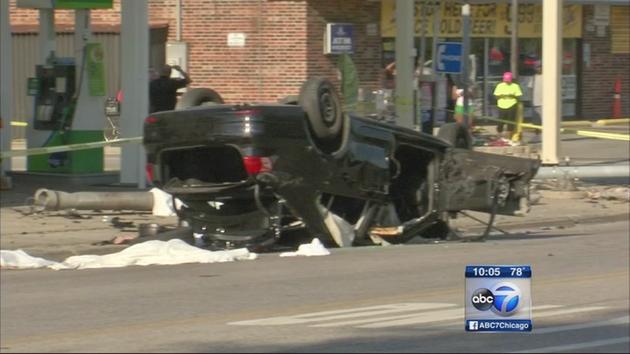
One person was killed and another injured after a fiery rollover crash in west suburban Maywood. (WLS)
By Rob Elgas
Wednesday, August 24, 2016 10:43PM
MAYWOOD, Ill. (WLS) -- One person was killed and another injured after a fiery rollover crash in west suburban Maywood.
Fire Chief Craig Bronaugh said a man on the street was killed after being struck by a vehicle at 9th Avenue and Roosevelt around 3:30 p.m. The driver of the vehicle, a woman whose exact age was unknown, was believed to be driving west on Roosevelt Road at the time of the crash, Bronaugh said. Firefighters were able to extinguish the fire and extricate the woman, who was taken to Loyola University Medical Center with burns to her legs. Her condition was not known.
Witnesses at the scene did not see the crash take place and the circumstances are still under investigation. Maywood police are trying to determine if the woman was trying to beat a red light. Witnesses said she was speeding down Roosevelt, perhaps going more than 70 mph.
"I go outside and I just see a car flipped over and smoke everywhere," said witness Khalid Alyafai.
Witnesses said they believe the man was walking from the VA hospital when he was hit. They said the SUV crashed into a street pole, rolled over several times and crushed him. As a result of the impact, he was dismembered.
"I was really freaked out, I'd never really seen anything like that in my life," said Mohamed Seck, a Proviso East student who witnessed the aftermath of the crash when he was walking home from school with his cousin Cori Robinson.
"I had food in my hand and I had dropped my food because I was like- It was very disturbing," said Robinson.
Police are reviewing surveillance video from the BP station as well as checking to see if any other businesses captured the crash on their security cameras. The speed limit for that section of Roosevelt Road is 30 mph.
The Sun-Times Media Wire contributed to this report.
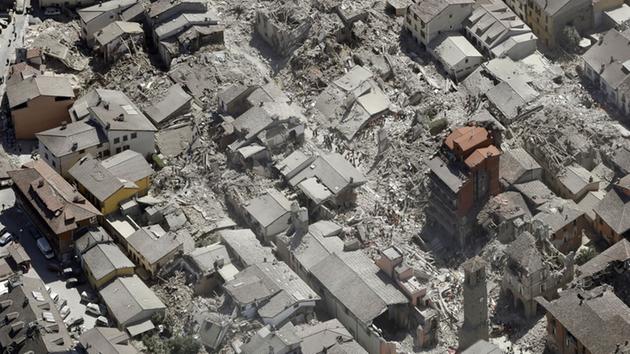
Italian
authorities say that the death toll from Wednesday's earthquake in the
central part of the country has risen to 247. (AP Photo/Gregorio Borgia)
Updated 1 hr 52 mins ago
ROME -- Rescue crews raced
against time Thursday looking for survivors from the earthquake that
leveled three towns in central Italy, but the death toll rose to 247 and
Italy once again anguished over trying to secure its medieval
communities built on seismic lands.
Dawn broke over the rolling
hills of central Lazio and Le Marche regions after a night of
uninterrupted search efforts. Aided by sniffer dogs and audio equipment,
firefighters and rescue crews using their bare hands pulled chunks of
cement, rock and metal apart from mounds of rubble where homes once
stood searching for signs of life.
PHOTOS: Deadly earthquake in Italy
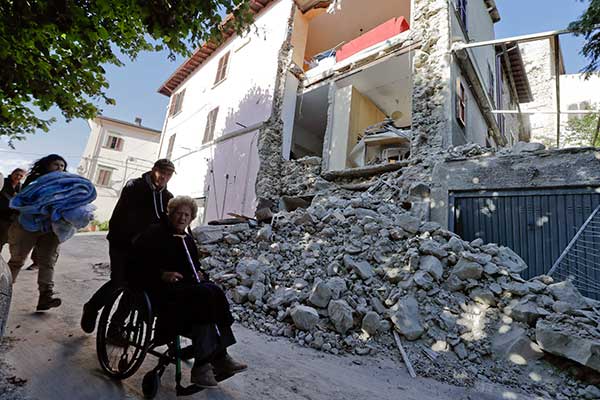
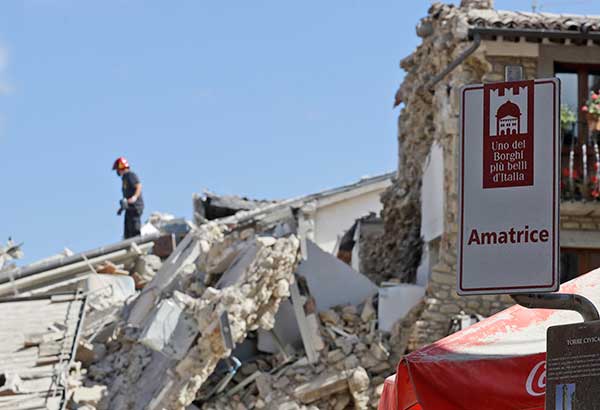
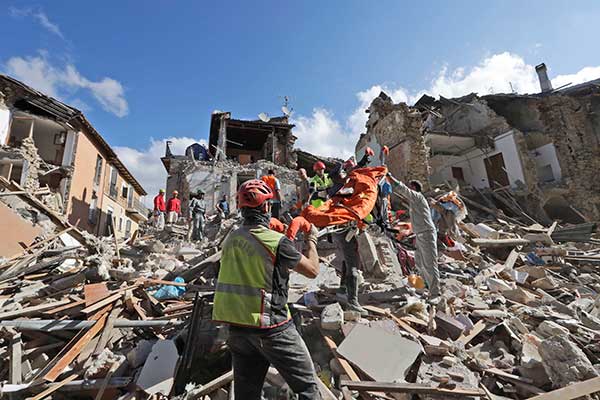
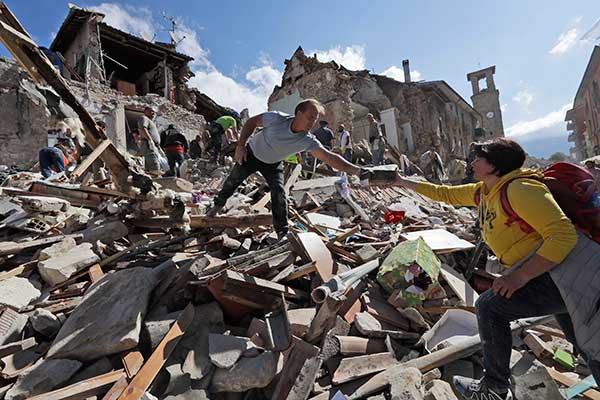
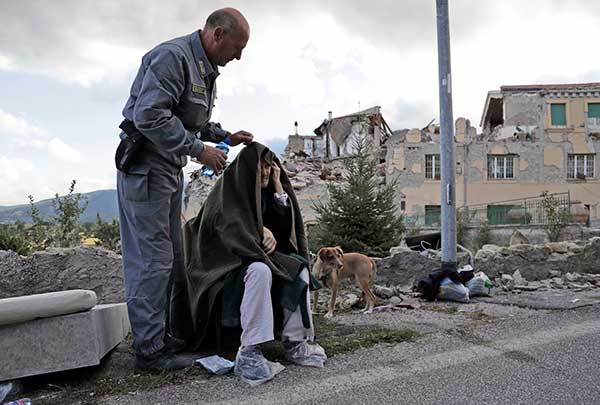
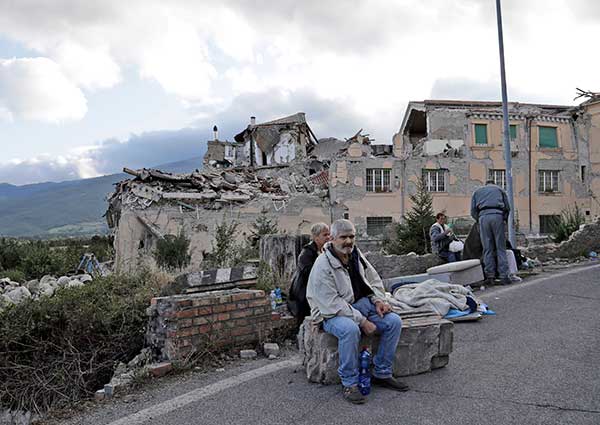
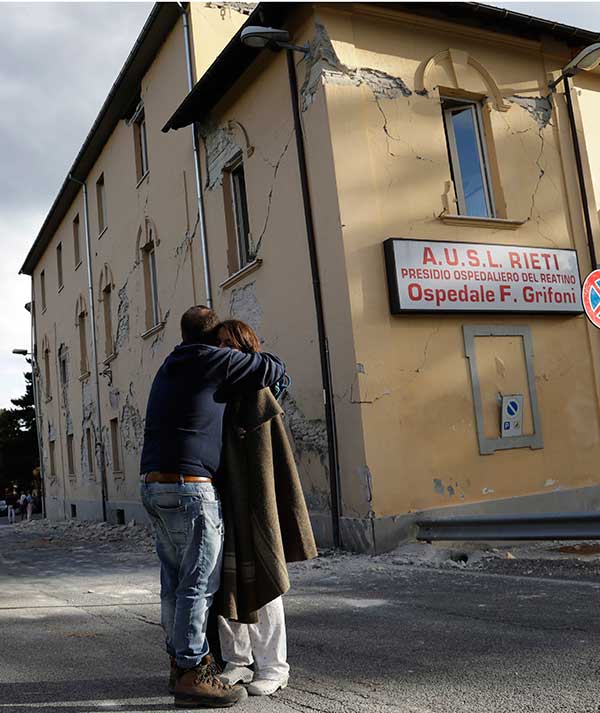
A
woman on a wheelchair is pushed past a partially collapsed building is
seen in the background following an earthquake, in Accumoli. (Andrew
Medichini/AP Photo)
One area of focus was the Hotel Roma in
Amatrice, famous for the Amatriciana bacon and tomato pasta sauce that
brings food lovers to this medieval hilltop town each August for its
food festival.
Amatrice's mayor had initially said 70 guests were
in the crumbled hotel ahead of this weekend's festival, but rescue
workers later halved that estimate after the owner said most guests
managed to escape.
Firefighters' spokesman Luca Cari said that
one body had been pulled out of the hotel rubble just before dawn but
that the search continued there and elsewhere, even as 460 aftershocks
rattled the area after the magnitude 6 temblor struck at 3:36 a.m. on
Wednesday.
"We're still in a phase that allows us to hope we'll
find people alive," Cari said, noting that in the 2009 earthquake in
nearby L'Aquila a survivor was pulled out after 72 hours.
Worst
affected by the quake were the tiny towns of Amatrice and Accumoli near
Rieti, 100 kilometers (60 miles) northeast of Rome, and Pescara del
Tronto, 25 kilometers (15 miles) further east.
Italy's civil
protection agency reported the death toll had risen to 247 early
Thursday with at least 264 others hospitalized. Most of the dead - 190 -
were in Amatrice and Accumuli and their nearby hamlets.
"From
here everyone survived," said Sister Mariana, one of three nuns and an
elderly woman who survived the quake that pancaked half of her Amatrice
convent.
"They saved each other, they took their hands even while it was falling apart, and they ran, and they survived."
She said that others from another part of the convent apparently didn't make it: Three other nuns and four elderly women.
The
civil protection agency set up tent cities around the affected towns to
accommodate the homeless, 1,200 of whom took advantage of the offer to
spend the night, civil protection officials said Thursday. In Amatrice,
some 50 elderly and children spent the night inside a local sports
facility.
"It's not easy for them," said civil protection
volunteer Tiziano De Carolis, helping to care for about 350 homeless in
Amatrice.
"They have lost everything, the work of an entire life,
like those who have a business, a shop, a pharmacy, a grocery store and
from one day to another they discovered everything they had was
destroyed."
As the search effort continued, the soul-searching
began once again as Italy confronted the effects of having the highest
seismic hazard in Western Europe, some of its most picturesque medieval
villages, and anti-seismic building codes that aren't applied to old
buildings and often aren't respected when new ones are built.
"In
a country where in the past 40 years there have been at least eight
devastating earthquakes ... the only lesson we have learned is to save
lives after the fact," columnist Sergio Rizzo wrote in Thursday's
Corriere della Sera. "We are far behind in the other lessons."
Experts
estimate that 70 percent of Italy's buildings aren't built to
anti-seismic standards. After every major quake, proposals are made to
improve, but they often languish in Italy's thick bureaucracy, funding
shortages and the huge scope of trying to secure thousands of ancient
towns and newer structures built before codes were passed or after the
codes were in effect but in violation of them.
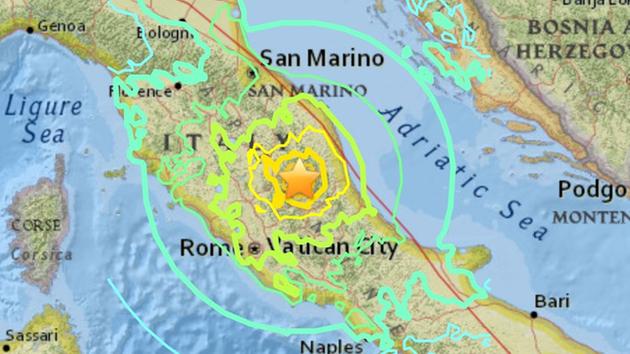
This map shows the epicenter of the 6.1 magnitude earthquake that rocked central Italy. (USGS)
In
recent quakes, some of these more modern buildings have been the
deadliest: the university dormitory that collapsed in the 2009 L'Aquila
quake, killing 11 students; the elementary school that crumbled in San
Giuliano di Puglia in 2002, killing 26 children - the town's entire
first-grade class. In some cases, the anti-seismic building standards
have been part of the problem, including using reinforced cement for
roofs that are then too heavy for weak walls when quakes strike.
Premier
Matteo Renzi, visiting the quake-affected zone Wednesday, promised to
rebuild "and guarantee a reconstruction that will allow residents to
live in these communities, to relaunch these beautiful towns that have a
wonderful past that will never end."
While the government is
already looking ahead to reconstruction, rescue workers on the ground
still had days and weeks of work ahead of them. In hard-hit Pescara del
Tronto, firefighter Franco Mantovan said early Thursday that crews knew
of three residents still under the rubble, but in a hard-to-reach area.
In the evening there, about 17 hours after the quake struck, firefighters pulled a 10-year-old girl alive from a crumbled home.
"You
can hear something under here. Quiet, quiet," one rescue worker said,
before soon urging her on: "Come on, Giulia, come on, Giulia."
Cheers broke out when she was pulled out.
But there were wails when bodies emerged.
"Unfortunately,
90 percent we pull out are dead, but some make it, that's why we are
here," said Christian Bianchetti, a volunteer from Rieti who was working
in devastated Amatrice.
=================================
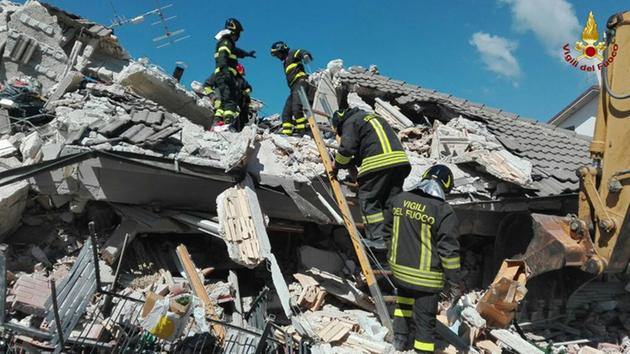
At
least 120 people have been killed after an earthquake hit central
Italy. Rescue crews are in a desperate race to dig survivors out of the
rubble. (AP)
Updated 1 hr 1 min ago
ROME -- Rescue
crews using bulldozers and their bare hands raced to dig out survivors
from a strong earthquake that reduced three central Italian towns to
rubble Wednesday. The death toll stood at 120, but the number of dead
and missing was uncertain given the huge number of vacationers in the
area for summer's final days.
Residents wakened before dawn by
the temblor emerged from their crumbled homes to find what they
described as apocalyptic scenes "like Dante's Inferno," with entire
blocks of buildings turned into piles of sand and rock, thick dust
choking the air and a putrid smell of gas.
PHOTOS: Deadly earthquake in Italy
A
woman on a wheelchair is pushed past a partially collapsed building is
seen in the background following an earthquake, in Accumoli. (Andrew
Medichini/AP Photo)
"The town isn't here anymore," said Sergio Pirozzi, the mayor of the hardest-hit town, Amatrice. "I believe the toll will rise."
The
magnitude 6 quake struck at 3:36 a.m. and was felt across a broad swath
of central Italy, including Rome, where residents woke to a long
swaying followed by aftershocks. The temblor shook the Lazio region and
Umbria and Le Marche on the Adriatic coast.
Premier Matteo Renzi
visited the zone Wednesday, greeted rescue teams and survivors and said
the casualty toll stood at 120 dead and was likely to rise. Another at
least 368 were injured. He promised the quake-prone area that "No
family, no city, no hamlet will be left behind."
Hardest hit were
the tiny towns of Amatrice and Accumoli near Rieti, some 100 kilometers
(62 miles) northeast of Rome, and Pescara del Tronto, some 25
kilometers further east. Italy's civil protection agency, which was
coordinating the rescue and care for survivors, said dozens were injured
and thousands in need of temporary housing, though it stressed the
numbers were fluid.
Italy's health minister, Beatrice
Lorenzin, visiting the devastated area, said many of the victims were
children: The quake zone is a popular spot for Romans with second homes,
and the population swells in August when most Italians take their
summer holiday before school resumes.
The medieval center of
Amatrice was devastated, with the hardest-hit half of the city cut off
by rescue crews digging by hand to get to trapped residents. The
birthplace of the famed spaghetti all'amatriciana bacon and tomato
sauce, it is made up of 69 hamlets that teams from around Italy were
working to reach with sniffer dogs, earth movers and other heavy
equipment.
Rocks and metal tumbled onto the streets of
the city center and dazed residents huddled in piazzas as more than 200
aftershocks jolted the region into the early morning hours, some as
strong as magnitude 5.1.
"The whole ceiling fell but did not hit
me," marveled resident Maria Gianni. "I just managed to put a pillow on
my head and I wasn't hit, luckily, just slightly injured my leg."
Another
woman, sitting in front of her destroyed home with a blanket over her
shoulders, said she didn't know what had become of her loved ones.
"It
was one of the most beautiful towns of Italy and now there's nothing
left," she said, too distraught to give her name. "I don't know what
we'll do."
"We need chain saws, shears to cut iron bars
and jacks to remove beams. Everything, we need everything," civil
protection worker Andrea Gentili told The Associated Press in the early
hours of the recovery. Italy's national blood drive association appealed
for donations to Rieti's hospital.
Despite a massive rescue and
relief effort - with army, Alpine crews, carabineri, firefighters, Red
Cross crews and volunteers, it wasn't enough: A few miles (kilometers)
north of Amatrice, in Illica, residents complained that rescue workers
were slow to arrive and that loved ones were trapped.
"We are
waiting for the military," said resident Alessandra Cappellanti. "There
is a base in Ascoli, one in Rieti, and in L'Aquila. And we have not seen
a single soldier. We pay! It's disgusting!"
Agostino Severo,
a Rome resident visiting Illica, said workers eventually arrived after
an hour or so. "We came out to the piazza, and it looked like Dante's
Inferno," he said. "People crying for help, help."
The magnitude 6
quake's epicenter was located near Accumoli and Arquata del Tronto and
had a shallow depth of just four kilometers, Italy's geological
institute said. Generally, shallow earthquakes pack a bigger punch and
tend to be more damaging than deeper quakes.
"The Apennine
mountains in central Italy have the highest seismic hazard in Western
Europe and earthquakes of this magnitude are common," noted Dr Richard
Walters, a lecturer in Earth sciences at Durham University in Britain.
This map shows the epicenter of the 6.1 magnitude earthquake that rocked central Italy. (USGS)
The
head of Italy's civil protection service, Fabrizio Curcio, noted that
the region is popular with Romans escaping the heat of the capital to
their country houses, swelling the population during the summer months.
This weekend, Amatrice was due to celebrate its annual festival honoring
its native pasta dish, possibly adding to the number of people in town.
The
devastation harked back to the 2009 quake that killed more than 300
people in and around L'Aquila, about 90 kilometers (55 miles) south of
the latest quake. The town, which still hasn't fully recovered, sent
emergency teams Wednesday to help with the rescue and set up tent camps
for residents unwilling to stay indoors because of aftershocks.
"I
don't know what to say. We are living this immense tragedy," said a
tearful Rev. Savino D'Amelio, a parish priest in Amatrice. "We are only
hoping there will be the least number of victims possible and that we
all have the courage to move on."
Another hard-hit town was Pescara del Tronto, in the Le Marche region, where the main road was covered in debris.
Residents
were digging their neighbors out by hand since emergency crews hadn't
yet arrived in force. Aerial photos taken by regional firefighters
showed the town essentially flattened and under a thick gray coat of
dust; Italy requested EU satellite images of the whole area to get the
scope of the damage.
"There are broken liquor bottles all over
the place," said Gino Petrucci, owner of a bar in nearby Arquata Del
Tronto where he was beginning the long cleanup.
One rescue was
particularly delicate as a ranger in Capodacqua, in the Marche province
of Ascoli Piceno, diplomatically tried to keep an 80-year-old woman calm
as she begged to get to a toilet, even though she was trapped in the
rubble.
"Listen, I know it's not nice to say but if you need to
pee you just do it," he said. "Now I move away a little bit and you do
pee, please."
The mayor of Accumoli, Stefano Petrucci, said a
family of four had died there, one of the few young families who had
decided to stay in the area. He wept as he noted that the tiny hamlet of
700 swells to 2,000 in the summer months, and that he feared for the
future of the town.
"I hope they don't forget us," he told Sky TG24.
A
1997 quake killed a dozen people in central Italy and severely damaged
one of the jewels of Umbria, the Basilica of St. Francis in Assisi,
filled with Giotto frescoes. The Franciscan friars who are the
custodians of the basilica reported no immediate damage from Wednesday's
temblor.
Pope Francis skipped his traditional catechism for his
Wednesday general audience and instead invited the thousands of pilgrims
in St. Peter's Square to recite the rosary with him. He also sent a
six-man squad from the Vatican's fire department to help with the
rescue.
=====================


Diana Rocco reporting live (Francesco Rocca/Twitter)
By PAOLO SANTALUCIA and NICOLE WINFIELD
Updated 48 mins ago
AMATRICE,
Italy -- A strong earthquake in central Italy reduced three towns to
rubble as people slept early Wednesday, with reports that as many as 50
people were killed and hundreds injured as rescue crews raced to dig out
survivors.
The toll was likely to rise as crews reached homes in
more remote hamlets where the scenes were apocalyptic "like Dante's
Inferno," according to one witness.
"The town isn't here anymore," said Sergio Pirozzi, the mayor of Amatrice. "I believe the toll will rise."
PHOTOS: Deadly earthquake in Italy


A
woman on a wheelchair is pushed past a partially collapsed building is
seen in the background following an earthquake, in Accumoli. (Andrew
Medichini/AP Photo)
The magnitude 6 quake struck at 3:36 a.m.
(0136 GMT) and was felt across a broad swath of central Italy, including
Rome, where residents felt a long swaying followed by aftershocks. The
temblor shook the Lazio region and Umbria and Le Marche on the Adriatic
coast.
Premier Matteo Renzi planned to head to the zone later
Wednesday and promised: "No family, no city, no hamlet will be left
behind."
The hardest-hit towns were Amatrice and Accumoli near
Rieti, some 100 kilometers (80 miles) northeast of Rome, and Pescara del
Tronto some 25 kilometers further east. Italy's civil protection agency
said the preliminary toll was 38 dead, several hundred injured and
thousands in need of temporary housing, though it stressed the numbers
were fluid.
The ANSA news agency said 35 of the dead were in
Amatrice alone, with another 17 dead in the province of Ascoli Piceno,
which includes Pescara del Tronto, for a reported total topping 50.
The State Department is urging Americans in Italy to contact friends and family:
The
center of Amatrice was devastated, with entire buildings razed and the
air thick with dust and smelling strongly of gas. Amatrice, birthplace
of the famed spaghetti all'amatriciana bacon-tomato pasta sauce, is made
up of 69 hamlets that rescue teams were working to reach.
Rocks
and metal tumbled onto the streets of the city center and dazed
residents huddled in piazzas as more than 40 aftershocks jolted the
region into the early morning hours, some as strong as 5.1.
"The
whole ceiling fell but did not hit me," marveled resident Maria Gianni.
"I just managed to put a pillow on my head and I wasn't hit luckily,
just slightly injured my leg."
Another woman, sitting in front of
her destroyed home with a blanket over her shoulders, said she didn't
know what had become of her loved ones.
"It was one of the most
beautiful towns of Italy and now there's nothing left," she said, too
distraught to give her name. "I don't know what we'll do."
As
daylight dawned, residents, civil protection workers and even priests
began digging out with shovels, bulldozers and their bare hands, trying
to reach survivors. There was relief as a woman was pulled out alive
from one building, followed by a dog.
"We need chain saws, shears
to cut iron bars, and jacks to remove beams: everything, we need
everything," civil protection worker Andrea Gentili told The Associated
Press. Italy's national blood drive association appealed for donations
to Rieti's hospital.
But just a few kilometers to the north, in
Illica, the response was slower as residents anxiously waited for loved
ones to be extracted from the rubble.
"We came out to the piazza,
and it looked like Dante's Inferno," said Agostino Severo, a Rome
resident visiting Illica. "People crying for help, help. Rescue workers
arrived after one hour... one and a half hours."
The devastation
harked back to the 2009 quake that killed more than 300 people in and
around L'Aquila, about 90 kilometers (55 miles) south of the latest
quake. The town sent emergency teams Wednesday to help with the rescue.
"I
don't know what to say. We are living this immense tragedy," said a
tearful Rev. Savino D'Amelio, a parish priest in Amatrice. "We are only
hoping there will be the least number of victims possible and that we
all have the courage to move on."
Another hard-hit town was
Pescara del Tronto, in the Le Marche region, where the main road was
covered in debris. The ANSA news agency reported 10 dead there without
citing the source, but there was no confirmation.
Residents were
digging their neighbors out by hand since emergency crews hadn't yet
arrived in force. Photos taken from the air by regional firefighters
showed the town essentially flattened; Italy requested EU satellite
images of the whole area to get the scope of the damage.
"There
are broken liquor bottles all over the place," lamented Gino Petrucci,
owner of a bar in nearby Arquata Del Tronto where he was beginning the
long cleanup.
The Italian geological service put the magnitude
at 6.0; the U.S. Geological Survey reported 6.2 with the epicenter at
Norcia, about 170 kilometers (105 miles) northeast of Rome, and with a
relatively shallow depth of 10 kilometers (6 miles).
"Quakes with
this magnitude at this depth in our territory in general create
building collapses, which can result in deaths," said the head of
Italy's civil protection service, Fabrizio Curcio. He added that the
region is popular with tourists escaping the heat of Rome, with more
residents than at other times of the year, and that a single building
collapse could raise the toll significantly.
The mayor of
Accumoli, Stefano Petrucci, said six people had died there, including a
family of four, and two others. He wept as he noted that the tiny hamlet
of 700 swells to 2,000 in the summer months, and that he feared for the
future of the town.
"I hope they don't forget us," he told Sky TG24.
In
Amatrice, the Rev. Fabio Gammarota, priest of a nearby parish, said he
had blessed seven bodies extracted so far. "One was a friend of mine,"
he said.
The mayor, Pirozzi, estimated dozens of residents were
buried under collapsed buildings and that heavy equipment was needed to
clear streets clogged with debris.
A 1997 quake killed a dozen
people in central Italy and severely damaged one of the jewels of
Umbria, the Basilica of St. Francis in Assisi, filled with Giotto
frescoes. The Franciscan friars who are the custodians of the basilica
reported no immediate damage from Wednesday's temblor.
Pope
Francis skipped his traditional catechism for his Wednesday general
audience and instead invited pilgrims in St. Peter's Square to recite
the rosary with him.
Valentina Onori in Amatrice and Fulvio Paolucci in Illica contributed to this report.
======================
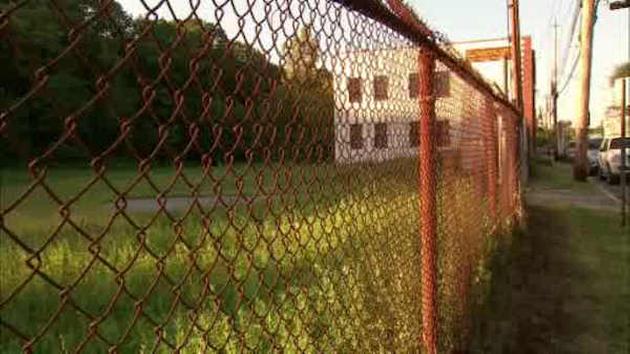
Carolina Leid reports from Tuckahoe, where parents are concerned about a project planned at a toxic waste dump.
By Carolina Leid
Wednesday, August 24, 2016 11:28PM
TUCKAHOE, New York (WABC) -- Dozens of concerned and angry parents marched outside the community center in Tuckahoe Wednesday night, demanding more extensive testing be done before anything is built at the old quarry on Marbledale Road.
"That is going to be in kindergarten at Waverley School, which is just blocks away from this site where they plan to stir up toxic dust and toxic vapors into our air forever," said Eastchester parent Melissa Viviano.
"They cannot answer the what ifs for us, they keep saying we're professionals, we know how to handle it," said PTA co-president Sarah DeRise.
Right now the plan is to build a Marriott Spring Hill Suites hotel and detached restaurant on the site of the contaminated landfill in Tuckahoe, just a couple of blocks away from Waverly School in Eastchester, which houses kindergarten and first-grade students.
The site was a marble quarry until the 1950's and a municipal dump for two decades.
It's classified as a brown field in need of cleanup.
"It's admirable the participation from this community," said Bill Canavan, who works for HydroEnvironmental Solutions, Inc. "I just want to make sure that everyone is well-informed. If this isn't what you do for a living it's complex sometimes, I think there are some misconceptions."
HydroEnvironmental Solutions is a consulting firm hired by the developer to test and monitor the site.
He says the 400-page plan to remediate includes additional ground wells, concrete caps and proper ventilation in the buildings, all in an effort to deter harmful toxins from being released through soil vapors and groundwater.
"There's independent review by multiple agencies that insured that what was proposed protects human health and the environment," said Canavan. The truth is that they will be installing monitoring systems for ever. Furthermore, there is no warranty that the monitoring will detect all pathways of vapor and toxic chemical released from the site. The developer always proposes the absolute minimum to turn a profit on the project. They are known to cut corners at the public's expense.
Residents say they're not against new construction, they just want all the facts first.
"We are hoping that someone is doing their due diligence and really recognize that this is a threat and test it, because if it is in fact safe, prove it," said Eastchester resident Rachel Zolottev.
=========================
HELP PROTECT OUR COMMUNITY FROM TOXIC RELEASE
DEMAND TESTING BEFORE DIGGING
Information = Safety
The DEC has confirmed that the Tuckahoe Marbledale Road Quarry Dump is a Hazardous Waste Dump (Class 2(P) & BCP).
A Marriott SpringHill Suites hotel is proposed in the middle of this
hazardous waste dump. Because of the proposed Marriott hotel project,
the center 3.43 acres of the 7 acre toxic dump is in the Brownfield
Program (BCP).
The DEC has now approved a Remedial Action Work Plan (RAWP), without
having done a thorough examination of the BCP site. No testing at all
has been done on the surrounding ~3.5 acres of the dump.
Any construction on the site will release contaminated vapors and dust.
A proper evaluation of the risk has not been performed; therefore the risk posed to our community is unknown.
How can any plan be safe if nobody knows the contaminants that are
currently coming off of the dump, and what will be stirred up and
released during construction?
The current DEC Remedial Action Work Plan (RAWP) DOES NOT:
◆ Understand and analyze the threats of the entire toxic quarry dump
◆ Locate chemical-filled drums before digging
◆ Appropriately test, monitor, and contain toxic soil vapors
◆ Appropriately monitor and analyze off-site ground water
◆ Test and monitor for dioxin, radioactivity, pharmaceuticals, and other toxic contaminants.
KNOWLEDGE IS POWER: COMPLETE, EXTENSIVE TESTING of the ENTIRE DUMP SITE IS NECESSARY TO PROTECT OUR COMMUNITY.
Do Not Allow a rush to Development to Take Precedence over the Health and Safety of our Community!!
YOU HAVE A VOICE
RALLY, MARCH & Speak out
WEDNESDAY, August 24
Take Action! Join us!
Date: This Wednesday, August 24
Time: 6:30pm
Location: Tuckahoe Community Center, 71 Columbus Ave, Tuckahoe, NY
Actions: Peaceful March in front of the Community
Center starting at Community Center, going to Main st, and then
returning to Community Center for the Tuckahoe Community meeting.
Bring: Your signs, your children, your friends, your families, your neighbors, and the news media.
Tell: The Tuckahoe Policy Makers we need MORE TESTING for the MOST PROTECTIVE SAFETY PLAN!
Write to your public officials:
Demand that we have the most sophisticated protections and safety protocols.
We need the DEC to enact all of the testing recommendations, and safety protocols put forth by Dr. Donald Hughes.
These include, but are not limited to:
1) Current Ambient air testing: test the air now.
2) Soil Vapor testing of the entire BCP site, the entire Quarry Dump,
and the surrounding buildings. They must identify the specific types of
soil vapor contaminants in order to properly protect us.
3) During all construction activities: Specific Soil Vapor monitoring
to identify the specific contaminants in the vapors. We need to know
our exposure risks.
4) Real time vapor monitoring systems: test in real time what vapors are being released into our air, and at what levels.
5) Real time community alert systems: let us know whenever there have
been work stoppages due to contaminated vapor and dust overages in the
air.
6) Soil vapor capture systems, during construction, and after the
project completion. Capture the vapors, do not vent them into our air.
7) Tenting the area during construction activities; this, with vapor
capture, will best protect our community from contaminated vapor and
dust exposure.
8) Test for Dioxin, Radioactivity, Pharmaceuticals, and several more
contaminants. These contaminants require specific types of community
protection protocols.
9) Identify chemical filled drums, tanks, canisters before digging.
When a bulldozer hits a ~60 year old chemical filled drum, the drum will
probably rupture.
And then, the construction crew will have to deal with the exposures
and leakages. Encourage the DEC to be pro-active, and more protective
of the risks of exposure.
10) A Full Department of Health Risk Assessment of the possible toxic threats to our entire community.
Please see addresses and more information on the Sierra Club Lower Hudson Website
https://sierraclub.org/atlantic/lower-hudson/tuckahoes-toxic-trench
We are Pro-Testing & Pro-Safety:
because this is where we live.
===============================
Tuckahoe hotel plan moving forward at toxic site
Dan Reiner, dreiner@lohud.com 2:44 p.m. EDT August 11, 2016
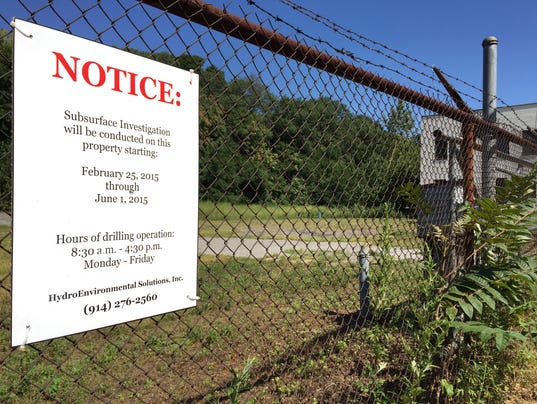
(Photo: Ernie Garcia / File Photo)
TUCKAHOE - Plans for a hotel and restaurant on the site of a contaminated landfill are moving forward despite public backlash.
More than 100 protesters filled Tuckahoe's Village Hall at Monday's Board of Trustees, spilling into the hallway, meeting to speak against the proposed 5-story, 163-room Marriott SpringHill Suites hotel and detached restaurant at 109-125 Marbledale Road.
The site was a marble quarry until 1958, a municipal dumping ground for more than 20 years and most recently an auto repair lot. Samples at the site spanning two decades have detected at least 21 contaminants of concern across the 3.45 acres, classifying it a brownfield in need of cleanup.
REISMAN: Tuckahoe witness to chemical dumping's view
HOTEL TAX: NY lawmakers OK Westchester bills
New York State Department of Environmental Conservation project manager Kevin Carpenter identified the site as a "significant threat."
"In areas that looked like there could be more contamination, we've requested more sampling," Carpenter said in an interview this week.
He noted, however, DEC, in consultation with the state Department of Health, "only approves remedies for sites in the Brownfield Cleanup Program that are protective of public health and the environment, based on the intended future use of the site and its surroundings."
"The approved remedy for this site will be protective for the proposed use, and the site will be monitored following remediation to ensure that it remains protective into the future," he said in a statement.
Developer Bilwin Development Affiliates, LLC, hired consulting firm HydroEnvironmental Solutions (HES) to test and monitor the site. In July, HES released a 400-page remedial action work plan to deter harmful toxins from being released via soil vapors or through groundwater. The plan calls for additional ground wells, concrete caps and proper ventilation in the buildings to be installed.

A rendering of the SpringHill Suites by Marriott proposed at 109-125 Marbledale Road in Tuckahoe. (Photo: Village of Tuckahoe)
With a residential neighborhood and an elementary school just west of the site, village residents are troubled by the possibility of contaminants reaching the air.
“It’s not in the middle of nowhere," said resident Rachel Zolottev, whose husband, Vladimir, owns KI Martial Arts at 125A Marbledale Road. "You’ve got houses, a school, businesses. This is a constantly trafficked street.”
Zolottev marched with more than 100 residents in protest of the project before Monday's board meeting. During the meeting, which lasted nearly four hours, members of the public voiced various concerns.
“I’ve made myself very loud and clear for quite a few months now that this private property owner will be held to the strict requirement standards and oversight that we have at our discretion," Mayor Steve Ecklond said at the meeting. "It is our responsibility to make sure it is done right.”
Groups like Sierra Club and the Marbledale Road Environmental Coalition, of which Zolottev is a member, believe the village needs to do more extensive testing and analyzing for potential threats of exposure to the toxic waste.
“This is like dealing with a person who’s contagious and you don’t acknowledge they’re contagious," Zolottev said. "You don’t do any blood tests and you don’t know how sick they are. Is it Zika? Is it Ebola? Nobody knows how bad it could be.”
Bilwin first made an application to the planning board in June 2014, where the board declared a conditional "negative declaration" on the project, said Village Administrator David Burke. This meant that while there was potentially an adverse environmental impact, it was left to experts at the DEC and the DOH to review.
Over the past year, site plan revisions were at the planning board level while the DEC and DOH reviewed the environmental impact, Burke said. The DEC's decision document, in conjunction with the DOH, was released last month. The proposal is again expected to go in front of the village planning board Sep. 15.
Ecklond said Monday he anticipates a decision to be made "one way or the other" at the September meeting. He added that, depending on which way the board votes, he expects a lawsuit to be filed by the opposing party.
A representative from Bilwin could not be reached for comment.
“At the end of the day, I like to call it as I see it, that this application is going to be probably decided in Westchester County Court at some point,” Ecklond said.
The DEC released a question and answer document which is now available to the public.

AVIANNE TAN
Updated 1 hr 36 mins ago
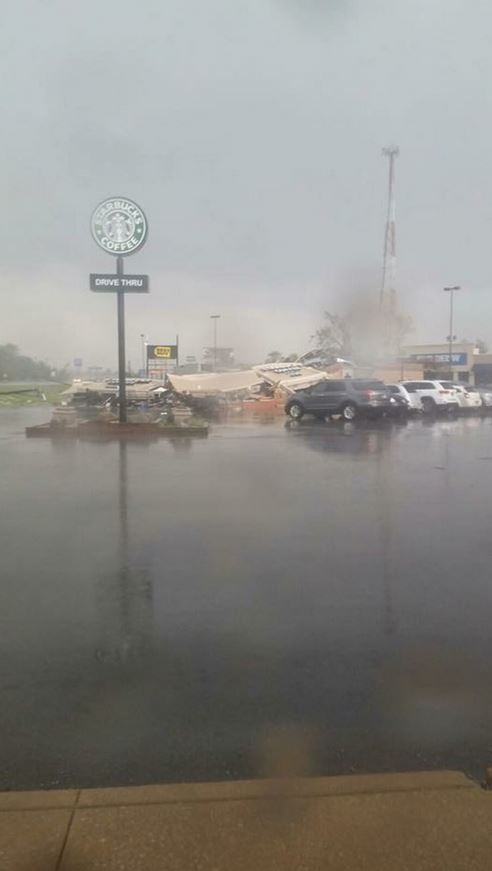
Multiple tornadoes have been reported striking central Indiana today -- damaging homes, destroying a Starbucks cafe, downing trees and leaving over 60,000 residents without power.
At 3:15 p.m. local time, the National Weather Service urged everyone in the area to take shelter immediately, calling the situation "particularly dangerous."
A little later, the NWS issued a tornado warning saying a "confirmed large and destructive tornado was about 10 miles east of Kokomo," or about 40 miles north of Indianapolis.
The tornado blew roofs off of homes and buildings, knocked over trees and even flattened a Starbucks in Kokomo's Markland Mall, ABC affiliate WRTV in Indianapolis reported.
People who had been hiding in the Starbucks' bathroom miraculously survived the tornado with no major injuries.
"It's crazy. It's a madhouse," said Mitchell Carlson, a maintenance technician at the Park Place Apartments in Kokomo. He added that the complex has 16 buildings and "probably eight of them don't have a roof."
But fortunately, there have not been any reported injuries at the complex, he said. "So, I guess we're all blessed at the Park Place."
Though the tornado in Kokomo caused damaged and cut power to thousands of homes and businesses in Howard County, no injuries or deaths have been reported, according to Indiana Department of Homeland Security spokesman John Erickson.
In addition to the Kokomo tornado, the IDHS has been assessing whether another reported tornado touchdown on Indianapolis' near east side caused any damage, Erickson said. "We're just asking people to sit tight, especially if there's a tornado warning in their area, so they can stay as safe as possible."
Police officers in Indianapolis spotted at least two funnel clouds close to the ground in the city just south of Interstate 70, but the department had received no reports of damage, according to Officer Jim Gillespie of the Indianapolis Metropolitan Police Department.
The NWS said it had not received any immediate reports of major injuries.
ABC News' Alex Perez, Susan Caraher and The Associated Press contributed to this report.
=================================


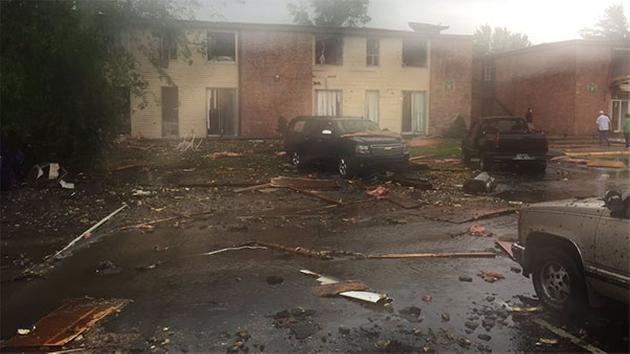
(Courtesy of Aaron Baber)
Updated 2 mins ago
INDIANAPOLIS -- The National Weather Service is reporting at least two tornadoes have struck central and north central Indiana.
The
weather service issued a tornado warning saying a "confirmed large and
destructive tornado was about 10 miles east of Kokomo," or about 40
miles north of Indianapolis
Meteorologist Dave Tucek says a
tornado moved from the southwest side of Kokomo to the east-central side
of that city. He says there are reports of damage but he had no
specifics.
An official in the Howard County Emergency Management
office said preliminary assessment has not reported only minor injuries
so far.
"We are still in assessment mode as to the extent of the damages," the official said.
Local television station WTHR showed images of downed trees and a damaged Starbucks in the area.
The
weather service also says Indiana State Police observed a tornado
northwest of the Montgomery County town of New Ross, or about 35 miles
northwest of Indianapolis, and moving east.
There were no immediate reports of injuries.
WLS-TV contributed to this report.