MEC&F Expert Engineers

Tuesday, July 26, 2016

California Announces Major Regulatory Proposal to Improve Safety at Oil Refineries


California Announces Major Regulatory Proposal to Improve Safety at Oil Refineries

For Immediate Release No.: 2016-72

July 14, 2016


Contacts:

Alex Barnum, (916) 324-9670
California Environmental Protection Agency


Erika Monterroza, (510) 286-1161
California Department of Industrial Relations


SACRAMENTO—The Department of Industrial Relations (DIR), the Governor’s Office of Emergency Services (Cal OES) and the California Environmental Protection Agency (CalEPA) today announced a landmark set of regulations to strengthen workplace and environmental safety at oil refineries across the state.

The regulatory proposals are intended to make California refineries safer both for workers and surrounding communities. The two regulations implement key recommendations of the Governor’s Interagency Working Group on Refinery Safety, and are the result of a multi-year effort, including extensive consultation with workers, industry, NGOs, and communities, following a serious chemical release and fire at Chevron’s Richmond oil refinery in August 2012.

“The proposed regulations will put into place new strategies to prevent major incidents at refineries, and to protect refinery workers and surrounding communities from exposure to health and safety risks,” said David M. Lanier, Secretary of the Labor and Workforce Development Agency.

The proposal includes two complementary regulations – one overhauling Cal/OSHA worker safety regulations as they apply to refineries and another strengthening the California Accidental Release Prevention program (CalARP) regulations designed to prevent the accidental release of hazardous substances that could harm public health and the environment. DIR, Cal OES, and CalEPA have collaborated to ensure that the two regulations are aligned.

“These regulations will make refineries safer neighbors and employers. Refinery workers, community and environmental organizations, and industry leaders worked with us to develop requirements that are practical and effective,” said Matthew Rodriquez, California Secretary for Environmental Protection.

The proposed regulations incorporate the most advanced principles of safer engineering and management, as well as attention to the human and organizational elements of safety. Key features of the proposed regulations include:
  • Increased employer accountability for the mechanical integrity of refinery equipment;
  • Requirements to adopt inherently safer designs and systems, to the greatest extent feasible;
  • Increased employee involvement in all aspects of the safety and prevention program;
  • Periodic workplace safety culture assessments to evaluate whether management is appropriately emphasizing safety over production pressures;
  • Authority for refinery personnel to shut down a unit if needed in the event of an unsafe condition or emergency and provisions for anonymous reporting of safety hazards;
  • Requirements for investigations to determine root causes of any incidents that do occur and develop interim and permanent corrective measures in response; and
  • Annual public reporting of refinery safety metrics.

Major incidents at oil and gas refineries pose a significant risk to refinery workers and nearby communities while costing Californians an average of $800 million a year in disruption to fuel supplies.

“The proposed amendments to the California Process Safety Management program and Accidental Release Prevention program are significant improvements that will strengthen protections for workers, communities and the environment, based on lessons learned and best practices,” said Vanessa Allen Sutherland, Chairperson of the U.S. Chemical Safety Board. “We look forward to seeing the final regulations implemented, and we hope that they prove to be a model for refinery worker protection and public safety for the rest of the country.”

Cal OES and DIR’s Occupational Standards Board will provide a minimum of 45 days to solicit comment on the proposed regulations. A public hearing on the Process Safety Management regulation will be held in Sacramento on September 15; a public hearing on the CalARP regulation has not yet been scheduled.

Following a serious chemical release and fire at Chevron’s Richmond oil refinery in August 2012, Governor Edmund G. Brown Jr. called for an Interagency Working Group to examine ways to improve public and worker safety through enhanced oversight of refineries, and to strengthen emergency preparedness in anticipation of any future incident. The Working Group consisted of participants from 13 agencies and departments, as well as the Governor’s office.

Over an eight-month period, the Working Group met with industry, labor, community, environmental, academic, local emergency response and other stakeholders. It also worked closely with the Contra Costa County Health Services Hazardous Materials Division, which implements an industrial safety ordinance that served as a model for the proposed refinery safety regulations. In February 2014 the Working Group issued a final report with recommendations to improve safety practices at refineries and develop more reliable and effective emergency response plans. The proposed regulations implement one of four key recommendations of the final report.

California now has an Interagency Refinery Task Force, headed by CalEPA with participation from DIR, its division Cal/OSHA, and 11 other federal, state, and local agencies and departments. The task force works collaboratively to achieve the highest possible level of safety for refinery workers and local communities, and prepare for and effectively respond to emergencies if they occur. - See more at: http://www.calepa.ca.gov/PressRoom/Releases/2016/OilRefineries.htm#sthash.rCy1NMWf.dpuf
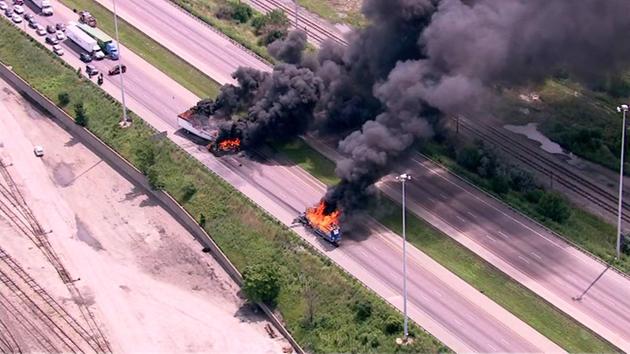
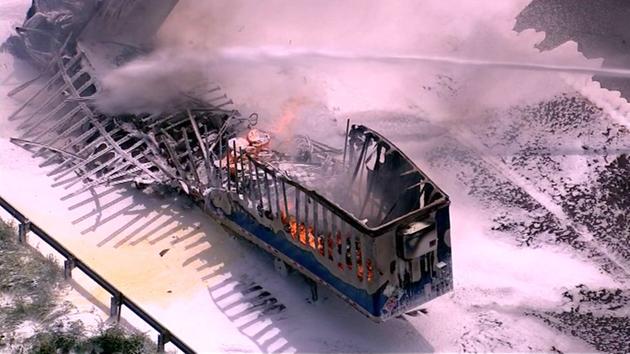
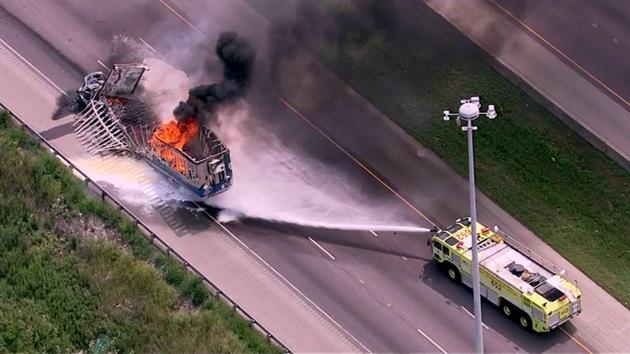
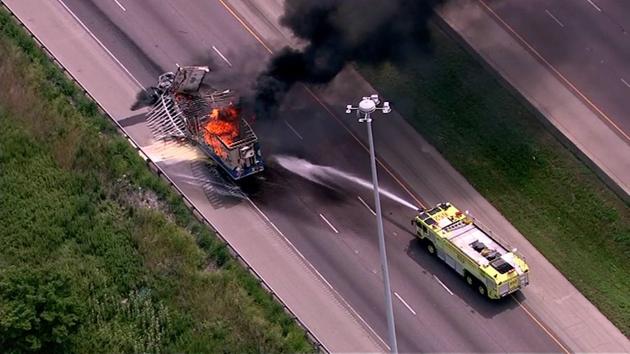
Fatal I-55 chain-reaction crash, fire caused by semi hauling frozen meat; driver was cited for following too closely


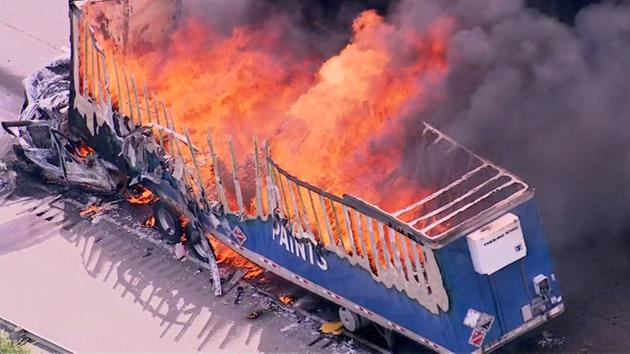
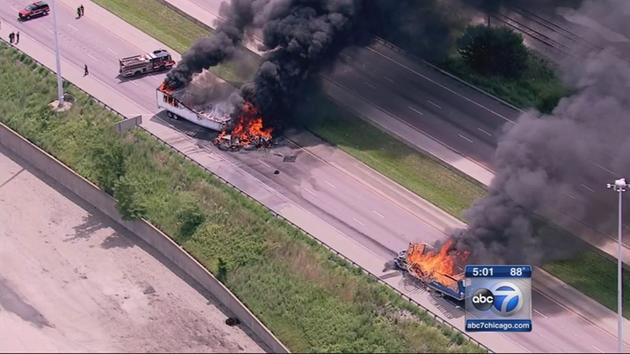
A fifth car has been discovered in the wreckage after five vehicles, including two semis, caught fire in a large crash on the city's Southwest Side. (WLS)

Updated 41 mins ago

CHICAGO (WLS) -- Illinois State Police say a five-vehicle, chain-reaction crash on the outbound Stevenson Expressway just east of Cicero Avenue Monday morning was caused by the driver of a semi hauling tons of frozen meat.

The 59-year-old Logansport, Ind., man driving the semi that started the crash was cited for following too closely, police said.

Police said the semi, carrying 40,000 pounds of frozen meat, first crashed into the back of a Ford pickup driven by a 43-year-old Chicago man. That pickup was sent crashing into a green minivan, which was pushed under the trailer of a second semi hauling 17,800 pounds of paint, driven by a 48-year-old Aurora man, police said. ISP investigators say the second semi then struck a 2002 Honda Civic, driven by a 35-year-old Chicago man. All of the vehicles except the Civic caught fire, fire officials said.

The identity of the driver of the green minivan and the van's make and model have not been released. The Cook County Medical Examiner's Office is using dental records to identify the victim.

The minivan and the fatality inside were not discovered in the wreckage until after the fire on the city's Southwest Side had been extinguished.


The other four drivers managed to escape the crash. The expressway was closed in both directions at the crash site for nearly three hours. All lanes of northbound I-55 were reopened by 4 p.m. Southbound I-55 reopened around 12:05 a.m. Tuesday, nearly 14 hours after the crash.

The Chicago Fire Department dispatched a foam truck from Midway International Airport to help put out the flames after the fire was raised to a two-alarm and a Level 1 hazmat was called. The fire was extinguished by around 11:55 a.m.

After the fire was struck, an EMS Plan 1 was called, which sends five ambulances to the scene.

No sooner did the crash take place than the tanker truck of paint burst into flames. The materials spilled, spreading the fire onto four other vehicles, including a second semi.

Just getting the right emergency equipment on site to fight the fire proved a challenge.

"We're concerned about flammable liquids, there's corrosives. We had to regroup, back off, get the proper equipment," said Asst. Deputy Cmsr. Timothy Sampey, CFD. "So we had to stop the traffic in both directions as well as the runoff of the flammable liquid coming towards the traffic stuck in traffic - a lot of things to juggle at first."

The drivers of both trucks were unharmed. One person in a passenger car was taken to the hospital in stable condition.

"It's going to take some time for our investigators to determine exactly what happened. Review all the parties that were involved, all the drivers and passengers if applicable to find out exactly what happened," said Master Sgt. Jason Bradley, ISP.

OSHA cites grain handling, processor, New Alliance, for exposing workers to grain, noise, fall hazards at Nebraska site


OSHA cites grain handling, processor, New Alliance, for exposing workers to grain, noise, fall hazards at Nebraska site
 
Employer name: New Alliance
9620 S. Railroad Ave.
Bridgeport, Nebraska    

                     
Citations issued: July 22, 2016

Investigation findings: The U.S. Department of Labor’s Occupational Safety and Health Administration’s Omaha Area Office cited New Alliance for 16 serious and one other-than-serious safety and health violations. The citations are the result of February and March 2016 investigations initiated under OSHA’s Local Emphasis Program for Grain Handling hazards.
The inspection found:
  • Workers exposed to fall hazards up to 15 feet while accessing the tops of rail cars and from ladderway openings and platforms lacking guardrails and open-sided work platforms.
  • Employees exposed to grain dust explosion hazards. The employer failed to implement housekeeping procedures to prevent grain dust accumulation in priority and non-priority areas.
  • Lack of confined space entry procedures for grain bins including testing the atmosphere, issuing permits, monitoring workers and training.
  • Equipment was not powered down or locked out to prevent unintentional operation prior to workers entering grain bins.
  • Workers were not trained at least annually on safe grain-handling procedures.
  • Equipment and training were not provided for grain rescue operations.
  • Personal protective equipment needs were not evaluated.
  • Lack of an occupational noise monitoring program including audiometric testing, noise monitoring and fitting and correct use of hearing protection.
Quote: “OSHA grain handling standards address the numerous serious and life threatening hazards found in grain bins including grain dust explosions, engulfment and entrapment from flowing grain, falls and amputation hazards,” said Jeff Funke, OSHA’s area director in Omaha. “OSHA’s safety standards protect workers on the job in this hazardous industry.”

Proposed Penalties:  $61,600.00.

View: safety and health citations. 

New Alliance handles and processes Great Northern and Pinto dry edible beans at locations in Alliance, Bridgeport, Gering, Hemingford and Mirage Flats. The company is a division of Alliance-based Western Cooperative Company known as WESTCO.

To ask questions, obtain compliance assistance, file a complaint, or report amputations, eye loss, workplace hospitalizations, fatalities or situations posing imminent danger to workers, the public should call OSHA’s toll-free hotline at 800-321-OSHA (6742) or the agency’s Omaha Area Office at 402-553-0171.
OSHA News Brief: 
07/26/2016
 
================
 
New Alliance handles and processes Great Northern and Pinto dry edible beans. Receiving facilities located in Alliance, Bridgeport, Gering, Hemingford and Mirage Flats.

New Alliance processes beans in Alliance, Bridgeport and Gering, Nebraska. We specialize in providing top-quality canning quality beans to food companies around the world. The finished product is milled to customer specifications and packed in a variety of ways including bulk totes and paper or poly bags from 20 lb to 50 kilo. Beans are also shipped in bulk rail hoppers or bulk trucks.


New Alliance offers farmers the advantage of a co-op in the marketing of their beans. As a Division of WESTCO, patronage refunds earned by doing business at New Alliance are paid with the WESTCO refund that is made each December.
 

US Labor Department investigation finds Restaurant Associates and its subcontractor, Personnel Plus, illegally denied Capitol Hill cafeteria workers more than $1M in wages

US Labor Department investigation finds Restaurant Associates and its subcontractor, Personnel Plus, illegally denied Capitol Hill cafeteria workers more than $1M in wages
Employers contracted by Architect of the Capitol violated federal prevailing wage law


WASHINGTON – Hundreds of workers who prepare and serve meals for Capitol Hill lawmakers and their staffs in the U.S. Senate cafeterias will receive more than $1 million in back wages after a U.S. Department of Labor investigation found their employers failed to pay prevailing wages required of federal contractors.

The department’s Wage and Hour Division announced today that Restaurant Associates and its subcontractor, Personnel Plus, will pay 674 workers $1,008,302 in back wages. The division found the two employers violated the McNamara-O’Hara Service Contract Act when they improperly classified workers – paying them for lower-paying jobs than they actually performed – and required employees to work prior to their scheduled starting times without compensation. Paying below the required rates also caused the companies to fail to pay the workers overtime at the proper rates.

“Employers given the opportunity to earn a profit by providing a service to the government at a cost to the tax payer have a legal obligation to follow the letter of the law, especially when it comes to paying their workers,” said the department’s Wage and Hour Division Administrator David Weil. “Workers in the restaurant industry are among the lowest-paid workers in our economy. Most struggle to afford life’s basic expenses and pay their bills; they shouldn’t have to deal with paychecks that don’t accurately reflect their hard work and the wages to which they are legally entitled.”

The agency also determined the employers failed to pay required health and welfare benefits and violated the SCA’s recordkeeping requirements.

Investigators found that Restaurant Associates’ failure to pay workers proper overtime and failure to maintain a record of hours employees worked prior to their scheduled shifts also violated the Fair Labor Standards Act.

“Enforcement of the prevailing wage laws levels the playing field for all contractors and protects the wages of hard-working employees,” said Mark Watson, Regional Administrator for the Wage and Hour Division in the Northeast. “These contractors’ actions put vulnerable, low-wage workers and their families in jeopardy. The division will remain vigilant in its enforcement of these laws to protect both workers and employers.”

The division is reviewing the findings to determine whether to seek debarment of the employers from obtaining contracts with the federal government in the future.

The SCA applies to every contract valued in excess of $2,500 entered into by the U.S. Government or the District of Columbia, the principal purpose of which is to furnish services in the U.S. using service employees. Contractors and subcontractors performing on covered service contracts must observe minimum wage and safety, health and welfare benefits and maintain certain records.

The FLSA requires that covered, nonexempt workers be paid at least the federal minimum wage of $7.25 per hour for all hours worked, plus one and one-half times their regular rates of pay for hours worked beyond 40 per week. Employers also must maintain accurate time and payroll records.

For more information about federal wage laws administered by the Wage and Hour Division, call the agency’s toll-free helpline at 866-4US-WAGE (487-9243). Information also is available at http://www.dol.gov/whd/.
WHD News Release:
07/26/2016

JD Home Rentals, a Fresno, California home rental company, to pay $259K in overtime back wages, damages

JD Home Rentals, a Fresno, California home rental company, to pay $259K in overtime back wages, damages
US Labor Department found that JD Home Rentals failed to pay overtime to 157 employees

Employers: David Hovannisian and J&V Properties Inc., two property management companies jointly doing business as JD Home Rentals

Location: 2975 E. Belmont Ave., Fresno, California

Investigation findings: An investigation by the U.S. Department of Labor’s Wage and Hour Division found that Fresno-based JD Home Rentals paid straight time for overtime hours worked, rather than paying time-and-a-half for each hour worked beyond 40 in a workweek, as required by the Fair Labor Standards Act. The home rental and management company also failed to keep accurate records of the hours worked by employees, in violation of the FLSA’s recordkeeping provisions. Most of the affected employees were maintenance workers.

Resolution: JD Home Rentals will pay $129,719 in overtime back wages and an equal, additional amount in damages, totaling $259,438 to 157 employees.

Quote: “We will not tolerate employers denying workers their hard-earned wages,” said Cesar Avila, assistant district director for the Wage and Hour Division in Sacramento. “Failure to pay workers the wages they’ve rightfully earned makes it difficult for them to care for themselves and their families. It also puts employers who play by the rules at a disadvantage. The resolution of this case should send a clear message to other employers who may be paying their employees in this manner – violating the law doesn’t pay.”

Information: For more information about federal wage laws administered by the Wage and Hour Division, call the agency’s toll-free helpline at 866-4US-WAGE (487-9243). Information also is available at http://www.dol.gov/whd/.