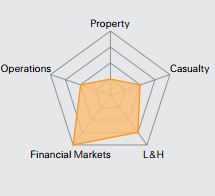
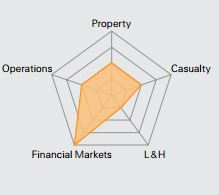
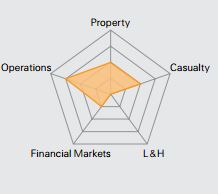
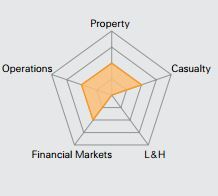
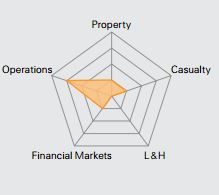
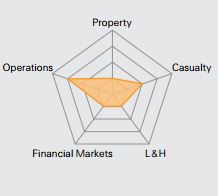
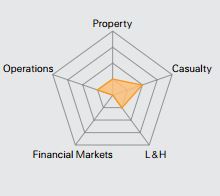
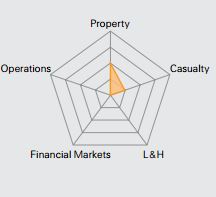
This blog presents Metropolitan Engineering Consulting & Forensics (MEC&F) claim management and claim investigation analyses of some of the typical claims we handle
21 emerging risks for the insurance industry and the global economy
2016 Swiss Re annual emerging risk update
Jun 14, 2016
A new report from Swiss Re offers insights into
emerging risks, those newly developing or evolving risks whose potential
impact and scope are not yet fully understood. (Photo: Shutterstock)Turmoil in emerging markets, increased localization of internet
networks within country borders and financial repression are some of the
risks identified in this year's Swiss Re SONAR "New emerging risk insights" report. The report offers insights into emerging risks, those newly
developing or evolving risks whose potential impact and scope are not
yet fully acknowledged.
.
The report also highlights human-induced earthquakes, mass
migration, a crisis of trust in institutions, and technology-related
topics, such as the rise of precision medicine and distributed energy
generation.
Anticipating future risks
"Risk management is not just about managing risks in the present.
It is about anticipating future ones to make sure we will be in a
position to deal with them," says Patrick Raaflaub, Swiss Re's group
chief risk officer. "These risks may only fully reveal themselves to
future generations. That doesn't mean that we shouldn't act today to
reduce uncertainty and alleviate their burden." Related: Here are the 21 trends that pose the biggest risks to global business in 2015 The identified risks are relevant to life and non-life insurance
areas and are presented with the goal of helping industry players
prepare for new scenarios. Here are the 21 emerging risks that Swiss Re says could have the biggest impact on the insurance industry and the wider global economy:
Traditionally, insurers absorbed some of the risks associated
today with the sharing economy into their general risk pool. (AP Photo)
1. Risks of the sharing economy
Medium impact | >3 years While the sharing economy
may provide new business opportunities for the insurance industry, it
also brings legal risks and challenge to adequately model and price the
assocated risks. For insurers, the rise and increasing sophistication of
the sharing economy raises questions regarding the appropriate form of
coverage. The sharing economy has also reached the very foundations of
insurance. Peer-to-peer insurance is gaining traction — a model that is
similar to traditional mutual insurance, but takes it to another level
by using new technology. Peer-to-peer insurance raises questions of
adverse and self-selection, pricing and reserving adequacy, and its
ability to cope with catastrophic events. Potential impacts:
Traditional insurers may face pressure from new players that can access new client segments through a sharing economy set-up.
Insufficient loss experience could expose insurers to inadequate
pricing models for the "hybrid risks" posed by the sharing economy.
Opposition supporters wave flags during an opposition protest in
Belgrade, Serbia, April 30, 2016. Thousands of opposition supporters
have protested in front of the Serbian state electoral commission what
their leaders are saying is widespread vote rigging by the ruling
populists. (Photo: Darko Vojinovic/AP Photo)
2. Crisis of trust
Medium impact | 0-3 years Citizens increasingly distrust public institutions, particularly
governments, large corporations, especially banks and multinationals and
the traditional media. While there are many reasons for the decline in trust, at least part of it is because of rising inequality,
a sense of disenfranchisement and rising job insecurity, resulting in a
growing alienation between the elites and middle classes. Potential impacts:
A decline of trust in insurance in general may hurt business.
A more-predatory attitude may lead to an increased number of unwarranted claims.
Women queue as they wait for distribution of hygiene kits at the
premises of the old international airport which is used as a temporary
camp in Athens, on May 3, 2016. Germany and some other EU countries are
planning to ask the European Commission for an extension of border
controls within the Schengen passport-free travel zone for another six
months because they fear a new wave of migrants. (Photo: Yorgos
Karahalis/AP Photo)
3. Mass migration
Low impact | 0-3 years Migration is a global phenomenon and has become a pressing economic
issue, particularly in light of the recent refugee flows from the Middle
East and North Africa to Europe which have reached a level
unprecedented in recent history. Migration pressures across borders will likely continue to increase due to a number of unresolved, protracted crises in many regions of the world. Potential impacts:
While this is a major issue for society as a whole, Swiss Re expects only minor impacts on the insurance industry.
Variations in populations because of a massive inflow of migrants
may affect insurance by shifting the characteristics of the insured,
such as life expectancy, immunization/vaccination status, prevalence of
specific diseases, lifestyle choices or product preferences.
The risk exposure of buildings used as refugee accommodation might
need to be reassessed because higher-than-expected occupancy. The
insurance industry could offer expertise to ensure that adequate
loss prevention measures are established.
Bahraini anti-government protesters burn old furniture during
clashes with riot police in Daih, Bahrain, March 14, 2016. Bahraini
police detained a political activist and her year-old son on Monday in
an operation that came on the fifth anniversary of Saudi and Emirati
soldiers putting down Arab Spring-inspired protests in the tiny island
kingdom. (Photo: Hasan Jamali/AP Photo)
4. Viral leaderless mobilization
Low impact | 0-3 years The technological capabilities of smartphones and the impact of social media
increase the number of communication channels and the power of
"leaderless mobilizations" — the viral spreading of messages and calls
for action that can result in "flash mobs" or public shaming. This could
seriously damage corporate reputations. Rallying people is easier in a social environment where distrust
towards governments, corporate institutions and organizations is
widespread, and individual frustration, youth unemployment and
disillusionment are high. Particularly the young and the digitally savy
are easily mobilized. But also among the broader middle class, trust in
the ability of elites to govern is evaporating fast, fueling a general
sense of distrust and alienation from the elite. This may result in more
and more violent riots and demonstrations that are difficult to
contain, which in turn could result in more property losses. Potential impacts:
More property and business interruption losses from riots are to be expected.
Campaigns that hurt a company’s reputation and lead to customer and
stock valuation losses, with liability suits by shareholder activists as
secondary effects.
Manufacturers and distributers of smartphones and apps developers
may be held liable for violent events from viral leaderless
mobilization, resulting in more liability claims.
Youth march during a protest against proposed changes to France's
work week and layoff practices, in Paris, Tuesday, April 5, 2016.
Socialist President Francois Hollande's government, desperately trying
to lower unemployment, says the bill will encourage hiring, especially
of young people. But unions and students say it erodes hard-fought
worker protections. The banner reads: "Labor law. Out". (Photo:
Christophe Ena)
5. The future of work
Medium impact | >3 years With the rise of artificial intelligence and robotics, industrialized
countries are on the verge of a fourth industrial revolution, also
known as the industrial Internet of Things or Industry 4.0. This
gives rise to "smart manufacturing" where automation,
machine-to-machine communication and other high-tech applications
dominate industrial production. While the fourth industrial revolution will create new jobs and
transform work qualitatively, a high portion of paid labor jobs is also
expected to vanish. This will affect the middle classes, and ultimately
the insurance customer base: if people have no jobs they cannot buy
insurance. Potential impacts:
The digital industrial revolution will increase demand for
information and communication technology and corresponding insurance
products. Mass unemployment could result in a shrinking customer base
for personal insurance and a reduced portfolio for employers’ liability
if newly created jobs are not outweighing the loss.
Insurance might find new opportunities in supporting the growth of a new informal economy.
Dr. Michelle Griffin, a plastic research fellow, demonstrates for
photographs seeding stem cells onto a synthetic polymer ear at her
research facility in the Royal Free Hospital in London, March 31, 2014.
In a north London hospital, scientists are growing noses, ears and blood
vessels in the laboratory in a bold attempt to make body parts using
stem cells. (Photo: Matt Dunham/AP Photo)
6. Precision medicine
Medium impact | >3 years
Precision medicine is an emerging approach
for disease treatment and prevention that takes into account a person’s
genes, environment and lifestyle. The potential for precision medicine
is regarded to be huge, but there are still some drawbacks. Potential impacts:
New data types and new data sources will create information
management challenges, and data protection and transfer might become a
bigger liability issue.
For insurers, personalized diagnostics and therapies may increase
costs for health insurance in the mid-term, but could reduce overall
health care expenditure in the long-term by increasing treatment
effectiveness and efficiency.
With an increase of the predictive value of personalized genomic
data, the insurance industry will be increasingly faced with
anti-selection in life insurance and an increased lapse risk.
Ultimately, it might even lead to a creeping erosion of the solidarity
principle on which insurance is based.
Who does and does not benefit from taking supplements of omega-3
fatty acids, the good oils found in fish such as salmon, tuna and
sardines? (Photo: Ted S. Warren/AP Photo)
7. Nutraceuticals
Low impact | 0-3 years Ageing and increasingly health conscious populations make for a
growing market for products which promise to help prevent
lifestyle-related diseases. Nutraceuticals are products deriving from
food sources that claim to contain extra medical or health benefits in
addition to a basic nutritional value. The global market for nutraceuticals is expanding rapidly and is expected to reach $278 billion by 2021, from $172 billion in 2014. Potential impacts:
How should nutraceuticals be regulated and classified? The answer has an impact on the corresponding insurance covers.
The novelty of the products and the lack of consistent rules make underwriting nutraceuticals challenging for re/insurers.
Claims can be unique and complicated because of the composition of
the products, labelling and advertising issues, lack of clarity on
health effects and difficulty demonstrating causation.
In this photo provided by the Centers for Disease Control and
Prevention, a feeding female Anopheles stephensi mosquito crouching
forward and downward on her forelegs on a human skin surface, in the
process of obtaining its blood meal through its sharp, needle-like
labrum, which it had inserted into its human host. A powerful new
technology holds the promise of rapidly altering genes to make
malaria-proof mosquitoes, eliminate their Zika-carrying cousins or wipe
out an invasive species, but advisers to the government say these
so-called "gene drives" aren't ready to let loose in the wild just yet.
(Photo: James Gathany/CDC via AP Photo)
8. Gene drives
Medium impact | >3 years Gene drives are genetic systems that circumvent the rules of normal
sexual reproduction and greatly increase the odds that a particular
trait will be passed on to offspring. Gene drives have the potential to fix difficult biological problems.
For example, they could be applied to genetically modify mosquitoes and
other disease vectors so they can no longer transmit diseases such as
malaria, dengue fever or the Zika virus. They could also be used to
exterminate invasive species or to break the herbicide resistance of
common weeds by altering their genetic make-up. Gene drives are a very powerful tool which could get out of control. Scientists have begun to call for increased regulation, but international governance is still lacking. Potential impacts:
Huge upside potential, but also uncertainties, mainly regarding the environmental impact.
For insurers, a commercial application of gene drives could trigger
genetically modified organism-related losses, such as under the EU’s
Environmental Liability Directive.
In this Jan. 18, 2010 file photo, steaks and other beef products
are displayed for sale at a grocery store in McLean, Va. The meat
industry is seeing red over the dietary guidelines. The World Health
Organization’s cancer agency said on Oct. 26, 2015, that processed meats
such as ham and sausage can lead to colon and other cancers, and red
meat is probably cancer-causing as well. (Photo: J. Scott Applewhite/AP
Photo)
9. Meat consumption
Medium impact | >3 years While traditional diets are increasingly replaced
by ones higher in refined sugars, refined fats, oils and meats in many
parts of the world, meat consumption is coming under pressure in many
parts of the Western World. There is pressure on meat eaters in some
parts of the world to cut down their consumption — be it for health or
for environmental reasons. Further changes in dietary patterns are to be expected, with some
implications for the farming industry and all stakeholders in the
associated value chain. Potential impacts:
Large-scale dietary shifts would have a significant economic effect
on livestock farmers and the entire associated supply chain, including
insurance.
Class actions against stakeholders in the meat value chain are
possible, similar to those that already shook the tobacco industry.
People check an electronic stock indicator of a securities firm in Tokyo. (Photo: Shizuo Kambayashi/AP Photo)
10. The great monetary experiment
High impact | 0-3 years
The uncertainty from unconventional monetary policies continues to increase. What is certain is the negative impact of low interest rates on pension funds, retirees and insurance companies. Potential impacts:
Negative interest rates will further undermine the conventional
business model of the insurance industry, particularly life insurers,
and pension funds.
M&A activity may become more intense as insurance companies
partner in order to increase economies of scale and retain earnings
power.
In this Aug. 27, 2015 file photo, a man walks past a bank's
electronic board showing the share index around the world at Hong Kong
Stock Exchange. Investors have yanked $40 billion from emerging-market
stocks this year, a record pace of withdrawals, as a slowdown in China
has hammered companies that supply raw materials. (Photo: Vincent Yu/AP
Photo)
11. Emerging market crises 2.0
High impact | 0-3 years For years, emerging markets have attracted capital inflows due to low
interest rates in advanced economies. Many emerging market commodity
producers have also benefited from high commodities prices. Excess supply of commodities along with the slowdown in economic
growth in China have lowered commodity prices (e.g., oil, metals),
stressing many emerging markets. This, along with a tightening bias to
U.S. monetary policy, has led to net capital outflows from emerging markets for the second consecutive year in 2015. Parallels have been drawn to the emerging market crises in the late 1990s, triggering fears of an “emerging market crisis 2.0.” As exposure to emerging markets has grown over the past two decades, such effects are likely to be bigger than in the past. Potential impacts:
Political turmoil and riots may result in higher underwriting
losses, especially in property, personal and commercial lines. Corporate
defaults may produce credit losses, and interruptions to infrastructure
projects would have adverse impacts on surety books.
Large-scale investment losses in emerging markets may trigger
lawsuits from shareholders, resulting in liability and Directors &
Officers claims.
An Indian woman uses her mobile phone as she waits for a bus in
New Delhi, India, Sept. 27, 2015. Indian Prime Minister Narendra
Modi envisions a "Digital India," where ubiquitous high-speed internet
access will empower entrepreneurs to build software and other technology
products that will raise the standard of living in a country where many
households are still impoverished. (Photo: Tsering Topgyal/AP Photo)
12. Internet fragmentation
High impact | >3 years Cyber crime and cyber espionage have grown strongly over the last few
years and have made the internet less safe. Governments are concerned
about this development and have been building up their capabilities to
prosecute criminals and hackers in the cyber space. International negotiations are currently under way to agree on how
the internet should be governed, but no consensus or international
treaty has emerged yet. While the debate is still under way, there is a
chance that disconnected national and regional nets
will become more common. Such developments would increase IT costs and
regulation and would hurt insurance companies operating across borders. Potential impacts:
Evolving regulation would increase operational risk and could
trigger more liability claims (Directors & Officers, fidelity); it
may also massively increase costs for setting up and maintaining
separate legal structures.
Technology companies, such as providers of cross-border cloud
services, could see a disruption of their business model and might face
liability suits from customers if they could no longer access data
stored on cross-border servers.
IBM's Chief Watson Security Architect Jeb Linton demonstrating to
University of Maryland, Baltimore County student Lisa Mathews how to
teach IBM's Watson the language of security, May 10, 2016, Baltimore.
IBM will work with eight universities to train Watson for cyber
security, so that the next generation of security professionals can user
the power of "cognitive" technology to defend against cyber attacks.
(Photo: Mitro Hood/IBM)
13. The FinTech risk landscape
Medium impact | >3 years FinTech is an umbrella term for technology-driven financial services
that promise efficiency gains and lower costs and prices thanks to
disintermediation, new funding sources (peer-to-peer) and artificial
intelligence-based advising. Global FinTech investments have tripled
from 2013 to 2014 and doubled again from 2014 to 2015, with the bulk
made in the U.S. Regulators are pondering whether new and different
regulation is needed or whether existing regulations would still
suffice. InsurTech
has emerged as a niche within FinTech, offering innovative insurance
solutions based on new technology platforms and software. Traditional
financial services players have begun to embrace the trend while venture
capitalists are financing numerous start-ups. FinTech thus poses
possibly revolutionary risks to the business model and the internal
management of established financial services players. Increased exposure to cyber risks, but also the potential risk of a
valuation bubble and issues around liability — for example in the case
of artificial intelligence-based stock trading — make FinTech a tangible
challenge for the insurance industry. Potential impacts:
Immature or badly protected technology platforms are considerably exposed to cyber risks.
Badly implemented FinTech solutions leading to failures and losses
may trigger liability claims by consumers, savers and investors.
IBM Blockchain user interface designers, Dante Guintu, left and
Andrea Lee, work on secure blockchain apps at IBM San Francisco on
February 16, 2016. (Photo: George Nikitin/IBM)
14. Blockchain risks
Medium impact | >3 years The blockchain, best known as the technology that underpins the
Bitcoin cryptocurrency, is a distributed ledger technology to certify
ownership and verify transactions, streamline processes, facilitate
verification, or share approval. In the insurance world, SafeShare, a London-based start-up, offers a blockchain-based insurance product aimed at the sharing economy. The blockchain could revolutionize industries where heavy
documentation is needed, including the insurance sector where it could
challenge the traditional underwriting value chain thanks to its
potential for efficiency. The blockchain remains vulnerable to cyber risks, though it seems
very difficult to hack by conventional methods. In combination with
encryption, it could also be used for criminal activities, such as
remunerating hackers. Regulators are seeing the blockchain as uncharted territory to be
penetrated which could eventually result in over- or inadequate
regulation, distorting and stifling the growth and application of the
technology. Potential impacts:
The blockchain may undermine underwriting and the insurance value
chain and could thus pose a challenge to traditional market players.
Reliance on the blockchain in many walks of life may increase the exposure to cyber risks.
IBM research data scientist Eric Clark explores wearable
technologies that could help monitor and analyze biological data from
study subjects on April 7, 2016, at IBM's T.J. Watson Research Center in
Yorktown, N.Y. IBM and Pfizer are collaborating to create a
first-of-a-kind remote monitoring system to support patients with
Parkinson's disease. This non invasive, real-time approach to patient
data will offer new insights into disease progression and treatment
plans. By applying advanced analytics and machine learning to sensor
data, the hope is to transform how neurological diseases are diagnosed
and treated. (Photo: Jon Simon/IBM)
15. Phoney data
Medium impact | >3 years Data integrity may become a problem for insurance companies
collecting data on customers, for example via wearables, as there may be
incentives to manipulate input in order to benefit from rate discounts
or to escape regulation. Intrusion into sensors and apps and the manipulation of data will be amplified with the adoption of the Internet of Things. Potential impacts:
Using manipulated or phoney data sets for insurance modelling may result in mispriced risks and unexpected claims.
Data manipulation could exacerbate insurance fraud.
Hackers and other cyber criminals are busy exploring how they
could tap into the potentially highly profitable market of stealing and
selling digital identities. (Photo: Shutterstock)
16. Digital identities
Low impact | 0-3 years Thanks to social media, billions of people now have digital
identities. As employers are increasingly recruiting through social
networks and insurance companies may soon start vetting applications
through “Google checks,” the integrity and accuracy of such digital
identities, which are very vulnerable to attacks and hacking, becomes
paramount. Hackers and other cyber criminals
are busy exploring how they could tap into the potentially highly
profitable market of stealing and selling digital identities, and the
number of attempts to breach data of individuals, companies and
governmental institutions has grown together with our increasing
reliance on digital tools. Potential impacts:
Insurance lines that rely on personal data (e.g., health, life) are
strongly exposed to manipulations of digital identities. Due diligence
in data collection and investments in strong data protection will drive
up costs for insurance companies.
Restoring digital identities after a loss could involve costly legal
battles which could have an impact on legal fees paid by insurance
companies.
Electricians Adam Hall, right, and Steven Gabert, install solar
panels on a roof for Arizona Public Service company in Goodyear,
Ariz. (Photo: Matt York/AP Photo)
17. Distributed energy generation
Medium impact | >3 years Distributed energy
consists of a range of smaller-scale and modular devices designed to
provide electricity in locations close to consumers. This includes
fossil and renewable energy technologies such as photovoltaic arrays,
wind, combustion and steam turbines, as well as energy storage devices
such as batteries and flywheels or combined heat and power systems. In a distributed energy set-up, millions of households will develop from consumers-only into energy producers. This will have far-reaching implications for our whole energy system, especially for power grids. Potential impacts:
For re/insurers, the move towards distributed energy production
could be an opportunity to contribute to de-risking the new
technologies.
Smart grids entail significant cyber risks which should be taken into account while underwriting them.
Economic pressure on traditional utility companies might result in
reduced maintenance of legacy large-scale operations which could
increase property risk exposure.
Joel Woelfel, front, a technician at the Oklahoma Geological
Survey, prepares an in-ground container for a seismic monitor near
Waynoka, Okla., March 22, 2016. In the rear is Jefferson Chang, an OGS
seismologist. The OGS is installing 10 seismic stations in the area to
monitor seismic activity. The OGS already has over 40 stations in the
state. (Photo: Sue Ogrocki/AP Photo)
18. Human-induced earthquakes
Medium impact | 0-3 years As the increase in earthquake activity associated with man-made actions
is a relatively new situation, most risk models used by the insurance
industry do not incorporate the associated increase in seismic hazard. Losses arising from the rapidly rising number of human-induced
seismic events are largely uninsured or fall into the deductible of
traditional earthquake insurance products, which have been designed to
protect against a total loss rather than damage arising from frequent
small earthquakes. Potential impact:
There is an increasing likelihood for litigation/class actions
against hydrofracking operators, with significant accumulation risks for
re/insurers when events trigger claims on the property and on the
casualty side.
Mark DeRoche, a deck engineer with the Institute for Exploration,
directs his crew to slowly raise "Argus," a remote vehicle
submersible. (Photo: Jim Bovin/AP Photo)
19. Seabed mining
Low impact | >3 years Seabed mining is
an experimental industrial field focusing on extracting submerged
minerals and deposits from the sea floor — be it by submerged robotic
excavation machinery, large-scale vacuuming of the sea floor or other
techniques. Scientists and environmental groups are raising concerns about the
potential impact of seabed mining and deep sea mining on ecosystems that
are very vulnerable to physical disturbance because of fragile habitats
and extremely slow recovery rates. Potential impact:
Property and liability exposures of seabed mining activities could
be significant, but are hard to estimate due to lack of experience and a
potentially shifting regulatory environment.
A pedestrian walks along the East Side Esplanade in an area
beneath the FDR Drive just north of the Manhattan Bridge, left, Jan. 19,
2016, in New York. Lower Manhattan is expected to receive an additional
$176 million in federal funding for a large-scale flood protection
system that will eventually wrap from Montgomery Street in Chinatown,
around the tip of the borough, and up through Battery Park City. The
area shown in this photograph would be affected by the plan. (Photo:
Kathy Willens/AP Photo)
20. Geoengineering
Low impact | >3 years
Geoengineering
is the deliberate large-scale intervention in the Earth’s natural
systems to counteract climate change. It has been touted as a way to
reduce global warming. Potential impact:
Large-scale geoengineering has potentially huge liability exposures
due to unintended side effects. However, it will be very difficult to
establish whether a natural catastrophe stems from a man-made action or
not, and it may even be impossible to establish liability in a legal
sense.
An estimated 4 to 12 million tons of plastic enter the ocean from land each year. (Photo: iStock)
21. Ocean pollution from microplastics
Low impact | 0-3 years Plastic pollution is ubiquitous throughout the marine environment. An
estimated 4 to 12 million tons of plastic enter the ocean from land
each year, and that number is predicted to increase exponentially by 2025, if we don’t improve our waste management infrastructure. Microplastics are tiny pieces of plastic which find their way to the
ocean when cosmetics products such as facial scrubs or toothpaste, which
contain them as scrubbers and abrasive beads, wash down the drain or
when larger plastic objects break down in the seawater. As plastics do not break down for many decades, the amount of
microplastic in the oceans will continue to increase. Environmental
groups have started advocating for a ban on microplastics, and
regulation is beginning to catch up. Potential impact:
For the insurance industry, there could be implications for
liability covers arising from product liability for the manufacturers of
microplastics and various products containing them, and recall for
polluted fish/seafood products.