Two Bulkers Go Aground Off Philippines
 File image
By MarEx 2016-06-13 16:54:37
The geared bulkers Chang Hang Feng Hai and Belle Rose separately went aground off islands in the Philippines over the weekend, the nation's coast guard reports.
The Chinese-flagged Hai went onto a shoal off the island of Cagdianao on Saturday, damaging her number two ballast tank on the port side. All 22 crew members are safe. The Coast Guard called for a dive inspection of the hull; investigations into the cause of the incident continue.
The Hai was loaded with 55,000 tons of nickel ore from Cagdiano Mining Corporation at the time of the accident.
Separately, in the early hours of June 13, the Panamanian-flagged Belle Rose went aground off Monad Shoal, four nm southeast of Malapascua Island near the town of Daanbantayan, Cebu.
The Coast Guard received notification of the Rose's grounding via a text message from a resident of Malapascua, Gary Casis, who had heard from another local citizen that a ship had gone aground on the shoal.
The Rose was carrying a cargo of cement bags from Tsukumi, Japan to San Fernando, Cebu at the time of the grounding. Weather and visibility were reportedly good.
Local outlet Cebu Daily News said that an area of about 500 meters by 60 meters of coral reef near the shoal was damaged by the grounding. Divers have not found evidence of hull damage and no pollution has been observed.
A local marine biologist, Garry Casas, surveyed the damage to the reef, which is located in a locally protected shark and ray sanctuary – the first spot to receive this type of protection in the country. The Philippines Greenpeace affiliate called for the vessel to be detained pending compensation from the owner for environmental damages. "We want to make sure of the accountability. The company should also rehabilitate the damage. It takes time to rehabilitate these coral reefs," said Vince Cinches, the group's Ocean Campaigner.
Coast Guard and local officials continue an investigation into the cause of the grounding.
Final Subchapter M Rule Released
Many Exemptions for Existing Vessels
 File image
By MarEx 2016-06-13 19:14:54
On Monday, the U.S. Coast Guard posted a preview of the final version of the long-awaited Subchapter M regulation, which will extend inspection requirements to the majority of tugs and towboats (over 26 feet in length) for the first time. The text will be officially published in the Federal Register on May 20.
The USCG estimates that the regulation will affect 5,500 vessels operated by nearly 1,100 companies, and will have an annual cost to industry of $33 million – less than some commenters in the rulemaking process believed it would cost a single operator. The savings is due to the most noteworthy aspect of the final regulation: the extensive, permanent exemptions the USCG has created for existing vessels.
Unlike the initial draft published in 2011, under the final rule, stability documentation can be satisfied in a few hours based on examination of an existing towing vessel's "operation or a history of satisfactory service," instead of a traditional inclining test – a new alternative that the USCG estimates will cost approximately a few hundred dollars. New electrical, propulsion, and steering control system retrofit requirements have been eliminated for existing vessels, and a mandate for a pilothouse alerter system and new tow machinery standards will be delayed until five years after a tug or towboat's first certificate of inspection.
Owners and operators had informed the USCG during the rulemaking comment period that extensive retrofit requirements would impose costs in the hundreds of thousands or even millions of dollars, even for smaller firms. Some outside observers expected that the resulting expenses could put many operators out of business or force a wave of consolidation. The Coast Guard says that it strove to address those concerns in the final rule, and it asserts that restricting much of the regulatory burden to newbuilds and a small number of major conversions alone will sharply reduce the impact on operators – as any required changes will be made as part of work that the owner would have initiated anyways.
"The Coast Guard acknowledges the potential for higher costs to retrofit existing vessels. In this final rule, the relevant requirements have been moved . . . and the applicability of these requirements has been reduced to only apply to new vessels (estimated at 88 per year) or those undergoing a major conversion (estimated at 13 per year) that move tank barges carrying oil or hazardous materials in bulk. We estimate the incremental cost to comply during the design and construction stage for new vessels or those undergoing major conversion to be $10,000 per vessel," the USCG wrote. "We believe the resulting final rule fulfills Congress’ mandate to bring towing vessels under an inspection system to ensure and improve safety, while minimizing costs and potential impacts on the U.S. economy . . . The final rule brings all towing companies up to a minimum standard of safety and erodes the competitive advantages of those companies
underinvesting in safety measures." When the rule entered review by the White House Office of Management and Budget in February, the industry association American Waterways Operators expressed its strong support for the completion of the USCG's years-long review process. “For over a decade, AWO has strongly supported the Coast Guard as it has worked to develop a towing vessel inspection regime . . . The rule will raise safety standards throughout the tugboat, towboat and barge industry, incorporating and building on the safeguards that quality companies have already put in place and ensuring that all towing vessels achieve a minimum threshold of safety," said Thomas A. Allegretti, AWO President & Chief Executive Officer.
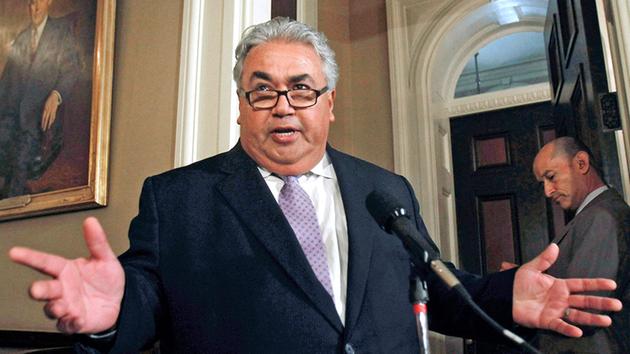
In this June 10, 2013, file photo, then-California State Sen. Ron Calderon, D-Montebello, holds a brief news conference to discuss the FBI raid on his Capitol office in Sacramento. (Rich Pedroncelli)
Monday, June 13, 2016 05:02PM
LOS ANGELES -- Former California Sen. Ron Calderon agreed to plead guilty Monday to mail fraud as part of a plea agreement in which he admitted to accepting bribes in exchange for supporting certain legislation.
Calderon, 58, agreed to plead guilty to mail fraud through the deprivation of honest services, according to a plea agreement filed in federal Los Angeles court. Prosecutors dropped more than 20 other charges in exchange.
Calderon is expected to enter the plea in court as early as Monday. He faces up to 20 years in prison at his yet-to-be-scheduled sentencing, though prosecutors said they would ask that he get no more than six years.
Calderon had been set for trial next month.
His attorney, Mark Geragos, didn't immediately return a call for comment Monday.
Geragos previously told The Associated Press that the government's plea agreement last week with Calderon's brother, former state Assemblyman Thomas Calderon, was an obvious effort to pressure his brother to do the same.
"Unfortunately this is the way the U.S. system of justice works," Geragos said. "You are facing enormous consequences in terms of sentencing guidelines and the government makes you an offer that you can't refuse, so you will sing from their script in order to get your head out of the noose."
Thomas Calderon, 62, pleaded guilty last week to a federal money laundering charge for allowing bribe money earmarked for his brother to be funneled through his firm.
The back-to-back plea agreements will settle the high-profile case that was filed in 2014.
"Public officials who engage in corrupt behavior threaten the basic fabric of our democracy," U.S. Attorney Eileen Decker said in a statement. "The Calderons have acknowledged their roles in a bribery scheme in which money for them and their families alone was driving legislation that would have benefited only a few individuals."
According to Ron Calderon's plea agreement, he agreed to support legislation that the government says helped a hospital owner maintain a long-running and massive health-care fraud scheme. The law was repealed in 2013, and the hospital owner was prosecuted separately.
In exchange, the hospital owner paid $30,000 to Calderon's son for three summers of work, according to the plea agreement.
Calderon also acknowledged taking money from an undercover FBI agent who posed as the owner of a Los Angeles movie studio and sought Calderon's help promoting an unsuccessful bill that would have expanded tax credits for the film industry.
In exchange for supporting the bill, Calderon accepted $12,000 worth of trips to Las Vegas and a $25,000 payment to a bank account belonging to his brother's consulting company, according to the plea agreement.
The undercover agent also paid Calderon's daughter $3,000 a month for work she didn't do and a $5,000 payment toward his son's college tuition, the plea agreement said.
"My office will not tolerate pay-to-play corruption by public officials and their associates," Deirdre Fike, chief of the FBI's Los Angeles field office, said in a statement. "While in office, Ron Calderon and others profited handsomely when bribe money was accepted and laundered, and I'm gratified that he has chosen to take responsibility for his actions."lderon agreed to plead guilty Monday to mail fraud as part of a plea agreement in which he admitted to accepting bribes in exchange for supporting certain legislation.
Calderon, 58, agreed to plead guilty to mail fraud through the deprivation of honest services, according to a plea agreement filed in federal Los Angeles court. Prosecutors dropped more than 20 other charges in exchange.
Calderon is expected to enter the plea in court as early as Monday. He faces up to 20 years in prison at his yet-to-be-scheduled sentencing, though prosecutors said they would ask that he get no more than six years.
Calderon had been set for trial next month.
His attorney, Mark Geragos, didn't immediately return a call for comment Monday.
Geragos previously told The Associated Press that the government's plea agreement last week with Calderon's brother, former state Assemblyman Thomas Calderon, was an obvious effort to pressure his brother to do the same.
"Unfortunately this is the way the U.S. system of justice works," Geragos said. "You are facing enormous consequences in terms of sentencing guidelines and the government makes you an offer that you can't refuse, so you will sing from their script in order to get your head out of the noose."
Thomas Calderon, 62, pleaded guilty last week to a federal money laundering charge for allowing bribe money earmarked for his brother to be funneled through his firm.
The back-to-back plea agreements will settle the high-profile case that was filed in 2014.
"Public officials who engage in corrupt behavior threaten the basic fabric of our democracy," U.S. Attorney Eileen Decker said in a statement. "The Calderons have acknowledged their roles in a bribery scheme in which money for them and their families alone was driving legislation that would have benefited only a few individuals."
According to Ron Calderon's plea agreement, he agreed to support legislation that the government says helped a hospital owner maintain a long-running and massive health-care fraud scheme. The law was repealed in 2013, and the hospital owner was prosecuted separately.
In exchange, the hospital owner paid $30,000 to Calderon's son for three summers of work, according to the plea agreement.
Calderon also acknowledged taking money from an undercover FBI agent who posed as the owner of a Los Angeles movie studio and sought Calderon's help promoting an unsuccessful bill that would have expanded tax credits for the film industry.
In exchange for supporting the bill, Calderon accepted $12,000 worth of trips to Las Vegas and a $25,000 payment to a bank account belonging to his brother's consulting company, according to the plea agreement.
The undercover agent also paid Calderon's daughter $3,000 a month for work she didn't do and a $5,000 payment toward his son's college tuition, the plea agreement said.
"My office will not tolerate pay-to-play corruption by public officials and their associates," Deirdre Fike, chief of the FBI's Los Angeles field office, said in a statement. "While in office, Ron Calderon and others profited handsomely when bribe money was accepted and laundered, and I'm gratified that he has chosen to take responsibility for his actions."

A fire raged at a vacant two-story building in Westlake, Los Angeles on Monday, June 13, 2016.
By ABC7.com staff
Updated 2 hrs 29 mins ago
WESTLAKE, LOS ANGELES (KABC) -- A body was discovered after crews responded to a fire at a vacant two-story building in Westlake on Monday.
The Los Angeles Fire Department said the fire broke out at the vacant two-story office building in the 2400 block of West 8th Street at about 7 p.m.
The fire department said 145 firefighters battled the flames in a "defensive operation," attempting to keep the flames from spreading to nearby buildings.
Five people who appeared to be "unauthorized occupants" were in the building at the time of the fire, the fire department stated.
Three of the five people were rescued by firefighters.
According to fire officials, one person was found dead at the scene.
One man, described as a "person of interest," was being interviewed by the Los Angeles Police Department, according to fire officials.
The fire department said the person of interest and one other person were taken to the hospital by ambulance for non-life threatening injuries.
Crews knocked down the fire just after 9 p.m. The cause of the blaze remains under investigation.
Did a delay in police response give Orlando nightclub shooter more time?
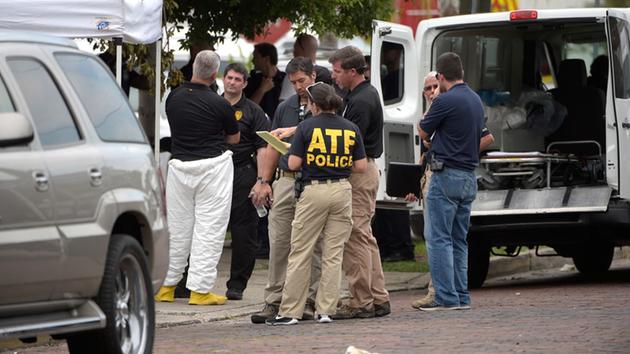
Law enforcement officials stand on the street beside the Pulse nightclub after a shooting involving multiple fatalities at the nightclub in Orlando, Fla., Sunday, June 12, 2016. (AP Photo/Phelan M. Ebenhack)
By LISA MARIE PANE
Monday, June 13, 2016 05:25PM
As the largest mass shooting in modern U.S. history began to unfold, an off-duty police officer working at a gay nightclub exchanged gunfire with the suspect. But three hours passed before a SWAT team stormed the building and brought the attack to an end.
The decision by law enforcement to hold off on entering the Pulse club - where more than 100 people were shot, 49 of them killed - immediately raised questions among experts in police tactics. They said the lessons learned from other mass shootings show that officers must get inside swiftly - even at great risk - to stop the threat and save lives.
"We live in a different world. And action beats inaction 100 percent of the time," said Chris Grollnek, an expert on active-shooter tactics and a retired police officer and SWAT team member.
Authorities in Orlando say the situation changed from an active-shooter scenario to a hostage situation once gunman Omar Mateen made it into one of the bathrooms where club-goers were hiding. He first had a shootout with the off-duty officer at the club's entrance. Then two other officers arrived and the firing continued.
Experts say there's a big difference between responding to a lone gunman and a shooter who has hostages.
In active-shooter situations, police are now trained to respond immediately, even if only one or two officers are available to confront the suspect. In a hostage crisis, law enforcement generally tries to negotiate.
Once in the restroom, Mateen called 911 and made statements pledging allegiance to the Islamic State, Orlando Police Chief John Mina said Monday.
That's when the shooting stopped and hostage negotiators began talking with him, the chief said.
"We had a team of crisis negotiators that talked to the suspect, trying to get as much information as possible, what we could do to help resolve the situation ... He wasn't asking a whole lot, and we were doing most of the asking," Mina said.
But Mateen soon began talking about explosives and bombs, leading Mina to decide about 5 a.m. to detonate an explosive on an exterior wall to prevent potentially greater loss of life. The explosives did not penetrate the wall completely, so an armored vehicle was used to punch a 2-foot-by-3-foot hole in the wall about 2 feet from the ground.
"We knew there would be an imminent loss of life," Mina said.
Hostages started running out, as did Mateen, who was killed in a shootout with SWAT team members. It turned out there were no explosives.
Police tactics changed after the 1999 massacre at Columbine High School, where the first officers to arrive exchanged fire with the gunmen but then stopped and waited for the SWAT team. That took 45 minutes. By then, Eric Harris and Dylan Klebold had killed 12 students and a teacher.
At the time, the standard police practice was to set up a perimeter, wait for SWAT officers and then go inside. Authorities began to realize that the delayed response gave suspects more time to kill.
"We can't just let him have free rein and continue to shoot," said Ben Tisa, a former FBI agent and former SWAT team member.
Experts point to other mass shootings where a delay in confronting the shooter probably gave the gunman time to maneuver and attack. A mass shooting in 1984 at a McDonald's in San Ysidro, California, offered one of the earliest lessons, with 21 people being killed and 19 wounded before a SWAT team killed the gunman about 45 minutes later.
Incorrect or incomplete information is typical during police emergencies. And the gravity of the decisions is not lost on SWAT teams and their commanders. Civilian lives are at risk, along with those of police officers who are often outgunned by suspects.
"You have split seconds," said Thor Eells, commander of the Colorado Springs Police Department and chairman of the board of the National Tactical Officers Association.
Almost immediately after the shooting began, the nightclub posted a note on its Facebook page telling people to get out and "keep running."
Grollnek, a consultant who conducts active-shooter training for law enforcement, said that's another lesson from other mass shootings: Civilians can't expect to stay safe by heeding the old advice to hide or shelter in place.
"The problem is we're failing to evolve by learning the lesson that hiding does not work," he said. "Running works. Everyone who escapes to tell their story says, 'I ran away. I heard a noise on my left, and I went to my right and I got out.'"
But Grollneck reserved his anger for the police commanders in Florida who didn't allow SWAT team members to enter until several hours after the shooter began the attack.
"How have we failed so poorly that we did not learn our lesson ... when we see SWAT teams respond and not making entry creates victims," he said. "Period. End of story."