MEC&F Expert Engineers

Saturday, June 11, 2016

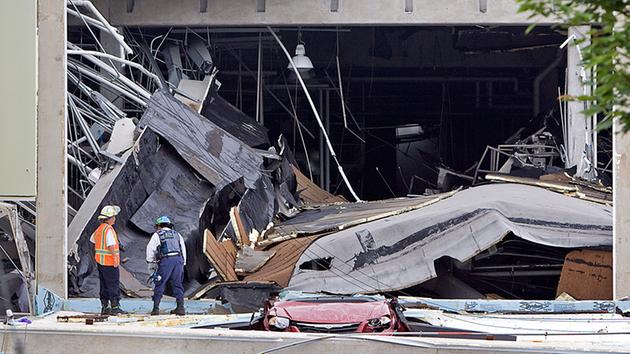
Crews extinguish chemical fire at Talley Farms, in Stanly County, NC


 Wednesday, June 8th 2016, 1:18 pm EDTWednesday, June 8th 2016, 3:48 pm EDT
By WBTV Web Staff


WBTV graphic STANLY COUNTY, NC (WBTV) -

Crews responded to a chemical fire at a Stanly County warehouse Wednesday afternoon.

Officials say it happened at Talley Farms in the 6300 block of Talley Road. Charlotte Fire Department's Hazmat crews assisted with the chemical fire, which was extinguished around 1 p.m.

Stanly County officials say the fire involved pallets of chemicals used in the feed mill process. Hydrogen peroxide and ammonium were the primary threats.

Crews say some of the containers continued to leak after the fire was put out, so the Regional Hazmat Response Team from Charlotte was called in to help. The chemicals have since been "contained and secured."No injuries were reported.

Tourism has bounced back, but the long-term effects on Gulf fisheries and wildlife remain unknown — and thousands of businesses are still battling to get some compensation


BP Oil Spill’s Ripple Effects
Tourism has bounced back, but the long-term effects on Gulf fisheries and wildlife remain unknown — and thousands of businesses are still battling to get some compensation
By Lazaro Aleman


Courtesy Stephen Ramsey


The worst marine petroleum disaster in U.S. history, the 2010 Deepwater Horizon oil spill — or BP oil spill, as it’s most commonly called — marred beaches, estuaries and marshes along 1,000-plus miles of coastline, caused immeasurable harm to sea and shore wildlife, and hurt the fishing and tourism industries in coastal communities across Northwest Florida. Some six years later, however, the spill appears to be all but history.

Tourism is reported at unprecedented levels, as sun-and-surf lovers again flock to Emerald Coast beaches; fishing, a major component of Florida’s economy, is back on track; Gulf seafood, shunned as risky following the spill, is once more considered safe; and dolphins, pelicans and other seabirds appear plentiful, attesting to their hardiness.

BP and the federal government, meanwhile, long ago ceased their concerted cleanup/mitigation operations. BP, the five affected states and Washington last year reached a landmark settlement resolving all government claims and assuring billions of dollars for restoration projects. And the news media and public have mostly moved on, their attention captured by new concerns and disasters.

BP, in a 40-page paper in March 2015, touted the Gulf’s resiliency, essentially declaring the disaster over.

“Areas that were affected are recovering and data BP has collected and analyzed to date do not indicate a significant long-term impact to the population of any Gulf species,” the report states.

The state and federal organizations that manage the nearly 200 Gulf species considered commercially or recreationally valuable seemingly agree.

“If there were any impacts on the fishery population, I can’t see them,” says Luis Barbieri, director of Marine Fisheries Research at the Fish and Wildlife Research Institute in St. Petersburg. “I know some parts of the ecosystem have been more impacted. But in terms of the fisheries, I really haven’t seen anything that dramatic.

“So yes, overall and in general, the abundance and sustainability of Gulf stocks are OK,” Barbieri asserts, allowing that some species are overfished, others are undergoing overfishing, yet others are rebuilding and a few are struggling for reasons other than the spill.

Not everyone is convinced normalcy has returned, however. Scientists caution that the spill’s full environmental and ecological effects are still playing out. Of note, the Deepwater Horizon Natural Resource Damage Assessment Trustee Council (composed of state and federal agencies tasked with assessing the spill’s impact and recommending solutions) in 2015 declared that full recovery could vary from decades to hundreds of years. Oil, meanwhile, continues washing up on Escambia County beaches.

“It’s much better than 2010, but you can still go on the beach and find marble-sized tar balls,” says Chips Kirschenfeld, interim director of the Escambia County Department of Natural Resource Management.

Many businesses that submitted claims to BP, moreover, had yet to be reimbursed in early 2016.

“The fact there are still millions of dollars’ worth of private claims pending means there are individuals and businesses that haven’t been reimbursed for their losses,” avers University of West Florida (UWF) economist Rick Harper.

Which is to say that six years out, the spill’s economic and environmental ramifications continue reverberating. The seafood industry well illustrates the point.

Florida is dubbed the “Fishing Capital of the World” for good reason. Economically, the state’s commercial fisheries (ranked among the country’s top-producing) and marine recreational fisheries (ranked the nation’s best) have an annual impact in the billions of dollars and support hundreds of thousands of jobs, according to data from the National Oceanic and Atmospheric Administration (NOAA) and the Florida Fish and Wildlife Conservation Commission (FWC). The Gulf of Mexico, moreover, is rated one of the world’s most productive fisheries, second only to Alaska in the United States. It therefore stands to reason that the ruptured well, which spewed oil for 87 days between April 20 and July 15, 2010, would cause “significant socioeconomic injuries to the Gulf of Mexico fishing industry,” as a 2011 congressional paper notes.

“Commercial and recreational fisheries are among the main activities supporting the economy and social well-being of many Gulf coastal communities,” the Congressional Research Service report states.

The spill’s most immediate impact resulted from the closing of tens of thousands of square miles of federal and state waters to fishing to ensure the seafood’s safety. The data suggest the closing’s impact on commercial fishing. NOAA, for example, shows that Gulf landings, or catches, dropped from 1,435,665,309 pounds in 2009 to 1,072,068,111 pounds in 2010, then increased to 1,792,550,312 pounds in 2011. Specific to Florida’s Panhandle, FWC data show amberjack landings at Panama City, for example, dropped from 80,554 pounds in 2009 to 39,364 pounds in 2010, and climbed to 66,275 pounds 2011. The decreased landings in 2010 largely hold true across species for Apalachicola, Destin, Panama City and Pensacola. Landings, of course, translate into revenues for harvesters.

It’s more difficult to gauge the spill’s economic impact on recreational fishing. That’s because, unlike commercial fishermen who must report all catches, recreational fishermen’s landings are calculated based on surveys, interviews and samplings. Even so, a University of Florida study published in 2014 found that anglers lost $545 million during the Gulf fisheries’ closures. Nor was the impact limited to recreational fishing; it rippled to ancillary businesses that supported or depended on the industry, such as bait-and-tackle shops, restaurants and hotels.

Today, recreational and commercial landings are back to normal, allowing for year-to-year fluctuations because of availability of species, number of trips, market prices and such.

“Absolutely, the Gulf seems to be thriving,” says Eddie Morgan, general manager of Harbor Docks Seafood Market in Destin. “Our seafood market’s as busy as ever. It’s hard to say on a week-to-week basis, but we definitely have 30,000-pound weeks and 20,000-pound days sometimes. Some species have rebounded completely. There are as many red snappers as ever. And tuna fishing seems to be as good as it’s ever been.”

“Business is great,” concurs Frank Patti, of Joe Patti’s Seafood, a Pensacola business dating from 1930. During the Gulf fisheries’ closure, Patti coped by switching to East Coast and Lower Caribbean products.

“The customers were leery about the product during those days, but we survived and we’re now doing great,” Patti says.

A possibly longer-lasting effect of the spill was the public’s perception that Gulf seafood was unsafe.

“People were afraid even the year after to eat the fish because they were afraid they were tainted,” says Pam Anderson, operations manager of Captain Anderson’s Marina in Panama City, which runs a seafood market and offers deep-sea fishing trips, charter boats and dinner/sightseeing cruises.

Morgan agrees.

“Even after they opened the waters back up, there was uncertainty with the public,” he says. “We knew the fish were safe, but a lot of people still didn’t trust it.”

Bob Jones, executive director of the Tallahassee-based Southeastern Fisheries Association, which represents commercial fishermen from Texas to Maryland, underscores the point.

“One of the biggest things that hurt us is we lost our seafood brand,” Jones says. “Everybody said, ‘Don’t eat Gulf fish or shrimp, they taste like oil.’ ‘You don’t have to put oil in the pan; they’ve got enough oil to cook themselves.’”

Where Jones differs from the others is his belief that the negative perception persists.

“Absolutely,” he says. “I’m talking about today; it’s still out there.”

This is despite assurances from state and federal officials and researchers that Gulf seafood is safe.

In Florida, for example, the Department of Agriculture and Consumer Services ensures the safety of Gulf seafood. It reports screening thousands of seafood samples since the spill and finding that “all are well below the FDA levels of concern.”

Steven Murawski, a marine scientist and professor with the University of South Florida (USF), is one whose research links the spill to tumors, skin lesions and polycyclic aromatic hydrocarbon (PAH) concentrations in some key species. He affirms the Department of Agriculture and Consumer Services’ findings.

“I’m not worried about the seafood’s safety,” Murawski says. “I have studied this fairly significantly. And in terms of both the government and independent research, there is no significant public health risk for consuming the seafood.”

Jones doesn’t dispute the scientific findings. His argument is that not enough has been done to convey the point to the public.

“Probably one of the bitterest pills to swallow for the industry is that we can’t get any BP money for marketing,” Jones says. “And we know how important marketing is, because BP must have spent billions marketing its brand after the spill.”

Generally speaking, however, the consensus in the fishing community is that things are back to normal.

“It’s much better,” says Anderson of Captain Anderson’s Marina. “Some of us are still recovering from the losses we incurred. It takes a while for businesses to totally recover clientele and rebuild. But 2015 has been the best year we’ve had since the spill.”

As for dolphin sightings, Anderson says they are common, notwithstanding documented evidence of their increased mortalities because of the spill.

“About 80 or 90 percent of the time, guests will see dolphins,” she says. “In our area, fishermen will tell you dolphins are plentiful.”

Reimbursements are the notable outlier.

“We have multiple businesses between our 12 restaurants and the seafood market,” says Morgan of Harbor Docks. “We’ve been reimbursed for some claims, but we still have others ongoing.”

Several reasons account for the non-reimbursement of losses some six years later. One is that not every spill-affected business was able or eligible to file a claim. Of the 382,192 claims filed, moreover, tens of thousands were still in resolution or appeals processes in early 2016. Yet others were denied or reimbursed at lower levels. Then there were the intangible losses — unrecoverable because unquantifiable — such as damage to natural resources, quality of life or brand name.

UWF economist Harper explains that the court-set damage test required that businesses demonstrate a V-shape (dramatic dip and rebound) revenue loss pattern to qualify for compensation. If failing this test — except in an area where damages were presumed — compensation wasn’t likely, he says.

He cites as an example a beer distributor whose warehouse was inland. If that business couldn’t prove the V-shape pattern, it wasn’t eligible for compensation.

“In Florida, businesses too far north of the spill or away from the coastline, even though they may have experienced revenue losses, were not compensated,” Harper says.

He talks also of damages that can’t be tabulated in dollars and cents, but are real nonetheless.

“You don’t pay for seeing Florida’s natural beauty,” Harper says. “But the flip side is that when you lose it, that kind of damage can never be compensated.”

Another of the uncompensated losses, he posits, resulted from businesses’ failure to realize reasonably expected higher returns on theirs or a public entity’s substantial investment to upgrade services.

“What would your business have been, given that Southwest Airlines started flying passengers into the brand-new Panama City airport in 2010?” Harper asks by way of example. “Well, if you couldn’t demonstrate that V-shape pattern, maybe you weren’t eligible to be compensated, because your revenues didn’t dip. Or maybe you invested additional dollars in advertising or providing greater amenities. If you’d done that, you would have expected to see your revenue rise in 2010, but the test for damage was that you demonstrated it fell and then rose.

“Or a charter fishing business that worked hard to get a client who visited regularly,” he continues. “If they lost that client for a summer because of the spill and that client went off and discovered charter fishing off North Carolina, it may be that business lost that person forever.”

The bottom line, Harper says, is that not all spill-related losses are recoverable or even quantifiable.

“So to the original question, some losses are difficult to calculate, some are nonmonetary, claims are still pending, and some businesses didn’t meet the V-shape revenue requirements,” he says. “So yes, as the settlement process winds up, I expect many damages will never be compensated.”

The Congressional Research Service report to Congress touches on the potential for irreversible losses to the industry. Not only did the spill interrupt the Gulf’s seafood supply, the report notes, it also disrupted demand for Gulf seafood, causing buyers to switch to other regions or imports for substitutes. To the extent that Gulf seafood producers weren’t able to recapture these markets, the losses were permanent, the report suggests.

The spill’s long-term environmental and ecological damages also pose potential consequences for the industry.

Wade Jeffrey, a biology professor and director of the UWF Center for Environmental Diagnostics and Bioremediation, conducts research in the Gulf, especially post-Deepwater Horizon. Jeffrey’s expertise is microbial growth and the food web. He points out that although resiliency is evident at the microbial level, some research suggests a significant post-spill shift in the bacterial community. His own research, interestingly, finds that sunlight (think Sunshine State) makes oil more toxic and inhibitory for microbial growth. Given the ecosystem’s interdependency, the findings suggest at minimum a potential impact on the food web and ultimately the larger fish populations.

Jeffrey disagrees with BP’s assessment that the Gulf is largely back to normal. For one thing, he says, the extent of the spill’s damage is unknowable, as the Gulf’s preexisting condition was unknown due to a lack of pre-spill data. Secondly, he says, the Gulf’s vastness and complexity make it impossible to assign it a whole value.

“To say the Gulf as a whole is OK is pushing it, because there are localized areas where absolutely it hasn’t recovered and it’s not going to recover for a long time,” Jeffrey says. “As to what the average person sees when he goes to the beach, it looks fine. And that’s great, because tourism is up and people are fishing. But as an ecological question, it depends on the specific question asked, where you ask it about and how you ask it. That’s where the long-term things come in. So I can’t agree the Gulf is back to what it was in 2009, because that’s washing over those places where it was really impacted.”

He cites as examples the fair amount of oil remaining on the seafloor, severely affected coral communities that haven’t recovered, and oil-linked heart defects in tuna larvae.

“But what people want to know is can they catch red snapper, and for that part, yeah,” he says. “But what the jury’s still out on, in terms of the red snapper and other fisheries, is whether 2010 will have an effect on their long-term populations.”

Ultimately, Jeffrey posits, the science, environment and economy are interconnected.

“If the water’s clean, people go to the beach,” he says. “If the water’s fouled for whatever reason, people won’t go to the beaches. If the fish are there, people fish and spend money on charter boats. If the fish population crashes, the economics of the fishing industry falls apart. It’s all dependent on the Gulf working the way the ecosystem is supposed to work.”

Murawski, of USF, likewise finds BP’s declaration premature.

“It’s way premature, given the amount of environmental health effects that have been seen in turtle, bird and fish populations and in oysters and other species that have an economic outcome and that are major players in the ecosystem,” he says.

Although he doesn’t necessarily see fish populations crashing in the future as a consequence of the spill, Murawski does see potential generational effects because of the die-offs in certain species.

“Fish like red snapper, for example, are very long-lived in the absence of fishing,” he says. “They can live 30 years or more. If they’re not there to participate, you have to look at a lifetime potential drop in reproduction and new egg production. So yeah, the spill can potentially have ramifications for decades.”

If the spill has a silver lining, one possibility is a greater understanding of the Gulf’s workings.

“The Gulf was phenomenally understudied before the spill,” Jeffrey says. “We now know a whole lot more about it and are learning more with every project. So we may not be able to tell for sure what’s a direct result of the spill because we didn’t have the pre-spill data, but we have a lot of data since, should something else happen.”

Another possibility is greater public awareness and appreciation of the Gulf’s ecology and vulnerability.

“It helped people recognize that the health of our Gulf economy is intrinsically linked to the health of our environment, and that the Gulf, while a vast and bountiful resource, is in fact a dynamic system that may not always be able to provide all of the natural resources we rely on for food, fun and the economy,” says Bethany Kraft of the Ocean Conservancy, a Washington D.C.-based nonprofit environmental advocacy group that helps formulate ocean policy at the federal and state levels.

“History,” Mark Twain remarked, “does not repeat itself, but it does rhyme.” Indeed, as recently as 2015, separate incidents on oil-processing platforms belonging to the state-owned Mexican company Pemex killed several workers and spewed oil into the Gulf. Given the continuation of offshore drilling in these waters, it isn’t inconceivable that another major mishap — whether human- or nature-caused — will one day occur. That’s something to ponder as the BP oil spill recedes into memory.

Quaker Valley High School in Leetsdale was evacuated after a chemical spill in a classroom


Crews respond to chemical spill in Quaker Valley HS classroom

  By Bobby Cherry | Thursday, June 9, 2016, 1:21 p.m.


Quaker Valley High School in Leetsdale was evacuated at about 12:45 Thursday afternoon after a chemical spill in a classroom, district spokeswoman Angela Yingling said.

Formaldehyde and two forms of xylene mixed in a third-floor science lab, Leetsdale fire Chief Ernie Logan said. Nobody was injured.

No students were in the building at the time. Their last day of class was June 7. But an unknown number of district staff members and some community members were inside.

The spill was contained, Logan said.

He said the mixture can be an inhalation hazard, which prompted the evacuation.

Logan said he expected crews to be on scene through mid-afternoon.

Fire crews from Leetsdale and Sewickley went to the scene.

Beaver Street from Valley Lane to Oak Drive was closed during the incident, and Port Authority buses were detoured using Route 65.

7 years later, Garner, NC recalls deadly ConAgra gas explosion that killed 4


Four people died in the Garner natural gas plant explosion on June 9, 2009.


By Elaina Athans
Thursday, June 09, 2016 06:52PM
GARNER (WTVD) -- There's a small memorial outside of the former ConAgra plant in Garner. Flowers line the fence that faces Jones Sausage Road. The items were placed there by children of one of the victims killed in the 2009 explosion.

Seven years ago this Thursday, there was a blast at the plant while 300 people were inside.

"It was chaos," recalled Garner Mayor Ronnie Williams. "I saw the building was demolished. I saw the cars demolished and I saw people that were hurt, emotionally and physically."

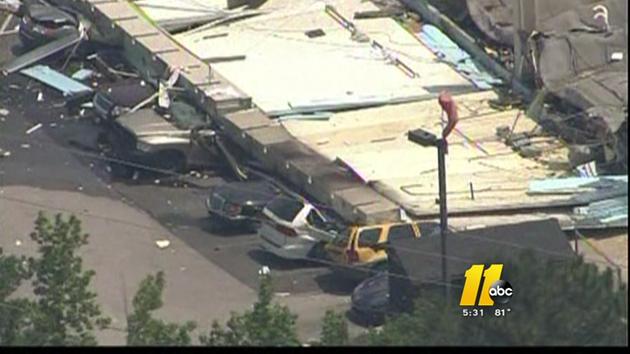
When EMS arrived at the plant, employees were running toward first responders and calling out for help. The ceiling collapsed, small fired were popping up, toxic chemicals were pouring through the building, and dozens of people were trapped inside.

A natural gas leaked caused the explosion.


Investigators survey the wreckage during recovery operations Wednesday, June 10, 2009, at ConAgra Foods Inc., in Garner (The News & Observer/Chris Seward)

"I stayed there three days total. I lost a lot of sleep. I slept about three hours in three days, but I felt like I needed to be on top of it for my citizens," Williams said.

Four people were killed. The Medical Examiners Report shows all the victims suffered blunt-force head trauma when debris fell on them.

Maggie Jones worked at the plant for 37 years. She lives up the road from the former facility and used to walk to work.

Jones was very good friends with one of the victims, Rachel Pulley.

"She was a mom and she was a Christian lady, that's why we always stayed together," Jones said.

There's a mosaic memorial at White Deer Park to honor those killed.

FROM NOVEMBER 2009: CONAGRA WORKERS TO LOSE JOBS

After the explosion, ConAgra donated the 98-acre property to the Town of Garner.

The lot has sat vacant for years. The building was leveled. "No Trespassing" signs are up, and weeds are growing among concrete.

The Town says it is aggressively trying to bring in another company.

RELATED: JURY SAYS CONAGRA LIABLE FOR $108.9 MILLION IN 2009 GARNER PLANT EXPLOSION

"We lost about $55 million worth of taxable investment and around 400-500 jobs," said Garner Economic Development Director Joseph Stallings. "We're looking for a company that is going to be a real jewel in the Garner's crown. Something the community can be proud of and something that will offer the folks that lives there the opportunity to better themselves and lives of their children."

In March of this year, ConAgra was found liable of negligence in a civil lawsuit. The company was ordered to pay more than $108 million.

A spokesperson for the Omaha-based company says it has multiple grounds for appeal.

An unloading accident caused an acid spill that prompted the evacuation of a Starkist Foods canning facility in Eastvale, CA where 15 workers were sent to the hospital for treatment of inhalation problems


EASTVALE, CAL: Acid spill sends 15 Starkist workers to hospital (UPDATE)


By RICHARD BROOKS / STAFF WRITER
Published: June 9, 2016 Updated: 7:25 p.m.

An unloading accident caused an acid spill that prompted the evacuation of a Starkist Foods canning facility in Eastvale where 15 workers were sent to the hospital for treatment of inhalation problems, say Riverside County Fire Department officials.

A firefighter also went to the hospital with unspecified minor injuries not related to breathing difficulty, officials said.

Roughly 40 gallons of concentrated cleaning acid spilled about 2:45 p.m. Thursday, June 9, at the sprawling facility at 12450 Philadelphia Avenue, just east of Milliken Avenue. The area is in the northeast corner of the city, nearly a mile northwest of Interstate 15 and Highway 60.

"They were off-loading (the acid) with a forklift from a trailer at loading dock," said Capt. Lucas Spelman. "One of the forklift arms pierced the bottom of the blue, plastic container."

The crews of five fire engines and a ladder truck were dispatched to the incident, along with county health department and fire department hazardous materials teams. By 5:25 p.m., the spill had been contained and the cleanup was beginning, allowing officials to lift the evacuation.