MEC&F Expert Engineers

Friday, June 10, 2016

OSHA Finalizes Crystalline Silica Rule, Effective June 2016


After years in the making and thousands of comments to the proposed rule from 2013, Occupational Safety and Health Administration (OSHA) has finalized the Crystalline Silica Rule for General Industry and Maritime. The final rule was published in the Federal Register on March 25, 2016 with an effective date of June 23, 2016. The final rule establishes new exposure limits and action levels, as well as specifies requirements for employee exposure assessments, exposure controls, medical surveillance, respiratory protection, hazard communication, and recordkeeping.

Who is affected?

Any industry that utilizes sand as part of the manufacturing process could have employees that are exposed to respirable crystalline silica (quartz, cristobalite, and/or tridymite). Specific to the automotive industry would be foundries that process sand as part of the metal casting operation and blasting operations that utilize sand as the blast media.

What are the new exposure limits and action levels?

OSHA, Worker HealthThe final rule establishes a permissible exposure limit (PEL) of 50 ug/m3 as respirable crystalline silica, averaged over an 8-hour day. Previously, silica was regulated as quartz through a respirable particulate relationship that established a varying PEL based on the silica content of measured respirable particulate matter. In addition to the new PEL, an action level of 25 ug/m3 has been established which is used as a trigger for higher frequencies of exposure monitoring and medical surveillance.

What is required by the new standard?

The new rule has several requirements that facilities will need to implement. Highlights of the new rule include requirements to:
  • Conduct initial exposure assessments for employees to determine if exposures for different job functions exceed the PEL or action level. Periodic sampling is required for employees that have exposures above the PEL (every 3 months) or the action level (every 6 months).
  • Limit employee access to regulated areas where exposures are above the PEL.
  • Develop and implement engineering and work practice controls to reduce employee exposure to or below the PEL (unless an employer can demonstrate that such controls are not feasible).
  • Provide respiratory protection to employees when dust controls cannot limit exposures below the PEL.
  • Develop and implement a written exposure control plan for workplace tasks that involve exposure to crystalline silica.
  • Housekeeping provisions to be established through wet sweeping, HEPA vacuuming, or other methods that minimize airborne crystalline silica.
  • Offer triennial medical surveillance exams to employees exposed to levels over the action levels for 30 days or more per year.
  • Comply with additional training and recordkeeping requirements.

When are the compliance dates?

Although the final rule is effective on June 23, 2016, the requirements don’t become effective for General Industry until June 23, 2018, allowing two years for facilities to conduct exposure assessments and implement administrative and engineering controls. Additionally, medical surveillance is required to be in place for employees above the PEL (for 30 days or more) by June 23, 2018; medical surveillance isn’t required to be in place until June 23, 2020 for employees above the action level (for 30 days or more).
Additional information regarding the new Crystalline Silica Rule can be found at the OSHA website. The Federal Register Publication of the final rule is available here.

Worker killed by hay compressor at the Menezes Brothers, Inc. at the alfalfa and straw processing plant in NV


Man dies after workplace accident near Lockwood
By Matthew Seeman Wednesday, June 8th 2016


Error loading player: No playable sources found

Officials with the Occupational Safety and Health Administration (OSHA) say they are investigating the death of a worker at Menezes Brother, Inc./ MGN Online


RENO, Nev. (News 4 & Fox 11) — A 44-year-old man has died after a workplace accident near Lockwood, an official with Nevada's state Occupational Safety and Health Administration has confirmed.

According to Storey County Sheriff's Office, Alfonso Martinez-Ojeda, was killed at 10:50 a.m. on Tuesday, June 7.

Chris Davis, district manager with OSHA, told News 4-Fox 11 that an accident was reported at Menezes Brothers, Inc.


Martinez-Ojeda had been employed at the alfalfa and straw processing plant for around four months, and was working on a hay compressor. For unknown reasons, Martinez_Ojeda crawled under part of the machinery and accidentally tripped a sensor. The hay compressor then began operating, resulting in deadly injury to the victim.

Storey County Fire Department provided emergency treatment, and transported the victim to Renown.

Martinez- Ojeda died after arriving at the hospital.

The Storey County Sheriff's Office investigation has determined that the death was the result of an industrial accident. No foul-play is suspected.No other details would be released due to OSHA's ongoing investigation, Davis said.

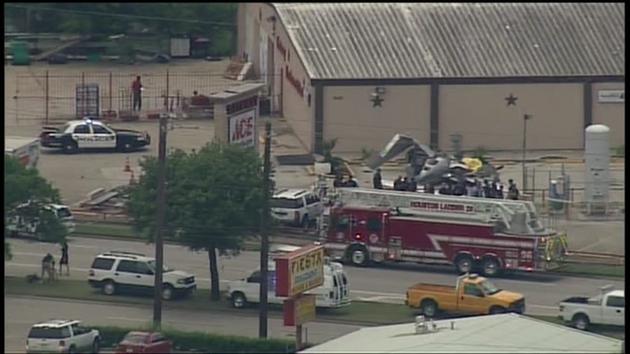
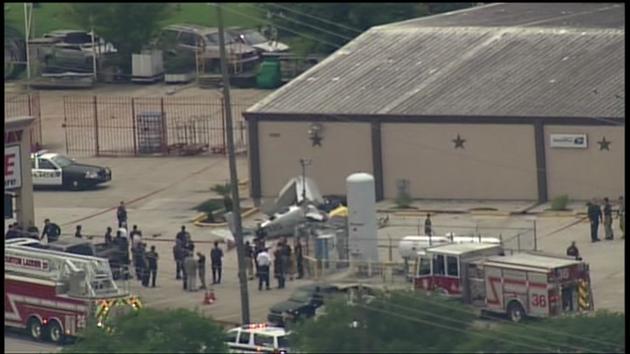
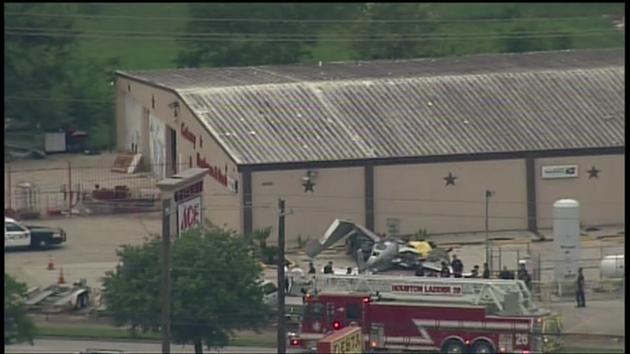
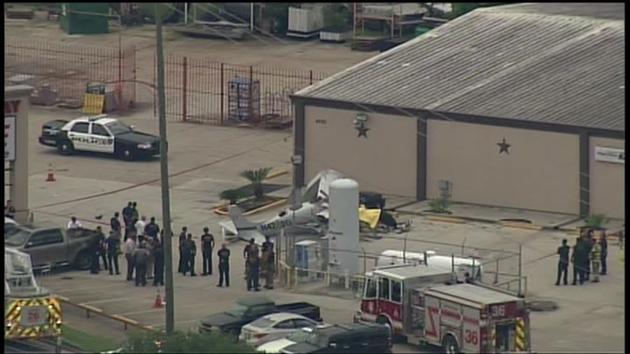
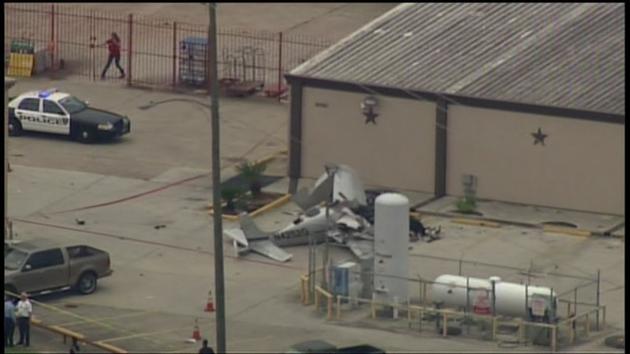
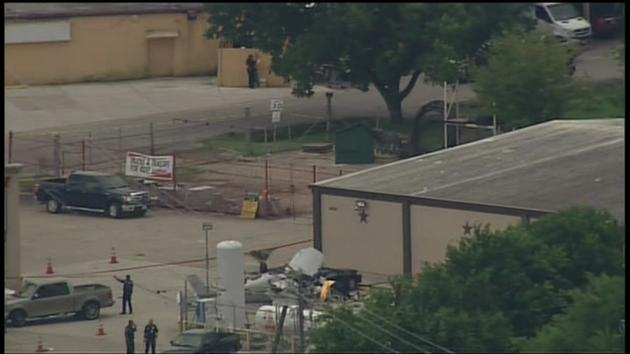
Investigators are looking for clues as to why a small plane crashed near Hobby Airport, killing three family members


Investigators comb for clues in deadly plane crash


NTSB investigators are probing a deadly crash in southeast Houston (KTRK)


By Courtney Fischer
Updated 28 mins ago

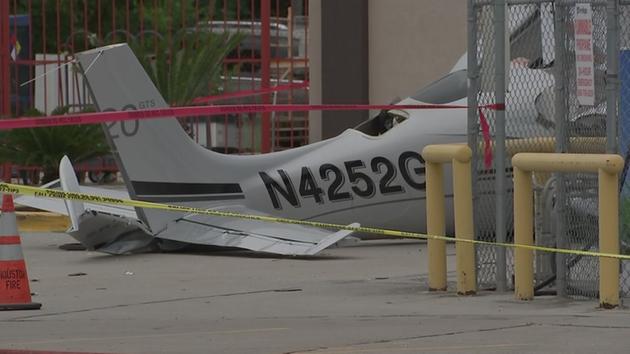
HOUSTON (KTRK) -- Investigators are looking for clues as to why a small plane crashed near Hobby Airport, killing three family members.

The crash happened Thursday at 1:12pm at the Gateway Ace Hardware store in the 6800 block of Telephone Road in southeast Houston.


The plane slammed into a parked car, killing all three people aboard. There was no one inside the car at the time of the crash.

Dana, Tony and Jerry Gray were flying from Norman, Oklahoma to visit Jerry's father, a patient at MD Anderson Cancer Center.


Three people have died in a single-engine plane crash

Dana Gray was the pilot of the Cirrus SR-20, and attempted to land twice before the plane nose-dived into the ground.

Investigators say there was an attempt to deploy a parachute, but it did not launch in time to make a difference.

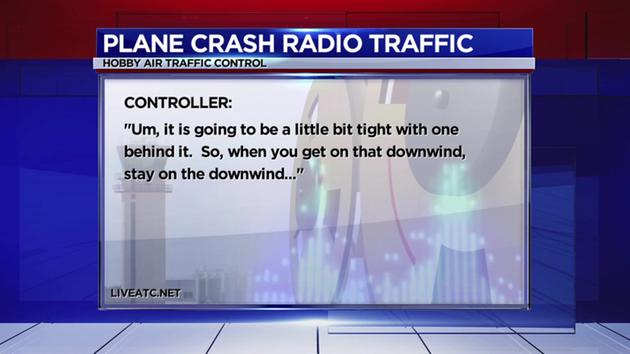
LISTEN: Audio from air traffic control tower leading up to crash


The National Transportation Safety Board is expected to give an update later today about their investigation into the crash.

We're following this story on Eyewitness News. Watch for updates on air, online and on our mobile news app.

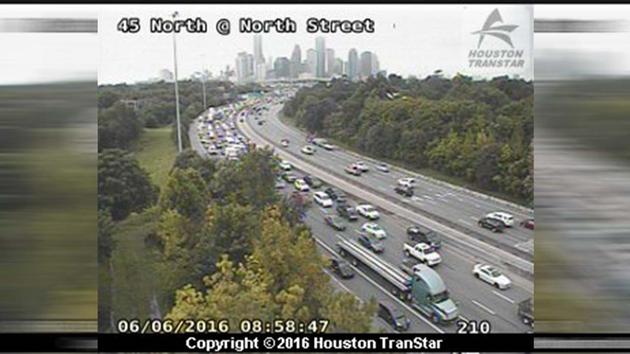
I-45 northbound before the 610 North Loop has re-opened after a fatal wreck


I-45 NB before 610 N. Loop re-opens after wreck


(Houston TranStar)


Monday, June 06, 2016 12:24PM
HOUSTON (KTRK) -- I-45 northbound before the 610 North Loop has re-opened after a fatal wreck had it shut down for more than two hours this morning.

The accident happened at around 7:50. One person, only identified as a 54-year-old male victim, was transported to Memorial Hermann Northwest Hospital, where he was pronounced dead.

According to police, that victim was driving northbound when he may have suffered a medical emergency and struck a gray van. That driver then struck a center retaining wall and began traveling backwards before striking another vehicle.

In all, four vehicles were involved. No one else was injured.

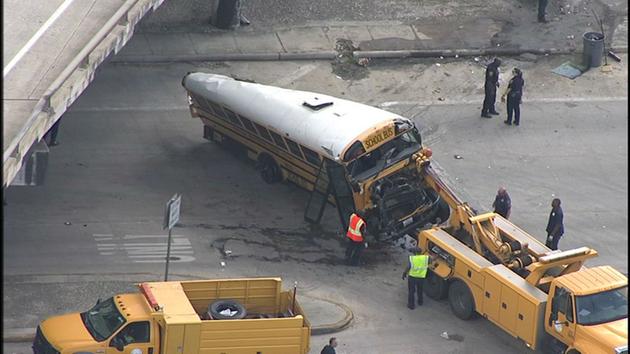
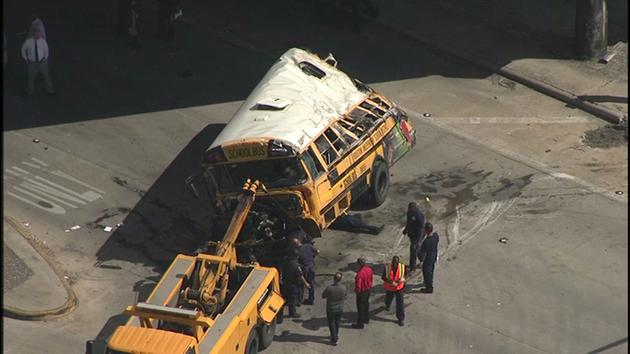
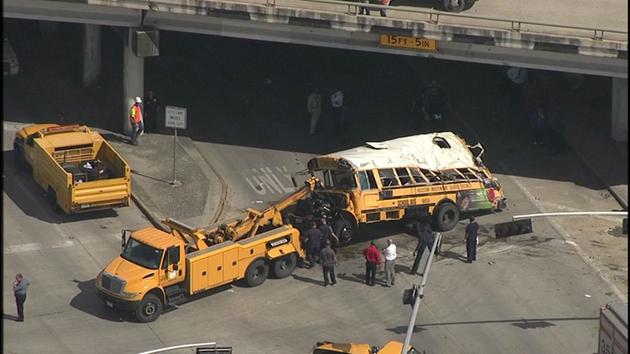
Inferior repairs to a bridge guard rail may have contributed to the death of two Houston Independent School District students when their bus crashed last September


Inferior repairs may have contributed to HISD students' deaths in bus crash


An NTSB report following a deadly bus crash says a road repair was inferior on the bridge where the crash happened


Updated 19 mins ago

HOUSTON (KTRK) -- Inferior repairs to a bridge guard rail may have contributed to the death of two Houston Independent School District students when their bus crashed last September.

A report from the National Transportation Safety Board says the Texas Department of Transportation reused bolts after a previous accident in the same spot where the bus crashed on 610 and Telephone Road.

READ THE NTSB REPORT
The bus went flying over the guard railing and landed on Telephone Road. It was a horrific crash. According to the NTSB, it was not he first accident at this site and those previous repairs were called inferior.


Two students were killed and two others seriously injured when a school bus careened off the 610 South Loop at Telephone Road.

<iframe width="476" height="267" src="http://abc13.com/video/embed/?pid=986559" frameborder="0" allowfullscreen></iframe>
The report from the National Traffic Safety Board says that TxDOT found there had been a previous severe impact to the bridge rail in the same location of where the HISD school bus went over the bridge rail on September 15, 2015.

The previous severe impact resulted in significant damage to the concrete parapet and the anchor bolts.

The report says there is evidence that the bolts that were bent over by that previous impact were then bent back and reused rather than being replaced.

Also, repair mortar had been used to patch spalls at the posts due to the impact.

NTSB found the quality of the repair mortar was inferior in overall quality to the original concrete which significantly increased the corrosion potential for the embedded steel.

Because of this finding, TxDOT is changing the repair procedure for damaged rails.

Now it will install new anchor bolts as opposed to bending back and re-using damaged bolts.

In response to the report State Senator Sylvia Garcia said had the railings met current safety standards and been properly maintained we might not be mourning the loss of two precious children from our community.

Meanwhile because the injured students did not have seat belts on the bus that crashed, HISD is now buying 60 new buses with seat belts, and students will be required to wear them.