MEC&F Expert Engineers

Wednesday, August 19, 2015

One-year anniversary of respirable coal dust rule shows reforms are working


One-year anniversary of respirable coal dust rule shows reforms are working

MSHA's Main: Miners better protected with industry compliance at 99 percent

ARLINGTON, VIRGINIA


One year ago this month, the landmark respirable dust rule went into effect, adding a number of increased protections for coal miners and closing several loopholes that masked their exposure to unhealthy coal mine dust. Respirable dust sampling results for the first year of the rule show that compliance is achievable and, more importantly, the nation's coal miners are better protected from debilitating and deadly black lung than ever before.

The respirable dust rule is the culmination of the Department of Labor's End Black Lung — Act Now Campaign, which began in late 2009 and called renewed attention to a disease that has caused or contributed to the deaths of 76,000 coal miners since 1968.

Nearly 62,000 dust samples were collected from surface and underground coal mines by the Mine Safety and Health Administration and coal mine operators, and only 1.1 percent of these samples exceeded the dust concentration limit. MSHA alone collected nearly 30,000 samples at 330 underground and approximately 900 surface mines and facilities.

The results for the first full year of sampling under the new rule show that the yearly average concentration of respirable dust for the dustiest mining occupations dropped to a new and historic low of 0.65 milligrams per cubic meter of air (mg/m3).

"While some insisted that mines would be unable to comply with the requirements of the rule, sampling results have proved that assumption is incorrect," said Joseph A. Main, assistant secretary of labor for mine safety and health. "At long last, we have a rule that fulfills the intent of Congress when it passed the Federal Coal Mine Health and Safety Act of 1969 — to eradicate black lung once and for all."

Under Phase I of the rule, compliance can be determined based on a single, full shift sample of coal dust, rather than simply on an average of multiple samples, which left some miners exposed to dust levels higher than the standard. Mine operators must sample the dust in the air for all shifts during the sampling cycle, and the sample must be taken when the mines are operating at least 80 percent of normal production so that they are representative of miners' actual working conditions. In addition, mine operators must take immediate action when any dust sample exceeds the concentration limit and must make a more thorough examination of dust controls on each shift, with a record made of the examination and signed by a top mine official.

Phase I also provides MSHA with increased enforcement authority to issue a citation during MSHA sampling for any single, full-shift sample at or exceeding the citation level. It increases certification and de-certification requirements for mining personnel who conduct sampling, increases medical surveillance requirements for both surface and underground mine and expands sampling for dust at surface mining operations.

"Now that Phase 1 of the rule is in place, we are moving to the next stage," Main said.

In preparation for Phase II, MSHA is hosting a series of stakeholder outreach meetings so that mine operators have ample time to adjust to the new requirements.

Beginning Feb. 1, 2016, continuous personal dust monitors, or CPDMs, must be used to monitor underground coal mine occupations exposed to the highest respirable dust concentrations, as well as all miners with evidence of black lung. These new, state-of-the-art devices provide miners and mine operators with dust exposure results in real time during the miner's shift, unlike the current device that requires that dust collected on a cassette be sent to labs for analysis, a process that can take days or weeks for results.

The rule's increased sampling frequency provisions also will go into effect at this time. For high-exposure occupations, 15 valid samples must be obtained on consecutive shifts every quarter, instead of the five samples previously collected either on consecutive days or on consecutive shifts every two months.

Finally, operators must post results of CPDM sampling within 12 hours of the sampled shift, and miners with evidence of black lung must be given a copy of the sample data within the first hour of the miner's next work shift.

"The use of the new, cutting-edge CPDMs provides for real-time dust level readings and allows corrective actions to take place more quickly. This, along with increased sampling frequency and the protections already in place, will help rid the coal mining industry of this terrible disease and protect our miners," said Main.

On May 1, MSHA began certifying industry personnel to use CPDMs for compliance sampling and maintenance and calibration. To date, 906 industry personnel have been certified in CPDM sampling and 130 in CPDM maintenance and calibration.

The third and final phase of the rule will go into effect next August and will lower the dust concentration limit for the dustiest areas in the nation's coal mines from 2.0 to 1.5 milligrams per cubic meter of air.

The dust rule was challenged by several petitioners and is under review by the 11th Circuit Court of Appeals.

California court rulings send clear message to employers who miss-classify workers as 'independent contractors'. Investigation, lawsuit yields $5M in back wages, damages for courier drivers


California court rulings send clear message to employers who miss-classify workers as 'independent contractors'

Investigation, lawsuit yields $5M in back wages, damages for courier drivers

SAN FRANCISCO, CA


Two recent and very significant legal victories for California workers send a strong message to employers nationwide: if you miss-classify your employees, you will face the consequences.

Misclassification is a practice used by some employers to cut costs by declaring their workers to be independent contractors — ducking their obligations to pay at least the minimum wage and overtime pay, and legally required contributions to unemployment insurance and workers' compensation funds. These employers also fail to remit payroll taxes, resulting in huge losses to state treasuries, and the federal Social Security and Medicare programs.

The U.S. Department of Labor, which has made combatting worker misclassification a major focus of its enforcement efforts, has announced that federal courts have ruled against two Bay Area companies and sided with their employees after investigations revealed that the companies deliberately misclassified the workers as independent contractors to cheat them out of their wages and other critical workplace benefits.

National Consolidated Couriers Inc., based in San Leandro but with clients across the country, has agreed to a court judgment requiring it to pay $5 million in back wages and damages to more than 600 drivers it misclassified as independent contractors, having cheated them out of minimum wage and overtime pay. The judgment reveals that, during the course of the Labor Department's investigation, the employer tried to destroy records showing an employment relationship with its drivers, and had been misclassifying the workers over at least five-year period.

In another major win for workers, a federal judge ruled that drivers for Mountain View-based Stanford Yellow Taxi Cab, Inc. were also misclassified. On its website, Stanford touts it strong relationships with corporate account holders such as Google, and the Four Seasons and Rosewood hotels. In this case, the department had to file suit to stop Stanford Cab from threatening and intimidating its drivers who were cooperating with investigators, including an instance where Stanford fired a worker just days before trial to discourage his witness testimony. The court's decision allows the department to continue with litigation forcing the company to pay nearly $3 million in back wages and damages to dozens of drivers.

"Misclassification is workplace fraud, plain and simple," said U.S. Secretary of Labor Thomas E. Perez. "It hurts workers by denying them a fair day's pay for a fair day's work, and it also undermines the competitiveness of businesses that are playing by the rules. At the Labor Department, through vigilant and vigorous enforcement, we are cracking down on irresponsible employers who game the system and cheat their employees — and that's what they are: not contractors, but employees."

In both the NCCI and Stanford Cab cases, the courts rejected arguments that the drivers were independent contractors in business for themselves as their employers alleged.

In the case of Stanford Cab, the company required drivers to be on the job six days per week for 12-hour shifts but did not compensate them for all of those hours. Stanford also did not allow drivers to change their schedules or operate independently by reaching out directly to passengers. Driver also had to abide by a dress code. They were and are employees under every reasonable interpretation of the law.

Wage and Hour Division Administrator Dr. David Weil, who in July issued official guidance to employers about avoiding misclassifying workers, said that his agency takes this matter seriously.

"We are attacking this problem head on through education and outreach as evidenced by our recent guidance to the employer community," Weil said. "But make no mistake. We are also engaged in a nationwide, data-driven strategic enforcement initiative across all industries to ensure that workers are correctly classified and properly paid, and that those employers who are playing by the rules aren't operating at a competitive disadvantage to those who aren't."

Typically, the Wage and Hour Division finds misclassification in low-wage industries. And while the misclassification of an employee as an independent contractor is not in and of itself illegal under the laws the department enforces, it typically leads to violations of the minimum wage and overtime provisions under the Fair Labor Standards Act which it does enforce.

In Fiscal Year 2014, Wage and Hour Division investigations resulted in more than $79 million in back wages for more than 109,000 workers in low-wage industries such as janitorial, food service, construction, day care, hospitality and garment.

The Wage and Hour Division currently has agreements with 25 states to jointly combat misclassification. The partnerships have led to better information sharing and coordinated enforcement to ensure resources are used strategically, effectively and efficiently to protect workers.

"As these court rulings indicate, the tide is turning against those employers who misuse independent contractor status to take advantage of workers," said Regional Solicitor Janet Herold of the department's Western Region, who litigated both cases. "The courts recognize the nature of this problem and stand ready to ensure that justice is served. America's workforce deserves no less."

The Fair Labor Standards Act requires that covered, nonexempt workers be paid at least the federal minimum wage of $7.25 per hour for all hours worked, plus one and one-half times their regular rate of pay for all hours worked beyond 40 per week. Employers also must maintain accurate time and payroll records.

Workers and employers can get more information about federal wage laws administered by the Wage and Hour Division by calling the agency's toll-free helpline at 866-4US-WAGE (487-9243). Workers can also file complaints confidentially. More information is also available online at http://www.dol.gov/whd/.

Coast Guard rescues 2 from sinking fishing boat Cecily Jean near Portsmouth Harbor, NH


Crew members on a 47-foot motor lifeboat based at Coast Guard Station Merrimack River, Mass., tow a 23-foot fishing vessel near Portsmouth Harbor, N.H. (U.S. Coast Guard photo by Station Merrimack River)


August 18, 2015  

BOSTON, MASS.

The Coast Guard, along with New Hampshire Marine Patrol and a good Samaritan, rescued two people Tuesday after their fishing vessel began taking on water 12 miles south of Portsmouth Harbor, N.H.

Coast Guard Sector Northern New England received the distress call via VHF-16 radio from the a person aboard the Cecily Jean at 12:07 p.m.

Two 47-foot Motor Life Boat crews launched from Coast Guard Stations Merrimack River and Portsmouth Harbor.

New Hampshire Marine Patrol and a good Samaritan arrived on scene and stayed with the vessel until Station Merrimack’s 47-foot MLB arrived and dewatered the vessel.

“The vessel was taking on water through the shaft,” said Petty Officer 2nd Class Craig Bren, a crew member from Station Merrimack River. “The crew stopped the leak, dewatered the vessel, and towed them back to port where the boat was trailered.”

The MLB crew towed Cecily Jean to Cashman Boat Ramp in Newburyport.

Coroner identifies 2 pilots killed in Cessna T182T Skylane plane crash near Oroville, Washington


(Photo: Debbie Mack)


Associated press 

August 18, 2015

OKANOGAN, Wash. (AP) - 

The Okanogan County coroner has identified the two victims of the plane that crashed near Oroville.

Coroner Dave Rodriguez says 88-year-old Albert Losvar of Loomis and 62-year-old Brian Downing of Surrey, British Columbia died in Thursday's crash.

Rodriguez says both men were pilots and it's not known who was at the controls when the plane went down. Losvar was the plane's owner.


KREM


Rodriguez says the crash resulted in a large explosion that consumed most of the Cessna. He says the victims' remains are being submitted for dental identification.


The National Transportation Safety Board is investigating the crash.


Officials said it left the Dorothy Scott Airport in Oroville at 8:45 a.m. Thursday but didn't reach its destination at the Spokane airport.


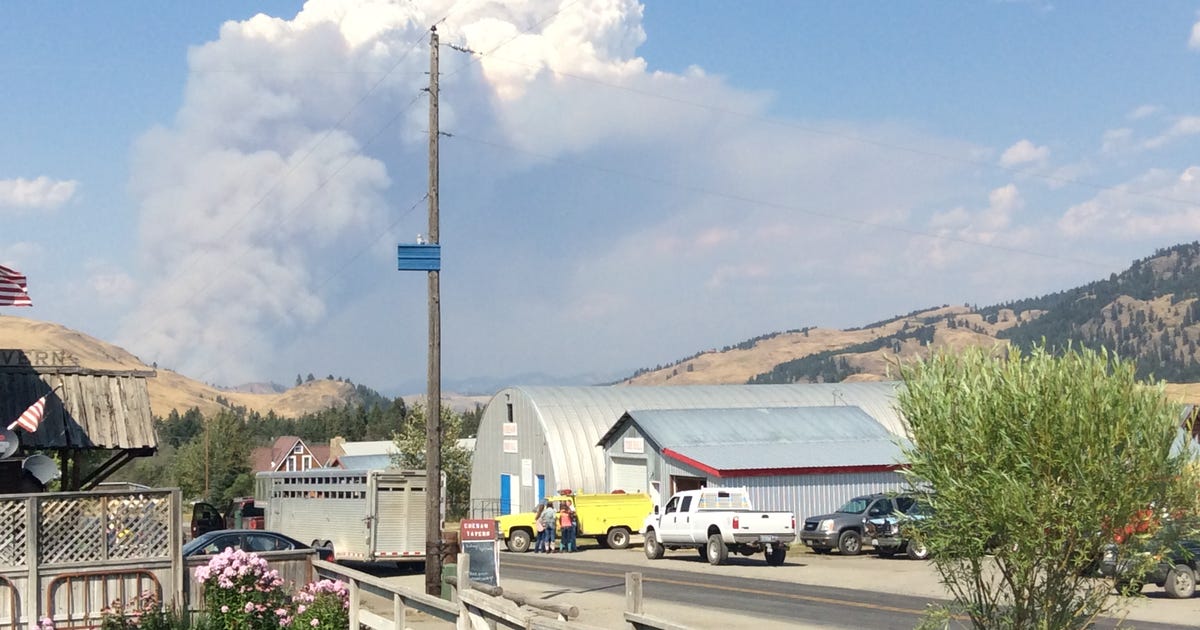
The plane was discovered by crews responding to a forest fire in that area.


Date:13-AUG-2015
Time:Morning
Type:Silhouette image of generic C182 model; specific model in this crash may look slightly different
Cessna T182T Skylane
Owner/operator:Private
Registration: N6289Z
C/n / msn: T18208870
Fatalities:Fatalities: 2 / Occupants: 2
Other fatalities:0
Airplane damage: Written off (damaged beyond repair)
Location:Okanogan County east of Oroville, WA -   United States of America
Phase: En route
Nature:Private
Departure airport:Dorothy Scott (0S7)
Destination airport:
Narrative:
The aircraft impacted timbered terrain in Okanogan County east of Dorothy Scott Airport (0S7), Oroville, Washington, and a post-impact fire occurred. The airplane was destroyed and the two occupants onboard received fatal injuries.
Sources
http://aviation-safety.net/wikibase/wiki.php?id=178609 http://www.kxly.com/news/spokane-news/one-dead-in-plane-crash-near-oroville-wildfire/34707218
http://t.omakchronicle.com/news/2015/aug/13/plane-crash-kills-one-sparks-multiple-fires/?templates=tablet
http://www.spokesman.com/stories/2015/aug/14/second-body-found-crashed-plane-okanogan-county/
http://www.gazette-tribune.com/news/authorities-confirm-two-victims-involved-in-fatal-plane-crash/70630/
http://www.komonews.com/news/local/Washington-fire-sparked-by-fatal-plane-crash-burns-buildings-321925491.html?mobile=y
http://registry.faa.gov/aircraftinquiry/NNum_Results.aspx?NNumbertxt=6289Z

http://www.airport-data.com/aircraft/photo/000538254.html

Pilot killed after an Ait Tractor plane registered to Reynolds Flying Service out of McCrory, AR clipped a telephone pole in Arkansas


Arkansas man, 35, dies in crop duster crash 


Posted: August 18, 2015

 Woodruff County, AR


A 35-year-old man is dead following a crop duster crash Tuesday.

Woodruff County Sheriff Phil Reynolds says Chad Powell, of Wynne, was spraying beans in a crop duster plane, when the plane clipped a telephone pole. The plane traveled two miles before crashing. Sheriff Reynolds reports Powell was killed on impact.

The crash site was near County Road 744 in the community of Wiville. The plane was registered to Reynolds Flying Service out of McCrory.


Unfortunately the highest risk faced by these air tractor pilots are the low-lying objects such as utility poles, electric wires, trees and so on.  RIP.

Date:18-AUG-2015
Time:
Type:Air Tractor
Owner/operator:
Registration:
C/n / msn:
Fatalities:Fatalities: 1 / Occupants: 1
Other fatalities:0
Airplane damage: Unknown
Location:North of Wiville, AR -   United States of America
Phase: Manoeuvring (airshow, firefighting, ag.ops.)
Nature:Agricultural
Departure airport:
Destination airport:
Narrative:
The aircraft clipped a power pole and impacted terrain during an aerial application flight north of Wiville, Arkansas. The airplane sustained unreported damage and the sole pilot onboard received fatal injuries.
Sources
http://aviation-safety.net/wikibase/wiki.php?id=178796
http://www.katv.com/story/29827334/arkansas-man-35-dies-in-crop-duster-crash