Aircraft narrowly lead fatalities list in wildland fire study
Associated Press
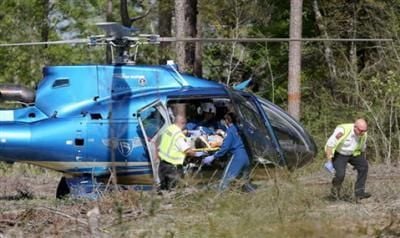
First responders load a victim into a LifeFlight medevac helicopter after a helicopter crash in Mississippi's DeSoto National Forest March 30. Helena National Forest employee Brenden Mullen was the sole survivor of the crash. Two others died.
August 06, 2015
By Rob Chaney
Retardant bombers and helitack teams might be safer if they talked more with the wildland firefighters they’re defending on the ground, according to a new study by the federal Centers for Disease Control and Prevention.
Aircraft accidents are the leading cause of death in forest fires by a slight margin, the study found. The category accounted for 26 percent of fatalities between 2000 and 2013.
Tied for second place were vehicle incidents (including rollovers and being hit by a vehicle) at 23 percent, and medical events such as heart attacks at 23 percent. The fourth leading cause was burn-overs or entrapment by the forest fire itself, at 15 percent.
“One thing we would encourage is more communication with people on the ground,” said Mary O’Connell, one of the lead authors of the study. “Tragically in aviation, the aviation component of a firefighting group communicates mainly amongst itself. We encourage expanding the definition of crew to not just the cockpit or tower, so we’re drawing in help from all areas that the pilots might not be aware of otherwise.”
O’Connell said ground firefighters on the scene might provide better advice on how winds shift around a water-dipping pond or obstructions at a landing zone.
“Firefighting always involves a diverse group of agencies, and sometimes that group isn’t totally united,” O’Connell said. “You haven’t trained together, so you’re not a well-oiled machine. That requires more attention paid to activities and operations.”
Dan Snyder of Missoula-based Neptune Aviation has seen a preliminary version of the study. He said it reinforces an effort the wildfire aviation industry has been working on for several years.
“More communication never hurts -- that’s always true,” Snyder said. “The biggest thing in aerial firefighting now is the Safety Management System, or SMS, that’s come along in the last five years.”
SMS is a method of reviewing an entire organization, government or private, for how each activity affects safety.
“It takes in everything from executive management to pilot decisions in the cockpit,” Snyder said. “It puts everything through a risk analysis centered around the idea of safety.”
To get their statistics for the National Institute for Occupational Safety and Health report, O’Connell and co-researcher Corey Butler gleaned several different state and federal data sets of workplace injuries and fatalities.
They also expanded some categories to better classify deaths that show up in one set but not another.
In the case of aviation-related fatalities, they combined aircraft crash incidents with deaths of smokejumpers or helitack firefighters, whose planes may not have had any reportable problems.
The study looked at 298 wildland firefighter fatalities over the 13-year period. They found 41 aviation-related events that killed 78 people. About a quarter of those involved some kind of mechanical failure in the aircraft, while another quarter was attributed to the pilot’s loss of control.
Private contractors employed 42 of the 78 aviation victims, followed by the federal government (15), state agencies (10), ground contractors (7) and the military (4).
California was the site of a quarter of the deaths, with eight occurring in Nevada and seven in Idaho.
The study was limited by several factors. The authors said they weren’t able to reliably gather information on aviation deaths that might have occurred on training missions, maintenance or transit to or from a fire.
They also had difficulty determining the total population of wildland firefighters, because of the variety of local fire departments, prison inmate crews and interrelated state agencies that all provide help at a forest fire.
And perhaps most critically, they found it hard to devise a good measuring stick to see what trends might flow from their statistics.
For example, they found the number of aviation-related fatalities was higher between 2000 and 2006 (28) than 2007 and 2013 (13), but that straddles a period when the federal government briefly grounded most of its large air tankers after a series of fatal crashes in 2004.
Just over half the incidents involved airplanes, with helicopters making up 45 percent. Causes ranged from engine failure to midair collision to failure of rappelling gear in a helitack mission.
U.S. Forest Service
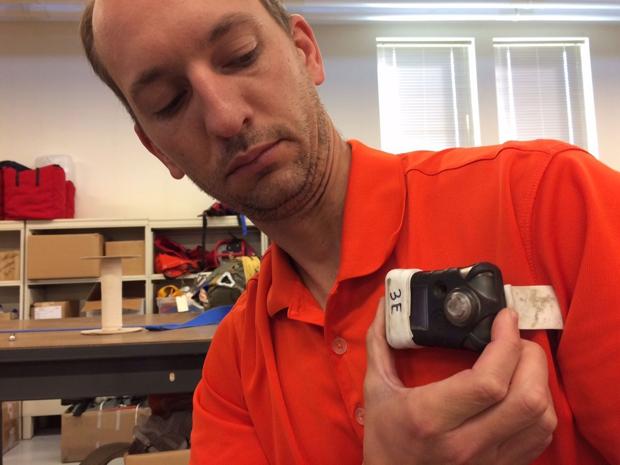
Technology and Development Center researcher Joe Domitrovich last week
displays a carbon monoxide dosimeter that wildland firefighters can wear
on their shoulder straps to measure smoke exposure.
Rob Chaney
Wildland firefighters don’t care to be called “smoke eaters” anymore, but smoke is what’s on their menu.
And it’s on the minds of Joe Domitrovich and Joe Sol at the U.S. Forest Service’s Technology and Development Center in Missoula, where they’re studying just how much smoke a firefighter can eat – or breathe – before health issues start to hurt performance.
The Joes, as they’re known at the center, are in the first year of a five-year analysis. Domitrovich has a doctorate in exercise physiology and Sol has a master’s degree from the University of Montana.
“We’re also both experienced firefighters,” Sol said. “We understand the culture and we know how to stay out of the way. It’s made it easier to get volunteers.”
Questions about smoke exposure started circulating in 1988, when the summer-long conflagration in Yellowstone National Park got people wondering if there was a health and safety issue from breathing fumes shift after shift. But the technology wasn’t ready to provide any good answers.
Now the T&D Center can provide carbon monoxide dosimeters smaller than a deck of cards (or a pack of cigarettes) that clip onto a firefighter’s shoulder strap. The little devices pump in air and calculate CO levels minute by minute.
Volunteers in the study also carry little activity monitors and cameras. That allows Domitrovich and Sol to crunch data for the whole day’s activity, comparing smoke levels when the firefighter is in camp, traveling to a perimeter, working on active flame fronts or performing mop-up work.
Current Occupational Safety and Health Administration standards say workers can endure about 50 parts per million of CO during an average eight-hour shift, with short-term exposure of up to 200 ppm. But firefighters often work 14- to 16-hour shifts, and then may return to a base camp that’s shrouded in smoke.
That’s different from the U.S. Environmental Protection Agency’s recommendations for air quality that the Missoula City-County Health Department reports on smoky days. Those standards are aimed at pollution levels that could affect elderly or infirm people, while the OSHA standards assume the subject is an otherwise healthy working adult.
One unexpected result of the study showed where smoke exposure tends to be worst. It’s not in the roaring inferno of a wildfire perimeter, but the cooler mop-up stage when firefighters are digging up smoldering stumps and soaking hot spots that most smoke gets inhaled.
“There’s a continuum of risk in firefighting,” Domitrovich said. “There’s hazard trees and driving and the fire itself, and then there’s smoke. You’re managing all of these minute by minute.
“But we’re also looking at what happens to firefighters over the course of a career. Carbon monoxide breaks apart quickly, but particulates stick around in the respiratory system for much longer. Our lungs are completely over-built, which is great. After fire season, we’ll typically see a fall in performance and then recovery. They get time over the winter to return to preseason (strength) values. But how many times can you recover, before the damage starts to be permanent?”
They also want to know how firefighters’ mental functions change with smoke exposure. They give volunteers tests before and after shifts in pattern-recognition, decision-making and other brain-teasers.
One tricky part of the study is the social nature of wildland firefighters. They tend to be young, mobile and part-time, which makes it difficult to find them years after they’ve left for new careers. Another challenge is the location of fires. Does a California wildfire burning in creosote bush and poison oak produce the same smoke components as a Montana fire in lodgepole and spruce?
Then there’s what to do about it. Nobody expects a new OSHA rule prohibiting firefighters from working on smoky days. The study hopes to provide more practical recommendations, like understanding the difference between direct-attack smoke and mop-up smoke, or how air disperses in spring fires compared to summer events.
“The EPA has done lots of work on smoke effects for the public, and OSHA does similar things for workers,” Domitrovich said. “We’re trying to stay in the worker environment. Although as a firefighter, I don’t like going home to breathe more smoke, either.”


Tianjin: An Appalling Loss
By MarEx 2015-08-17 19:13:17
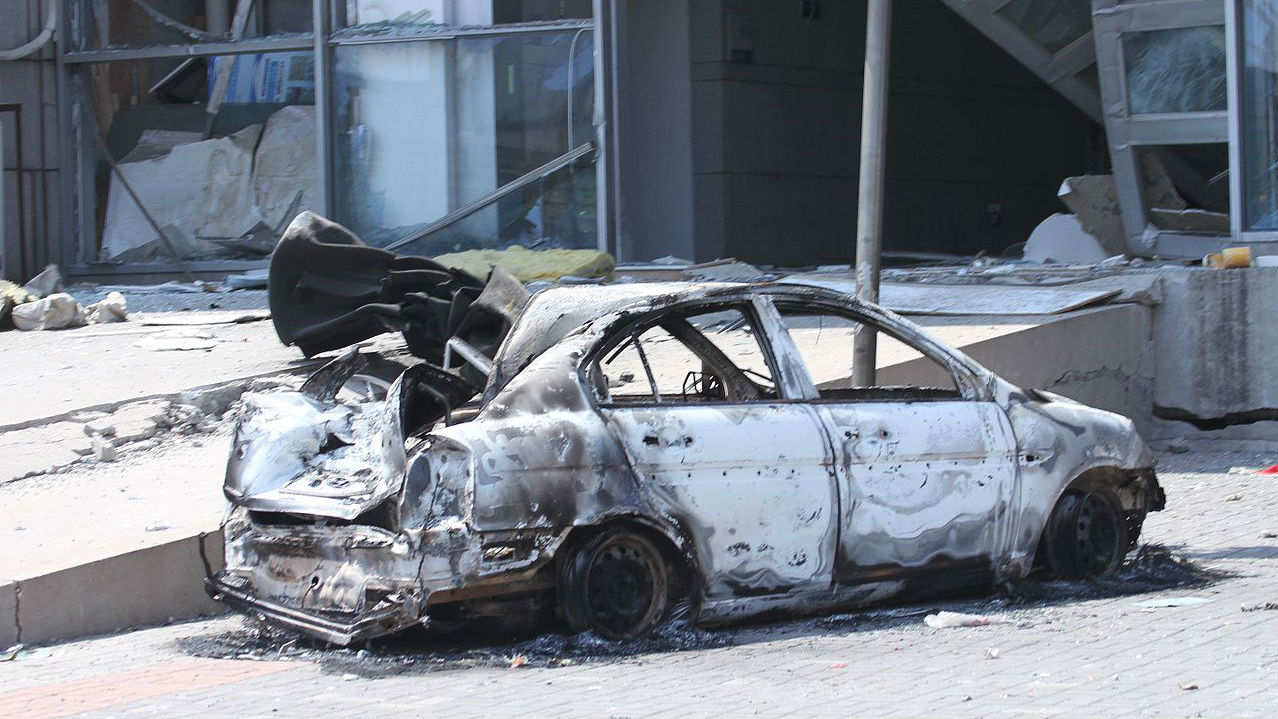
The death toll after the Tianjin port explosions last week in China has risen to 114.
Local officials report that 54 bodies have been identified and another 70 people are still missing. So far, 39 of the dead have been confirmed as fire fighters and five policemen.
As of Monday, 698 people are in hospital, 57 of them in critical condition.
Rescuers have carried out comprehensive searches through what they called "a maze of containers," and search and rescue efforts are still under way.
 A Series of Explosions
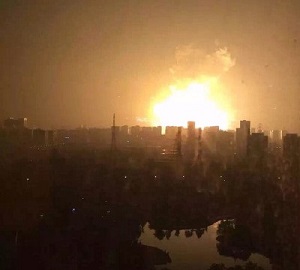
The Tianjin explosions were a series of explosions that occurred at a container storage station at the Port of Tianjin starting on Wednesday, August 12. The first two explosions occurred within 30 seconds of each other, and they were followed by another eight on August 15.
Chinese state media reported that the initial blast was from unknown hazardous materials in shipping containers at a plant warehouse owned by Ruihai Logistics, a firm specializing in handling hazardous materials.
Accumulated Risk
The International Union of Marine Insurance (IUMI) says it is far too early to speculate on the cause of the explosions which have left extensive physical damage as well as an appalling loss of life.
IUMI President, Dieter Berg says: “This extremely sad and regrettable incident demonstrates the persistent growth of accumulation of values in port and storage areas, particularly in highly industrialized regions. Recent examples include the floods in Thailand in 2011 and Hurricane Sandy on the East Coast of the United States in 2012 that caused the biggest marine cat loss ever.”
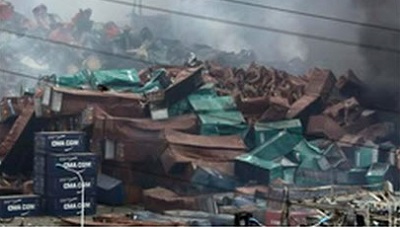 Berg continues: “Although we are focusing on losses caused by natural hazards such as flooding or hail, it is human error that is often to blame, particularly around industrial facilities. Man-made losses or damage caused by explosions are hard to model but they are comparable with acts of terrorism. To evaluate worst case scenarios we need to fully understand the value of the goods in the port and all potential exposures before we can calculate adequate premiums. This is becoming more of a challenge as these facilities continue to expand.”
Vehicle Insurers Hit
Early reports from Lloyd’s Agency Network state that more than 10,000 motor vehicles were destroyed at Tianjin.
Nick Derrick, Chairman of IUMI’s Cargo Committee said: “With average retail values of $30,000 this could result in a loss of $300 million for vehicles alone. Container losses are likely to be spread among many marine cargo insurers, bu
t motor vehicle insurance is a specialist sector and so that market is likely to be hit hard.”
///////////////////--------------/////
Tianjin explosions: sodium cyanide on site may have been 70 times allowed amount
Official death toll rises to 114 as officials find what they believe to be hundreds of tonnes of the toxic chemical
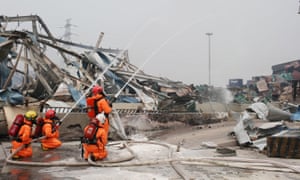 Firefighters wearing chemical protective clothing work at the site of explosion in Tianjin, north China, on Saturday. Photograph: Xinhua/Landov/Barcroft Media
Fergus Ryan in Beijing and agencies
Sunday 16 August 2015
Fears are growing for nearly 100 Chinese firefighters still missing after being sent to tackle the deadly explosions in Tianjin last week, amid reports that 70 times the permitted quantity of sodium cyanide had been stored at a warehouse near the blasts.
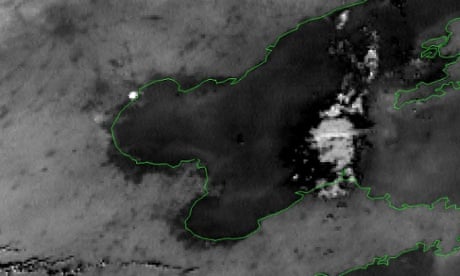
Tianjin explosions so huge they were visible from space
Read more
With the official death toll raised to 112 and the number of missing people at 95, rescue workers wearing gas masks and hazard suits were racing to clear the area before the weather changes because of concerns that wind could spread the toxins and rain could cause a dangerous reaction with chemicals at the site.
Chinese officials found what they believe to be 700 tonnes of sodium cyanide at two locations within the site of Wednesday’s deadly blasts, state media reported on Sunday. Some reports suggested the company that owned the warehouse where the blasts originated, Rui Hai International Logistics, may have been illegally transporting chemicals.
The Chinese premier, Li Keqiang, visited the site on Sunday, according to the official People’s Daily.
There is growing anger over the explosions, with residents living in the Qihang Jiayuan apartment complex less than 800 metres from the blast zone staging a protest outside a hotel where officials were holding a press conference.
“I’m very worried that these dangerous chemicals will harm my health,” Zhang Yinbao, who works in the chemical industry and lives nearby, told AP.
Under Chinese law, warehouses storing large quantities of chemicals are not permitted to be that close to a residential area. “From a legal perspective it’s unreasonable that dangerous chemicals would be so close,” Zhang said, calling for a thorough investigation and compensation.
Local media printed photographs of protesters, some with bandages on their arms and heads, holding pictures of what appeared to be their devastated homes.
Families of the missing firefighters joined the protest and clashed with police after marching to district government offices.
Footage shows the trail of destruction left by two deadly blasts in China’s eastern port city of Tianjin
The state broadcaster CCTV aired images of experts on the ground advising firefighters on the best method for extinguishing various fires still ablaze at the port facility. There are concerns about the potential for rain to react with calcium carbide at the site, creating a potentially toxic airborne gas.
Chinese officials confirm two locations in Tianjin where hydrogen peroxide was found at a level above the national safety level
Eric Liu, a campaigner at Greenpeace East Asia, said that without precise data on how much calcium carbide was involved in the blast, it was impossible to predict how serious these reactions could be.
“The other danger rain poses is that chemicals stored in warehouse could be washed into water supplies, with a potentially large impact on local ecosystems,” Liu said. “However, again, without more specific information it is difficult to say what impacts exactly.”
Officials said contaminated water was being properly quarantined and would not reach residents.
Advertisement
The first firefighters on the scene on Wednesday reportedly attempted to extinguish the flames with water, only to make the blaze worse. It was only after the explosions that firefighters switched to using foam.
A refuge in a school near the site of the blasts was evacuatated at the weekend after a change in wind direction prompted fears that toxic chemical particles could be blown inland.
There were conflicting reports about the size of the exclusion zone and how many people had been affected, but is is thought 6,300 people have been displaced by the blasts. Shockwaves from the blasts were felt by residents in apartment blocks miles away in the city of 15 million people.
Meanwhile, the Chinese government has stepped up efforts to control the media narrative around the incident. Fifty websites have been punished for “spreading Tianjin blast rumours” and close to 400 Weibo and WeChat accounts have been shut down, according to state media reports.
China’s top prosecutor, the Supreme People’s Procuratorate, has opened an investigation into the warehouse explosions and “will look into possible illegal acts, such as abuse of power or dereliction of duty and deal with those acts which may constitute crimes”, the state news agency Xinhua reported.
After the explosion, China issued an emergency notice ordering a a nationwide examination of dangerous chemicals and explosives. The State Council called on authorities around the country to “learn bitter lessons from the two massive blasts, and to crack down unwaveringly on illegal activities to ensure safety”.
Boy Assaulted in Cruise Ship Shower
By MarEx 2015-08-17 20:33:16
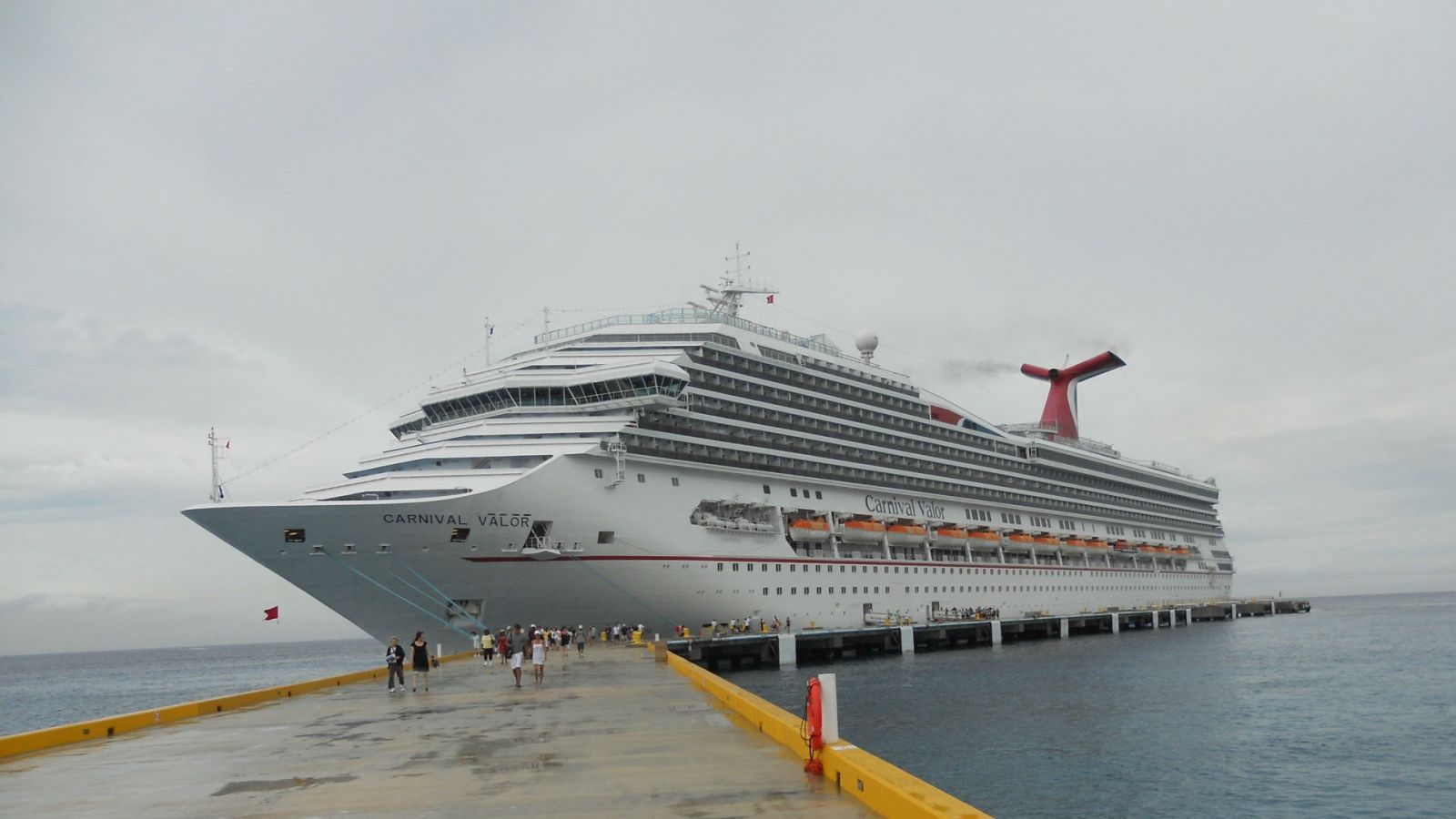
A cruise ship worker has been accused of sexually assaulting a boy on the Carnival Valor.
Yovany Suazo-Batiz, a Honduran citizen, was arrested on Saturday afternoon after the vessel docked in Port Canaveral in the U.S.
The Brevard County Sheriff’s Office alleges that Suazo-Batiz, 46, approached the boy in the ship’s sauna. The boy tried to escape. However, the man is alleged to have followed him into the shower where he sexually assault him.
The boy immediately sought help from his father, who, along with other passengers, detained the man until onboard security officers arrived at the scene.
Suazo-Batiz appeared before a judge on Sunday, and was set a bond of $135,000. The prosecution had asked the judge to hold the defendant in custody in case he fled.
Carnival Cruise Lines issued a statement saying it immediately notified the FBI and Brevard County Sheriff’s Office when it learned of the incident. “We extend our appreciation to both federal and local law enforcement agencies for their support and are continuing to provide Care Team assistance to the alleged victim.”
Unified Command responds to diesel spill in Sitka Sound
Aug 17th, 2015
 SITKA, Alaska —
A Unified Command has been formed to respond to a release of diesel fuel from the Jarvis St. Power Plant over the weekend.
Cleanup efforts continued Monday, involving local, state and federal
officials. Authorities are investigating what impact it may have on fish
in the Indian River area, where the first report of diesel came in
Saturday. Salmon are running in the river.
Coast Guard Sector Juneau, Alaska Department of Environmental Conservation pollution responders from Juneau and members of Coast Guard Marine Safety Detachment Sitka are coordinating clean-up efforts with the City of Sitka, National Park Service and tribal organization.
SITKA, Alaska —
A Unified Command has been formed to respond to a release of diesel fuel from the Jarvis St. Power Plant over the weekend.
Cleanup efforts continued Monday, involving local, state and federal
officials. Authorities are investigating what impact it may have on fish
in the Indian River area, where the first report of diesel came in
Saturday. Salmon are running in the river.
Coast Guard Sector Juneau, Alaska Department of Environmental Conservation pollution responders from Juneau and members of Coast Guard Marine Safety Detachment Sitka are coordinating clean-up efforts with the City of Sitka, National Park Service and tribal organization.
City of Sitka personnel received a report Saturday of diesel washing ashore in Sitka Sound. City of Sitka notified MSD Sitka personnel who responded and recovered approximately 50 gallons of diesel.
The source was identified from the Jarvis St. Power Plant, Sunday, which had released an estimated 30,000 gallons of diesel into the storage tank facility’s secondary containment. An estimated 2,500 gallons of diesel leaked into the storm drain system and into Sitka Sound due to a reported failure of the drain valve.
The models suggest that the amount of diesel that has evaporated since the release is significant.
The containment drain was secured and all diesel in the containment was pumped out recovering an estimated 23,000 gallons.
An aggressive response has been mounted to minimize the amount of diesel reaching Sitka Sound. Recovery of oil in the storm drain system and at the outfall of the storm drain with containment boom absorbent materials continues.
There were no reports of injuries, no confirmed reports of impacts to wildlife or theresources of the National Park.
“Cleanup efforts are continuing and we hope to mitigate the effects of the spill and remove the threat of pollution to the environment as quickly as possible,” said Chief Warrant Officer Michael Wortman, federal on-scene coordinator. “The Coast Guard will continue to work alongside our federal, state, and local partner agencies in response to this spill.”
The cause of the spill is currently under investigation.
///---------------///

A storage tank at Sitka’s Jarvis Street Diesel Plant failed over the weekend (8-15-15), spilling an estimated 4,000 to 7,000 gallons of diesel into Sitka Sound near the mouth of Indian River.
Teams from the city, state, and Coast Guard are working to contain and clean up the spill — and to find out what caused it.
As of Sunday night, it wasn’t yet clear exactly how much diesel had actually made it into Sitka Sound.
The Jarvis Street Diesel Plant is owned by the city — it’s Sitka’s backup power station — and City Administrator Mark Gorman said the failed storage tank released about 30,000 gallons of diesel into a cement containment enclosure. Some portion of that — perhaps as much as 7,000 gallons — then leaked into the storm water system, which empties into the ocean at Eagle Beach.
Gorman said that though the release is near the mouth of Indian River, so far there’s no sign of diesel in the river itself, and the spill has been contained to Eagle Beach and the water near Cannon Island.
The Fire Department estimated that about 40 people from the city, the state Department of Environmental Conservation, the Coast Guard, and the National Park Service were on site Sunday, using boom and absorbent material to contain and soak up the spill. Speaking Sunday evening, Gorman said the efforts so far have had a visible impact.
“I was down at the impacted area this evening twice, and you can smell it in the air, but there’s no sheen on the water at this point in time, so it seems to be dispersing pretty rapidly,” Gorman said.
According to a press release from the city, the Fire Department first received a call around 11 a.m. Saturday (8-15-15) reporting a heavy smell of diesel near Eagle Beach. Assistant Fire Chief Al Stevens says the department found a small patch of diesel in the water, but couldn’t locate its source. He says responders thought it had perhaps come from a fishing vessel in the area, and contacted both the state and Coast Guard.
The city then received a second call on Sunday, reporting a sheen on the water near Cannon Island. This time, the Fire Department traced the spill to a storm drain on Sawmill Creek Road, and eventually followed it back to the Jarvis Street Diesel Plant.
Around 1 p.m. Sunday, The Fire Department initiated its Incident Command System, marshalling resources from the city, state, Coast Guard, and National Park Service. Stevens says the leak was stopped around 3:30 p.m. Sunday, and teams worked throughout the afternoon to mop up the spill. “It certainly is a big deal,” he said.
But Gorman added that diesel is much easier to clean up than, say, crude oil.
“Diesel is not o,” Gorman said. “If this was an oil spill, I think the 7,000 gallons going into the Sound would be alarming. It’s not good to have diesel going into the sound, but diesel does evaporate and dissipate quite rapidly.”
It’s not yet clear why the tank failed, or how the diesel leaked out of the containment enclosure. The city, state and Coast Guard are all involved in that investigation.


