MEC&F Expert Engineers

Monday, August 17, 2015

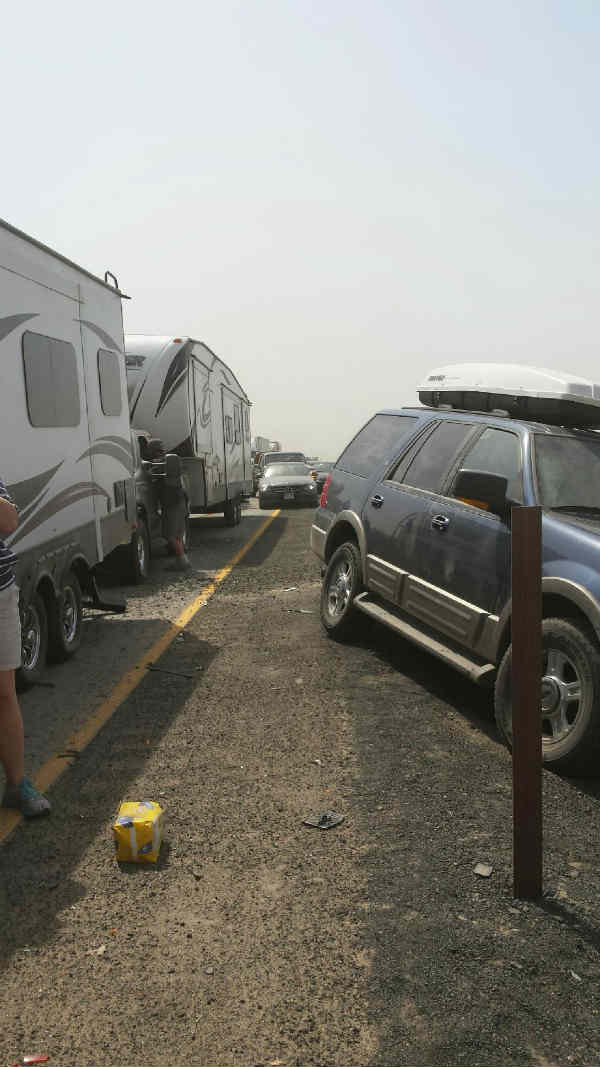
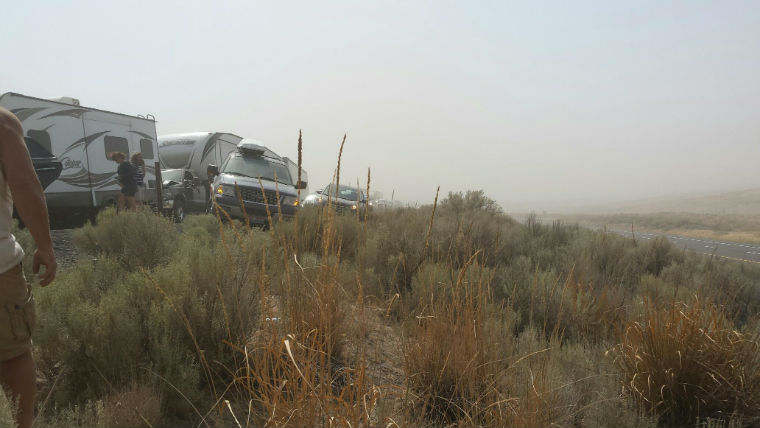
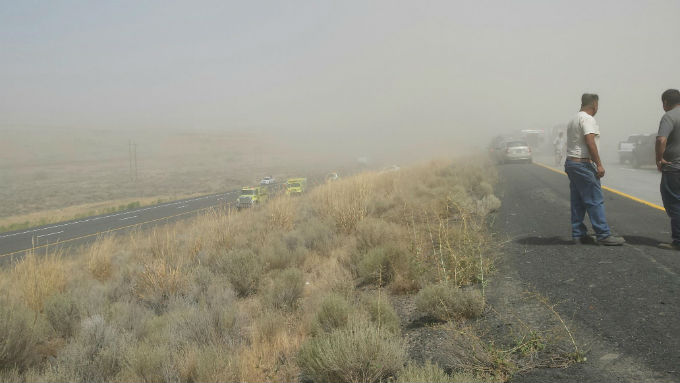
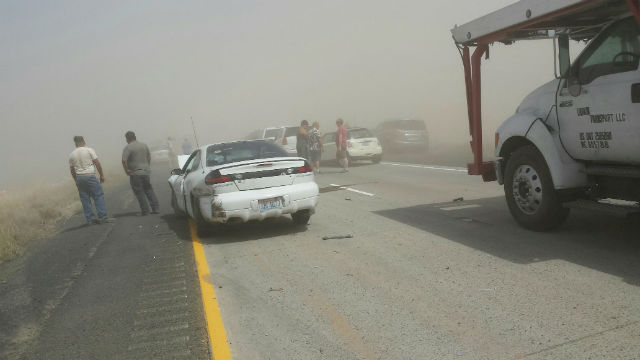
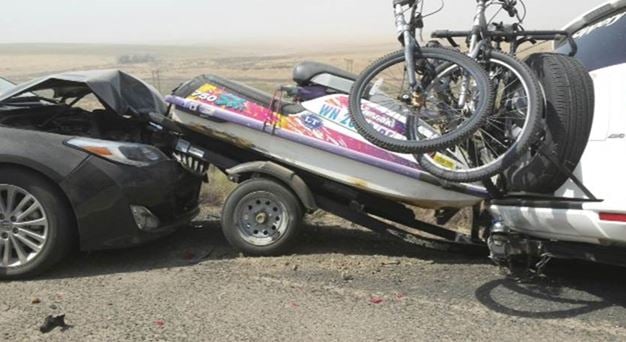
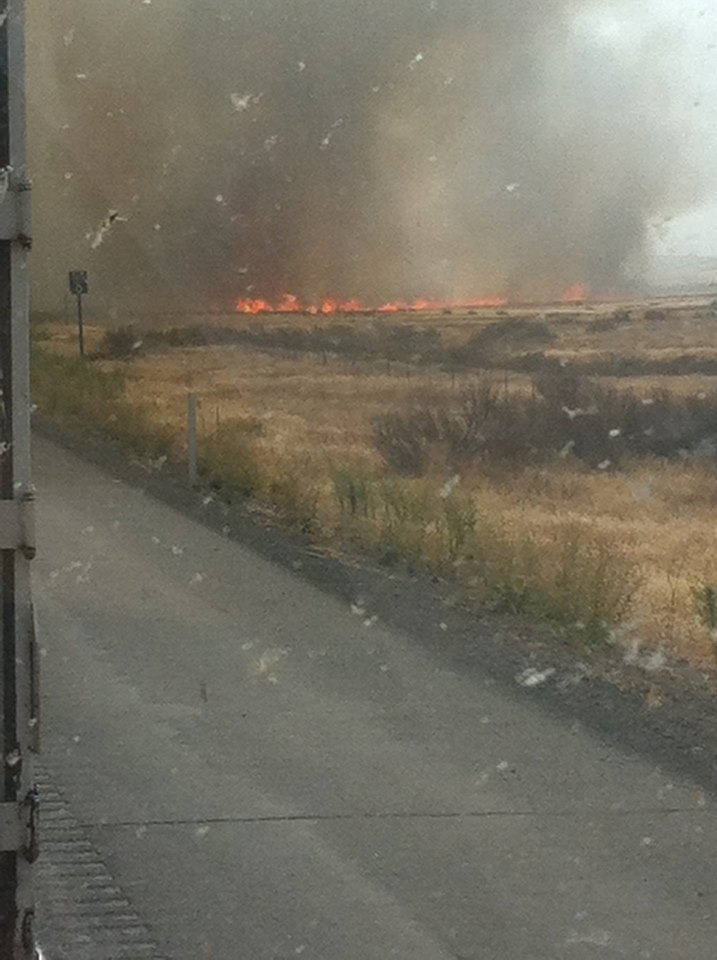
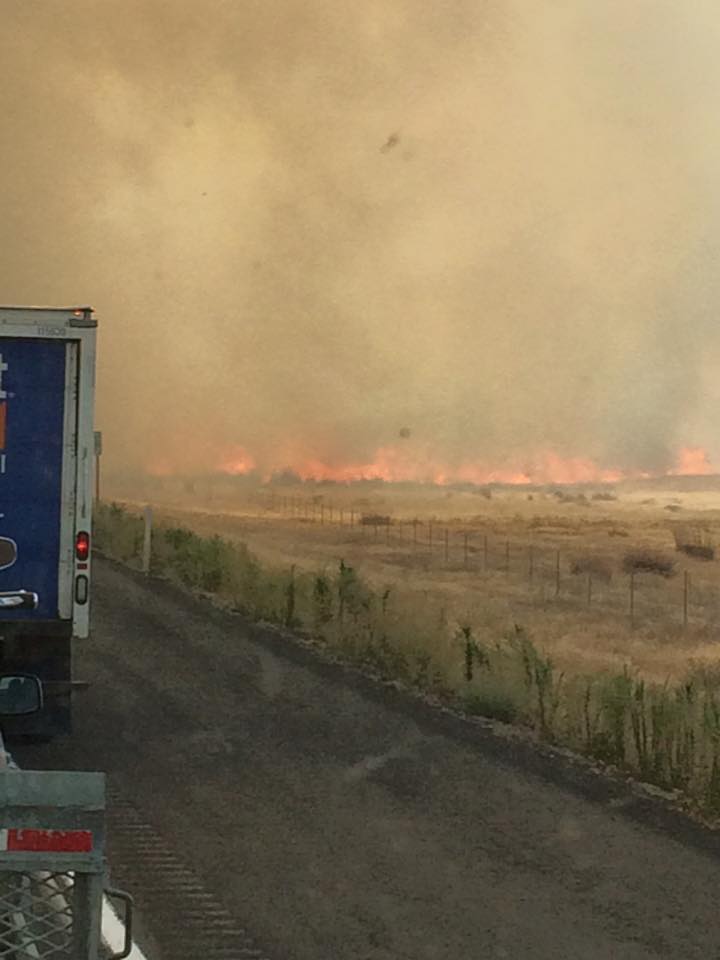
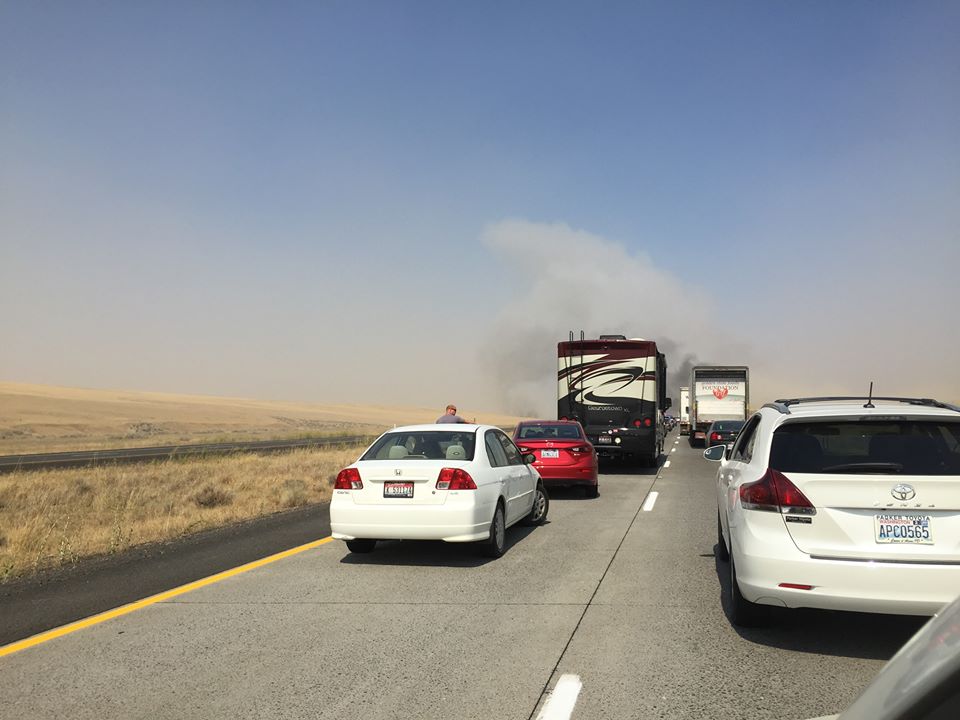
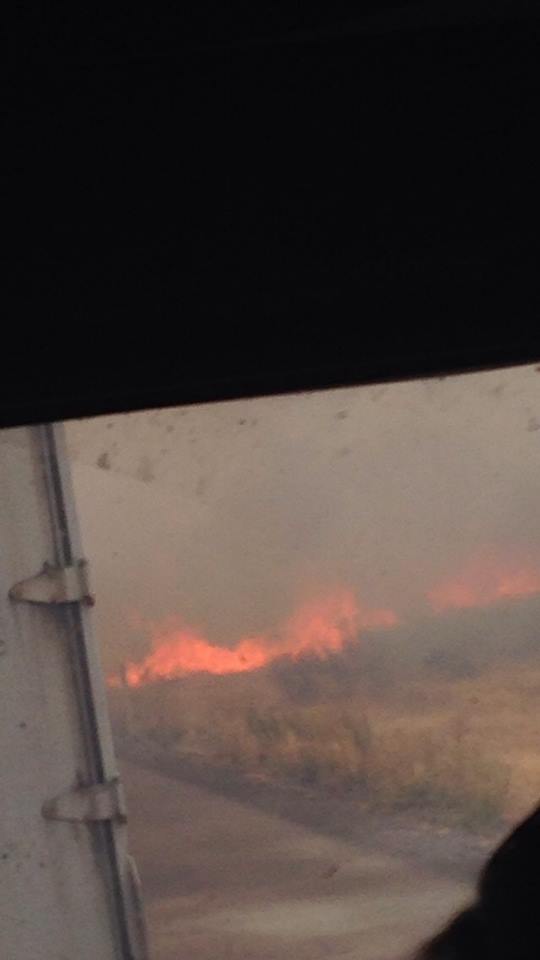
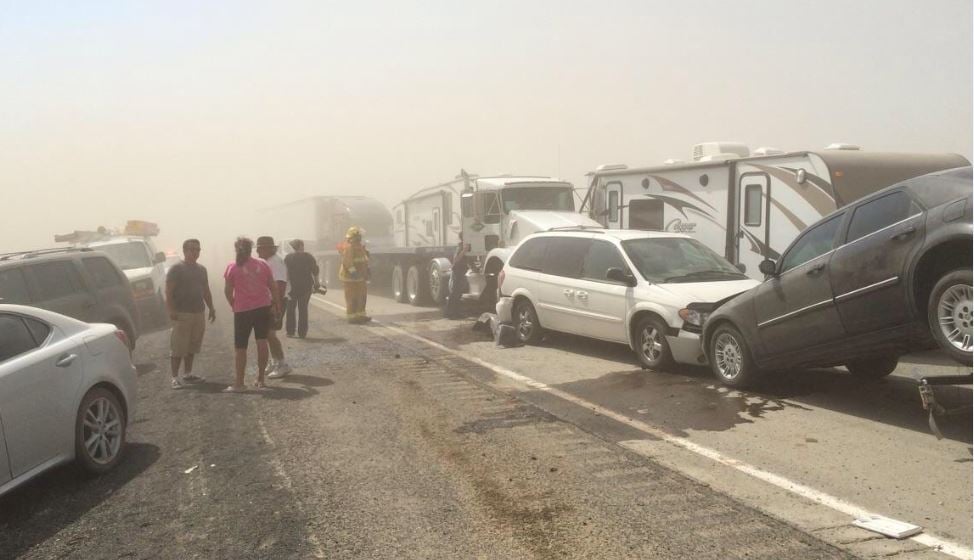
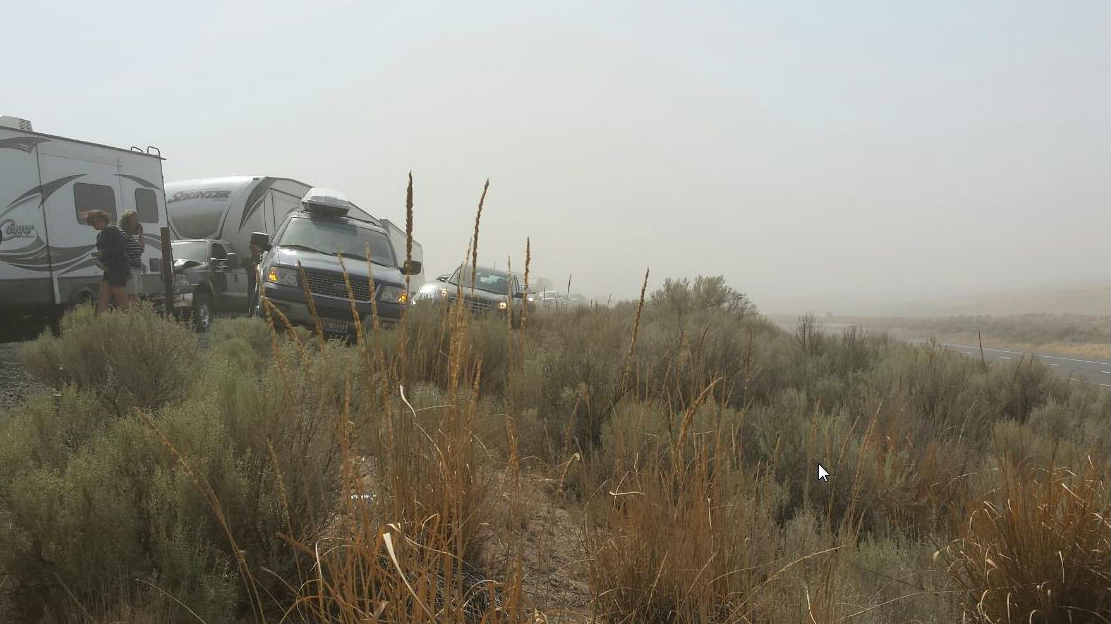
Dust storm causes multiple collisions on Highway 395 south of Ritzville, Washington


Photo from the scene on Highway 395 just south of Ritzville
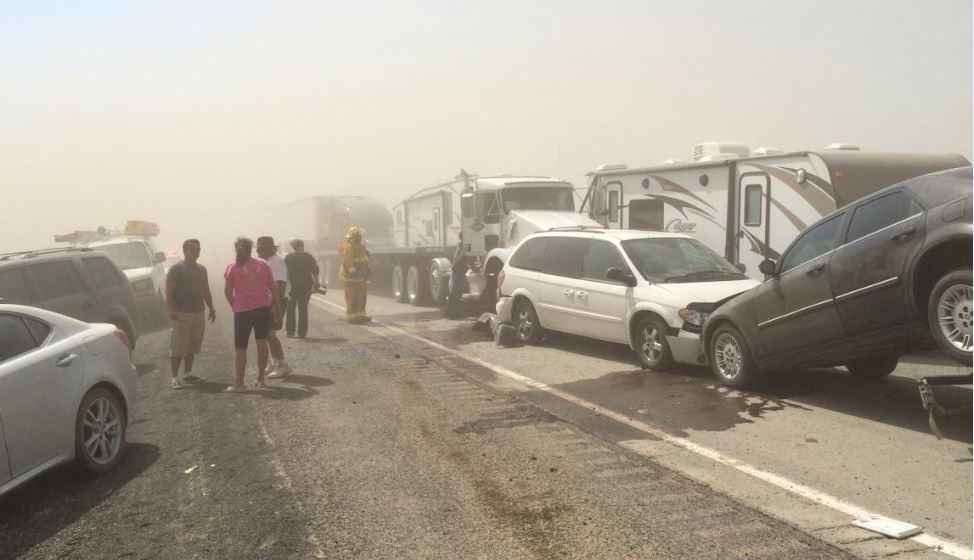
PHOTO: Peter Schmidt


Posted: Aug 14, 2015
by Cory Howard, Executive Producer Interactive, KHQ.com

ADAMS COUNTY, Wash. -

Update: 3:30 p.m.: Washington State Patrol reports both lanes of Highway 395 are open as of Saturday afternoon. The highway was closed for several hours Friday because a dust storm in the area was causing low visibility and multiple collisions.

Update: As of Saturday morning Washington State Patrol reports all units are clear of the scene of a dust storm on Highway 395. Northbound 395 from State Route 26 to I-90 will remain closed until further notice. Southbound Highway 395 is open to all traffic. The Department of Transportation is on scene providing traffic control. Detours are in place.

The Washington State Patrol is responding to multiple collisions on Highway 395 due to a dust storm causing low visibility about 11 miles south of Ritzville.

Trooper Jeff Sevigney says there haven't been any major injuries reported, however there is a brush fire burning near milepost 71 and they are working to evacuate motorists.

Highway 395 from I-90 to State Route 26 is closed.

If you are in the area and can safely take a photo, please post it to our Facebook page.

This is a developing story and we will update you as soon as we confirm any additional details.
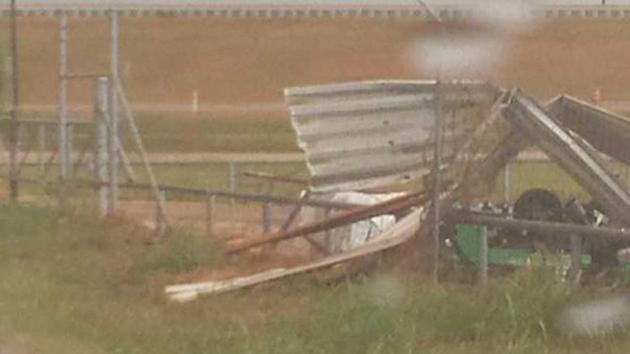
SUNDAY STORMS CAUSE PROPERTY DAMAGE IN SOUTHEAST TEXAS


Roof of Hockley tire shop blown off during Sunday's storms


Sunday, August 16, 2015 10:10PM

HOCKLEY, TX (KTRK) -- Storms Sunday left their mark on a tire shop in Hockley.

According to the Rosehill Fire Department, part of the roof of Hockley Tire on Roberts Road was blown off. They tell us power lines are also down in the area.

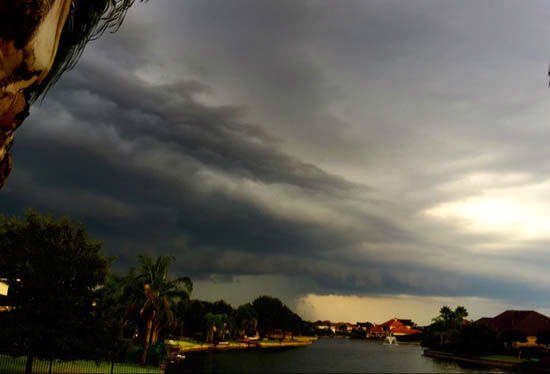
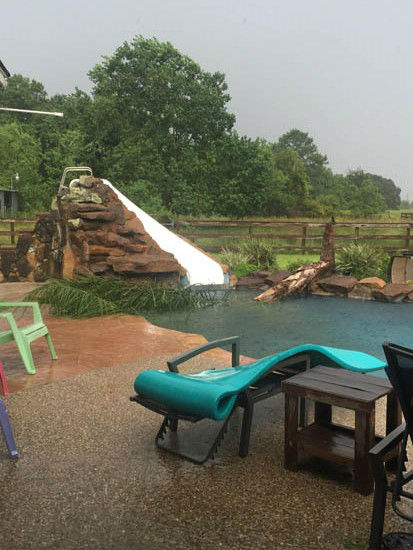
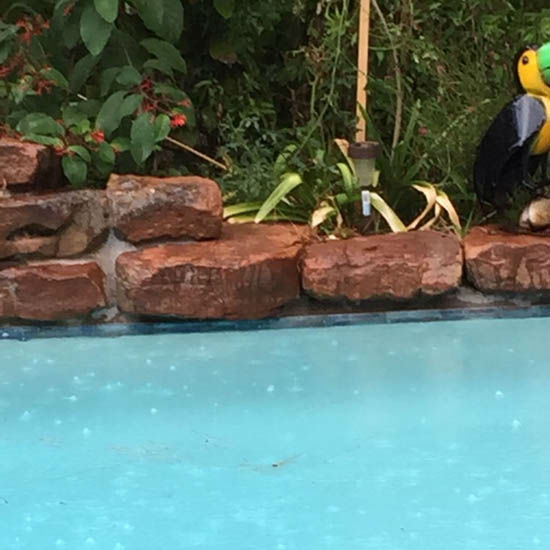
We've also received photos and videos from other damage across the area from Katy to Cypress and other spots across the viewing area.

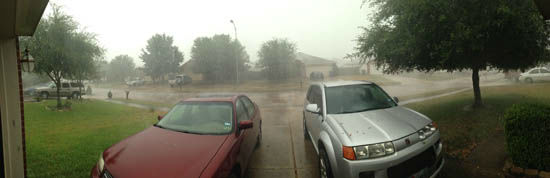
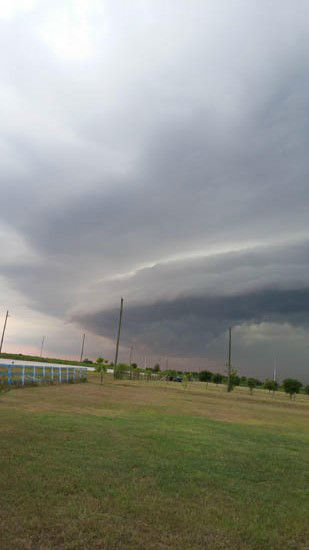
PHOTOS: Storms across southeast Texas

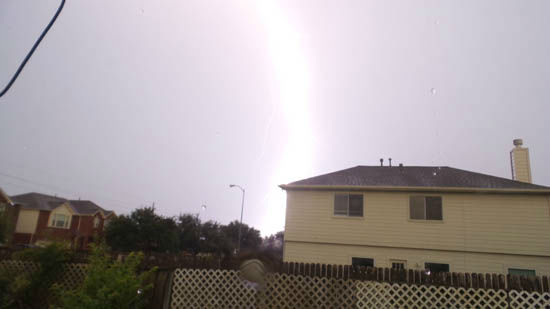
Lightning stike in Katy Photo/iWitness Photo


OSHA issues fine to Quality Blow Molding Inc. after man loses 4 fingers on his first day in Elyria, Ohio


First Posted: 5:19 pm - August 15th, 2015


ELYRIA, Ohio — 


The first day on the job for a new employee ended tragically when the 21-year-old man suffered severe burns and the loss of four fingers on his right hand as he tried to clear a jam in a plastic molding machine. The man had been working for a few hours when the incident occurred at an Elyria manufacturer.

The U.S. Department of Labor’s Occupational Safety and Health Administration cited his employer, Quality Blow Molding Inc., for two willful, two repeated and one other-than-serious violation on Aug. 12.

OSHA inspectors found the company failed to train the employee about safety requirements that protect workers from machine hazards. Quality Blow Molding also failed to report the injury to the agency, as required.

The company, which manufactures bottles, golf tees and other plastic items, faces proposed penalties of $171,270 and was placed in OSHA’s Severe Violator Enforcement Program following the investigation of the March 2 injury. The agency cited Quality Blow Molding for similar hazards in 2010 and 2014 at the same facility.

“A preventable and unforgivable injury has changed this young man’s life,” said Kimberly Nelson, OSHA’s area director in Toledo. “For the second time in two years, Quality Blow Molding intentionally and willfully disregarded OSHA standards and requirements for machine safety.”

OSHA inspectors found the company also failed to protect workers from operating machine parts because it had not implemented procedures to prevent machines from starting up during service and maintenance. In addition, the company did not train workers on safety procedures or install machine guards on horizontal lathes. These violations are among OSHA’s most frequently cited, and can result in death or permanent disability.

The company has 15 business days from receipt of its citations and penalties to comply, request an informal conference with OSHA’s area director, or contest the findings before the independent Occupational Safety and Health Review Commission.

To ask questions, obtain compliance assistance, file a complaint, or report amputations, eye loss, workplace hospitalizations, fatalities or situations posing imminent danger to workers, the public should call OSHA’s toll-free hotline at 800-321-OSHA (6742) or the agency’s Toledo Area Office at 419-259-7542.

Under the Occupational Safety and Health Act of 1970, employers are responsible for providing safe and healthful workplaces for their employees. OSHA’s role is to ensure these conditions for America’s working men and women by setting and enforcing standards, and providing training, education and assistance.

Disinvestment in rail infrastructure between New York and New Jersey could cause a decline in the region’s economic viability.


'Transportation Armageddon' Is Coming to the Northeast Rail Corridor

Metro New York is being held hostage by political vanity, and the region’s economic health is at stake.
Sarah Goodyear
@buttermilk1
Aug 13, 2015


Travelers inspect the departures board at Penn Station on in July 2015. (AP Photo/Mary Altaffer)


In January 2011, Senator Chuck Schumer warned that disinvestment in rail infrastructure between New York and New Jersey could cause a decline in the region’s economic viability. That was shortly after New Jersey Governor Chris Christie single-handedly shut down construction of an $8.7 billion federal project to build two new tunnels across the river, citing concerns about his state’s liability for cost overruns. Schumer, speaking at a Crain’s forum, said Christie’s move would have long-term repercussions:


“Historians may well look back at this decision—to put a stop to the largest transit project in the country—as a turning point, as a moment that the region, and the nation, stopped looking towards the future.”

The project Christie killed—loudly proclaiming his fiscal responsibility to a receptive conservative audience—would have been the biggest public-works endeavor in the nation at the time, modernizing and adding capacity to an outdated and overburdened Hudson River rail crossing where Amtrak and New Jersey Transit trains compete for track time while carrying 160,000 passengers each day. Flooding from Superstorm Sandy in 2012 accelerated the forces of entropy,and Amtrak has said it will have to shut down tunnels in and out of Manhattan one at a time for repairs. The existing rail tunnels are a fragile chokepoint whose failure could asphyxiate the entire Northeast rail corridor.

Fast-forward to July 2015. During one hot and humid week, travelers trying to get between New Jersey and New York by rail found themselves mired in four consecutive days of commuter hell, as power and signaling systems on the busy corridor failed over and over again. Not quite an apocalypse, perhaps, but an alarming affirmation of doomsayer predictions nonetheless.

For the Hudson River rail crossing, it seems, the dystopian future is now. The existing rail tunnels are a fragile chokepoint whose failure could asphyxiate the entire Northeast rail corridor—all the way from Boston to Washington, D.C.—and, by extension, further strain the already nightmarish roads in the metro New York region.

In testimony before the New Jersey State Senate this week, a top Amtrak official warned that the recent infrastructure failures “could become the norm.” According to NJ.com, Amtrak Executive Vice President Stephen Gardner said the antiquated tunnels, tracks, and electrical systems that carry millions across the Hudson each year are in need of $4 billion in annual investment over several years to get to modern functionality. Total costs for the project would be at least $14 billion and could exceed $20 billion, according to some estimates.

Stranded commuters might have felt a sense of urgency about figuring out how to get those investments made, as commutes that usually run under 30 minutes stretched to three hours. For many elected officials in the region, however, investing in political posturing remains a top priority. Rail commuters in the Northeast have been held hostage to Christie’s ambition and Cuomo’s vanity.

Neither New York nor New Jersey wants to end up shouldering too much of the cost, and this time it has been New York’s governor, Andrew Cuomo, who has been most vocal in protecting his home state’s coffers, insisting that the federal government provide grants and not loans to fund the project. He has been cold to entreaties from U.S. Transportation Secretary Anthony Foxx for a meeting on the matter.

“It’s not my tunnel!" Cuomo said at a press conference Monday. "Why don’t you pay for it? It’s not my tunnel. It is an Amtrak tunnel that is used by Amtrak and by New Jersey Transit." (As other observers have pointed out, Cuomo has been willing to take on debt to build one of his pet transportation projects, a replacement for the Tappan Zee Bridge over the Hudson that serves many fewer commuters, but connects New York to New York rather than to New Jersey.)

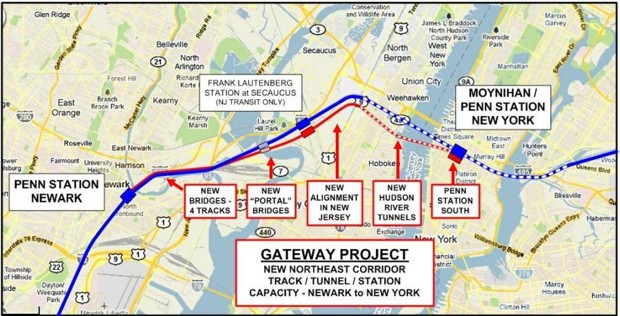
In the latest round of negotiations, Senator Schumer has again tried to take the high ground, calling on Tuesday for the creation of a new nonprofit corporation that would coordinate financing for the most recent proposal to improve the rail connections, known as the Gateway project. He warned of a coming “transportation Armageddon” if the region’s leaders can’t get it together to agree on a plan. A map of Amtrak’s proposed Gateway Project to improve rail service over the Hudson. (Amtrak)

Cuomo later softened his stance, saying in a statement that he welcomed Schumer’s proposals. “We both agree that [this] will require significant federal investment,” Cuomo said, “and I look forward to working with him to move this critical project forward.”

In his 2011 speech, Schumer noted that the New York-New Jersey-Connecticut region’s public transportation infrastructure makes it uniquely qualified among American metropolitan areas to compete on the global economic stage:


It has been one of the particular geniuses of New York going back centuries that we have always recognized the importance of investing in infrastructure, even when others did not. ...

Public transportation is what separates the New York region from almost every other American city and surrounding suburbs. That we can move so many people in and out of such a dense environment is essential, and one of the reasons that, even today, New York is the largest metropolitan region in this country, with 5 million more people than live in and around Los Angeles. ….

[M]any experts would tell you the interconnections that having so many people in one place gives rise to is one of the reasons that we have become a dominant financial center, a dominant media center, and now, increasingly, a dominant high-tech center. The density that mass transit facilitates will only become more important as we move further into the 21st Century information age.

He was right about all of that. And that’s why the people of the region, and the nation, are so ill-served by the political squabbling that continues to push a solution to the Hudson River crossing into the distant future. For Cuomo to say “It’s not my tunnel” is a patent absurdity. New York does not exist in a vacuum, any more than New Jersey does. The two states should be allies, rather than antagonists.

Yet our system allows a regional transportation solution to be manipulated by state politicians with their own agendas and narrow-minded competing interests. Rail commuters in the Northeast have been held hostage to Christie’s ambition and Cuomo’s vanity. The health of a whole region’s economy is in danger. It’s time to find another way forward.

How Whales Change Climate


Published on Nov 30, 2014
 
This video was produced as a gift to humanity by Sustainable Human (sustainablehuman.me). Visit us to find out how you can support and create videos like How Whales Change Climate in collaboration with a global team of volunteers. Together, we can change the story of the world.