This blog presents Metropolitan Engineering Consulting & Forensics (MEC&F) claim management and claim investigation analyses of some of the typical claims we handle
Dive teams are continuing their search on
Lake St. Clair this morning for a man believed to have possibly drowned
following a fall from a boat.
Keith Rowley, the Chief of the Southfield Fire Department, has been
missing since Friday evening following reports of him going overboard.
Deputies tried to locate Rowley unsuccessfully throughout the evening. Three other people were aboard the boat including one Troy man who
was handcuffed and arrested on an Operating a Watercraft While
Intoxicated charge.
The Macomb County Sheriff’s Office Dive Team will continue their search this morning at approximately 7:00 am.
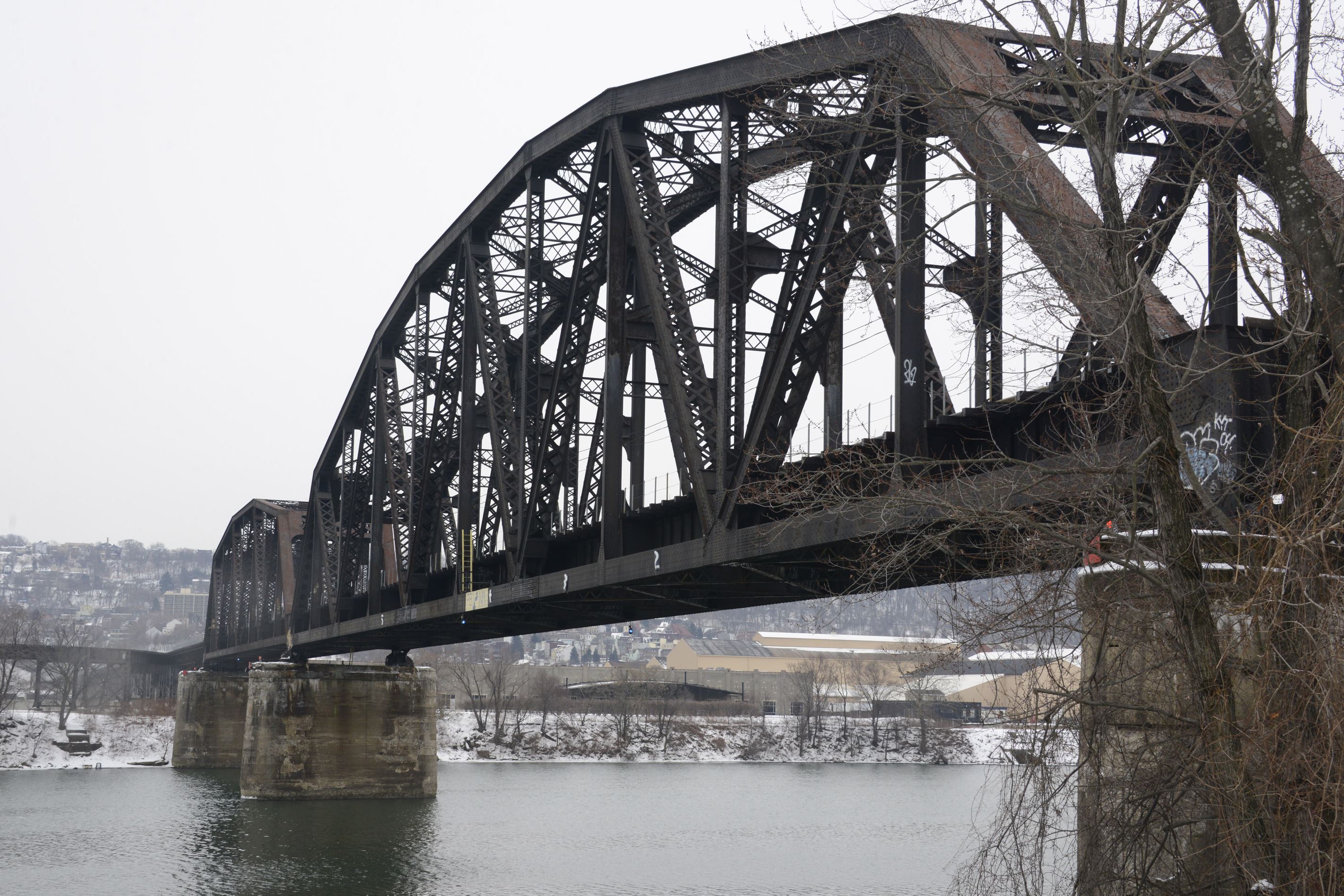
Darrell Sapp/Post-Gazette There are more than 70 railroad bridges in Allegheny County.
By Karen Langley / Post-Gazette Harrisburg Bureau
July 30, 2015 HARRISBURG, PA
U.S. Sen. Bob Casey on Thursday called for increasing the number of federal rail bridge inspectors, saying the government has too few workers overseeing the safety of more than 70,000 bridges in the United States.
Mr. Casey, a Democrat, told reporters on a conference call that the
Federal Railroad Administration has eight employees responsible for the
safety of the nation’s rail bridges. With train derailments in the news
in recent years, he said there should be more inspectors assigned to
rail bridges.
“They’re charged with making sure that these train bridges are safe,
and the investment we’ve made in their work is inadequate,” Mr. Casey
said. “You don’t have to be an expert in rail safety or engineering ...
to know that eight for 70,000 isn’t nearly enough.”
Mr. Casey is proposing nearly doubling the number of bridge specialists.
The Federal Railroad Administration is evaluating its bridge
management program to determine if more can be done with its current
resources, communications director Matthew Lehner said. The 2008 federal
Rail Safety Improvement Act instructed railroads to build bridge
management programs and the FRA to audit those programs, he said.
“We are carrying out those instructions,” Mr. Lehner said. “With more
resources from Congress, FRA could have a more robust program.”
The train company CSX, which has about 2,000 miles of tracks in
Pennsylvania, will invest more than $2.5 billion this year in the safety
and adequacy of its infrastructure, including in its bridge management
system, spokesman Rob Doolittle said.
The bridge management system requires that each of the company’s
bridges receive a complete inspection at least once a year, and tracks
crossing the bridges receive frequent visual inspections, he said.
“Safety is CSX’s highest priority, and CSX appreciates Sen. Casey’s
continued focus on these important issues,” Mr. Doolittle said.
Dave Pidgeon, spokesman for Norfolk Southern Corp., said rail
transportation is safe and getting safer. Norfolk Southern is spending
$1.3 billion this year on its infrastructure, including tracks and
bridges, he said. He said the company employs 4,700 people in
Pennsylvania.
“When we talk about safety, it’s not just a good business practice,” he said. “It’s personal, too.”
Ed Greenberg, spokesman for the Association of American Railroads,
said that freight railroads follow strict federal and industry standards
in all areas of train operations, including through visual and
high-tech inspections of tracks and bridges.
“Freight railroads are performing more inspections than required by
federal regulations, and at any point during the day or night, the
nation’s rail system is being inspected, undergoing maintenance or being
upgraded,” he said.
Gov. Tom Wolf supports Mr. Casey’s proposal, spokeswoman Beth Melena
said. In April, the governor’s office announced that Mr. Wolf had hired a
rail expert to focus on the safety of trains transporting crude oil
through Pennsylvania. The governor has also written to President Barack
Obama to ask for the federal government’s help in ensuring the safety of
transporting oil by train.
The
charred remains of railroad cars after an oil tanker train derailed and
exploded Monday, Dec. 30, 2013, west of Casselton, N.D. The cars have
been moved from the site of the crash to a nearby field. (Dave Wallis /
Forum News Service)
By Mike Nowatzki at 9:05 p.m.
BISMARCK, ND
North Dakota regulators are expected to
sign a deal with the Federal Railroad Administration on Wednesday that
will allow the state to launch a rail safety program funded by the
Legislature and proposed after a fiery oil train derailment near
Casselton in 2013.
The
agreement will permit two rail safety inspectors employed by the North
Dakota Public Service Commission to work with the FRA on track and
mechanical inspections.
Thirty states have rail inspection programs to supplement the federal program, including neighboring Minnesota and Montana.
Commission
chairwoman Julie Fedorchak said the advantage of a state-run program is
that North Dakota’s inspectors will focus only on in-state track and
can’t be pulled away to other states.
“It’s a big deal,” she said.
About
52 percent of the oil shipped in May from the Williston Basin went by
rail, the state Pipeline Authority reported this month. Rail traffic
increased 233 percent in North Dakota from 2005 to 2012 and has
continued to climb since then, Fedorchak said, citing FRA data.
“That
just increases the wear and tear on the track, and a large part of the
increase is hazardous materials,” she said. “We want to have these folks
out inspecting and finding problems before they cause an accident.”
State
lawmakers voted in April to spend $523,345 on the pilot program for
2015-17, with the intent of continuing it in 2017-19. The money will
come from an excise tax railroads pay on diesel fuel.
The
three-member PSC and Gov. Jack Dalrymple originally proposed two
full-time inspectors and a rail safety manager in the agency’s budget.
The final budget provided $253,345 for a full-time permanent inspector,
$70,000 for related operating expenses and $200,000 for a temporary
full-time inspector whose job the Legislature will have to reapprove in
2017.
Fedorchak said she hopes to extend an offer this
week to an applicant for the permanent job. The temporary job drew fewer
applicants, but she also hopes to fill that position soon.
“As we knew they would be, they’re more hesitant to leave a job for a temporary job,” she said.
Under
the agreement, the FRA will pay for classroom training for the state
inspectors, who must be certified to participate in investigative and
surveillance activities. Depending on their experience level, the state
inspectors could achieve certification in as little as six months,
Fedorchak said.
As of May, the FRA had 44 rail safety
inspectors and five vacancies in its eight-state region that includes
North Dakota, South Dakota and Montana, FRA spokesman Mike Booth said.
Nine of those inspectors were located in North Dakota, but they may serve multiple states and even other regions.
“Most
of the focus right now is in North Dakota, so chances are we’re pulling
people from the outside in, rather than the other way around,” Booth
said.
Booth said the FRA would welcome North Dakota’s
state safety program, which he called a “force multiplier” and “an
essential piece of our national rail safety program.”
Commissioner
Brian Kalk said he supports the agreement, calling it “a big step.” But
he doesn’t want people to get a false sense of security, as the state
still needs additional oil pipelines and investment by railroads to
improve safety, he said.
“This is not the silver bullet here. This is one of several important steps that have to happen,” he said.
Commissioner
Randy Christmann said he had the PSC’s legal counsel checking on one
part of the agreement to ensure it doesn’t commit the state to services
beyond what’s budgeted.
“Assuming that that’s all OK, I intend to vote for it,” he said.
Fedorchak said the PSC knows that lawmakers – who must reauthorize funding for the program in 2017 – will be watching closely.
“We’re
going to be keeping really close track of the benefits of having our
inspectors out on the road examining these track and mechanical issues
and working with the railroads to improve their safety performance,” she
said.
BP’s Andrew Platform in the North Sea (For illustration purposes)The Offshore Installations (Offshore Safety Directive)
(Safety Case etc.) Regulations 2015 (SCR 2015) came into force on July
19, 2015. They are the UK’s response to the EU’s Offshore Directive
which was adopted in June 2013.
Britain’s Health and Safety Executive (HSE) published a new guide to
help offshore oil and gas operators to adhere to the regulatory
requirements introduced by SCR 2015.
HSE explained that the document provides an explanation of the
regulatory provisions in SCR 2015 and is addressed to those with duties,
such as licensees, installation operators, installation owners, well
operators and others involved with offshore activities.
SRC 2105 applies to oil and gas operations in external waters, that
is, the territorial sea adjacent to Great Britain and any designated
area within the United Kingdom continental shelf (UKCS). They replace
the Offshore Installations (Safety Case) Regulations 2005 (SCR 2005) in
these waters, subject to certain transitional arrangements.
The primary aim of SCR 2015 is to reduce the risks from major
accident hazards to the health and safety of the workforce employed on
offshore installations or in connected activities. Furthermore, the
Regulations also aim to increase the protection of the marine
environment and coastal economies against pollution and ensure improved
response mechanisms in the event of such an incident.
Offshore Safety Directive Regulator
The Directive also required the creation of an offshore competent
authority and the UK’s Department of Energy and Climate Change (DECC)
and HSE, working in partnership, have established the Offshore Safety
Directive Regulator (OSDR). The competent authority is governed by a
senior oversight board which will agree implementation arrangements, set
the strategic direction and agree decisions for the competent
authority.
Requirements to submit safety cases
According to the HSE, a safety case is a document that gives
confidence to operators, owners, workers and the competent authority
that the dutyholder has the ability and means to manage and control
major accident hazards effectively. Safety cases under SCR 2015 are required for all installations
operating, or to be operated, in external waters. It is an offence to
operate an installation in external waters without a safety case that
has been accepted by the competent authority.
Different requirements apply to installations used for producing oil
and gas compared to those used for other purposes, such as drilling,
exploration or providing accommodation. For new production installations
to be established offshore, operators must send a notification to the
competent authority at the early design stage.
Once given, the competent authority’s acceptance of a safety case may last as long as the installation to which it applies.
No safety cases for offshore pipelines
SCR 2015 does not require safety cases for offshore pipelines.
However, the Regulations do require the installation safety case to
address all risks arising from pipelines connected to the installation
and any other pipelines with the potential to cause a major accident on
the installation.
New regulations to protect workers and environment
According to the Institution of Occupational Safety and Health
(IOSH), a body for individuals with a professional involvement in
occupational safety and health, revised offshore safety case regulations
in the UK will help to safeguard both workers and the environment.
Allison Laws, Chair of the Offshore Group at IOSH, said: “The new regulations will help to protect thousands of workers in the offshore industry. “It is vital that all operators follow the regulations and they
will feel the benefits of doing so. After all, safety and health is an
investment, not a cost.”
Ian Waldram, a member of the IOSH Offshore Group committee, said it was important operators familiarise themselves with the changes.
He said: “Whilst the agreed intention was to minimise changes to
the 2005 UK legislation, judged by many as a ‘best in class’ regulatory
regime, there are in fact a significant number of changes – some small,
others more significant.” Offshore Energy Today Staff
A
car ferry with 71 passengers and 23 crew members aboard caught fire off
Japan’s northernmost main island of Hokkaido on Friday, leaving one
crew member missing while everyone else evacuated in lifeboats, the
Japan Coast Guard said.
The 11,401-ton Sunflower Daisetsu caught fire in the Pacific Ocean
about 55km off Tomakomai port in southern Hokkaido at around 5.15pm,
coast guard officials said.
Kunihiko Orita, a 44-year-old junior officer, was unaccounted for as
he lost contact with other crew members after rushing to extinguish the
fire. He was tasked with taking charge of on-site fire fighting
operations in the event of a fire aboard, according to MOL Ferry.
Captain Mikiro Sakaue, 58, had remained on the ferry to communicate
with rescue vessels but later agreed to evacuate, according to the
officials. Three commercial ships and two patrol boats came to rescue
the evacuating passengers and crew and took them to Tomakomai port.
At a press conference at its Tokyo head office, MOL Ferry apologised
for the accident. A company official said the safety of the 93
passengers and crew members had been confirmed.
The fire broke out in a truck being transported by the ferry, which
left Ooarai port in Ibaraki Prefecture, northeast of Tokyo, at 1.45am,
and was to arrive at Tomakomai at 7.45pm, according to the coast guard
and MOL Ferry.
“I wasn’t afraid until I boarded a life raft, but just as I was
getting on, the outer walls of the ferry tumbled down,” said Takuya
Ozawa, 24, a passenger from Hokkaido’s capital city of Sapporo.
As sprinklers failed to put out the fire, a coast guard fireboat
sprayed water on the ferry to bring it under control. A coast guard
helicopter flew over the ferry around 7.20pm and confirmed smoke coming
from the starboard, but no flames were seen, according to the coast
guard.
The seven-deck ferry was built in 2001 and is authorized to carry up to 154 people, 62 cars and 150 large trucks.
It was carrying 68 vehicles and 100 cargo units for trailer trucks.
The accident prompted the transport ministry to initiate an
extraordinary audit of MOL Ferry’s offices. The Transport Safety Board
decided to send five accident investigators on Saturday.
///--------------///
Written by
Shubhajyoti
The
"Sun Flower Daisetsu" issued a distress signal on July 31, 2015, at
5.32 p.m. off the coast of Honshu, reporting a fire on board.
The fire
started on a cargo deck in one of the trucks and got out of control off
the coast of the northernmost island Hokkaido.
The ferry with 71
passengers and 23 crew on board was en route from Tokyo to Tomakomai
port, Hokkaido.
She was about 30 miles off the eastern coast of Honshu.
15 patrol boats and 5 aircraft were sent to the Ferry. The passengers,
all wearing lifejackets, were gathered on the deck, awaiting the arrival
of rescue Teams.
All passengers and crew were safely evacuated, no
injures reported. One crew member went missing.
There were about 160
vehicles on board, mostly trucks.