MEC&F Expert Engineers

Monday, June 29, 2015

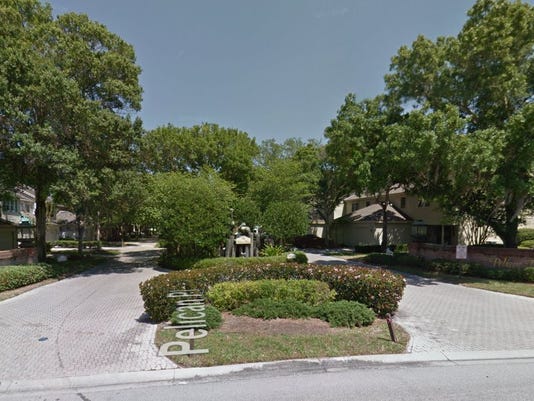
Maintenance worker treated for chlorine inhalation at the Pelican Place complex in Belleair, Florida

Maintenance worker treated for chlorine inhalation at the Pelican Place complex in
Belleair, Florida

Belleair, Florida 

Emergency rescue crews treated a maintenance worker for chemical inhalation at a townhouse complex after he was overcome with chlorine fumes when he walked into a pool shed on the property Monday morning.

Authorities say they believe there was a malfunction of an automatic pool system that mixes the chemicals together to treat the pool.

Hazmat crews responded and evacuated one nearby building while they investigated and aired out the shed.

The incident occurred at the Pelican Place complex off Poinsettia Road.

Complaint inspection finds workers exposed to amputation hazards at Cleveland Die & Manufacturing Company

June 29, 2015

Complaint inspection finds workers exposed to amputation hazards
at Cleveland Die & Manufacturing Company

Employer name: Cleveland Die & Manufacturing Company

Investigation site: 20303 1st Avenue, Cleveland, Ohio

Date citations issued and what prompted inspection: The U.S. Department of Labor's Occupational Safety and Health Administration's Cleveland office issued 11 serious safety and health citations to Cleveland Die & Manufacturing Company. The agency initiated an inspection in March after receiving a complaint alleging unsafe working conditions at the company which manufactures brackets and parts for the automotive industry.

Investigation findings: Investigators cited 11 serious violations at the Ohio facility.

Violations included:
  • Exposing workers to operating parts of machinery by failing to install safety mechanisms
  • Lack of procedures to ensure equipment was de-energized to prevent it from operating during service and maintenance such as the changing of dies
  • Personal protective equipment such as arc-rated clothing and voltage rated gloves as well as face protection not provided
  • Hooks and wire ropes were not inspected as required.
  • Employees were not trained about the hazardous chemicals used in the workplace.
  • The company lacked a hearing conservation program and failed to implement engineering controls to reduce noise exposure.
"Lack of safety mechanisms on machines continues to be among the most frequently cited OSHA violations and that is unacceptable," said Howard Eberts, OSHA's area director in Cleveland. "Each year thousands of workers suffer injuries and illness that can affect their ability to earn a living. Cleveland Die & Manufacturing needs to make immediate improvements to ensure their workers are protected on the job."

Proposed Penalties: $59,400

To ask questions, obtain compliance assistance, file a complaint, or report workplace hospitalizations, fatalities or situations posing imminent danger to workers, the public should call OSHA's toll-free hotline at 800-321-OSHA (6742) or the agency's Cleveland Area Office at 216-447-4194.

Midwest Manufacturing and Distributing Inc., doing business as Midwest Metal Forming in Melrose Park, Illinois, exposes workers to machine hazards. OSHA proposes penalties of more than $54K for 3 safety violations

June 29, 2015

Midwest Manufacturing and Distributing Inc., doing business as Midwest Metal Forming in Melrose Park, Illinois, metal shop exposes workers to machine hazards.  OSHA proposes penalties of more than $54K for 3 safety violations

Employer name: Midwest Manufacturing and Distributing Inc., doing business as Midwest Metal Forming

Investigation site: 6025 N. Keystone
Chicago, Illinois


Date investigation initiated and what prompted inspection: The U.S. Department of Labor's Occupational Safety and Health Administration's Chicago North Area Office initiated a follow-up inspection of Midwest Metal Forming, March 4. The sheet metal manufacturer was cited in 2014 for exposing workers to amputation hazards from unguarded machinery and failed to provide OSHA with information detailing how the company had abated the safety hazards. 

Investigation findings: OSHA issued one willful and two other-than- serious safety violations.

Investigators found the press brake lacked adequate machine guarding which protects workers from coming in contact with operating parts of the machine. Lack of appropriate machine guarding can cause lacerations, bruises, and amputations.

Two other-than- serious violations were issued to the company for not using electrical equipment in accordance with labeling and failing to post the annual injury and illness summary.

Quote: "Midwest Metal Forming has failed in its responsibility to protect workers from dangerous operating parts of machinery," said Angeline Loftus, OSHA's Area Director for the Chicago North Office in Des Plaines. "Each year thousands of workers are injured by such hazards."

Proposed Penalties: $54,780

To ask questions; obtain compliance assistance; file a complaint or report amputations, losses of an eye, workplace hospitalizations, fatalities or situations posing imminent danger to workers, the public should call OSHA's toll-free hotline at 800-321-OSHA (6742) or the agency's Chicago North Area Office in Des Plaines at 847-803-4800.
New York state officially bans fracking, issues a 1,448 page final report which completed the state’s seven-year review of fracking.

the risks to our water, soil, air, health and climate our simply too great to continue this fossil extraction strategy

ny state fair fracking rally 1.JPG
Elizabeth Henderson, an organic farmer in Newark, speaks out against fracking at a rally at today's New York State Fair. (Glenn Coin | gcoin@syracuse.com)

June 29, 2015
 
Albany, N.Y.

It's official: New York has banned fracking.

After more than seven years of study, the state Department of Environmental Conservation today issued the final document needed to ban the controversial drilling practice, known formally as high-volume hydraulic fracturing.

"Prohibiting high-volume hydraulic fracturing is the only reasonable alternative," said DEC Commissioner Joe Martens in a prepared statement. "High-volume hydraulic fracturing poses significant adverse impacts to land, air, water, natural resources and potential significant public health impacts that cannot be adequately mitigated. This decision is consistent with DEC's mission to conserve, improve and protect our state's natural resources, and to enhance the health, safety and welfare of the people of the state."

Today's finding statement has been in the works since December, when Martens said he would ban fracking because too little was known about the potential health impacts. Last month, the DEC released a 1,448-page report on fracking that began in 2009. Today's findings statement is based on that report.

The fracking ban is not permanent, and could be rescinded. Proponents and opponents of the ban both said they expect lawsuits to be filed.

Fracking has drawn more scrutiny than any other environmental issue in New York. The study released in May drew 260,000 public comments. More than 300 pages of the final study were devoted to responding to those comments.

Tactics of U.S. oil companies used this spring to quash efforts by investors to win the right to nominate climate experts for board seats.

investors think the companies must do more to address climate change risks - which range from shortages of water needed for drilling to hefty carbon taxes governments could impose on fossil fuel producers


Oil Companies Played Hardball to Defeat Climate Outsiders

Published in Oil Industry News on Monday, 29 June 2015

Graphic for Oil Companies Played Hardball  to Defeat Climate Outsiders in Oil and Gas News
Petty legal filings. Diversionary ballot measures. Counting abstentions as no votes. These are just some of the tactics U.S. oil companies used this spring to quash efforts by investors to win the right to nominate climate experts for board seats.

Led by New York City Comptroller Scott Stringer and proposed at 75 U.S. companies in various industries this year, the so-called proxy access measure would give investor groups who own 3 percent of a company for more than three years the right to nominate directors. At the 19 oil and gas companies targeted, the aim was to demand more accountability on global warming.

While the non-binding measure passed at two-thirds of all the companies targeted, and at 15 of the 19 energy companies, some took unusual steps to block it. Oilfield services provider Nabors Industries Ltd, for example, counted non-votes from brokers as votes against the proposal. Still, the measure passed at Nabors, which didn’t respond to requests for comment.

Shale oil company Pioneer Natural Resources Co filed a last-minute counterproposal calling for a higher ownership threshold of 5 percent, which institutional investors say is much harder to obtain. Pioneer said it gave shareholders extra time to vote. Stringer's proposal failed.

Exxon Mobil Corp and Chevron Corp tried to block the proposal by arguing the New York City pension funds behind it had not shown proof of owning their shares for a full year. The proposal passed at Chevron and narrowly failed at Exxon.

The 15 victories at energy companies show that investors think the companies must do more to address climate change risks - which range from shortages of water needed for drilling to hefty carbon taxes governments could impose on fossil fuel producers, fund managers said.

"ExxonMobil received this (proxy access) proposal due to its exposure to risk related to climate change," James Andrus, a representative from Calpers, told Exxon's annual meeting.

The outcome also shows companies miscalculated the groundswell of support for more climate accountability ahead of the U.N. conference on global warming in December, fund managers said.

A simple majority was needed for the non-binding proposal to pass. Of the 19 targeted energy companies, all opposed the measure, except for shale oil producers Apache Corp and Whiting Petroleum Corp.. The other two companies where the measure failed were Cabot Oil and Gas Corp and Noble Energy Inc.

'PETTY LEGAL ACTIONS'

Stringer characterized Chevron and Exxon's maneuvers as "petty legal actions" in a statement made in February. The U.S. Securities and Exchange Commission sided with New York.

Because the measures are non-binding, corporate boards can either ignore the results of the votes or decide to change their bylaws.

While most companies say their boards' nominating committees are best suited to pick nominees for director, energy companies in particular likely do not want the type of board candidates that labor pension funds might promote, said Erik Gordon, clinical assistant professor at the University of Michigan's Ross School of Business.

"Companies fear that the nominees will be single issue candidates who focus solely on a labor or environmental issue such as executive compensation or global warming," said Gordon. "In fact, the Comptroller's office has targeted companies that it feels have done too little to address climate change, and that frightens energy companies."

Steven Mueller, chief executive officer of Southwestern Energy Co, told Reuters that his board opposed the proxy access proposal because Southwestern was unfairly targeted because it produces oil and natural gas. The proposal passed at Southwestern.

"We didn't believe it was a governance issue," said Mueller, who said Southwestern's board is working on how to respond to the proposal.
Source: www.reuters.com