MEC&F Expert Engineers

Monday, May 11, 2015

Coast Guard saves 5 people after boat sinks 10 miles west of Crystal River, Florida


29 foot Response Boat small 

ST. PETERSBURG, Fla. — The Coast Guard rescued five people from the water after their 48-foot boat sank 10 miles west of Crystal River, Florida, Saturday night.

At 9:27 p.m. watchstanders from Coast Guard Sector St. Petersburg received a call via VHF-FM radio channel 16 from a man stating his boat was taking on water with a total of five people aboard, all wearing life jackets.

A 29-foot Response Boat-Small from Coast Guard Station Yankeetown, Florida, and an Air Station Clearwater MH-60 Jayhawk helicopter crew were launched.

At 10:05 p.m. watchstanders at the sector were notified that the vessel was sinking and all people aboard the boat were going into the water. Watchstanders directed the people to stay with the vessel and launch a handheld red flare when they saw rescue personnel.

At 10:27 p.m. the RB-S boatcrew arrived on scene, observed a single handheld flare, located the people and pulled them out of the water. The people were taken to Pete’s Pier in Crystal River without any reported injuries.

The Jayhawk crew stayed on scene until all the people were recovered safely.
The owner is coordinating salvage plans.

“These people did everything right, in the midst of danger,” said Petty Officer 2nd Class Jonathan Wheatley, an operations specialist at the sector. “They had all the proper safety equipment including a marine radio, life jackets and flares, and they used them properly.”
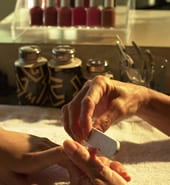
BRAVO, NEW YORK: NY Governor Orders Emergency Protections for Nail Salon Workers


Governor Andrew Cuomo has ordered emergency measures to protect nail salon workers from wage theft and exposure to potentially dangerous chemicals.

Strict new rules are taking effect immediately that are designed to protect manicurists from chemicals used in nail salons.

Health advocates have linked those chemicals to breathing problems, skin disorders, and miscarriages.

The governor is also launching a new task force that will conduct case-by-case investigations into nail salons across the state.

This comes after the New York Times published an investigation into poor pay and conditions at nail salons. 

The task force will also conduct a multilingual campaign to educate workers on their rights.

Unlicensed salons, or those who defy orders to repay back wages, would be shut down.

In a statement, the governor said, "New York State has a long history of confronting wage theft and unfair labor practices head on. We will not stand idly by as workers are deprived of their hard-earned wages and robbed of their most basic rights."

The United States of Chemicals: Chemicals May Be Risky to Nail Salon Workers


Study: Workers Are Exposed to Unsafe Levels of the Chemical Toluene


May 5, 2011 -- Harmful chemicals may be endangering the health of Vietnamese nail salon workers, according to a new study.

Researchers at the Cancer Prevention Institute of California and Asian Health Services report finding unsafe levels of toluene, a solvent linked to neurological, reproductive, and endocrine damage, and other chemicals, including one that has been banned by the FDA since 1974.

The study is published in the American Journal of Public Health.

The research team recruited 80 workers, all of whom were Vietnamese women, at 20 different salons -- half of them in Oakland, Calif. -- to participate in the study. Each of them wore a monitor attached to a shirt or coat collar. Over the course of each shift, the monitor would measure concentrations of toluene, ethyl acetate, and isopropyl acetate.

High Levels of Risky Chemical

The researchers found that the average toluene levels were 0.15 parts per million, nearly twice the amount recommended by the California Environmental Protection Agency for indoor air, according to the study.

In addition to the samples taken from the workers’ monitors, they also measured the ambient air in three of the salons being studied. They found notable levels of methyl methacrylate, which has been banned for decades.

Finally, the salon workers were given a questionnaire in which they were asked to identify any health symptoms they had experienced while working. The most frequent complaints common among salon workers included irritation of the eyes, nose, throat, and skin, shortness of breath, nausea, and coughing.
“This really explains why we have been hearing from salon workers about the health problems that they have,” study researcher Thu Quach, PhD, MPH, says of the Vietnamese women who make up most of the salon workforce in California.

While Quach’s study focused on workers in California, reports of adverse health effects among Vietnamese salon workers have been a concern in other parts of the country, including the Pacific Northwest, Houston, and Boston.

“It’s definitely a national issue,” says Julia Liou, MPH, manager of the California Healthy Nail Salon Collaborative, an organization founded in 2005 to address the health and safety concerns among California salon workers. “We’re concerned about their cumulative, chronic, and long-term health problems.”

Nail salon workers may be at heightened risk of health problems because they are exposed to the chemicals on a daily basis. However, Quach points out, the toxins are in the nail care products, which means that customers are exposed as well, albeit to a much lesser extent.

In addition to the acute symptoms that salon workers suffer, Quach is concerned about potential long-term health risks.

“I’m really very interested in following the long term health outcomes of these women.”

NAIL TECHNICIANS' HEALTH AND WORKPLACE EXPOSURE CONTROL


Approximately 350,000 people are employed in nail salons and other personal care services in the United States according to industry estimates (Nails Magazine, 2008–2009). These estimates indicate the workforce is largely female (96%) with the industry employing a large number of minority workers (63%). Nail salon employees are potentially exposed to dozens of chemicals including acrylates, solvents, and biocides as dusts or vapors. 

A small but growing number of studies have examined possible links between nail technicians' work and health outcomes, such as respiratory, neurological, and musculoskeletal effects, as well as other health conditions. Much of the NIOSH-sponsored research to-date has focused on the respiratory system.

Nail technicians perform manicures and may also perform pedicures. Manicures are performed over a workstation—or "nail table"—with the client's hands resting on the table as they work. The nail table is, therefore, directly below the nail technicians' breathing zone. Downdraft vented nail tables and portable source capture systems that place local exhaust ventilation close to the work area provide the means to vent (remove) potential dust or chemicals away from the breathing zone. 

Thus, theoretically, potential contaminants may be removed before they cross the breathing zone and are inhaled. Good general room ventilation is also important. There is some overlap in nail products and processes for manicures and pedicures. Exposures may differ, though, as pedicures involve processes such as soaking feet, filing calluses, and the use of pedicure work stations, but do not typically involve artificial nail application.


Hand shot of a manicurist filing a customer’s fingernails The NIOSH publication entitled Controlling Chemical Hazards During the Application of Artificial Fingernails (NIOSH Publication No. 99-112) describes simple measures to reduce exposures during artificial nail application, such as keeping dispensers closed and wearing long sleeves and gloves to protect skin from potential irritants and sensitizers. Information is also provided on engineering controls, such as how to build a downdraft vented nail table that vents to the outdoors, plus references to other sources of information.
View the Spanish version of this report.

Current Research

NIOSH Report: An Evaluation of Local Exhaust Ventilation Systems for Controlling Hazardous Exposures in Nail Salons 
Adobe PDF file
EPHB Report No. 005-164


The National Institute for Occupational Safety and Health (NIOSH) conducted a research project to examine the effectiveness of different portable source capture ventilation systems (SCVS) units with the potential for use in nail salons. Units received for evaluation in response to a Federal Register NoticeExternal Web Site Icon featured local exhaust recirculation. With local exhaust recirculation, contaminated air is drawn through a filter and then vented it back into the room (for the NIOSH evaluation, however, air was vented into an exhaust system). 

The air intakes on these SCVS units could also be positioned so that contaminated air could be drawn into the unit before it crosses the breathing zone of the face. Airflow and capture characteristics of the units as well as the noise levels around them were evaluated.

NIOSHTIC-2

NIOSHTIC-2 search results on manicurists and nail tables
NIOSHTIC-2 is a searchable bibliographic database of occupational safety and health publications, documents, grant reports, and journal articles based on research supported in whole or in part by NIOSH.

Journal Articles and Abstracts Published by NIOSH Authors

A manicurist smiles as she files her customer’s fingernails A pilot respiratory health assessment of nail technicians: symptoms, lung function, and airway inflammation

Am J Ind Med. 2009 Nov;52(11):868-75.

 
A pilot respiratory health assessment of nail technicians and a comparison group was conducted. Lung function values and symptoms were presented by group. Among the nail technician group, relationships between respiratory measures (lung function and nitric oxide) and some exposure measures were seen, suggesting a need for further study.


Urinary phthalate metabolite concentrations among workers in selected industries: a pilot biomonitoring study
Ann Occup Hyg. 2009 Jan;53(1):1-17.

 
Workers from manufacturing companies and nail-only (manicure) salons that used phthalates or phthalate-containing materials were recruited into the study.


 Manicure, pedicure and artificial nail services were provided at nail-only salons where di-n-butyl phthalate (DBP) was confirmed in polishes, topcoats and basecoats used by the study participants. Concentrations of 10 phthalate metabolites were measured in workers' urine samples. Occupational exposure to DBP was most evident in rubber gasket, phthalate (raw material) and rubber hose manufacturing, with DBP metabolite concentrations exceeding general population levels by 26-, 25- and 10-fold, respectively, whereas DBP exposure in nail-only salons (manicurists) was 2-fold higher than in the general population.

Risk factors for asthma among cosmetology professionals in Colorado
J Occup Environ Med. 2006 Oct;48(10):1062-9.
A study was conducted of the prevalence, work-attributable risk, and tasks associated with asthma in a random sample of cosmeticians, manicurists, barbers, and cosmetologists holding licenses in Colorado. Application of artificial nails, hairstyling and shaving and honing were significantly associated with asthma arising in the course of employment.

Hazards of Ethyl Methacrylate [NIOSHTIC-2 abstract]
Am J Contact Dermat. 2000 Jun;11(2):119-20.
Letter to the editor with reference to NIOSH Health Report No. ECTB 171-05v, "Controlling Chemical Hazards in the Nail Salon Industry." Contains a reply to commentary regarding the description of hazards of ethyl methacrylate in the NIOSH report.

A new manicure table for applying artificial fingernails [NIOSHTIC-2 abstract]
Appl Occup Environ Hyg. 2000 Jan;15(1):1-4.
A multi-station downdraft nail table was developed by NIOSH for workplaces where several clients are served at once. A schematic of the table, which vents to the outdoors, was shown and other measures to reduce exposures are described. The table was evaluated and shown to reduce levels of ethyl methacrylate in personal breathing zones.

Control of ethyl methacrylate exposures during the application of artificial fingernails
Am Ind Hyg Assoc J. 1997 Mar;58(3):214-8.
A commercially available recirculating downdraft nail table with charcoal filters was purchased and evaluated. NIOSH made modifications to the table and vented the system to the outdoors. An evaluation was performed. The average ethyl methacrylate exposure in personal breathing zone samples when using the modified table for approximately 6 hours was 0.6 ppm; when using the unventilated conventional table, the average exposure was 8.7 ppm. The difference in the values was statistically significant.

NIOSH Health Hazard Evaluation (HHE) Reports

Warren Tech Adobe PDF file [PDF - 211 KB]
HHE Report, HETA 2002-0306-2911

The Grand Experience Salon Adobe PDF file [PDF - 229 KB]
HHE Report, HETA 97-0153-2694

Tina & Angela's Nail Salon Adobe PDF file [PDF - 176 KB]
HHE Report, HETA 92-128-2241

Haute Nails Adobe PDF file [PDF - 167 KB]
HHE Report, HETA 90-048-2253

Chapple Hair Styling Salon Adobe PDF file [PDF - 190 KB]
HHE Report, HETA 89-138-2215

Journal Article Published by Author of NIOSH-Sponsored Extramural Research

Results from a community-based occupational health survey of Vietnamese-American nail salon workers
J Immigrant Minority Health (2008) 10:353–361.
A community-university collaborative partnership assessed self-reported work-related health effects and environmental factors in Boston's Vietnamese immigrant community via an interviewer-assisted survey. Seventy-one nail technicians responded. Musculoskeletal disorders, skin problems, respiratory irritation and headaches were commonly reported as work-related, as were poor air quality, dusts and offensive odors. The reporting of a work-related respiratory symptom was significantly associated with the reporting of exposure factors such as poorer air quality. Absence of skin disorders was associated with glove use and musculoskeletal symptoms were associated with years worked as a nail technician. Work-related health effects may be common in nail salon work. Chemical and musculoskeletal hazards should be reduced through product and equipment redesign.

NIOSH Science Blog

Nail Salon Table Evaluation

OSHA Resources

The OSHA website covering Health Hazards in Nail SalonsExternal Web Site Icon includes information and steps that nail salon workers and employers can take to prevent injuries and illnesses. Information is also available for workers in OSHA’s publication “Stay Healthy and Safe While Giving Manicures and Pedicures: A Guide for Nail Salon Workers,” also available through this website.

Additional Resources

California Safe Cosmetics Program Product DatabaseExternal Web Site Icon

NIOSH Contacts

Cheryl Estill, MS, PE
NIOSH Industrial Hygiene Supervisor
(513) 841-4476
CEstill@cdc.gov

Jack (Ming-Lun) Lu, PhD
NIOSH Research Ergonomist
(513) 533-8158
mlu@cdc.gov

David Marlow
NIOSH Industrial Hygienist, (513) 841-4204
DAM2@cdc.gov.

Health Hazards in Nail Salons

Chemical Hazards

Products used in nail salons may contain chemicals that can affect worker health. Using these products can expose nail salon workers to chemicals. Workers may breathe in the harmful vapors, dusts, or mists; get the product on their skin or in their eyes; or swallow the product if it is accidentally transferred onto food or cigarettes.
Working in a nail salon exposes workers to many different chemicals each day. These exposures can "add up," especially when many products are being used at the same time, the products are used day after day, or when there is poor ventilation in the salon. When this happens, workers can get sick. Many nail salon workers also work long hours, which adds to the amount of time they may be exposed to chemicals. These types of exposures may make workers sick immediately or cause effects over time.
Chemical exposures can be controlled. The information below will help you find out what chemicals are in your salon’s products and what steps you can take to reduce exposures and protect worker health. You can find more specific information about the chemicals in your workplace from the material safety data sheets (MSDS) that manufacturers are required to provide for potentially hazardous salon products.
Hazardous Chemicals Found in Nail Salon Products
Products used in nail salons can contain many chemicals that can have serious health effects.
Some potentially hazardous chemicals, the types of products they can be found in, and how they can affect a worker include:
  • Acetone (nail polish remover): headaches; dizziness; and irritated eyes, skin, and throat.
  • Acetonitrile (fingernail glue remover): irritated nose and throat; breathing problems; nausea; vomiting; weakness; and exhaustion.
  • Butyl acetate (nail polish, nail polish remover): headaches and irritated eyes, skin, nose, mouth, and throat
  • Dibutyl phthalate (DBP), (nail polish): nausea and irritated eyes, skin, nose, mouth, and throat. Long-term exposures to high concentrations may cause other serious effects.
  • Ethyl acetate (nail polish, nail polish remover, fingernail glue): irritated eyes, stomach, skin, nose, mouth, and throat; high levels can cause fainting.
  • Ethyl methacrylate (EMA), (artificial nail liquid): asthma; irritated eyes, skin, nose, and mouth; difficulty concentrating. Exposures while pregnant may affect your child.
  • Formaldehyde (nail polish, nail hardener): difficulty breathing, including coughing, asthma-like attacks, and wheezing; allergic reactions; irritated eyes, skin, and throat. Formaldehyde can cause cancer.
  • Isopropyl acetate (nail polish, nail polish remover): sleepiness, and irritated eyes, nose, and throat.
  • Methacrylic acid (nail primer): skin burns and irritated eyes, skin, nose, mouth, and throat. At higher concentrations, this chemical can cause difficulty breathing.
  • Methyl methacrylate (MMA), (artificial nail products, though banned for use in many states): asthma; irritated eyes, skin, nose, and mouth; difficulty concentrating; loss of smell.
  • Quaternary ammonium compounds (disinfectants): irritated skin and nose and may cause asthma.
  • Toluene (nail polish, fingernail glue): dry or cracked skin; headaches, dizziness, and numbness; irritated eyes, nose, throat, and lungs; damage to liver and kidneys; and harm to unborn children during pregnancy.
For a broader list of potentially dangerous chemicals that may be found in nail salons, read EPA's Protecting the Health of Nail Salon Workers (PDF).
Workers need to report any health problems they think are from the products they use in the workplace to their employer and doctor. Employers must follow up on reports of health problems from workers.
Where to Find Information about the Chemicals Found in Nail Salon Products
Product information is available on packaging, or in printed materials delivered with the product such as material safety data sheets.
Product Labels
At minimum, professional-use nail salon products must provide the following information:
  • The name and address of the product manufacturer or distributor.
  • An identity statement explaining the type and use of the product through use of name, descriptor, or illustration;
  • Facts about the product, such as directions for safe use if a product could be unsafe if used incorrectly; and
  • All necessary warning and caution statements.
Material Safety Data Sheets (often called "MSDS")
OSHA's Hazard Communication Standard requires product manufacturers to provide salon owners with a safety data sheet (MSDS) for each product used in the salon that may contain a hazardous chemical at 1% or more (or at 0.1% or more for chemicals that may cause cancer) or that could be released into the air above limits set by OSHA or the American Conference of Governmental Industrial Hygienists (ACGIH). The MSDS explains the health risks of the product and lists precautions for worker protection. In general, the MSDS must provide information about:
  • Hazardous ingredients in the product;
  • How users can be exposed to the ingredients;
  • Health and safety risks to users when using the product; and
  • Precautions for safely using and storing the product, including what to do in emergencies.
OSHA recently published an update to its Hazard Communications Standard, changing the classification of chemicals, labeling, and safety data sheet requirements so that they align with the Globally Harmonized System of Classification and Labeling of Chemicals (GHS). Refer to OSHA's Hazard Communication page to get more information about these changes and when they will go into effect. One of the changes to the standard is changing "Material Safety Data Sheet" to "Safety Data Sheet" (SDS). SDSs will generally contain the same information as MSDSs, but all information will be presented in a standard format.
Employers should read each MSDS and make sure they understand them. They must also make the MSDSs available to their workers, such as nail technicians, in a place near the product so workers can conveniently access the information. Employers are also required to provide information and training to all workers who use the product about the chemical's potential hazards and how to use the product safely.
Steps to Prevent Exposures and Protect Worker Health
Employers and workers can take steps to protect health when working with products that contain potentially hazardous chemicals.
Choose Safer Products and Read about the Products Being Used
  • Whenever possible, use products with the least hazardous chemicals in them.
    • 3-free: Some products now claim to be made without the "toxic trio" (toluene, formaldehyde, and dibutyl phthalate). These products are called "3-free" products.
    • Acid free: Some primers claim to be made without chemicals like methacrylic acid. These are labeled "acid free."
  • For any product used in your salon, be aware of the health effects it may cause and how to prevent overexposure.
  • Always read product labels and MSDSs and follow manufacturers' instructions when using all nail salon products, including those labeled as "free" of hazardous chemicals. MSDSs may not contain all of the information needed to adequately protect yourself, e.g., the manufacturer may state "wear impervious gloves" without specifying the type of glove material needed.
Ventilate the Room to Remove Chemicals in the Air
Ventilation is the best way to lower the level of chemicals in a salon!
NIOSH laboratory tests (PDF) indicate that exhaust ventilation systems may reduce worker chemical exposure in nail salons by at least 50% .
These steps really help improve worker health:
  • Let in fresh air, when possible, by opening doors and windows. If the salon has a ceiling vent, it should be turned on and working.
  • Always keep the nail salon's exhaust system on.
  • If your salon does not have an exhaust system, always keep the heating, ventilation, and air conditioning (HVAC) system on during work hours. The HVAC thermostat fan switch should always be in the "on" position (not "auto") so that it runs even when the heat or air conditioner is off. The salon owner should have a HVAC contractor clean the HVAC system and replace the filters at least once a year.
  • Install exhaust fans wherever possible. Place fans near open doors or windows. Fans should pull air in one end of the salon and push it out of the other end.
  • If the salon has ventilated tables, make sure they are turned on. Also, change the charcoal filters at least once a month and clean out the catch basin at least once a week.
  • Consider using portable ventilation machines to remove dust and chemicals directly from the work area.
Use Safe Work Practices to Avoid Regular and Accidental Exposures
  • Label chemicals moved from large bottles to smaller bottles with the information from the manufacturer's label.
  • Close bottles tightly when they are not being used so the product does not spill or get into the air.
  • Use metal trash cans with tight, self-closing lids to keep the nail products soaked on cotton balls and other trash from evaporating and getting into the salon's air.
    • Put cotton balls and other soaked materials into the trash cans immediately.
    • If you do not have metal trash cans with self-closing lids, put cotton balls and soaked materials in a sealed bag before putting them in the trash can and keep the trash covered.
    • Empty trash cans often and remove from the work area to the outside garbage at the end of each day.
  • Use only the amount of product you need to perform services. When possible, do not keep extra product at workstations.
  • Follow instructions for safely disposing of used chemicals. DO NOT pour them down the sink or toilet, throw them on the ground or down outside drains, or pour them onto cotton balls.
    • Some chemicals have specific disposal requirements. For example, used liquid acetone must be saved in a fire department-approved metal container and disposed of as hazardous waste.
  • Wash your hands before eating, drinking, applying cosmetics, and smoking.
  • Keep food and drink covered at all times, and do not store or eat food in work areas.
Gloves Keep Products Off of Skin and Out of Eyes
  • Wear long-sleeved shirts to protect your arms and pants or skirts that are at least knee-length to protect your lap from acrylic nail and other dusts.
  • Wash your hands before and after working on clients; before eating, drinking, applying cosmetics, or smoking; and after handling or transferring products.
  • Wear goggles and the appropriate type of disposable gloves when handling and transferring products. For example, nitrile gloves protect against many chemicals used in nail salon products, but latex or vinyl gloves are appropriate when handling acetone.
  • Replace gloves immediately if there are cuts, tears, or holes in them.
  • Cover and protect cuts or cracks in your skin. Damaged skin can increase chemical absorption and exposure.
  • Do not continue to use a product if there are visible signs of skin irritation immediately after exposure to the product or from previous exposure to the product.
    • Note that if your hands display signs of irritation, you should examine your gloves to make sure they are intact and properly protecting your skin.
Determine if Respiratory Protection if Needed
Respirators protect against breathing in hazardous gases and vapors (such as formaldehyde) and particulates (such as dusts, germs, and viruses). Employers must evaluate worker exposure to dust and/or chemical vapors, determine if the levels in the work place are a risk to workers, and decide if respirators are required to protect workers. Small employers can get help with this process from OSHA's free On-site Consultation Program (PDF*). Other groups that can help include an employer's private insurance carrier, professional associations, and private industrial hygiene consulting firms.
Most work in a nail salon will not require respiratory protection; good ventilation and good work practices should keep exposure to gases, vapors, and particulates to a minimum. However, when respiratory protection is required, employers must implement a respiratory protection program that meets the requirements in OSHA's Respiratory Protection Standard, 29 CFR 1910.134. This program must include proper respirator selection, fit testing, medical evaluations, and training. Workers may also decide that they want to wear a respirator while transferring chemicals or buffing and filing nails, in which case the employer may also have responsibilities under OSHA's Respiratory Protection standard.
Types of Respirators that May Be Used in Nail Salons
N95s
  • Filtering facepiece respirators (often called "N95s" or dust masks): Only use N95s that are NIOSH-approved. N95s protect workers from particulates, such as dust, viruses, and other germs, and are helpful when buffing or filing nails or using acrylic power. They do not protect workers from vapors or gases, such as hazardous chemicals. Employers who allow their employees to wear this type of respirator voluntarily must give their employees Appendix D of the OSHA Respiratory Protection Standard. This appendix has certain requirements that include training and medical evaluation.
  • Half-facepiece
  • Half-facepiece elastomeric respirators with cartridges: These respirators can protect workers from hazardous gases and vapors (such as formaldehyde) when performing tasks such as moving chemicals from large bottles to smaller bottles and cleaning up large spills. Using this type of mask requires that the employer implement a respiratory protection program under OSHA's Respiratory Protection Standard, 29 CFR 1910.134. This standard has certain requirements that include training and fit testing. In addition, employers must evaluate the appropriate cartridge for the job, provide the cartridge to workers, and inform workers of how and when to change cartridges.
Resources
Resources on Chemicals in Nail Salon Products
Resources on How to Prevent Exposures and Protect Worker Health
  • Health Hazards in Nail Salons Presentation (PPT*). OSHA. Training presentation that summarizes the information on OSHA’s "Health Hazards in Nail Salons" webpage. Included information about the potential health hazards to nail technicians and other workers, and precautions that employers and workers can take to reduce exposures, injuries, and illnesses.
  • Stay Healthy and Safe While Giving Manicures and Pedicures: A Guide for Nail Salon Workers (PDF*). Labor Occupational Health Program (LOHP), University of California, Berkeley and the California Healthy Nail Salon Collaborative.
  • Tips on Worker Safety (PDF*). Labor Occupational Health Program (LOHP) and California Healthy Nail Salon Collaborative. Provides general tips for staying safe and healthy while working in nail salons. Also available in Vietnamese (PDF*).
  • Controlling Chemical Hazards During the Application of Artificial Fingernails. National Institute for Occupational Safety and Health (NIOSH). Describes how workers can prevent some of the potential adverse health effects of applying artificial fingernails.
  • An Evaluation of Local Exhaust Ventilation Systems for Controlling Hazardous Exposures in Nail Salons (PDF). National Institute for Occupational Safety and Health (NIOSH). In-depth report on a laboratory research project to evaluate the effectiveness of local exhaust ventilation controls such as ventilation table and portable ventilation devices in preventing worker exposure to chemicals in nail salons.
  • Healthy Practices for Nail Salons Video. King County Local Hazardous Waste Management Program. Describes healthy operating procedures for nail salon workers.
  • How to Be Safe at Work (PDF). Oregon OSHA and Oregon Healthy Nail Salon Collaborative. Gives tips on how to prevent overexposure to chemicals in nail salons.
  • How to Handle Nail Salon Waste in King County (PDF). King County Local Hazardous Waste Management Program. Describes how to properly handle nail salon waste.
  • Nail Technicians' Health and Workplace Exposure Control. National Institute for Occupational Safety and Health (NIOSH) Workplace Safety and Health Topic. Lists research and publications helpful to preventing injuries and illnesses while working in nail salons.
  • Safe Nail Salon Training (in English and Vietnamese). Boston Public Health Commission. English language training presentation that teaches nail salon owners and workers to recognize workplace hazards, protect health, make improvements to eliminate hazards, and properly use and store hazardous chemicals.
  • Safe Nail Salons: Keeping You and Your Customers Healthy. Boston Public Health Commission. Describes nail salon health and safety measures in video format (in Vietnamese with English subtitles).
  • Will You Try These Ways to Protect Your Customers and Your Health? [English] (PDF). King County Local Hazardous Waste Management Program, Environmental Coalition of South Seattle, and Community Coalition for Environmental Justice. Gives a brief overview of several measures to protect nail salons workers' health. Also available in Vietnamese.
  • Guidelines for Controlling and Minimizing Inhalation Exposure to Nail Products. Describes over exposure to chemicals, provides information on ventilation and dust masks, and lists important points for workers and employers to remember.
  • Guidelines for Controlling and Minimizing Skin Exposure to Nail Products. Describes skin exposure and reactions, provides information on gloves and hand washing, and lists important points for workers and employers to remember.
General Information on Nail Salon Safety and Health
  • California Healthy Nail Salon Collaborative. The California Healthy Nail Salon Collaborative's mission is to assure healthy and safe working environments for nail salon workers. This website lists research and outreach publications related to its mission.
  • Oregon Collaborative for Healthy Nail Salons (OCHNS). The Oregon Collaborative for Healthy Nail Salons is an organization that works to improve the workplace health of nail salon workers. This website provides information and outreach publications related to its mission.
  • Safe Nail Salon Project. Boston Public Health Commission. The goal of the Boston Safe Nail Salons Project is to protect workers and the public from exposure to hazardous chemicals and air pollution in nail salons.
  • Safety and Health Hazards in Nail Salons (PDF). Oregon OSHA Fact Sheet Plus. Describes the potential hazards of chemicals used in nail salons and what workers and nail salon owners can do to minimize exposure.
Additional Information
  • Asthma and Allergies. National Institute for Occupational Safety and Health (NIOSH) Workplace Safety and Health Topic. Gives information about workplace conditions that can cause occupational asthma and how to prevent occupational asthma.
  • Dermal Exposure Safety and Health Topics Page. OSHA. Gives information about chemicals that can cause damage to skin and chemicals that can enter the body through intact skin and cause other harmful effects.
  • Health Hazard Evaluation, The Grand Experience Salon (PDF). National Institute for Occupational Safety and Health (NIOSH), (1998). Describes a National Institute for Occupational Safety and Health (NIOSH) investigation of the hazards found inside a specific nail salon and recommendations for preventing those hazards.
  • Health Hazard Evaluation, Haute Nails (PDF). National Institute for Occupational Safety and Health (NIOSH), (1992). Describes a National Institute for Occupational Safety and Health (NIOSH) investigation of the hazards found inside a specific nail salon and recommendations for preventing those hazards.
  • Health Hazard Evaluation, Tina and Angela's Nail Salon (PDF). National Institute for Occupational Safety and Health (NIOSH), (1992). Describes a National Institute for Occupational Safety and Health (NIOSH) investigation of the hazards found inside a specific nail salon and recommendations for preventing those hazards.
  • Indoor Air Quality Safety and Health Topics Page. OSHA. Gives information about the hazards in an indoor work environment and how to reduce exposure to them.
  • Indoor Environmental Quality. National Institute for Occupational Safety and Health (NIOSH) Workplace Safety and Health Topics. Gives information about the hazards in an indoor work environment and how to reduce exposure to them.
  • Occupational Asthma Safety and Health Topics Page. OSHA. Gives safety and health information about the causes and health effects of occupational asthma and possible solutions.
  • Personal Protective Equipment Safety and Health Topics Page. OSHA. Gives safety and health information about personal protective equipment (PPE) that is designed to prevent or lessen the severity of injuries to workers when other solutions are unavailable or do not help to lessen exposures to acceptable levels.
  • Ventilation Safety and Health Topics Page. OSHA. Gives safety and health information about ventilation in the workplace. Ventilation is one of the most common engineering controls used to control chemical hazards in the workplace.
Help for Nail Salon Owners and Employers
  • Hazard Communication. OSHA. Describes manufacturers' and employers' responsibilities to provide information about the identities and hazards of chemicals used in the workplace.
  • Respirator Selection Logic (PDF). National Institute for Occupational Safety and Health (NIOSH), (2004). Provides guidance on the selection of appropriate respirators for specific work environments.
  • Small Business. OSHA. Provides links to many OSHA resources and information specifically for smaller employers, including safety and health tools and publications, easy-to-follow guides for specific OSHA standards, and descriptions of benefits that small businesses receive from OSHA.