MEC&F Expert Engineers

Thursday, April 9, 2015

MAN’S KILLING BY A NORFOLK SOUTHERN TRAIN IN PERRY TWP., OHIO HAS BEEN RULED AN ACCIDENT. ALCOHOL OR DRUGS MAY HAVE BEEN A FACTOR


APRIL 7, 2015

PERRY TWP., OHIO 

Police say the death of a man hit by a train Saturday has been ruled accidental.

Fifty-one-year-old Faron J. Carreon, of Salem, was killed shortly before 8 p.m. Saturday night when he was hit by a train near the South Ellsworth Avenue crossing.

Perry Township Police said the coroner's investigation ruled the death as an accident.

According to police Carreon was widely known to the community. Officers say Carreon did not own a car and was frequently seen walking through the city.

Authorities say they're investigating claims made by the family that Carreon had hearing disabilities and may not have heard the train.

Officers say a nearby camera caught the accident on video but it will be two weeks before police are able to view that video. Police will also wait the next two weeks for toxicology reports to see if alcohol or drugs may have been a factor.

Perry Township Police were assisted by the Perry Twp Fire Department, Salem police, Salem fire department, Norfolk Southern police, and the Highway Patrol.

3 DEAD AFTER HIGH SPEED CRASH ONTO A BARRIER WALL IN MIAMI LAKES, FLORIDA. THE SPEED LIMIT IN THE AREA IS 25 MILES PER HOUR, IT HAS BEEN POSTED FOR MANY YEARS, BUT DRIVERS NEVER SEEM TO PAY ATTENTION, IT HASN'T STOPPED ANYBODY.


APRIL 8, 2015

MIAMI LAKES, FLA. (WSVN) 

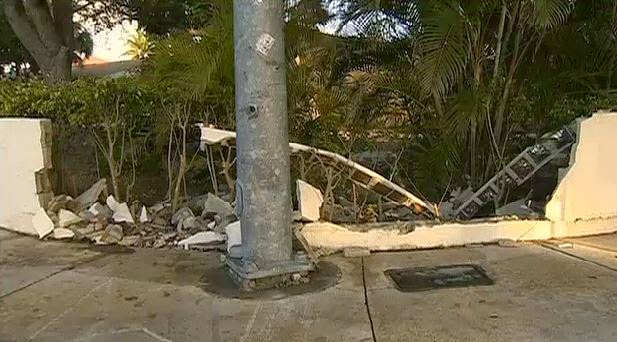
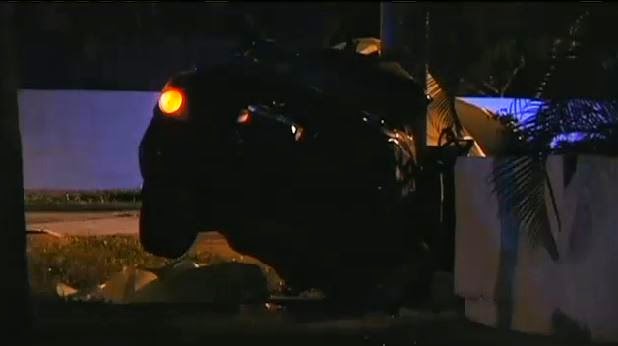
Authorities are investigating after three people were killed in a car crash Wednesday morning in a residential neighborhood.

The crash happened along Miami Lakes Drive and North Miami Lakeway Road, just after 1 a.m., Wednesday. "After midnight I heard like a bomb go off," said Jarimie Walker, who lives in the neighborhood.

Investigators said a Nissan Altima carrying three passengers was heading westbound on Miami Lakes Drive when it crashed into a barrier wall. Two women in their 30s and a man in his 40s died on scene. "We got out here and three of them were not responding," said Walker, "so we tried to do what we could do, but it was a little too late."

The driver has since been identified as 31-year-old Gesenia Llorentis, a divorced single mother. Her close friend, Mari Gorday, arrived at the scene of the crash Wednesday afternoon. "No matter if life is hard, she was always smiling. 
Always," she said of her friend. "A single mother of a beautiful child. She was with him all the time. She's a great mother."

Gary Herlth has lived near the intersection for 25 years. He said that particular wall has received quite a beating over the years. "It is unfortunate," said Herlth. "It's just a bad intersection, people just fly around."

Others who knew Llorentis returned to the scene, Wednesday, and said they needed to witness it with their own eyes. Many of them heartbroken and in disbelief. "I'm still in shock. I'm extremely hurt inside," said Gorday as she held back tears.

"She was always happy and always full of life and she'll make the best out of any situation," said longtime friend Miguel Vazquez.

The speed limit in the area is 25 miles per hour, but Herlth said, drivers never seem to pay attention. "The speed limit has been posted a lot of years, but it hasn't stopped anybody," he noted.

Detectives said speed may have played a role in the crash. "We need to encourage the community to slow down, obey the laws of the road," said Miami-Dade Police Detective Romelio Martinez. "Obviously, these are somebody's kids, they may be a parent, they may be mothers and fathers. Families are going to be impacted. This is going to be a tragedy for at least four families today."

"Tragic. Just tragic," said Walker. "My heart goes out to the families."
The identities of the man and the second woman have not yet been released.
In addition to speed, the driver may have been under the influence of alcohol as well, as they had just left a nearby restaurant. 

Russian Trawler Was Sunk by Greed and Corruption, Investigators Say

Photo: mchs.gov.ru
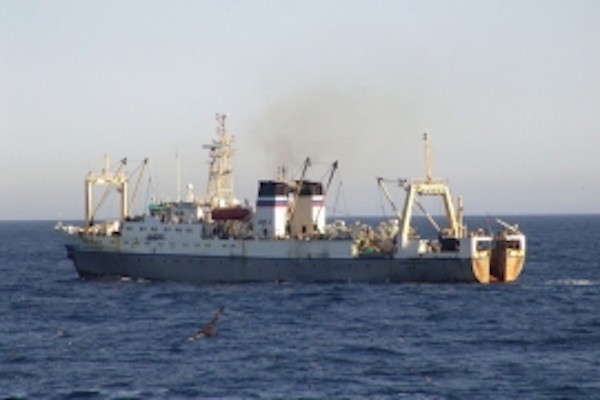
Dalniy Vostok. Photo: mchs.gov.ru
ReutersMOSCOW, April 8 (Reuters) – Greed and corruption were to blame for the sinking of a Russian trawler last week in which at least 56 crew died, a spokesman for investigators said on Wednesday.

The Dalniy Vostok fishing vessel sank in the icy Sea of Okhotsk off Russia’s far eastern coast last Thursday. Sixty-three people were rescued out of a crew of 132 people, with 13 missing presumed dead.

Many past Russian disasters have been blamed on negligence or violation of safety regulations.

“There are no doubts that this is a crime at the base of which lies the greed of the businessmen who owned the vessel and corrupt officials,” Vladimir Markin, the Investigative Committee spokesman, told Rossiya 1 television, TASS news agency reported.

“Both the owner of this vessel and the captain knew that in the petrol tanks there was a minimal amount of fuel, the trawler’s ability to right itself was affected.”

Markin also said investigators had established that there were not enough lifeboats on the Dalniy Vostok for over 20 crew members.

“We know that on board there were a large number of foreigners who were working there illegally. We know who brought them in and by what means,” he said.

“We have concrete officials (in mind), whom I won’t name so they don’t run away, but we will bring them to justice.”


© 2015 Thomson Reuters. All rights reserved.

Shipping Industry Urges ‘Immediate Action’ to Humanitarian Crisis in Mediterranean Sea

Photo: TORM A/S
Photo: TORM A/S

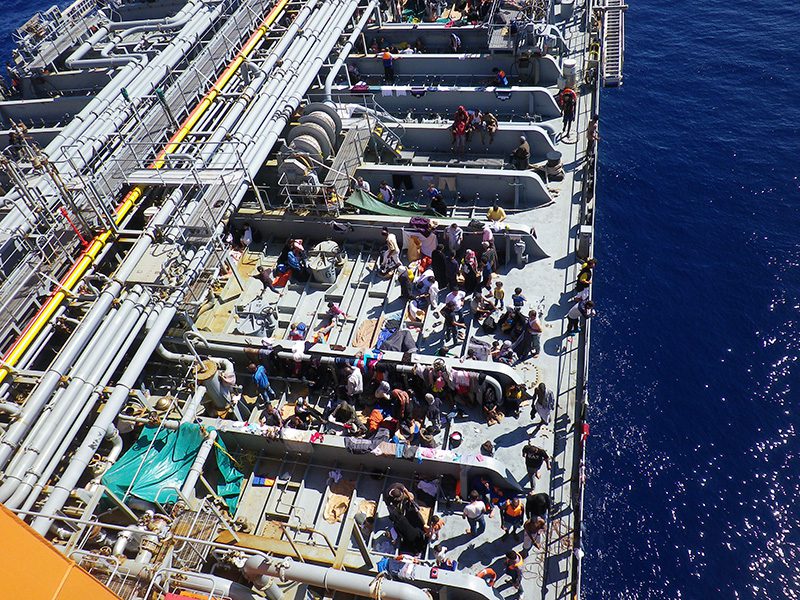
European and global shipowner groups and seafarer unions have banded together to urge EU Member States to take immediate action to address the growing humanitarian crisis in the Mediterranean Sea. 

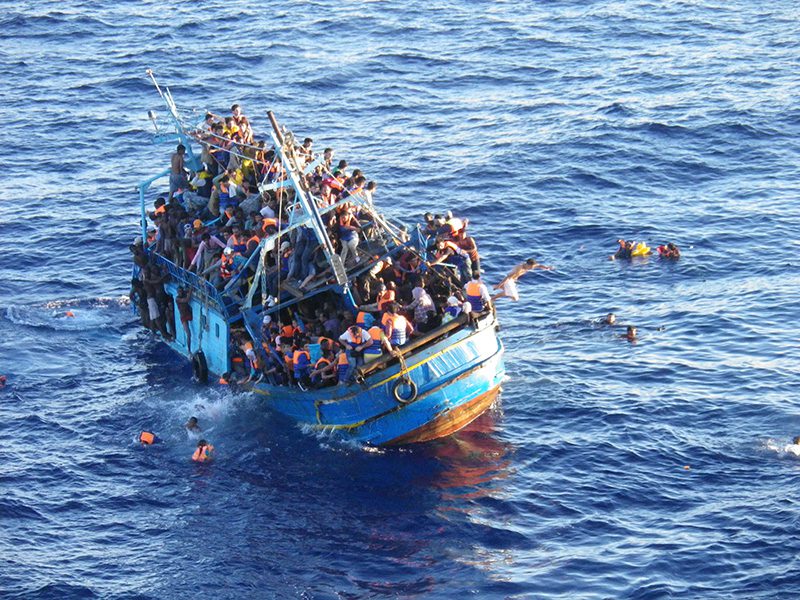
Since 2014, hundreds of thousands of migrants have crossed the Mediterranean Sea to reach Europe in overcrowded, unseaworthy boats, resulting in the loss of thousands of lives. 

In a joint letter to leaders of all 28 EU Members States, the European Community Shipowners’ Associations (ECSA), the European Transport Workers’ Federation (ETF), the International Chamber of Shipping (ICS) and the International Transport Workers’ Federation (ITF) have warned that the crisis is spiraling out of control, and that we can expect further catastrophic loss of life unless EU Member States respond with greater urgency.


Photo: TORM A/S
Photo: TORM A/S

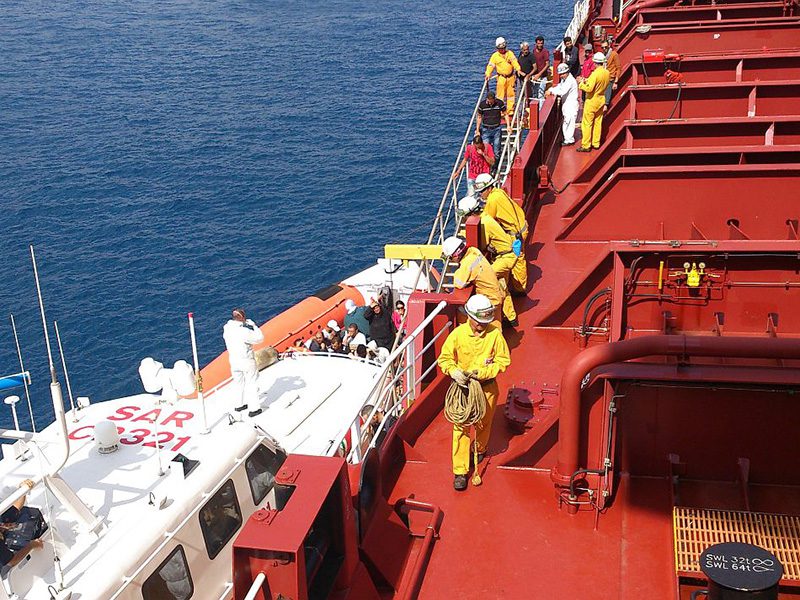
The shipowner groups and unions are calling on all EU Member States to give immediate priority to increasing resources for Search and Rescue operations, in view of the very large number of potentially dangerous rescues now being conducted by merchant ships.

According to a joint statement about the letter, in 2014 merchant ships rescued around 40,000 people, with the number expected to increase dramatically. While the shipping industry fully accepts its legal responsibility to rescue anyone in distress at sea, the industry argues that it is unacceptable that the international community increasingly relies on merchant ships and their crews to undertake more and more large-scale rescues. Single ships have had to rescue as many as 500 people at a time, creating serious risks to the health and welfare of seafarers who are unprepared and untrained to take on such rescues, the statement said.

Photo: Stolt Tankers B.V.


While the shipowners recognize that navies and coastguards of those EU Member States on the front lines have made impressive efforts to respond, the situation continues to get worse. The shipping industry believes there must be a commensurate increase in State funded resources for Search and Rescue operations, meaning that all EU Member States need to share the financial burden.

The shipping industry also suggests that the EU and the international community need to provide refugees and migrants with alternative means of finding safety, without risking their lives by crossing the Mediterranean in unseaworthy boats.

The shipping industry says that the development of solutions to this crisis must be treated as an absolute priority as “it is literally a matter of life and death”. The shipowners’ representatives and unions are therefore requesting that this issue should be added, as a matter of real urgency, to the agenda of the European Council and relevant meetings of EU Ministers.

COLLISION BETWEEN BULK CARRIER SUMMER WIND AND THE MISS SUSAN TOW KIRBY 27706


MARCH 22, 2014

HOUSTON SHIP CHANNEL, TEXAS

 NTSB Accident #DCA14FM008

At 1235 local time (CDT) on Saturday, March 22, 2014, the Liberian registered bulker Summer Wind, inbound in the Houston Ship Channel (HSC), collided with the lead tank barge (Kirby 27706) of a two barge tow that was being pushed by the Kirby tow boat Miss Susan. The collision occurred in the vicinity of buoys 25 and 26 just north of the intersection of the HSC and the Gulf Intracoastal Waterway (ICW). 

The 607 foot long Summer Wind which was anchored at Bolivar Roads anchorage B for two days, had boarded a Houston pilot at about 1200 in preparation for its transit up to the Cargill docks in Houston to load a cargo of grain. The 70 foot long Miss Susan got underway at 1115 from NuStar Dock 19 Texas City and was outbound in the Texas City channel with two 300 foot long barges loaded with 45,621 barrels (1,916,090 gallons) of intermediate fuel oil (RMG-380) bound for Kirby’s Bolivar fleet area. The length overall of the Miss Susan and her tow was 670 feet. 

The accident occurred in the Bolivar Roads Precautionary Area where the Galveston Channel, the Texas City Channel, and the Gulf ICW intersect with the HSC. The area had been covered in fog and pilots had suspended boarding deep draft vessels at 0740 that morning. Reports of visibility slowly improving prompted the commencement of pilot boarding. Two outbound (southbound) deep draft piloted vessels were underway in the HSC and the Summer Wind departing anchorage was to be the first inbound transit of a deep draft vessel. 

At the time of the accident the port was open. There were 34 vessels operating in the Houston-Galveston Vessel Traffic Service Area, most of which were tows maneuvering through all channels with barges of varying cargos and different destinations. 

Both vessels, the Summer Wind (pilot) and the Miss Susan (captain) had stated their intentions several times via radio broadcasts. The pilot radioed on VHF channel 13 the vessel was leaving anchorage heading for Houston some 20 minutes before the accident. The captain on the Miss Susan radioed her intention to proceed out of the Texas City channel bound for Bolivar about 15 minutes prior to the accident. Although the fog had cleared to about a mile of  visibility north and south of the accident area, there was a thicker area of patchy fog lingering around the intersection of the ICW and HSC. 

The pilot was using a portable pilot unit (PPU) laptop and both vessels had working radars and automatic identification system (AIS), but neither vessel contacted each other by radio until 3 minutes before the accident. The two vessels were in a close quarters situation in restricted visibility with the eastbound Miss Susan trying to cross the HSC in front of the northbound Summer Wind. Just prior to and upon sighting each other (with less than 800’ of visibility) both vessels tried evasive maneuvering to no avail. 

The bulbous bow of the Summer Wind struck the lead barge 27706 on the starboard side just forward of amidships, puncturing a hole through the double hull of cargo tank #2 starboard containing 4,159 barrels and releasing approximately 4,000 barrels (168,000 gallons) of cargo fuel oil into the waterway. Two crewmembers of the Miss Susan suffered injuries from exposure to the hydrocarbon vapor. 

The NTSB launched an investigator to the accident scene on March 23, 2014. A second investigator on March 24th and as the size and scope of the accident became more apparent an additional two more marine investigators were dispatched to the scene on March 27th. The Coast Guard was the lead investigative agency for the joint accident investigation. Investigators retrieved and reviewed the voyage data recorder from the Summer Wind as well as recorded data from the Sector’s Vessel Traffic Service (VTS) at Sector Houston-Galveston’s Command Center in Ellington Field Houston, Texas. 

While on scene, investigators interviewed crewmembers from both vessels and other vessels that witnessed the accident, as well as VTS watchstanders and supervisors. Of issue is the captain of the accident towboat was not interviewed until the CG Hearing 2-5 June 2014 and the Houston pilot aboard the Summer Wind refused to turn over his PPU to the Coast Guard until ordered by a judge almost nine months after the accident. 

Alcohol testing was performed on relevant crewmembers of both vessels, the watchstanders at the VTS station and the pilot. All alcohol results were negative. Samples, for drug testing were collected from all individuals with the exception of the Summer Wind’s engineering watch. All drug test results were negative. 

At the peak of the response on April 1st there were 2,233 personnel from 18 federal, state and local agencies; and contractors from about 80 businesses working on the salvage, containment, decontamination, clean-up operations, and the organization and staffing of the command center. About 150 volunteers per day were enlisted to search for oiled beaches and wildlife. 

The oil spill reached its greatest extent of impact on April 10, when shoreline cleanup and assessment teams determined that about 13 miles of this shoreline were heavily oiled, while about 40 miles were impacted with light to moderate amounts of oil. The oil spill that resulted from this accident endangered several environmentally sensitive sites located on or along about 160 miles of impacted coastline. On April 14, 2014, after 24 days of operations, the incident command center in Texas City/Galveston was demobilized. 


In 2009, the Coast Guard’s Office of Waterways Management conducted a waterway safety assessment of the Port of Houston-Galveston and reported that the economic impact of closing the HSC was about $13.3 million per hour or $330 to $400 million per day. The HSC was closed for three days March 22-25, 2014.