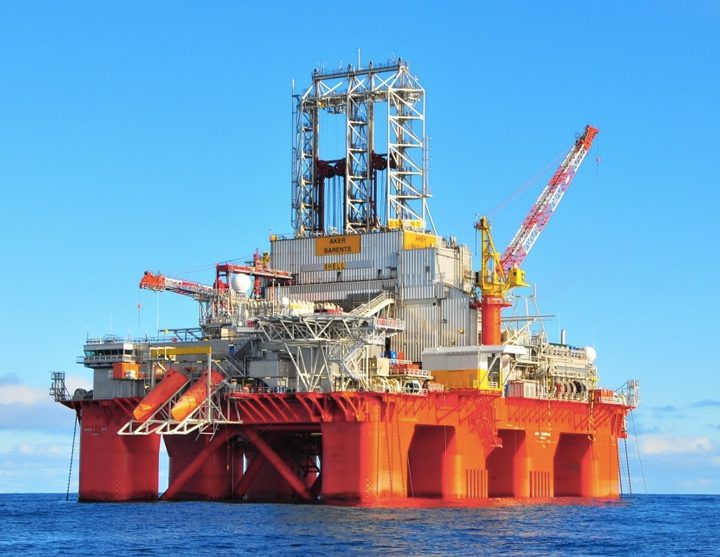
Norway’s Petroleum Safety Authority has launched an investigation
into an incident on board the Transocean Barents semi-submersible
drilling rig on 4 March when they say a roughneck suffered crush
injuries.
“The injured drill floor worker was on the monkey board, about 10-12
metres in the derrick, at the time of the accident. He has been flown to
Ă…lesund Hospital in western Norway,” according to the PSA.
The monkey board is the term for the slots that hold the stands of
drill pipe which are arranged on the rig floor. Each slot has a
hydraulic latch that holds each stand of drill pipe in place until they
are grabbed individually by the pipe racking system and brought to the
center of the rotary table.
Transocean Barents is located on the Ormen Lange field in the
Norwegian Sea under a contract with A/S Norske Shell. Activity on the
rig has now been halted.
Shell notes in an emailed statement to gCaptain, “He was doing an inspection job when the incident occurred.”
This blog presents Metropolitan Engineering Consulting & Forensics (MEC&F) claim management and claim investigation analyses of some of the typical claims we handle
Thursday, March 5, 2015
U.S. Navy Ship Hit by Fire at NASSCO Shipyard
By Mike Schuler On

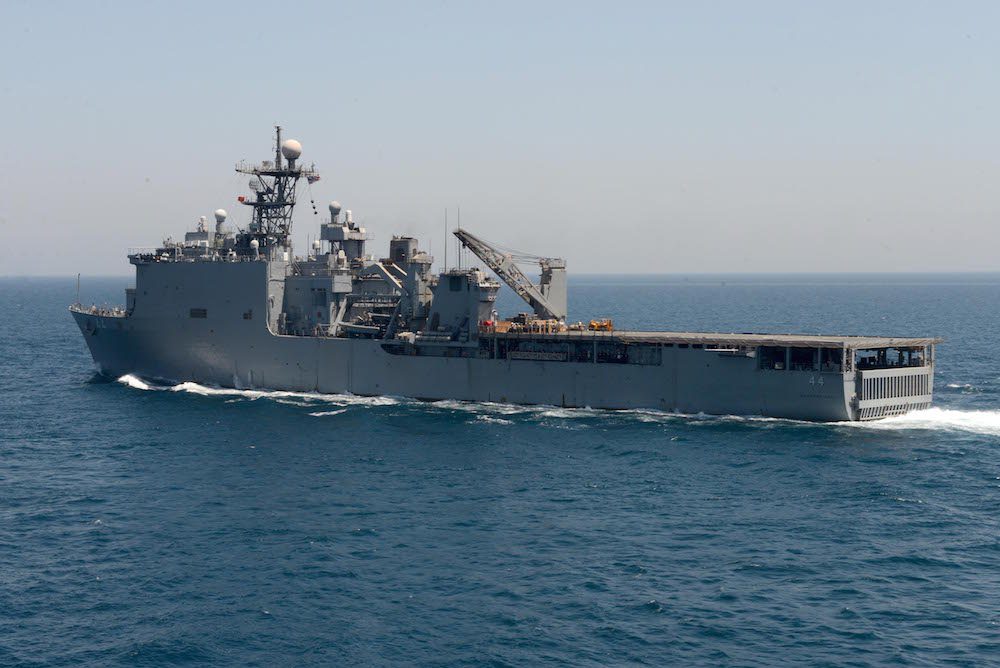
The amphibious dock landing ship USS Gunston Hall (LSD 44) underway in the Arabian Gulf. U.S. Navy file photo.
The USS Gunston Hall (LSD 44) was undergoing maintenance at NASSCO-Earl Industries shipyard in Portsmouth when the fire broke out at approximately 2 p.m. Tuesday.
Initial reports indicate that the fire began in an unmanned storeroom below the main deck. The ship’s in-port emergency fire team responded to the initial report and the Portsmouth Fire Department was notified and responded with multiple units.
The fire was declared out at approximately 5:25 p.m.
All personnel were accounted for. One Navy firefighter experienced a minor smoke inhalation injury but returned to duty.
The cause of the fire is currently under investigation.
United States’ Deepwater Wind Block Island Now Fully Financed
By Rob Almeida On
“We’re ecstatic to reach financial close and thrilled to be partners with Societe Generale (SG) and KeyBank for this groundbreaking clean energy project,” said Deepwater Wind CEO Jeffrey Grybowski. “We’re full speed ahead and moving ever closer to ‘steel in the water.’”
“As the first offshore wind farm to be developed in the U.S., the Block Island Wind Farm represents a milestone that expands SG’s offshore wind sector footprint outside of Europe and further strengthens our extensive global track record of advising clients and arranging debt for offshore wind projects,” added Alexander Krolick, Director of Energy Project Finance in the Americas at Societe Generale.
Deepwater Wind is the only United States offshore wind company to reach this critical milestone. The Block Island Wind Farm will be America’s first offshore wind farm.
The financing from Societe Generale and KeyBank is in addition to more than $70 million in equity funding already provided by Deepwater Wind’s existing owners, principally an entity of the D.E. Shaw Group.
In addition to its role as Mandated Lead Arranger, Societe Generale also acts as Financial Advisor for Debt Raise, Bookrunner and Administrative Agent.
The Project
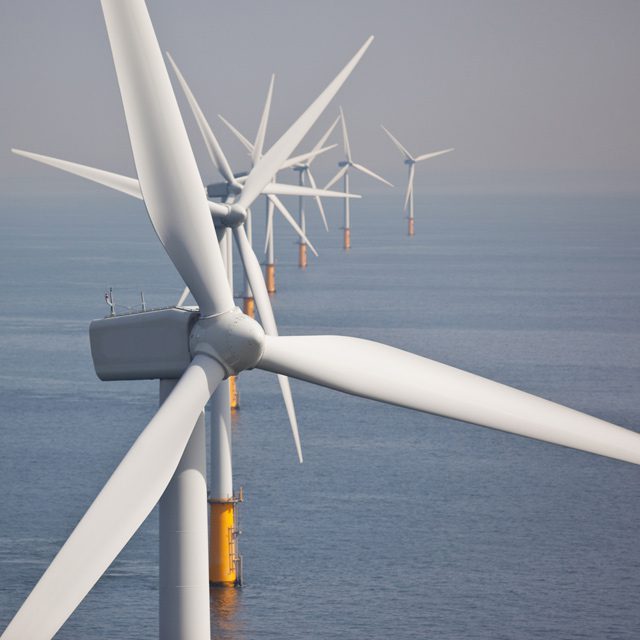
Construction is currently well underway on the wind farm. Alstom has been contracted to supply five Haliade 150 6 MW offshore wind turbines for the project and has already completed the fabrication in Denmark of all 15 blades for the project.
Gulf Island Fabrication, Inc., began fabrication work in January 2015 at its facilities in Houma, Louisiana, on the wind farm’s five steel jacket foundations. That work is scheduled to be complete in several months.
Rhode Island-based Specialty Diving Services is expected to begin additional fabrication work on components of the foundation substructures at Quonset, Rhode Island in the coming weeks.
“Steel in the water” is planned for this summer, when all five foundations are scheduled for installation off the Block Island coast. The project will be in-service in the fourth quarter of 2016.
Deepwater Wind says they are also actively planning offshore wind projects in other U.S. east coast areas such as New York, Massachusetts, New Jersey as well as deep waters projects on the US West Coast.
Four-Alarm Chemical Fire Shuts Down Port Metro Vancouver, Causes Evacuations.
By Mike Schuler On March 4, 2015
Smoke from a fire rises at the Port
Metro Vancouver, British Columbia March 4, 2015. REUTERS/Ben Nelms
A four-alarm chemical fire broke out
at Port Metro Vancouver Wednesday afternoon, sending hazardous smoke into the
air and causing evacuations and warnings to people in the area to stay indoors.
The fire broke out at approximately
1:40 p.m. inside a container at the Port’s Centerm Container Terminal on the
south shore of Burrard Inlet. Vancouver Coastal Health confirmed the material
inside is a hazardous organic compound, trichloroisocyanuric acid, which can
cause eye and skin irritation.
The fire is reported to have spread
to at least two other containers at the terminal, according to the Vancouver
Fire Department.
Vancouver Coastal Health warned that
people experiencing wheezing or difficulty breathing, especially people lung
problems, should seek medical attention.
The fire forced the shut down of all
operations on the Port’s south shore, Port Metro Vancouver tweeted.
The Centerm Container Terminal is
operated DP World Vancouver.
A statement from Port Metro
Vancouver said:
Our primary concern is the safety of
first responders, the public and all port workers. The Centerm container
terminal and nearby port properties have been evacuated. All port operations
along the south shore of Burrard Inlet have been shut down, including rail and
truck access. Vancouver Fire and Vancouver Coastal Health are on-site and
actively determining if any additional evacuations are required. We will
continue to monitor the situation and provide further information as it becomes
available.
An update posted to Twitter at 1750
PST by Port Metro Vancouver said that Vancouver Fire and Rescue has lifted the
“shelter in place” order.
//---------------------------------------------//
Chemical Fire at Port Metro Vancouver Contained
A four-alarm fire broke out in a
container on Wednesday afternoon at the Centerm container terminal on the south
shore of Burrard Inlet, Port Metro Vancouver.
Vancouver Coastal Health confirmed
the material inside was a hazardous organic compound (trichloroisocyanuric
acid), and that it was a possible eye and skin irritant.
The Vancouver Fire Department was
rushed to the scene to extinguish the fire. The Vancouver Fire Chief issued a
shelter-in-place order for the surrounding area urging the public to stay away
amid health concerns.
“Our primary concern is the
safety of first responders, the public and all port workers. The Centerm
container terminal and nearby port properties have been evacuated. All port
operations along the south shore of Burrard Inlet have been shut down,
including rail and truck access. Vancouver Fire and Vancouver Coastal Health
are on-site and actively determining if any additional evacuations are
required,” the Port Metro Vancouver said.
The fire was contained later in the
day and the resulting smoke was diminishing, based on the latest update.
The shelter-in-place order has been
lifted for the surrounding area and the firefighting teams remain on scene. The
public is still encouraged to stay away from the area.
“Port Metro Vancouver continues to
collaborate in responding along with partners including the Vancouver Fire
Department, Vancouver Coastal Health Authority, the City of Vancouver and the
Vancouver Police Department. We will continue to monitor the situation and
provide further information as it becomes available,” the port added.
Investigation into the cause of the
fire is underway.
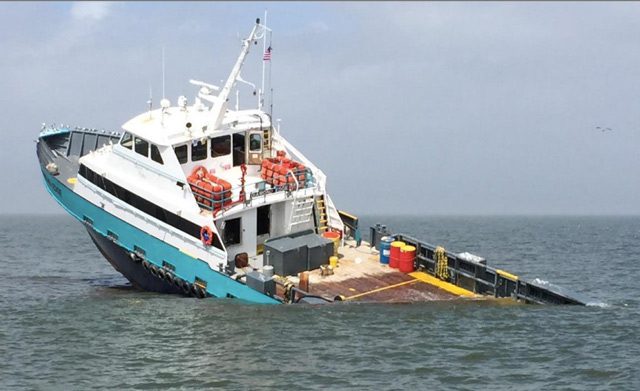
Crewboat Sinks in Gulf of Mexico After Collision With Halliburton Liftboat
By Rob Almeida On
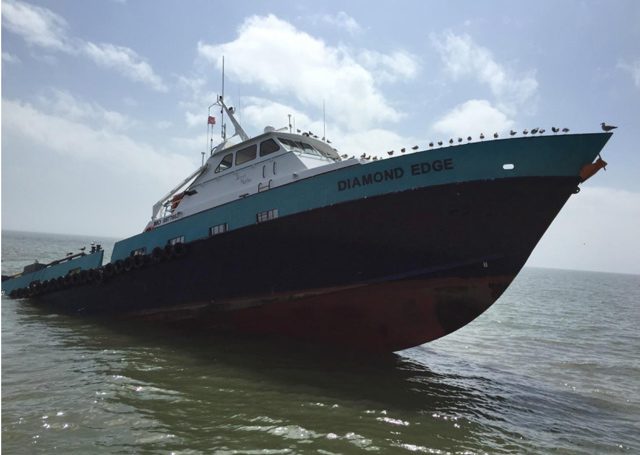
An earlier report indicated the incident was an allision, however new details from the U.S. Coast Guard say it was a collision.
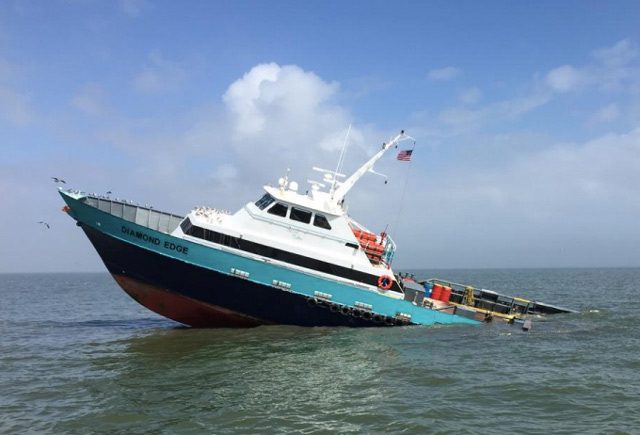
The U.S. Coast Guard tells gCaptain there were four personnel on board the 98 gross ton Diamond Edge when the incident occurred, all of whom donned PFDs and were subsequently recovered by the B.W. Haley.
6,000 gallons of diesel remain on board the vessel and the vessel owner has contracted McKinney Salvage to recover the vessel, according to the USCG statement. Two tugs and three barges are expected to be on scene this evening.
An investigation into the incident has commenced.
Source: www.gCaptain.com
Subscribe to:
Posts (Atom)