

BALTIMORE, MD --
Two people were killed when part of an Amazon distribution warehouse collapsed amid severe weather, a spokeswoman for the retail giant said Saturday.
The men worked for an outside company and not Amazon, spokeswoman Rachael Lighty said. No one else was injured when severe storms with strong winds tore through Maryland Friday evening, she said.
"First responders remain onsite assessing the damage. The safety of our employees and contractors is our top priority and at this time the building remains closed," Lighty said in an email.
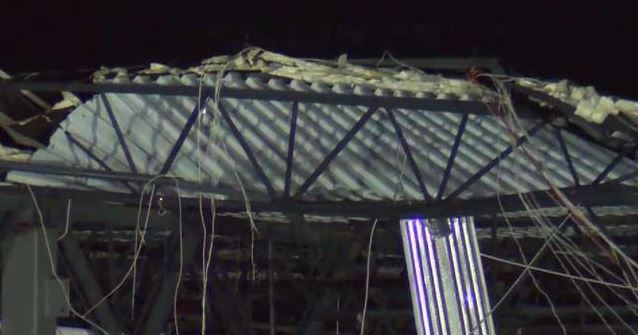
News reports cite Baltimore fire officials as saying one man was found under debris Friday night and later pronounced dead, while a second man's body was recovered under rubble early Saturday. Officials say a 50-foot wall at the warehouse collapsed. Photos from the scene appear to show the collapsed wall was about two stories tall.
Baltimore fire officials didn't respond to phone or email messages from The Associated Press.
The National Weather Service had earlier warned of thunderstorms in the area, with some producing gusty winds and heavy rain.
================================
Two men were killed when part of an Amazon distribution warehouse in Baltimore collapsed and weather officials have confirmed a tornado struck the area.
A 50-foot wall collapsed late Friday at the Amazon Fulfillment Center amid heavy rain and thunderstorms, Baltimore Fire Chief Roman Clark told WBAL. Clark said one man was found under the debris and taken to a hospital, where he was pronounced dead.
The second victim was later found beneath the rubble.
Andrew Lindsay, 54, was one of the victims. The Baltimore Sun reported that he was an employee of a real estate consulting firm.
Israel Espana Argote, 37, was also killed. Argote owned a trucking company that contracted with Amazon, the Sun reported.
The National Weather Service said Saturday an EF-1 tornado was to blame for the damage. The tornado also uprooted several large trees and tore the roof off of an apartment complex in Baltimore County.
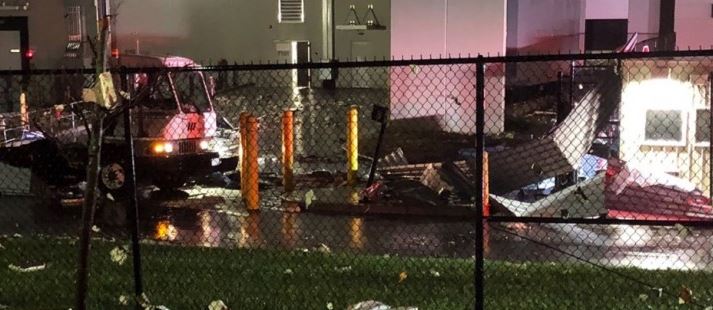
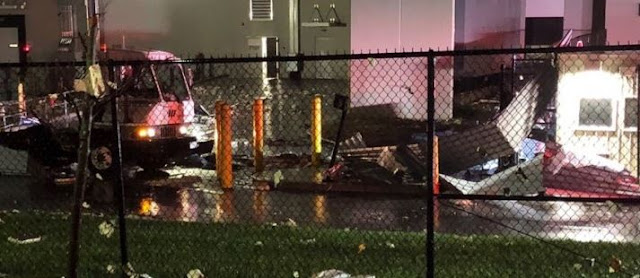
Images taken from outside the Amazon facility showed a badly damaged truck, a knocked-over light pole and a large swath of the building exposed through a missing wall.
Amazon spokeswoman Rachael Lighty told the Associated Press that the two people killed weren't employees of the online retail giant but worked for an outside company.
"First responders remain onsite assessing the damage. The safety of our employees and contractors is our top priority and at this time the building remains closed," Lighty said in an email.
She said no one else was injured.
Jill Klein, 44, of Cedarville, MI died at the Carmeuse Lime and Stone quarry after two vehicles collided in the dig pit
MARQUETTE, MI —
An investigation is underway after a woman passed away in workplace accident that occurred at Carmeuse Lime and Stone in Cedarville, according to the Michigan State Police St. Ignace Post.
Upon the troopers’ arrival at the facility around 1:50 a.m. Saturday, they found two Carmeuse vehicles had been involved in an incident in the pit, which resulted in the death of Jill Klein, 44, of Cedarville, a press release about the incident states.
Michigan State Police Troopers were assisted at the scene by the Mackinac County Sheriff’s Department and Clark Township Fire/EMS, according to police.
=========================================

JILL KLEIN
Jill was born on February 20, 1974 and passed away on Saturday, November 3, 2018.
Jill was a resident of Cedarville, Michigan at the time of passing.
Jill graduated from Atlanta High School in 1992 and served her country in the United States Army National Guard after graduation.
There will be a visitation service for Jill on Thursday, November 8, 2018 from 4:00 PM until 8:00 PM at Green Funeral Home; Atlanta. A short prayer service will be held at 8:00 PM.
In lieu of flowers the family has asked that donations be made to Atlanta Schools.
================================
 About Carmeuse
With over 150 years in business, Carmeuse Lime & Stone, is a leading producer of high calcium and dolomitic lime, chemical grade limestone and crushed limestone aggregate products that are a vital part of important industries in steel manufacturing, energy, environmental services, and construction.
Carmeuse products make steel stronger, air cleaner, roadways last longer, water more pure and waste reusable—they are a vital ingredient in the materials that build and renew infrastructure around the world.
Based in Pittsburgh, Pennsylvania in North America, Carmeuse operates 28 production facilities, staffed by up to 2000 employees who are driven by a passion for success, quality, efficiency and respect for the environment.
As a family owned business located in Louvain la Neuve, Belgium, Carmeuse is led and guided by its strong values and principles that have been handed down from generation to generation and the company maintains an international presence than spans Western, Central, and Eastern Europe, Africa, Middle-East and Asia, as well as it presence here in North and South America.

Highway Deaths Account for 95 Percent of all Transportation Fatalities in 2017
11/1/2018
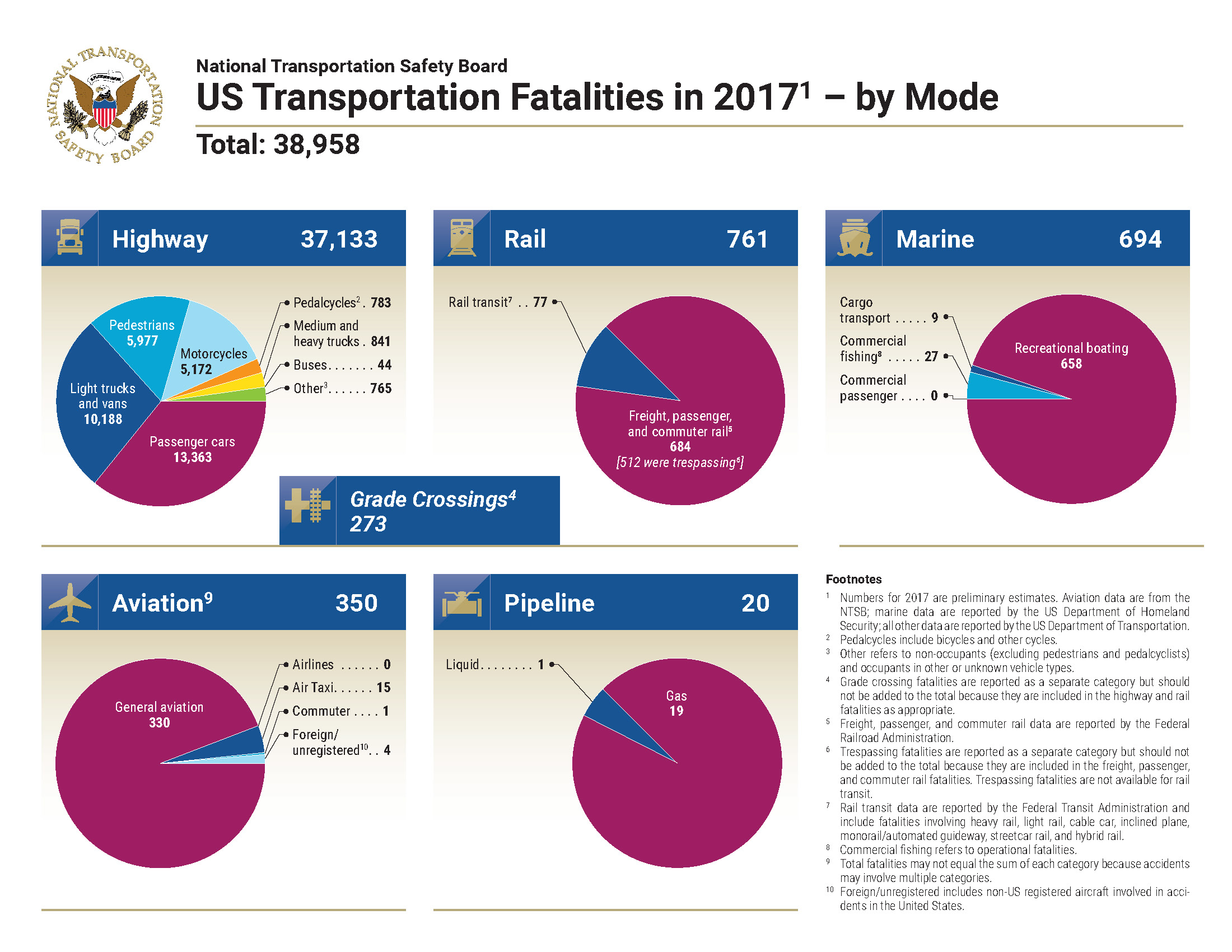
— Highway crashes claimed the lives of 37,133 people in 2017, accounting for 95 percent of the 38,958 who died in transportation related accidents that year, according to data provided by the National Highway Traffic Safety Administration and released Thursday by the National Transportation Safety Board.
The data indicate 712 fewer people died in transportation accidents in 2017, compared to the 39,670 who died in 2016. Aviation, marine and highway deaths decreased while rail and pipeline fatalities increased. Rail experienced the largest increase with 58 more deaths in 2017 than the 703 fatalities in 2016.
While 673 fewer people died in highway crashes in 2017 compared to 2016, highway fatalities continued to represent 95 percent of all transportation fatalities.
“Highway crashes are completely preventable,” said NTSB Chairman Robert Sumwalt. “Implementation of the 369 open NTSB highway safety recommendations, including the 22 recommendations related to speeding, have the potential to prevent crashes, save lives, and significantly reduce the carnage on our nation’s roads.”
National transportation fatality statistics for calendar year 2017 also revealed:
Aviation deaths decreased from 412 in 2016 to 350 in 2017. While general aviation showed the largest decrease with 56 fewer deaths, general aviation again accounted for 94 percent of all aviation fatalities.
Recreational boating accidents killed 43 fewer people in 2017 than in 2016, but 27 mariners died in commercial fishing in 2017, compared to 17 in 2016. Overall, there were 39 fewer deaths in marine transportation compared to the 733 fatalities in 2016.
Highway fatalities decreased from 37,806 in 2016 to 37,133 in 2017, and crashes involving passenger cars, light trucks and vans, pedestrians, motorcycles, pedalcycles, and buses resulted in fewer deaths, but deaths associated with crashes involving medium and heavy trucks increased to 841 in 2017 compared to 725 in 2016.
Four more people died in pipeline accidents in 2017 compared to the 16 who died in 2016.
Preliminary aviation accident statistics also released Thursday show a slight decrease in the number of US civil aviation accidents, with 1,316 in 2017 compared to 1,335 in 2016. There were 10 fewer fatal general aviation accidents in 2017 than in 2016, and the fatal accident rate remained below one fatal accident per 100,000 flight hours for a second consecutive year.

The approaching Thanksgiving holiday weekend is typically the busiest travel weekend of the year in the United States and marks the start of the holiday travel season. The NTSB reminds travelers that speed, distracted, impaired and drowsy driving are key factors in highway fatalities.
When traveling by bus, train or plane, stay buckled up (just as if you were in your car), know where your nearest safety exit is and how to use it, and if directed to evacuate, leave your carry-ons behind!
The preliminary aviation accident statistics are tracked and compiled by the NTSB. The U.S. Department of Homeland Security provides marine statistics, and the U.S. Department of Transportation provides statistics for all other modes. A link to the data tables for transportation fatalities for all modes may be found online at https://go.usa.gov/xPySY.
Miner Jason Holman, 42, of Goshen, Utah, died in a roof collapse at the underground gold operation run by Small Mine Development at Jerritt Canyon Gold’s Lee Smith Mine north of Elko, NV
ELKO, NEVADA –
A miner at Jerritt Canyon Gold’s Lee Smith Mine north of Elko has died in a roof collapse at the underground gold operation run by Small Mine Development.
Jason Holman, 42, of Goshen, Utah, was killed Thursday evening, the company confirmed.
“Jason was loading a round and was involved in a fall of ground near the end of his shift,” Small Mine Development’s general manager, Keith Jones, said on Oct. 26.
According to U.S. Mine Safety and Health Administration’s spokeswoman Amy Louviere, the miner was “loading blast holes underground when the cemented backfill roof fell, causing fatal injuries. MSHA has inspectors at the mine site and has secured the scene.”
MSHA received a call on Oct. 25 that there had been a ground fall at 5:10 p.m. and one miner was unaccounted for, so SMD mine rescue crews were on the way to the mine, the preliminary report states.
“Our thoughts and prayers are with the family and SMD following this devastating event and tragic loss,” Jerritt Canyon Gold’s president and chief executive officer, Greg Gibson, said on Oct. 26.
“Jerritt Canyon Gold is making every effort to support the family and our employees at this time. We are investigating the incident to better understand what happened. The health and safety of our employees and contractors at our mine remain our top priority,” Gibson said in an email.
Jones said SMD’s “thoughts and prayers are with the family at this difficult time. Small Mine Development lost a valuable employee and our mining family is grieving with the family. We are deeply saddened that this tragic event occurred and will endeavor to determine the cause and work to prevent reoccurrence.”
Jones said in an email that MSHA, the state mine inspector and Elko County Sheriff’s Department are assisting in the investigation, which will “take a period of time to complete.”
Small Mine Development began operating the mine roughly 50 miles north of Elko in 2010 under contract with prior Jerritt Canyon owners and has continued the work under Jerritt Canyon Gold, a private company based in Toronto.
MSHA data shows this is the first mine fatality in Nevada this year. The last mine fatalities in Nevada were those of two men at the Marigold Mine at Valmy on Oct. 31, 2017. Nationwide, Holman’s death is the 14th hardrock-nonmetal mining fatality in 2018.


Police Officer Joseph Moloney, left, arrived at State Supreme Court in Brooklyn on Tuesday. He pleaded not guilty to perjury charges. CreditCreditSam Hodgson for The New York Times
By Joseph Goldstein
March 27, 2018
A New York police officer was arraigned on Tuesday on perjury charges after prosecutors said he repeatedly lied about how the police found a gun in a Brooklyn apartment.
The officer, Joseph Moloney, 27, is accused of providing several false stories, under oath, about how the police discovered a gun in an apartment in the Red Hook Houses complex in South Brooklyn in 2016. Officer Moloney initially claimed that he had found the gun when it was another officer — a sergeant — who had discovered it, prosecutors said. Ultimately, he came clean, but that did not help him. Prosecutors charged him in a 24-count indictment that includes perjury in the first degree and official misconduct.
He pleaded not guilty Tuesday to the charges before Justice Danny K. Chun in State Supreme Court in Brooklyn. Officer Moloney’s lawyer, John Tynan, declined to comment on the charges.
“Our police officers are expected to be truthful and honest at all times because people’s fates and the integrity of the justice system depend on that,” said Eric Gonzalez, the Brooklyn district attorney. “We allege that the officer in this case failed to do that and instead repeatedly gave false testimony under oath. Such conduct diminishes public trust and is, in fact, criminal. We intend to now hold the defendant accountable.”
Last week, The New York Times published an investigation into police perjury within the New York Police Department that found that false testimony by the police, known as “testilying,” remains a problem. This year, a Queens detective, Kevin Desormeau, has been convicted of perjury and a Brooklyn detective has been charged with fabricating a photo lineup.
Even as Officer Moloney was arraigned, prosecutors offered little explanation about why they believe he lied. They also did not say if they suspect it had been his idea to lie or if he been instructed to lie by superiors. At the time of the gun arrest, Officer Moloney had been a police officer for three years. As contradictions in his account were exposed, Officer Moloney cited his inexperience as the reason for the error, prosecutors said.
The charges against Officer Moloney stem from an arrest he and other officers made on May 6, 2016, in the public housing apartment building where they had been seeking to arrest a man on a warrant for low-level charges. The officers knocked on the door of an apartment and arrested the man when he answered the door, prosecutors said.
Because it was early in the morning, the man was not properly dressed. The officers followed him into a bedroom to allow him to put on clothes. Officer Moloney and a second officer left with the man to process the arrest, prosecutors said, but about 15 minutes later a sergeant who had stayed behind told the officers to come back.
Inside the apartment was an open black box containing a gun as well as a few bags of marijuana, prosecutors said. At that point, the sergeant told Officer Moloney to go get a search warrant. But when Officer Moloney went to the Brooklyn district attorney’s office to apply for the warrant, he claimed that he — not the sergeant — discovered the gun.
He also insinuated that the arrested man had tried to hide the gun.
“As I was assisting Mr. [redacted] to get dressed, Mr. [redacted] kicked a black plastic box under the bed where the baby was sleeping. I then opened the black plastic box and observed a silver pistol inside the box,” Officer Moloney wrote in a search warrant affidavit, according to the indictment.
He repeated this account, with some variations, to a grand jury, and at court proceedings, prosecutors said.
His story came under scrutiny when photographs from the apartment showed that the bed was set on the floor. At that point, Officer Moloney said the suspect had been trying to push the box away from the bed — rather than toward it, prosecutors said.
“When we were getting him dressed we’re noticing he’s pushing the box away from the actual bed and we realize that it’s open a little and we see that there’s also a firearm in the box,” Officer Moloney testified on Feb. 1. in a family court hearing.
Asked about the discrepancy, Officer Moloney said it was an error based on a lack of experience. It was, he said in Supreme Court, a “mistake on my part, being my first search warrant that I’d sworn out alone, and just a rookie mistake.”
But in July 2017 Officer Moloney admitted that he had not been the one to open the black box, prosecutors said. He also said that he did not observe the moment that the box was being opened, prosecutors said.
“I want to come clean to you,” he told officials, according to the indictment. “I did not open the black plastic box. I did not see the box being opened by someone else. I wasn’t in the room.”
Based on this, prosecutors dismissed the gun charges against the man, whom prosecutors did not identify. The Brooklyn district attorney’s office referred the matter to the Police Department’s Internal Affairs Bureau, which led to perjury charges being filed against Officer Moloney.