MEC&F Expert Engineers

Wednesday, June 28, 2017

GREEDY ORTHODOX JEWS IN LAKEWOOD, NEW JERSEY VIOLATE ONE OF THE TEN COMMANDMENTS OF THE TORAH THAT STATE: THOU SHALL NOT STEAL: The three couples were identified as Yitzchock and Sora Kanarek; Chaim and Liatt Ehrman; and William and Faigy Friedman.


GREEDY ORTHODOX JEWS VIOLATE THE TEN COMMANDMENTS THAT STATE: YOU SHALL NOT STEEL

"Thou shalt not steal" is one of the Ten Commandments of the Torah (and by extension the Old Testament), which are widely understood as moral imperatives by legal scholars, Jewish scholars, Catholic scholars, and Post-Reformation scholars.

LAKEWOOD, New Jersey -- Seven married couples from the same New Jersey shore town, including a rabbi and his wife, now face charges that they misrepresented their income to get a combined $2 million in public welfare benefits to which they were not entitled.

Three couples were arrested late Tuesday in Lakewood after four couples, including Rabbi Zalmen Sorotzkin, of Congregation Lutzk, and his wife, Tzipporah, were arrested Monday.

The three couples were identified as Yitzchock and Sora Kanarek; Chaim and Liatt Ehrman; and William and Faigy Friedman.

Prosecutors say the three couples misrepresented their income and then collected more than $674,000 in benefits. They say the couples failed to disclose income from numerous sources on applications for Medicaid, housing, Social Security and food assistance benefits.

The state and federal investigation centers on Lakewood, which is home to a large and growing ultra-Orthodox Jewish community.

In the arrests Monday, the Sorotzkins were charged with collecting more than $338,000 in benefits prosecutors say they weren't entitled to. Their attorney said they will plead not guilty.

They were charged in state court along with Mordechai and Jocheved Breskin, who prosecutors said collected more than $585,000 in benefits they weren't entitled to.

Zalmen Sorotzkin's brother, Mordechai, and his wife, Rachel, were one of two couples charged in separate federal complaints with conspiring to fraudulently obtain Medicaid benefits.

They made more than $1 million in 2012 and in 2013, the complaint alleges, but still received more than $96,000 in Medicaid benefits, including $22,000 to pay for medical expenses when their sixth child was born in November 2013.

"Everything is going to work out and all will be vindicated," said Rachel Sorotzkin's attorney, Fred Zemel.

According to a federal complaint, Yocheved and Shimon Nussbaum hid their income by creating companies that were run by relatives on paper but that the couple actually controlled. They made a total of $1.8 million in 2013, but still received Medicaid, food benefits and housing assistance into 2014, prosecutors said.

2 old people were killed after a young female drunk/drugged driver crashes her pickup truck onto their Mercedes E300 sedan head-on in Valley Center, California


VALLEY CENTER, Calif. -- Two people were killed Tuesday afternoon in a head-on collision between a Mercedes sedan and a pickup truck on a rural North County road.

Shortly after 1 p.m. in the 28000 block of Lilac Road in Valley Center, a Ford Explorer Sport Trac crossed over the double yellow center line and collided head-on with a black Mercedes E300 sedan, according to a witness.

An 81-year-old Valley Center man and an 83-year-old Oceanside woman in the Mercedes were killed, according to California Highway Patrol.

A 27-year-old Escondido woman, who was the only person in the pickup truck, suffered major injuries and was airlifted to Palomar Hospital. She was arrested for suspicion of driving under the influence of drugs, according to CHP.

The pickup was carrying pool cleaning chemicals, so a hazardous materials team was called to clean up.

The wreck left the two-lane street closed between Old Castle and Valley Center roads until shortly after 6 p.m., the CHP reported.

SPEEDING AND DRUNK DRIVER ANTHONY MILDER, 34, COMMITS SUICIDE AFTER PASSENGER ALEJANDRA DAMIAN KILLED IN A FIERY CRASH UPON IMPACTING AT LEAST TWO UTILITY POLES IN CHICAGO


CHICAGO, IL (CBS) — The drunk and speeding driver who ran from a fiery crash early Monday in River North that killed his passenger was later found dead in his Bucktown apartment after apparently committing suicide, according to a police source.

About 1:30 a.m. Monday, a 2009 Nissan coupe was speeding west in the 400 block of West Ontario when it struck a utility pole at Orleans, causing the car to spin out and burst into flames, according to Chicago Police.

A passenger in the car, 21-year-old Alejandra Damian of Joliet, was pulled from the wreck and pronounced dead at the scene at 1:40 a.m., according to police and the Cook County medical examiner’s office.

Damian, known to friends as “Aly,” was a student at DePaul University, and worked as a waitress at the Vertigo Sky Lounge and Cerise Rooftop, according to her Facebook page.

A GoFundMe page set up to help with funeral and memorial expenses had raised nearly $10,000 towards a $15,000 goal in just 15 hours as of Tuesday morning.

An autopsy found she died of multiple injuries from an automobile striking a fixed object, and her death was ruled an accident, the medical examiner’s office said.

The driver, 34-year-old Anthony Milder, jumped out of the car and ran away, according to a police source and the Cook County medical examiner’s office.

A source told the Chicago Sun-Times that Milder — who also went by Anthony van MorrĂ© — and Damian were at Bottled Blonde, a bar on Wells Street in River North, for several hours prior to the crash. Milder posted to Facebook at 6:32 p.m. Monday that he was at the bar.

Tuesday afternoon, a Bottled Blonde manager, who declined to give her name, said Milder and Damian were at the bar Sunday, but said they were at several other River North bars that night, as well.

Milder was found in his apartment in the 1800 block of North Wood Street, and pronounced dead at 6:23 p.m. Monday, according to police and the medical examiner’s office. An autopsy Tuesday ruled his death a suicide.

A police source told the Chicago Sun-Times that the Chicago Fire Department was dispatched to Milder’s home to perform a well-being check Monday evening. As fire crews were arriving, so too were Chicago Police officers who were there to question him about the crash.

The source said hung himself with a belt and was found against a door.

According to his social media accounts, Milder was an active figure in the Chicago nightlife scene and worked at Underground, another bar in River North.

The Ontario Street feeder ramp to the Kennedy Expressway was closed for about eight hours after the crash for the investigation and cleanup.


What was this 21-year old doing with a 34-year old man drinking at a bar.  This reckless activity cost her her life.  Too sad.  Girls, live and learn from this tragedy.
==============


CHICAGO (CBS) — A woman was killed in a high-speed collision early Monday in the River North neighborhood, and the crash forced the closure of the Ontario feeder ramp for more than seven hours.

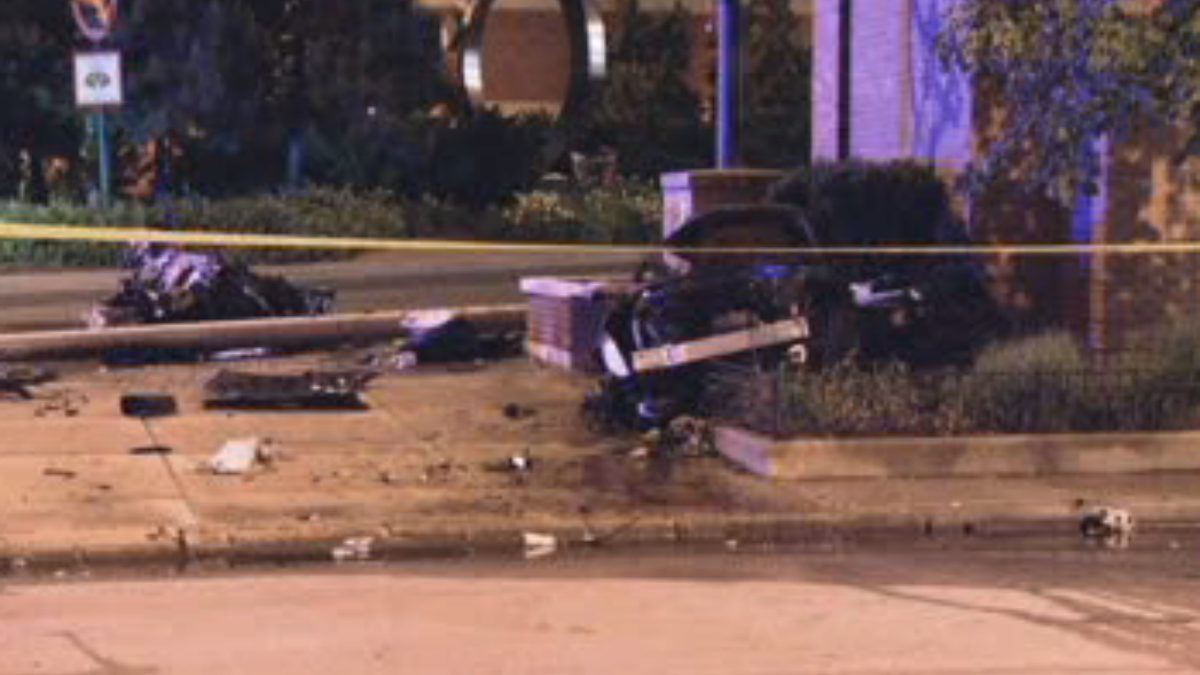
Police said the crash happened around 2 a.m. at the intersection of Ontario and Orleans streets. A speeding 2009 Nissan failed to negotiate the curve onto the Ontario feeder ramp, and instead slammed into at least two utility poles.

Surveillance video of the crash shows the car exploding in flames as it is cut in half after striking two utility poles.

A 20-year-old woman who was a passenger in the car was pronounced dead at the scene. Her name has not been released.

The driver was able to get out of the vehicle, and fled the scene, leaving a trail of blood for at least a block.

Jordan Hack saw the video of the crash, and said she can’t believe anyone survived.

“How? That doesn’t make any sense. That doesn’t make any sense,” she said.

Hack, like the woman who died, is just 20 years old. She said news of the deadly wreck serves as something of a cautionary tale.

“You have to be aware of who you know, and who you’re driving home with, especially late at night on a weekend,” she said.

Police have not said how fast they believe the car was going, but some experts who viewed the video said it appeared the car was traveling more than 80 mph.

Officials shut down the Ontario feeder ramp to the Dan Ryan and Kennedy expressways after the crash while police investigated and performed an accident reconstruction. The ramp reopened around 9:30 a.m.

============


A killer driver with consciousness? Alleged Driver Who Ran From Fatal Kennedy Ramp Crash Commits Suicide


By Alisa Hauser and Kelly Bauer | June 27, 2017 9:59am | Updated on June 27, 2017 6:25pm
 
Speeding and drunk driver Anthony Milder, who reportedly was the driver in a car crash that killed Alejandra Damian early Monday and shut down the Ontario feeder ramp for seven hours was found dead in his Bucktown apartment Monday night. V
Facebook / Google

BUCKTOWN — A 34-year-old man who reportedly was the driver in a car crash that killed his passenger early Monday and shut down the Ontario feeder ramp for seven hours was found dead in his Bucktown apartment Monday night.

The man, Anthony Milder, of the 1800 block of North Wood Street, was pronounced dead at 6:23 p.m. Monday, according to the Cook County Medical Examiner's Office. The coroner later ruled Milder's death a suicide, from hanging.

Milder allegedly was involved in the fatal car crash in River North that killed his 21-year-old passenger, according to ABC7. The Cook County Medical Examiner's Office identified that 21-year-old as Alejandra Damian of Joliet.

A GoFundMe campaign has raised more than $14,000 in just one day to help Damian's family with funeral expenses.

Milder's neighbors said police cars were at his home for several hours Monday night.

In the fiery one-car crash in River North around 1:30 a.m. Monday, the driver of a Nissan was speeding in the 400 block of West Ontario Street when the car hit a utility pole, police said. The car spun out and burst into flames.

Police at the time identified the driver as a man and said he got out of the car and ran away.

Officer Brandy Wright, a Chicago Police Department spokeswoman, said that the death is under investigation and police cannot confirm more details.

Milder, who also went by the name Anthony Van Morre according to friends, managed the door at a night club, Underground, 56 W. Illinois St.

"He was a good guy who always treated everyone with respect and made them feel welcome at Underground," said Jason Tong, an Arlington Heights resident who met Milder through Underground.


===============


A night out in River North, including a stop at the controversial nightspot Bottled Blonde, preceded the fiery, high-speed crash in which a 21-year-old passenger died and the driver ran away — but later took his own life.

The driver, 34-year-old Anthony Milder, was found in his Bucktown apartment and pronounced dead at 6:23 p.m. Monday, according to police and the Cook County medical examiner’s office. An autopsy Tuesday ruled his death a suicide.


A police source told the Chicago Sun-Times that the Chicago Fire Department was dispatched to Milder’s home to perform a well-being check Monday evening. As fire crews were arriving, so too were Chicago Police, who were there to question him about the crash, which happened early Monday and closed the Ontario Street feeder ramp for eight hours.

The source said Milder had hanged himself with a belt and was found against a door.

According to his social-media accounts, Milder was an active figure in the Chicago nightlife scene and worked at Underground, another bar in River North.

A source told the Chicago Sun-Times that Milder, who also went by Anthony van MorrĂ©, and the passenger in his car, 21-year-old Alejandra Damian of Joliet, were at Bottled Blonde on Wells Street before the crash. Milder posted to Facebook at 6:32 p.m. Sunday that he was at Bottled Blonde; it’s unclear exactly how long the two were there.

Tuesday afternoon, a Bottled Blonde manager, who declined to give her name, confirmed Milder and Damian were at the establishment on Sunday evening. But she said they were at several other River North bars that night based on conversations she’d had with other members of the River North nightlife community.


Alejandra ‘Aly’ Damian | Facebook

 
Bottled Blonde has become a symbol of sorts for the hip, but sometimes violent, bar scene in River North.

With a flood of complaints for noise, litter and drunken patrons since it opened in 2015, city investigators reprimanded the pizzeria for operating primarily as a bar instead of a restaurant, against the terms of its liquor license, according to records from the city’s Department of Business Affairs and Consumer Protection.

The restaurant also has drawn widespread social-media attention for its dress code — which prohibits 30 different styles, including “excessively baggy” clothing, plain white T-shirts and Jordan gym shoes. The dress code has been widely criticized online as a thinly veiled way of keeping out people of color.

Bottled Blonde’s owners have declined to comment on both issues.

About 1:30 a.m. on Monday, the 2009 Nissan coupe that Milder had been driving was speeding west in the 400 block of West Ontario when it struck a utility pole at Orleans, causing the car to spin out and burst into flames. Damian was pulled from the wreck and pronounced dead at the scene at 1:40 a.m.


The crash scene in the 400 block of West Ohio. | ABC7 Chicago via Twitter

Damian, known to friends as “Aly,” was a student at DePaul University, and worked as a waitress at the Vertigo Sky Lounge and Cerise Rooftop, according to her Facebook page. A GoFundMe page set up to help with funeral and memorial expenses had raised nearly $10,000 towards a $15,000 goal in just 15 hours as of Tuesday morning

THE DEADLY U.S. ROADS: Crashes on North Carolina's network of rural roads claim more lives than all but two states in the country


RALEIGH (WTVD) -- They're narrow, they curve, they slope and they kill.

Crashes on North Carolina's network of rural roads claim more lives than all but two states in the country, according to report by TRIP, a national transportation research group.

The data from 2015 shows 855 traffic-related deaths on non-interstate rural roads, trailing only Texas and California. The 855 fatalities also accounts for 62% of all traffic deaths in the state, even as only 31% of the population lives in what the state considers rural areas.


"If you're going to travel this beautiful state, you're going to travel on rural roads," Larry Wooten, President of the NC Farm Bureau, explained to ABC11. "Many of them are winding, narrow and sometimes not very well lit at night."

According to Wooten, more than 50,000 farmers use the rural roads but they're hardly the only ones; tourists travel them to the mountains and the beach, while the growth of the Triangle also extends 20-30 miles outside the city limits.

"Rural roads are important to the economy in North Carolina," Wooten said. "We've got to make sure they remain safe and modern for our transportation needs."

Tiffany Wright, President of AAA's Foundation for Traffic Safety, asserted some inexpensive improvements can reduce the risk.

"Updated guard rails, wider shoulders and rumble strips can help drivers correct themselves when they've veered off the road," Wright explained. "These safety measures can help prevent some of the tiniest mistakes from turning into big mistakes with deadly consequences. North Carolinians who live and travel on rural roads deserve a transportation system that is safe, sufficient and reliable."
To read the full report, visit http://www.tripnet.org/docs/Rural_Roads_TRIP_Report_2017.pdf


Executive Summary
America's rural heartland plays a vital role as home to a significant share of the nation’s
population, many of its natural resources, and popular tourist destinations. It is also the primary
source of the energy, food and fiber that supports America’s economy and way of life. The strength of the nation’s rural economy is heavily reliant on the quality of its transportation system, particularly the roads and highways that link rural America with the rest of the U.S. and to markets in other countries. The quality and connectivity of America’s rural transportation system supports the economy of the entire nation and quality of life for the approximately 60 million Americans living in rural areas.


Good transportation is essential in rural areas to provide access to jobs, to facilitate the
movement of goods and people, to access opportunities for health care and educational skills, and to provide links to other social services. Transportation supports businesses and is a critical
factor in a company’s decision to locate new business operations. For communities that rely on
tourism and natural amenities to help support their economy, transportation is the key link between visitors and destinations.


Roads, highways, rails and bridges in the nation’s heartland face a number of significant
challenges: they lack adequate capacity, they fail to provide needed levels of connectivity to many communities, and they cannot adequately support growing freight travel in many corridors. Rural roads and bridges have significant deficiencies and deterioration, they lack many desirable safety features, and they experience fatal traffic crashes at a rate far higher than all other roads and highways. 


This report looks at the condition, use and safety of the nation’s rural transportation
system, particularly its roads, highways and bridges, and identifies needed improvements.
Rural areas in this report are based on the U.S. Census Bureau definition, which defines rural
areas as regions outside of urban areas with a population of 2,500 or more. Road, bridge and
safety data in this report is based on the Federal Highway Administration (FHWA) definition for
rural areas, which allows states to use the U.S. Census Bureau definition to identify rural routes
or to define rural areas as regions outside of urban areas with a population of 5,000 or more. The
following are the key findings of the report.

An aging and increasingly diverse rural America plays a vital role as home to a significant share of the nation’s population, natural resources and tourist destinations. It is also the primary source of the energy, food and fiber that drive the U.S. economy. Rural Americans are more reliant on their transportation system than their urban counterparts.
• While there are many ways to define rural, the U.S. Census Bureau defines rural areas as
regions outside of urban areas with a population of 2,500 or more.

• According to the U.S. Census Bureau definition, 19 percent of the nation’s residents live in
rural areas – approximately 60 million of the nation’s 316 million people in 2015.

• The nation’s rural areas account for 97 percent of America’s land area and are home to the
vast majority of the nation’s 2.2 million farms.


• America’s rural population increased gradually each year from 1976 to 2010, rising between 0.1
and 1.5 percent each year. From 2010 to 2014, the nation’s rural population declined slightly by
0.3 percent before stabilizing in 2015 as rural areas continued to recover from the Great
Recession.

• While overall rural populations declined slightly between 2010 and 2014, population did
increase in some rural areas during that time. This population increase occurred primarily in rural
counties that have been impacted by increased energy extraction, particularly in the Northern Great
Plains as well as portions of Arkansas, Louisiana, Pennsylvania and Texas.

• Unemployment in rural areas increased from 5.2 percent in 2007 to 9.9 percent in 2010, before
decreasing to 5.7 percent in 2015.

• America’s rural economy is far more reliant on goods production, which includes farming,
forestry, fishing, mining and energy extraction, and manufacturing, than is the nation’s urban
economy.

• Many of the transportation challenges facing rural America are similar to those in urbanized
areas. However, rural residents tend to be more heavily reliant on their limited transportation
network - primarily rural roads and highways - than their counterparts in more urban areas.
Residents of rural areas often must travel longer distances to access education, employment, retail
locations, social opportunities and health services.

• The rural U.S. population is aging more rapidly than the nation as a whole. The share of older
adults in rural areas is disproportionate, with 17.2 percent of those living in rural areas over
age 65, while 12.8 percent of residents in urban areas and 13 percent of the nation’s total
population are over 65.

• The movement of retiring baby boomers to rural America is likely to continue in the future as
aging Americans seek out communities that offer affordable housing, small- town quality of life and
desirable natural amenities, while often located within a short drive of larger metropolitan areas.

• Rural areas are growing increasingly more diverse. Although racial and ethnic minorities make
up only 21 percent of the rural population, minorities accounted for nearly 83 percent of rural
population growth between 2000 and 2010.


• The amount of rural tourism in a region is tied partly to the level of highway access.
Eighty-six percent of trips taken by Americans to visit rural areas are for leisure purposes.

• Popular tourism activities in rural America include hiking, golfing, biking, hunting, fishing
and water sports. Rural areas are also home to beaches, national and state parks, wineries,
orchards and other national amenities.


The quality of life in America’s small communities and rural areas and the health of the nation’s
rural economy is highly reliant on the quality of the nation’s transportation system, particularly
its roads, highways and bridges. America’s rural transportation network provides the first and last
link in the supply chain from farm to market while supporting the tourism industry and enabling the
production of energy, food and fiber.

• Freight mobility and efficiency is fundamental to rural economic vitality and prosperity.
Economic growth and stability in rural areas is heavily reliant on the ability to move raw
materials into, or the value-added products out of, these areas.

• Agriculture, food, and related industries, including food and beverage manufacturing, apparel
manufacturing and food and beverage stores and establishments -- which rely on agricultural inputs -- contributed $992 billion to the U.S. GDP in 2015 – 5.5 percent of overall U.S. GDP.

• Despite record yields, lower crop prices have resulted in total U.S. crop receipts declining
from a record $232 billion in 2012 to a forecast $187 billion in 2017.

• While farming accounts for just six percent of all jobs in rural America, for every person
employed in farming there are seven more jobs in agribusiness, including wholesale and retail
trade, processing, marketing, production, and distribution.

• Employment in goods production, which includes farming, forestry, fishing, mining and energy
extraction, accounts for 11 percent of earnings in the nation’s rural economy versus two percent in the urban economy.

• Manufacturing jobs account for 15 percent of earnings in the nation’s rural economy versus
nine percent in the urban economy.

• A United States Department of Agriculture (USDA) report found that “an effective
transportation system supports rural economies, reducing the prices farmers pay for inputs such as seeds and fertilizers, raising the value of their crops and greatly increasing market access.”

• Trucks provide the majority of transportation for agricultural products, accounting for 46
percent of total ton miles of travel compared to 36 percent by rail and 12 percent by barge.

• Trucks account for the vast majority of transportation for perishable agricultural items,
carrying 91 percent of ton miles of all fruit, vegetables, livestock, meat, poultry and dairy
products in the U.S.


• The Council of State Governments recently found that “rural highways provide many benefits to
the nation’s transportation system, including serving as a bridge to other states, supporting the
agriculture and energy industries, connecting economically challenged citizens in remote locations
to employers, enabling the movement of people and freight and providing access to America’s tourist attractions.”

• The rapid expansion of the energy extraction industry, particularly in the Great Plains
states, has consumed rail capacity that had previously been used to move agricultural goods. As a result, the agricultural goods that had been shipped by rail are now being moved via alternate
transportation means, placing additional stress on the rural highway system and increasing costs to farmers and consumers.

• Transportation is becoming an even more critical segment of the food distribution network.
While food demand is concentrated mostly in urban areas, food distribution is the most dispersed
segment of the economy.

• A highly competitive and efficient transportation system can lead to lower food costs for
U.S. consumers and higher market prices for producers due to lower shipping costs, smaller margins and more competitive export prices.

• A report by the Pacific Economic Cooperation Council recommends that governments improve the quality of their transportation systems serving the movement of goods from rural to urban regions as a strategy to lower food costs and increase economic prosperity.

• A report on agricultural transportation by the USDA found it likely that market changes and
shifts in consumer preferences would further increase the reliance on trucking to move U.S.
agricultural products.

The condition and quality of the nation’s highway system plays a critical role in providing access to America's many tourist destinations, particularly its scenic parks and recreational areas, which are mostly located in rural areas.

• In 2016, travel and tourism related spending in the U.S. contributed $1.5 trillion to U.S.
Gross Domestic Product. Tourism related jobs employed 5.5 million Americans in 2016.
• America’s national parks, which are largely located in rural areas, received a record 331
million visitors in 2016, many in personal vehicles.

Travel loads on America’s rural roads are increasing dramatically due to the booming energy extraction sector. This has been driven by increases in domestic oil and gas extraction, largely as a result of advancements in hydraulic fracturing (fracking), which has greatly increased the accessibility of shale oil and gas deposits, as well as the increased production of renewable energy such as wind and solar.

• Ethanol production in the U.S. increased from 1.7 billion gallons in 2000 to 13.3 billion
gallons in 2016.


Construction worker, 18, injured after concrete stairs fell onto his leg during dismantling at the Union Garage at Towson University in Maryland


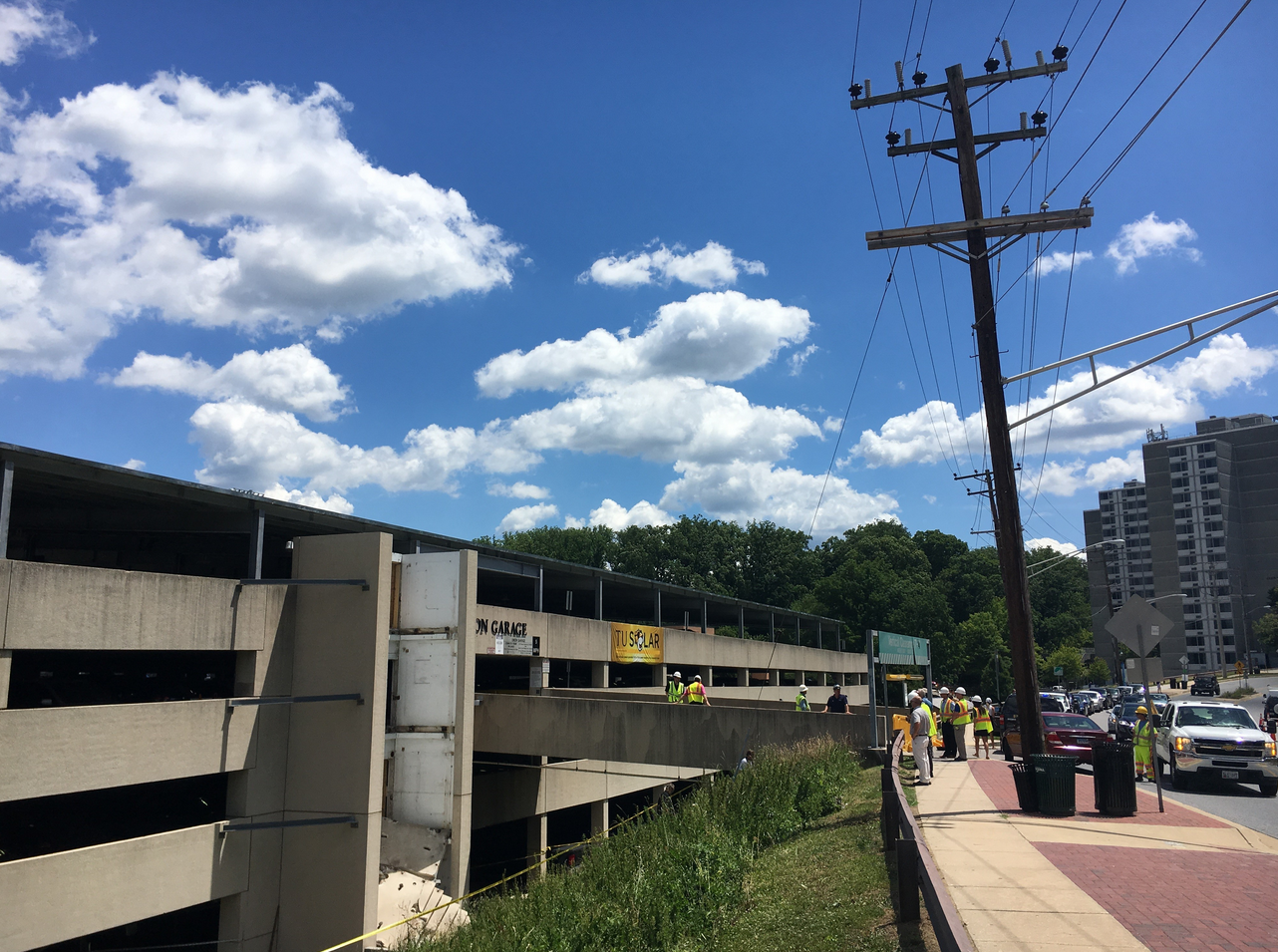
TOWSON, Md. (WBFF) -- Police say one person was injured after a stairwell collapsed at a Towson University parking garage.

The incident occurred at around 10:15 a.m. at the Union parking garage along Cross Campus Boulevard.

Police say workers were attempting to dismantle the stairs when they collapsed, falling onto a worker’s leg. The worker, 18, was taken to a local hospital with "non-life threatening" injuries.

"He is not a university employee. He is employed by one of the sub-contractors," Towson University spokesperson Ray Feldmann said. "We're going through and doing stairwell replacement. A lot of these parking garages are old and the stairwells need to be replaced on a fairly frequent basis."

Police say workers were attempting to dismantle the stairs when they collapsed, falling onto a worker’s leg. He was taken to a local hospital with non-life threatening injuries.

Maryland Occupational Safety & Health officials were on scene Tuesday investigating what went wrong. The construction project is suspended while the investigation is conducted, according to Feldmann.


============


TOWSON, Md. - Baltimore County Police confirm an 18-year-old worker was injured while working on dismantling steps at a Towson parking garage when they broke away.

Police said the man’s leg was injured. He wasn't trapped, but was taken to an area hospital with non-life threatening injuries.

Workers had been working on the steps at the Towson University Union Garage when they collapsed, just after 10 a.m. Tuesday.

==================


BALTIMORE (WJZ) — One worker was injured when a stairwell that was being worked on collapsed at the union parking garage at Towson University.

Sky Eye Chopper 13 was above the scene, where a concrete stairwell collapsed while workers were putting up concrete steps in the stairwell.

A portion of the concrete fell on one of the worker’s legs. He was taken to a hospital with non-life threatening injuries.

The garage was in use at the time of the collapse.