MEC&F Expert Engineers

Monday, May 1, 2017

Army Corps of Engineers says PennEast pipeline application is incomplete because it didn’t secure permission to conduct detailed environmental surveys


PennEast Runs into More Permit Snags with Another Federal Agency
Tom Johnson | April 25, 2017
Army Corps of Engineers says PennEast pipeline application is incomplete because it didn’t secure permission to conduct detailed environmental surveys


Penn East is not done dealing with permits from federal agencies just yet.

The Army Corps of Engineers is the latest agency seeking more information on the controversial 120-mile pipeline project before it is ready to render a decision on the proposal.

As has happened in the past, the application by the PennEast Pipeline Co. has been deemed incomplete because the developer failed to secure permission to enter rights-of-way along the proposed route to conduct surveys, including those involving wetlands and waterways.

In a letter to the Federal Energy Regulatory Commission, the Army Corps’ Philadelphia office said because of the lack of information, it does not know when a decision on the permits sought by PennEast would be made.

“Depending on how long it takes to gain access and if the results of the initial surveys indicate more in-depth surveys are required makes it simply impossible to determine a permit issuance date at this time,’’ according to the letter signed by Glenn Weitknecht, senior project manager for the Corps.

The problem is a familiar, if unwanted, one for PennEast. The New Jersey Department of Environmental Protection advised the applicant not to bother filing for crucial water permits until it submits more information the state agency is seeking. PennEast filed for the permits earlier this month, the day before FERC issued its Final Environmental Impact Statement on the project, clearing one of the major regulatory hurdles for the developer. The project is one of the more contentious of more than a dozen new pipelines proposed in New Jersey, most seeking to tap into cheap, new natural-gas supplies in neighboring Pennsylvania. The $1 billion PennEast project begins in Luzerne County, PA, and extends across the Delaware River to Mercer County.

Pat Kornick, a spokesperson from PennEast, downplayed the significance of the letter from the Corps, saying it is a routine part of the permitting process. The information sought by the Corps will not change the company’s timetable, which aims to begin construction sometime in 2018.

In its letter, the Corps acknowledged the fluid nature of “these projects with continuing route changes’’ and pledged to continue working with the applicant to delineate wetlands and waters along the route. The permit requires the Corps to coordinate with various agencies concerning endangered species, wild and scenic rivers, historic preservation, and other issues.

Jeff Tittel, director of the New Jersey Sierra Club, said the tone of the Corps letter and information sought by the agency underscores that the EIS issued by FERC is flawed. “How can the EIS be considered final with all of PennEast missing information?’’ he asked.

With the water and sewer system facing a debt of more than $40 million, Vernon Township is looking for alternatives to increase flow


Vernon Council, MUA discuss alternatives for sewer system 


By Lori Comstock New Jersey Herald
Posted: Apr. 23, 2017 12:01 am


VERNON -- With the water and sewer system facing a debt of more than $40 million that will eventually fall on existing ratepayers if nothing is done, the township is looking for alternatives to increase flow while spending the least amount of money.

One alternative would be to have a sewage pump station in town, and instead of the township sending any of its wastewater outside the township, it would be kept inside and, in turn, increase the flow, Council President Jean Murphy said.

Murphy spoke at a joint public meeting Thursday evening of the Vernon Township Municipal Utilities Authority, the mayor and the Township Council, at which residents continued to voice concerns on a potential expansion of the water and sewer system.

Murphy said she went to Allamuchy with Mayor Harry Shortway and Councilman Dan Kadish to meet with U.S. Rep. Josh Gottheimer, D-5th Dist., who gathered with Sussex and Warren county municipal officials for a roundtable discussion with federal and state representatives to learn about ways to procure more grant dollars for their communities.

Murphy said she approached an individual from the U.S. Department of Agriculture at that meeting and asked if there was a possibility to apply for grants to install lift stations at the Great Gorge Village condominiums. Great Gorge Village is an area where existing ratepayers -- should the council decide against the expansion of the sewer system or if the state Department of Environmental Protection were to withhold the required approval of the project -- would be stuck with the tab to pay off sewerage debt in the form of future connection fees and rate hikes.

She said she wasn't told "yes" but said she wasn't told "no" either, so it was something else the council could look into.

John Scerbo, executive director of the Vernon MUA, said an application for a USDA grant would require many factor including an income analysis of the area.

Thomas Buchney, chairman of the MUA, said that he understands that people are expressing that they are having trouble paying their bills at Great Gorge Village and that the MUA is looking into dealing with the current rates by increasing and gathering new equivalent dwelling units.

"We're looking to expand into areas that are already within our designated sewer service areas to bring in new rates," Buchney said.

Buchney noted that because a resolution was passed to endorse the sewerage expansion at the April 10 council meeting, the next step would be to delineate what those areas will include.

"I don't think we can sit here tonight and hash those out," he said.

Scerbo said an MUA engineer would need to plan the preliminary steps of going to the DEP and the county for the purpose of identifying what specific areas can be looked at for expansion.

Should the DEP or county say that there are no areas that can be looked at for expansion, Scerbo said, the MUA and council will have "a worse problem on their hands."

Next would be identifying preliminary and ancillary steps to determine what can be expanded and what opportunities the MUA can consider for low-interest rates and forgiveness through the New Jersey Trust Fund.

Ceren Aralp, authority engineer of the MUA, said that getting to a final point in just the planning phase can take "easily" nine months to a year.

During the public comment portion of the meeting, about 10 people among the near 60 present expressed concerns that included the lack of plans for the project and their struggle in making ends meets.

John Stevens, of Glenwood, a retired engineer, urged the council and MUA to seek out and form a plan for the project.

"A schedule of activities that will get you to a milestone of completions to what you want to do here," he said. "This is going to take a huge effort, it's going to take studies, assemblage of documents preceded by engineering, and has to include all the stakeholders."

Stevens said that when the stakeholders, the state, county and township are brought together, they need to develop their major goals and requirements.

Mark Bower, a resident of the Great Gorge Village condominiums, said that most of the 1,356 residents in the village "are struggling to make ends meet."

Bower said he pays $30 to $40 a month for his water bill but noted that it costs him "approximately five times more to get it out of (his) house. Something has to be done to alleviate the financial burden the MUA sewage system has placed upon us."

"If owners can't afford to live here, that forces them either to sell at reduced rates ... bringing in people even less able to afford the increasing sewer bills and ultimately a result in forfeitures and people walking away from their properties, abandoning it because they cannot afford to live here," Bower said. "I appeal to you to protect Great Gorge Village and the Minerals Hotel."

Richard Bagney, a resident of Great Gorge Village, said that although he doesn't have the answer, he doesn't believe the answer is to wait for a sewer expansion.

"There are a number of people in the village that are on fixed incomes and can't afford these rate increases as they wait for this expansion to take place," he said. "There must be other options. What other options are there? Because no action you can take right now is going to help the situation. What I see is a coming disaster."

A Vernon resident, Vinnie Speciale, said he'd "pay a little tax to help the situation so it's not a burden on the condo people. Why isn't that being talked about?"

In December 2015, the council endorsed a proposed sewerage expansion from the town center along Route 94 into the McAfee section of the township. In February 2016, the council suspended the resolution in a 3-2 vote after maps prepared by the MUA for submission to the DEP were found to have included other areas not contemplated in the original resolution.

During that time, questions had also been raised about language in the resolution that had cited an alleged 53 percent septic failure rate in the Route 94 corridor and McAfee areas that was an additional justification in proceeding with the expansion proposal.

On April 10, however, the divided council, in a 3-2 vote, endorsed the sewerage expansion.

A financial analysis that covers three expansion possibilities from engineering firm Remington and Vernick, which was hired by the council in June 2016 to conduct a sewer utility expansion study, is available on the Vernon Township website at www.vernontwp.com.

The next public meeting of the Vernon MUA is scheduled for 7 p.m. May 18, at the Vernon Township Municipal Building, 21 Church St. The next regularly scheduled meeting of the Township Council is 6:30 p.m. April 24, at the municipal building. If a closed executive session is necessary, the meeting would begin at 7:30 p.m.

The Holland Tunnel will get $229.6 million in federal funding for superstorm Sandy-related repairs


Holland Tunnel to undergo critical Sandy repairs with FEMA funding

By Vincent Barone vin.barone@amny.com


 April 18, 2017

The Holland Tunnel will get $229.6 million in federal funding for superstorm Sandy-related repairs, a group of U.S. senators announced.

The money was secured through the Federal Emergency Management Agency (FEMA) for 22 sites within the tunnel, which was flooded during the storm. That money will be delivered to the Port Authority and will cover about 90% of the $255 million in repairs.

“I am pleased that FEMA is providing the federal funds needed to restore this critical infrastructure and help make the Holland Tunnel better protected in the event of a future storm,” said Senate Minority Leader Chuck Schumer, who announced the news with Sens. Kirsten Gillibrand of New York and Bob Menendez and Cory Booker of New Jersey.

Water surged in the 89-year-old tunnel, a National Historic Civil and Mechanical Engineering Landmark, through the New Jersey roadway portals and the exhaust air duct system. Both the north and south tubes of the tunnel were damaged, leaving the Holland closed for days after the storm.

“This investment will help strengthen critical transportation infrastructure here in New York City,” said Gillibrand in a statement, who added that the repairs are “long overdue”for the tunnel, which serves about 89,000 vehicles each day.

In February, the Port Authority announced it would spend $7 million in planning work for “permanent repairs and restorations” to the tunnel. Executive Director Pat Foye stressed at the time that “what happens in our Port District – and what happens to our Port District – impacts the nation.”

The state Department of Environmental Protection may be heading toward another confrontation with the Legislature — this time over a rule it is reviewing that would open up parts of the Highlands to more growth.


DEP Could Go Toe to Toe with Legislature over Septic Tanks in Highlands
Tom Johnson | April 26, 2017
 

Department wants to open preserve to greater development, claiming water quality would not be adversely affected
 
The state Department of Environmental Protection may be heading toward another confrontation with the Legislature — this time over a rule it is reviewing that would open up parts of the Highlands to more growth.

The regulation, proposed last year by the agency, would allow more septic systems in sensitive parts of the Highlands, a step critics argue would threaten the drinking water supplies of millions of residents.

Under a resolution to be considered by the Senate Environment and Energy Committee on Monday, the DEP could be blocked from adopting the rule because lawmakers contend it violates the legislative intent of a 13-year-old law to preserve and protect hundreds of thousands of acres in the Highlands, a region in central and north Jersey of woodlands, lakes, and rolling hills.

The rarely used legislative tool allows the legislative branch to overturn actions by the executive branch the former believes are inconsistent with laws that have been adopted. It has been used more often during the Christie administration in disputes over environmental policies, but not successfully, falling short of reversing rule changes, other than winning a procedural victory.

The proposed rule would increase the density of development in the preservation area of the Highlands by allowing more septic tanks per acre, a red flag to environmentalists because they are a primary source of nitrate pollution.

The resolution already has cleared the Assembly in a mostly partisan vote. If passed by the Senate, it would put the department on notice to withdraw the rule, or amend it. If the DEP chooses to take no action, the Legislature could rescind the regulation by approving the resolution once again in both houses.

DEP officials have vigorously defended the rule, arguing it protects water quality while allowing a minimal amount of growth in the region. Many property owners in the Highlands have long criticized restrictions in the region hindering growth there. The New Jersey Farm Bureau also backed the new rule.

The resolution (SCR-148) noted there is no provision in the original Highlands law directing the DEP to review or weaken septic-tank density standards and argued the new rule will not promote restoration of water quality.

“This is an opportunity for the Legislature to assert that the DEP cannot slash and burn its way through Highlands protections and violate legislative intent,’’ said Doug O’Malley, director of Environment New Jersey, which supports the resolution.

O’Malley argued the Highlands Act is a legacy law for a lot of legislators, including Sen. Bob Smith (D-Middlesex), the sponsor of the resolution and chairman of the committee. “Legislators don’t take nicely to having their legacy diminished.’’

New Jersey Natural Gas has requested an easement in Seaside Park as part of a project to build a new gas line from the mainland, under Barnegat Bay


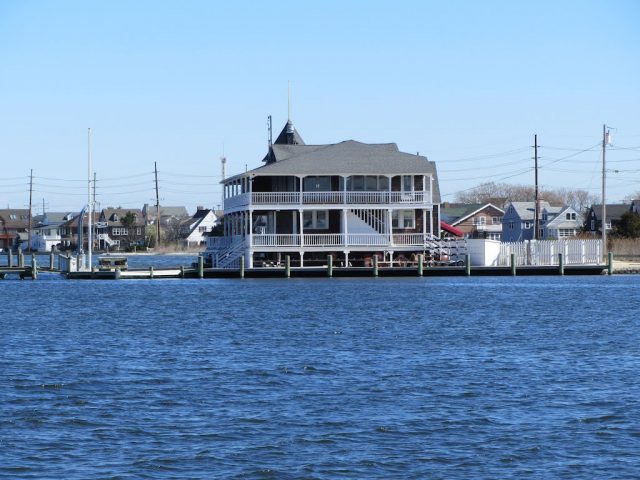
New Jersey Natural Gas has requested an easement in Seaside Park as part of a project to build a new gas line from the mainland, under Barnegat Bay, connecting to an area near the Seaside Park Yacht Club.

However, borough officials discussed their hesitation in signing the agreement, at the advice of the borough attorney, who will ask for additional documents from NJNG and the yacht club and hopes to have a meeting with all parties involved before the paperwork progresses.

NJNG has a Southern Seaside Reliability Project planned, one of six major gasline projects on the Jersey Shore called NJ RISE, an acronym for NJ Reinvestment in System Enhancement project proposed after Superstorm Sandy.

NJNG Spokesperson Mike Kenney said the Seaside project aims to create redudancy to the barrier island. What happened after Sandy is that the entire barrier island needed to be re-pressurized and was not receiving gas following the disaster. Adding a more southernly, second line, to the barrier island would mean tens of thousands of NJNG customers would not be cut off from their gas utility in the event of an emergency, because a second line would be available.

The project as it stands now would lead from the Good Luck Point part of Berkeley, Bayview Drive, and then head under the bay to connect with Bayview Drive in Seaside Park, near the yacht club. From there, it would connect with the existing gasline.

The South Seaside Reinforcement Project would have NJNG contractors drilling using “horizontal directional drilling” technology, which is a trenchless system. It would lay 9,000 linear feet of a natural gas distribution main.

Seaside Park officials said the agreements NJNG was attempting to have the borough and the yacht club sign as part of the project needed further explanation.

The questions as to what the easement agreement, compensation and other details were between the yacht club and the NJNG were of concern of Seaside Park Borough Council, who had the paperwork as a discussion item at its last council workshop meeting.

The borough would like to know what compensation the yacht club is receiving to house NJNG equipment and connect to its parcel, which the borough believes may be borough property leased to the yacht club.

Mayor Robert W. Matthies Jr. tasked the borough attorney with responding to the request with one for the information the borough was looking for, and possibly setting up a meeting between Seaside Park, the utility company and the yacht club.

Kinney said the project would not begin until late fall. Drilling for the project would be 80 feet under the bay, so as to protect the gasline and also so as not to disturb marine life or marine traffic.

A CAFRA permit public notice was recently published, asking for any public comment on the Seaside project, which was already approved by the BPU as part of the NJ RISE application.

The other local spots of NJ RISE include infrastructure in Sea Bright, and another “second feed” to Long Beach Island via Dock Road in West Creek to Barnegat Light.

Through the five-year, $102.5 million NJ RISE initiative, NJNG aims “to enhance the resiliency of its natural gas distribution and transmission systems and help mitigate the impact of major weather events in the future.”

Kinney said an additional component of NJ Rise is to install approximately 35,000 excess flow valves in potential storm-affected areas. This would restrict the gas flow when there is a change in pressure on the service line.

The CAFRA permit public notice seeks that anyone seeking to comment on the permit or who requests a hearing on the project contact the state Department of Environmental Protection’s Division of Land Use Regulation at PO Box 420, Code 501-02A, Trenton, NJ 08625-0420 at the attention of Berkeley Township or Seaside Park Bureau Chief.


The problem NJNG had during Sandy was there were no homes in any shape to receive the gas! If homes are washed away or otherwise compromised, NJNG would rightly TURN THE GAS OFF! Just as they did durning Sandy. The RISE Project, as well as SJG and The SRL are all for export or future development, not 'reliability or redundancy` Of course if they admitted that, they wouldn't be able to charge the ratepayers to build the pipe.

===========

WALL, N.J.--(BUSINESS WIRE)--

New Jersey Natural Gas (NJNG), the regulated subsidiary of New Jersey Resources (NJR), today filed with the New Jersey Board of Public Utilities (BPU) seeking recovery of costs associated with its NJ Reinvestment in System Enhancement (NJ RISE) and Safety Acceleration and Facility Enhancement (SAFE II) programs. If approved, the typical residential heating customer using 100 therms a month would see an increase of $0.68, or 0.65 percent, on their monthly bill.

“We never stop working to ensure safe, reliable service for our customers,” said Mariellen Dugan, senior vice president and chief operating officer of New Jersey Natural Gas. “It’s our top priority and the most important thing we do. The investments we are making in NJ RISE and SAFE II strengthen the integrity of our system and enable us to better meet our customers’ expectations.”

Through NJ RISE, approved by the BPU in 2014, NJNG is investing $102.5 million for a series of capital projects designed to help mitigate the impact of major weather events by enhancing the resiliency of its natural gas distribution and transmission systems. The projects include the installation of secondary natural gas feeds into Sea Bright, Long Beach Island and the Seaside Peninsula, as well as the relocation of a regulator station from Mantoloking to the mainland and two regulator station reinforcement projects in Mantoloking and Long Beach Island, respectively. Additionally, NJNG is installing excess flow valves, which restrict the flow of natural gas when there is a change in pressure, on all distribution services in coastal communities that may be impacted by storm surges and flooding. These upgrades will help minimize the number and duration of outages, improve NJNG’s ability to respond to and control service disruptions and enhance the safety and reliability of its system.

In 2016, the BPU approved NJNG’s SAFE II program to replace the remaining approximately 276 miles of unprotected steel main and associated services in the company’s distribution system. NJNG has been routinely addressing the replacement of these facilities, and in 2015 became the first natural gas utility in New Jersey to eliminate all cast iron from its system.

For both projects, NJNG is allowed to earn an Allowance for Funds Used During Construction (AFUDC) rate on its invested capital during construction and request rate increases for related spending in annual filings over the duration of the programs. Pending BPU approval, NJNG is seeking to adjust its rates effective October 1, 2017 to recover approximately $31.4 million of related NJ RISE and SAFE II costs made through June 30, 2017, resulting in a base rate increase of $4.3 million.

About New Jersey Resources
New Jersey Resources (NJR) is a Fortune 1000 company that, through its subsidiaries, provides safe and reliable natural gas and clean energy services, including transportation, distribution, asset management and home services. NJR is comprised of five primary businesses:
  • New Jersey Natural Gas, NJR’s principal subsidiary, operates and maintains over 7,300 miles of natural gas transportation and distribution infrastructure to serve over half a million customers in New Jersey’s Monmouth, Ocean and parts of Morris, Middlesex and Burlington counties.
  • NJR Energy Services manages a diversified portfolio of natural gas transportation and storage assets and provides physical natural gas services and customized energy solutions to its customers across North America.
  • NJR Clean Energy Ventures invests in, owns and operates solar and onshore wind projects with a total capacity of nearly 280 megawatts, providing residential and commercial customers with low-carbon solutions.
  • NJR Midstream serves customers from local distributors and producers to electric generators and wholesale marketers through its 50 percent equity ownership in the Steckman Ridge natural gas storage facility and its stake in Dominion Midstream Partners, L.P., as well as its 20 percent equity interest in the PennEast Pipeline Project.
  • NJR Home Services provides service contracts as well as heating, central air conditioning, water heaters, standby generators, solar and other indoor and outdoor comfort products to residential homes throughout New Jersey.
NJR and its more than 1,000 employees are committed to helping customers save energy and money by promoting conservation and encouraging efficiency through Conserve to Preserve® and initiatives such as The SAVEGREEN Project® and The Sunlight Advantage®.
For more information about NJR:
Visit www.njresources.com.