1 dead in massive 6-alarm fire at Upper East Side apartment building
Eyewitness News
Updated 55 mins ago
UPPER EAST SIDE, Manhattan (WABC) -- One person was killed after a six-alarm fire broke out in an Upper East Side building in Manhattan Thursday morning.
The fire broke out on the first floor of the building in the 300 block shortly before 3:30 a.m.
An unidentified middle-aged man was found on the third floor and pronounced dead in the building.
A man on the fifth floor was trapped with fire coming up the stairs and fire blocking the fire escape.
"His two options were really to jump or to burn," said FDNY Commissioner Daniel Nigro.
17 people were reported injured so far, most with minor injuries. 11 of the injured are firefighters.
A picture of the fire sent to us by viewer Emily Wiehl:
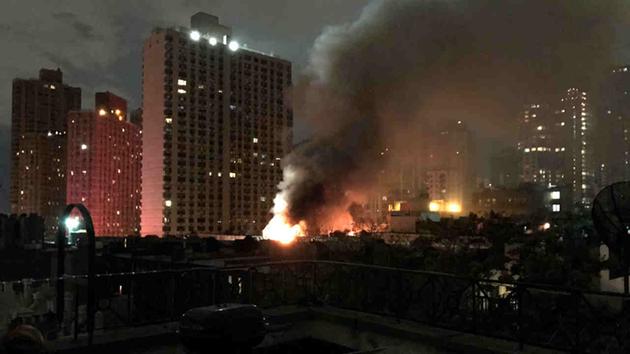
One person was killed and another is critical after a six-alarm fire broke out at an Upper East Side building.
The building, number 324, and two others were evacuated, leaving dozens of residents homeless. "We are talking about anywhere from 10 to 20 apartments in each building. You can do the math on that," FDNY Chief of Department James Leonard said.
An 81-year-old man was rescued by firefighters from his home on the fifth floor. He is now listed in stable condition at New York Presbyterian Hospital/Cornell burn unit.
The fire burned through the entire building, from the first to the fifth floor, then through the roof, destroying 324. Firefighters were met with heavy flames and at one point, had to pull away from fighting the fire because the flames were too strong.
"The residents were alerted by a smoke alarm, and unfortunately left the door open when they exited the apartment, so fire not only spread up the shaft, it spread directly up the stairs from one apartment," Commissioner Nigro said.
Nigro says that in a fire, he urges residents to close the doors.
The two adjacent buildings were checked for minor damage.
It was a chaotic scene as neighbors evacuated.
"Before the fire trucks got here, there was yelling in the streets, somebody yelling fire. I mean, if it wasn't for him, a lotta people wouldn't have gotten out," said Gabrielle Desonne, a resident.
Ashley Henry, another displaced resident, also escaped the fire. "We just literally threw on whatever was on the floor and ran out," said Henry.
East 93rd Street was closed between First and Second avenues, and First Avenue was closed between 88th and 94th streets.
The Red Cross was on the scene assisting residents of the building. American Red Cross has registered 19 families so far, 22 adults and 2 children.
The cause of the fire is under investigation.
Truck driver fatally hit by large pipe during unloading in Blaine
The incident occurred at a construction equipment business.
By Paul Walsh Star Tribune
October 25, 2016 — 8:51pm
BLAINE, MN
A truck driver was fatally struck in the head by one of the large plastic pipes he was delivering Tuesday morning to a construction equipment business in Blaine, police said.
The incident occurred shortly before 9 a.m. at Gary Carlson Equipment in the 10700 block of Mankato Street, just west of Radisson Road NE., said police Lt. Dan Pelkey.
The semitrailer truck driver, in his 20s and from Missouri, was unloading the 12-foot-long pipes from his trailer when “one came off the trailer and struck him,” Pelkey said.
The man was taken by emergency responders to Mercy Hospital in Coon Rapids with critical injuries and later died, the lieutenant said. The driver’s name has not been released.
Emergency scanner traffic indicated that the pipe hit the man in the head and left him unconscious but still breathing as he was taken from the loading area.
The man’s death is being investigated by the state’s Occupational Safety and Health Administration.
For the five years ending in 2015, workplace deaths in Minnesota involving “contact with object/equipment” averaged nearly eight per year, according to state statistics. That category includes contact with vehicles such as trucks, forklifts and front-end loaders, said agency spokesman James Honerman.
That category also accounts for the most common instances of workplace fatalities, making up 42 percent of the 92 deaths overall from 2011-15.
Transporting loads is a very dangerous operation. It might seem like a simple task of getting stuff from one place and bringing it to another. But loading, unloading and transporting cargo can cause serious injury and even fatality. Workers loading and unloading cargo are exposed to serious danger in that heavy objects may hit or fall on them if they don’t follow the right procedures in securing loads.
Drivers may meet accidents if they don’t drive safely while carrying heavy loads. The same thing can happen if the weight of the cargo is not distributed well, thus compromising the driver’s control of the vehicle.
What makes transporting loads more dangerous is the possibility of risking lives of other drivers on the road. This can happen when loads are not securely fastened to the vehicle and they end up rolling onto the road and hitting other vehicles or obstructing their path.
Now that you know how hazardous transporting loads can be, it’s time you learn more about securing loads properly. Here are guidelines you should follow for this important task:
1. Loading areas should always have good lighting. They should also be away from both vehicles and pedestrians.
2. Loading areas should be firm, flat and free from potholes and other obstructions that may cause slips or trips.
3. Inspect the vehicle and make sure that horns, reflectors, lights and other safety features are in good condition.
4. Provide guards for dangerous parts of the vehicle such as chain drives, power take-off and exposed exhaust pipes.
5. Before loading transport, ensure that the vehicle is braked and stabilized.
6. Clean off first any junk or loose materials (crates, cables, wires, chains, and bins) in the vehicle before loading tools or equipment.
7. A rule of thumb when securing cargo in the vehicle: one tie-down must be used for every ten feet of cargo. Make sure, though, to use at least two tie-downs for any cargo regardless of its length.
8. Use a red flag to mark loads that extend more than three feet beyond the body of the vehicle. When transporting cargo at night, use a red light instead.
9. Use at least 4 binders for loads like pipes and logs that are 27 feet long. Ensure that the spacing between binders is equal.
10. Never load unsecured items on the backseat or rear window deck of the vehicle. This can cause the load to hit passengers or the driver when the vehicle comes to a sudden stop.
11. As much as possible, use a compartment or tool box to keep small items secure in a vehicle. If this is not feasible, use a tarp to cover the small items, making sure that it is securely tied down with ropes or straps.
12. When on the road, stop frequently to check your cargo. This is all the more necessary when traveling long distances.
Unloading cargo can be as dangerous as loading and securing it. That’s why employees must remain cautious when carrying and unloading tools, equipment and other materials from vehicles. This should not be a problem when they’re properly trained in this procedure. 
RANDOLPH COUNTY, AR (KAIT) -
4:52 p.m. UPDATE: Randolph County
Sheriff Gary Tribble told Region 8 News that the road south of the
scene of this afternoon's truck fire is back open. A wrecker has been
called to the scene for cleanup.
Catch LIVE reports coming up on Region 8 News at 5 and 6.
4:24 p.m. UPDATE: The fire is now out, according to Bo Graham, the Randolph County director of emergency management.
The tires, brakes and air bags caught fire, he said.
Graham confirmed there was no chemical release of the ammonium nitrate slurry on the trailer.
Arkansas State Police will be in charge of moving the trailer. They are contacting a wrecker service.
Officers are diverting traffic along the old highway.
4:20 p.m. UPDATE: Whitney
Green, public information officer for the Arkansas Department of
Emergency Management, tells Region 8 News there was no release of the
chemical.
She said the truck tires were the only thing that caught fire.
Crews on the scene have not confirmed if the fire is out or not.
3:55 p.m. UPDATE: Randolph County Judge David Jansen confirms the truck is loaded with 44,000 pounds of ammonium nitrate.
The Arkansas State Police Bomb Squad is on the way to the scene and local crews are suiting up to fight the fire.
Meanwhile,
they have evacuated a half-mile radius from the scene. Jansen said it
is "not very populated," so he was not sure how many homes would be
affected.
Jack Adams, manager of Cole's Grocery in Reyno, said
that police are rerouting traffic onto the old highway. No one, he said,
is allowed below Reyno.
He said that they have received no evacuation notices in town.
3:07 p.m. UPDATE: Randolph County Judge David Jansen says the fire is located 15 miles north of Pocahontas, between Biggers and Reyno.
Sheriff Gary Tribble is en route to the scene.
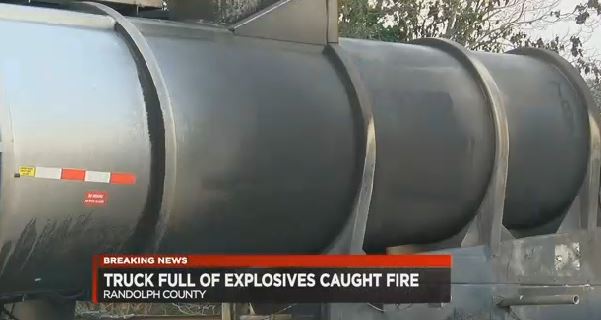
Crews are responding to a report of a semi truck loaded with explosives on fire.
The truck, according to a Randolph County sheriff’s deputy, is located in the 14000-block of Highway 67 North.
Motorists should avoid this area.
==========
REYNO, Ark. (AP) - A tractor-trailer rig carrying ammonia nitrate caught fire and burned in northeast Arkansas, forcing the evacuation of homes for about a half-mile around the fire near the town of Reyno.
Randolph County Office of Emergency Services Coordinator Bo Graham says the fire was put out Tuesday afternoon and there are no injuries.
The number of people forced to leave their homes or businesses was not immediately known.
Graham says the brakes on the trucks caught fire as the truck traveled on Highway 67.
==========
Tractor-trailer carrying ammonium nitrate catches fire on Arkansas highway
By Austin Cannon
October 25, 2016
No injuries were reported after a tractor-trailer carrying 44,000 gallons of ammonium nitrate caught fire Tuesday afternoon on U.S. Highway 67 near Reyno, said a spokesman for the Arkansas Department of Emergency Management.
Whitney Green said none of the chemical escaped the truck and that only the truck’s tires, rims and brake pads caught fire. The emergency management department’s local coordinator reported the fire about 3:30 p.m., she said.
Firefighters from the Biggers-Reyno and Pocahontas departments helped extinguish the flames, Green said.
Brad Smithee, an official with the Arkansas Highway and Transportation Department, said traffic had been blocked off a substantial distance away from the fire and that it was being diverted onto a county road west of the highway.
Ammonium nitrate is a component in some plant fertilizers. It’s normally a stable chemical, but when it’s exposed to fire, it can cause additional, uncontrollable fires or explosions, according to the U.S. Chemical Safety Board.
Fertilizer-grade ammonium nitrate was stored at the West Fertilizer Company in West, Texas. Its plant exploded in April 2013, killing 15 people.
OCTOBER 26, 2016
Sheepshead Bay, New York
A man has died after falling to the bottom of a 35-foot-deep concrete wastewater tank while on the job at a Brooklyn treatment facility Wednesday, police and fire officials said.
The man, who sources said is a contractor in his early 30s, was working at the Coney Island Wastewater Treatment Plant on Knapp Street in Sheepshead Bay when he fell into the tank and became trapped at the bottom around 12:30 p.m., authorities said.
Police and firefighters, including members of elite marine units and scuba divers from the NYPD and FDNY, arrived at the scene and desperately searched for the man before finally finding him submerged about 8 minutes later and pulling him out, said FDNY Deputy Chief John Hodgens.
“He fell and he went right to the bottom,” Hodgens told reporters, adding, “There was no sign of him on the surface of the water.”
When the man was pulled out of the tank, “Immediately CPR was started on him to try and get a pulse,” said Hodgens.
The man, whose identity was not immediately released, was rushed to Coney Island Hospital in critical condition and emergency responders performed CPR on him right up until they reached the hospital, officials said.
But the man died shortly after.
The wastewater the man fell into is the final stage of treatment before the water gets funneled out into Plumb Beach Channel, which is located near the plant.
It was not immediately clear how the man fell into the tank.
“It’s a unknown environment,” said Hodgens of the conditions of the water. “We have zero visibility. They performed a difficult search in order to recover this member. It wasn’t cut and dry by any means.”
====
Coney Island Wastewater Treatment Plant
Overview
The Coney Island Wastewater Treatment Plant is located in Sheepshead Bay Brooklyn, New York. Its borders are located at Avenue Y to the North, Voorhies Avenue to the South, Coyle Street to the West and Shell Bank Creek to the East. The plant has been in operation since 1952. The plant site is approximately 30 acres, of which 8 acres are dedicated to recreational facilities for the adjacent community.
To comply with the Clean Water Act, beginning in 1983 until completion in 1993 the plant was upgraded from a modified aeration plant to a full secondary plant. Because the site is limited, the upgrading was performed in a series of 12 construction phases and construction contracts at a cost of over $600 million. Today it provides treatment for 110 mgd of wastewater at average conditions and has a maximum capacity of 220 mgd of wastewater for the 684,569 New Yorkers it serves.
Schedule
Project is scheduled to be completed in December 2011.
Cost
Cost of the Coney Island Wastwater Treatment Plant project is $48 million.
Community Issues
Because of the close proximity to the neighborhood, odor control is an on-going issue at the plant. To alleviate any odor issues, the plant is equipped with an extensive odor control system and the primary and aeration tanks are covered.
Charges dropped against limo driver in Long Island crash that killed 4
Updated 17 mins ago
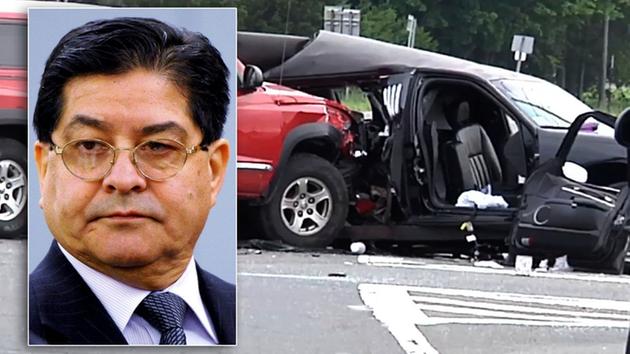
CENTRAL ISLIP, New York (WABC) -- A judge on Wednesday dismissed criminally negligent homicide and other charges against a limousine driver whose four passengers were killed in a crash after leaving a vineyard on Long Island.
State Supreme Court Justice Fernando Camacho found there had been improper grand jury testimony in the case and dismissed the indictment against Carlos Pino.
Pino, 59, had been awaiting trial on an array of charges, which included assault and reckless driving offenses.
He refused to answer questions from reporters as he left the courthouse Wednesday.
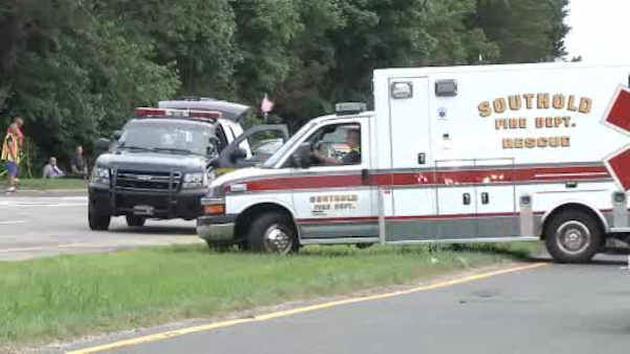
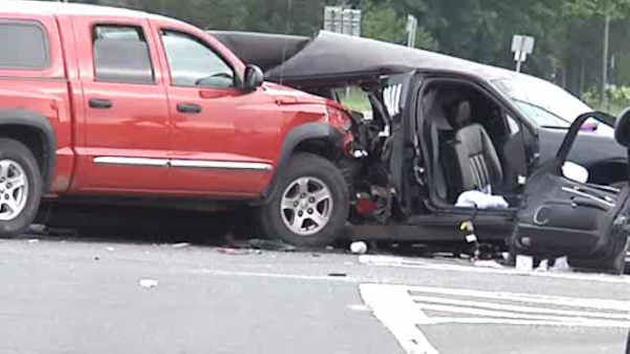
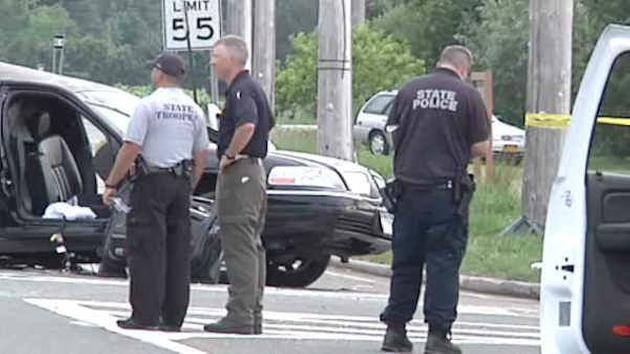
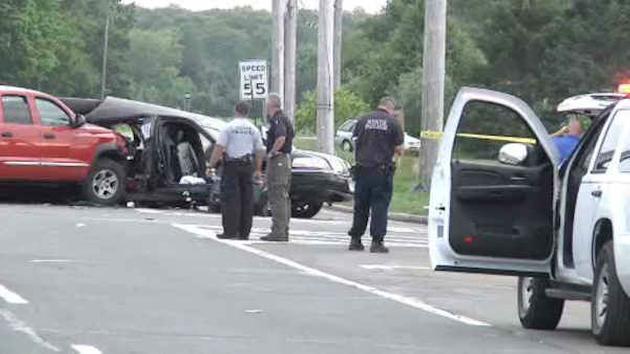
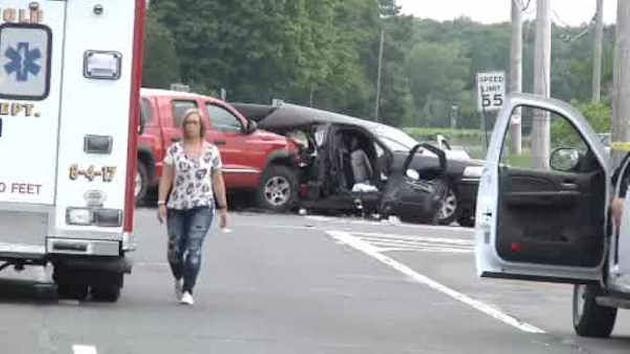
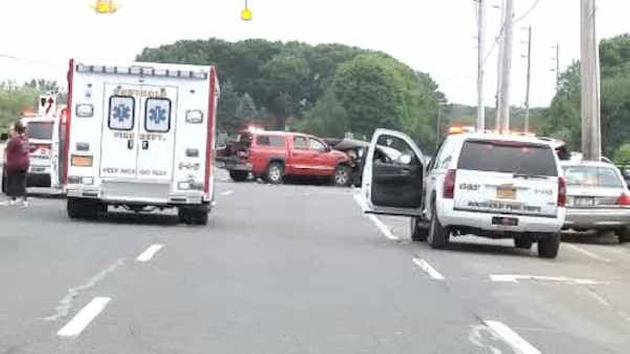
Four women at a bachelorette party were killed after a limousine was hit by a pickup truck on the eastern end of Long Island.
Pino's attorney, Leonard Lato, said prosecutors "knew all along that this was not a criminal case" but presented it to a grand jury "rather than have the integrity and actually tell that to the families of these poor girls who died."
Authorities have said Pino was trying to make a U-turn at an intersection along Route 48 in Cutchogue after leaving a nearby winery when a pickup truck broadsided the limo on July 18, 2015. Brittany M. Schulman, 23, of Smithtown; Lauren Baruch, 24, of Smithtown; Stephanie Belli, 23, of Kings Park; and Amy R. Grabina, 23, of Commack, were killed.
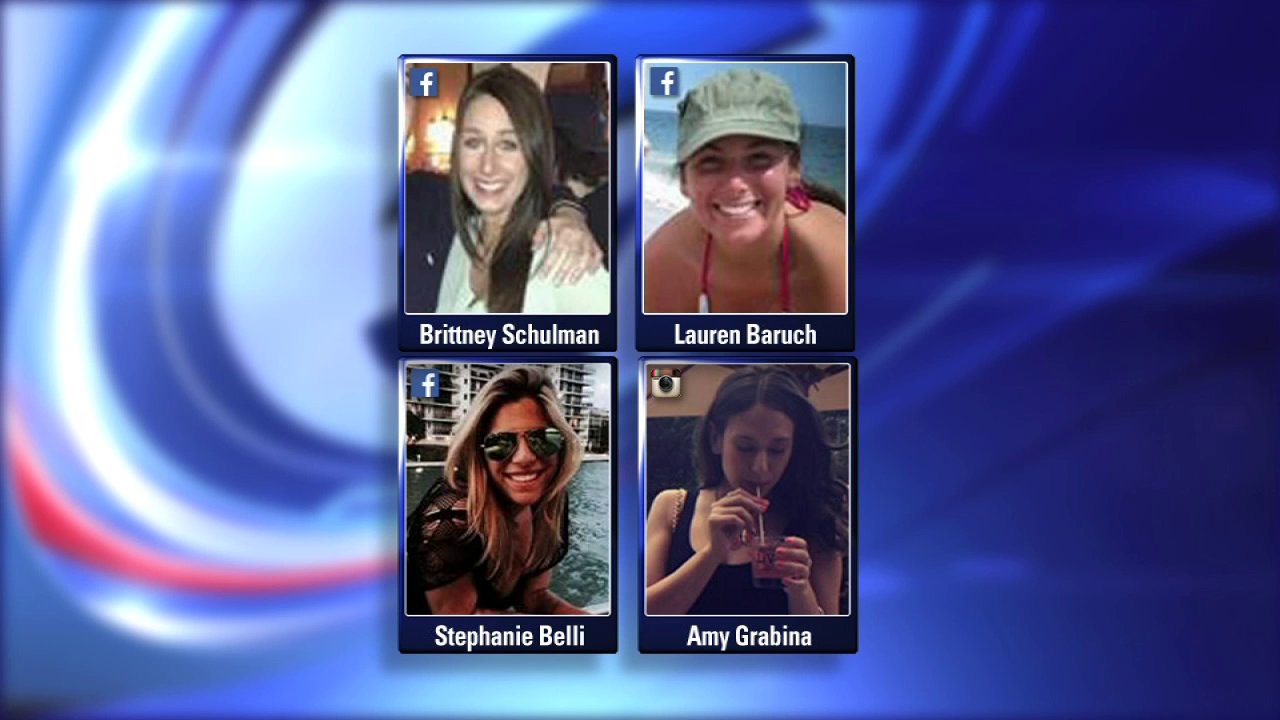
Four other women and the limo driver were hospitalized.
Lato had argued in court papers that Pino wasn't criminally responsible because he did nothing more than fail to perceive the proximity of an approaching truck as he made the turn. Steven Romeo, the driver whose pickup truck collided with the limo, was charged with drunken driving offenses, but prosecutors said he wasn't criminally responsible for the crash. A case against him is still pending; Romeo has said he isn't guilty.
Romeo made an application for dismissal but it was denied because prosecutors introduced evidence that his blood alcohol content was more than .08 at the time of the accident.
Pino is the defendant in several lawsuits brought by the families of the women who were killed and injured in the crash. Family members of some of the victims attended the court proceeding Wednesday but declined to comment.
Pino's attorney concedes that his client, as well as the truck driver, might have liability in the civil cases.
"He should've seen the oncoming car," Lato said. "Was there civil liability? Yes. Was it a criminal case? No."
Suffolk County District Attorney Thomas Spota said he would appeal the judge's decision.
Spota issued a statement which read in part:
"We are extremely disappointed that Justice Camacho determined the actions of Carlos Pino on July 18, 2015 were not criminal. Pino's actions were far from just careless. Pino, an experienced professional limousine driver carrying eight passengers, turned blindly into a roadway when his view was completely blocked by another car. Pino was driving a vehicle he knew or should have known could never make a safe U-turn under the circumstances. Justice Camacho's decision appears to ignore this critical and distinguishing fact. Simply because others made the turn without harm did not make doing so safe or lawful when done blindly as Pino did.
There is no evidence that the grand jurors were confused by the thorough, fair and impartial legal instructions given to them by prosecutors. The grand jury with the benefit of hearing the testimony of numerous witnesses, including from crash reconstruction experts, reached their decision. The grand jury found that Pino's heedlessly executed U-turn was serious enough to "constitute conduct that should be condemned" by an indictment."