UDOT contract worker dies in excavator accident near Alta Ski Resort. The UDOT contractor was killed while installing avalanche control equipment in Little Cottonwood Canyon.
by Sara Weber
Wednesday, October 12th 2016
(KUTV) A UDOT contract worker was killed Wednesday when the excavator he was driving rolled and ejected him, police say.
Unified Police are reporting the unnamed man, 41, died while working on a site up Little Cottonwood Canyon, near Alta Ski Resort
UPD is working with the Alta Marshal's Office to determine who has jurisdiction over the area where the man died.
The man's name has not been released, nor has the cause of the accident.
Authorities believe the man may have been working on avalanche control equipment when the excavating machine rolled over, crushing him the death.
======
ALTA, Utah - An industrial accident has killed a 41-year-old construction worker near Alta.
Officials said the man was contracted to do work for the Utah Department of Transportation and was not a UDOT employee. The deceased has been identified as 41-year-old Kasey Christiansen of Price.
Unified Police said it is assisting the Alta Marshal's Office with the incident.
UDOT said the worker was installing avalanche control equipment in Little Cottonwood Canyon when an excavator rolled, ejecting and killing the man.
Authorities are investigating what caused the excavator to roll.
UDOT sent Fox 13 this statement:
This morning we were devastated by the news that a UDOT contractor was killed while installing avalanche control equipment in Little Cottonwood Canyon.
Our contractors are part of the UDOT family and it’s heartbreaking any time something like this happens. Our thoughts and prayers go out to this worker’s family, friends and colleagues at this difficult time.
At UDOT, safety is our top priority. Work on the project is shut down pending an investigation.


Irish construction worker killed in Brooklyn
Frances Mulraney
@FrancesMulraney
October 12, 2016 02:00 PM

Paul Kennedy, 43, dies after being struck on the head by a falling piece of steel that fell from a crane. iStock
A 43-year-old Irishman and Bronx resident was killed on Tuesday afternoon following an accident at a construction site in Brooklyn.
According to
a complaint lodged with the NY Department of Buildings, Paul "Gooch" Kennedy was drilling piles at a site on 61 Bond St in Boerum Hill at approximately 1:20pm yesterday when a shackle from a crane overhead snapped. The piece of steel fell over 60ft before hitting Kennedy on the head. The Irishman was pronounced dead at the scene.
FDNY and NYPD immediately flocked to the site at the corner of Schermerhorn St., where a 13-storey hotel is being constructed on an open-air parking lot, but an NYPD spokesperson stated the man was discovered “unconscious and unresponsive with severe trauma to the body.” The medical examiner will determine the cause of death and an investigation into the tragedy is ongoing.
Kennedy’s wife, who resided with him in the Woodlawn section of the Bronx, rushed to the scene of the accident Tuesday evening, according to NY Daily News.
“He didn’t have to die — I told him not to take this job,” she said sadly. “I don’t know what I’m going to do.”
She was accompanied by her mother, Kennedy’s mother-in-law, who described him as “a kind man, a really good guy.”
“The machinery malfunctioned,” a security guard working the site told the NY Post.
“I went to get some pizza and I came back and he was dead. It happened that fast. Something detached from the machine. It busted him in the head and he was dead.
“It’s sad, he came to work and now he’s gone.”
A spokesperson for the site’s general contractor Broadway Construction Group told the Brooklyn Eagle: "We are deeply saddened by this terrible tragedy. Our thoughts are with the grieving family at this time. We are committed to the highest standards of safety and are fully cooperating with the investigation into how this happened."
The 18,000-square-foot site, located just beside a school, is currently being developed by GFI Hospitality and GFI Development Company with plans to open a “lifestyle hotel” by spring 2018. The crane in question was anchored below street level but stretched up over five stories high.
The Dept of Buildings ordered a complete stop-work order on the site, according to authorities. The site received just one safety violation from the department previously, when tripping and slipping hazards were found on the corner lot last May.
This is the 18th death related to construction to occur in New York in 2016.
======
Construction worker in Brooklyn dead after being struck in head by piece of machinery

The victim was hit in the head with a piece of machinery in Downtown Brooklyn and died at the scene. (Jesse Ward for NY Daily News)
BY Kerry Burke Ryan Sit
NEW YORK DAILY NEWS
Updated: Tuesday, October 11, 2016, 8:28 PM
A piece of crane equipment came loose Tuesday and fatally struck a 43-year-old hardhat as he operated the machine at a Brooklyn construction site, officials said.
Paul Kennedy had just stepped out of the tower crane when a piece of steel latching a hook to the crane’s cable fell at least 60 feet and struck him on Bond St. near Schermerhorn St. in downtown Brooklyn about 1:20 p.m., officials and construction workers said.
Kennedy, who lived in the Woodlawn section of the Bronx, died at the scene. His wife rushed to the site after getting the grim news.
“He didn’t have to die — I told him not to take this job,” she sobbed. “I don’t know what I’m going to do.”
“This can’t be real!” she wailed as workers tried to comfort her. “It’s not fair! It’s not fair!”
Kennedy’s mother-in-law also came to the scene.
“That was my daughter’s husband,” she said. “He was a kind man, a really good guy.”
One construction worker, who declined to give his name, described the horrific incident.

A woman reacts at the scene of a construction accident. (Theodore Parisienne)
"(The piece) came loose and came down on him,” he said. “His scalp was ripped back."
It was unclear if Kennedy was wearing a hard hat at the time.
"It didn't matter if he was wearing a hard hat,” he said. “It fell from so far up."
The crane was anchored below street level and extended up over five stories high.
Police and the Department of Buildings were investigating the death. A stop work order has been issued to the job site pending the investigation, city officials said.
The 18,000-square-foot site, previously a parking lot, was purchased in 2014 by GFI Hospitality and GFI Development, which also own The Beekman and Ace Hotels. The lot is being developed into a 13-story hotel slated to open in the Spring of 2018, according to public records and the company's website.
The driver of this Ford Explorer was killed on Wednesday when he crashed into the back of an 18-wheeler in Liberty.
Photo: Cleveland Advocate And Dayton News
Horrific crash with 18-wheeler kills dad inside SUV with baby
David Taylor
Updated 7:57 am, Thursday, October 13, 2016
The crash left debris on the road.
A man died on Wednesday when he allegedly ran a red light and careened under an 18-wheeler.
The power of the crash peeled the top of the black Ford Explorer completely off the vehicle.
The accident occurred around 9:40 a.m. at the State Highway 146 bypass in Liberty, Texas.
According to the Liberty Police Department, an 18-wheeler sand truck was in the left-hand lane turning onto the southbound lane of the SH 146 bypass.
"As he pulled out, the passenger vehicle (Ford Explorer) crashed under the back end of the trailer of the 18-wheeler," Lt. Chip Fairchild, of the Liberty Police Department, said.
The driver of the Ford Explorer was pronounced dead at the scene. In the back seat of the vehicle was his baby, about 18 months old. The child was taken by Life Flight to Memorial Hermann Hospital in Houston. The baby is in good condition with minimal medical issues.
"Our initial investigation clearly shows that the passenger of the Ford Explorer had a red light and the driver of the truck had a green light," the officer said.
Witnesses at the scene corroborated the story and were questioned by officers.
The intersection was shut down during the investigation of the accident.
The driver was in his late 20s or early 30s. His identity has not been released pending notification of family members.
Speed kills, folks. Learn from this tragedy and slow down.
Texas leads the nation in traffic fatalities. Texas also has the highest traffic fatality rate. I guess the huge size of the state, combined with flat and long roads entices the drivers to speed and reach their final destination at an early time.


One worker died and three others were seriously injured at the KMTEX Chemical Plant located on Gulfway Drive on the Intracoastal Waterway.
Witnesses said one of the workers was welding a pipeline that contained coal tar naphtha solvent when the fire occurred about 2 p.m.
FOR IMMEDIATE RELEASE
Wednesday, October 12, 2016
Four Texas Companies Agree to Pay $3.5 Million for Criminal Violations of the Clean Air Act at Two Oil and Chemical Processing Facilities
The Department of Justice, U.S. Attorney’s Office for the Eastern District of Texas and the U.S. Environmental Protection Agency (EPA) announced today that four Texas companies pleaded guilty and agreed to pay a total of $3.5 million dollars for criminal violations of the Clean Air Act at two oil and chemical processing facilities in Texas.
The information filed in federal court in the Eastern District of Texas charges KTX Limited and KTX Properties Inc., with negligently releasing hazardous air pollutants after a tank explosion at their chemical and petroleum processing facility located in Port Arthur, Texas, on March 31, 2011. The explosion killed one worker at the plant and severely injured two others.
According to the factual basis of the plea agreement, KTX Limited and KTX Properties Inc, authorized two contract workers to perform welding or “hot work” on piping connected to a tank at their Port Arthur facility. Prior to beginning the welding, the defendants falsified the “hot work” permit issued to the workers and failed to properly drain, isolate and decontaminate the tank and connecting equipment as required by Occupational Safety and Health Act (OSHA) regulations. As a result, the welding work ignited vapors causing the tank to explode and release hazardous air pollutants to the environment. Because the defendants had failed to properly inspect and maintain the tank pursuant to generally accepted industry standards, the exploding tank collapsed spilling burning product which severely injured two workers. A third worker was killed when the rails and ladder from the collapsing tank fell on his head.
The information also charges Crosby LP and Ramsey Properties LP with failing to monitor leaks of ground-level ozone (smog) producing air pollutants at their chemical processing facility in Crosby, Texas, from 2008 until 2012. Pursuant to the factual basis, the defendants also admitted that they falsified records and reports for these Title V permit requirements to EPA and the Texas Commission of Environmental Quality certifying the facility was complying with the permit requirements.
“The dishonest and outright failure to adhere to workplace standards and practices can lead to death and injury to American workers who deserve better, as this case tragically shows,” said Assistant Attorney General John C. Cruden for the Justice Department’s Environment and Natural Resources Division. “The Justice Department is committed to enforcing environmental and workplace safety laws that protect workers from this kind of egregious behavior and to help ensure it doesn’t happen again.”
“Safety inspections involving toxic or hazardous materials are mandatory and vital to the safety of the worker and the surrounding communities,” said Acting U.S. Attorney Brit Featherston for the Eastern District of Texas. Non-performance is unacceptable and will not be tolerated, and offenders will be prosecuted.”
The plea agreement requires the companies to pay a total of $3.3 million in criminal fines. In addition, the companies will make a $200,000 community service payment to the Southern Environmental Enforcement Network (SEEN). The payment will be used by SEEN for hazardous air release prevention and emergency response training to state and local environmental and law enforcement agencies.
“When handled or stored improperly, chemicals can result in severe injuries or even death, so protecting communities from the harmful effects of hazardous chemicals is a priority for EPA,” said Special Agent in Charge Christopher R. Brooks of EPA’s criminal enforcement program for Texas. “This case emphasizes the importance of having – and following – a plan to manage risks associated with storing hazardous chemicals, which help companies avoid accidents and enable local emergency responders to be better prepared.”
“Employee safety is of paramount importance as there is no excuse for workers not returning to their families at the end of the day,” said Regional Administrator Kelly Knighton for OSHA Region 6. “Resulting from an initial OSHA fatality investigation, I commend the Federal and State partners for holding accountable, to the fullest extent of the law, those employers that take shortcuts and endanger the safety and health of their workers.”
Assistant U.S. Attorney Joseph R. Batte of the Eastern District of Texas and Trial Attorneys Richard Powers and David Kehoe of the Department of Justice, Environmental Crimes Section, prosecuted the case. The case was investigated by EPA’s Criminal Investigation Division and assisted by the Texas Commission on Environmental Quality, the Texas Parks and Wildlife Department and OSHA.
========
Fatal accident at Port Arthur plant leads to federal fine
by Staff
Wednesday, October 12th 2016
Fatal accident at Port Arthur plant leads to federal fine

PORT ARTHUR, TEXAS — From U.S. Attorney's Office - The Department of Justice, U.S. Attorney’s Office for the Eastern District of Texas and the Environmental Protection Agency (EPA) announced today that four Texas companies pleaded guilty and agreed to pay a total of $3.5 million dollars for criminal violations of the Clean Air Act at two oil and chemical processing facilities in Texas.
The Information filed in federal court in the Eastern District of Texas charges KTX Limited and KTX Properties Inc., with negligently releasing hazardous air pollutants after a tank explosion at their chemical and petroleum processing facility located in Port Arthur, Texas on March 31, 2011. The explosion killed one worker at the plant and severely injured two others.
According to the factual basis of the plea agreement, KTX Limited and KTX Properties Inc, authorized two contract workers to perform welding or “hot work” on piping connected to a tank at their Port Arthur, Texas, facility. Prior to beginning the welding, the defendants falsified the “hot work” permit issued to the workers and failed to properly drain, isolate and decontaminate the tank and connecting equipment as required by Occupational Safety and Health Act (OSHA) regulations. As a result, the welding work ignited vapors causing the tank to explode and release hazardous air pollutants to the environment. Because the defendants had failed to properly inspect and maintain the tank pursuant to generally accepted industry standards, the exploding tank collapsed spilling burning product which severely injured two workers. A third worker was killed when the rails and ladder from the collapsing tank fell on his head.
“The dishonest [and outright] failure to adhere to workplace standards and practices can lead to death and injury to American workers who deserve better, as this case tragically shows,” said Assistant Attorney General John C. Cruden for the Justice Department’s Environment and Natural Resources Division. “The Justice Department is committed to enforcing environmental and workplace safety laws that protect workers from this kind of egregious behavior and to help ensure it doesn’t happen again.”
The information also charges Crosby LP and Ramsey Properties LP with failing to monitor leaks of ground-level ozone (smog) producing air pollutants at their chemical processing facility in Crosby, Texas, from 2008 until 2012. Pursuant to the factual basis, the defendants also admitted that they falsified records and reports for these Title V permit requirements to EPA and the Texas Commission of Environmental Quality certifying the facility was complying with the permit requirements.
“Safety inspections involving toxic or hazardous materials are mandatory and vital to the safety of the worker and the surrounding communities,” said Acting U.S. Attorney Brit Featherston for the Eastern District of Texas. Non-performance is unacceptable and will not be tolerated, and offenders will be prosecuted.”
The plea agreement requires the companies to pay a total of $3.3 million in criminal fines. In addition, the companies will make a $200,000 community service payment to the Southern Environmental Enforcement Network (SEEN). The payment will be used by SEEN for hazardous air release prevention and emergency response training to state and local environmental and law enforcement agencies.
“When handled or stored improperly, chemicals can result in severe injuries or even death, so protecting communities from the harmful effects of hazardous chemicals is a priority for EPA,” said Special Agent in Charge Christopher R. Brooks of EPA’s criminal enforcement program for Texas. “This case emphasizes the importance of having – and following – a plan to manage risks associated with storing hazardous chemicals, which help companies avoid accidents and enable local emergency responders to be better prepared.”
“Employee safety is of paramount importance as there is no excuse for workers not returning to their families at the end of the day,” said Regional Administrator Kelly Knighton for OSHA Region 6. “Resulting from an initial OSHA fatality investigation, I commend the Federal and State partners for holding accountable, to the fullest extent of the law, those employers that take shortcuts and endanger the safety and health of their workers.”
Assistant U.S. Attorney Joseph R. Batte of the Eastern District of Texas and Trial Attorneys Richard Powers and David Kehoe of the Department of Justice, Environmental Crimes Section, prosecuted the case. The case was investigated by EPA’s Criminal Investigation Division and assisted by the Texas Commission on Environmental Quality, the Texas Parks and Wildlife Department, and the Occupational Safety and Health Administration.
Bacteria in dentist's water sends 30 kids to hospital
By Jason Kravarik, CNN
Updated 7:26 AM ET, Wed October 12, 2016
Story highlights
30 kids were infected with Mycobacterium abscessus from water used in pulpectomies
The dental clinic is cooperating with a joint state-county investigation
Anaheim, California (CNN)
An outbreak that sent 30 children to Southern California hospitals and could have long-term effects on their health, is raising awareness about the risk of bacterial infection from water at the dentist's office.
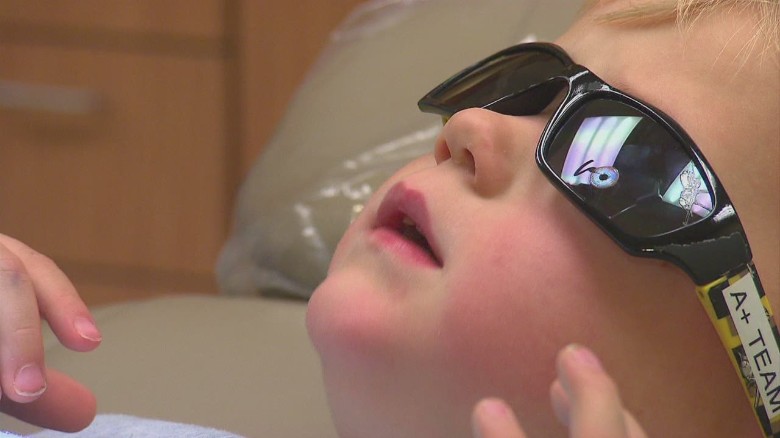
All of the children had a pulpotomy, essentially a "child root canal" and were infected by water used during the procedure, said Dr. Matthew Zahn of the Orange County Health Care Agency.
The cases have been traced to the Children's Dental Group in Anaheim, with patients ages 3 to 9 years old all visiting the clinic between March and July.
"Several hundred people had these pulpotomies, so we are anticipating that for at least the next several weeks or months, we're going to see more cases," Zahn said. He added that the infection, called Mycobacterium abscessus, is slow-moving and can take weeks or months to show symptoms.
Swelling, redness and pain around the infected tooth can occur, with the bacteria often spreading to the gum and jawbone. In those cases, Zahn said, stopping the infection often means removing part of the jaw itself, making it "a long-term issue for these children."
Investigators believe the bacteria grow in low-level stagnant water that isn't flushed. In a dental setting, that water is used during treatment, and when a tooth is capped, it can trap the bacteria inside.
Calling it "a weak bug," Zahn said most people who encounter M. abscessus simply flush it away during their daily life. But patients who have had a pulpotomy aren't able to get to the infected area inside the tooth, allowing it to grow.
Cecilia Roman claims it happened to her child, who she said initially went in to have her teeth cleaned.
"At the end of the day, she had three teeth taken out. Her face was swollen," Roman told CNN affiliate KCBS/KCAL. "I feel like I let my daughter down."
Investigation is underway
The Dental Board of California is investigating whether proper procedures were followed at the Children's Dental Group office in Anaheim. The company operates other offices throughout California, but none of those has been linked to the outbreak.
The state of California mandates that water lines be "purged with air or flushed with water for at least two minutes" each day, according to documents provided by the Dental Board.
"We want to make sure they were doing what they were supposed to be doing," board spokeswoman Joyia Emard said.
She said the clinic, which is still open, is cooperating with a joint investigation between the state and county. The water lines at the clinic are not in use, pending the outcome of the investigation. The company tells CNN it will replace the lines and begin ongoing monitoring of its water purity.
Some parents think that the clinic could have acted sooner and that it placed profits over the safety of patients.
"I want their license revoked," Roman said. "I want that place to be shut down."
Zahn, who is heading the investigation for Orange County, said it's not clear how soon the clinic knew of the outbreak and began notifying at-risk patients. He said it probably took time before doctors even diagnosed the cases.
"Unless you know you're looking for it and culturing for it, it's not easy to identify, and they take a period of time to show up," Zahn said.
In a statement, Children's Dental Group CEO Sam Gruenbaum said he "regrets even one patient has developed this condition" and is working hard to "make sure every single person is seen for a precautionary examination." He said 842 children received the pulpotomies since March.
Outbreaks are rare
With dozens of children hospitalized -- and hundreds more at risk -- the impact of this outbreak has been wide-ranging. But it's still only the second such outbreak linked to a dental clinic, said spokesman Richard Quartarone of the Centers for Disease Control and Prevention.
The first was identified last year in Georgia when 20 children got sick after having pulpotomies. As in California, investigators linked the outbreak to contaminated water lines at a single clinic.
The CDC issued recommendations to properly disinfect water lines and avoid "dead ends in plumbing where stagnant water" can form. But now, with the California case bringing more attention to the issue, some wonder whether those warnings should be amplified.
"Do we modify any guidelines that make sure these specific events don't happen?" Zahn asked. "These are not common events, but they do have very significant consequences."
====
Infection Outbreak Shines Light On Water Risks At Dentists Offices
September 30, 201612:03 PM ET
Erin Ross

Mimi Morales recovers in Children's Hospital of Orange Country in late September after surgery for a dental infection she contracted at Children's Dental Group in Anaheim, Calif. She had three permanent teeth, one baby tooth and part of her jawbone removed. Mindy Schauer/Courtesy of The Orange County Register
When people go to the dentist, they generally expect to leave in better health than when they walked in.
But the water that dentists use to rinse teeth sometimes carries infectious bacteria.
The Orange County Health Care Agency in California says that nearly two dozen children who received so-called baby root canals, or pulpotomies, are thought to have developed dangerous bacterial infections. Dentists perform pulpotomies to remove infected pulp inside a baby tooth so the rest of the tooth can be spared.
The infections were caused by Mycobacterium abscessus, which the health department traced back to the water at Children's Dental Clinic of Anaheim.
"The reason we're so concerned is this infection is very hard to treat with antibiotics," says Dr. Eric Handler, health officer with the Orange County Health Authority. Instead, the tissue is surgically removed. "Treatment can be very traumatic and deforming."
As of Sept. 27, three confirmed and 19 probable infections have been linked to the clinic. In each case, the children had to be hospitalized. In an email to Shots, Children's Dental Group CEO Sam Gruenbaum said, "I am currently devoting all of my time and energy to making certain our patients are taken care of."
In a Sept. 23 letter to patients, Gruenbaum asked the families of patients who had received pulpotomies since April 1 at the Anaheim clinic to come in and be examined for signs of infection. The letter said that the Orange County Health Care Agency had found abnormal levels of microbes in the water, and the clinic is no longer using office water for patient procedures.
Deepa Bharath and Courtney Perks at The Orange County Register report that several children have had surgery to treat infections, including a 7-year-old girl who had "three permanent teeth, a baby tooth, and a part of her jaw bone" removed.
Although infections like these are rare, this isn't the first time Mycobacterium abscessus has been traced to a dental office. In Georgia in 2015, more than 20 children who had pulpotomies were later hospitalized with confirmed or suspected mycobacterium infections.
Still, according to the federal Centers for Disease Control and Prevention, the Georgia outbreak of dental mycobacterium infections is the only other one on record. The investigation into Georgia cases found that 1,386 children received pulpotomies and were potentially exposed to the bacteria. But only about 1 percent of them got sick.
"Infections from mycobacterium are very rare," said Dr. Melissa Tobin-D'Angelo, a medical epidemiologist with the Georgia Department of Public Health who investigated the 2015 outbreak. "We don't want to discourage parents from having their children see their dentists two times a year as recommended. The reason children had to have this procedure is because they had decay to begin with."
Investigators learned that the water supply to the building wasn't contaminated. Ultimately, they traced the infection to the dental unit waterlines — the flexible plastic tubes that carry water to the hoses that rinse your mouth.
The researchers weren't surprised that the tubes turned out to be the source of the problem. Keeping waterlines clean can be a challenge for dentists.
A bacterial incubator
Dental unit waterlines are very good at growing bacteria, says Dr. Nuala Porteous, an associate professor of dentistry at University of Texas Health Science Center Dental School in San Antonio. In her research, she looks at how to control infection risks in dental offices, including the microbes that live in waterlines.

Mimi Morales says she's "flabbergasted" that her granddaughter, Mimi, 7, ended up in the hospital with an infection following a pulpotomy in July. Mindy Schauer/Courtesy of The Orange Country Register
"If you think about the last time you went to the dentist, they only use the water sometimes," Porteous says. "It's very start and stop. They work and then they rinse, so there's a lot of stagnant water."
And bacteria love to grow in stagnant water. How prevalent they are is hard to say. A study of dental waterlines in the U.S. found harmful bacteria 68 percent of the time. Still, another study was reassuring, barely finding any contamination in dental offices in London and Northern Ireland.
Mycobacterium isn't the only kind of germ that can thrive in waterlines. Pseudomonas and legionella can, too. Both types of bacteria can cause pneumonia-like illnesses. Despite studies showing that dentists are more likely to have antibodies for legionella than the general population, very few actual illnesses have been directly linked to dentistry.
"These are organisms that are typically found in water and groundwater, things like that," says John Molinari, a microbiologist and professor emeritus at the University of Detroit Mercy School of Dentistry. "They wouldn't normally get you sick. It's when you have high concentrations in a certain person that illness happens." The elderly and people with an underlying illness are most at risk.
"With legionella, you're more likely to get sick when there's a lot of bacteria, like when you get biofilms," says Molinari.
Fighting biofilms
A biofilm is a group of microorganisms — typically bacteria, fungi or a mixture of microbes — that live in a colony. These microbes communicate with each other and even feed and protect each other. And that can make them very hard to remove.
"Think of the plaque that grows on your teeth," says Molinari, "That plaque is a biofilm. At first you can wash it off with water, but after 24 hours you need to brush your teeth and use chemicals to remove it. Even mouthwash alone isn't enough."
The biofilms in waterlines do the same thing. The outer layers might die as cleaning chemicals rush through the pipes, but the inner layers can survive.
A paper published online Sept. 13 in the journal Pathogens and Disease looked at dental practices using industry-standard sterilization techniques. "We found fungi, bacteria, viruses, and protozoa in dental unit waterlines. In our study, decontamination procedures worked but not completely," Damien Costa, at the University of Poitiers in France and the lead investigator on the study, told Shots in an email.
Costa says there aren't any set procedures for sterilizing waterline units in France, where his research was conducted. He hopes his study will provide data that will help the government create guidelines.
In the United States, the CDC says dentists should "consult with the dental unit manufacturer for appropriate methods and equipment to maintain the recommended quality of dental water." Waterlines vary depending on the dental equipment, so a one-size-fits-all approach wouldn't be effective, a CDC spokesman told Shots.
Generally, dental offices use a combination of chemicals. Some are added continuously to the water in low concentrations, while other, stronger disinfectants are used intermittently. Filters and disinfectant cartridges can be added to the ends of lines, and the ADA recommends occasionally draining and purging the waterlines with air.
Dentists should be able to tell if the bacteria-killing maintenance for their equipment is working. Porteous says chairside kits that check for bacteria are available. Dentists can also send water samples to testing companies to make sure bacterial counts fall within CDC guidelines.
The CDC says that the water dentists use should meet the same quality standards as drinking water. But the CDC and the American Dental Association don't say how often dentists should test their water.
"Without water testing, it's impossible to tell if your treatment works," says Mark Frampton, owner of ProEdge Dental Products, a manufacturer of disinfectants for dental lines. Frampton's company also analyzes water quality for dentists. "In our experience, about a third of the time people that have maintenance programs will still fail our tests because they don't always follow the treatment instructions. People don't always do everything perfectly."
Frampton recommends that dentists check their water quality at least quarterly, or more often depending on the treatment product they use.
University of Texas Health Science Center's Porteous recommends dentists check the water coming out of dental lines at least weekly. "I would hope that all dentists take note of these cases that have been occurring recently in Georgia and under investigation in LA," she says. "It's very sad, and I hope that it makes all dental institutions sit up and take note."
Back in California, the dental clinic linked to the mycobacterium infections isn't taking any chances. It will replace its entire water system.


