The husky spill
Last month, some 200,000 litres of oil spilled into the North Saskatchewan river. Officials have praised the company for its financial response to the crisis, but critics are concerned about the lack of transparency, Carrie Tait reports

Crews work to clean up an oil spill on the North Saskatchewan river near Maidstone, Sask. on Friday, July 22, 2016.
Jason Franson/The Canadian Press
Carrie Tait
NORTH BATTLEFORD, SASK. The Globe and Mail Last updated: Friday, Aug. 26, 2016 10:52PM EDT
Jim Toye spent weeks asking Husky Energy Inc. for a 10-litre sample of oil and diluent comparable to the mix the company spilled into the North Saskatchewan River in July.
The city manager for Prince Albert, Sask., wanted more precise information on the toxins polluting the community’s sole source of water so he and his team of specialists could figure out how to filter out contaminants from the spill, making the water safe for roughly 60,000 people.
They needed the sample. They got it last week, a month later. And the folks who wanted it had to fetch it themselves from Maidstone, a three-hour drive away and the town closest to the spill.
“How do we know what’s coming down the river unless we got a sample of it?” Mr. Toye said in an interview this week.
“We went to Maidstone and got it ourselves. … Every day now counts with winter coming.”
For more than a month, Prince Albert has been getting by on three emergency sources of water, but October’s freeze-up will put an end to those makeshift alternatives.
The city is not alone in its struggle to obtain accurate and timely information from Husky and the provincial government. Red Pheasant Cree Nation near North Battleford has done its own water testing. James Smith Cree Nation near Melfort installed its own booms on the river and is testing the water itself. Scientists want Husky and the government to post all the raw data from their water tests so they can be scrutinized by outsiders.
Husky estimates it spilled between 200,000 and 250,000 litres of oil and diluent into the river.

Crews work to clean up an oil spill on the North Saskatchewan river near Maidstone, Sask on Friday July 22, 2016.
JASON FRANSON/THE CANADIAN PRESS
At a time when questions about pipeline safety have hung up approvals for three major projects across Canada, the Husky spill is proving a major test for Saskatchewan’s regulatory system.
The province does not have an independent regulator like its counterpart in Alberta. Instead, Saskatchewan’s Ministry of the Economy is “conducting a full and thorough review of the incident to determine its cause and any required changes to operation and/or response,” according to Karen Hill, a spokeswoman for the government’s executive council.
The economy department’s mandate includes generating wealth and expanding the economy – and the province’s resources are key to those two pillars. Other departments and agencies, including the Ministry of the Environment and Water Security Agency, are involved.
Alberta moved away from this type of patchwork system in 2013, consolidating responsibility for enforcing resource regulations into a single arms-length body called the Alberta Energy Regulator. It, too, has its critics.
Husky, a global energy firm controlled by Hong Kong billionaire Li Ka-shing, has accepted full blame for the incident. It has already distributed millions of dollars to help cities and businesses cover expenses and lost revenue as a result of the leak.
Officials in North Battleford and Melfort – two other cities affected by the contaminated water – have praised the company, and even Prince Albert’s Mr. Toye is pleased with Husky’s financial response.
But critics are concerned about the amount of independent analysis of tests performed by Husky and the government.
Tim Jardine, a professor at the University of Saskatchewan’s School of Environment and Sustainability, wants all the raw data from the water test results published, rather than having to rely on Husky’s broad overview. That would allow specialists such as non-governmental organizations or university scientists to analyze the tests independently.
“It increases the transparency of the process … even if not everyone [in the public] can totally understand perfectly what the numbers mean.”
Officials from Husky and the Saskatchewan government are running a “unified command” centre to co-ordinate cleanup and testing. First Nations have a seat in the hub. Prince Albert, the largest centre affected by the spill, does not.
Husky’s pipeline-monitoring system detected “pressure anomalies” in the line July 20. The company, in an update July 26, noted this is normal when restarting parts of a pipeline network. The firm dispatched crews along the network. They did not find any leaks. The company planned to survey the pipeline from the air at dawn. During the night, Husky decided to shut down the system at 6 a.m. By morning, Husky received reports of a sheen on the river.
The Saskatchewan government first announced the leak July 21.

Husky did not immediately give Prince Albert the requested oil sample because the firm first wanted to know how the city would use it, company spokesman Mel Duvall said.
“Our water experts were trying to better understand how the crude-oil sample would be used for analysis. The crude oil taken from the pipeline would not be an accurate representation of any oil that might make it to Prince Albert, given that it would need to travel downstream for 390 kilometres and undergo weeks or months of weathering.”
But Saskatchewan’s Water Security Agency has results for 120 surface water-quality samples. It found one that did not meet “the current drinking water quality guidelines,” at North Battleford, according to a statement it released Thursday. Sixteen samples exceeded guidelines for the protection of aquatic life.
The agency also detected hydrocarbons in some sediment samples. Six exceeded Canada’s sentiment quality standards. Those regulations protect organisms living in or on the bottom of sediments “and thereby the aquatic food chain, but are not of direct concern for people,” the WSA said Thursday. The agency posted raw data on its website.
Husky also has specialists testing the water along 385 kilometres of shoreline affected by the spill. The company, which has drawn 4,000 samples from about 60 locations, has released summaries of its findings. Of 1,400 samples, for example, Husky found 37 instances where toluene exceeded quality guidelines for freshwater aquatic life. Eight samples surpassed pyrene standards, the company said in its Aug. 8 update.
The province has counted 144 confirmed wildlife deaths, including 51 aquatic species, as a result of the spill. Roughly 73 per cent of the estimated oil released has now been recovered, Mr. Duvall and the government note.

Oil is seen on the North Saskatchewan river near Maidstone on July 22, 2016. Officials say more assessments are needed before the river can be used as a drinking water source.
JASON FRANSON/THE CANADIAN PRESS Chief Wally Burns leads James Smith Cree Nation near Melfort, and about 11 kilometres of the North Saskatchewan runs through the band’s land. The band has spent thousands of dollars installing booms and hiring a water specialist from Calgary. The community is reluctant to rely solely on test results Husky and the government provide, Chief Burns said Friday.
“We did this on our own,” he said, although the band expects to be reimbursed. “The people who did this have to pay.”
Prince Albert is still waiting for Husky to deliver its water-quality report – data the city expected to land about two weeks ago. Municipal officials hope it, too, will contain information that will help Prince Albert adjust its water-treatment plans and identify technology that could deal with the dirty water. (Husky said it is, indeed, sharing testing information). Prince Albert is relying on a hose stretching about 30 kilometres to the South Saskatchewan River, a program costing about $2-million a month. Husky, Mr. Toye said, has been quick with cash to help cover expenses.
But if Prince Albert is unable to draw from the North Saskatchewan River by October, its problem will exacerbate. Water in the hose will freeze. It may have to heat the water or the line in order to keep it flowing – expensive and unproven proposals.
Husky and the government are still trying to determine what caused the leak. Saskatchewan officials do not yet know whether Husky will face regulatory consequences.
Husky has even deployed dogs – Pepper and Patton – to sniff out hydrocarbons clinging to the shoreline. The busted pipeline is inspected monthly and more thoroughly every two years, Mr. Duvall said. Its last major inspection took place in 2015, he said.
Saskatchewan officials, in an update with reporters Thursday, said they expect water from the North Saskatchewan will be clean enough to use by freeze-up.
North Battleford, meanwhile, smoothly switched over to existing wells for water and connected a hose to the nearby Battle River. North Battleford has since added wells. Melfort’s water system services about 10,000 people, and the provincial government treats it. The city reverted to a water source it used years ago when its normal source risked contamination, Melfort’s director of works and utilities Gerald Gilmore said. It doesn’t taste as good or smell the same, but it works and winter will not interfere. The government and Husky, Mr. Gilmore said, have been exceptional.
“It couldn’t be any better,” he said.


Coast Guard closes Ohio River due to chlorine spill
Aug 27th, 2016
 NEW ORLEANS – Coast Guard Sector Ohio Valley closed the Ohio River from mile marker 118 to mile marker 130 near Proctor, West Virginia, Saturday.
A release of liquid chlorine was reported from a rail car at the Axiall Corporation Facility. An unknown amount of product has been released into the ground and air creating a plume that is traveling south down the river.
The West Virginia State Department of Environmental Protection is currently investigating the release.
================
Chlorine Leak From Railcar Closes Axiall Corp. Chemical Facility in West Virginia
Nearby communities in the state and in Ohio evacuated, while local roads closed
By
George Stahl Aug. 27, 2016 2:58 p.m. ET
A chlorine leak at an Axiall Corp. chemical plant in West Virginia caused a shutdown of the facility, the evacuation of nearby communities and the closure of local roads, the chemical company said on Saturday.
The leak has been closed off, Axiall said, and emergency crews are evaluating the area of the discharge. One Axiall employee and a contract worker were transported to nearby hospitals for treatment. Others were treated at an on-site health facility.
Axiall said a rail tanker car loaded with liquid chlorine developed the leak on Saturday morning inside its Natrium chemical facility, which is located in Marshall County near Proctor, W.Va. The railcar is no longer leaking, but the plant was evacuated and is closed down.
Nearby communities in Proctor; Kent, Ohio; and northern New Martinsville, W.Va., were evacuated, the company said, and state highway 7 in Ohio and highway 2 in West Virginia, as well as the Ohio River, were closed to vehicular traffic. In addition, Axiall said, nearby industrial plants were ordered to have their employees shelter in place.
In June, Westlake Chemical Corp. agreed to buy Axiall for about $2.33 billion, ending a months-long takeover battle between the two companies.
Axiall’s plant in Natrium has had other accidents in the past, according to local reports. In 2014, one worker died after a chemical explosion, and in December, a steam release injured 11 workers.
================
Axiall Statement: Chlorine Railcar Leak at Natrium Plant
August 27, 2016 01:56 PM Eastern Daylight Time
ATLANTA--(BUSINESS WIRE)--Axiall Corporation (NYSE:AXLL) statement: At approximately 8:40 a.m. on Saturday, Aug. 27, 2016, a rail tanker car loaded with liquid chlorine developed a leak inside the Axiall Natrium chemical facility, which is located in Marshall County near Proctor, W.Va. The rail car is no longer leaking. Hazmat crews are on site and are evaluating the railcar and area of the leak. The Natrium plant was evacuated and is currently shut down.
Nearby communities in Proctor and Kent, Ohio, and northern New Martinsville, W.Va. were evacuated and state highway 7 in Ohio and highway 2 in West Virginia, as well as the Ohio River, were closed to vehicle traffic. Nearby industrial plants were ordered to have their employees shelter in place.
One Axiall employee and a contract worker were transported to offsite hospitals for treatment; others were treated at an onsite health facility.
About Axiall
Axiall Corporation is a leading integrated chemicals and building products company. Headquartered in Atlanta, Axiall has manufacturing facilities located throughout North America and in Asia to provide industry-leading materials and services to customers. For more information, visit www.axiall.com.
Contacts
Axiall Corporation
Chip Swearngan
corpcommunications@axiall.com =====================
Two people have been transported to the hospital for inhalation injuries and others are being treated at the site of a reported chlorine leak in Marshall County. Officials from Axiall say a rail tanker car loaded with liquid chlorine developed a leak Saturday morning inside the company's facility near Proctor, W.Va.
Updated at 1:50 p.m. Saturday, Aug. 27
Statement released from Atlanta-based Axiall Corporation:
At approximately 8:40 a.m. on Saturday, Aug. 27, 2016, a rail tanker car loaded with liquid chlorine developed a leak inside the Axiall Natrium chemical facility, which is located in Marshall County near Proctor, W.Va. The rail car is no longer leaking. Hazmat crews are on site and are evaluating the railcar and area of the leak. The Natrium plant was evacuated and is currently shut down.
Nearby communities in Proctor and Kent, Ohio, and northern New Martinsville, W.Va. were evacuated and state highway 7 in Ohio and highway 2 in West Virginia, as well as the Ohio River, were closed to vehicle traffic. Nearby industrial plants were ordered to have their employees shelter in place.
One Axiall employee and a contract worker were transported to offsite hospitals for treatment; others were treated at an onsite health facility.
Updated at 12:50 p.m. Saturday, Aug. 27
Two people have been transported to the hospital for inhalation injuries; four or five are being treated on-site, according to Kelley Gillenwater at the state's Department of Environmental Protection.
A rail car at the Axiall site in Marshall County has been reported as the the leak. DEP reports the capacity of the car is estimated to be about 30,000 gallons of pressurized liquid chlorine. The leak was reported at 8:30 a.m. Saturday, but how much chlorine was released is still unclear.
Marshall County emergency officials are reporting a chlorine leak in the northern panhandle along the Ohio River is under control, but a cloud of that resulted from the leak is still moving south toward New Martinsville. Communities continue to be evacuated, but state emergency officials say the cloud is dissipating.
Updated at 11:16 a.m. Saturday, August 27
On Ohio side - state route 7 is shut down; voluntary evacuation, according to Monroe County Sheriff Department.
Original Post:
Law enforcement officials in Marshall County say there’s an uncontrolled chlorine leak at the Axiall plant along Route 2. The leak is about 26 miles south of Wheeling. Route 2 has been shut down and communities to the south, including Kent, West Virginia, are being evacuated. We’ll have more updates as we receive them.
==================
Gas leak contained, roads still closed
Aug 27, 2016
Miles Layton
For The Times Leader
NEW MARTINSVILLE — A chlorine leak this morning at the Axiall plant in southern Marshall County is now under control, emergency officials said.
The leak was first reported around 8:45 a.m. today, when Marshall County 911 said a chemical cloud from the plant was heading south. Axiall issued a press release that said a rail tanker car loaded with liquid chlorine developed a leak inside the company’s Natrium chemical facility near Proctor.
The company said the rail car is no longer leaking. The company said one of its employees and a contract worker were transported to area hospitals for treatment; others were treated at an onsite health facility.
The company said Hazmat crews are evaluating the railcar and area of the leak that authorities estimated to be 26 miles long. The Natrium plant was evacuated and is currently shut down. W.Va. 2 was closed in that area and the Kent neighborhood was evacuated.
River traffic was restricted in that area. The evacuation order remains in place.
Ohio Route 7 between Clarington and Hannibal was shut down as a precaution in Monroe County. Evacuation in that area is voluntary, according to the Monroe County Sheriff’s Department.
Washington Lands’ Volunteer Fire Department and Washington Lands Elementary School are open for people needing some place to go during this event, according to Marshall County 911.
This is not the first industrial accident to affect residents in Kent, as an explosion at the nearby Blue Racer Midstream natural gas processing plant in 2013 sent residents from their home.
In Wetzel County, the New Martinsville Bridge across the Ohio River was closed and residents in the Steelton area — Orchard Drive — and north were evacuated, according to emergency officials. Magnolia High School is being used as a shelter.
New Martinsville Police issued an alert around noon.
“If you smell chlorine, then it would be in your best interest to evacuate immediately rather than waiting on emergency services to come to you. We are working as fast as we can to notify everyone,” the NMPD’s alert said.
Marshall Emergency Management Agency said multiple first responders including Wetzel County fire departments are on scene.
After the chemical leak was reported, Sistersville Mayor Bill Rice and the cityás Water Plant Operator Craig Surface contacted the proper authorities to determine if there was any threat to the city’s water supply from the Ohio River.
“At this time, there is no imminent threat,” according to the city. “The chemicals were released into the air as opposed to directly into the water. While river traffic through the area has been closed, Sistersville’s water supply is unaffected as of this time.”
According to the Axiall’s website, the company is a leading integrated chemicals and building products company. Headquartered in Atlanta, Axiall has manufacturing facilities located throughout North America and in Asia.
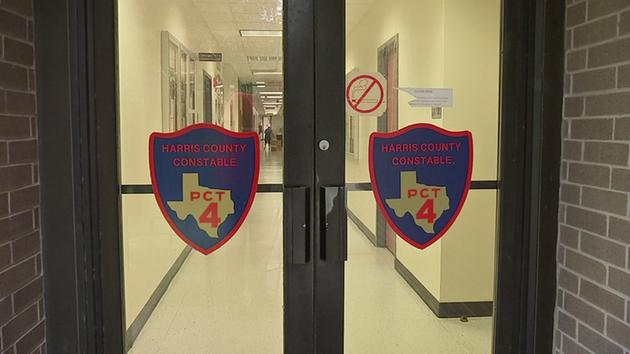
The Harris County District Attorney's office has dismissed 90 drug cases after a Precinct 4 deputy constable threw away evidence connected to pending cases.
Lauren Lea
Friday, August 26, 2016 10:16PM
HARRIS COUNTY, TX (KTRK) -- The Harris County District Attorney's office has dismissed 90 drug cases after a Precinct 4 deputy constable threw away evidence connected to pending cases. Now, investigators are reviewing all disposed cases back to 2007, involving more than 25,000 pieces of evidence.
Harris County Precinct 4 Constable Mark Herman said a deputy was cleaning out an evidence storage room and accidentally got rid of evidence connected to pending cases. Herman said he immediately fired the deputy, who had worked in the evidence room for 14 years. No charges have been filed against the deputy.
Hundreds of cases with the Harris County Constable PCT 4 are under review
On Thursday, a judge dismissed a case against a man who plead guilty and was sentenced to ten years in prison just two weeks prior.
"Clearly an injustice has been done," attorney Samuel Gardner said. Barry Johnson plead guilty to three drug charges, including possession of marijuana between 5 and 50 pounds on August 11. A judge threw out the case on August 25 because the evidence in the case was missing from the Constable Precinct 4 evidence room. Johnson was being released from the Harris County Jail.
"I was recently in contact with his wife and let her know the outcome of the case. She was ecstatic, obviously," Gardner said.
"That's something we cannot have in our judicial system. If evidence is destroyed, those cases need to be dismissed," he said.
A DA spokesperson said the prosecutor in the case did not know the evidence was gone at the time that Johnson entered his plea.
"How many other innocent people have been sent to prison over cases with no evidence?" asked attorney Paul Morgan. His client was the first case to be dismissed because of the Precinct 4 evidence problems.
District Attorney Devon Anderson said about 10 employees are now dedicated to sorting out the mess, including IT specialists, lawyers and investigators. The dismissed cases include felonies and misdemeanors.

FIREFIGHTER AIR LIFTED FROM CA REY FIRE
August 26, 2016
A firefighter reportedly suffering from a heat-related illness was airlifted from the Rey Fire area on Thursday, as crews continued battling to contain the stubborn blaze burning in the rugged Santa Barbara backcountry.
A Calstar medical helicopterlanded near the Pendola Campground, a field base for firefighters, at about 5 p.m. to pick up the firefighter, reported to be a 20-year-old man.
He was flown to Santa Barbara Cottage Hospital for treatment.
His name, agency and details on his condition were not available.
The incident occurred as the fire remained most active in and around the Mono Creek drainage northeast of Gibraltar Reservoir.
By late afternoon, a sizable column of smoke was rising from that area, and flames could be seen slopping over a ridge on the canyon’s eastern ridge.
Throughout the day, air tankers laid down swaths of retardant to slow the flames, while helicopters made repeated water drops.
The fire remained active in that area until about 3 a.m. Friday, when it was slowed by increasing humidity from the marine layer.
As of Friday morning, the estimated area burned by the fire was 33,006 acres, and containment was pegged at 39 percent.


A hand crew clears brush in the area of the Rey Fire on Thursday. (Tom Bolton / Noozhawk photo)
The latter number was unchanged from what was reported Thursday morning.
Nearly 2,000 fire personnel remain assigned to the fire.
There were reports that structures on the Ogilvy ranch were damaged, but that could not be confirmed.
However, a statement released by fire officials Thursday night hinted at the possibility:
“The fire spotted into the Zaca burn scar and around Ogilvy Ranch in the Mono drainage. Resources are currently assessing the possible damage and the extent of the spots,” officials said.

A plume of smoke rises Thursday afternoon from the Mono Creek drainage, the most active area of the Rey Fire. (Tom Bolton / Noozhawk photo)
Flames have moved east of Mono Canyon, and now are threatening Agua Caliente Canyon, officials said.
Crews planned to reassess the fire area Thursday night to assist in repositioning firefighting resources on Friday.
Meanwhile, firefighters spent much of the day constructing and expanding a contingency containment line at the P-Bar trail to the east of the active fire, and another further east along the Pendola Jeep Trail.
Crews had expected lower temperatures on the fire lines Thursday, but officials said they did not materialize.
At 6 p.m., residents were allowed to return to their homes along Paradise Road, along the fire’s southwest flank, where the blaze began on Aug. 18.
The road was to remain closed to the public and partial closures on East Camino Cielo, which is also closed to non-residents, remained in effect.

Friday morning map of Rey Fire.
Cause of the blaze remained under investigation, but there are indications it was sparked when a large part of an oak tree brought down power lines near the entrance to the White Rock Picnic Area along Paradise Road.