
Dan Wheat/Capital Press The gutted remains of one of Northwest Wholesale’s buildings in Wenatchee, Wash., still smolder the morning after it was destroyed by fire in June 2015. An environmental company is paying a fine for hazardous waste violations in the cleanup.
Dan Wheat Capital Press
Published on August 23, 2016 11:50AM
WENATCHEE, Wash. — An environmental response company has agreed to pay a $39,330 settlement for hazardous waste violations that occurred in handling cleanup from a June 2015 wildfire that severely damaged several businesses in Wenatchee.
NRC Environmental Services Inc., Great River, N.Y., made its first monthly payment of $1,100 on Aug. 3, said Joye Redfield-Wilder, a Washington Department of Ecology spokeswoman in Union Gap, Wash. The company will make the payments over the next three years, she said.
NRC waived its right to appeal by reaching a settlement that reduced the penalty by $20,000 and saves all parties costly litigation.
Northwest Wholesale Inc., a Wenatchee farm chemical company, lost several buildings in the June 28, 2015, Sleepy Hollow fire that also destroyed more than two dozen high-end homes, two major tree fruit packing plants and damaged another business.
Northwest Wholesale hired NRC to manage cleanup, including damaged containers of the fumigant gas methyl bromide.
NRC took appropriate steps to safely purge the gas from the containers, producing about 14,000 gallons of highly acidic wastewater that was stored at the site pending disposal, Ecology said.
In January, Northwest Wholesale discovered a tank containing the wastewater drained due to the corrosion of an unlined valve, Ecology said. The wastewater leaked into a dry well requiring cleanup.
The companies reported the leak and cooperated with the investigation and cleanup but the material had not been stored properly or handled in a timely fashion, said Darin Rice, Ecology’s Hazardous Waste and Toxics Reduction Program manager.
Ecology inspectors identified four violations:
• Failing to properly dispose of dangerous waste.
• Accumulating dangerous waste on site for more than 90 days.
• Storing waste in unsuitable containers.
• Failing to inspect waste areas weekly, as required.
In an Ecology news release, Ken Knappert, general manager of Northwest Wholesale, and Bob Keesee, NRC vice president, both said their companies are committed to protecting the environment.
“NRC is committed to ongoing compliance with regulations concerning hazardous waste and has taken this opportunity to re-emphasize internal policies designed to ensure that such a release will not happen again,” Keesee said

 Tyler Stabile | Dispatch Heavy smoke pours out of the Dick Cold Storage warehouse as firefighters battle the Hilltop blaze. Cooling systems used in appliances in the building on Valleyview Drive use anhydrous ammonia, which complicated firefighters' task.
 Tyler Stabile | Dispatch Firefighters spray water on hot spots at the Dick Cold Stoarge warehouse. The fire, which started on Saturday, continued to smolder Monday.
 Eric Albrecht | Dispatch A fire smolders at WestRock Recycling Center on Marion Road. The Aug. 12 fire yesterday sent smoke through the South Side neighborhood surrounding the facility.
By Emily Tate The Columbus Dispatch • Tuesday August 23, 2016 7:33 AM
Industrial fires are some of the most challenging that firefighters face, and a recent pair of them in Columbus has caused concern among nearby residents.
Fires such as the one that ignited Friday night at the Dick Cold Storage warehouse on the Hilltop and continues to burn, are unpredictable.
It just takes one spark, or one tossed cigarette, and an acre of the city can be consumed in a matter of minutes, said Battalion Chief Steve Martin, spokesman for the Columbus Division of Fire.
Firefighters and neighbors don’t often know what’s contained in these facilities. There could be explosives or toxic materials that could affect area homes and escalate the threat.
That’s what concerns Jim Griffin, chairman of the Columbus South Side Area Commission.
“Nobody wants those kinds of fires. Period,” Griffin said. “But then you don’t know what kind of combustibles are kept onsite. ... Nobody wants to breathe in chemicals that could be harmful.”
The most recent South Side fire occurred a little more than a week ago, at the WestRock Recycling Center on Marion Road. It was the latest in a series of industrial fires on the South Side since 2011.
More than 100 firefighters worked to quell that Aug. 12 fire as dark smoke blanketed south Columbus. No one was injured, but many residents fled their homes to avoid suspected toxic fumes.
Although the smoke was no more toxic than an average house fire, Martin said, it probably was wise for those residents to leave the area.
“No smoke is good smoke to inhale,” Martin said.
A warehouse is often a storage space that Martin described as a “shell.” Any added intricacies to the building can promote the fire’s growth.
The Dick Cold Storage fire, which has required more than 400 firefighters at the 144,000-square-foot warehouse on Valleyview Drive since Friday, has been one of the more complicated ones, Martin said. The building contained cold storage units such as refrigerators, freezers and walk-in coolers.
The cooling systems used in those appliances use anhydrous ammonia, which further complicated the firefighters’ task. The chemical “attacks water,” including moisture that could be found on someone’s exposed skin, Martin said.
One thing warehouses often have in common are their steel-truss roofs, which can become unstable in less than 20 minutes, Martin said. It takes the firefighters an average of eight minutes to arrive once they get a call, leaving them just 10 minutes or so to douse the blaze before the roof starts to go.
With the Hilltop fire, firefighters eventually backed out of the building because the roof was collapsing.
Once it starts, a warehouse fire can burn for up to two weeks, Martin said.
That might be the case with the fire at Dick Cold Storage, which has been contained but had not yet been extinguished as of Monday night. The fire is still consuming fuel trapped beneath the roof where water can’t reach, Martin said. When the fuel burns out, the fire will too.
Officials have not yet released the cause of either fire.
===================
Fire guts Hilltop cold-storage warehouse
 Share this photo Tyler Stabile | Dispatch Firefighters continue to spray water towards hot-spots after a fire destroyed a warehouse that housed Dick Cold Storage at 3080 Valleyview Drive in Columbus.
 Share this photo Tyler Stabile | Dispatch Firefighters continue to spray water towards hot-spots after a fire destroyed a warehouse that housed Dick Cold Storage at 3080 Valleyview Drive in Columbus.
 Share this photo Tyler Stabile | Dispatch Firefighters continue to spray water towards hot-spots after a fire destroyed a warehouse that housed Dick Cold Storage at 3080 Valleyview Drive in Columbus.
 Share this photo Tyler Stabile | Dispatch Firefighters continue to spray water towards hot-spots after a fire destroyed a warehouse that housed Dick Cold Storage at 3080 Valleyview Drive in Columbus.
 Share this photo Tyler Stabile | Dispatch Firefighters battle a blaze at a warehouse in the 3000 block of Valleyview Drive in Columbus on the evening of Friday.
 Share this photo Tyler Stabile | Dispatch Firefighters battle a blaze at a warehouse in the 3000 block of Valleyview Drive in Columbus on the evening of Friday.
 Share this photo Tyler Stabile | Dispatch Firefighters battle a blaze at a warehouse in the 3000 block of Valleyview Drive in Columbus on the evening of Friday.
 Share this photo Tyler Stabile | Dispatch Firefighters battle a blaze at a warehouse in the 3000 block of Valleyview Drive in Columbus on the evening of Friday.
 Share this photo Tyler Stabile | Dispatch Residents at the Valleyview Mobile Home Park watch as firefighters battle a blaze at a warehouse in the 3000 block of Valleyview Drive in Columbus.
 Share this photo Tyler Stabile | Dispatch Residents at the Valleyview Mobile Home Park watch as firefighters battle a blaze at a warehouse in the 3000 block of Valleyview Drive in Columbus.
Share this photo Tyler Stabile | Dispatch Firefighters battle a blaze at a warehouse in the 3000 block of Valleyview Drive in Columbus on the evening of Friday.
 Tyler Stabile | Dispatch Firefighters battle a blaze at a warehouse in the 3000 block of Valleyview Drive in Columbus on Friday.

By Rick Rouan The Columbus Dispatch • Sunday August 21, 2016 6:54 AM
A cold-storage facility used to hold frozen food was gutted by a fire that began Friday night and continued to burn Saturday.
Columbus firefighters doused the few remaining hot spots with water Saturday afternoon at the 144,000-square-foot warehouse that housed Dick Cold Storage at 3080 Valleyview Drive on the Hilltop.
No one was injured in the fire.
The warehouse mostly held frozen food, said Battallion Chief Steve Martin, Columbus Fire Division spokesman. Initial reports said the warehouse housed Market Day, a frozen-food provider for school fundraisers, but that company went out of business.
Firefighters started attacking the blaze with water around 9 p.m. Friday but backed off when they learned that the cooling system used to freeze food required anhydrous ammonia, he said.
The chemical “attacks water,” including moisture that could be on someone’s exposed skin, Martin said.
Hazardous-materials cleanup workers were called to monitor the scene. Anyone within a third of a mile of the facility was evacuated, but they were allowed to return Saturday morning.
Firefighters also feared that the warehouse might collapse while they were trying to extinguish the blaze, Martin said. Warehouses use lightweight steel-truss roofing that often is exposed, and Martin said it takes only about 10 minutes for it to weaken under intense heat.
Firefighters pulled back and let the fire burn itself out, Martin said. Once they determined that the anhydrous ammonia was not a problem, they began to douse the remaining hot spots with water.
“We decided it wasn’t worth risking our lives for,” he said. “We shut down all the water and pulled out all the trucks.”


August 24, 2016
OSHA urges Louisiana flood recovery workers, volunteers
to be vigilant, aware of hazards during cleanup
Agency representatives providing compliance assistance in affected areas
BATON ROUGE, La. - Louisiana residents - emergency workers, employers and the public - recovering from the impact of the recent floods should be aware of the hazards they may encounter and take necessary steps to stay safe, the U.S. Department of Labor's Occupational Safety and Health Administration urges.
"Recovery work should not put you in the hospital emergency room," said Benjamin Ross, OSHA's Acting regional administrator in Dallas. "A range of safety and health hazards exist following flooding. You may minimize these dangers with knowledge, safe work practices and personal protective equipment. OSHA wants to make certain that all working men and women, including volunteers, return home at the end of the workday."
Cleanup work after the flooding may involve hazards related to restoring electricity, communications, and water and sewer services. Other hazards pertain to demolition activities; debris cleanup and removal; and structural, roadway and bridge repair; hazardous waste operations; and emergency response activities. OSHA maintains a comprehensive website to keep disaster site workers safe during storm cleanup and recovery operations.
In addition to teams at the affected areas, OSHA has many resources on https://www.osha.gov/dts/weather/flood/index.html detailing how to stay safe in preparation of a flood and subsequent cleanup.
Only workers provided with the proper training, equipment and experience should conduct cleanup activities.
During cleanup, consider the following protective measures:
- Evaluate the work area for hazards.
- Employ engineering or work practice controls to mitigate hazards.
- Use personal protective equipment.
- Assume all power lines are live.
- Use portable generators, saws, ladders, vehicles and other equipment properly.
- Heed safety precautions for traffic work zones.
Individuals involved in recovery efforts may call OSHA's toll-free hotline at 800-321-OSHA (6742) or its Baton Rouge Area Office at 225-298-5458. Residents can also contact the Louisiana On-site Consultation Program who can provide on-site assistance.
Under the Occupational Safety and Health Act of 1970, employers are responsible for providing safe and healthful workplaces for their employees. OSHA's role is to ensure these conditions for America's working men and women by setting and enforcing standards, and providing training, education and assistance. For more information, visit http://www.osha.gov.
EPA closes Pflueger stormwater case after successful restoration of Kauai property
08/24/2016
Contact Information:
Dean Higuchi (higuchi.dean@epa.gov)
808-541-2711
HONOLULU – The U.S. Environmental Protection Agency announced the successful conclusion of its case against James Pflueger for construction activities that damaged his former property and the beach and coral reefs at Pila’a on Kauai. The consent decree settling the Clean Water Act violations was closed after Pflueger stabilized and restored the slopes and streams.
“Thanks to the work completed under this settlement, this once-degraded land has a healthy population of native trees and shrubs and restored stream channels,” said Alexis Strauss, EPA’s Acting Regional Administrator for the Pacific Southwest. “With continued care by the new owners, these restoration efforts can be sustained for the future.”
EPA initiated its case after Pflueger conducted extensive grading and construction at the 378-acre coastal site without obtaining necessary Clean Water Act permits. Those activities included excavating a hillside to expose a 40-foot vertical road cut, grading a coastal plateau, creating new access roads to the coast, and dumping dirt and rock into three perennial streams. As a result, massive discharges of sediment-laden stormwater flowed to the ocean at Pila’a Bay in November 2001.
The settlement required Pflueger to build a wall to stabilize the road cut adjacent to the shoreline, remove dam material in streams, install erosion controls on roadways and trails, terrace slopes to slow runoff, use native plants to control erosion, and control invasive plants and animals on the property. He was also required to reconstruct natural rock-lined stream beds and reestablish native plants along the banks.
The 2006 stormwater settlement was the largest for federal Clean Water Act violations at a single site, by a single landowner, in the United States. Pflueger paid $2 million in penalties to the State of Hawaii and the United States, and was expected to spend approximately $5.3 million to conduct the required restoration efforts.
The State of Hawaii was a co-plaintiff in EPA’s case against Pflueger, and the settlement was joined by the Limu Coalition and Kilauea neighborhood organizations, which had also filed a lawsuit against Pflueger.
EPA and local community organizations involved in the settlement conducted oversight inspections throughout a ten-year restoration effort that was slowed by funding obstacles and the necessity of adapting the restoration projects to changing field conditions.
=========================
Pflueger Clean Water Settlement
Settlement Resources
Press Release
Consent Decree
The EPA has reached a settlement of over $7.5 million with James Pflueger over Clean Water Act violations associated with construction activities on Pflueger's property in Hawaii. This is the largest storm water settlement in the United States for violations at a single site by a single landowner.
On this page:
Action
Background
Settlement Provisions
Significance
Action
The Department of Justice, U.S. Environmental Protection Agency, Hawai'i Department of Health, the Hawaii Attorney General's Office, Kauai County, Earthjustice, the Limu Coalition and Kilauea Neighborhood Association have reached an agreement with James Pflueger (and two related corporate entities, Pflueger Properties and Pila'a 400) over Clean Water Act (CWA) violations associated with construction activities at his properties on the island of Kaua'i, Hawai'i.
Background
This case primarily concerns approximately 378 acres of coastal property owned by James Pflueger at Pila'a on the Island of Kaua'i, Hawai'i . After purchasing this property in 1997, Mr. Pflueger conducted grading, grubbing and other land-disturbing construction activities on various portions of the property without obtaining a Clean Water Act (CWA) storm water National Pollutant Discharge Elimination System (NPDES) permit or a CWA section 404 permit for filling waters. These activities included cutting and filling to create new coastal access roads, carving away a hillside to create a 40 foot vertical road cut adjacent to the coast, building dams in streams to create ponds, and grading a coastal plateau. The environmental consequences of this construction activity include massive discharges of sediment-laden storm water in November, 2001 which flowed to the ocean, damaging a beachfront home and the coral reef. The disturbed areas had none of the erosion control measures in place that are required under the CWA and that would have been required to be implemented through a NPDES storm water permit.
Mr. Pflueger also failed to obtain a CWA storm water permit for his construction activities on property near the Kaloko reservoir, mauka of Pila'a. (See Figure 1.) Measures to control contaminant releases to nearby streams were not taken during this construction on the Kaloko site.
At Pila'a, three perennial coastal streams were impacted by unauthorized placement of soil and rocks as fill material. Part of one stream was filled to construct a coastal access road in the stream bed. Two other streams were impounded to form a series of decorative ponds. These alterations diminished the value of the coastal streams as habitat for native aquatic life, such as o'opu, and damselflies.

Figure 1 Map of Kauai showing location of Pila'a property, Kaloko property, and Kalihiwai.
The settlement resolves multiple enforcement actions taken by federal, state and county agencies, as well as the citizen groups. In December, 2001, the County of Kauai issued a notice of violation to Mr. Pflueger for unauthorized work in a Special Management Area. In 2002, EPA Region 9 and the Hawai'i Department of Health issued orders for violations of the CWA. Also, in 2002, a CWA citizen suit was filed by Earthjustice on behalf of local community organizations, the Limu Coalition and Kilauea Neighborhood Association.
Based on plans approved by EPA and the other parties to this settlement, in September 2004 Mr. Pflueger began to stabilize particularly vulnerable areas of the Pila'a property to reduce the ongoing erosion risks .
There are related State enforcement actions against James Pflueger for his activities at Pila'a. In May 2005 Mr. Pflueger pleaded guilty to ten felony counts in Hawai'i state criminal court and was ordered to pay a $500,000 penalty. In July 2005 the Hawaii Board of Land and Natural Resources fined Mr. Pflueger $4 Million for natural resource damages associated with sediment runoff and its damage to the beach and coral reef at Pila'a.
Top of Page
Settlement Provisions
Payment of Penalties: As a result of the CWA violations described above, under the settlement, Mr. Pflueger will pay fines totaling $2 Million to the State of Hawai'i and to the United States . This represents the largest CWA stormwater penalty for violations at a single site, by a single landowner, in the United States .
Injunctive Relief : In order to repair damage caused by Mr. Pflueger's unauthorized construction, work valued at approximately $5.3 Million is required under the settlement. The primary components of this work are overall site stabilization to prevent further erosion and restoration of stream segments at three sites on the property. (See Figure 2.)

Figure 2 . Aerial overview of Pila'a property showing locations of Gulch 2, Gulch 3, Pila'a Stream, and Eastern Plateau where stabilization and restoration work will be done.
Site Stabilization - Under the settlement, work will continue to stabilize portions of the property vulnerable to erosion. This will include completion of a soil "nail wall" to stabilize a 40-foot cliff adjacent to the Pila'a Bay shoreline. Erosion control will be maintained on roadways and trails that are used on the property. Terracing slopes, and planting and maintaining vegetation cover will be used to control erosion at other sites, including a barren ridge at the eastern shoreline of Pila'a Bay. For all required vegetation, the settlement requires the control of invasive plant species and use of native trees and shrubs.
On the Kaloko site, stabilization measures are being constructed and vegetation planted to control storm water runoff from the site. This work is scheduled to be completed in October 2006.
Stream Restoration - Under the settlement, channel restoration will be done in the three streams that were modified by Mr. Pflueger.
Gulch 2 - In this stream, Mr. Pflueger built an access road over parts of a stream and installed a culvert to redirect the stream. Restoration activities are designed to return the stream to its natural state. The access road will be removed. Establishing native plants along the stream is a component of the restoration. This work is scheduled to be completed in March, 2007.
Gulch 3 - Mr. Pflueger filled portions of this stream by constructing dams and installing PVC outlet pipes to create a series of seven ornamental ponds. Under the settlement, three dams will be removed, thus eliminating three ponds. The original stream bed will be reconstructed, restoring this part of the stream to its natural state. At the upper four ponds, the PVC conduits will be removed, and dams will be lowered so that the ponds are smaller and the stream flows on the surface between the ponds. Native plants will be established along the stream as part of the restoration work, which is scheduled to be completed in October, 2007.
Pila'a Stream - Mr. Pflueger's construction activities included construction of a dam which created a new lake in Pila'a Stream. Under the settlement, sediment from this lake will be removed, and the streambed will be reconstructed to restore it to its natural state. Revegetation with native plants will be part of the Pila'a Stream restoration, which is scheduled to be completed in August, 2007.
All work on these waterways will be followed by monitoring of stream conditions and vegetation to ensure that performance criteria in the consent decree have been met.
Supplemental Environmental Project: In addition, Mr. Pflueger will implement a Supplemental Environmental Project to improve the environment in a beach community near Pila'a Bay. In this project, Mr. Pflueger will spend approximately $200,000 to replace cesspools used for wastewater disposal at individual homes located near the beach in Kalihiwai. (See Figure 3.) These wastewater improvements will make the water in Kalihiwai Stream and Bay safer for swimmers.
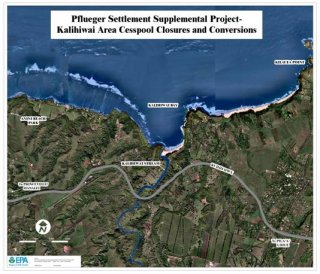
Figure 3 . Aerial photo showing Kalihiwai beach and stream where cesspool closures and coversions will be done as a Supplemental Environmental Project.
Top of Page
Significance
This Consent Decree, the first combined Federal, State, County and citizen environmental enforcement action in Hawaii, represents a significant deterrent to others who disregard Federal, State, and local permit and erosion control requirements. It is a landmark settlement with $2 Million penalty, the largest CWA storm water penalty imposed to date in the United States for a single site and single landowner, including extensive repair and restoration work costing approximately $5.3 Million, and a supplemental environmental project for $200,000.
This settlement will reduce erosion at Pila'a, restore perennial stream systems, including surrounding native plant habitats, and will lead to cleaner safer streams and coastal waters, as well as healthier reefs.
For additional information, contact:
Tom Charlton
U.S. EPA
1200 Pennsylvania Avenue, NW (2243A)
Washington, DC 20460
(202) 564-6960
charlton.tom@epa.gov

EPA Settlement with Central Missouri AGRIService to Address Clean Water Act Violations at Construction Site in Marshall, Mo.
08/24/2016
Contact Information:
Chris Whitley (whitley.christopher@epa.gov)
913-551-7394
Environmental News
FOR IMMEDIATE RELEASE
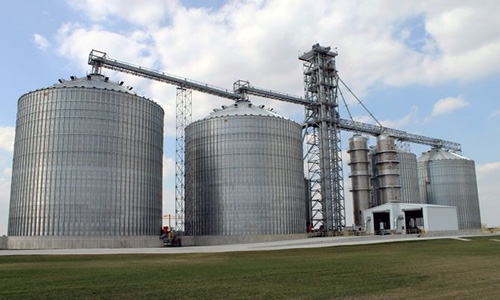
 (Lenexa, Kan., Aug. 24, 2016) - EPA Region 7 has reached a proposed settlement with Central Missouri AGRIService, LLC, concerning alleged Clean Water Act violations associated with construction of a railroad loop track and grain loading facility in Marshall, Mo. As part of the settlement, Central Missouri AGRIService has agreed to pay a civil penalty of $166,914 to the United States.
The U.S. Army Corps of Engineers notified EPA Region 7 in July 2015 that Central Missouri AGRIService had discharged fill material into wetlands and streams without required authorization under the Clean Water Act (CWA).
Subsequently, EPA inspected the construction site in November 2015 to evaluate the company’s compliance with its stormwater permit, and found construction-related activities had occurred on nearly 60 acres of the 130-acre site. EPA’s inspection identified several CWA violations, including failure to timely develop a Storm Water Pollution Prevention Plan (SWPPP), failure to develop an adequate SWPPP, failure to update the SWPPP, failure to implement the SWPPP, failure to install or implement adequate stormwater control measures, failure to perform and document stormwater self-inspections, and failure to notify on-site workers of the SWPPP. The violations resulted in sediment being discharged to unnamed tributaries to North Fork Finney Creek.
The CWA seeks to protect streams and wetlands that form the foundation of the nation’s water resources. Construction projects have a high potential for environmental harm because they disturb large areas of land and significantly increase the potential for erosion. The CWA requires construction sites to have controls in place to limit pollution discharged via stormwater into nearby waterways.
Without proper on-site pollution controls, stormwater runoff can carry pollutants into waterways and degrade water quality, threatening aquatic life and its habitat, and impairing the public’s use and enjoyment of waterways. Protecting streams and wetlands is also part of adapting to climate change impacts like drought, sea level rise, stronger storms, and warmer temperatures.
Following the EPA inspection, Central Missouri AGRIService took actions to address the observed stormwater violations. The company is also working with the Corps of Engineers to return the site to compliance with the CWA.
The proposed settlement with Central Missouri AGRIService is subject to a 40-day public comment period before it becomes final. Information on how to submit comments is available online.
=====================
Central Missouri AGRIService continues expansion project Monday, December 8, 2014
By Ashton Clark/Agriculture Reporter

(Sarah Reed/Democrat-News)
A new beginning is in store for Central Missouri AGRIService, in Marshall, and motorists on Route 240 have been able to see the changes from the comfort of their vehicles.
This past week, Jerry Young, a project manager on the expansion project, gave insight on the upcoming grain transport and storage system. It is expected to be ready for the 2015 fall harvest.
According to Young, General Manager John Fletcher worked on finding a way to keep up with the demand, and has been planning on adding a rail system and increased capacities for some time. Young came to work on the project in April 2013.
"It's all about transportation and the ability to get rail cars, the ability to ship grain," Young said. "As a shipper, the railroads are catering to the unit trains. For us to stay competitive and to be a viable shipper long term, we need to be able to load 100-car unit trains."
The proposed track is a 110-car track. It loops the tract of land skirted by Route 240 and U.S. Highway 65. Recently, crews with Wayne Brown Enterprises began excavating and moving dirt, and what looks like a considerably large depression in the earth will soon hold a new concrete base pit for shipping and receiving grain. The system will contain two receiving pits -- each with the ability to receive grain at 30,000 bushels per hour. From there, as much as 60,000 bushels per hour can be exported.
"We couldn't have done this alone," Young said, as he explained alliances that CMAS made with Wayne Brown Enterprises, WB Young Co., Marshall Municipal Utilities, Mike Mills with Marshall Electrical Contracting, and Kansas City Southern Railway.
Each company has put fourth effort for construction to come to fruition, and Young could not express enough his gratitude toward the men and women who have help them in the production.
===================
MFA Incorporated announces construction of rail facility near Hamilton, Mo.
Local News May 5, 2016
MFA Incorporated, a grain marketing and farm supply cooperative based in Columbia, Mo., recently announced a joint venture with MFA Oil Company, a farmer-owned energy supply cooperative, to build a shuttle-loader facility on the Union Pacific Railroad approximately 5 miles east of Hamilton, Mo. The grain-handling facility will consist of 2 million bushels of permanent storage and 1.5 million bushels of temporary storage along with a loop rail siding to accommodate a 110-railroad-car “shuttle” unit. Once completed, the structure will allow farmers in north central Missouri and southern Iowa to deliver crops to a modern, high-speed grain facility. Its rail siding capacity will provide new efficiencies to MFA Incorporated’s grain division as well as access to new markets.
“Logistics are a key issue in the grain business,” said MFA Incorporated Director of Grain Operations Mitch Dawson. “For MFA, this is the culmination of a multi-year process during which we evaluated the needs of our grain system. We identified this facility as a strategic improvement that will help us provide needed service to our owners and customers in a large part of our northern trade territory.”
Situated on Highway 36 in Caldwell County, Mo., the shuttle-loader facility will take advantage of an improved four-lane highway, close proximity to north-south traffic on Interstate 35 and direct access to the Union Pacific Railroad.
Adam McIntyre, regional manager for MFA locations in the area, sees the shuttle loader as a year-round asset for producers. “There is a lot of grain produced in north central and northwest Missouri, and harvest is a critical time for farmers. MFA’s investment in the shuttle loader will directly benefit farmers by providing them a place to unload quickly during peak harvest season. It also helps relieve harvest-time pressure on existing MFA grain receiving facilities throughout the region. During the high volume of harvest, we can move grain from smaller elevators to the shuttle loader to keep local storage capacity available. It will also be a great asset in the sense that the shuttle loader adds value to farms throughout the year as an additional marketing option for their grain.”
“Farmers favor facilities like this one because of the efficiency of large-capacity grain pits and high-speed conveyors to move the grain into storage,” said Dawson. “The facility is capable of moving 60,000 bushels per hour as farmers deliver grain. That means farmers will be able to unload as quickly as their trucks allow.”
A 110-car shuttle will hold approximately 420,000 bushels of corn or 380,000 bushels of soybeans. “Much of the grain will be sold to poultry markets in northwest Arkansas, eastern Oklahoma and eastern Texas,” said Dawson. “Some new markets we can reach include terminal markets in Arizona, California and Mexico. The facility will also provide MFA an efficient means to deliver northwest Missouri and southwest Iowa grain to terminal markets in U.S. Gulf region.”
The joint venture between MFA Incorporated and MFA Oil Company brings resources and expertise from both cooperatives and a significant investment in local communities. The facility will be operated by MFA Incorporated and is expected to bring five full-time jobs as well as seasonal part-time jobs to the region.
“This is a unique opportunity to aid local farmers by improving the transportation infrastructure in northwest Missouri,” said Mark Fenner, President and CEO of MFA Oil. “We’re always looking for ways to support our existing customers and attract new ones and this joint venture with MFA Incorporated will help us do both.”
“The shuttle loader helps fulfill our mission,” said Ernie Verslues, President and CEO of MFA Incorporated. “MFA was formed more than 100 years ago to address a lack of buying power and market access for farmers. We still take that mission seriously. This facility fits MFA’s vision to grow in strategic, profitable ways that enhance the economic well-being of our member/owners,” he said.


