MEC&F Expert Engineers

Wednesday, August 17, 2016

Tyson Foods issues statement after OSHA investigation into amputation incident at Center, Texas plant


Tyson Foods issues statement on OSHA investigation into amputation incident Wednesday, August 17th 2016, 12:03 pm EDTWednesday, August 17th 2016, 12:03 pm EDT
By Gary Bass, Digital Content Producer


Source: Facebook CENTER, TX (KTRE) -

In the wake of the Occupational Safety and Health Administration’s decision to fine Tyson Foods for a workplace incident in which an employee at the company's Center plant lost his finger in a conveyor belt, the company issued a statement saying Tyson is committed to “continual improvement in our workplace safety efforts.”

“We never want to see anyone hurt on the job, which is why we’re committed to continual improvement in our workplace safety efforts,” the statement said. “We fully cooperated with OSHA’s inspection of our Center plant and intend to meet with OSHA officials in an effort to resolve these claims. “

The statement went on to say that Tyson Foods employs almost 500 health and safety professionals who work in areas like safety training, safety audits, ergonomics, and health care.

“We also have programs and policies to help protect our employees,” the statement said.

OSHA fined the company more than $260,000 for the amputation incident.

According a US Department of Labor press release, inspectors identified two repeated and 15 serious violations.

The investigation revealed the employee's finger became stuck in an unguarded conveyor belt as he worked in the de-bone area and tried to remove chicken parts jammed in the belt, according to the press release.

OSHA inspectors also found more than a dozen serious violations, including failing to ensure proper safety guards on moving machine parts, allowing carbon dioxide levels above the permissible exposure limit, failing to provide personal protective equipment and not training employees on hazards associated with peracetic acid, according to the press release. Used as a disinfectant, the acid can cause burns and respiratory illness if not handled safely.

Inspectors also found employees exposed to slip-and-fall hazards due to a lack of proper drainage, trip-and-fall hazards caused by recessed drains and fire hazards resulting from of improper stored compressed gas cylinders, according to the press release. The inspection falls under OSHA’s Regional Emphasis Program for Poultry Processing Facilities.

OSHA cited the company for repeated violations for not making sure employees used appropriate eye or face protection when exposed to eye or face hazards. The agency cited Tyson for a similar violation in a 2012 investigation at its Carthage facility, according to the press release. The company also failed to separate compressed gas cylinders of oxygen and acetylene while in storage – a violation for which OSHA cited the company in 2013 at its Albertville, Alabama, facility, according to the press release.

For more information on Tyson Foods’ health and safety programs, click this link.

Greek bulk carriers ALEXANDROS THEO and EPHESUS III collided on outer Istanbul anchorage after passing Bosphorus Straights


Greek bulkers ALEXANDROS THEO and EPHESUS III collided off Bosphorus

Aug. 15, 2016 at 12:17 by Mikhail Voytenko


Greek bulk carriers ALEXANDROS THEO and EPHESUS III collided on outer Istanbul anchorage, Ahikapi road, at 2138 LT Aug 14, after passing Bosphorus in southern direction. According to available information, no spill reported, vessels presumably suffered slight damages. 


Both vessel were anchored near collision site. Understood EPHESUS III allided with anchored ALEXANDROS THEO . As of 1230 UTC Aug 15, both vessel remained in the same position. ALEXANDROS THEO is en route from Varna, Bulgaria to Ghent, Belgium, EPHESUS III is en route from Tuapse, Russia to Alexandria, Egypt. 

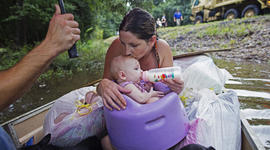
THE REAL DISASTER: Many of the Louisiana homeowners in inundated areas have no flood insurance


Suffering from epic Louisiana flooding only just beginning


GONZALES, La. -- The heartbreaking task of sorting through waterlogged belongings and ripping out carpets and drywall is kicking into high gear Wednesday in flood-wracked southern Louisiana as the state faces a long-term challenge of how to house thousands of displaced people.

But even as the water receded in some areas, it was rising in others downstream, sending people fleeing to shelters.

Officials painted a stark picture of the crisis: at least 40,000 homes damaged and 11 people killed in some of the worst flooding in Louisiana history. More than 30,000 people have been rescued since Friday.

Officials started going house to house to ensure everyone was accounted for. They also searched countless cars caught in the flooding.

“I don’t know (that) we have a good handle on the number of people who are missing,” the governor said.

Several thousand homes and businesses in southern Louisiana were without power, reports CBS Baton Rouge affiliateWAFB-TV. Outages fluctuated as changing levels of floodwater affected different areas.

About 60,000 people have signed up for assistance from the Federal Emergency Management Agency, and 20 parishes were included in a federal disaster declaration.

And help was coming from quarters beyond the federal government.

Performer Taylor Swift told The Associated Press she is donating $1 million to flood relief. She noted the state’s residents graciously welcomed her kickoff of the U.S. dates of her “1989 World Tour” in Louisiana last year.


“The fact that so many people in Louisiana have been forced out of their own homes this week is heartbreaking,” the 26-year-old said in a statement. “I encourage those who can to help out and send your love and prayers their way during this devastating time.”

There were scattered reports of looting, and Louisiana Gov. John Bel Edwards said parishes with widespread damage were being placed under curfew as of Tuesday night.

The smell of muddy water hung heavy in the air as people donned surgical masks and began the back-breaking job of ripping out soggy carpet, drywall and insulation. They cleared out spiders and cockroaches that had bubbled up through the sewer grates.

By noon Tuesday, more than two dozen volunteers had arrived at Rhonda Brewer’s Baton Rouge home, helping her take water-damaged belongings to the curb. Volunteers worked to remove wooden floor boards, sheet rock and insulation before the mold set in.

“The water was waist deep, so it’s iffy if I can take the sheet rock and insulation half way or have to go to the ceiling,” she said. “If we don’t make it in time, we trash it.”

In Livingston Parish, one of the hardest-hit areas with about 138,000 people, an official estimated that 75 percent of the homes were a total loss.

Officials from Livingston Parish were in Baton Rouge on Tuesday to talk to federal officials about getting some sort of temporary housing for their first responders - a sign of the housing crunch likely to come with so many people out of their homes for weeks and perhaps months.

Rivers and creeks were still dangerously bloated south of Baton Rouge as water drained toward the Gulf of Mexico.

Nearly 800 evacuees waited Tuesday in a makeshift Red Cross shelter in Gonzales at the Lamar Dixon Expo Center, a multipurpose facility that has hosted rodeos, car and truck shows and concerts.

Floyd Melancon, 71, and his partner, Judy McGehee, 61, remained in the dark about how much water - if any - their Prairieville home received.

“My neighbor sent me a picture. Water was in the yard. I don’t know where it’s at right now,” Melancon said. “Judy and I think it’s come up since then.”

In the house for 14 years, the couple doesn’t have flood insurance to cover repairs.

“We weren’t in a flood zone. It had never flooded before,” McGehee said.

Many of the homeowners in inundated areas have no flood insurance, leaving them prone to draining savings accounts and relying on federal disaster programs to rebuild and repair.

Insurance Commissioner Jim Donelon said that, in hard-hit Baton Rouge, only 12 percent of residences are covered by flood insurance, and 14 percent in Lafayette - figures he called “shocking.”

People in many of the areas that remain underwater weren’t considered to be in high-risk flooding areas and weren’t required to carry flood insurance by mortgage lenders.

The governor said he is worried about “battle fatigue” setting in as rescuers and residents deal with day upon day of stress.

The trauma was evident among people who went back to their homes.

David Key used a small boat to get to his house in Prairieville and said it had taken on 5 inches of “muddy, nasty bayou water.” There were fish and thousands of spiders, and mold had started to grow.

“I’m not going to lie, I cried uncontrollably,” he said. “But you have to push forward and make it through. Like everybody says, you still have your family.”

Construction worker in North Naples, Florida dies from apparent heat stroke


(Photo: facebook)
 Dave Osborn, dave.osborn@naplesnews.com; 239-263-4896 9:10 p.m. EDT August 16, 2016
 
A North Naples construction worker died from an apparent heat stroke Monday afternoon, authorities said.

Luke K. Sannicandro, 37, of Naples Park was working on the roof of a house along East Avenue north of Pine Ridge Road about 4 p.m. Monday when he said he felt sick from the heat, Collier County deputies reported Tuesday. The temperature at the time was above 90 degrees.

Sannicandro was told to come down from the roof and rest until he felt better. He sat on a pile of debris for a short time as others continued to work.

When the workers returned to the ground about a half-hour later, they did not see Sannicandro.

A worker went into the first floor of the house and yelled Sannicandro's name when he found him on the ground shaking slightly.

The men called 911 and attempted CPR until paramedics arrived.

The U.S. Department of Labor's Occupational Safety & Health Administration is investigating Sannicandro's death, a spokesman said Tuesday evening.

Andy Perez, 40, of Naples said he has known Sannicandro and his family for years. Before construction work, Sannicandro was a barber, Perez said.

“Luke was a very spirited young guy,” Perez said. “He was different than any other person I could describe. He had a passion for music. He loved his hip-hop, but it was a different thing. He was into hip-hop’s roots, the message it used to send, the positivity.”

Perez said he kept in touch with Sannicandro through social media and had run into him a few times in town.

Sannicandro’s older sister, Leah, died a few years ago, so this is another tragedy for the family, Perez said.

He said he is friends with Jude Sannicandro, Luke’s brother.

“It’s really sad,” Perez said. “He buried an older sister, and now he’s burying an older brother.”

Luke also was raising his daughter, whom he took to school Monday.

Perez referred to Sannicandro as a spiritual guy.

“He wasn’t an in-your-face, repent kind of guy,” Perez said. “He was aware of everything going on around him. He wasn’t a very spiteful person.”

“He expressed to me that only God could judge him,” Perez added. “It was his salvation. He had S-A-L-V-A-T-I-O-N tattooed across his back.”


Friday, July 1, 2016

How to Recognize Exertional Heatstroke


We thought we were on top of matters when it came to heat illness prevention—in particular, we thought we knew how to recognize the most serious type of heat illness, heatstroke. And then the Deepwater Horizon disaster occurred, and thousands of workers were cleaning up the mess in the heat of a Gulf shore summer—and we found out just how wrong we were.
Researchers at the National Institute for Occupational Safety and Health (NIOSH) learned some important lessons about heat illness from the Deepwater Horizon disaster. As a result, the agency has updated its Criteria for a Recommended Standard: Occupational Exposure to Heat and Hot Environments for the first time since 1986.
Here’s what’s new in our understanding of heat illness.

Two Types of Heatstroke

The most significant change to the NIOSH document is a change in the definition of “heatstroke.” At one time, the accepted definition of “heatstroke” included confusion, unconsciousness, and/or convulsions, accompanied by a lack of sweating. In fact, workers were warned that if they stopped sweating, heatstroke was imminent. 
Unfortunately, this type of heatstroke, now called “classic heatstroke,” isn’t the type that most commonly strikes workers.
NIOSH has recognized that another type of heatstroke, known as “exertional heatstroke,” is more common in workers—and profuse sweating is one of its symptoms. So workers who have been taught that sweating is a positive sign are actually at increased risk.

Exertional heatstroke is caused by the combination of heat exposure and heavy physical exertion. It can lead to a condition called rhabdomyolysis, in which muscle tissue breaks down, releasing large amounts of potassium into the blood. High levels of potassium in the blood can lead to cardiac arrhythmias and seizures. High levels of proteins released by muscle breakdown can cause temporary or permanent kidney damage.
Symptoms of rhabdomyolysis include: 
  • Muscle pain and cramping
  • Swelling
  • Weakness
  • Decreased range of motion
  • Fatigue
  • Abdominal pain
  • Back pain
  • Nausea or vomiting
  • Confusion
However, many cases occur with very mild symptoms that are mistaken for heat stress. This creates a potentially dangerous situation because these workers don’t receive the intensive medical intervention they require.
Another potential complication of rhabdomyolysis is compartment syndrome, or swelling in a specific type of muscle, usually in the lower extremities, that blocks blood flow. Compartment syndrome is often delayed—it may take several hours to develop—and can lead to permanent loss of function in the affected limb.
Symptoms of compartment syndrome include the “5 P’s”: 
  • Pain
  • Pallor
  • Pulselessness
  • Paresthesia (sensation of tingling, numbness, or burning, usually felt in the hands, feet, arms, or legs)
  • Paralysis

Pain is the most common and tends to be extremely severe. Workers who experience these symptoms must go to a hospital immediately. Quick surgical intervention is required to treat compartment syndrome.

Both types of heatstroke are accompanied by extremely high body temperature, and both types are a medical emergency that require immediate medical attention. First aid includes cooling the worker as quickly as possible by any means available, including an ice bath, circulating air around the worker, and placing cold packs on the head, neck, armpits, and groin.
For exertional heatstroke, oral hydration is vital—the more the victim drinks, the more potassium and proteins will be flushed from the body. However, in serious cases, it’s impossible for the victim to drink enough fluids to flush out the proteins and potassium; the victim will need intravenous fluids. Emergency medical services should be summoned immediately for all cases of heatstroke, and victims should be transported to a hospital as soon as possible.

A Warning from NIOSH

Because exertional heatstroke is more likely to occur in workers than classic heatstroke, NIOSH recommends that all workers exposed to hot working conditions be retrained to recognize exertional heatstroke.

A worker has died and another hurt after the collapse of scaffolding and ladders in Watervliet Township, Michigan.


Worker dies in collapse of scaffolding, ladders in Michigan 


 Updated: Aug 17, 2016 3:36 PM EST

  WATERVLIET TOWNSHIP, Mich. (AP) -

Authorities say a worker has died and another hurt after the collapse of scaffolding and ladders in southwestern Michigan.

The Berrien County sheriff's department says it responded Tuesday evening to the construction accident in Watervliet Township and 75-year-old Carl Lee Stone of Hartford was pronounced dead at the scene. They say a second man, 28-year-old Joshua Stone from Lawrence, has been treated at a hospital for a broken arm and other possible internal injuries.

Sheriff's officials say Carl Stone appears to have fallen about 25 feet while working on the outside of a barn under construction. The case remains under investigation.