MEC&F Expert Engineers

Tuesday, May 31, 2016

Pipeline at the Jefferson Energy Terminal released an estimated 880 gallons of Eagle Ford crude oil in the Neches river.

Neches River Closed After Oil Spill
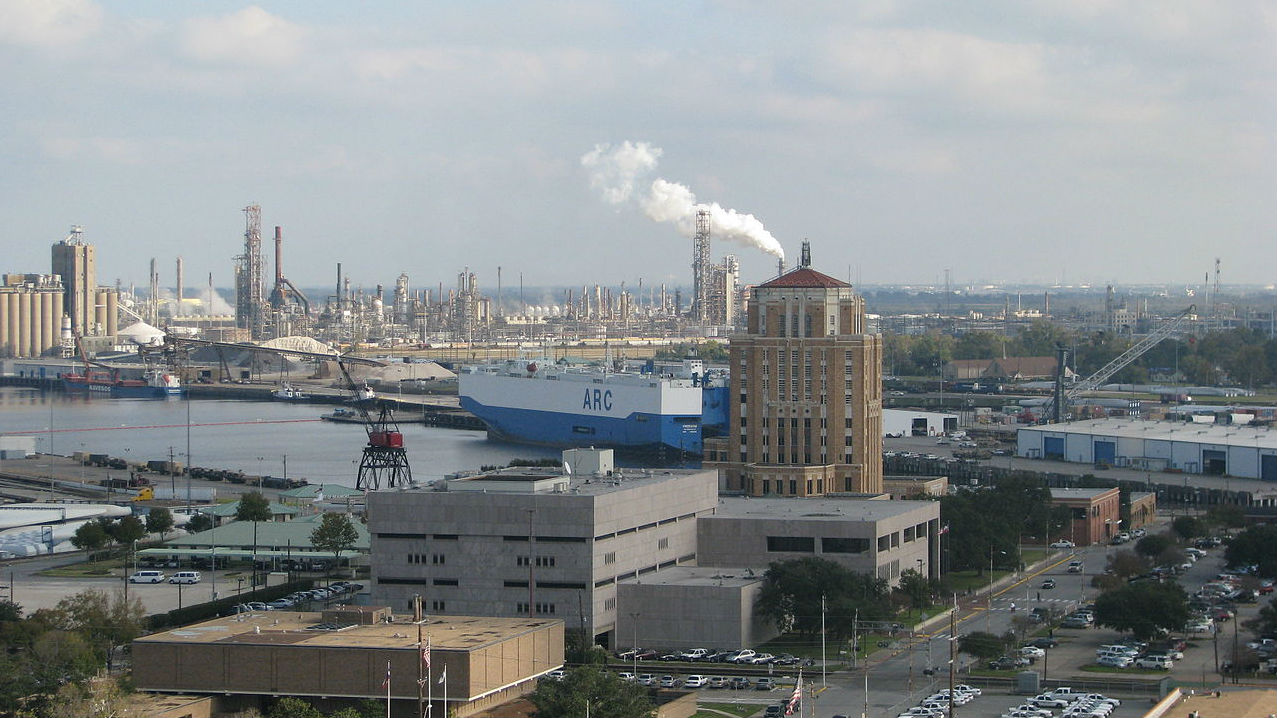
Beaumont
Beaumont
By MarEx 2016-05-30 17:51:07
A section of the Neches River and part of the port of Beaumont in the U.S. were closed on Saturday after a pipeline at the Jefferson Energy Terminal released an estimated 880 gallons of Eagle Ford crude oil in the river.
The source of the leak has since been secured, however the Neches ship channel is closed to all vessel traffic and a Coast Guard safety zone has been established from the Kansas City Southern Railroad Bridge to just below the Enterprise docks and navigation light 46. 
The U.S. Coast Guard, Texas General Land Office and Jefferson Energy, operating in a Unified Command structure, are working to contain and clean up the spilled oil.
The Texas Commission on Environmental Quality along with the Center for Toxicology and Environmental Health are conducting air monitoring to ensure the safety of response personnel and the public.
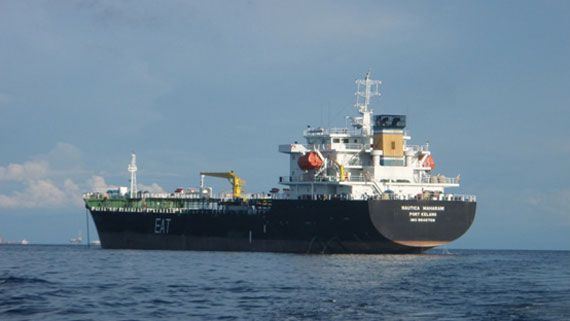
Malaysian Marine Department reported a spill of 15 tonnes of fuel oil near the Prai Bulk Cargo Terminal near Penang

Fuel Oil Spill at Penang's Capital

Maharani
File image courtesy EAT Shipping
By MarEx 2016-05-31 12:45:41
On Sunday, the Malaysian Marine Department reported a spill of 15 tonnes of fuel oil near the Prai Bulk Cargo Terminal near Penang, and said that it may have originated from a tanker berthed at the facility. 
The tanker, the Nautica Maharani, remains detained in port while authorities look at all potential sources of the spill, including shoreside fuel transfer infrastructure. It was the only vessel present at the time of the incident, and authorities asked it to stop delivery of fuel when the slick was discovered, said Penang Port COO V. Sasedharan. 
Environmental officials took fuel samples from the water and from the tanker for laboratory analysis to see if there is a match. On Tuesday, the Transport Ministry told media that preliminary investigations pointed to an accidental discharge from the tanker, but that "we are investigating whether the leakage was from the vessel or from shoreline piping," said minister Datuk Seri Liow Tiong Lai. 
Cleanup efforts have already been completed, including the use of 600 liters of dispersants – but not before the slick covered over 70 square kilometers, reported Free Malaysia Today. The oil was reportedly carried by currents towards shore, creating a two meter wide strip of a thicker layer along five kilometers of coastline at George Town, Penang state's capital.  
Chief Minister Lim Guan Eng described the accident as a disaster. "We are really disappointed that the state government was not informed of the spill until late on Saturday," he said, speaking to local media. He was concerned that it could have long-term effects for fishermen's livelihoods. "The fish farms are safe but we are not sure about the marine life,” he said. He believed the cleanup effort was satisfactory, though: "I am very satisfied with the efforts and swift action of the authorities, which included the Marine Department and Department of Environment," he said. 
Fisherman M. Ravi told the Malay Mail Online that the spill was only the latest in a series, and that they were a common occurrence. "It happened two weeks ago and several months ago. We have been severely affected as we cannot catch fish until the oil is no more," he said. "Fish can sense pollution and they swim away if the area is polluted."
Fisherman M. Murugan confirmed that spills were common and had negative effects, including the oiling of nets, requiring the purchase of clean replacements.

City of Fort Dodge, Iowa, to Pay Penalty and Perform Project to Settle Water Plant Risk Management Program Violations


05/24/2016
Contact Information: 
Chris Whitley (whitley.christopher@epa.gov)
913-551-7394
Environmental News
FOR IMMEDIATE RELEASE
(Lenexa, Kan., May 24, 2016) - The City of Fort Dodge, Iowa, has agreed to an administrative settlement of alleged violations of federal Risk Management Program regulations at the John T. Pray Water Treatment Plant. Through the settlement, the city will pay a $20,000 penalty to the United States, and through a supplemental environmental project it will spend at least $200,000 to build a new road to provide emergency vehicles better access to the facility.
The settlement agreement, filed May 10 by EPA Region 7 in Lenexa, Kan., follows a related compliance agreement between EPA and Fort Dodge filed in January 2015 that addressed the correction of Risk Management Program issues at the facility.
The 2015 compliance agreement requires the city to develop a Risk Management Program for the John T. Pray Water Treatment Plant, located at 600 Phinney Park Drive in Fort Dodge. Risk Management Programs and plans are required under the Clean Air Act for certain facilities that use any of dozens of specific regulated chemicals in a process.
Specifically, facilities that hold more than 2,500 pounds of chlorine gas in a process are required to comply with the Risk Management Program regulations. The John T. Pray Water Treatment Plant routinely stores and uses three to four times that amount of chlorine gas for its use in water treatment. If released, chlorine gas can be severely corrosive to the eyes, skin and lungs. Exposure to high concentrations of chlorine gas can be fatal.
In addition to preventing accidental releases of extremely hazardous substances, the water treatment plant’s Risk Management Plan is available to help local fire, police and emergency response personnel prepare for and respond to chemical emergencies at the facility. Making these plans available to the public also fosters communication and awareness to improve accident prevention and emergency response practices at the local level.
For a supplemental environmental project, Fort Dodge will construct a new road to allow improved access for emergency vehicles to reach the facility. The asphalt road will be built outside of the area’s 100-year flood plain and will cost at least $200,000.

EPA takes action to protect agricultural workers in Nevada from pesticides


05/24/2016
Contact Information: 
Margot Perez-Sullivan (perezsullivan.margot@epa.gov)
415.947.4149
SAN FRANCISCO -- The U.S. Environmental Protection Agency fined Moana Nursery in Reno, Nev. $2,640 and issued a warning to Genoa Trees and Landscape Materials of Minden, Nev. for violating federal pesticide worker safety laws. These actions are part of a larger effort focused on the enforcement of requirements that protect farm and nursery workers from the risk of illness due to pesticide exposure.
The violations were discovered during inspections conducted in June 2015 by the Nevada Department of Agriculture and referred to the EPA for enforcement. 
“Notifying workers about pesticide applications and medical information is essential to protecting their health, and the health of their families,” said Kathleen Johnson, EPA’s Enforcement Division Director for the Pacific Southwest. “We appreciate the opportunity to work with our state partners in this important public health action.”
Moana Nursery failed to provide appropriate pesticide safety training to its workers, failed to display required information notifying its workers of a recent pesticide application, and failed to display emergency medical information for its workers.  Genoa Trees and Landscape Materials had similar violations, failing to provide safety training to its workers, and also failing to display required information notifying its workers of recent pesticide applications.
The Worker Protection Standard, part of the Federal Insecticide, Fungicide, and Rodenticide Act, aims to protect workers from occupational exposure to pesticides. The standard contains requirements for pesticide safety training, decontamination supplies, emergency medical assistance, personal protective equipment, as well as restrictions on reentry into fields where pesticides have been recently applied. EPA recently strengthened these standards, with many of the new requirements going into effect in January 2017.

For more information on the federal regulation and enforcement of pesticides, please visit http://www.epa.gov/pesticides

For further information on the Worker Protection Standard, please visit: https://www.epa.gov/pesticide-worker-safety/revisions-worker-protection-standard

EPA Reaches Settlement with Acme Foundry, Coffeyville, Kansas, for Industrial Stormwater Violations


05/31/2016
Contact Information: 
Angela Brees (brees.angela@epa.gov)
913-551-7640
Environmental News
FOR IMMEDIATE RELEASE
(Lenexa, Kan., May 31, 2016) – EPA Region 7 reached an administrative settlement with Acme Foundry, Inc., of Coffeyville, Kan., to resolve industrial stormwater violations under the Clean Water Act. Under the settlement, Acme Foundry must comply with its industrial stormwater permit, pay a penalty of $28,975, and implement a Supplemental Environmental Project (SEP).
EPA investigations in March 2015 found that Acme Foundry, Inc., failed to comply with its industrial stormwater permit due to unauthorized discharges containing pollutants. The company failed to:
  • develop and update an adequate stormwater pollution prevention plan;
  • implement best management practices to reduce the amount of pollutants in stormwater;
  • perform facility inspections;
  • conduct annual comprehensive site compliance evaluations;
  • conduct visual stormwater monitoring; and
  • conduct employee training
Under a previously issued administrative compliance order, Acme Foundry is addressing each of the violations and will install and maintain structural and non-structural controls to bring the facility into compliance with its industrial stormwater permit.
Under this settlement, Acme Foundry will pay a $28,975 penalty for their alleged stormwater permit violations and complete a SEP by Jan. 1, 2017, estimated at $600,000, to replace the existing wet scrubber air emissions control with a fabric filter, reducing air emissions.
Material handling and storage, equipment maintenance and cleaning, and other activities at industrial facilities are often exposed to the weather. Runoff from rainfall or snowmelt that comes in contact with these activities can transport pollutants directly to a nearby river or lake, or indirectly via a storm sewer and degrade water quality.
The Clean Water Act seeks to protect streams and wetlands that form the foundation of our nation’s water resources, which are critical in adapting to climate change impacts like drought, stronger storms, and warmer temperatures. 
The settlement is subject to a 40-day public comment period before it becomes final. The public comment period began on May 19, 2016. Information on how to submit comments is available at www.epa.gov/ks/region-7-table-clean-water-act-public-notices