MEC&F Expert Engineers

Sunday, September 6, 2015

AFTER OSHA CITATION, FIREFIGHTERS IN KENAI PENINSULA BORO RECEIVE TRAINING IN HAZARDOUS MATERIAL LABELING, HANDLING


Borough receives OSHA citation for chemical labeling
Posted: September 5, 2015


By ELIZABETH EARL
The Peninsula Clarion

All government and school facilities in the Kenai Peninsula Borough will soon have access to an online system for chemical safety information.

After an August 2014 Occupational Safety and Health Administration inspection showed deficiencies in the Bear Creek volunteer fire station, the borough faced a fine and a citation for insufficient Hazard Communication.

The Material Safety Data Sheets, or MSDS, that the borough is required to maintain, which describe the dangerous qualities of chemicals such as bleach, were incomplete, according to Safety Director Brian Smith. Smith said the issue occurred because the fire station was in transition between facilities and some of the records were not yet organized.

The borough was issued a citation and a $1,225 fine that was subsequently reduced to $525 and then written off because the borough could demonstrate that it was actively involved in training its employees and volunteers, Smith said.

“It was fairly minor,” Smith said. “Hazard Communication has for several years been the most cited issue in inspections.”

Hazard Communication is the most commonly cited problem for Alaska waste disposal issues, and the second most commonly cited in all inspections nationally after Fall Protection, according to OSHA. Violations can occur when information on a hazardous material is incomplete, missing or unclear. However, the citation inspired the borough to purchase an online system to increase the availability of the MSDS information, called MSDSonline. 


The borough authorized the purchase of the system in July for $9,624 in 2015 and $8,749 in both 2016 and 2017 to be implemented throughout the borough and the Kenai Peninsula School District. Borough employees and school district employees will be able to view the chemicals stored at each location and the related MSDS. The borough is currently working on constructing a compliance structure for the material recording before implementing the program, according to Smith. Once up and running, the program will eliminate paper and make communication easier from the central offices to the outer parts of the borough, he said.

“Because the borough is so geographically spread out, the program allows us from a central office to see every location,” Smith said.

LOS ALAMOS NATIONAL LABORATORY: GREAT SCIENTISTS, LOUSY HOUSEKEEPERS IN HANDLING HAZARDOUS OR RADIOACTIVE WASTE


National lab reports violations of hazardous waste permit
09/05/2015
By SUSAN MONTOYA BRYAN


By SUSAN MONTOYA BRYAN

ALBUQUERQUE, N.M. (AP) — An extensive review at one of the nation's premier federal laboratories has turned up violations in how the lab handled hundreds of containers of radioactive waste over the past decade.

The latest revelations are on top of the permit violations Los Alamos National Laboratory first reported last year in the wake of a radiation release at the federal government's underground nuclear waste dump in southern New Mexico.

That release was caused by a container that had been inappropriately packed at Los Alamos. The incident forced the indefinite closure of the repository, leaving in limbo the cleanup of decades' worth of plutonium-contaminated waste at defense sites around the country. The price tag for resuming operations at the Waste Isolation Pilot Plant is expected to top a half-billion dollars.

The lab reviewed more than 200 variations of the procedures that have been used between October 2005 and May 2014 to decontaminate about 10,000 containers of waste. The review found that some of the same procedural missteps made with the drum that leaked radiation were also made when handling more than 1,000 other containers.

But Lab Director Charlie McMillan and U.S. Department of Energy Los Alamos Field Office Manager Kimberly Davis Lebak said in a letter sent this week to the New Mexico Environment Department that the containers highlighted in the latest review were different than the drum that leaked radiation.


"Our staffs have completed a technical evaluation of these non-compliances and concluded that they do not present a credible safety concern to workers or the public and do not pose a threat to human health or the environment," they wrote.

Still, the lab's lack of compliance is a big concern for the state Environment Department, which oversees a permit that allows Los Alamos to handle hazardous waste. "The one thing I can say is we're going to continue to hold their feet to the fire on this," said Kathryn Roberts, director of the department's Resource Protection Division.

The corrective action Los Alamos is taking to address the problems related to the waste stream that resulted in the radiation leak will also cover the latest violations, Roberts said.

"It's going to address all those fundamental problems that stem from those procedures that were deficient in a lot of ways," she said. "Those are still going to be revised and we're going to have new processes in place and we're going to scrutinize those very, very closely."

The lab first notified the state of the latest violations during a meeting in July. The report released this week provides details.

Watchdog Greg Mello of the Los Alamos Study Group pointed to the lab's history of noncompliance, saying outside observers would disagree that there are not safety or environmental concerns.

Mello said the report indicates some waste was illegally treated, some contained incompatible chemicals such as organic cat litter and some may have been mislabeled as safe to handle.

Among the containers are more than 630 stored at Los Alamos, the Waste Isolation Pilot Plant and another facility in west Texas in which mixed waste has been blended with concrete. The containers may include corrosive or ignitable materials, but officials say more tests need to be done on the contents.

The state recently settled with the federal government over the radiation release at the Waste Isolation Pilot Plant, but Mello said under the terms the state agreed not to enforce penalties against Los Alamos for compliance issues that are self-disclosed.

"This does not leave the state in a good place," he said, suggesting the contractor that runs the lab believes it is above the law.

Los Alamos lab "is too big and complicated for NMED (the New Mexico Environment Department) to regulate without a special enforcement squad," he said.

A contractor is in the hospital following a fire and chemical release cyclohexanone in the 700 block of the BASF Freeport facility in Texas after a reactor tube failed


One contractor remains hospitalized after fire at BASF


Posted: Saturday, September 5, 2015

ERINN CALLAHAN erinn.callahan@thefacts.com


FREEPORT, TEXAS


A contractor is in the hospital following a fire and chemical release in the 700 block of the BASF Freeport facility on Copper Road Thursday night.

The fire started at about 9 p.m. Thursday when a mixture of cyclohexanone and cyclohexanol escaped from a vent stack at the site’s Anone 1 plant due to a failed reactor tube, BASF spokeswoman Cindy Suggs said.


The facility’s fire brigade responded immediately, containing the fire to the unit and extinguishing the flames by 9:15 p.m., Suggs said.

“They were there within less than 60 seconds,” Suggs said. “We took immediate action.”

BASF also notified the Freeport Fire Department as a courtesy, Suggs said, although they don’t typically respond.

Of the 28 contractors working at that site, 20 were taken to U.S. HealthWorks Medical Group in Freeport for evaluation and released with no issues, Suggs said.

“It was more precaution than anything else,” she said.

Seven contractors were taken by ambulance to Brazosport Regional Health System in Lake Jackson, and six were released with no issues, Suggs said. One contractor remained in the hospital Saturday morning.

Suggs said that people on site at BASF are working with the contract company to monitor the contractor.

“We cannot speak to the contractor’s medical condition,” she said.

The facility’s environmental health and safety group is conducting an investigation to determine the cause of the incident and the amount of chemicals released, but Suggs said BASF is confident that the release was less than 500 pounds.

“We are confident it did not impact our nearby neighbors or our community,” Suggs said. “An investigation is already underway to put measures in place to make sure something like that doesn’t happen again.”

The environmental health and safety group and BASF’s operating team are also working to monitor the air, Suggs said, and the fire brigade monitored the site for several hours after the flames were extinguished.

“The main thing is the health and safety of our employees, our contractors, our environment and our community, and I think our quick response in containing and extinguishing the fire demonstrates that commitment,” Suggs said.

Reporter Erinn Callahan is working on the story. Anyone who can provide firsthand information on the incident can contact her at 979-237-0150 or erinn.callahan@thefacts.com. 


Some info from BASF's web pages:


BASF:  Working safely and responsibly


Welcome to BASF in Freeport Texas


The BASF Freeport site was founded in Southeast Texas in 1958 as BASF’s first manufacturing site outside Europe. The Freeport site employs more than 770 employees and almost 600 contractors. Currently, the Freeport facility produces 23 different products in 25 plants.


The BASF Freeport site has a long history of strong safety performance. The facility has received the Texas Chemical Council’s Award for Distinguished Service and the Sustained Excellence in Caring for Texas Award numerous times for accomplishments in safety performance, environmental stewardship and community outreach.

In 2013, the Freeport site set records in safety performance, production and environmental performance. The site was awarded the Pinnacle Award by Union Pacific for chemical transportation safety, and, in two instances, worked more than 1 million man-hours without a recordable injury.

BASF attributes these results to highly-trained, motivated employees who understand the expectations and accept responsibility for working safely. 

Employees are actively involved in all aspects of the safety process, from writing safety procedures, to conducting inspections, participating in special projects and promoting safe work habits. Site spotlight: Freeport, Texas An integrated approach to manufacturing

15-year old boy committed suicide using cyanide at 2 Rockmont Rd. in Arlington, Mass., prompts Hazmat response, evacuations


By Jackie Bruno and Mike Pescaro


Investigators say a male committed suicide using cyanide at 2 Rockmont Rd. in Arlington, Mass. (Published Friday, Sept. 4, 2015)


Crews responded to a hazmat situation Friday afternoon when a person used cyanide to kill himself in Arlington, Massachusetts.

Police say they were called to 2 Rockmont Rd. shortly after 4 p.m., finding a 15-year-old boy who had apparently committed suicide with the deadly chemical. That prompted what authorities called a Tier 2 hazmat incident.

Kathleen Bodie, superintendent of Arlington Public Schools, said in a statement that the boy's mother is a former teacher and librarian at Bishop Elementary School. Bodie offered her sympathy to the boy's family and said that support would be available at the high school.

Bodie added that resources for anyone in need were available here, and that the Massachusetts Suicide Prevention Hotline was available 24 hours a day at 1 (800) 273-TALK.

While the public school system has released the teen's identity, necn has chosen not to identify him or his family.

After the incident, a couple was evacuated from the house as a precaution, as were direct neighbors.

The road remained closed off Friday night as crews worked to decontaminate the area and investigate the incident.

"It's just bizarre, we saw the helicopters for a while," said neighbor Rick Murphy.

"The Metro Fire Hazardous Materials Team will go in there and decontaminate the deceased and decontaminate the home so that our investigators and the district attorney's office investigators can get in there and do their work," said Arlington Police Chief Frederick Ryan.

Neighbors expressed grief at the loss of a local.

"It's clearly a very distressed person who would do that, and a person who was probably in a great deal of psychological pain and wanted to end it, and was thinking of feeling better, not thinking of anyone else," said Modesto Hevia.

KINDER MORGAN WORKER KILLED AT PORT ARTHUR, TEXAS COKE REFINING UNIT AFTER HIS BULLDOZER FLIPPED IN PETROLEUM COKE PIT


 Kinder Morgan's Bulk Coke Facility in Port Arthur, Texas


Coke
Coke Unit
Coke Unit


Coke


Worker killed in bulldozer accident at Total Refinery in Port Arthur

Updated: Saturday, September 5 2015, 10:53 PM CDT

PORT ARTHUR, TEXAS


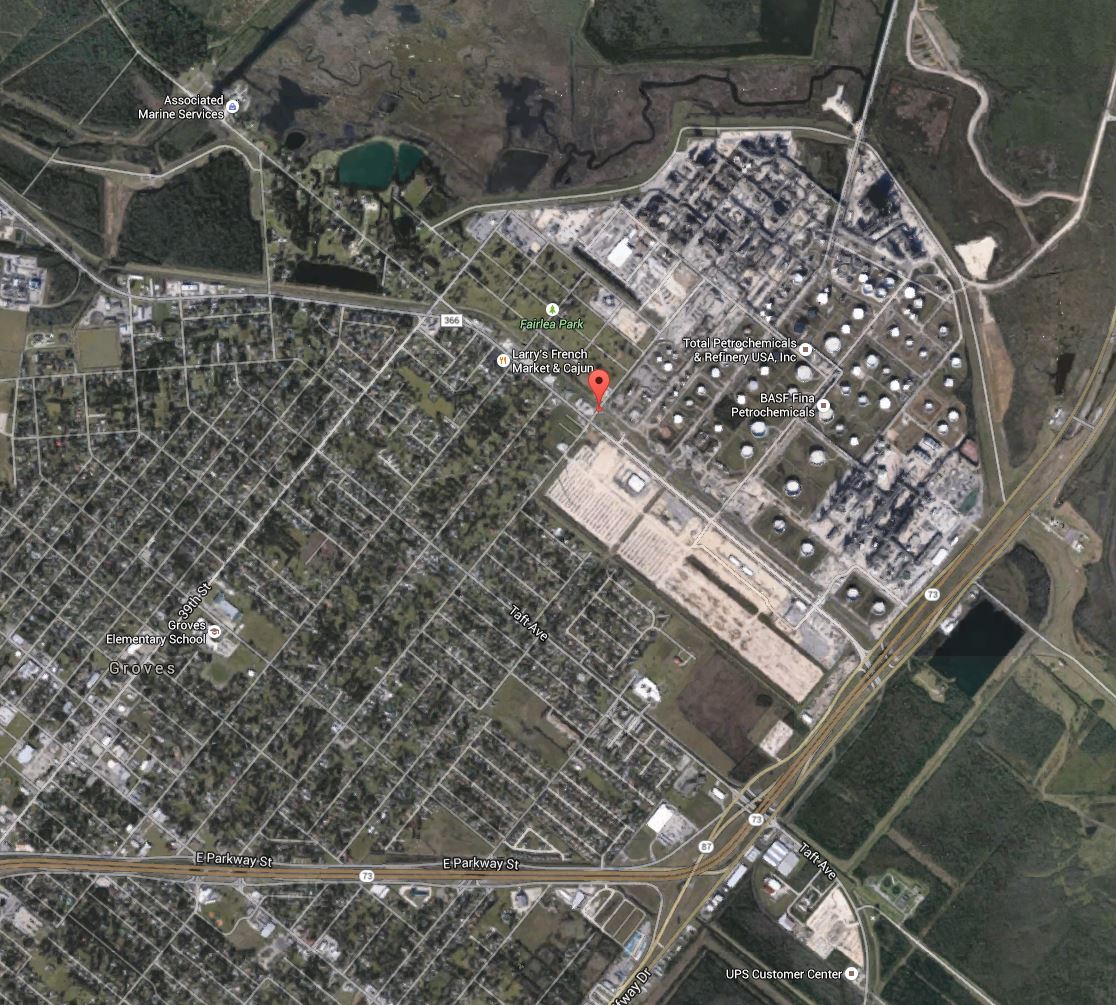
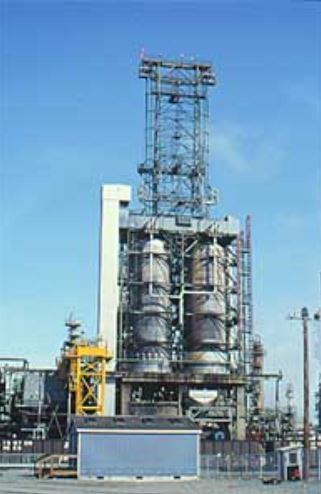
A contract worker has died in an industrial accident involving a bulldozer at the Total Refinery in Port Arthur.  The accident happened near a deep conversion unit, known as a coker, that improves the processing of heavy crudes, converting them into lighter products and coke, a solid residue resembling coal.


Total Facility is located  in the 7400 Block of 32nd Street in Port Arthur, Texas.

Justice of the Peace Marc DeRouen tells Fox 4 News he was called to the plant at about 3 a.m.


The accident happened at about 12:40 a.m. Saturday. DeRouen pronounced the worker dead at the scene.

He says the man worked for Kinder Morgan.


The name has not been released pending notification of next of kin.

JP DeRouen tells Fox 4 News the man was working on a bulldozer near the coker unit when the bulldozer somehow ended up in a pit filled with a chemical liquid. 


A deep conversion unit, known as a coker, that improves the processing of heavy crudes, converting them into lighter products and coke, a solid residue resembling coal. - See more at: http://www.total.com/en/energies-expertise/oil-gas/refining-petrochemicals/projects-achievements/upgrading-port-arthur-refinery-united-states#sthash.ufGm9HLo.dpuf


He says another worker saw the headlights from the bulldozer submerged in the liquid and used the arm of his heavy equipment to pull out the bulldozer, but the worker was dead.


DeRouen says the chemical liquid had been heated to 180-200 degrees. He's ordered an autopsy to determine if the man died from burns, drowning or another cause.


/////-------------------///


UPDATE 3-Total Port Arthur refinery cuts production after worker killed

HOUSTON, TEXAS


September 5, 2015 (Reuters) - 

Total SA cut production at its Port Arthur, Texas, refinery on Saturday after a contract worker was killed when the bulldozer he was driving in a pit beneath a giant refining unit flipped over in petroleum coke and coarse dust, said sources familiar with plant operations.

Total and the worker's employer, Kinder Morgan Inc, both confirmed the worker's death. Kinder Morgan operates a petroleum coke terminal in Port Arthur.

Total's Tricia Fuller said coker operations were at minimal rates and operators had stopped taking coke from the unit due to the death.

The sources said production at the 225,500 barrel per day (bpd) refinery's other units had been reduced.

"We will restart (the coker) once we know it can be operated safely," Fuller said.

The coker was not damaged in the incident, the sources said.

Investigators from the U.S. Occupational Safety and Health Administration (OSHA) were expected to open an investigation Saturday, Fuller said.

Generally, U.S. refineries do not need permission from safety or environmental regulators to resume production following a fatality.

Bulldozers were being used to push coke and coarse sand-like coke dust from beneath the 60,000 bpd delayed coking unit because a crane, the owner of which was unknown on Saturday, that is usually used to remove coke from the pit had been shut for repairs for several months, the sources said.

Kinder Morgan spokeswoman Sara Hughes said she had no further information about the accident beyond confirmation of the worker's death.

"An investigation is being conducted," Hughes said.

Petroleum coke, which can be used as a coal substitute, is made from the gunky, black residual crude that remains after all refinable material has been obtained from it.

In a delayed coking unit, residual crude is injected into giant drums where it is heated until it hardens, a process that usually takes 24-48 hours.

The coke is knocked out of the drums by high pressure jets of scalding water and falls into the coke pit beneath.

Total is currently seeking a partner to purchase a 50-percent stake in the Port Arthur Refinery.

///-----------------------////


Total refinery issues statement after contract worker killed at plant in Port Arthur:       

"It is with great sadness that we report that at approximately 0037 a.m. on Saturday, a Kinder Morgan contractor suffered a fatal injury while working in the coker area at the Port Arthur Refinery.

Total Petrochemicals & Refining USA, Inc. and Kinder Morgan are working together in mutual employee support.

Total has great sympathy for the family and sends our condolences to his family, colleagues and friends.

We are unaware of any other injuries at this time. All appropriate authorities have been notified and the refinery is conducting a thorough investigation into the cause of the incident.

We will update you as more information becomes available."

===============

BELOW IS PRESS RELEASE FROM JEFFERSON COUNTY SHERIFF'S OFFICE at 6:03 p.m. Saturday:

News Release from Assistant Chief Deputy Rod Carroll
Subject: Industrial Fatality 
Date: September 5, 2015

On Saturday, September 05, 2015, at approximately 1:10 am the Jefferson County Sheriff’s Office Dispatch Center received a 911 Call in reference to an industrial incident at the Total Facility in the 7400 Block of 32nd Street in Port Arthur, Texas.

Upon arrival deputies were directed to the Coke Pits at the facility, where they learned that a bulldozer occupied by one individual had entered the Coke Pits and become submerged.

The bulldozer was quickly removed by a co-worker that had witnessed the incident who called for assistance and utilized a track hoe to remove the bulldozer from the 200 degree byproduct waste water.

Once removed from the water, the co-workers administered CPR to the victim with the assistance of Acadian Ambulance Service medics.

The victim was pronounced deceased by Justice of the Peace Marc Derouen.

The identity of the victim is being with-held for 24 hours to allow family to be notified.


===============
Previous report:

PORT ARTHUR - A contract worker has died in an industrial accident involving a bulldozer at the Total Refinery in Port Arthur.

Justice of the Peace Marc DeRouen tells KFDM News he was called to the plant at about 3 a.m. He pronounced the worker dead at the scene. He says the man worked for Kinder Morgan. The name has not been released pending notification of next of kin.

JP DeRouen tells KFDM the man was working on a bulldozer near the coker unit when the bulldozer somehow ended up in a pit filled with a chemical liquid. He says another worker saw the headlights from the bulldozer submerged in the liquid and used the arm of his heavy equipment to pull out the bulldozer, but the worker was dead.

DeRouen says the chemical liquid had been heated to 180-200 degrees.

He's ordered an autopsy to determine if the man died from burns, drowning or another cause.