MEC&F Expert Engineers

Tuesday, May 19, 2015

Bulk Carrier Grounding Shuts Saint Lawrence Seaway

IMG_9422-copy
Algoma Spirit aground in Cornwall, Ontario. Photo: SeawayNNY

A section of the Saint Lawrence Seaway was shut down this weekend following the grounding of a Canadian-flagged bulk carrier.

The Saint Lawrence Seaway Development Corporation (SLSDC) reported that the gearless bulk carrier MV Algoma Spirit, carrying a cargo of grain, ran aground Saturday at approximately 4:00 p.m. in Canadian waters east of the Seaway International Bridge in Cornwall, Ontario.

The grounding forced the suspension of commercial navigation for “Sector 2″ of the Saint Lawrence Seaway beginning at approximately 4:11 p.m.

The vessel was refloated Sunday night at about 11:30 p.m. and was escorted by two tugs to the St.-Zotique Anchorage for further inspection and investigation by Transport Canada.

Commercial navigation resumed at approximately 12:45 a.m. Monday, the SLSDC said.

There were no injuries or pollution reported as a result of the grounding.

The grounding of the MV Algoma Spirit follows the grounding of the Bahamas-flagged MV Juno last month in the vicinity of Wellesley Island in the St. Lawrence River, New York.

Search for Missing Containership Captain Called Off

hanjin miami
Image (c) Reederei NSB

Since 15 May, the crew of the German-flagged containership Hanjin Miami, and other merchant vessels in the area, have been searching for the captain of the Hanjin Miami who went missing off the southwest coast of India. 

Sadly, after over three days of searching, they have have come up empty and the Hanjin Miami is now back underway toward the Suez, according to a statement by Reederei NSB, the operators of the 7,500 TEU containership.

U.S. To Change The Global LNG Market Forever

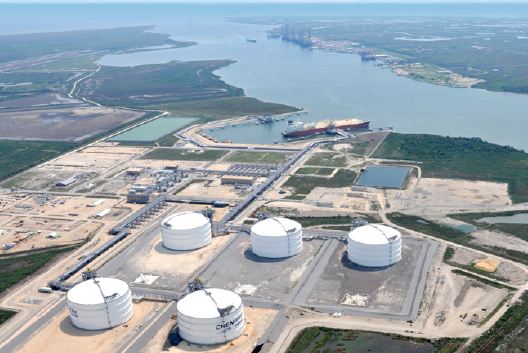
sabine pass lng cheniere bechtel
Sabine Pass, image: Cheneire

By Anna Shiryaevskaya and Isis Almeida

(Bloomberg) — The U.S. is about to change the global LNG market forever.
When the first tanker carrying liquefied natural gas from shale fields leaves the Sabine Pass terminal in Louisiana in December, it will turn consumers into traders with more bargaining power. That will transform a market dominated by long-term contracts into one where spot trading gains prominence, similar to crude oil.

Since the first LNG cargo went to the U.K. from Algeria under a long-term contract in 1964, buyers opted for guaranteed supply because the fuel was scarce. That’s changing because gas from the Bakken and other fields will transform the U.S. into the third-biggest exporter by 2020. Spot trading will probably account for almost half of transactions by then, from 29 percent last year, and LNG is poised to overtake iron ore as the most valuable commodity after oil.

“We see the U.S. as a major contributor to the development of the LNG spot market as the volumes start to ramp up,” Jamie Buckland, head of investor relations at GasLog Ltd. in London, which owns 22 LNG tankers, wrote in an e-mail May 14. “There should be a lot more flexibility and you could see some buyers of U.S. volumes selling product on to others.”

Last week, the Energy Department gave Cheniere Energy Inc. final approval for the nation’s fifth major export terminal at Corpus Christi in Texas, which will ship the fuel from 2018.

Valuable Commodity

Companies including Tokyo Gas Co. have said they will seek to profit from buying and selling U.S. cargoes that, unlike those on most current contracts, aren’t tied to a destination. Cheniere, the operator of Sabine Pass, expects the U.S. to produce 74 million metric tons of LNG by 2020. That’s about 22 percent of expected global output by 2019. Only Qatar and Australia will produce more.
U.S. natural gas will play an important role in connecting Pacific and Atlantic markets, Shigeru Muraki, an adviser at Tokyo Gas, said at conference in Kuala Lumpur on Tuesday. The company is expanding its investment in shale gas production in the U.S. as a natural hedge for LNG, he said.

Suppliers are now signing deals going as short as two or three years rather than 20 years, according to Charif Souki, Cheniere’s chief executive officer.

Long-term contracts will be eroded amid new supply coming from Australia and the U.S., Dubai Mercantile Exchange’s CEO Christopher Fix said at the conference in Kuala Lumpur.

LNG trade will exceed $120 billion this year, overtaking iron ore as the second most valuable commodity after oil, Goldman Sachs Group Inc. said in a March report. LNG is gas cooled to minus 160 degrees Celsius (minus 256 degrees Fahrenheit) so it occupies 600 times less space.

‘Constant Supply’

Spot and short-term LNG trades are defined by the International Group of LNG Importers in Paris as deals lasting four years or less. They accounted for 16 percent of all transactions in 2006 and that share may expand to 45 percent by 2020, according to Alan Whitefield, a senior associate at Sund Energy AS, a consultant to the industry.

The total LNG market will expand 40 percent by 2019, from 2013 levels, according to the International Energy Agency in Paris.

“What will make it a more interesting market is when gas starts being exported from the U.S., because then it becomes really like a commodity market,” Marco Dunand, the CEO of Mercuria Energy Group Ltd., said in an interview last month in Lausanne, Switzerland. “If you have constant supply coming from a terminal, then it becomes a liquid commodity.”

The new U.S. supply will also help link regional markets, said Ann-Elisabeth Serck-Hanssen, acting senior vice president of marketing and trading at Statoil ASA in Stavanger, Norway.

“We as a trading organization make our living from margins, so it both opens up opportunities and ties the different producing regions closer together,” she said by phone May 13. “If you believe a good market is a liquid market, this is positive.”

Dollar General ignores dangers of blocked emergency exits and other serious hazards at Bear, Delaware, store; faces nearly $125K in fines. Leading discount retailer has 6-year history of OSHA violations

May 18, 2015

BEAR, Del. – Boxes and excess merchandise could be a matter of life or death for workers at a Dollar General store in Bear, where federal inspectors found emergency exits blocked, in violation of federal law. 

The review by U.S. Department of Labor Occupational Safety and Health Administration inspectors was done in November 2014 at the store at 1679 Pulaski Highway, where four violations were found. Proposed penalties total $122,100.

The recent violations continue a six-year history of similar safety hazards found in more than 70 inspections of Dollar General Corp.'s stores nationwide. The company has received more than 40 citations since 2009. Many involved blocked emergency exits and electrical panels, and improperly maintained fire extinguishers.

"Again and again, our inspectors have found similar hazards at Dollar General stores, yet the company continues to put its employees at risk," said Erin Patterson, director of OSHA's Wilmington Area Office. "In a fire or emergency, every second counts. A blocked exit route can lead to tragedy. The company needs to address these serious issues immediately."

OSHA's inspection found one willful violation and other violations, including electrical panel and fire extinguisher hazards at the Bear store.

Based in Goodlettsville, Tenn., Dollar General is the nation's largest small-box discount retailer. It employs more than 11,000 employees and opened its 11,000th store in 2013. Founded in 1938, Dollar General is among the largest retailers of brands made by The Procter & Gamble Co., Kimberly-Clark Corp., Unilever, Kellogg Co., General Mills Inc. and Nabisco.

Dollar General has 15 business days from receipt of its citations and proposed penalties to comply, request a conference with OSHA's area director, or contest the findings before the independent Occupational Safety and Health Review Commission. 

To ask questions, obtain compliance assistance, file a complaint or report workplace hospitalizations, fatalities or situations posing imminent danger to workers, the public should call OSHA's toll-free hotline at 800-321-OSHA (6742) or the agency's Wilmington Area Office at 302-573-6518.

Under the Occupational Safety and Health Act of 1970, employers are responsible for providing safe and healthful workplaces for their employees. OSHA's role is to ensure these conditions for America's working men and women by setting and enforcing standards, and providing training, education and assistance. For more information, visit http://www.osha.gov.

Unadilla, Georgia, recycling center exposes workers to falls, fire and amputation hazards

May 19, 2015

Employer name: Recycling Revolution LLC

Inspection site: 4190 Collins Rd., Unadilla, Ga. 31091

Date inspection initiated: The Occupational Safety and Health Administration initiated the November 12, 2014 inspection as part of its National Emphasis Program on Amputations.

Investigation findings:
 
OSHA issued 14 repeated and 12 serious citations to the solid waste collection and processing company. The violations include exposing workers to amputations hazards from machine parts, not establishing procedures to protect workers from accidental machine startup while performing maintenance and services, and failure to provide readily accessible fire extinguishers. Additionally, the employer was cited for not removing from service a forklift with missing safety equipment and exposing workers to fall hazards due to missing railings on stairs. 

Quote: "Deadly falls, severe burns, crushed fingers or hands, and electric shock - those are just some of the hazards employees at Recycling Revolution faced because of management's disregard for worker safety," said Robert Vazzi, director of OSHA's Savannah Area Office. "The company's actions are not only disappointing but also dangerous, and they must take immediate action to address these hazards." 

Proposed Penalties: $78,078

View citations here: http://www.dol.gov/opa/media/press/osha/OSHA20150979fs.pdf*

Inspection History: Recycling Revolutions has been inspected by OSHA four times since 2012 and received 24 citations for workplace hazards.

Recycling Revolution has 15 business days from receipt of its citations and proposed penalties to comply, request a conference with OSHA's area director or contest the findings before the independent Occupational Safety and Health Review Commission. To ask questions, obtain compliance assistance, file a complaint or report workplace hospitalizations, fatalities or situations posing imminent danger to workers, the public should call OSHA's toll-free hotline at 800-321-OSHA (6742) or the agency's Savannah Area Office at 912-652-4393.